
pihlmann architects
ÅBEN Brewery
- Architectpihlmann architects
- PhotographerHampus Berndtson
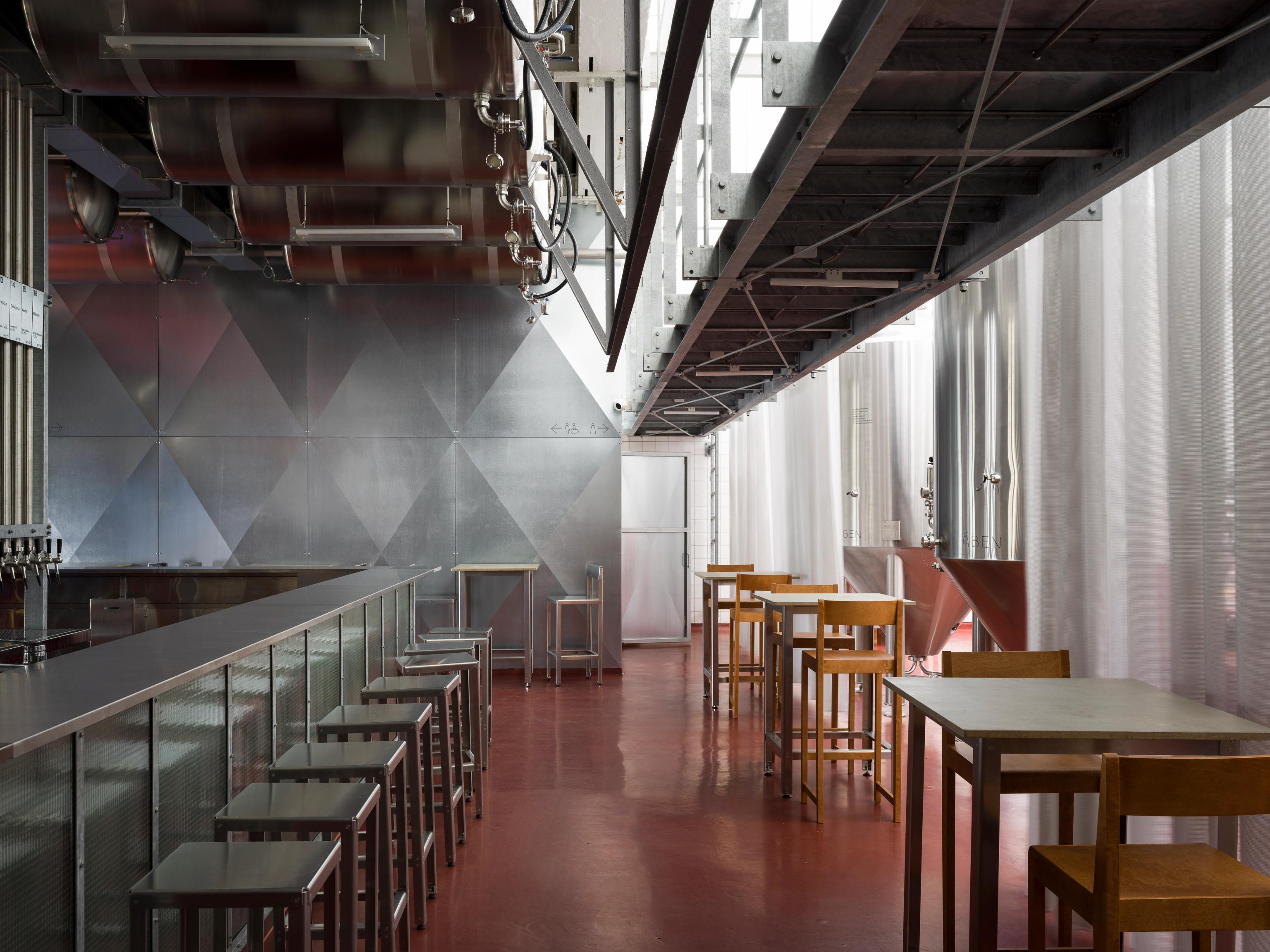
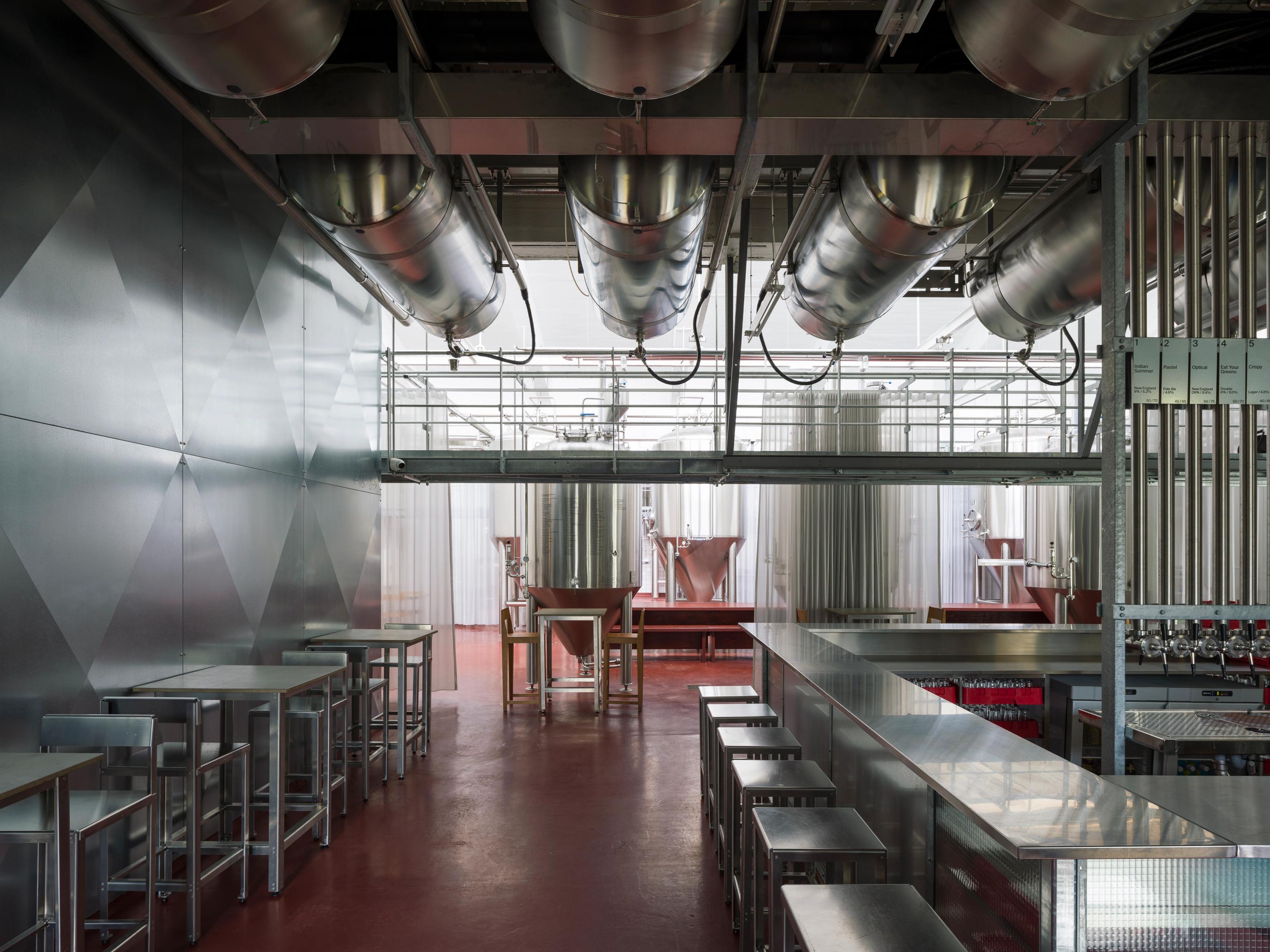
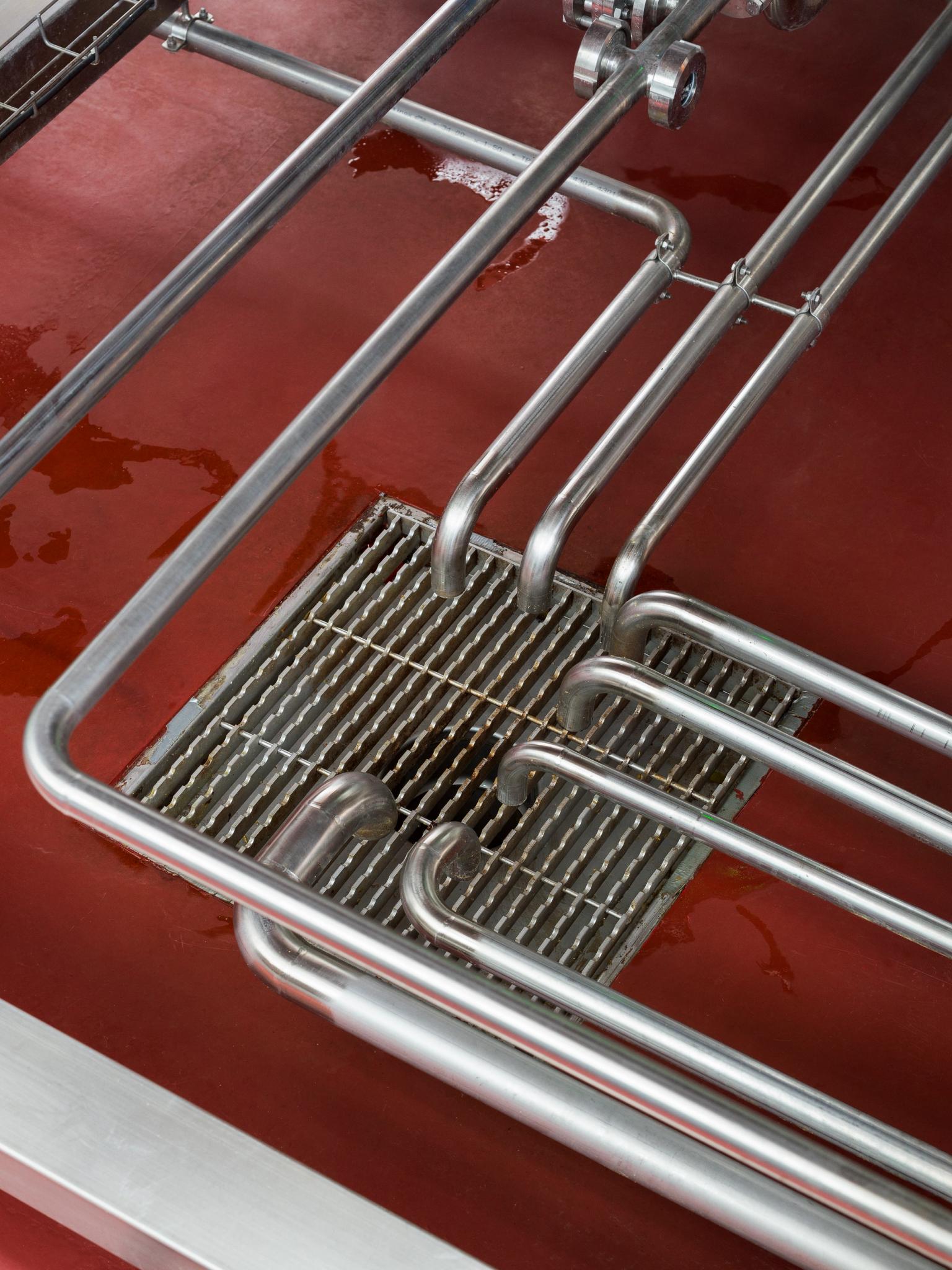
Frederik Gustav ÅBEN Bar in Kødbyen, is both a production space and a bar, experienced by us as an extremely precise interior project. The raw construction and material choices are directly derived from the brewery’s production setup – from the large steel tanks suspended in the space to the exposed piping that ultimately ends in the guest’s glass. It is a space that continues to reveal itself the more time you spend in it.

A Brewery Turned Inside Out
ÅBEN is a working microbrewery and bar set within a former 1932 slaughterhouse in Copenhagen’s historic Meatpacking District. Transformed by Pihlmann Architects, the project reintroduces large-scale food production to the centre of the city – not hidden behind logistics and walls, but fully exposed to the public. What was once a modernist chill hall for industrial meat processing now operates as a transparent brewery where guests drink beer metres from where it ferments. ÅBEN is both production facility and social space, challenging the conventional separation between factory and public realm by turning the building – quite literally – inside out. For Pihlmann, the project exemplifies their approach to architecture as a balance between pragmatic function and material poetry, treating every technical element as a spatial actor.






Reclaiming the Industrial Framework
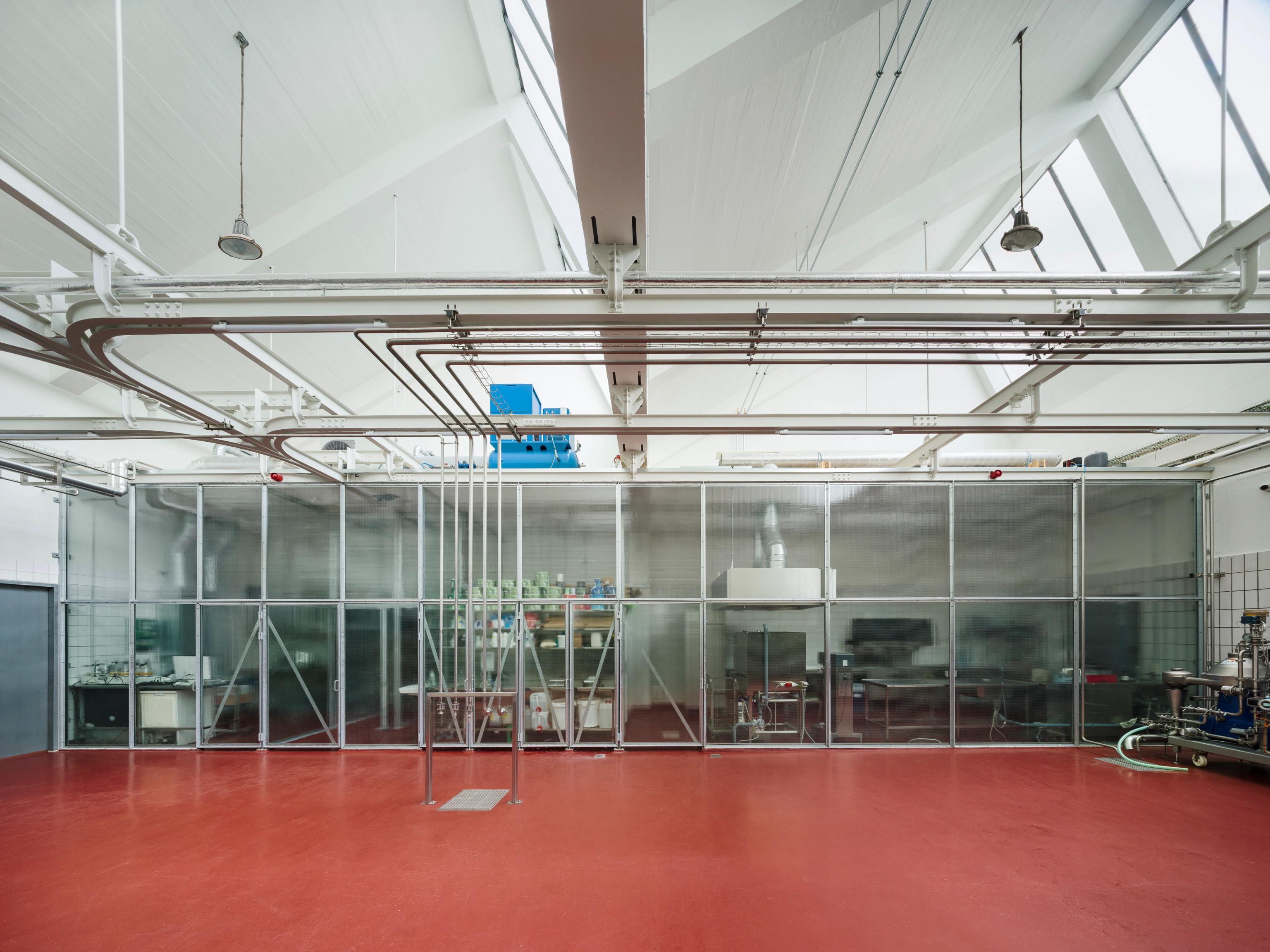
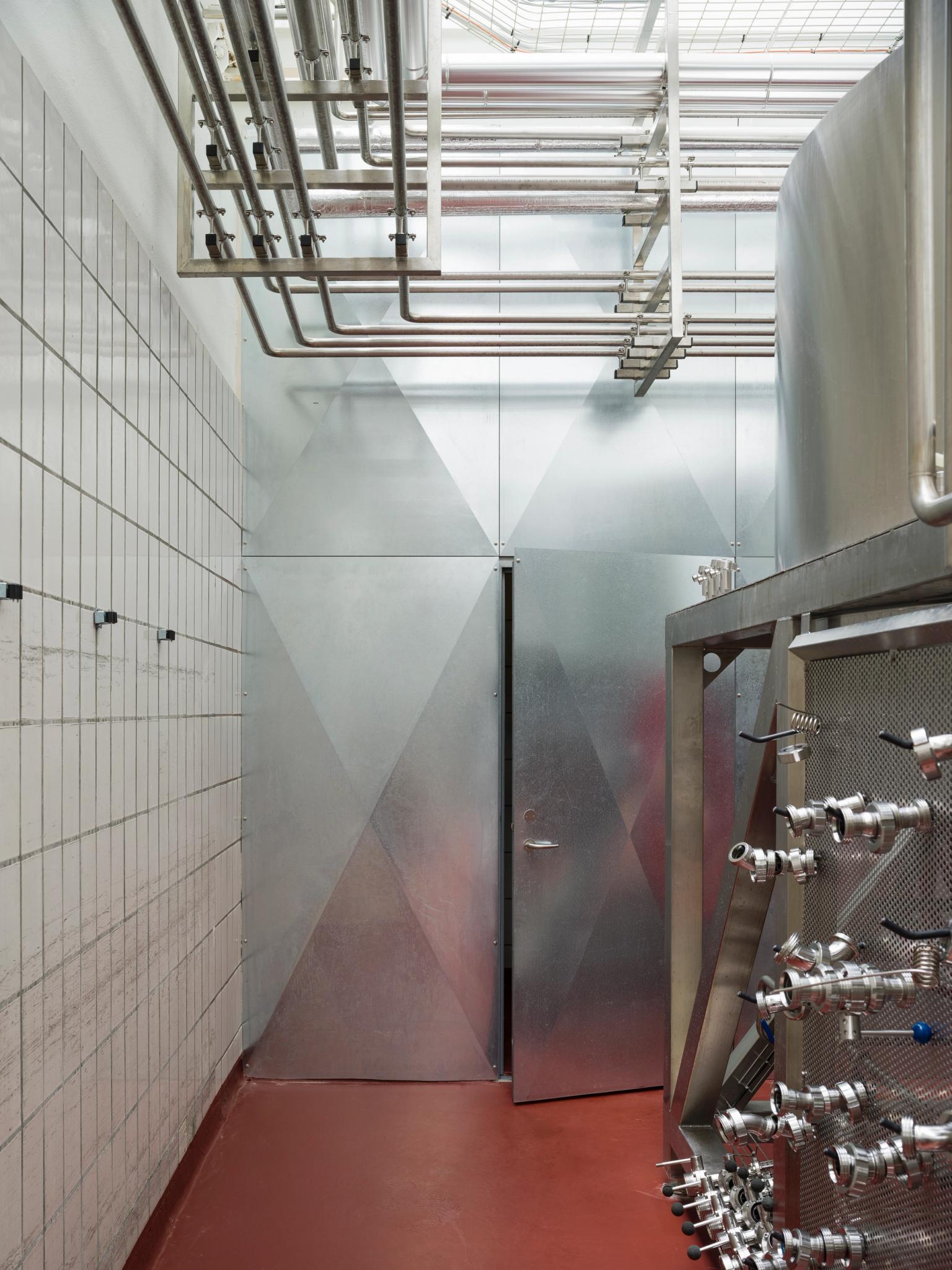
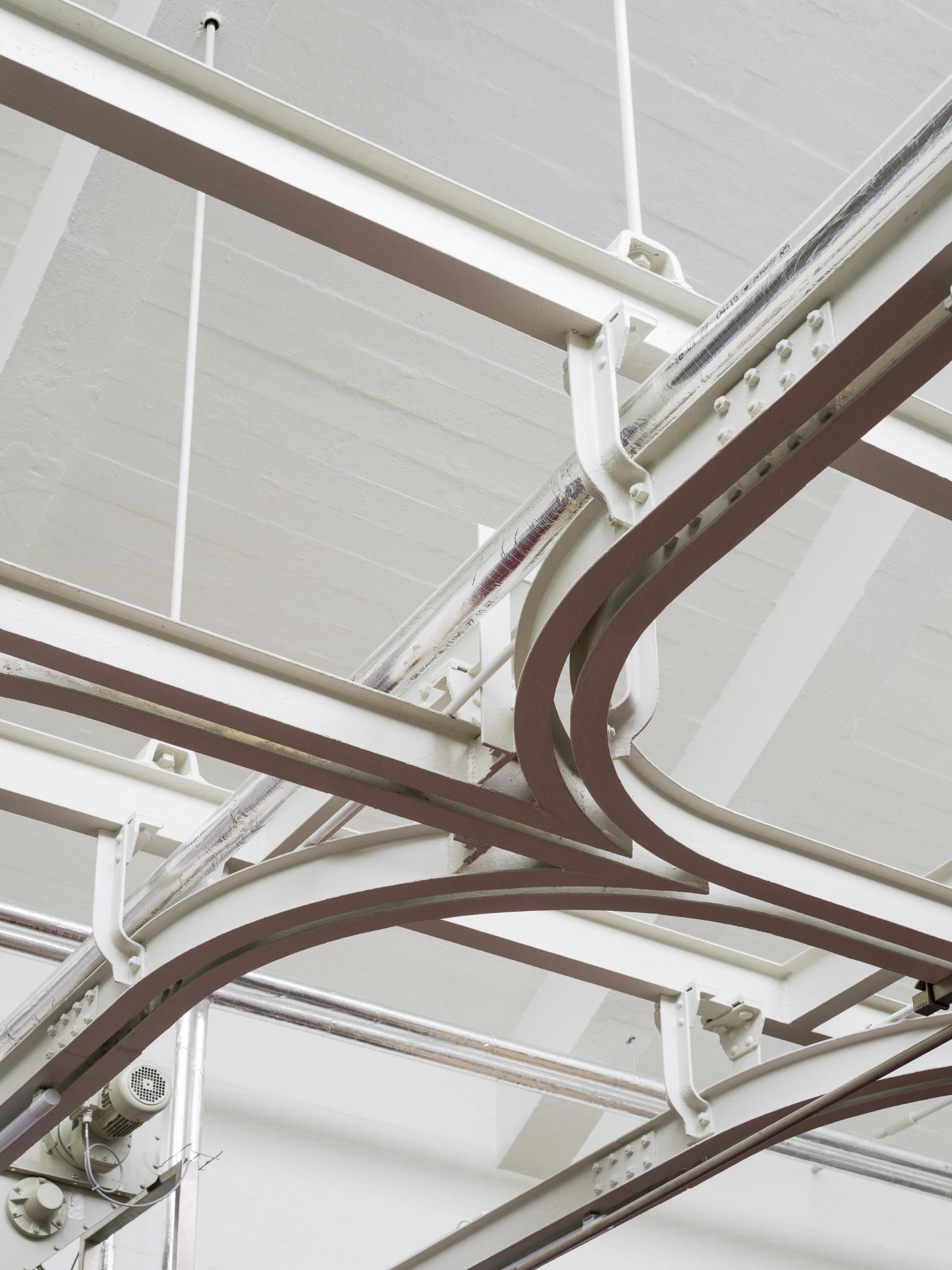
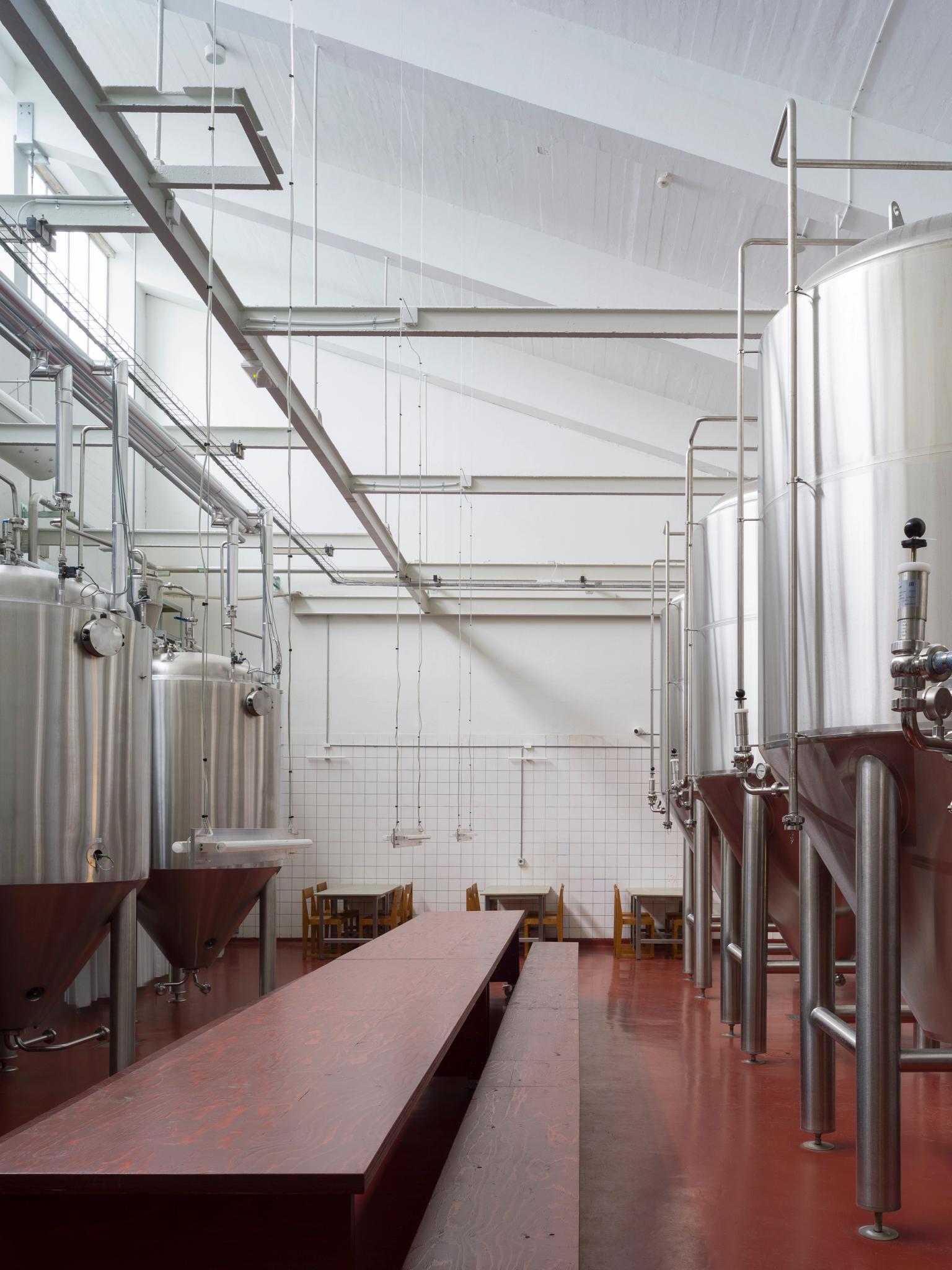
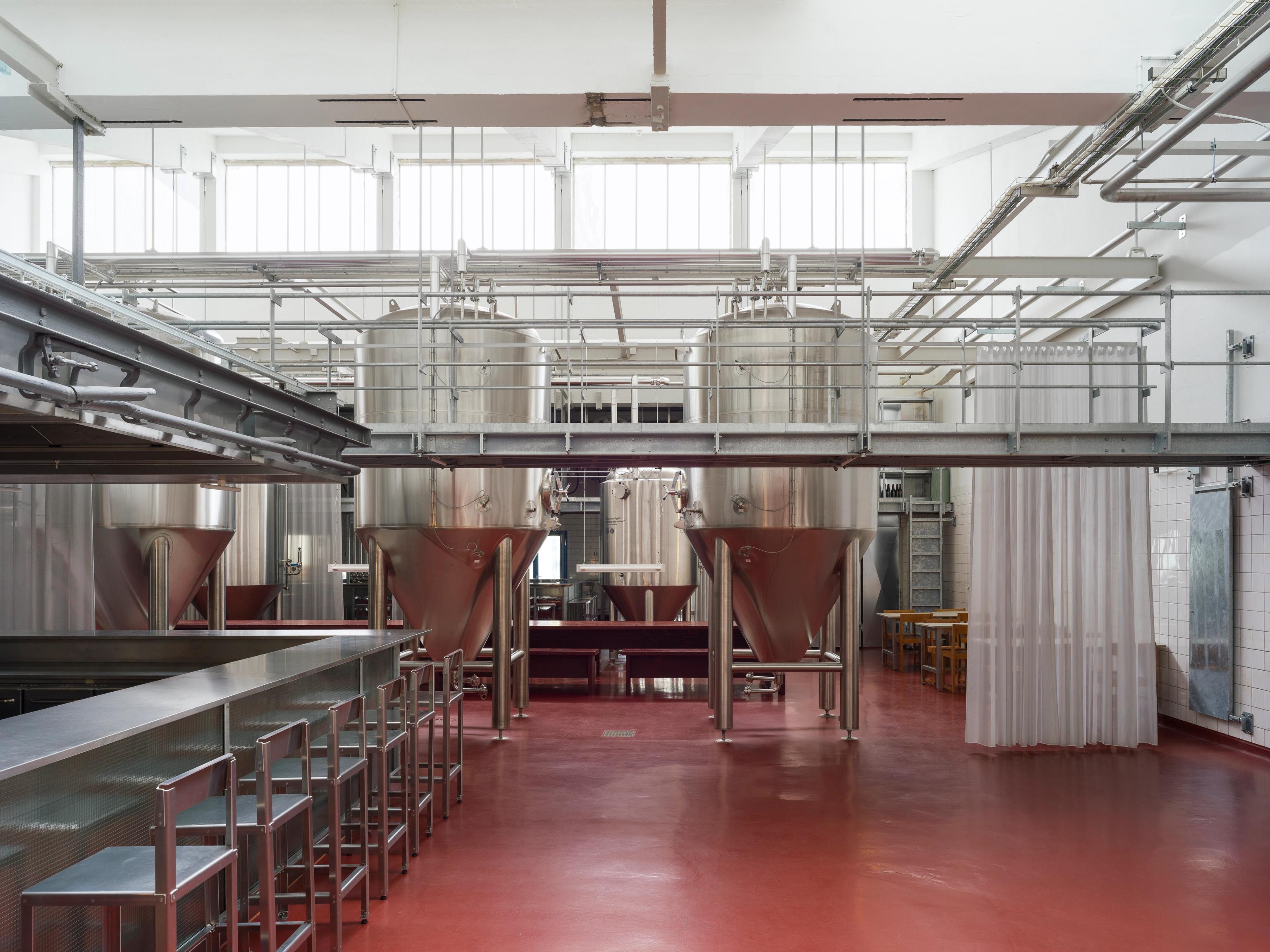
Built in 1932, the hall originally housed 980 carcasses suspended from a robust, gridded rail system, cooling for twelve hours until the caloricity had left their bodies. That rail system still defines the ceiling today. Instead of livestock, conical steel fermentation tanks and horizontal serving vessels occupy the structural grid, connected by kilometres of exposed piping. Positioned beneath the archetypal saw-tooth roof, the tanks stand solitarily on the floor, revealing the extended ceiling height and rhythmic order of the space.
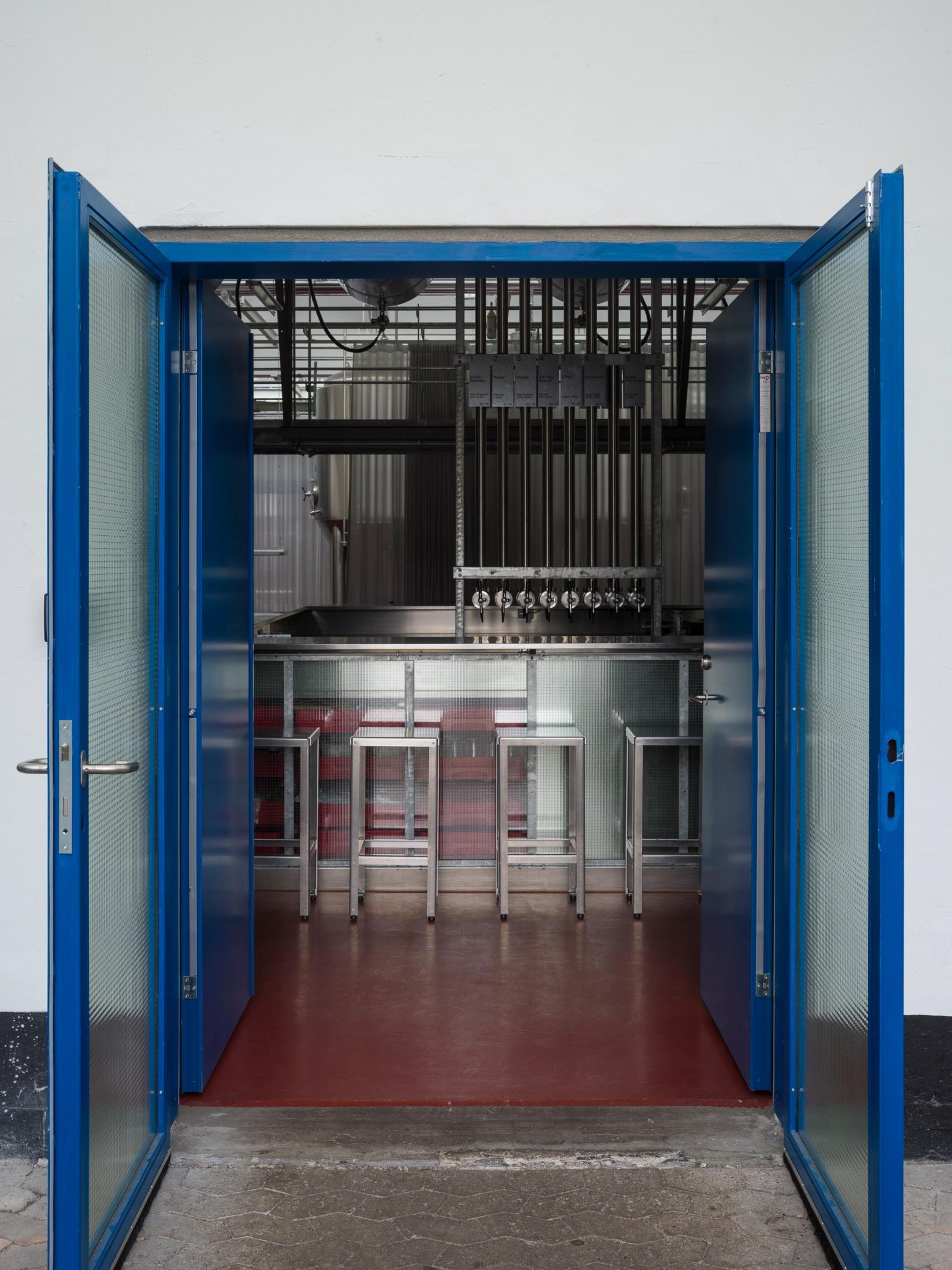


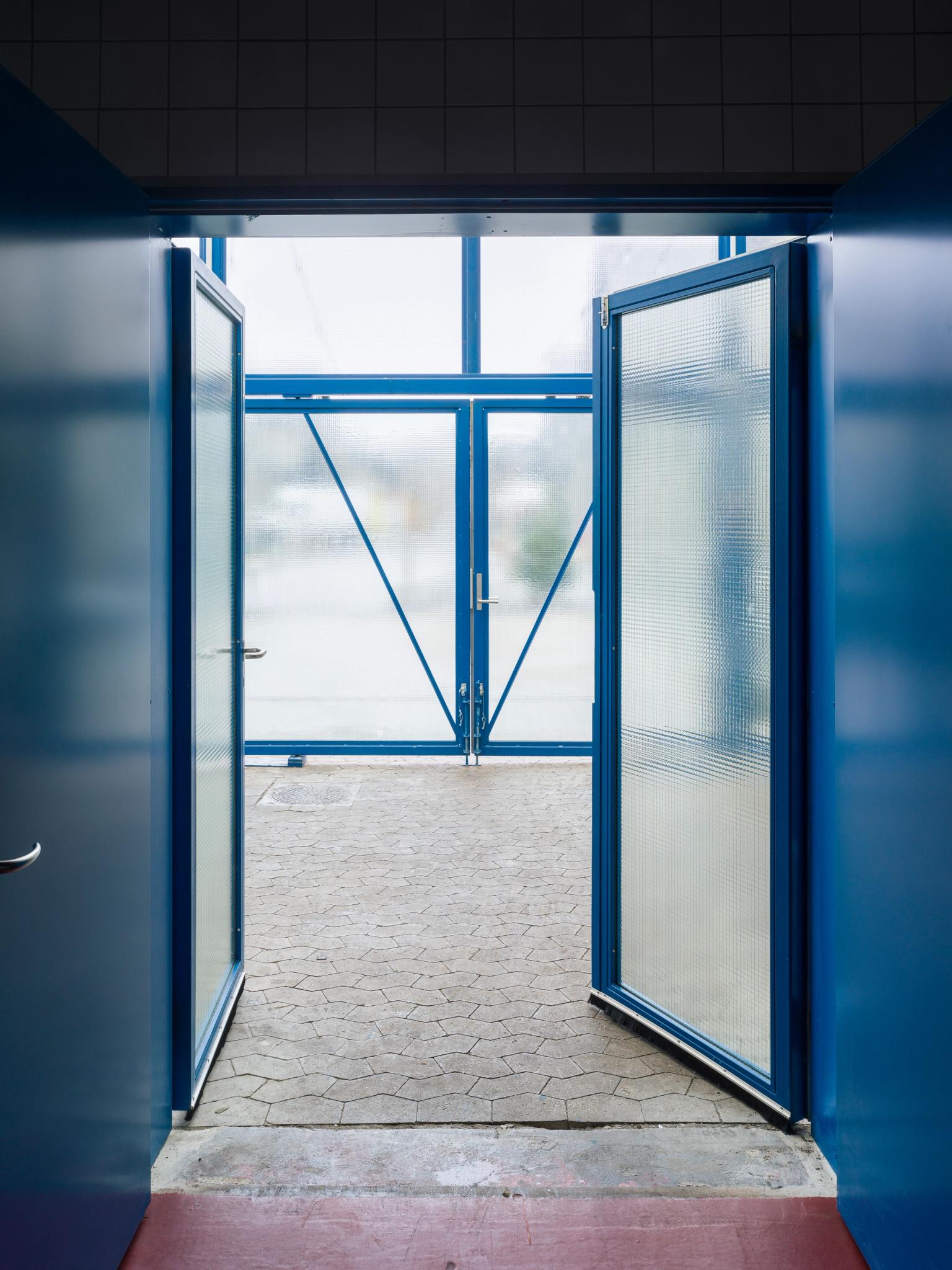
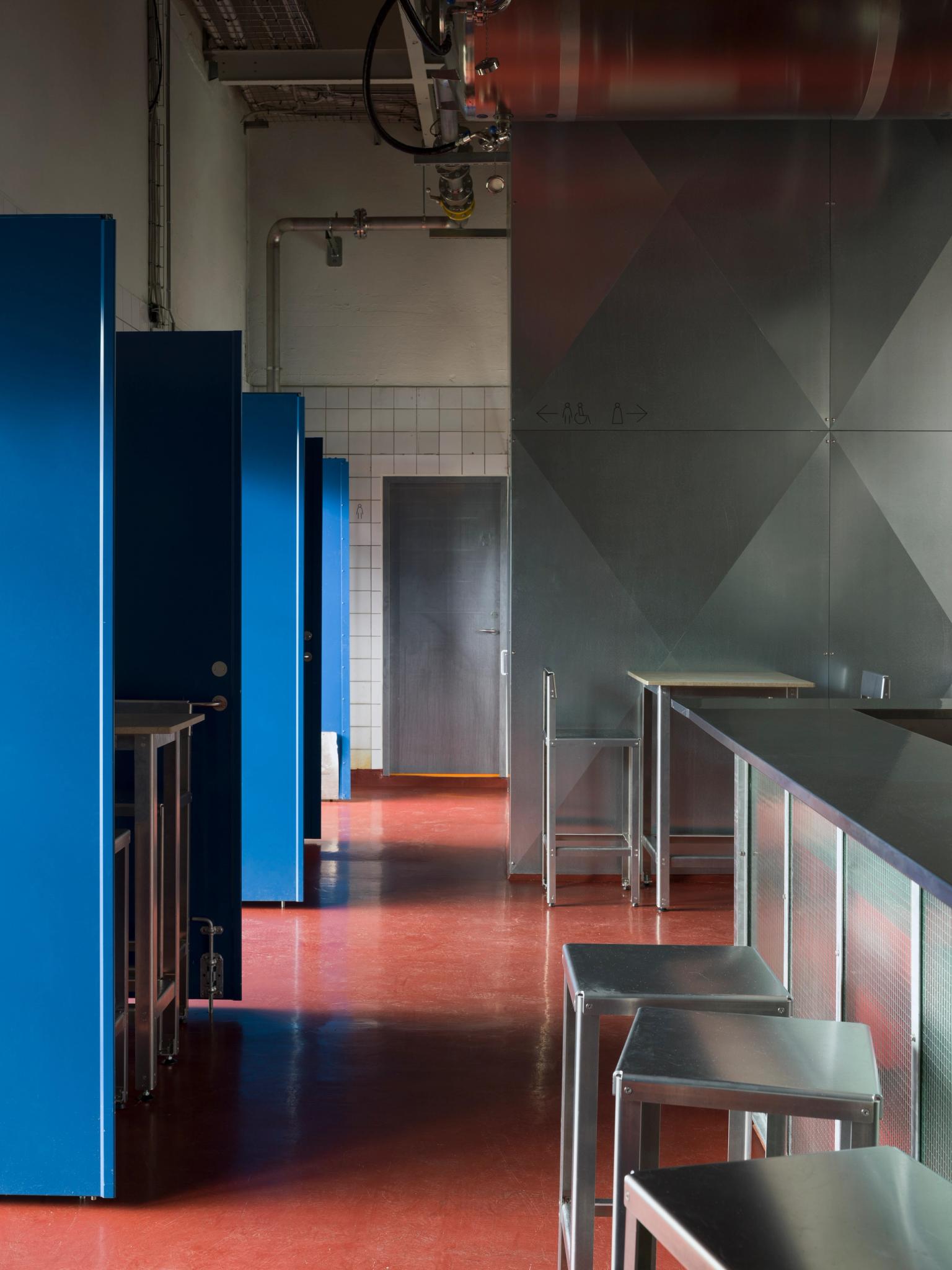
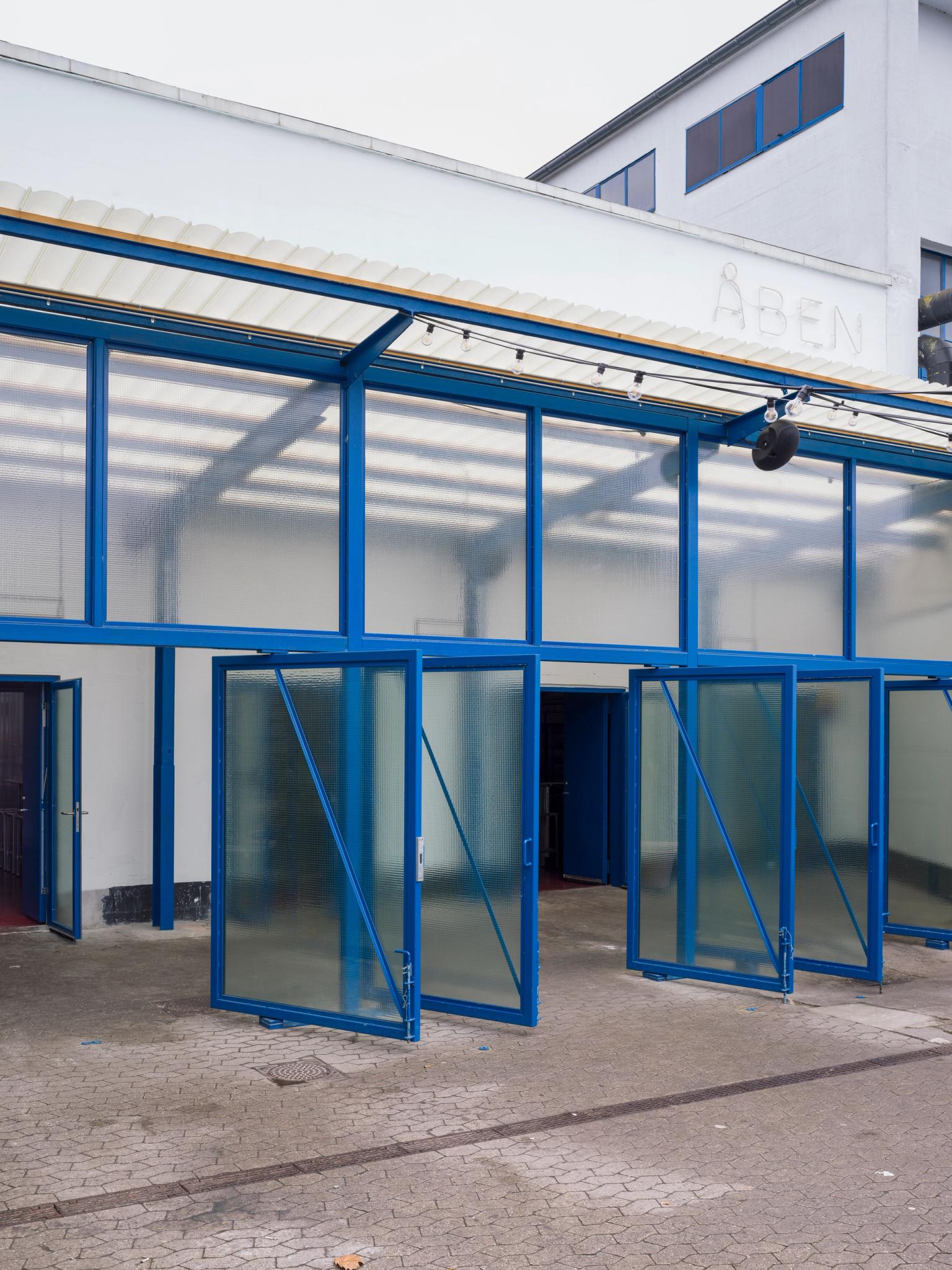
The building is located in The Meatpacking District (Den Hvide Kødby), one of Denmark’s 25 protected industrial monuments, with both interior and exterior listed. Pihlmann Architects’ restoration preserves the building’s industrial integrity – white wall tiles, blue-rimmed entrance doors, and structural steel – bringing the hall closer to its original clarity. Their philosophy is clear: not to romanticise industrial aesthetics, but to reactivate rational and robust principles embedded in the architecture, allowing the past to inform contemporary function.

Two Interrelated Flows
The transformation is organised according to brewing logic. Production follows a rational line from raw ingredients at the back of the building to increasingly refined beer towards the front. Yet as the beer becomes more sophisticated, the spaces become more distilled and legible as industrial environment. Guests move upstream through the process, closer to the origin of the product.
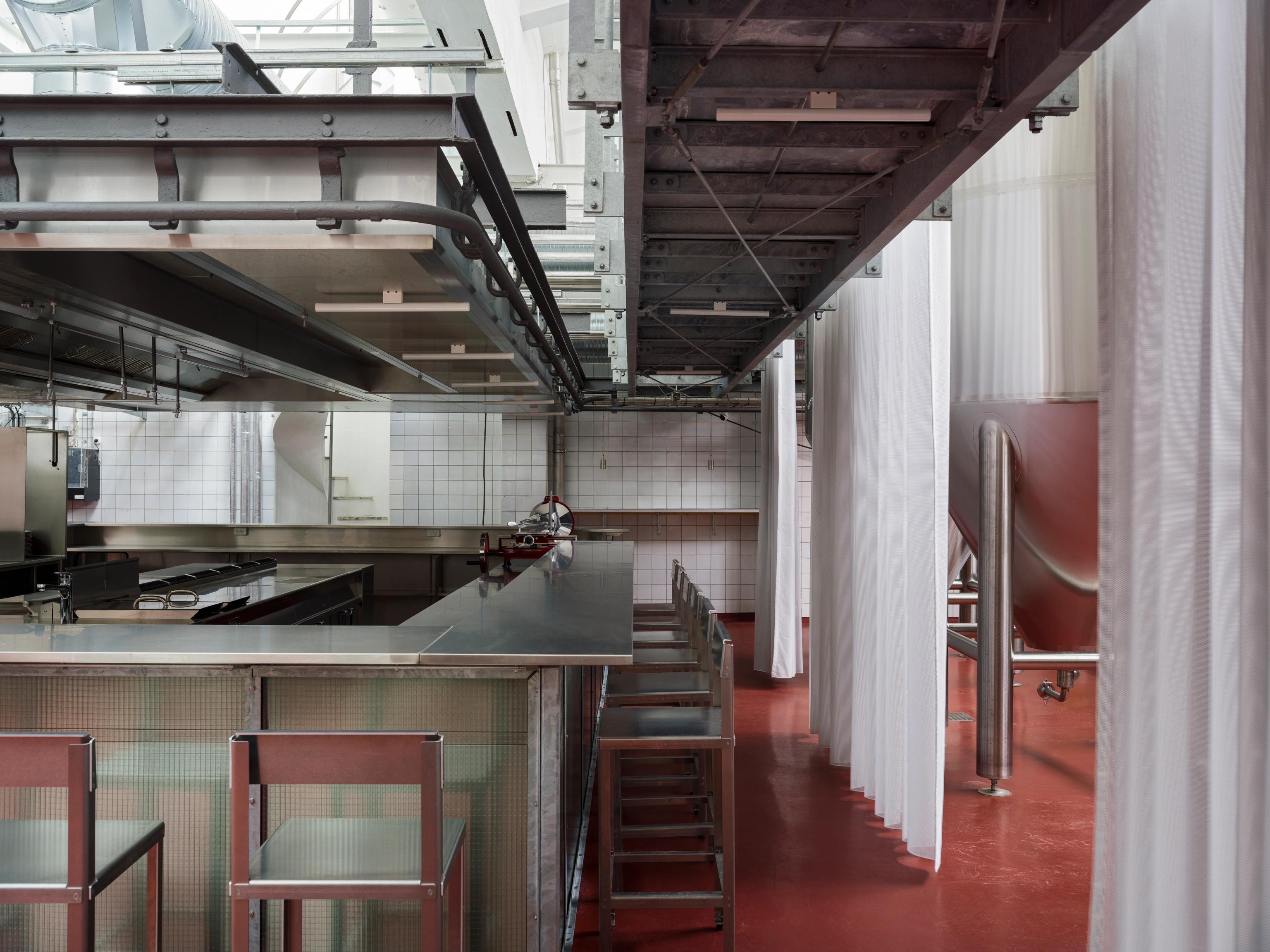
At the entrance, ceilings are lower and skylights absent, creating an inherent intimacy intensified by fourteen horizontal serving tanks suspended beneath the ceiling. Deeper inside, the space opens dramatically beneath the saw-tooth roof, culminating in a final public zone containing only the largest fermentation tanks and an open kitchen island placed directly under the preserved meat rails. Pihlmann’s design carefully orchestrates this dual experience, allowing production to be both functional and legible, while visitors encounter the brewery as a coherent spatial journey rather than a staged set.


Architecture as Apparatus
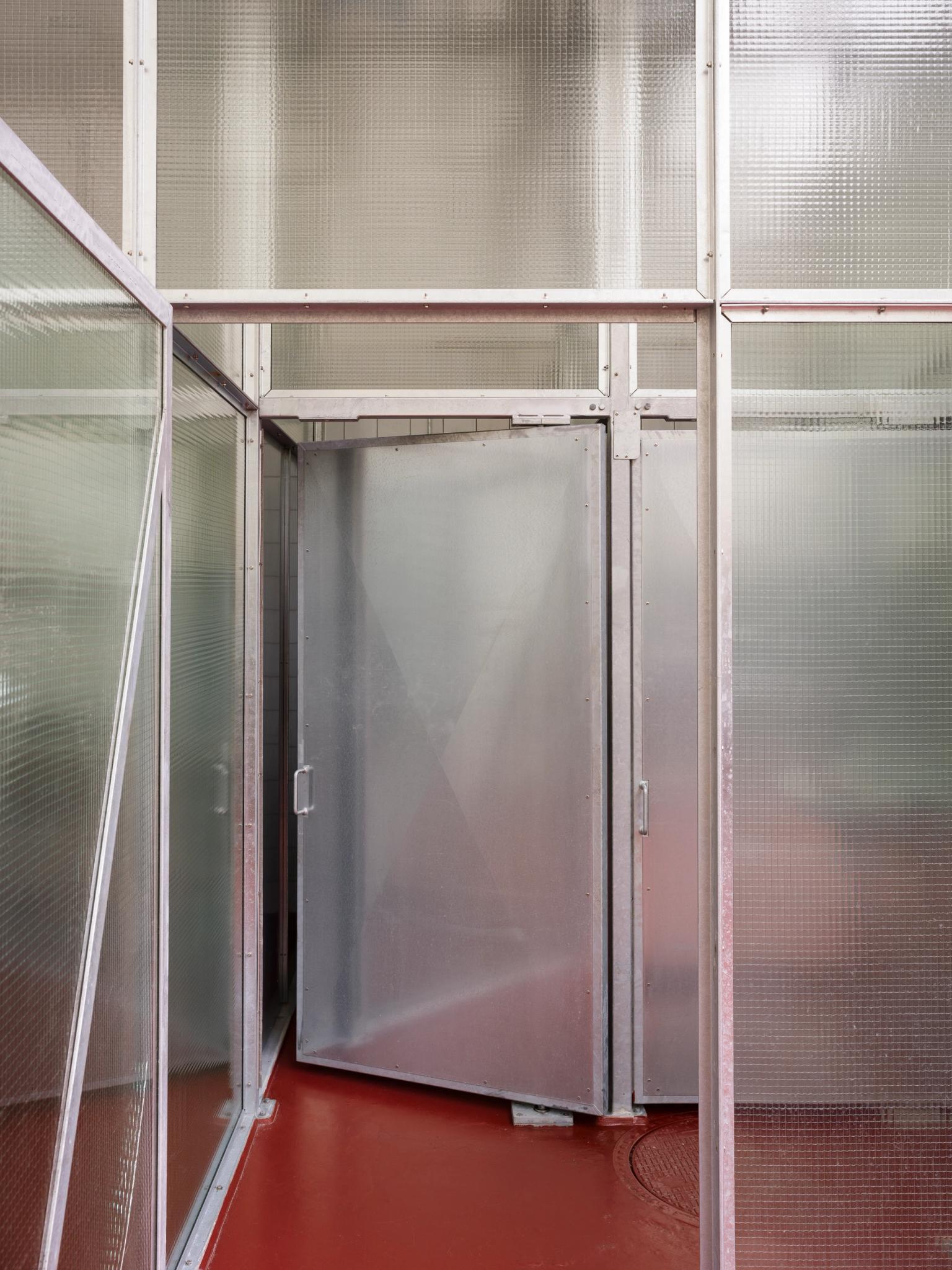
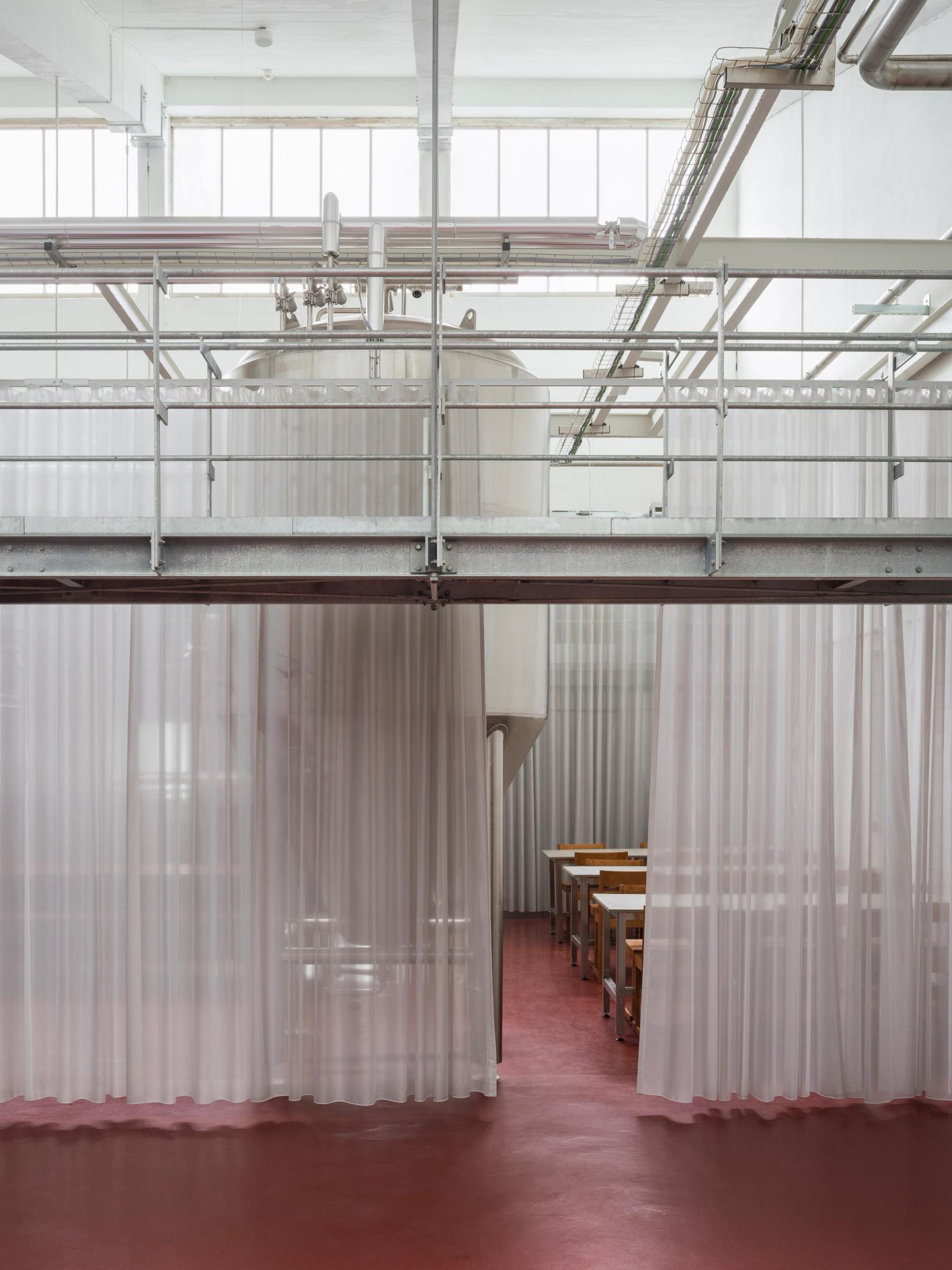
The project began with careful restoration. Thereafter, as little as possible was added. Every new element is simple, durable, and pragmatic: galvanised steel catwalks for servicing tanks, semi-transparent curtains reminiscent of slaughterhouse partitions, industrial wire glass panels, aluminium furniture, Kerto LVL, Viroc, and robust textiles selected for longevity and low maintenance.
The original red flooring, retained from when the client acquired the building, adds warmth to the otherwise clinical palette. At night, electric light absorbs the crimson tone and reflects softly from the steel vessels, transforming the raw hall into an unexpectedly intimate environment.
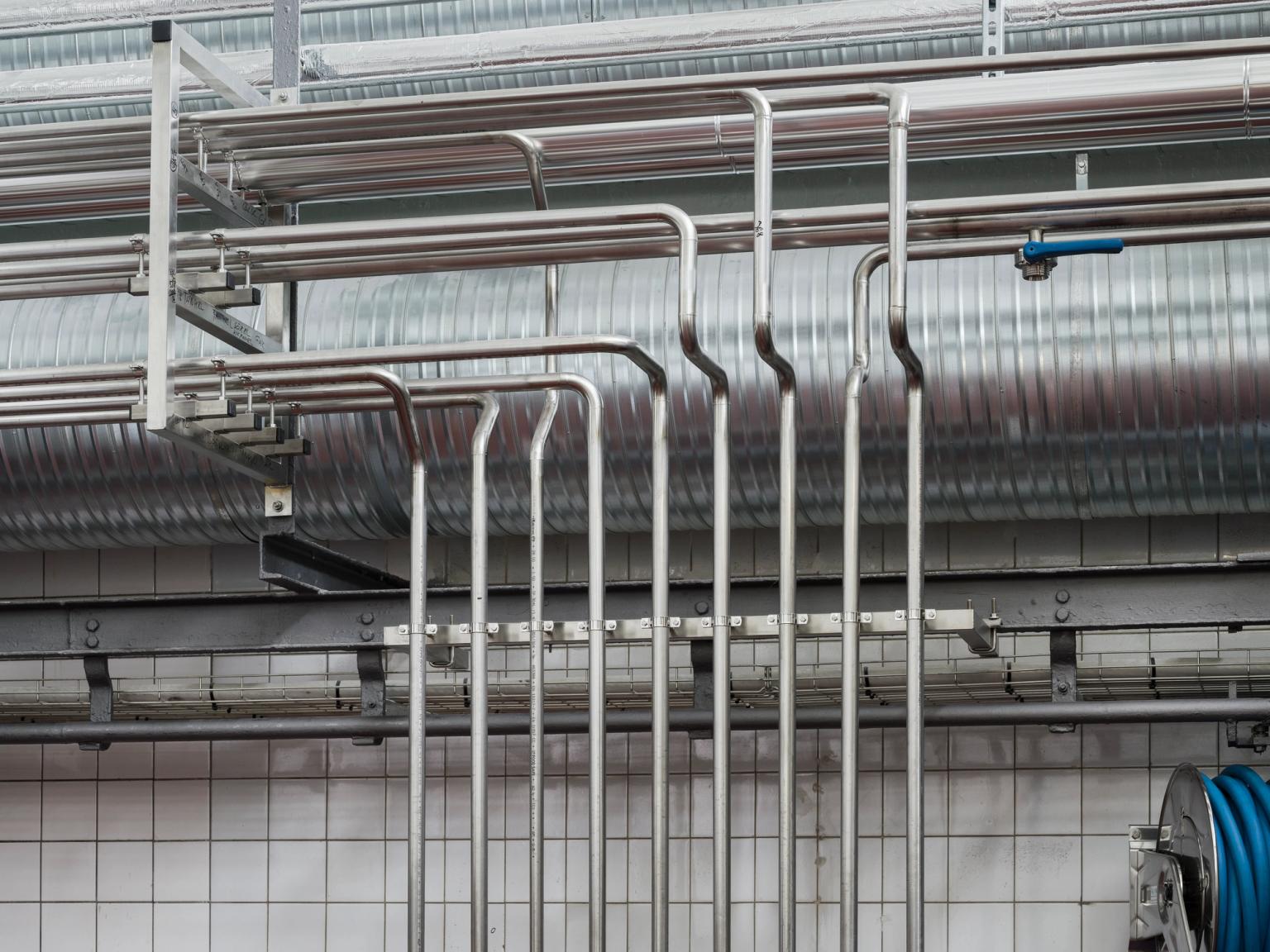

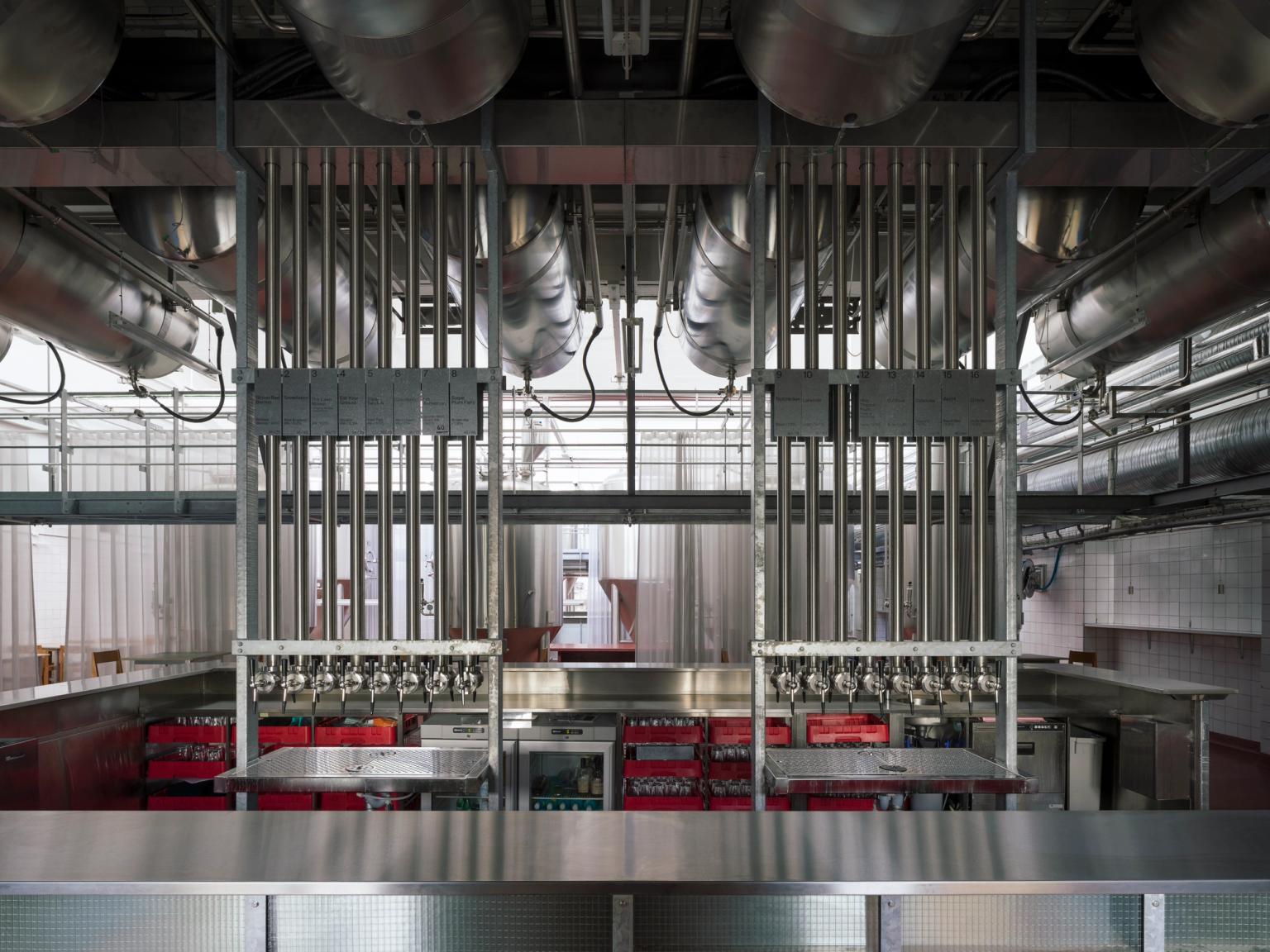

Through ÅBEN, Pihlmann Architects demonstrate how industrial heritage can be activated through use rather than frozen in nostalgia. Every pipe, tank, and curtain is treated as a spatial installation, blending functionality with architectural narrative. Brewing becomes both production and performance, and the contemporary factory is recast as a civic experience in which visitors participate in, rather than merely observe, the act of making.