
Vincent Van Duysen
Zara Diagonal
- ArchitectVincent Van Duysen
- PhotographerFrançois Halard
Desiree Groenendal Belgian architect and designer Vincent Van Duysen is known for his understated, warm and architectural approach to design. Through his work for Zara Home, this aesthetic has reached a much wider audience. Before designing Zara Diagonal in Barcelona, Vincent had already launched four collections for Zara Home, working across furniture and objects for the home. He then brought this design language into Zara Diagonal.
With a design language built on calm, warmth and understated elegance, he transforms the store into a sophisticated, home-like space that invites you to slow down and look around. Designed for continual discovery, there is something new to notice with every visit. For me, it is also a great way for people who might not otherwise encounter his work to experience his design language in a very direct way.

A Domestic Approach
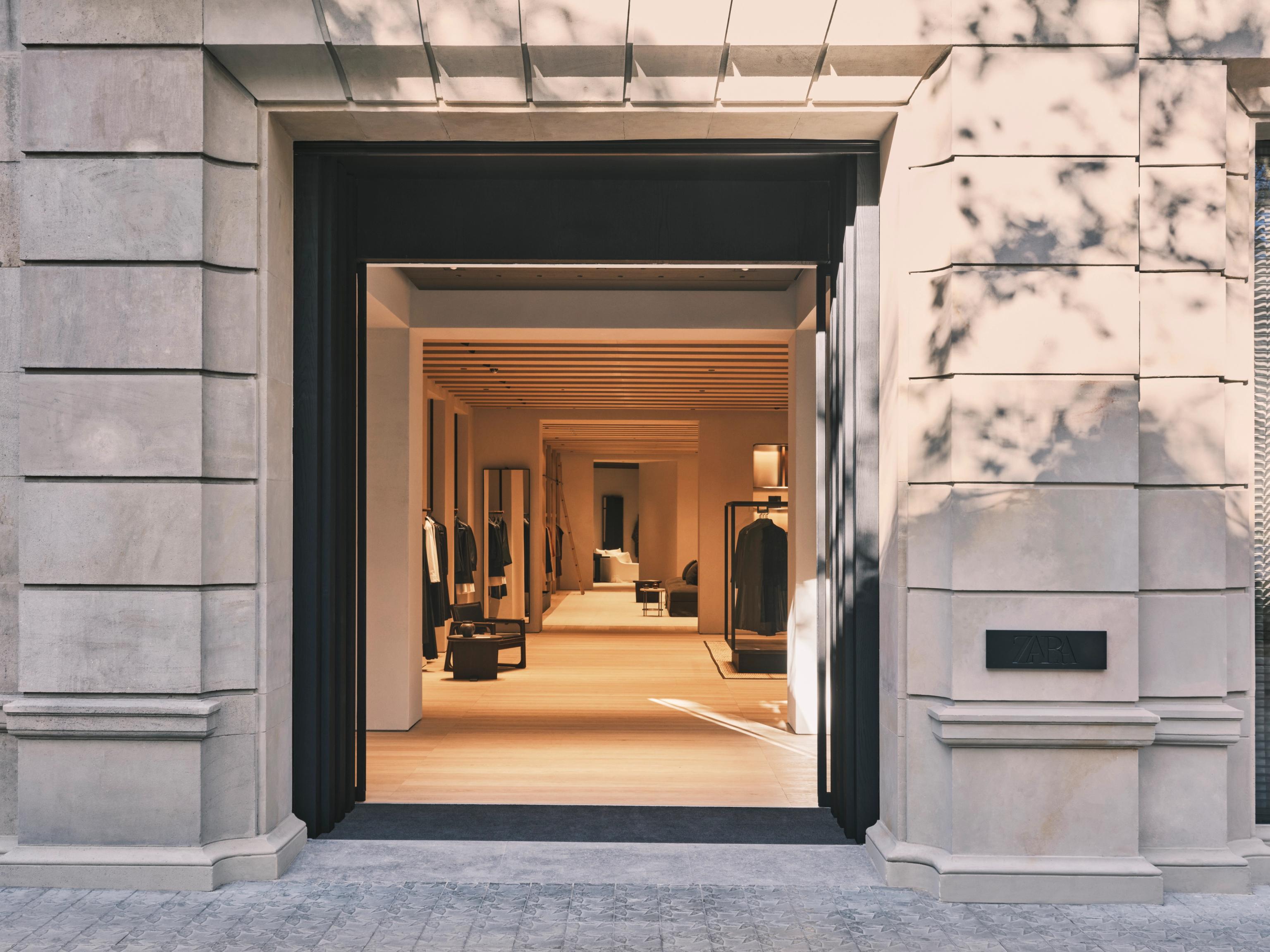
On Barcelona’s iconic Avenida Diagonal, Zara has introduced a new flagship designed by Belgian architect and designer Vincent Van Duysen. Occupying a traditional building, Zara Diagonal unfolds across several levels as a fluid environment where fashion, architecture and lifestyle come together. Inspired by the intimacy of domestic interiors and the curiosity of a cabinet of curiosities, the project introduces a new approach to retail, inviting visitors to move through the space at a slower pace and engage with its details.

A Continuing Collaboration
The project marks a new chapter in Van Duysen’s collaboration with Zara, which began in 2022 with a furniture collection before expanding into textiles, lighting and objects for Zara Home. Here, his design language is translated into a complete architectural environment, built around shared values of timelessness, restraint, quality materials and craftsmanship. Furniture from the Zara Home+ by Vincent Van Duysen collections is integrated throughout the store and is available to purchase, creating a direct connection between the interior and the objects within it.

A Sequence of Rooms and Material and Light
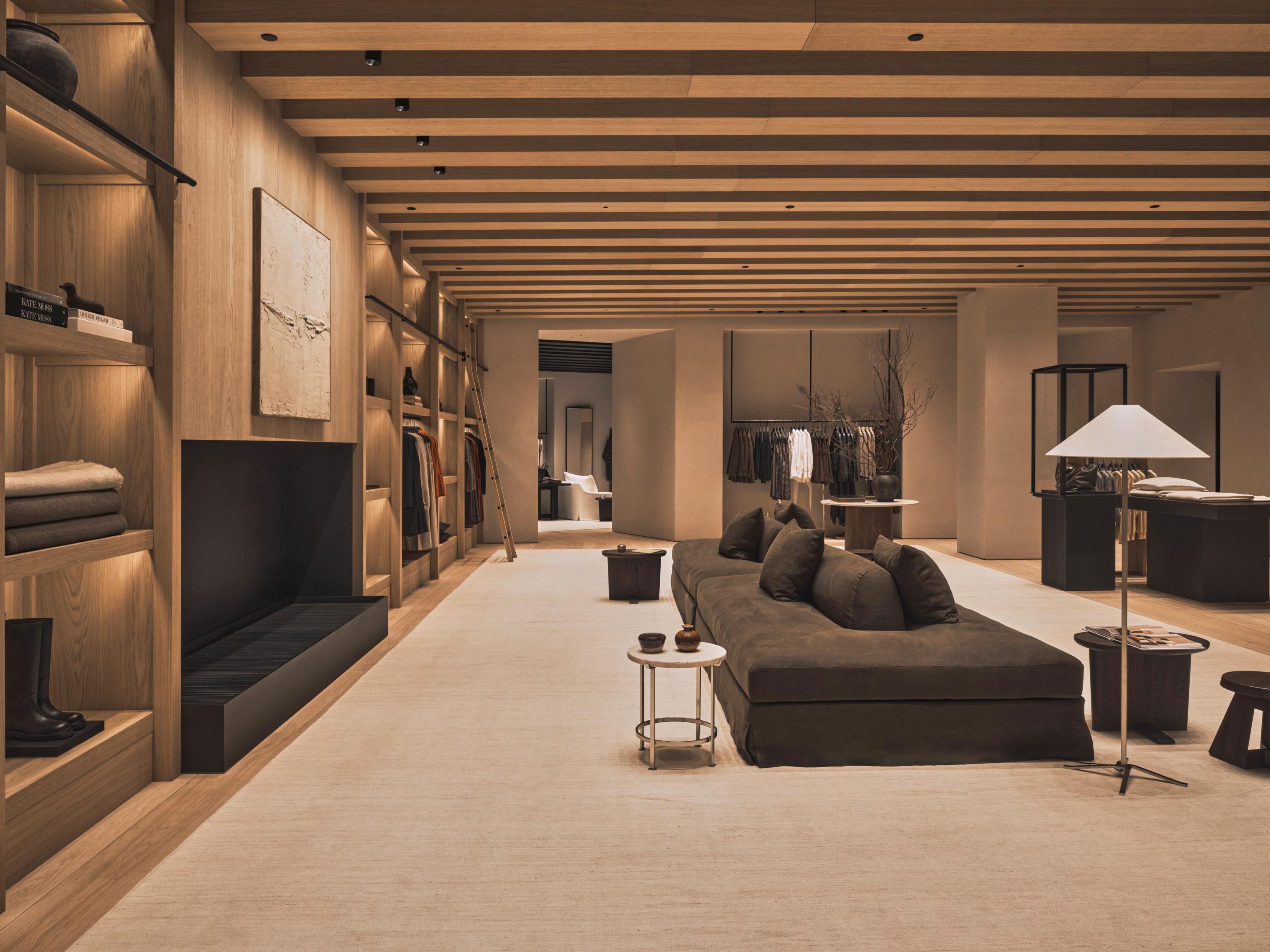
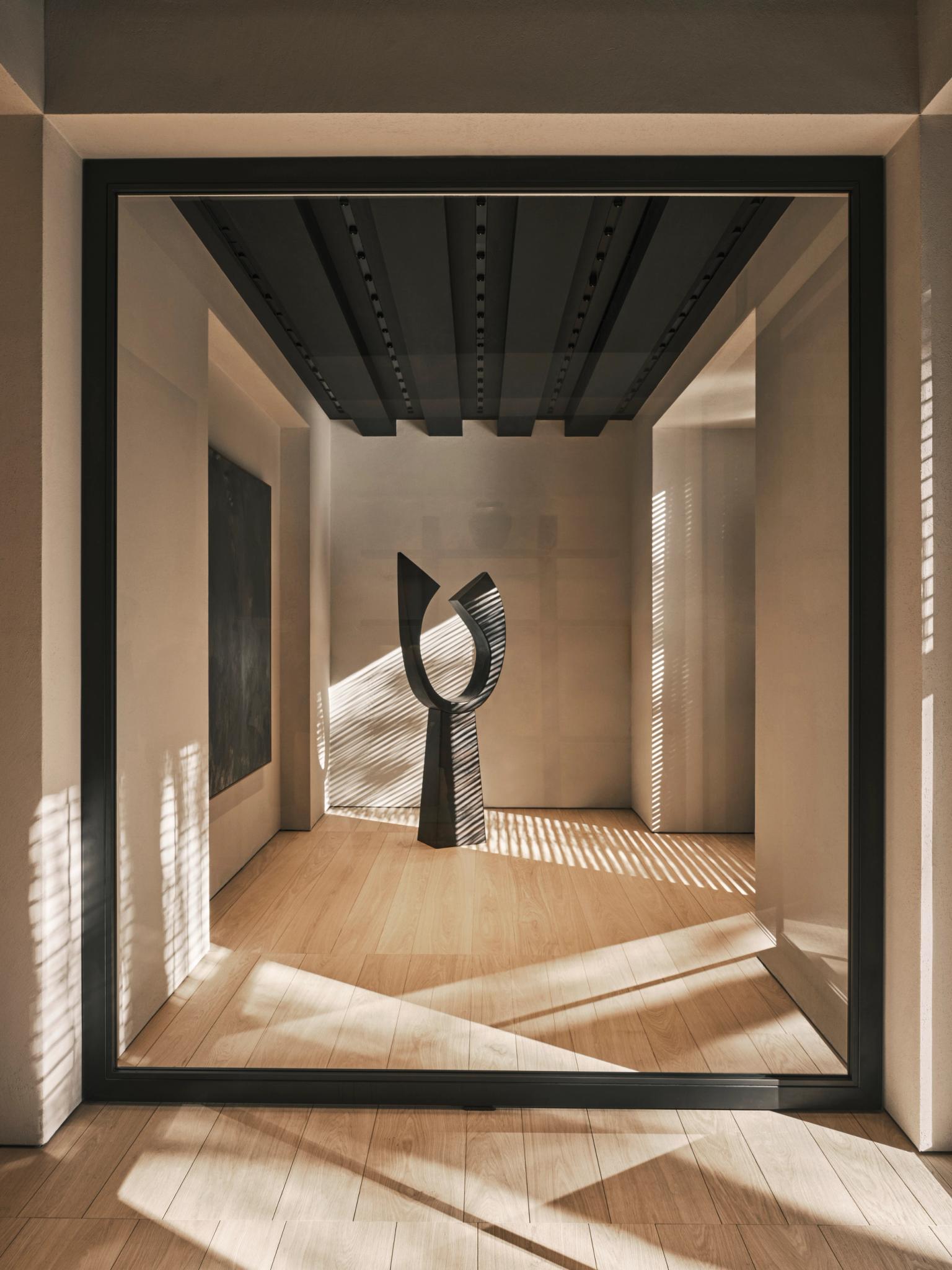
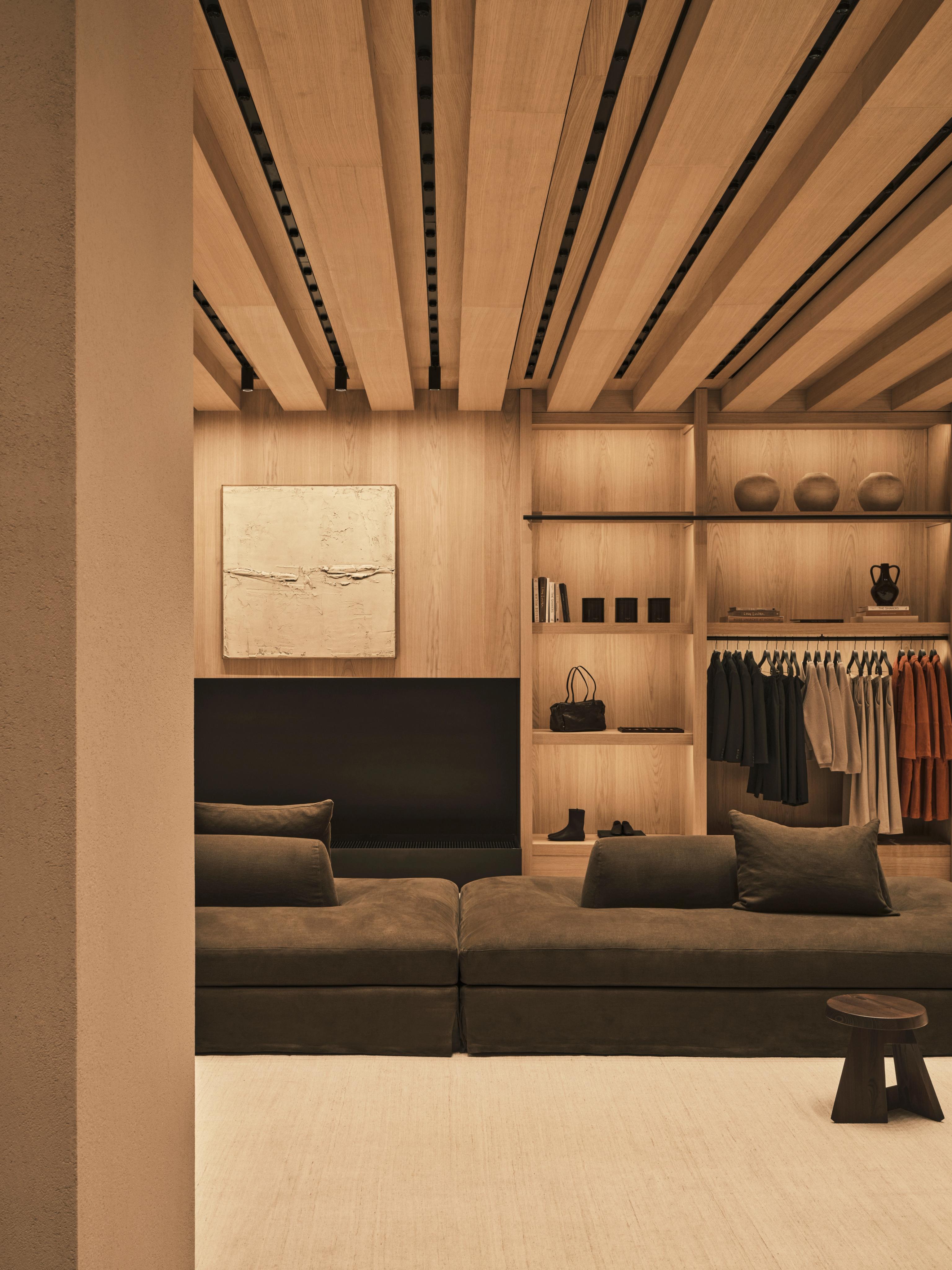
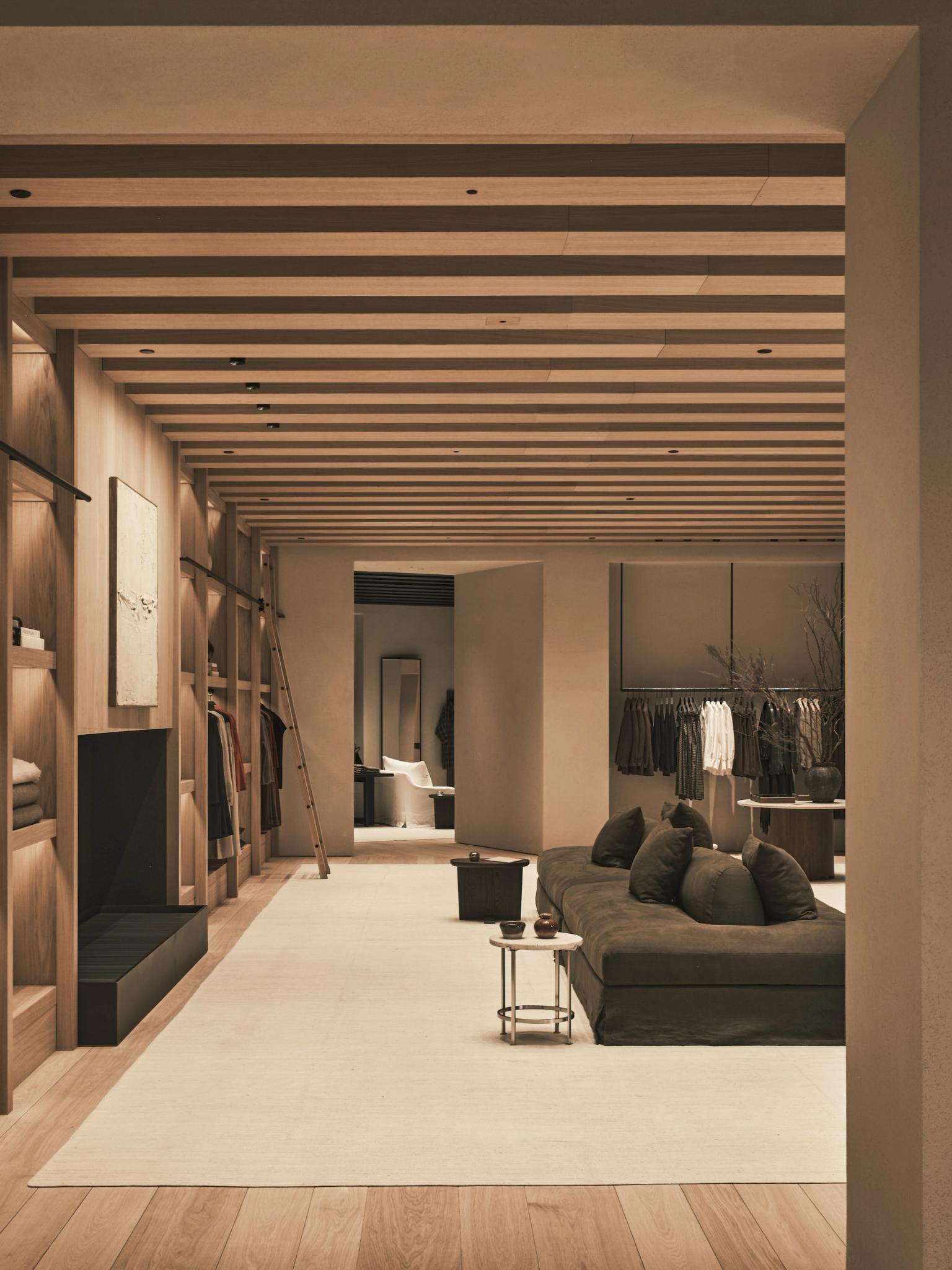
Rather than one continuous retail floor, the interior is organised as a series of distinct rooms, each with its own rhythm and material character. At the centre, a large lounge takes on the role of a living room, with a freestanding sofa, expansive bookcase and fireplace forming its focal point. Open shelving, glass vitrines and carefully placed objects create layered compositions around it. Artworks and sculptures are integrated throughout the store, including pieces by Belgian artist Elias Van Orshaegen and works displayed in collaboration with Alzueta Gallery, giving the space the quality of a private collection.
The palette combines natural wood, brushed metal, natural stone and matte finishes, chosen for their tactile qualities and the way they respond to light and age over time. Exposed timber beams reinterpret elements of traditional domestic architecture, while rugs and textured surfaces introduce softness. Lighting is treated in layers, with indirect and integrated sources creating a warm atmosphere and selectively drawing attention to garments, furniture and objects. The restrained architecture keeps the visual field quiet, allowing individual elements to stand out.

Fashion on Display
Clothing is presented with an almost museological sensibility. Discreet metal rails are integrated into the architecture, while selected pieces appear in glass vitrines and on natural stone and wooden tables. The fitting rooms continue the residential language, accessed through wood-panelled doors resembling large wardrobes and finished in raffia across the walls, floors and ceilings. Soft lighting and controlled acoustics create a private setting that shifts the experience of trying on clothes into a more considered moment.
Zara Diagonal is ultimately conceived as a place that rewards attention. Across its rooms, passages and carefully composed displays, details emerge gradually: an artwork, a texture, a material junction or an unexpected arrangement. By bringing together fashion, furniture, art and architecture within a domestic framework, Van Duysen gives Zara a new physical language for retail, one centred on atmosphere, proportion and the experience of being in the space.