
Herzog & de Meuron and Sauter von Moos
Villa Hammer
- ArchitectHerzog & de Meuron and Sauter von Moos
- PhotographerMax Creasy, Daisuke Hirabayashi and Mikael Stenström
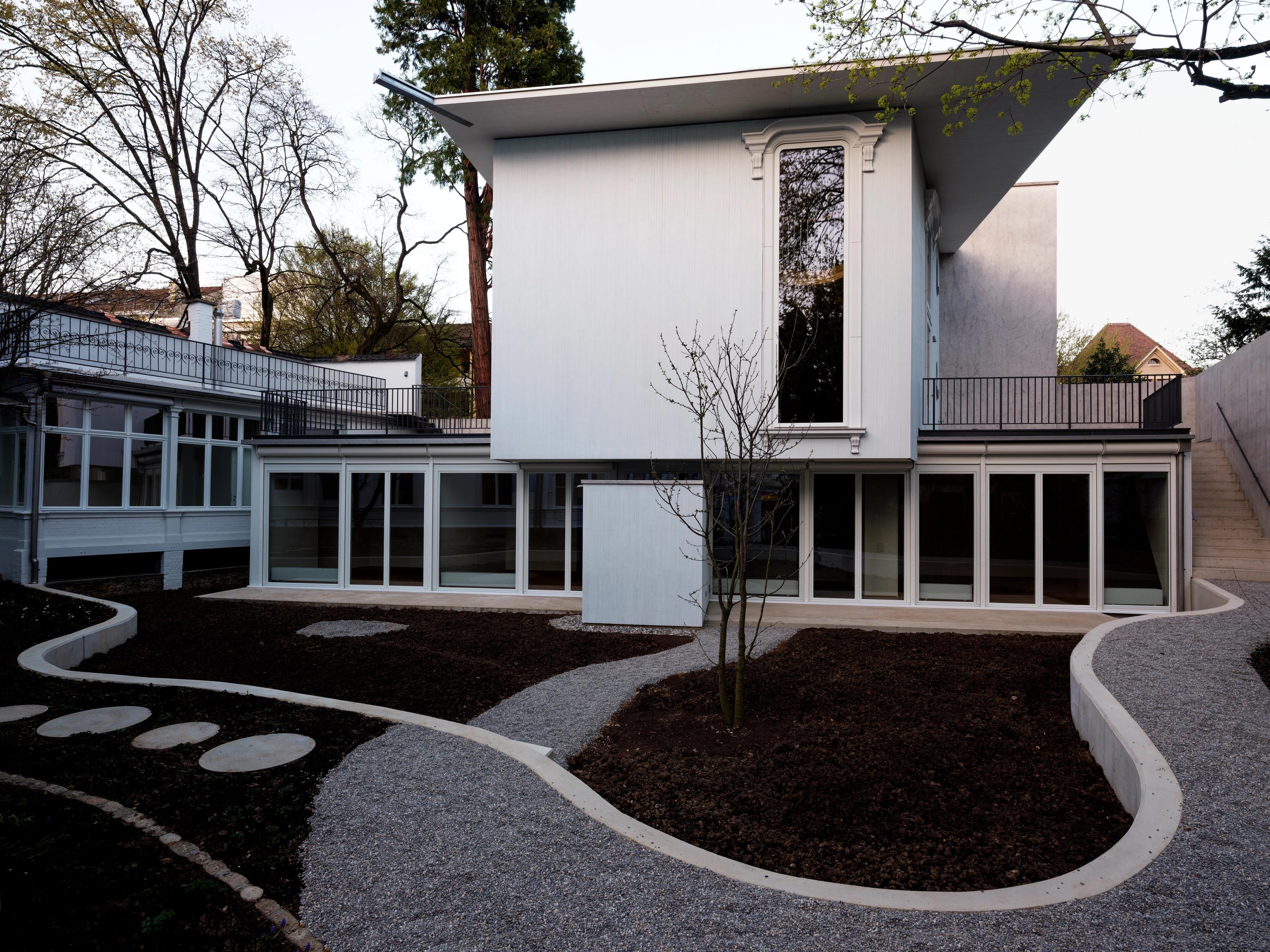
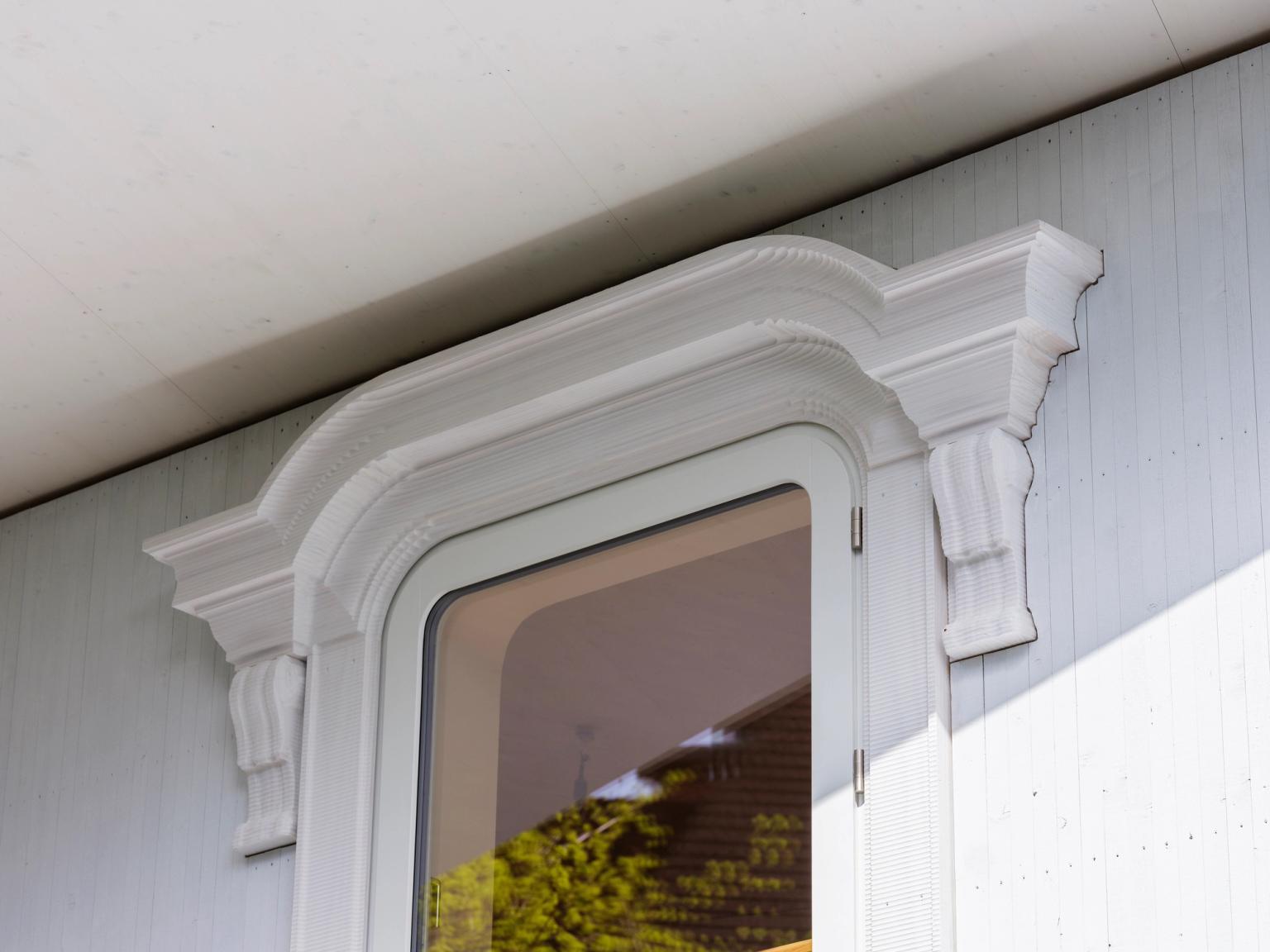
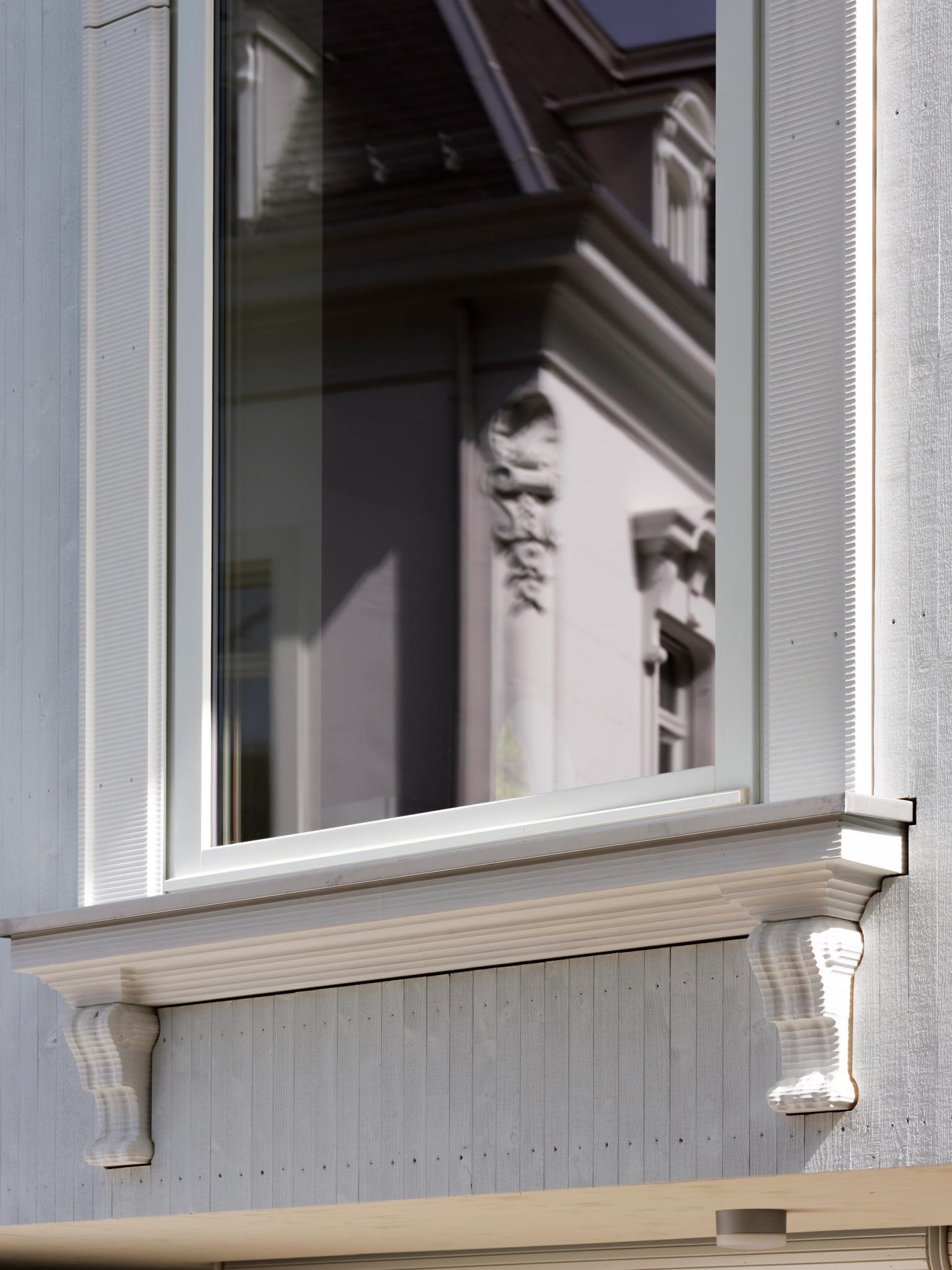
Praksis Arkitekter The new building and the villa engage in a critical dialogue, where the addition both echoes the original and emphasizes its own contemporaneity. The new structure reinterprets traditional forms through contemporary materials and ornaments are updated to a fresh expression using digitally fabrication.

A Neo-Baroque Reset
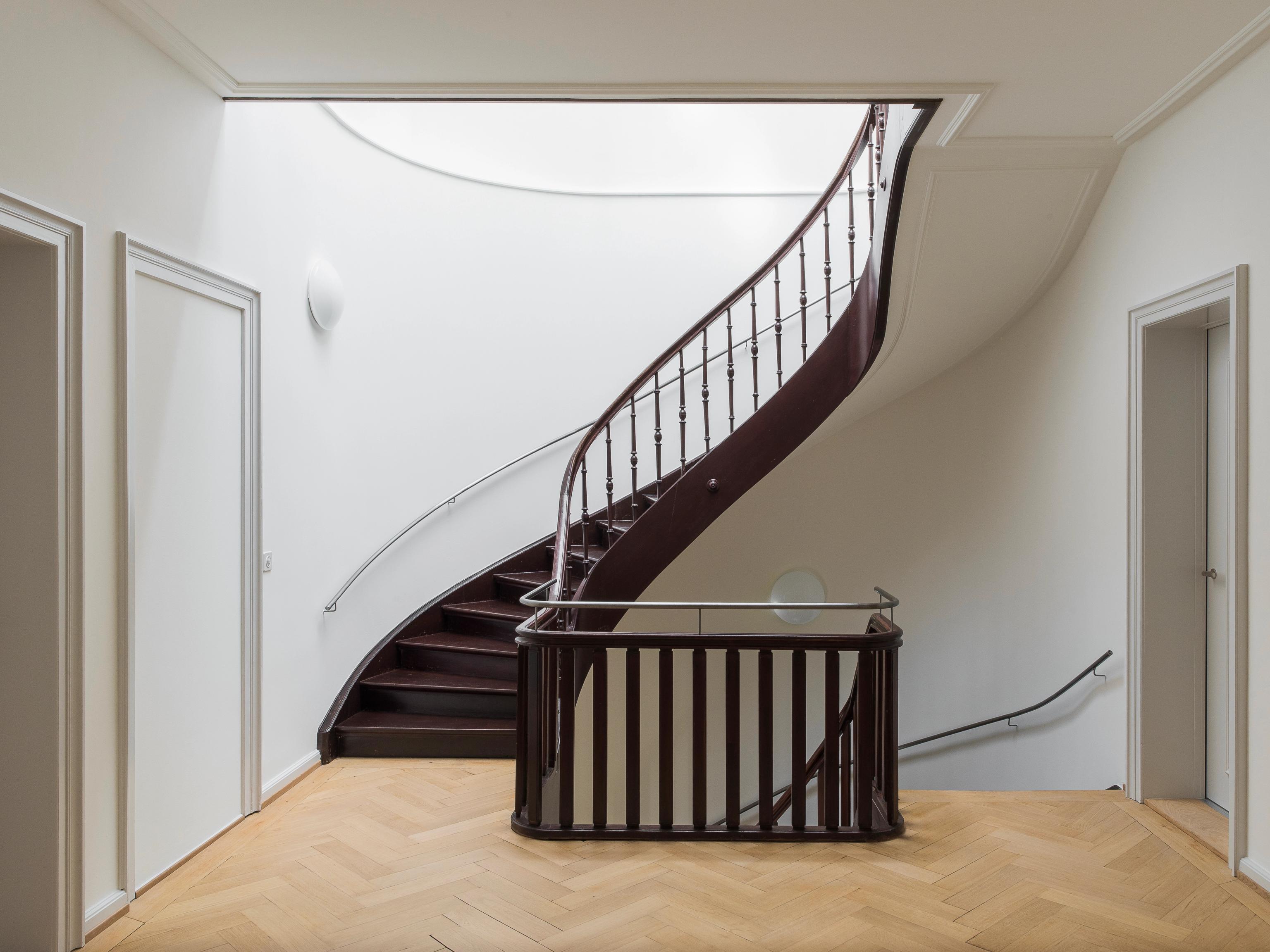
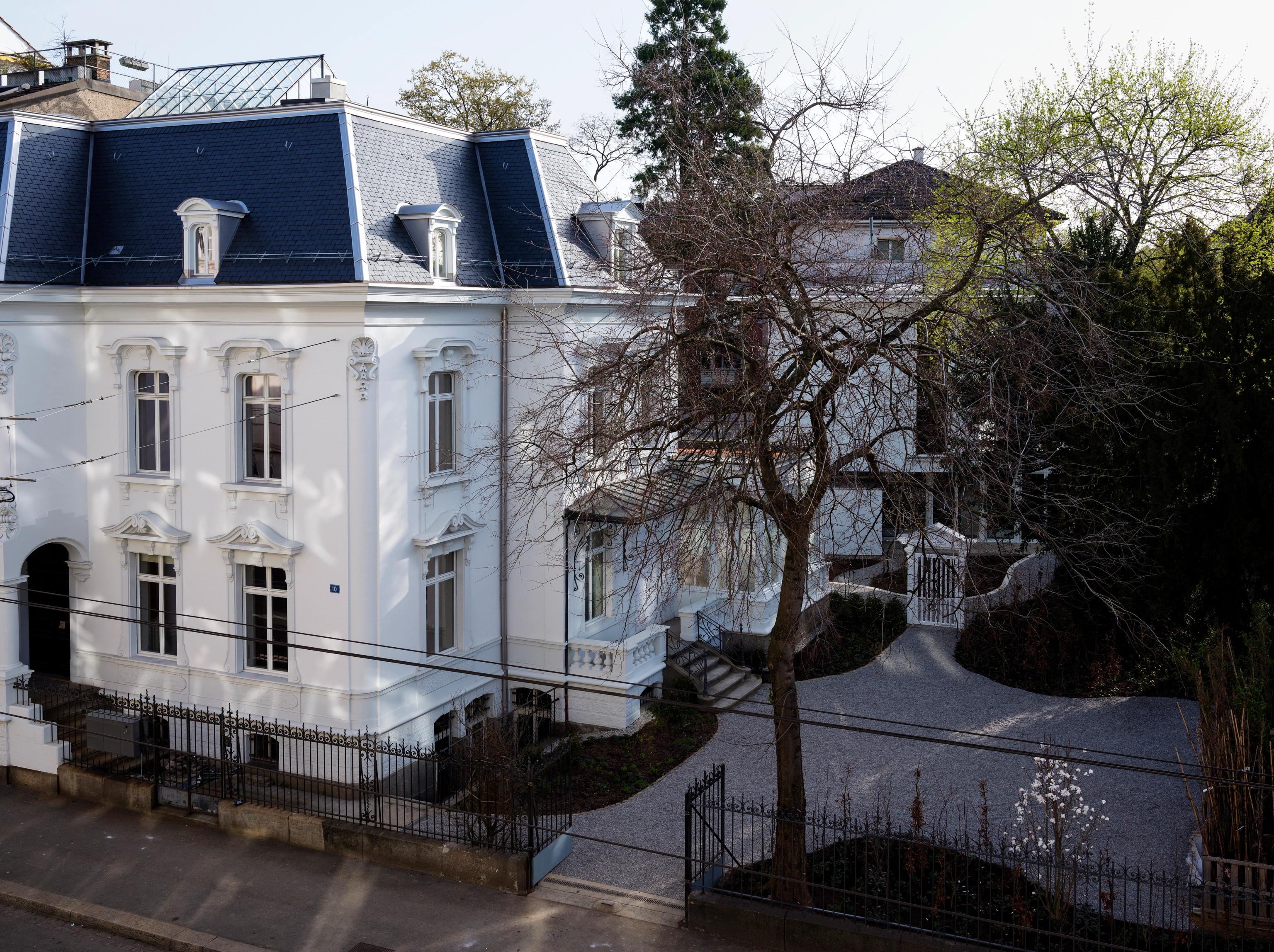
Villa Hammer, originally built in 1895 by Heinrich Flügel in Basel’s Kleinbasel district near Wettstein Square, enters the project already marked by contradiction. It is a listed neo-baroque villa, but also a building that had been left in deep decline after the death of its last owner and several insensitive renovations that erased large parts of its interior logic.

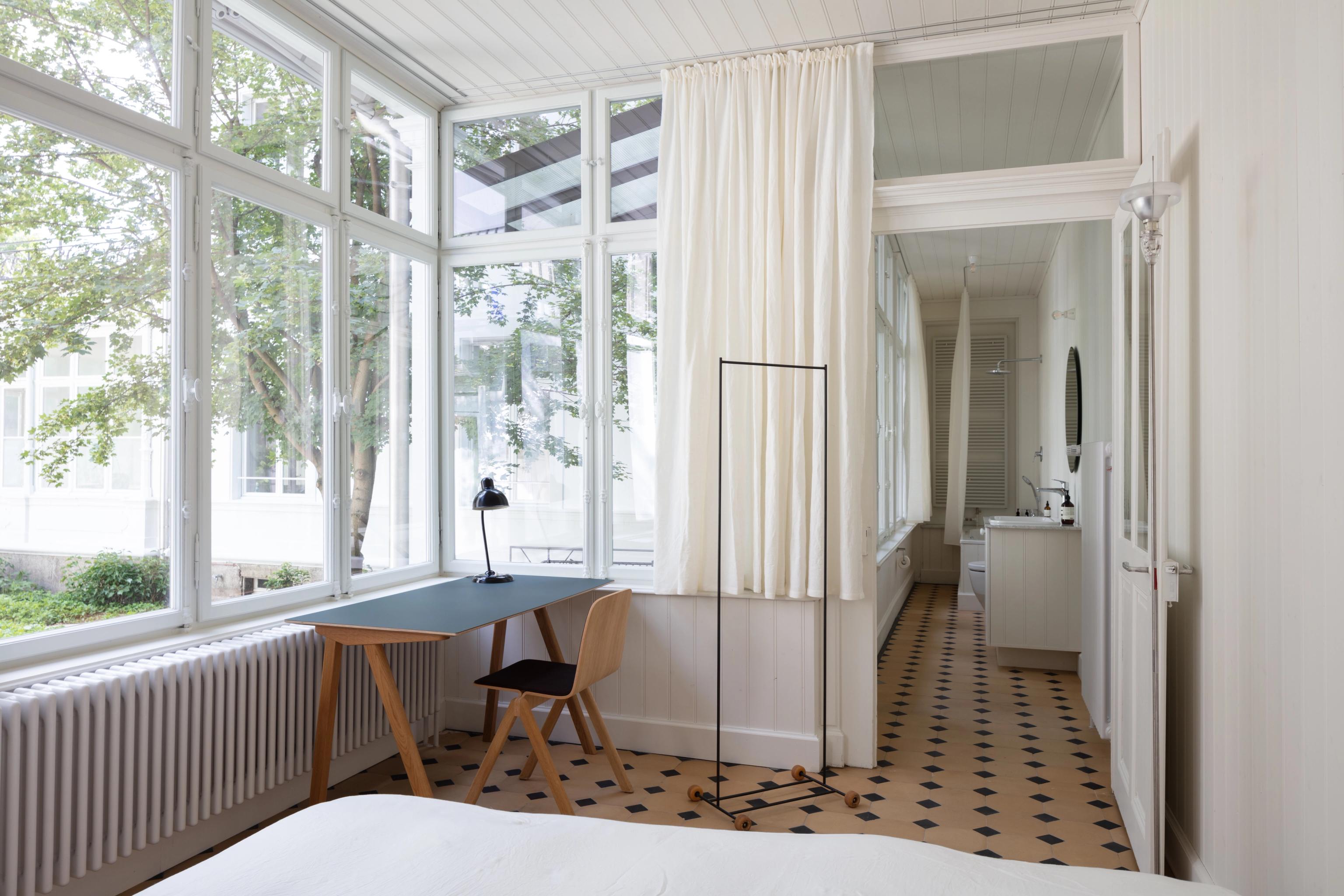
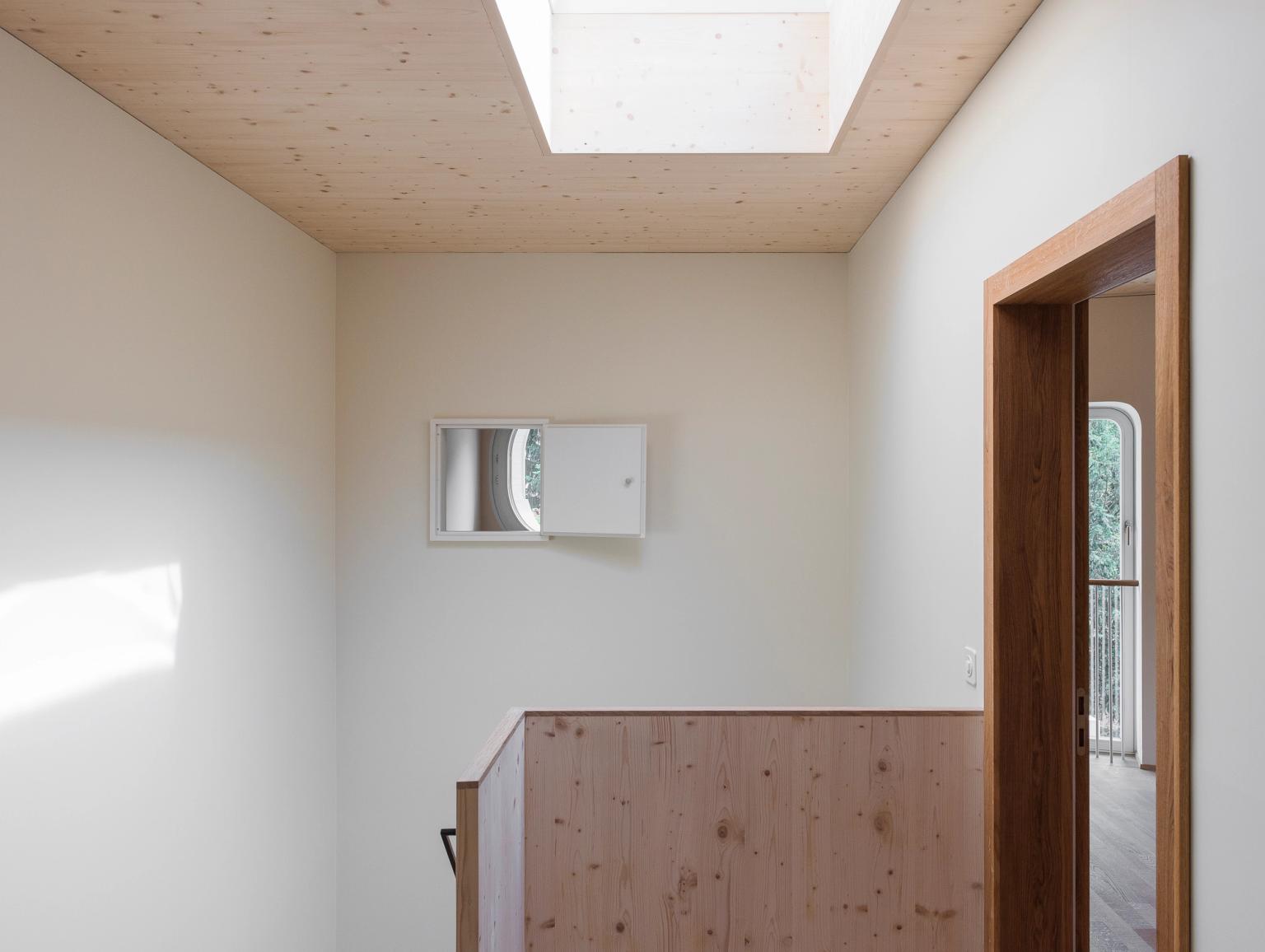
The intervention by Herzog & de Meuron together with Sauter von Moos begins with repair rather than transformation: the original spatial core, an inner hall structure with a light-filled stairwell, is carefully reactivated, and the building is brought back into a readable architectural order. At the same time, it is adapted to a new program as a day-care center, meaning the restoration is not nostalgic, but operational, grounded in everyday use and contemporary standards of comfort, climate, and circulation.

Two Practices, One Continuous Method
The project is shaped through a layered collaboration between two architectural positions rather than a single unified style. Herzog & de Meuron bring a long-standing interest in material translation and formal tension, while Sauter von Moos contribute a precise reading of context, proportion, and typological clarity. What makes Villa Hammer distinct is how these approaches are not separated by program zones or stylistic boundaries, but intertwined across both restoration and extension.


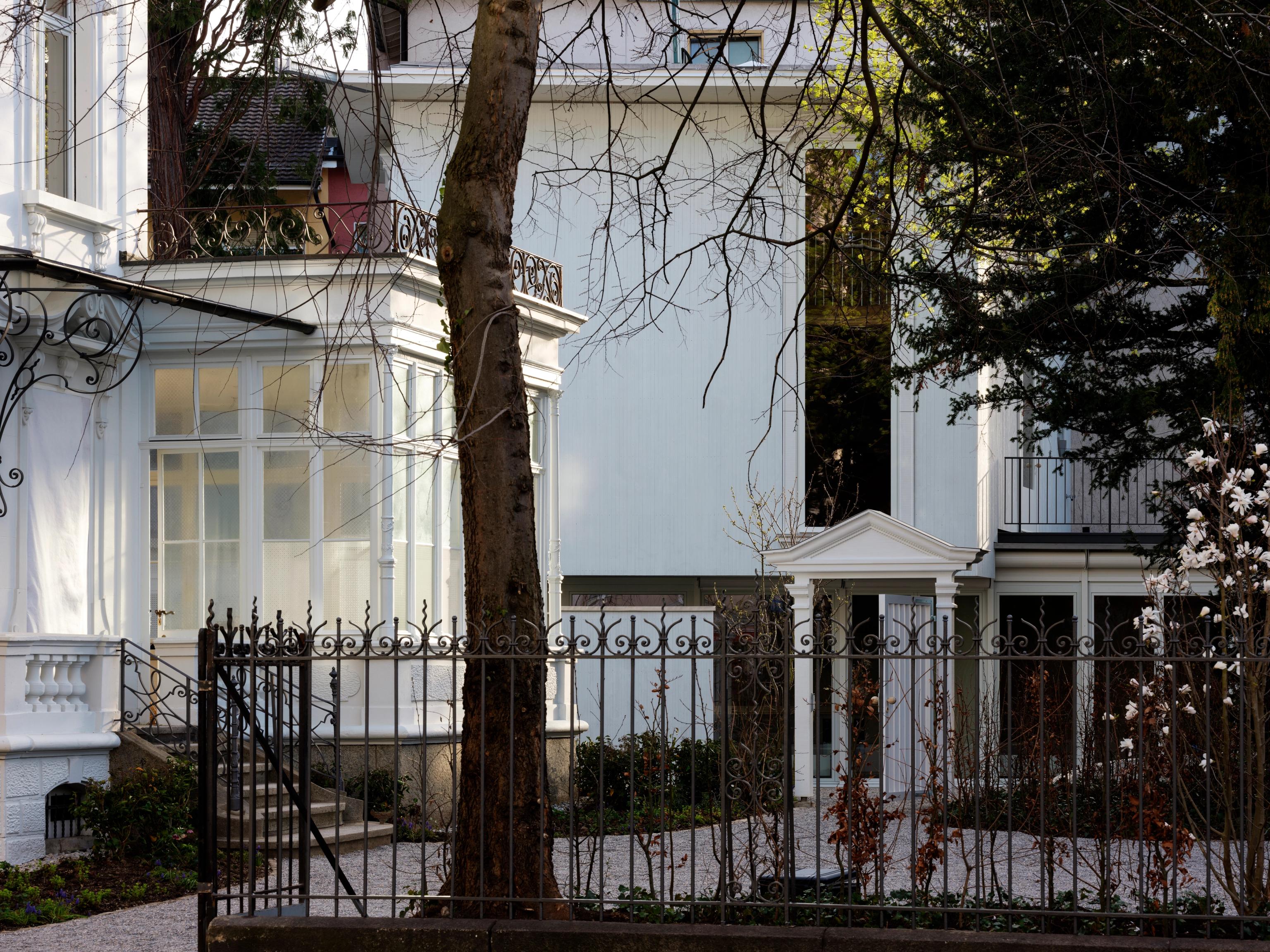
The villa is treated with restraint and historical sensitivity, while the new addition is allowed to test how far contemporary construction can reinterpret classical order without imitation. The result is not a contrast of old versus new, but a controlled overlap where each decision is measured against both historical memory and present-day architectural language.






The Garden as Structural Anchor
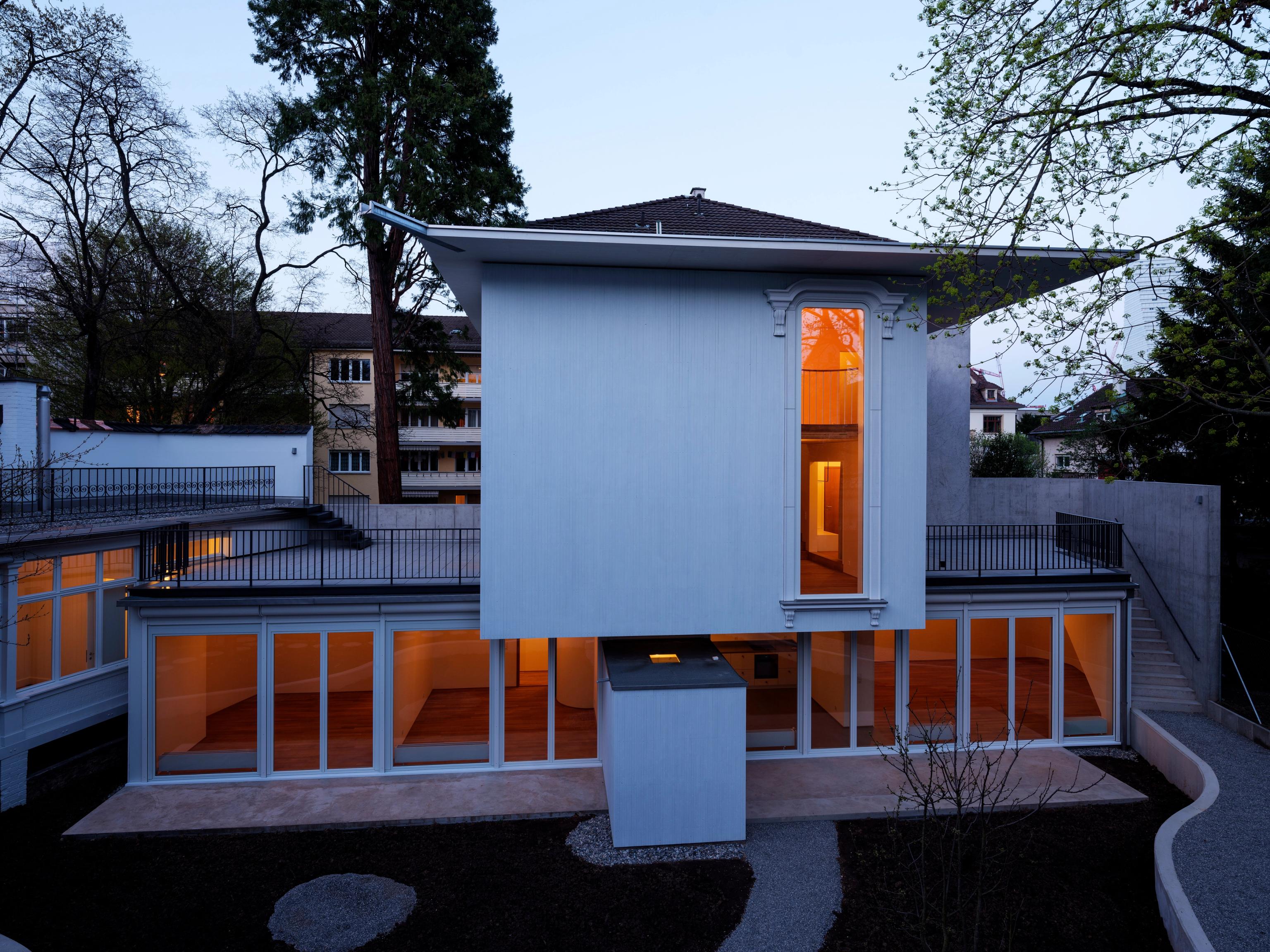
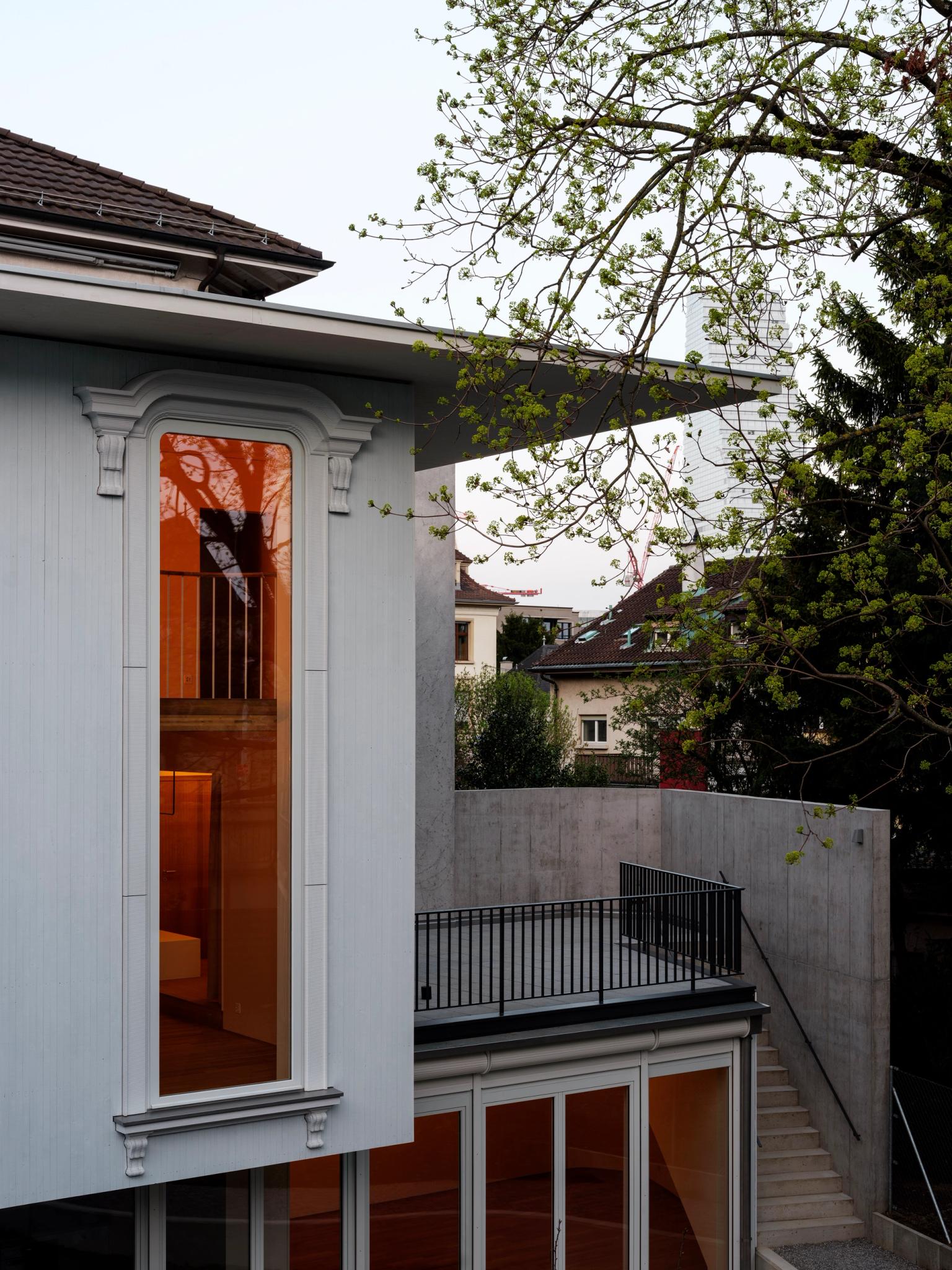
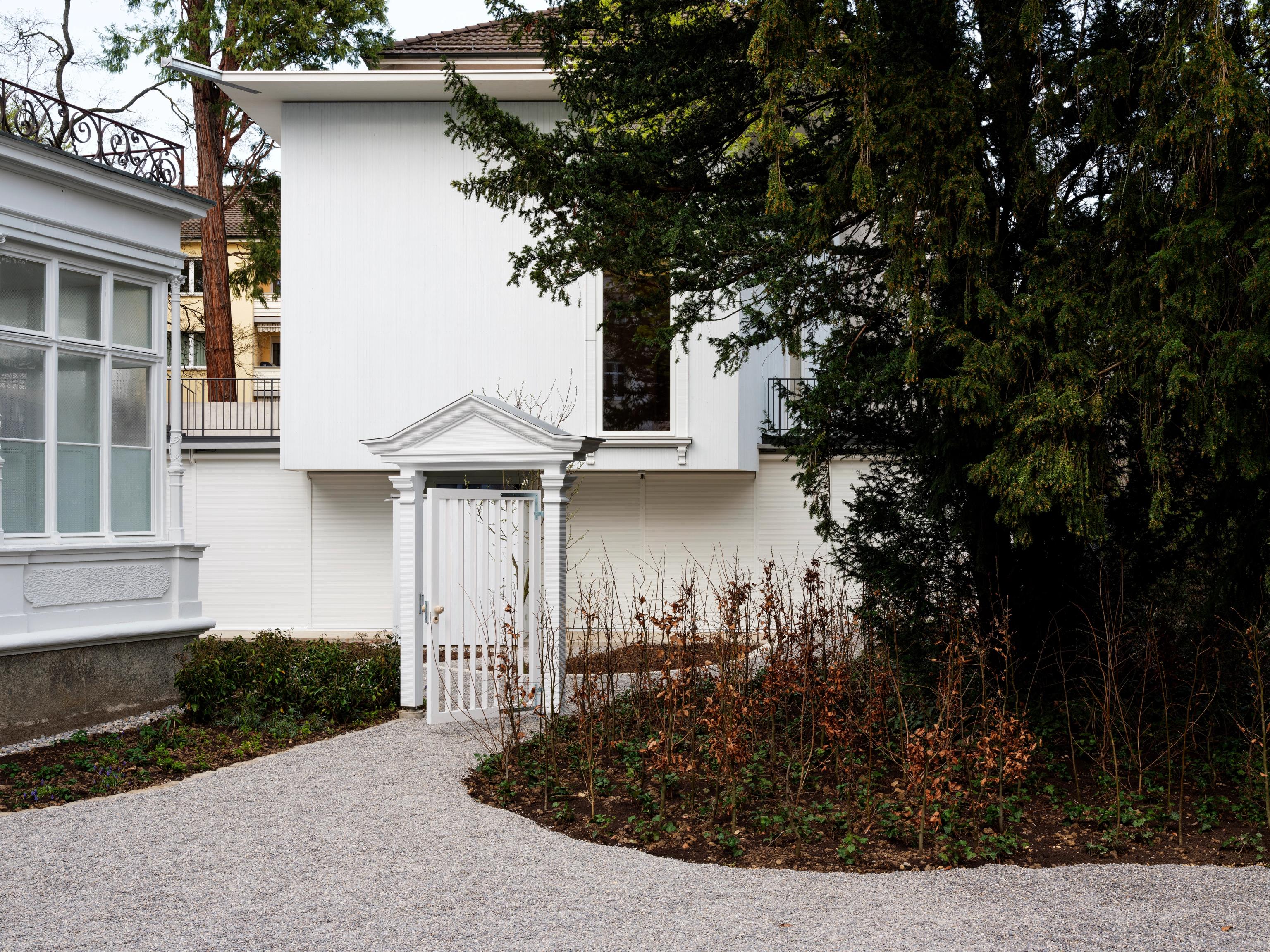
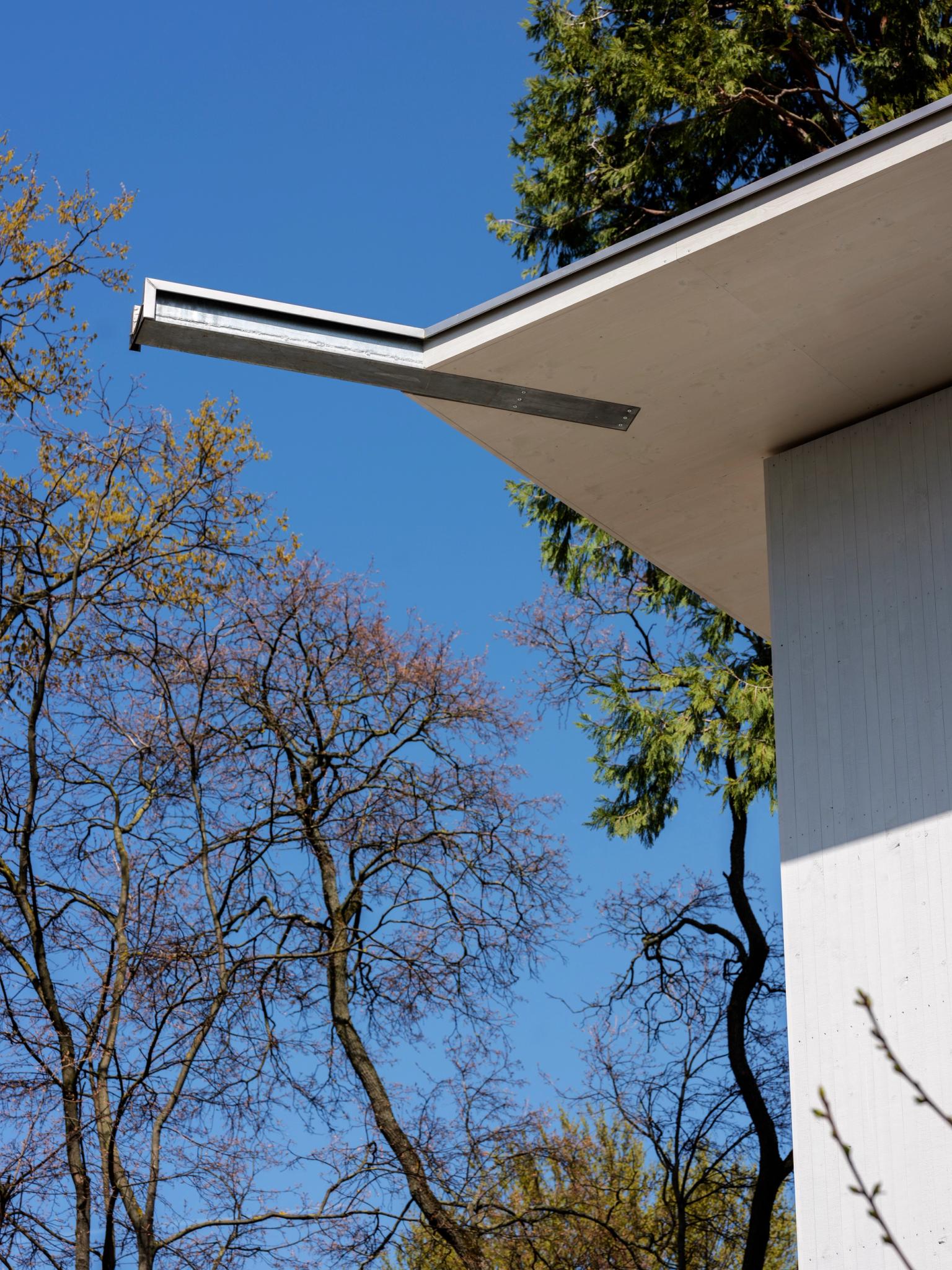
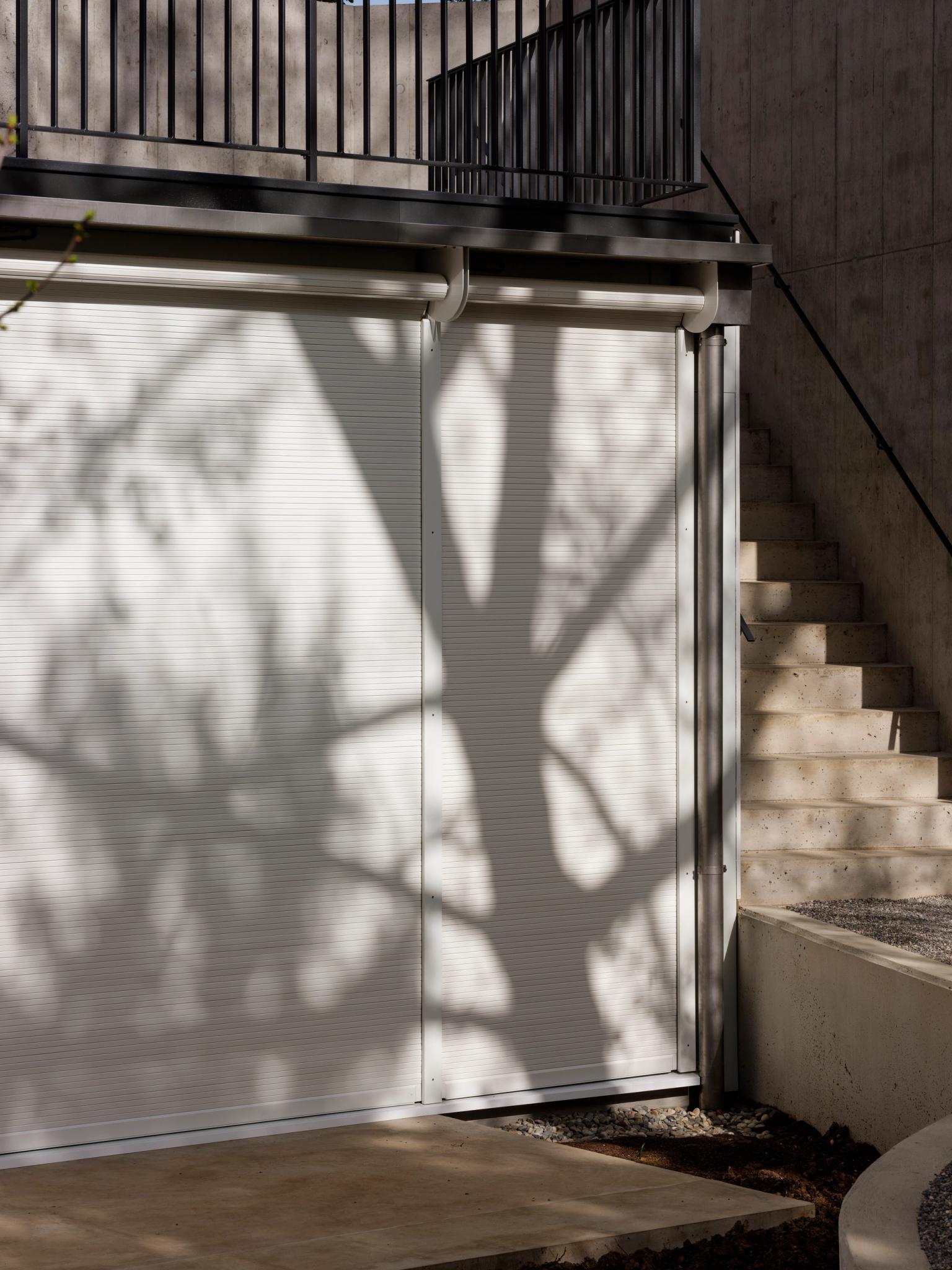
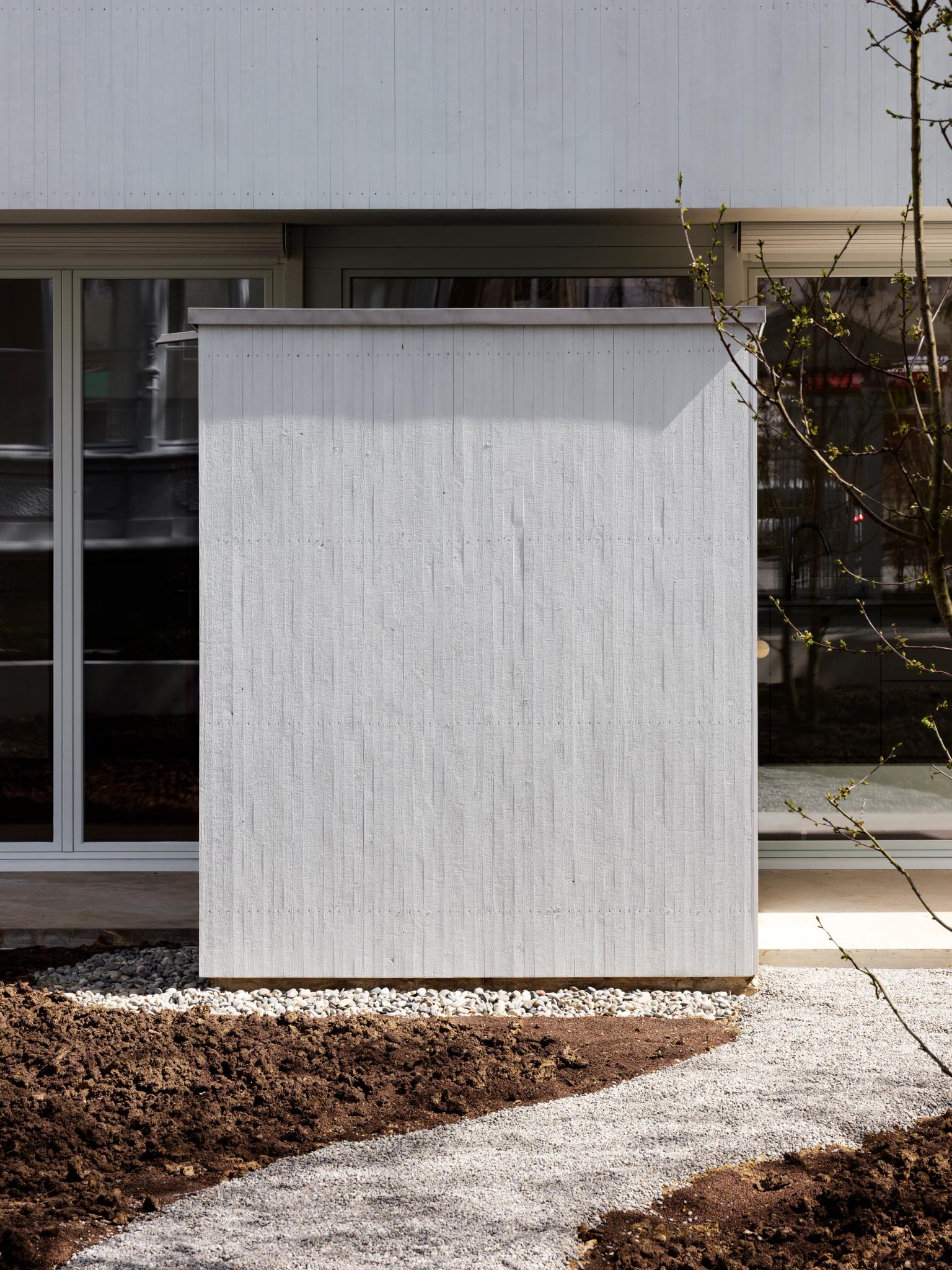
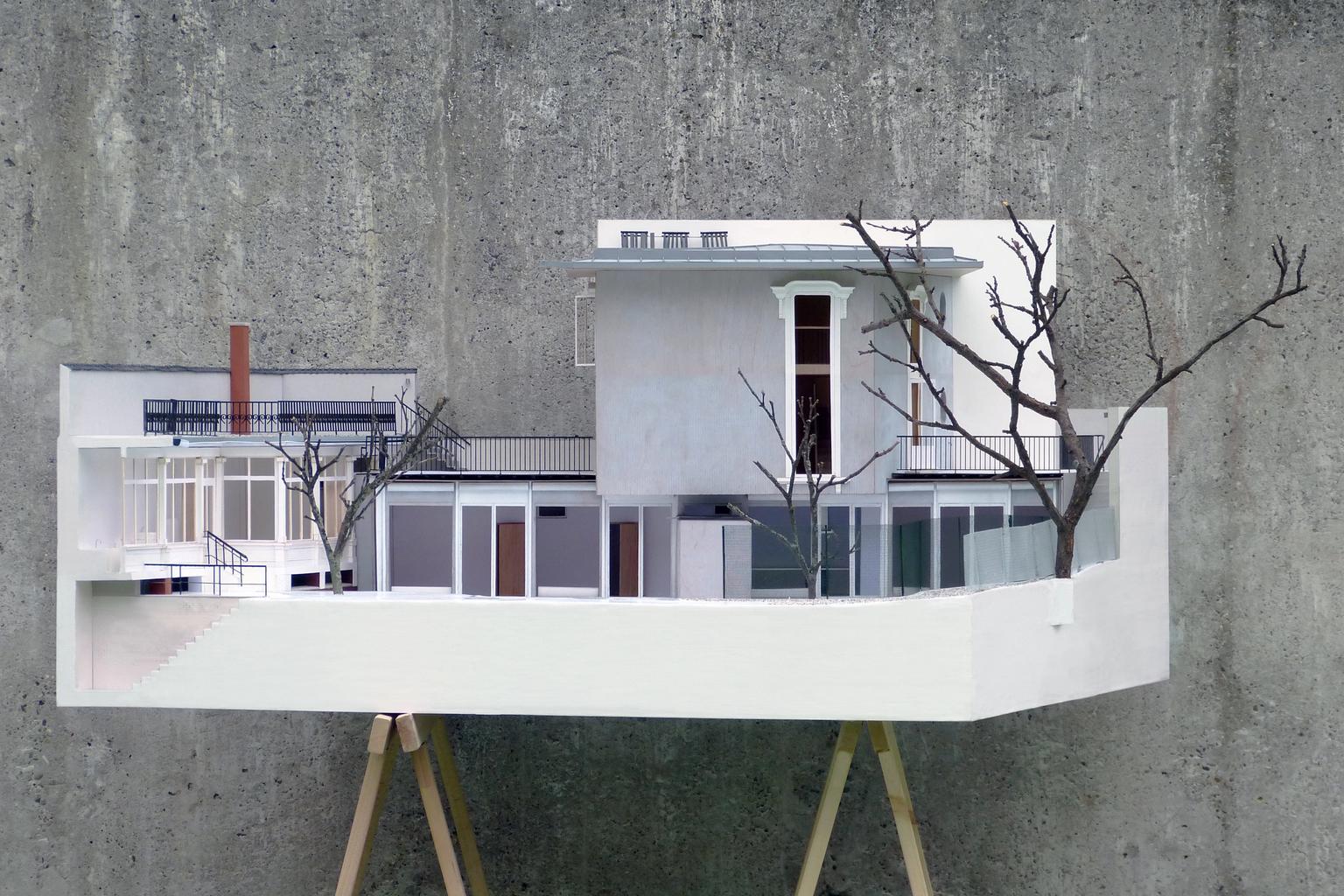
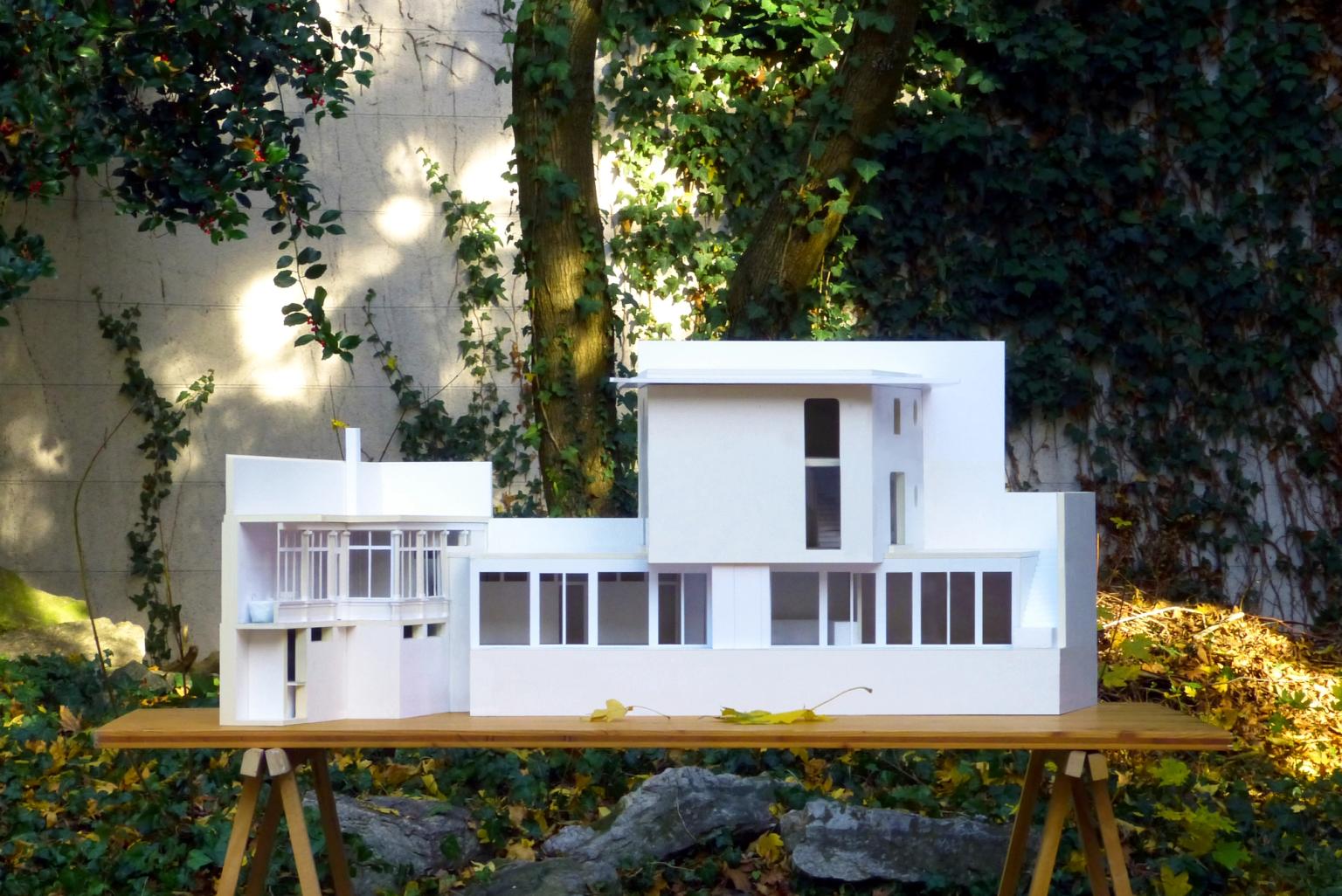
Behind the restored villa, the project opens toward a protected garden that becomes the true spatial center of the ensemble. Rather than treating the extension as an annex, the architects place a new building deep within this landscape condition, allowing the garden to operate as both buffer and mediator between eras. At its core sits a two-storey cubic volume, slightly elevated and covered by a wide, overhanging roof that gives the building a hovering, almost pavilion-like presence. The façade is organized through tall vertical openings that unify the volume while carefully aligning its proportions with the rhythm and scale of the historic villa. A dematerialized base lifts the structure visually, reducing its perceived mass and reinforcing the idea that the new intervention is anchored in the garden rather than imposed upon it.

Interior Organization as Spatial Contrast
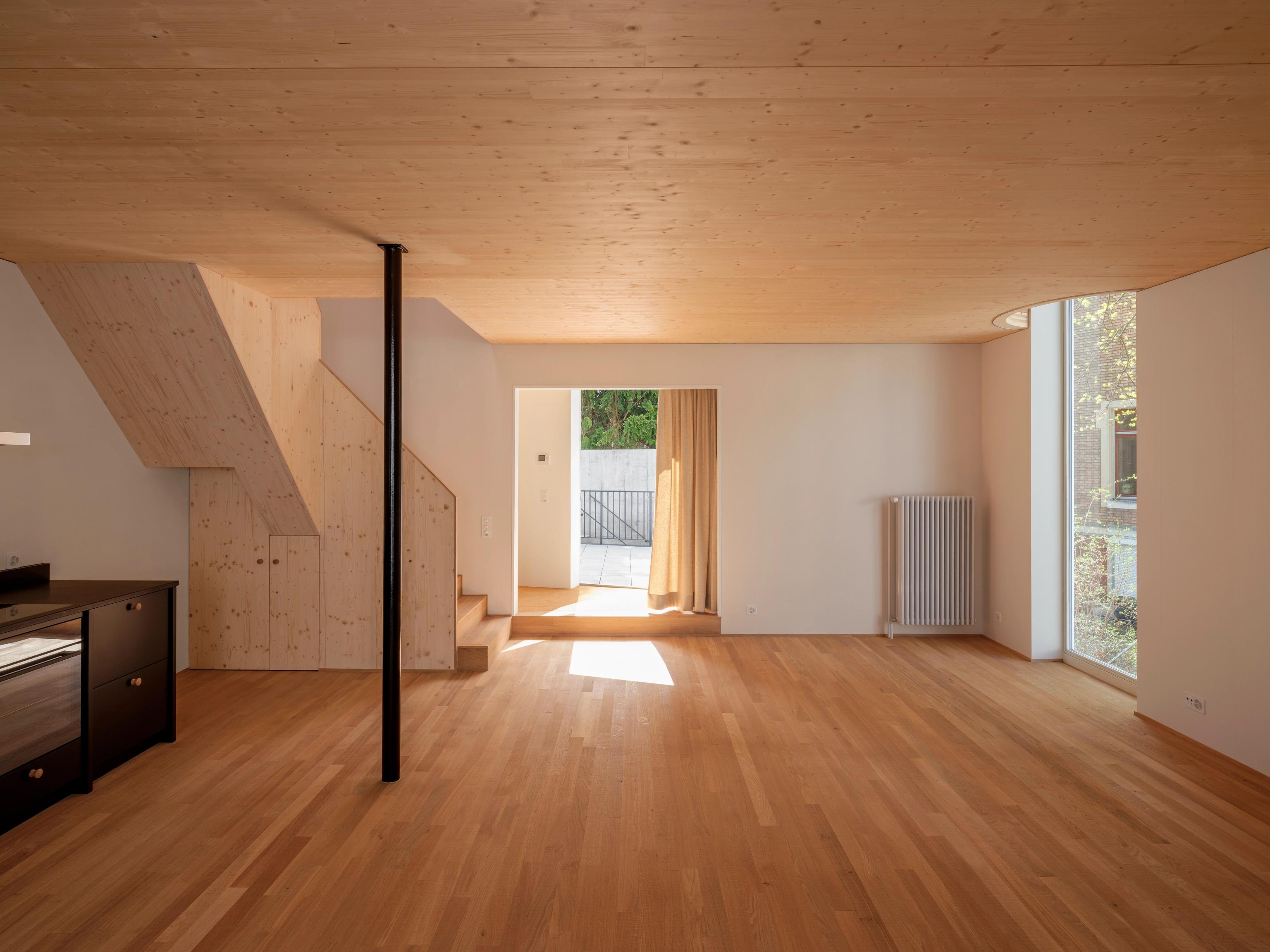
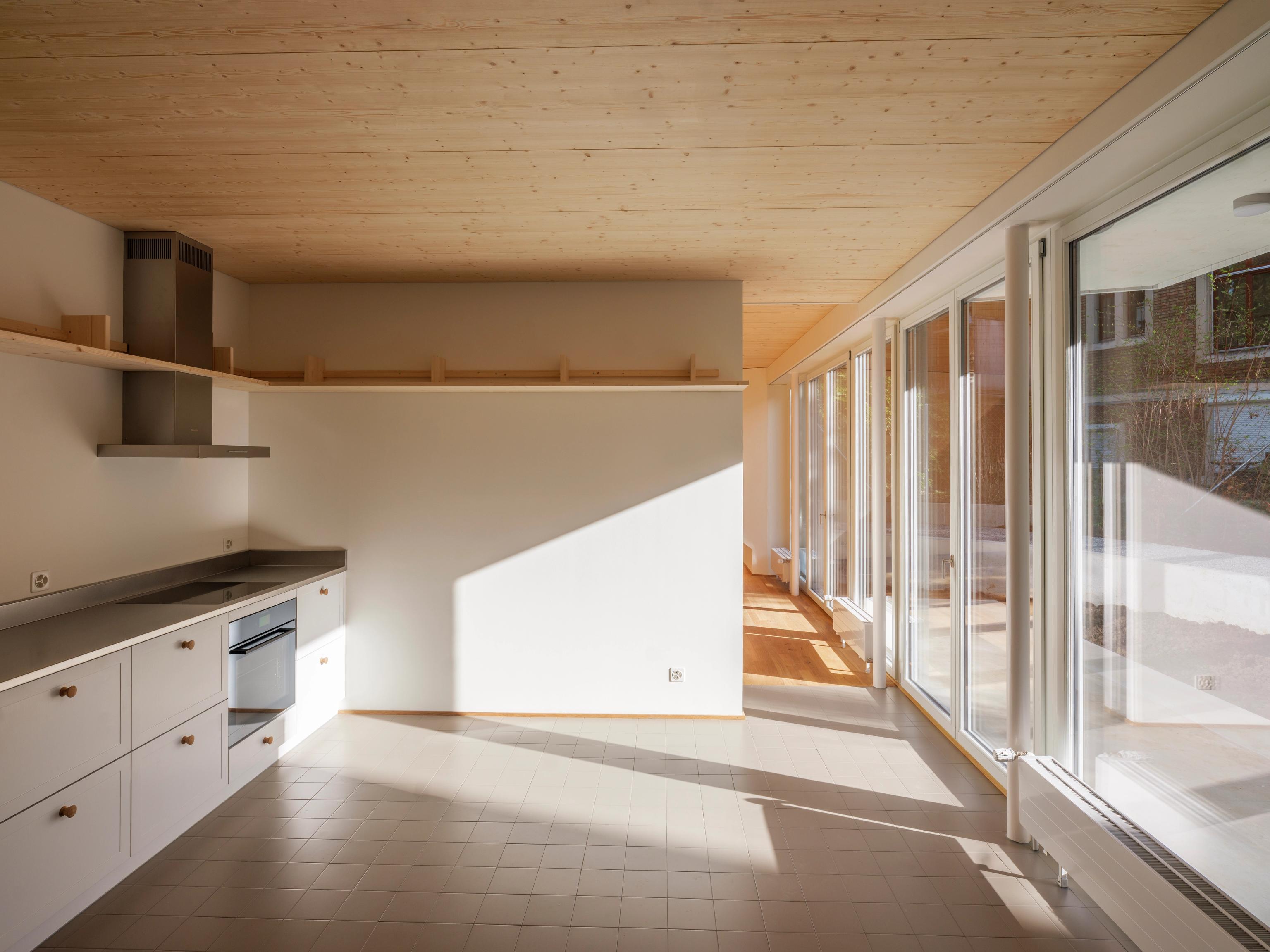
Inside the extension, the architectural logic is driven by a deliberate separation of atmospheres. The ground-floor apartment opens directly toward the garden through a transparent front façade, maximizing daylight penetration and establishing a continuous visual relationship with the exterior landscape. Here, the kitchen becomes the organizing element, structuring circulation and daily routines within a single open field.
Above, the upper apartment shifts dramatically in character: it is more enclosed, surrounded by heavier walls that create privacy and acoustic calm. Yet this apparent compression is counterbalanced by a strong articulation of longitudinal and vertical axes, which extend perception across the compact footprint and prevent the spaces from feeling constrained. The architecture works less through division of rooms and more through controlled spatial depth.

Ornament as Rewritten Technique
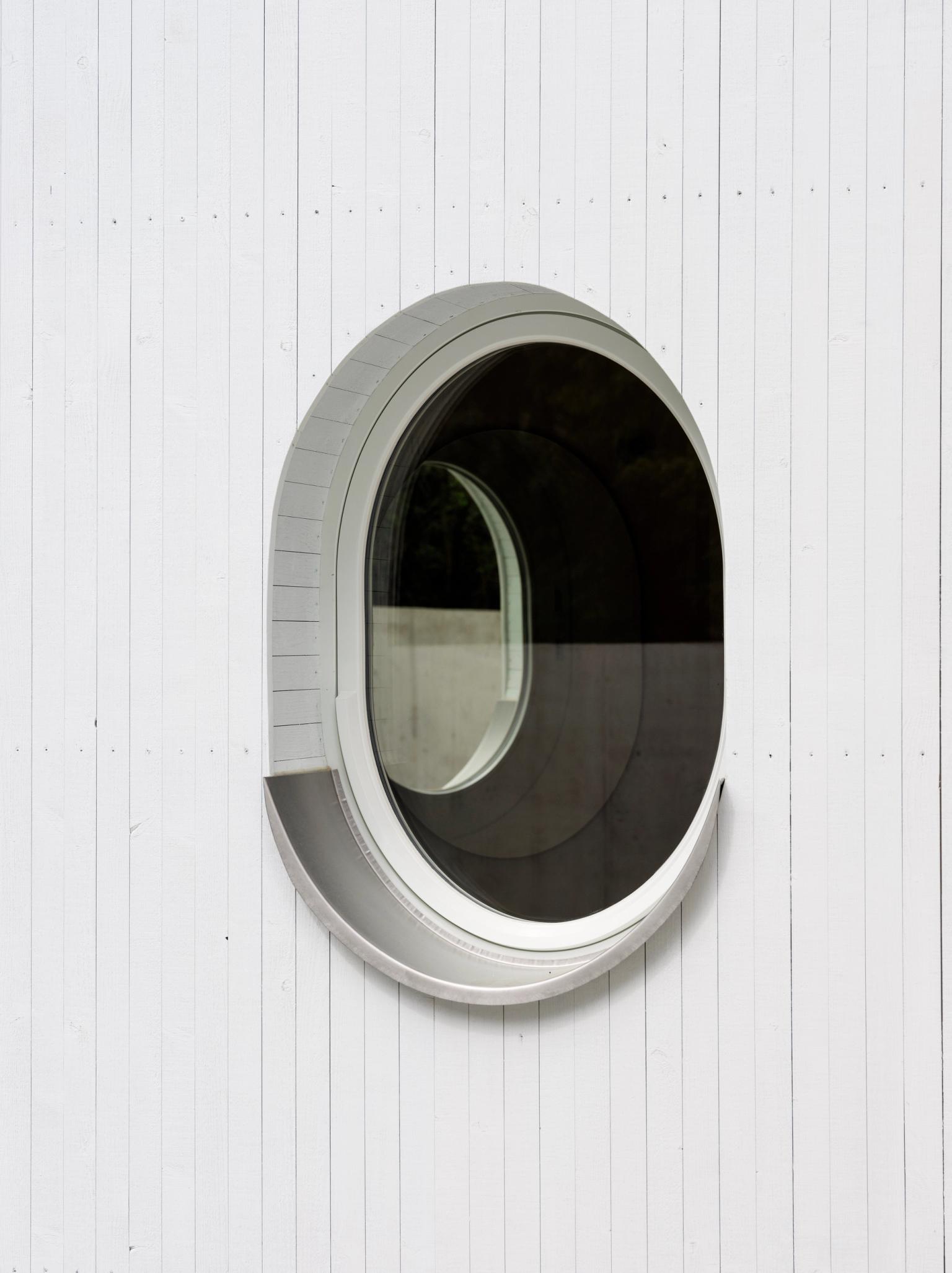
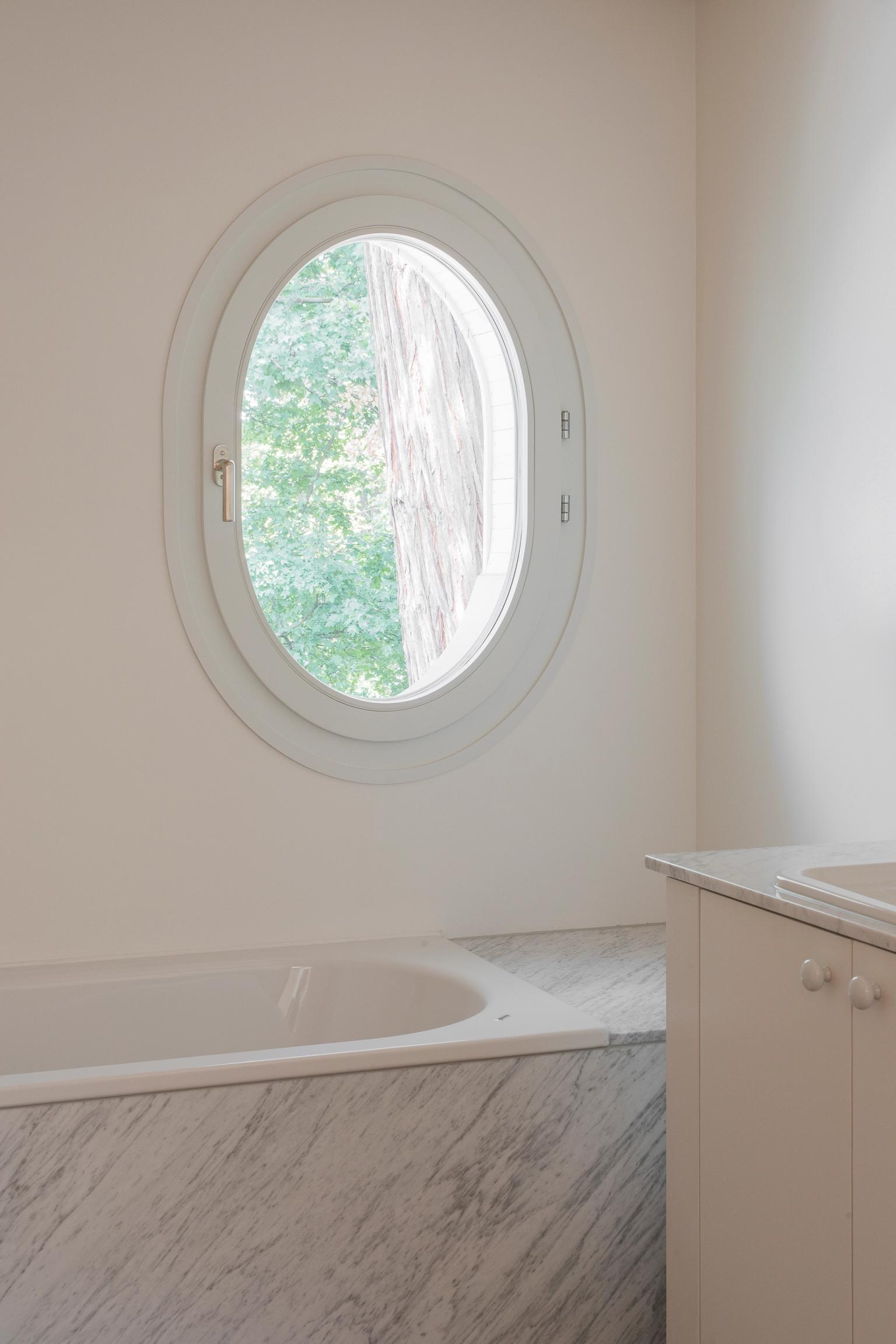
One of the most defining aspects of Villa Hammer lies in how it reinterprets architectural ornament as a technological rather than purely decorative act. Elements that historically would have been carved in stone are here reimagined in lighter wood and steel, produced through digital fabrication methods that allow for precision while still referencing craft-based traditions. Window frames and façade details become sites of translation, where classical proportions are maintained but material expression is fundamentally shifted. What once belonged to the language of masonry is re-coded through CNC processes, creating a subtle tension between hand-crafted memory and industrial accuracy. This approach does not reject historical reference; instead, it repositions it within contemporary production logic.


A Controlled Dialogue Between Eras
The ensemble of villa and extension is ultimately defined by a carefully calibrated relationship rather than a unified aesthetic. The old building retains its identity as a solid, historically grounded structure, while the new intervention introduces a lighter, more abstract architectural vocabulary. Together they form what can be understood as a critical dialogue: the villa represents continuity, while the extension represents reinterpretation. Classical ideas of centrality and order are present, but they are re-expressed through contemporary construction systems and spatial openness. In this sense, Villa Hammer does not resolve the tension between preservation and innovation, it holds it in place, allowing both to remain legible within the same architectural field.