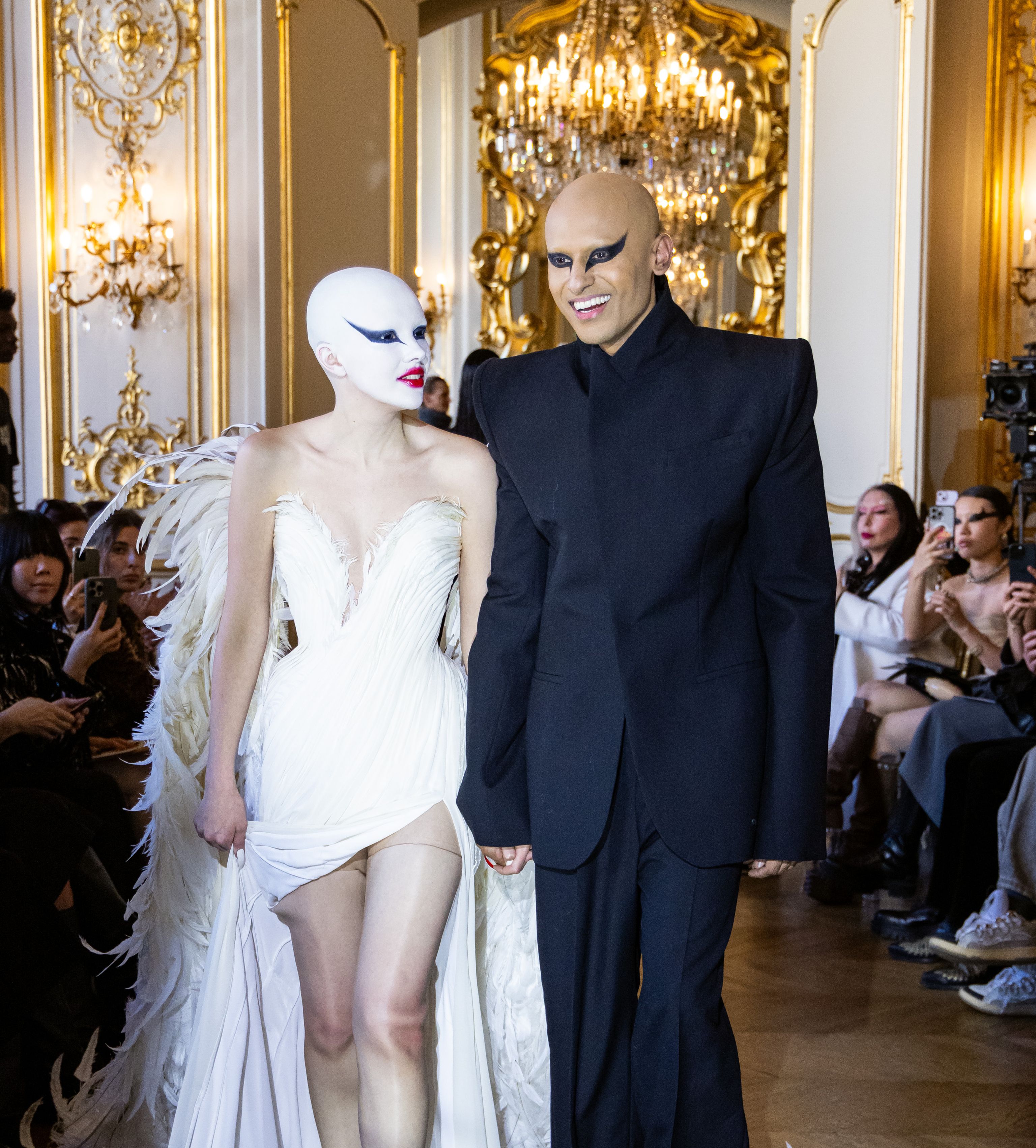

Matières Fécales’ Autumn/Winter 2025 Debut Collection
THE OTHER
- Creative Director and DesignerHannah Rose Dalton and Steven Raj Bhaskaran
- PhotographerCourtesy of Matières Fécales
Kristoffer Alexander Holtermann Hannah Rose Dalton and Steven Raj Bhaskaran have been building one of the most genuinely alien visual worlds in fashion for years, long before the industry took note. Their debut at Paris Fashion Week drew such a following they had to do two shows. Rick Owens and Michèle Lamy were there. The shoes they make are prosthetic, otherworldly, structurally impossible-looking. What moves me is that none of it is a pose. The world they live in and the world they design are the same world. That’s the only version of authenticity that holds up.

Fearless Becoming
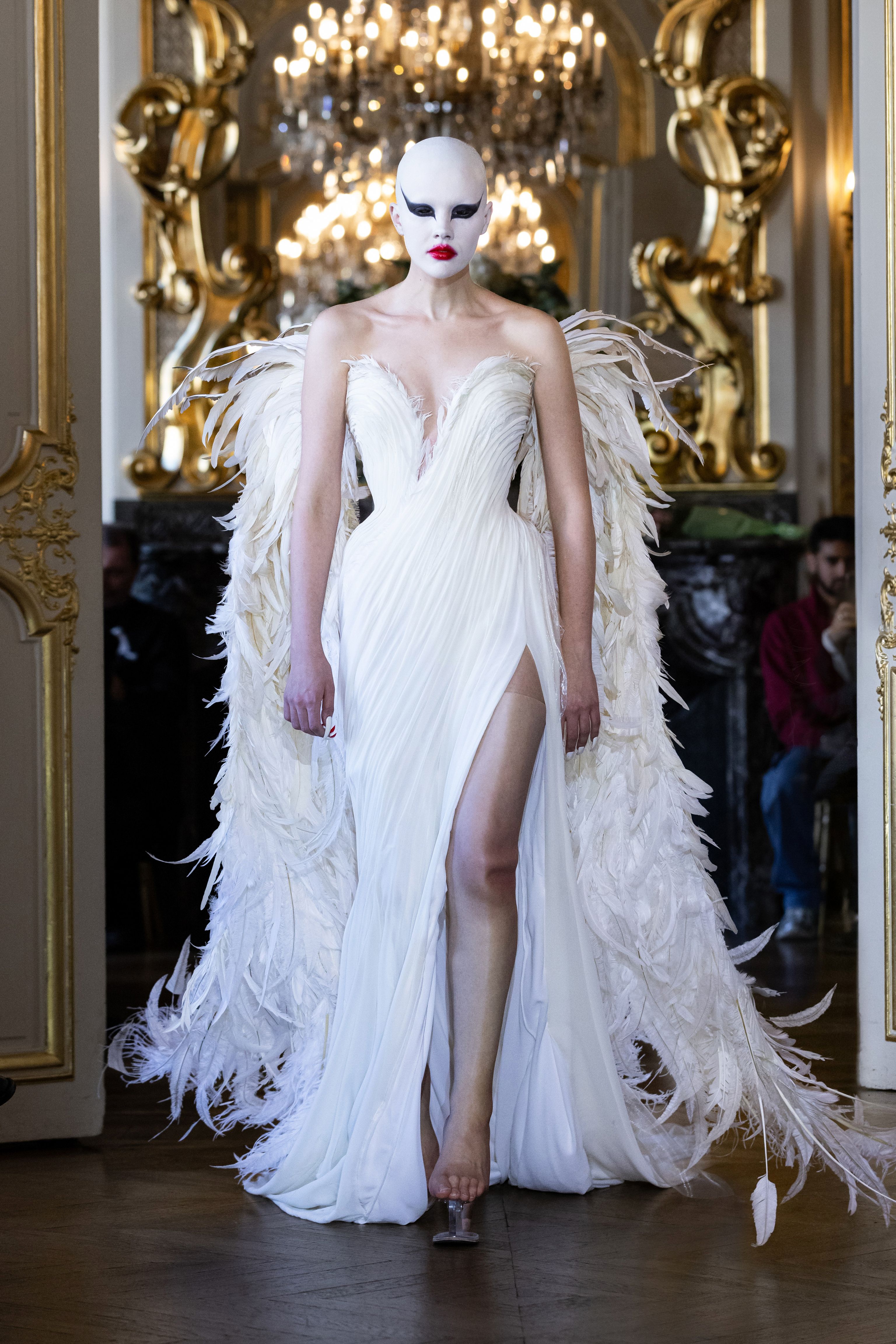
Matières Fécales’ Autumn/Winter 2025 debut collection, THE OTHER, arrived at Paris Fashion Week like a challenge to the fashion system itself. Presented inside the gilded salons of Hôtel Le Marois, the show placed post-human beauty and radical self-expression directly against the backdrop of old Parisian luxury. The contrast was intentional. Hannah Rose Dalton and Steven Raj Bhaskaran, the Montréal-based duo behind the label, have built their entire universe around questioning who fashion is made for, who gets accepted into it, and why individuality is so often flattened into trends.
THE OTHER became their answer to that tension. The collection opened with the statement: “This collection is about being fearless in your identity.” That idea ran through every silhouette, every prosthetic, every exaggerated shoulder, and every impossibly high heel. Rather than asking for acceptance, the collection moved with complete confidence in its own existence. It wasn’t about dressing to fit in. It was about dressing as transformation.


The World of Matières Fécales
Before launching the label formally, Dalton and Bhaskaran spent nearly a decade building a cult following online under the name Fecal Matter. Long before fashion embraced alien beauty, facial prosthetics, or post-human styling, the pair were already living it publicly every day. Their appearance, shaved brows, sculpted skin, surreal silhouettes, exaggerated body modifications, was never created as shock value. For them, it was always connected to survival, freedom, and identity. Both have spoken openly about feeling disconnected from traditional ideas of femininity, masculinity, and beauty while growing up.
Bhaskaran, who was raised Mormon, described feeling like “The Other” his entire life, while Dalton has talked about unlearning rigid expectations surrounding womanhood and femininity. Their work became a way to build a visual language for people who never saw themselves reflected anywhere else. That history matters when looking at the collection, because THE OTHER does not feel like costume design or performance styling disconnected from reality. It feels deeply personal. Every garment carries the weight of people who spent years teaching themselves how to exist visibly in a world that often wanted them invisible.


Distortion as Elegance
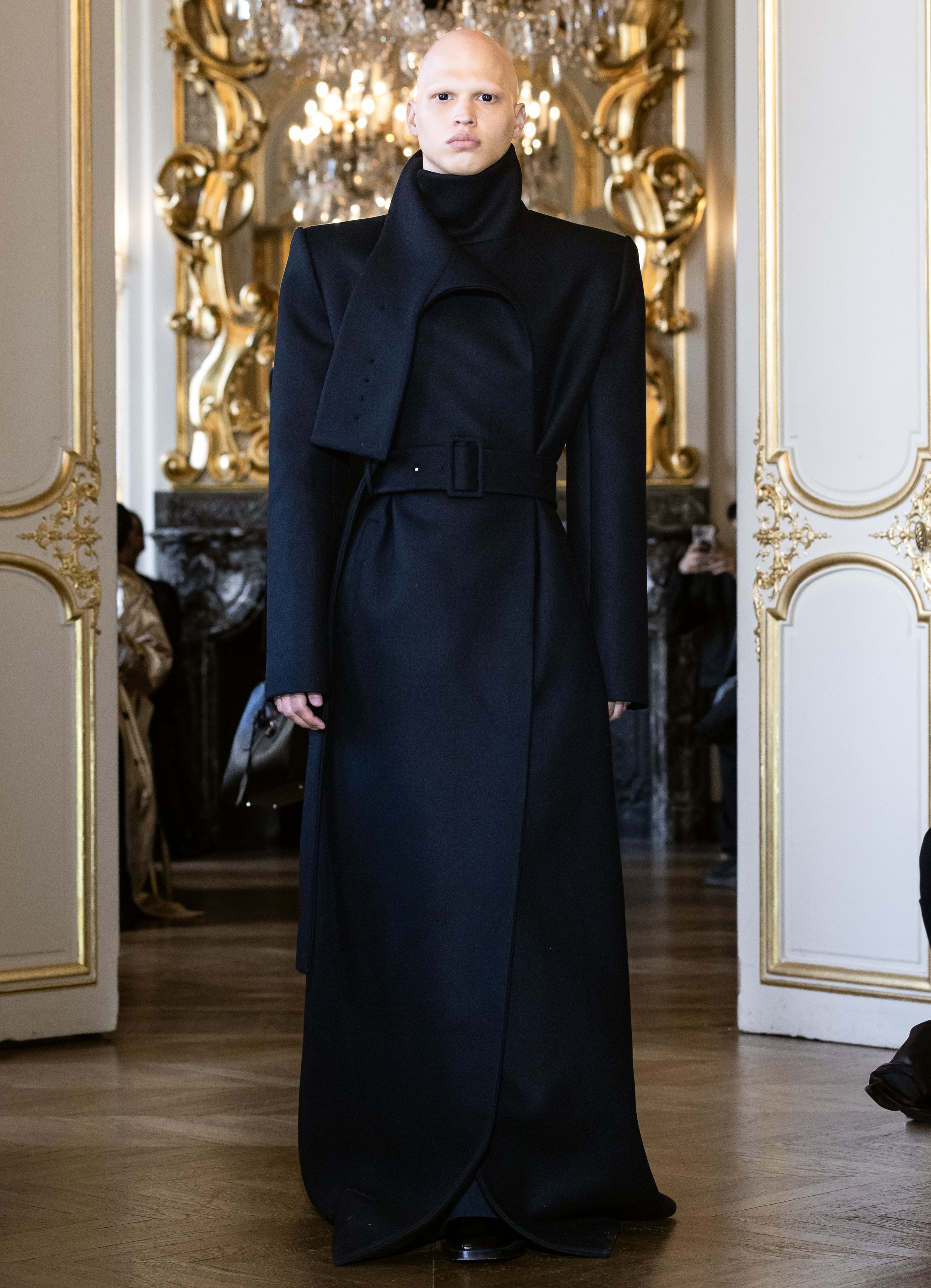
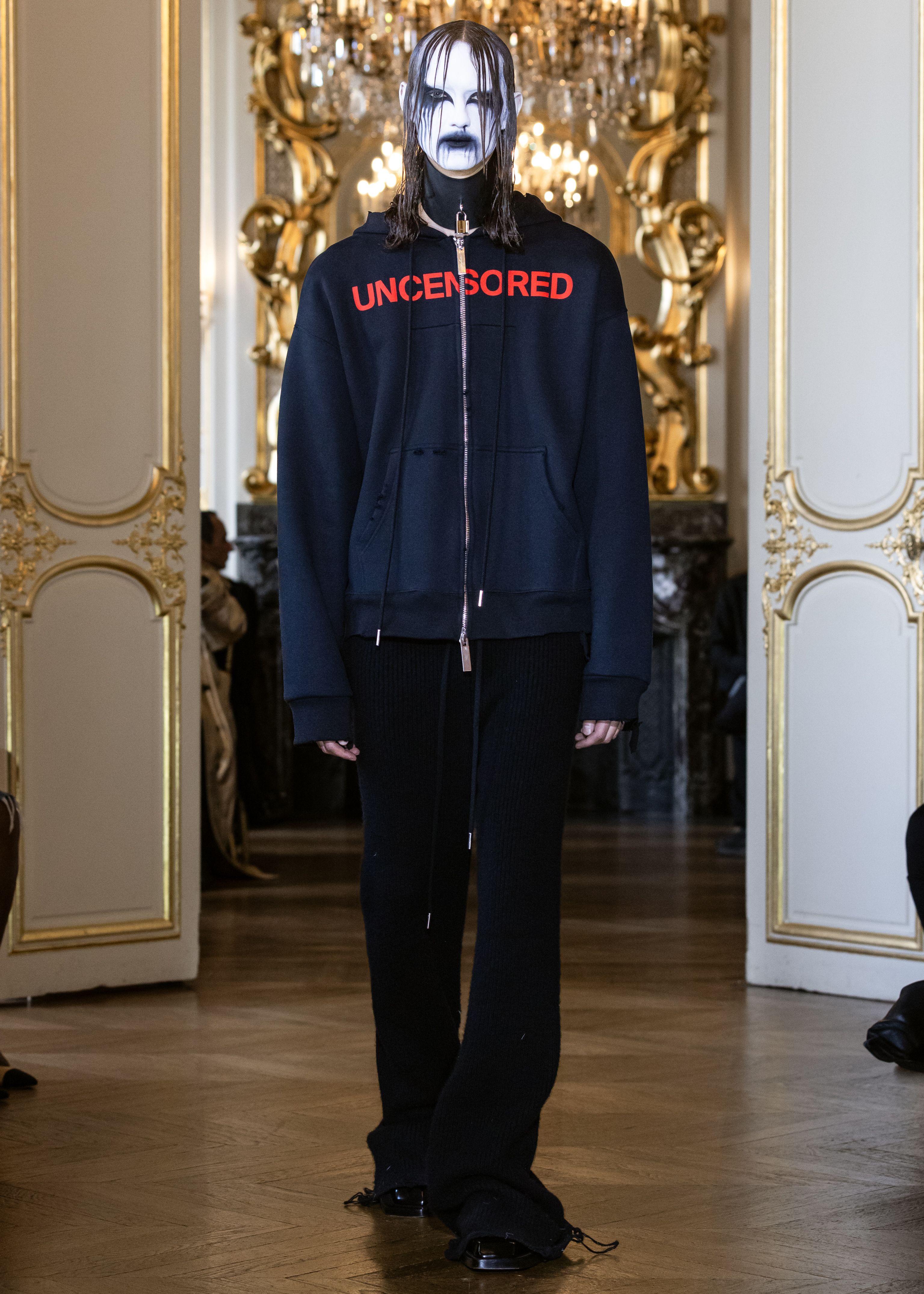
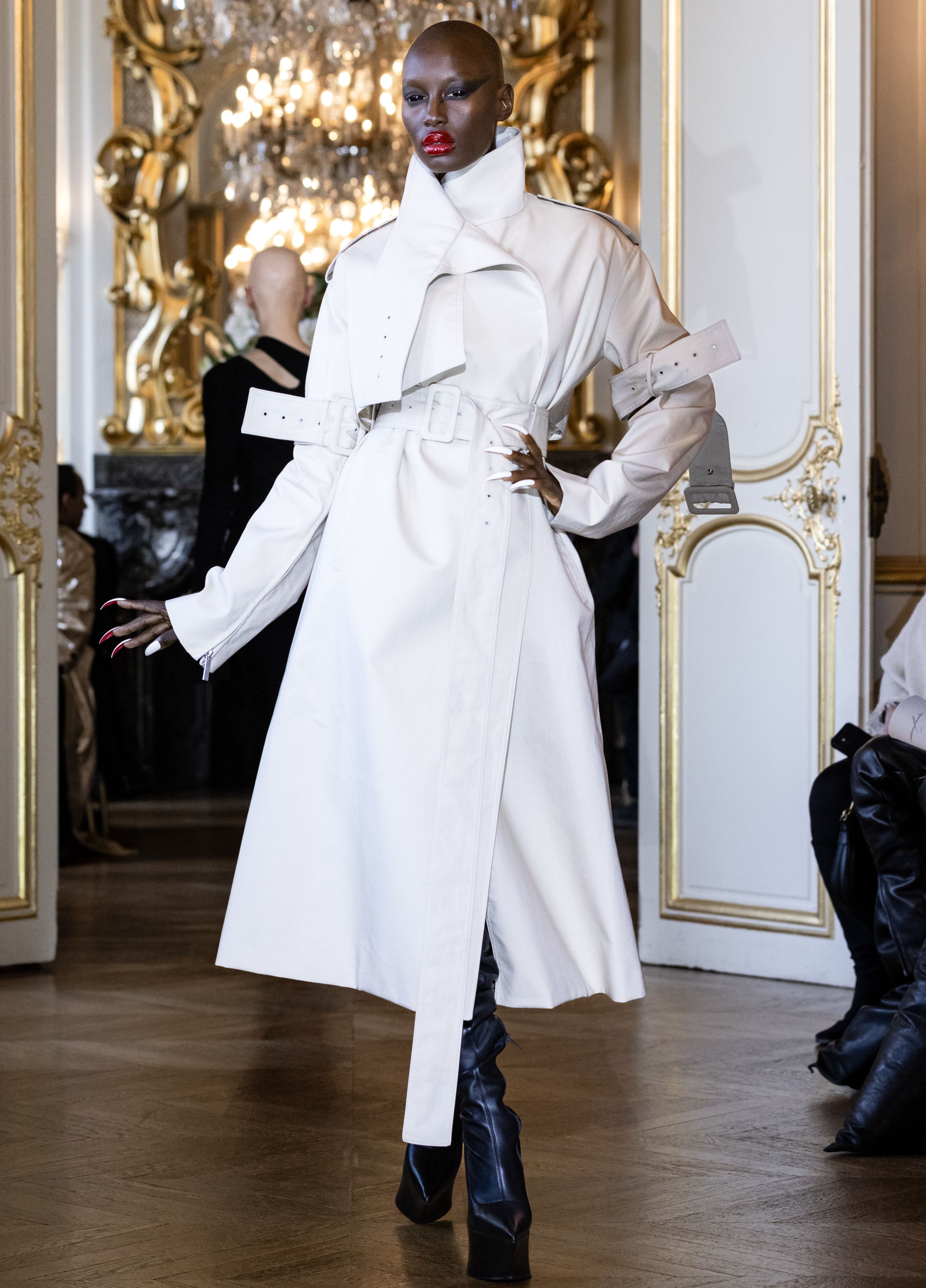
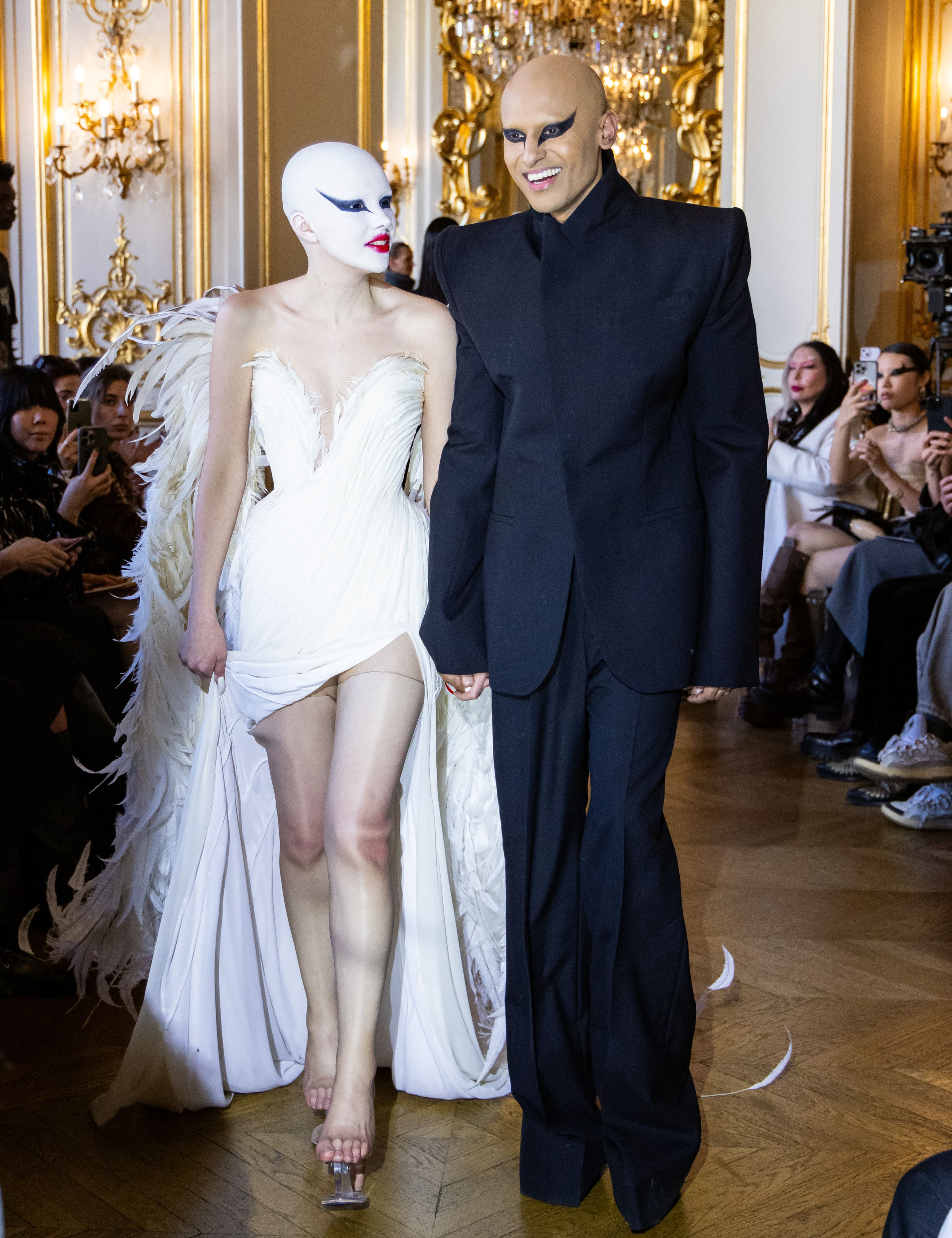
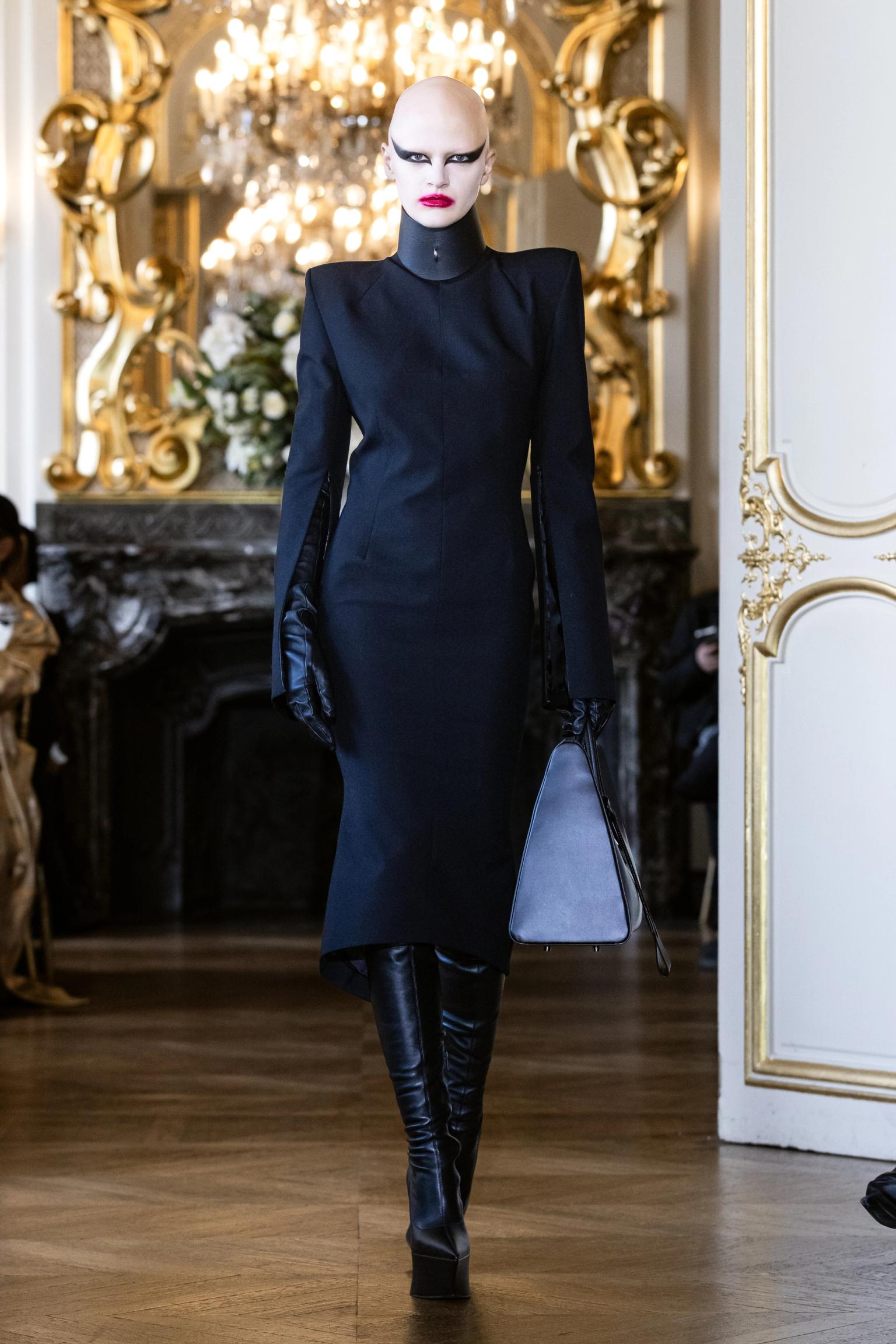
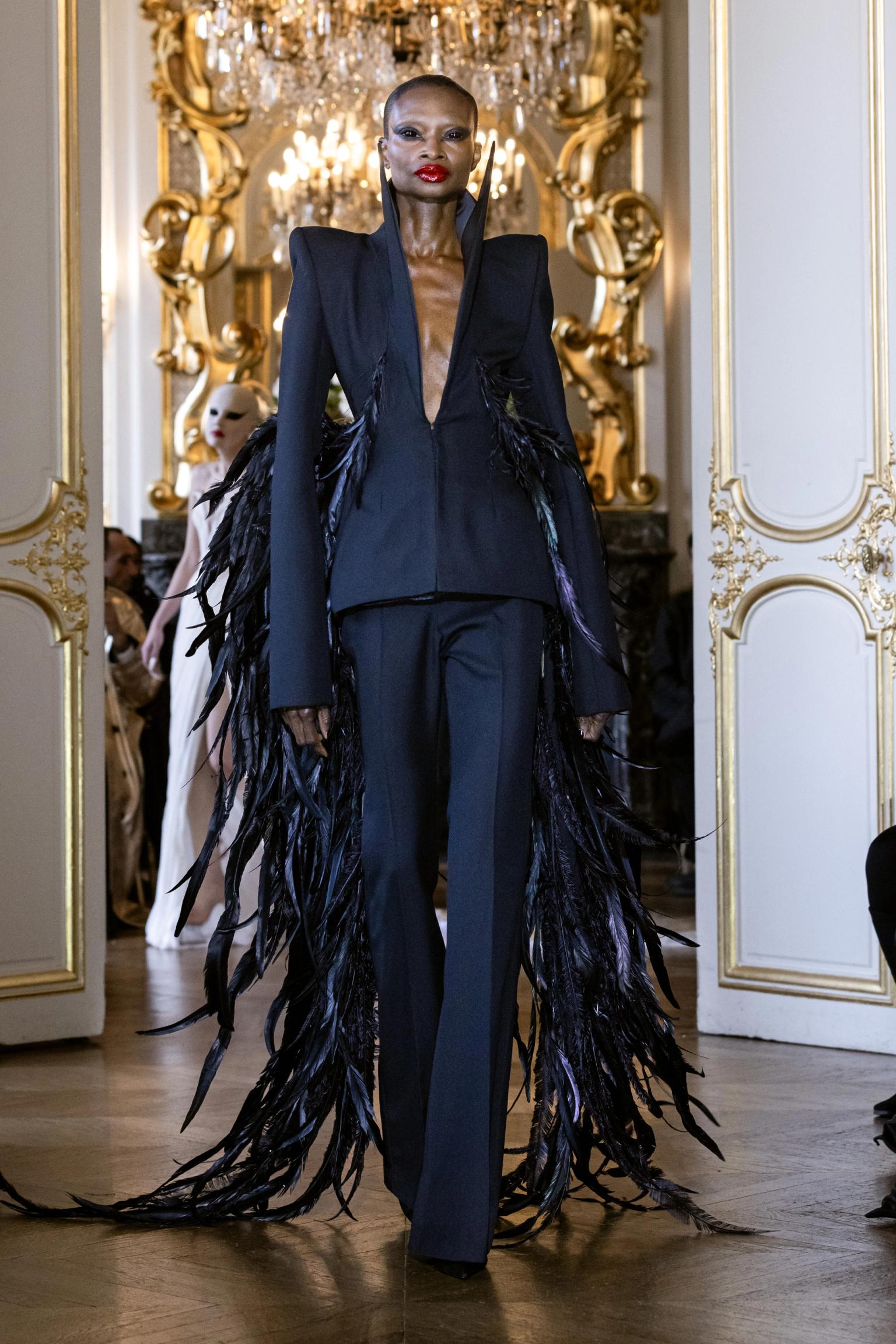
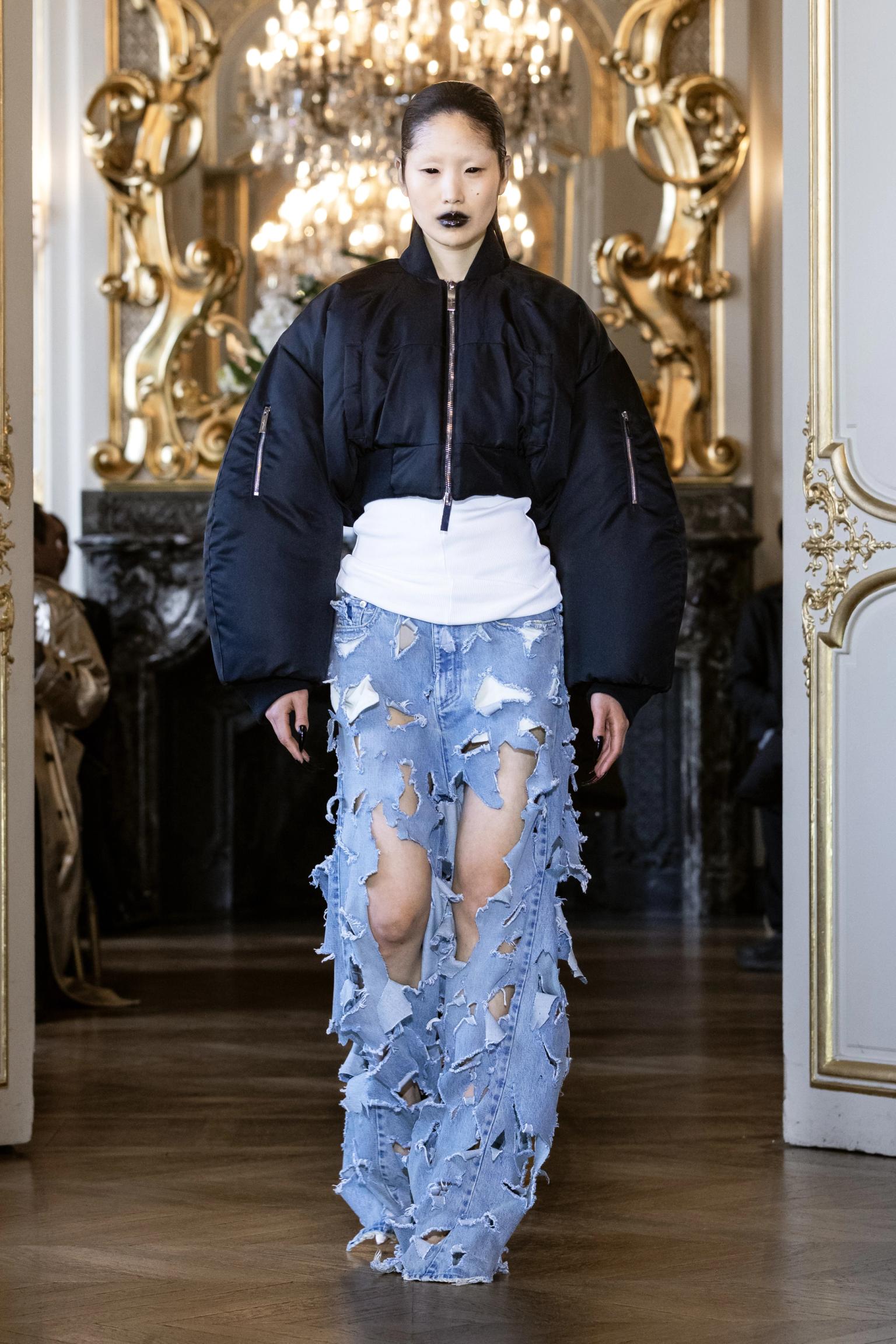
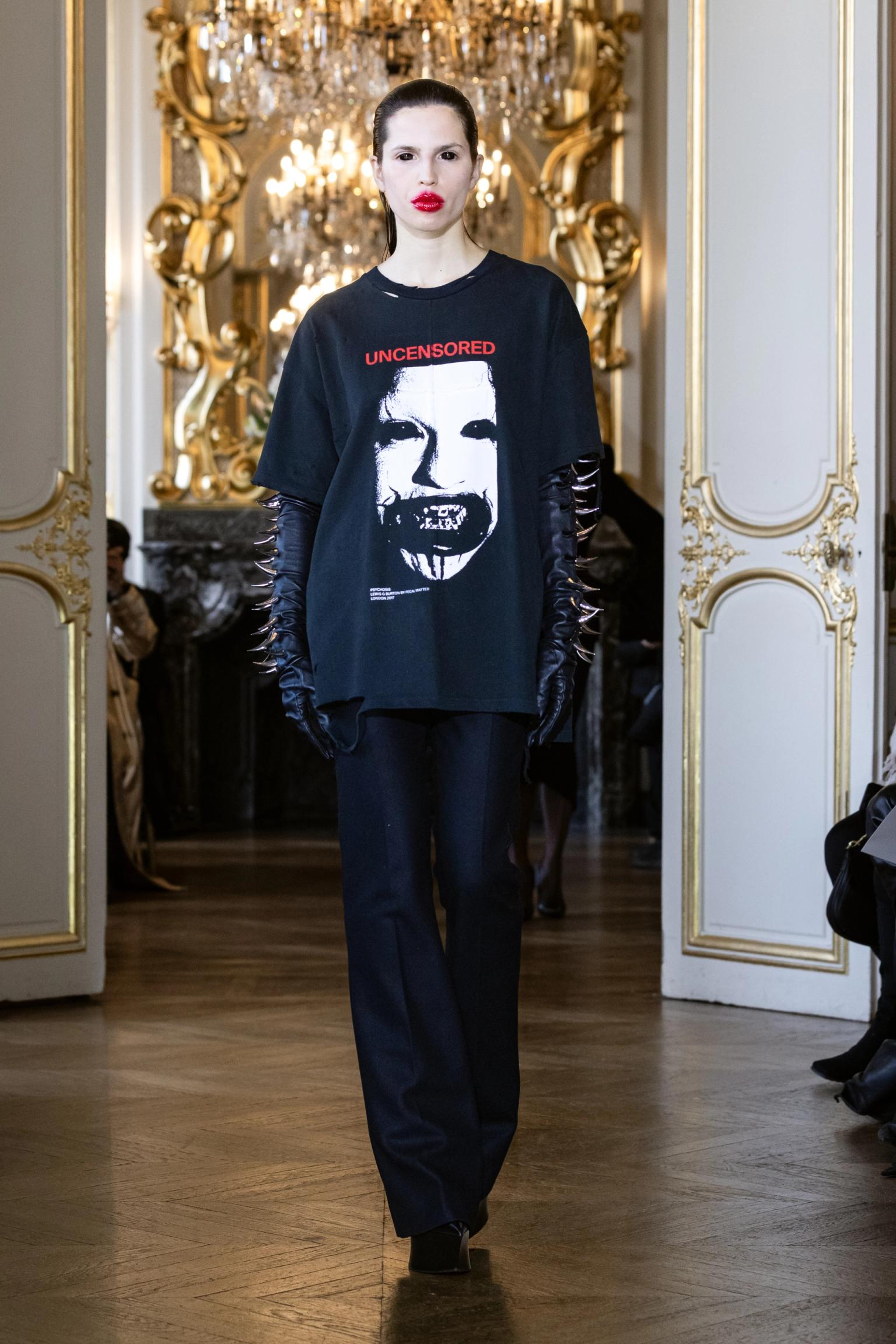
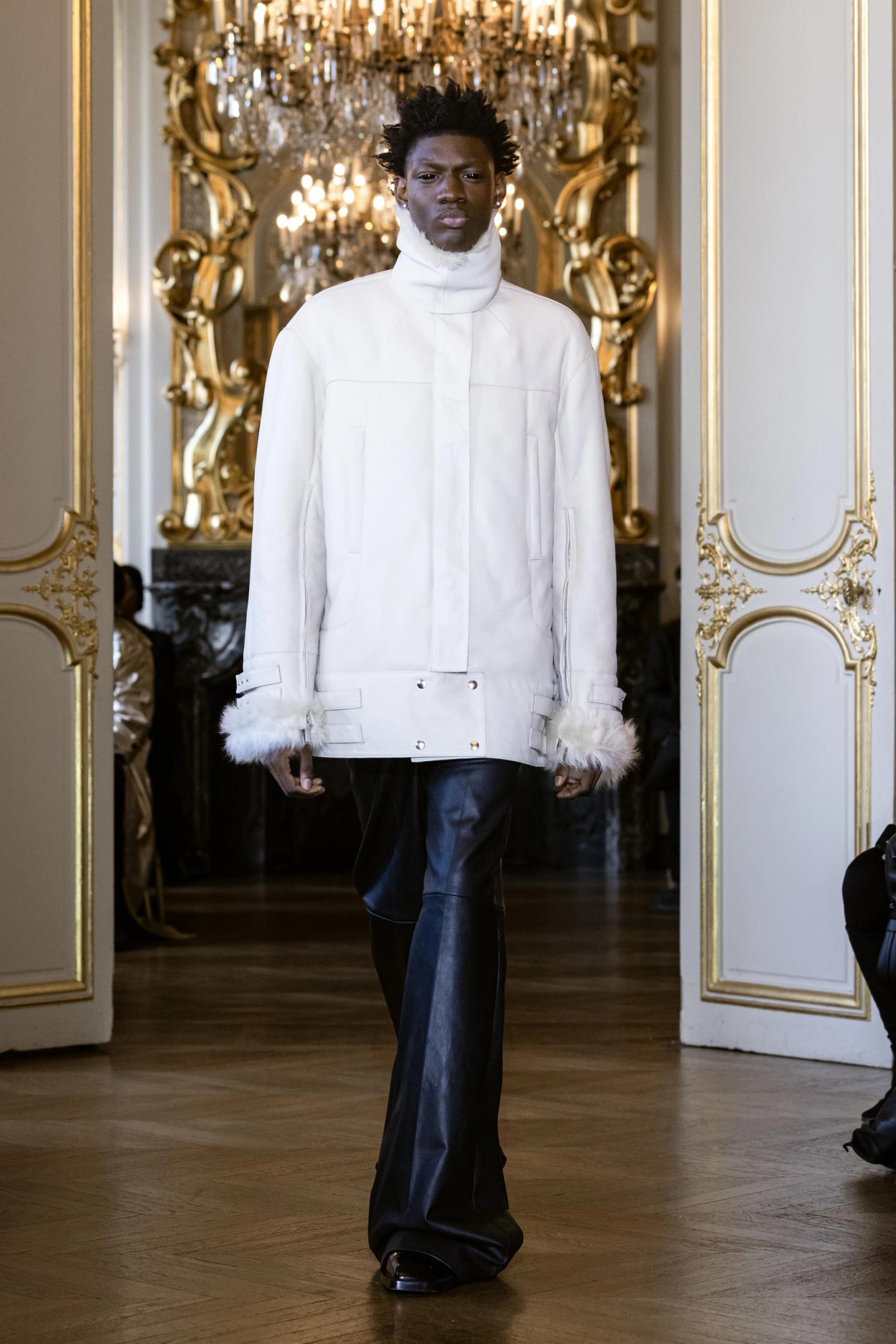
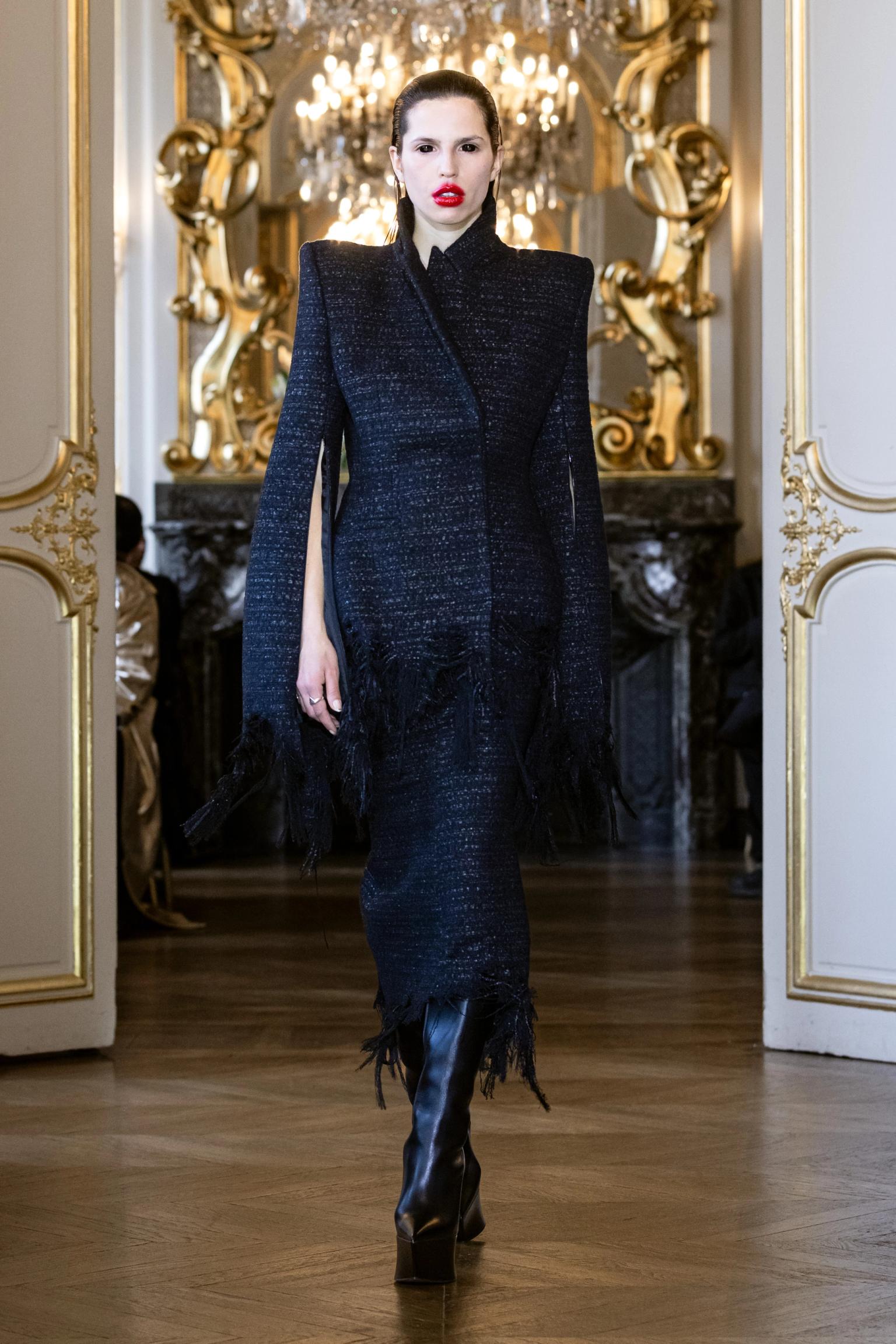
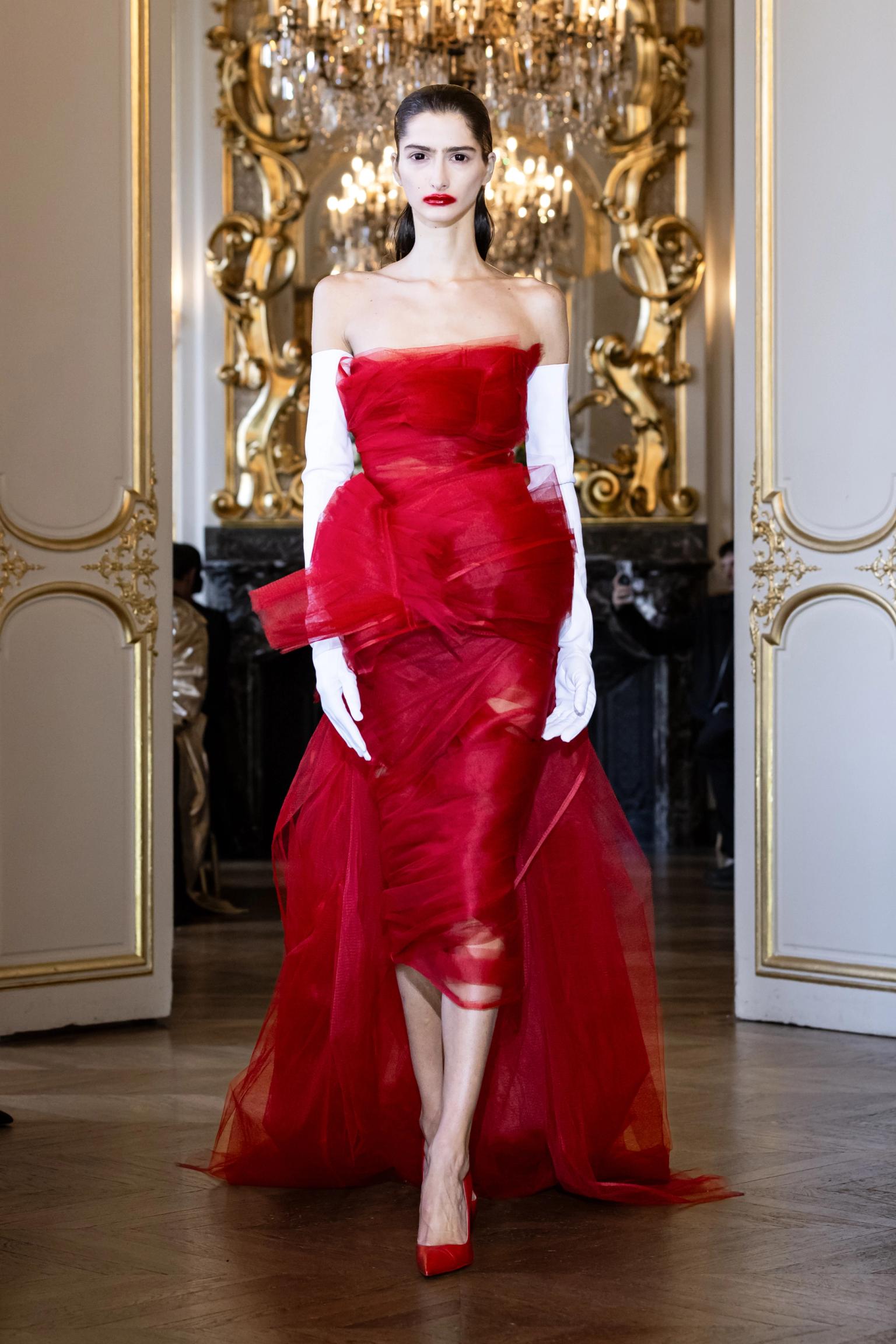
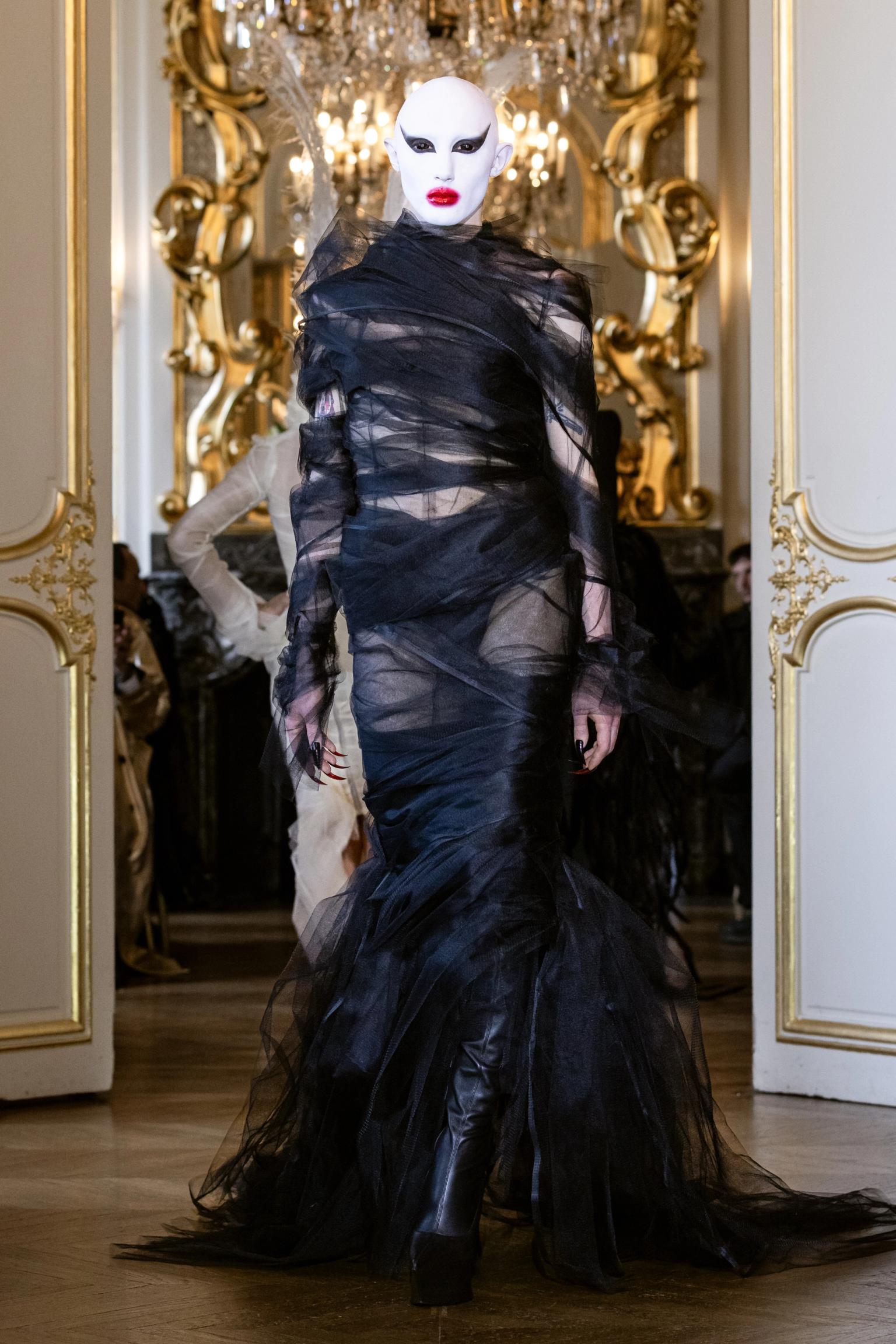
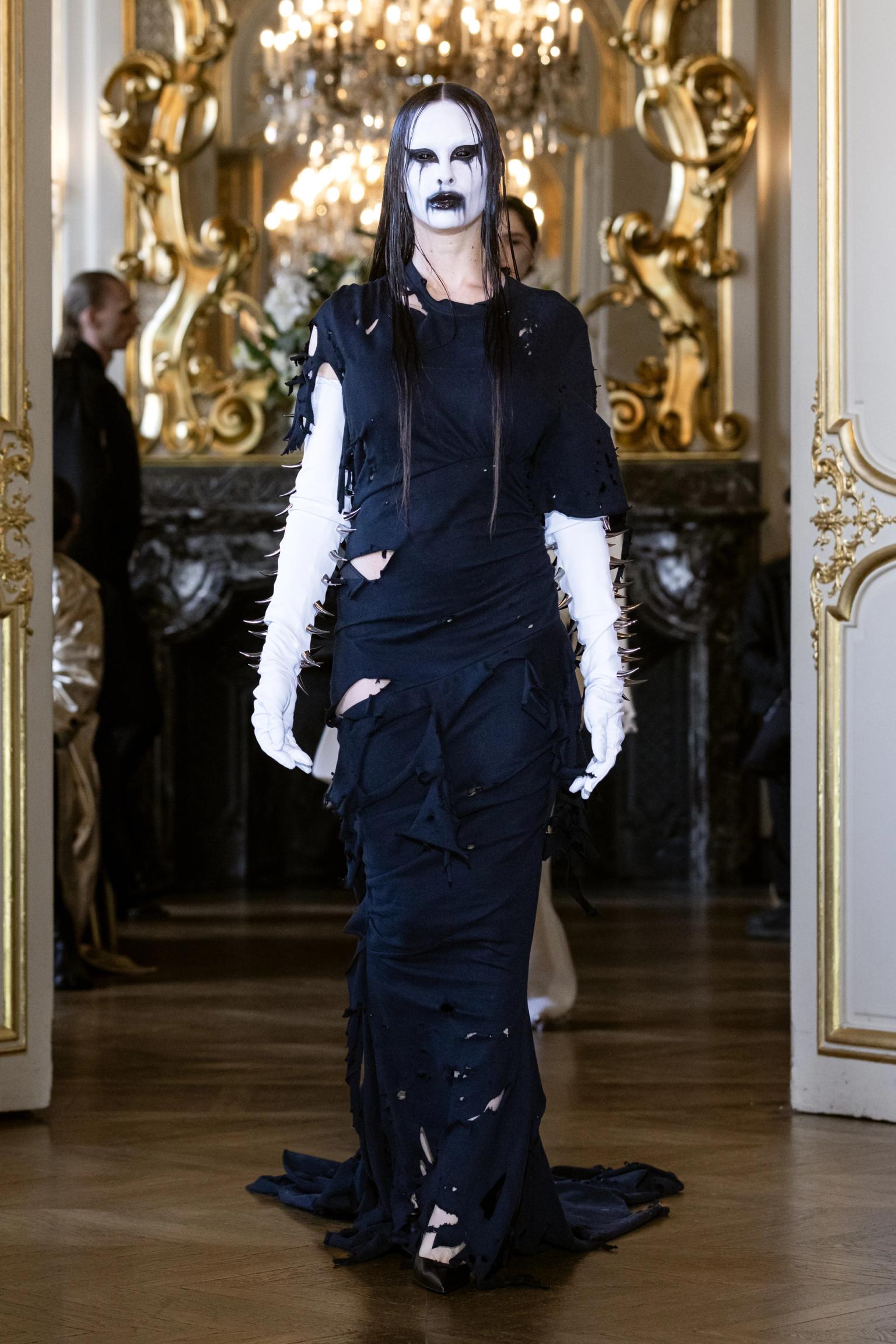
What made the collection so striking was the way it balanced extreme visual ideas with genuine craftsmanship. The runway moved between mutant tailoring, distressed knitwear, sculptural outerwear, feather-covered gowns, and sharply cut everyday basics like hoodies, jeans, and bombers. Dalton and Bhaskaran proved they were not only image-makers, but serious designers capable of constructing clothing with technical precision. Strong shoulders created almost architectural proportions, while elongated sleeves and cross seams distorted the body in ways that felt both elegant and unsettling.
Bouclé wool suits appeared frayed and damaged, as though they had survived another world before arriving on the runway. Dresses sliced with welt-like openings across the chest suggested vulnerability and transformation rather than glamour in a traditional sense. Even the casual pieces carried tension inside them, garments that looked familiar at first glance, then slowly became stranger the longer you looked. That push-and-pull between normality and distortion is central to Matières Fécales. They are not trying to escape fashion entirely; they are reshaping its codes from the inside.


Bodies Beyond Beauty
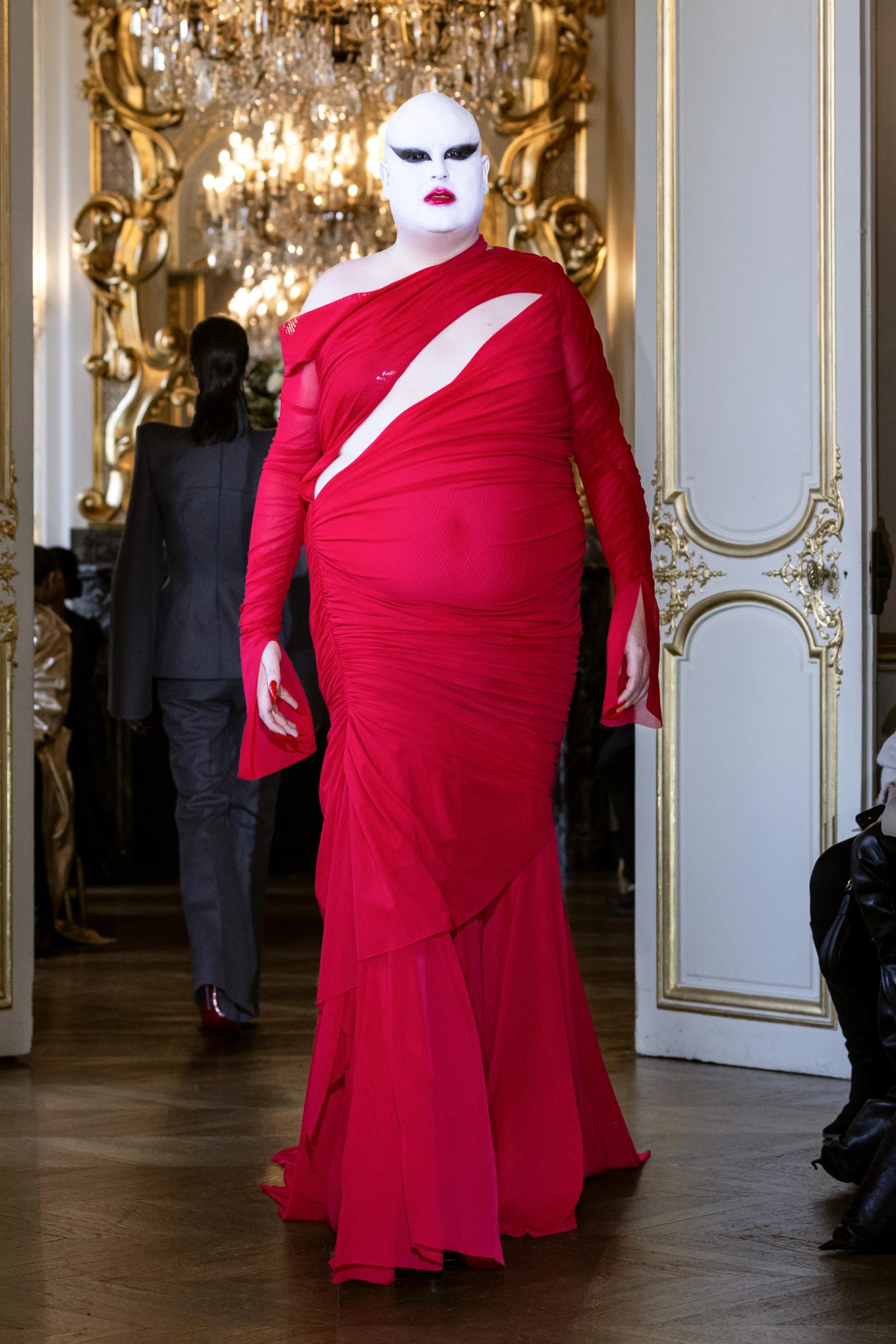
The models themselves became part of the storytelling. Wearing the duo’s signature facial prosthetics and haunting contact lenses, they moved through the show less like runway models and more like inhabitants of another reality. Yet despite the surreal styling, there was something deeply human about the casting. The runway reflected a community rather than an industry standard. Friends, outsiders, queer creatives, alternative figures, and people who rarely see themselves represented in luxury fashion all became part of the collection’s visual language. That inclusivity is not treated as branding for Matières Fécales, it is the foundation of the label itself.
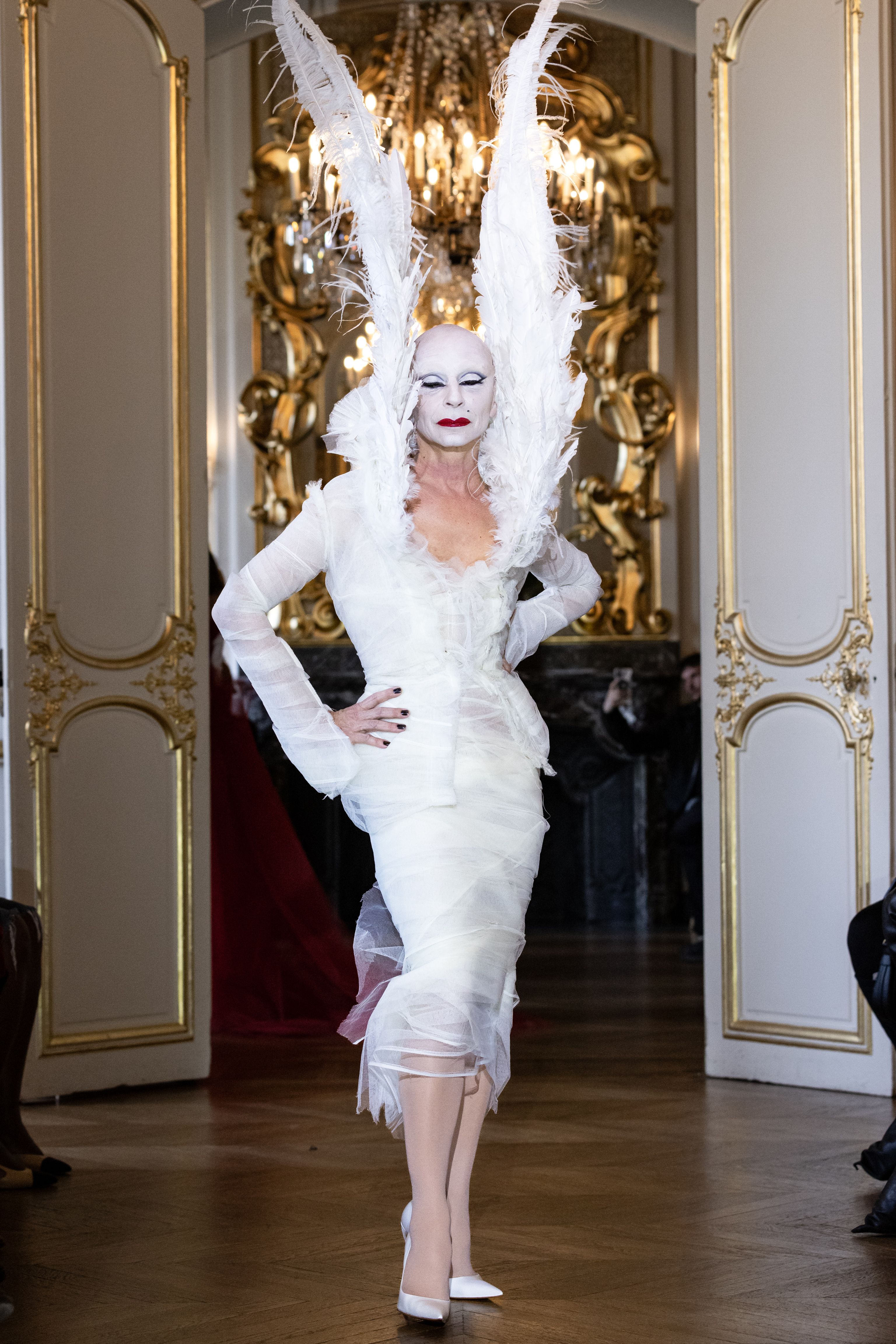

The designers consistently describe their work as an attempt to create space for people who feel alienated from conventional society. In that sense, the title THE OTHER becomes layered. It refers not only to alien beauty or post-human aesthetics, but to anyone who has ever entered a room feeling unwanted, misunderstood, or too different. The collection transforms that feeling into power. The models did not hide inside the clothes; they inhabited them completely, wearing even the most extreme looks with total calmness and control.


Between Couture and Subculture
Part of what made the debut so important was its refusal to separate underground culture from luxury craftsmanship. The collection included handmade couture gowns requiring hundreds of hours of work alongside oversized sweatshirts and deconstructed denim. Platform heels developed with Christian Louboutin pushed the body into almost sculptural forms, while the revival of their viral “skin heels” connected the runway back to the digital experiments that first made the duo known online.
Throughout the show, references collided freely: fairy imagery, gothic glamour, cyber aesthetics, body horror, couture techniques, club culture, and streetwear all existed together without hierarchy. That collision reflects the designers themselves. Dalton often speaks about softness and emotion, while Bhaskaran brings harsher, more confrontational energy. Matières Fécales exists in the space where those opposites meet. The result is a fashion language that feels emotional rather than trend-driven. Even at its most extreme, the collection never loses its sense of sincerity.


A Manifesto, Not a Debut
More than anything, THE OTHER felt like a manifesto about visibility. Fashion often talks about individuality while still rewarding sameness, but Matières Fécales approached individuality as something messy, vulnerable, difficult, and deeply political. The collection arrived during a moment where conversations around queer rights, trans visibility, identity, and self-expression feel increasingly tense globally, and the designers were direct about why this show mattered now. They described the project as an attempt to give people courage, courage to look at themselves honestly, courage to exist loudly, and courage to release parts of themselves they have been taught to suppress. That emotional honesty is what made the show resonate far beyond its visual spectacle. Beneath the prosthetics, the feathers, the tailoring, and the alien glamour was a very human message: that beauty does not need permission to exist.