
Max Lamb
The Min Chair and 005 Lounge Chair
- DesignerMax Lamb
BJARKE INGELS Max Lamb approaches solid wood and glulam as masses to be carved, treating timber furniture as a process of sculpting or excavation. His forms emerge through chamfering, chiseling and subtraction, departing from the conventional tectonics of timber construction.
Bjarke Ingels on the work of Max Lamb
Max Lamb approaches solid wood and glulam as masses to be carved, treating timber furniture as a process of sculpting or excavation. His forms emerge through chamfering, chiseling and subtraction, departing from the conventional tectonics of timber construction.
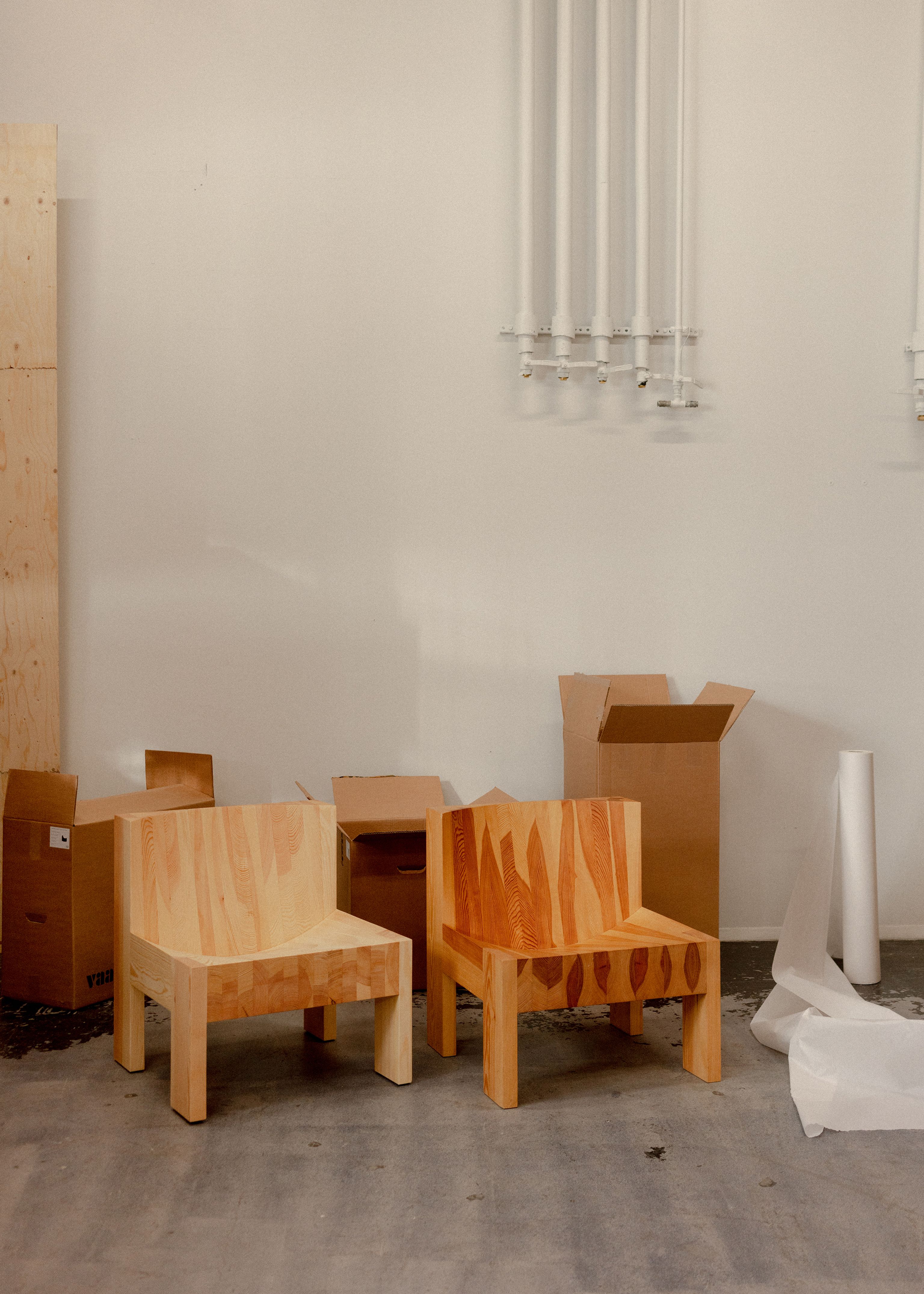
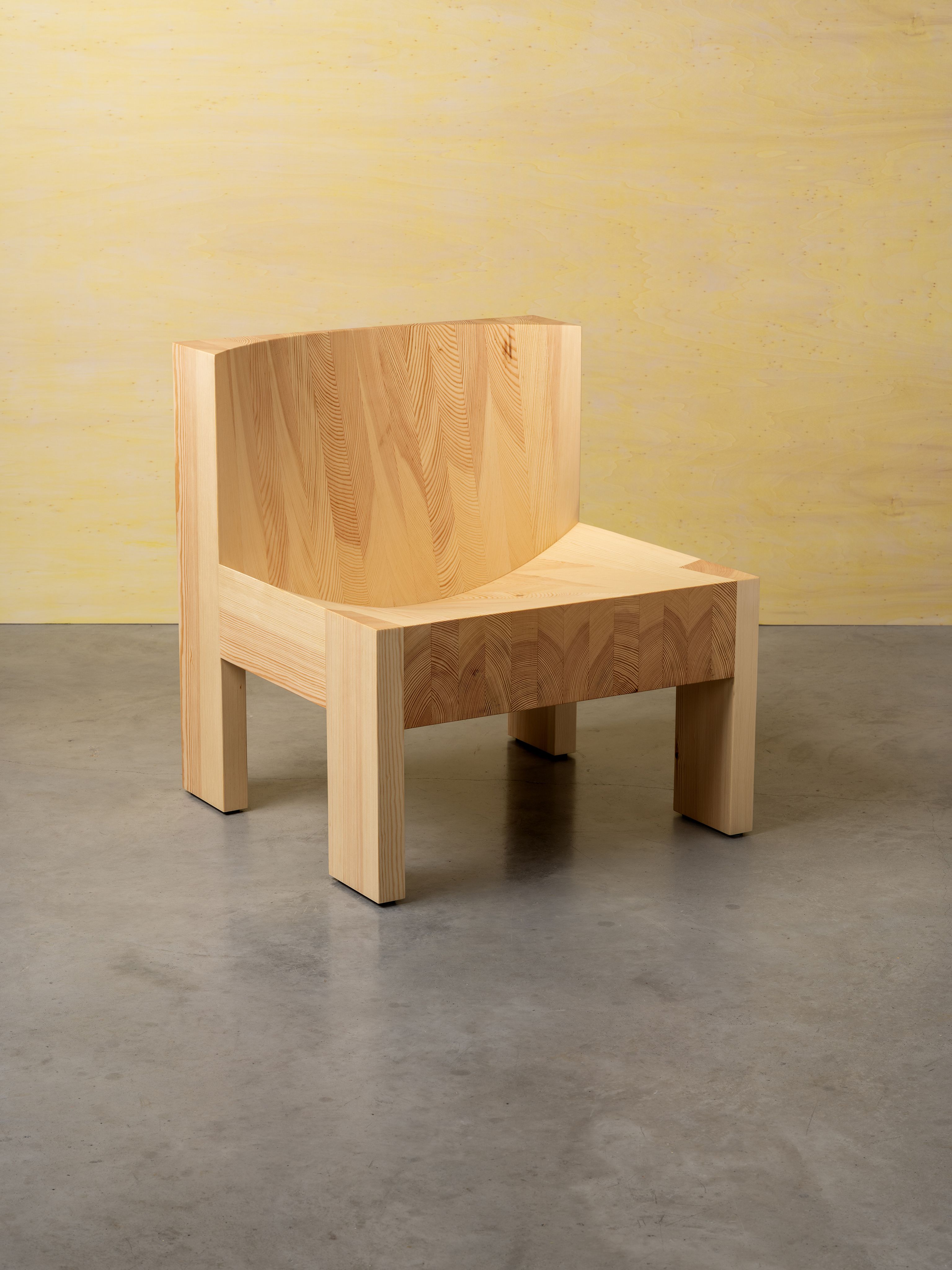
The lounge chair has the almost archetypal silhouette of a lounge chair, its sharp corners softened by gentle curves carved into the seat and backrest. It is casually comfortable and effortlessly beautiful.
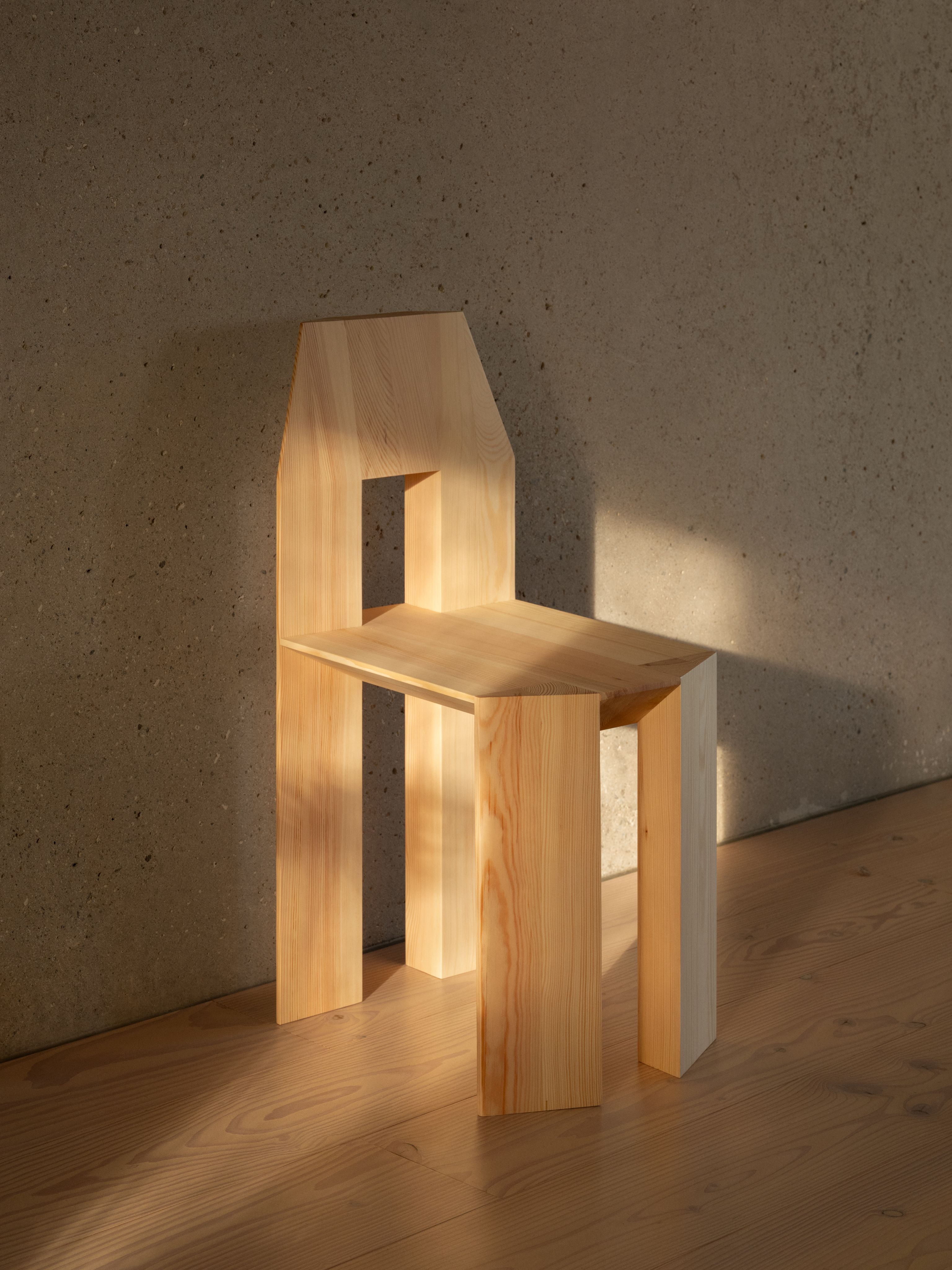
In the Min chair, conventional glued timber slabs are chamfered along every axis. At first glance, the chair feels formal, almost clerical or monastic—a sculpture conceived as a solid. Gradually, you recognize that each component is as simple as possible in its own right. Together, these elementary pieces form a crystalline language, almost anthroposophic in character.
Both chairs embody what I see as Max Lamb’s economy of form: the capacity to achieve extraordinary richness through remarkably few operations. They suggest a way of thinking about complexity as the transmission of the maximum amount of information through the minimum amount of data. Translated into design, this becomes the capacity to achieve the maximum amount of performance and expression through the minimum number of moves.

A Brutalist Approach to Furniture
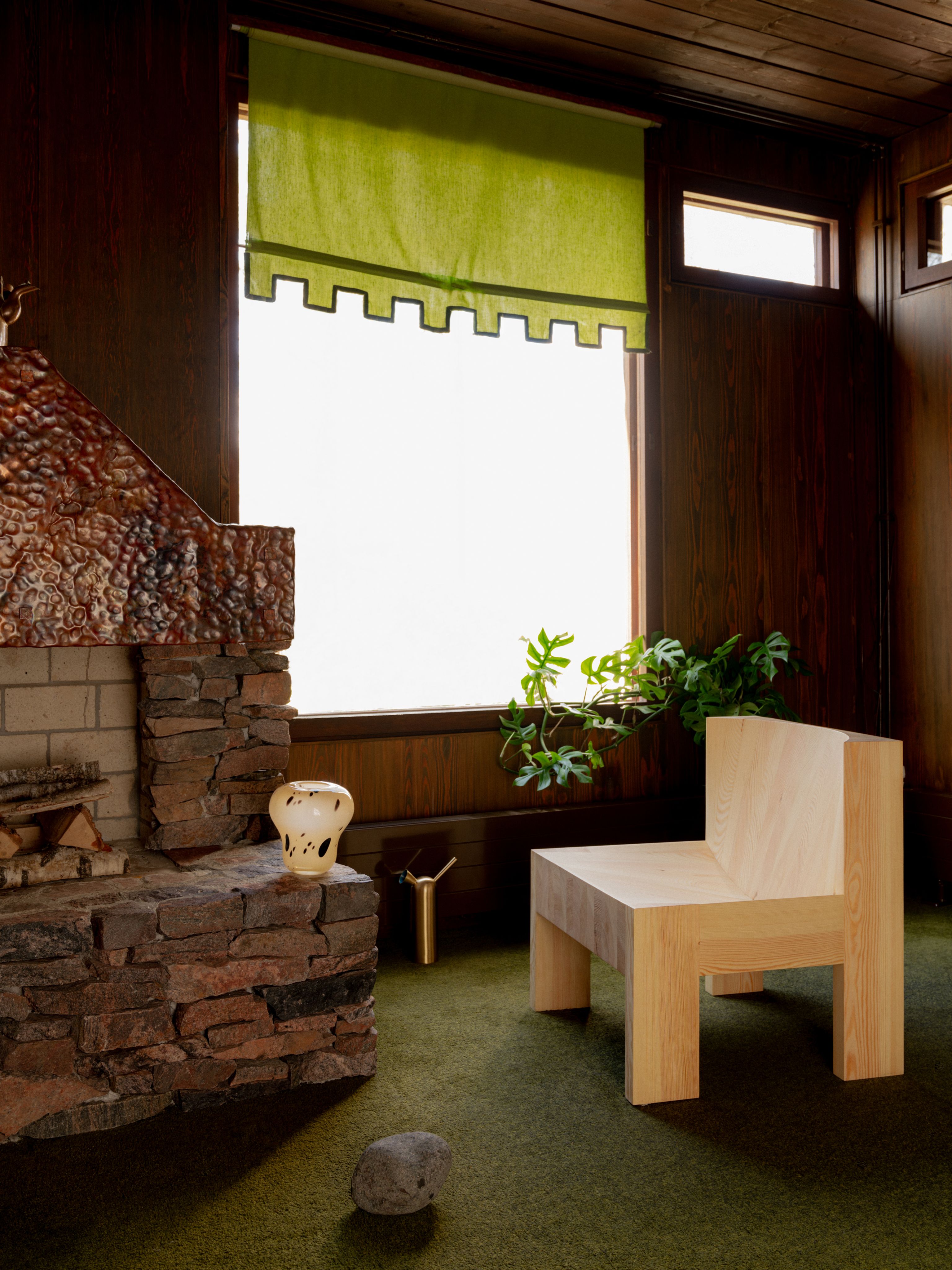
British designer Max Lamb has built a practice around the idea that the character of an object should emerge from the material itself. Working across wood, metal, stone, plastic and other materials, he combines a hands on approach to making with a fascination for how things are constructed. His furniture often feels almost architectural, with bold volumes, direct geometries and a visible relationship between material, process and function.
This sensibility finds a compelling expression in his work for Finnish furniture brand Vaarnii, particularly the 005 Lounge Chair. Made from solid Finnish pine, the chair initially appears monumental, almost primitive in its proportions. Its construction is deliberately straightforward, assembled from readily available sections of timber rather than shaped into a conventionally refined silhouette. The result is a piece that feels closer to a small architectural structure than a traditional lounge chair.
Finding Comfort in the Raw Material
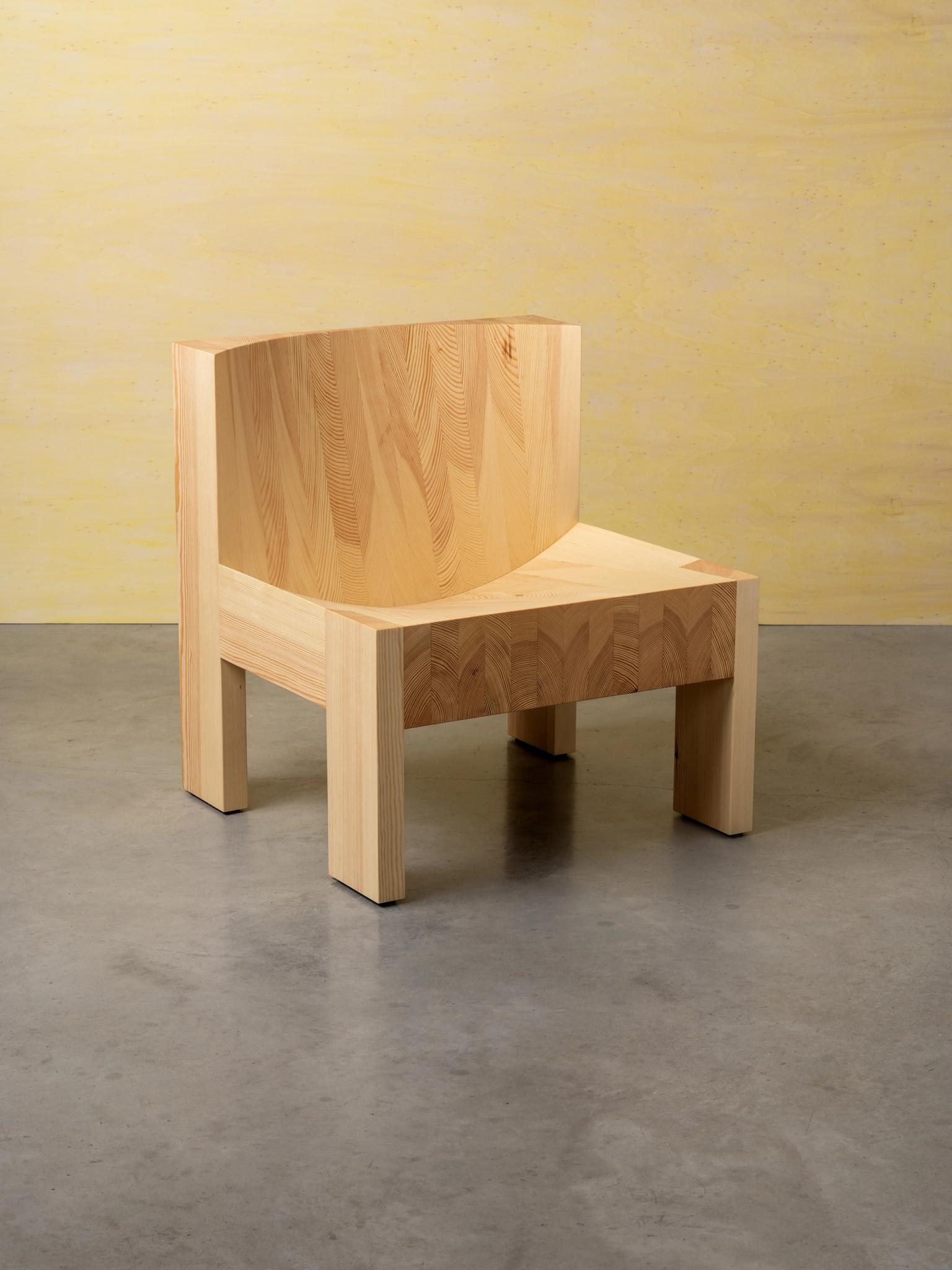
The 005 Lounge Chair is built around a striking contrast between its rigid geometry and its carefully carved surfaces. Lamb removes material from the seat and backrest to create two generous curved recesses, revealing the distinctive grain of the pine while introducing an unexpected degree of comfort. The sculptural intervention is restrained but essential. Rather than disguising the timber beneath elaborate upholstery or decorative finishes, the design allows the material to remain the central feature.
Produced in Finland, the chair also reflects Vaarnii's commitment to working with locally available wood and traditional manufacturing expertise. Pine is often associated with inexpensive, utilitarian furniture, but Lamb approaches it without prejudice, allowing its knots, tonal variations and natural imperfections to become part of the design. Over time, the pale timber develops a warmer honey coloured patina, while dents and scratches accumulate as traces of everyday use. Ageing is not something to conceal, but an integral part of the object's life.

Less Material, More Meaning
Lamb's Min Chair explores a related interest in material efficiency through a different constructional logic. Developed from an experiment in reducing waste, the chair uses diagonal cuts in the timber to create its legs, seat and backrest with a considered economy of material. Rather than treating efficiency as an invisible technical concern, Lamb allows the construction itself to define the chair's appearance. Its angled elements give the design a distinctive graphic quality, while demonstrating how a small change in the way wood is cut can influence both form and resource consumption.
Together, the 005 Lounge Chair and Min Chair reveal two sides of Lamb's approach to furniture. One explores the expressive potential of mass and subtraction, the other the possibilities of economy and intelligent construction. Both resist the idea that good design requires unnecessary complexity. Instead, they find their identity in the physical properties of wood, the logic of making and the willingness to let construction remain visible. In Lamb's hands, timber becomes more than a familiar natural material. It becomes the starting point for furniture that is direct, tactile and quietly radical.