
Márcio Kogan and MK27
The Barcelona Table
BJARKE INGELS Márcio Kogan and his studio MK27 are known for a modernism rooted in the International Style and enriched by the material sensibility of their Brazilian heritage. The Barcelona Table is both an explicit love letter to Mies van der Rohe’s Barcelona Pavilion, designed for the 1929 International Exposition, and a concentration of Kogan’s architectural sensibilities into a single artifact.


Bjarke Ingels on The Barcelona Table
Márcio Kogan and his studio MK27 are known for a modernism rooted in the International Style and enriched by the material sensibility of their Brazilian heritage. The Barcelona table is both an explicit love letter to Mies van der Rohe’s Barcelona Pavilion, designed for the 1929 International Exposition, and a concentration of Kogan’s architectural sensibilities into a single artifact.
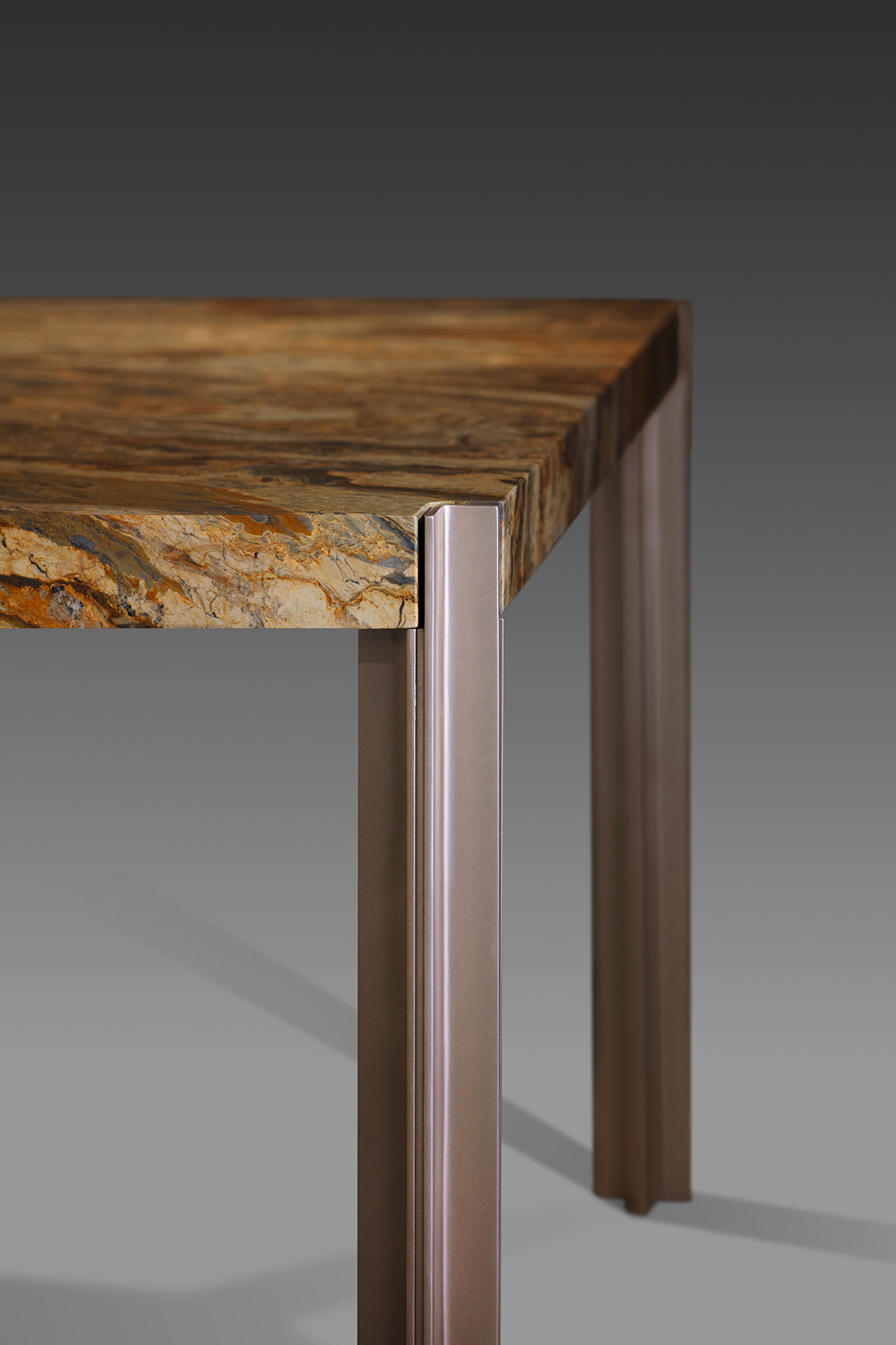
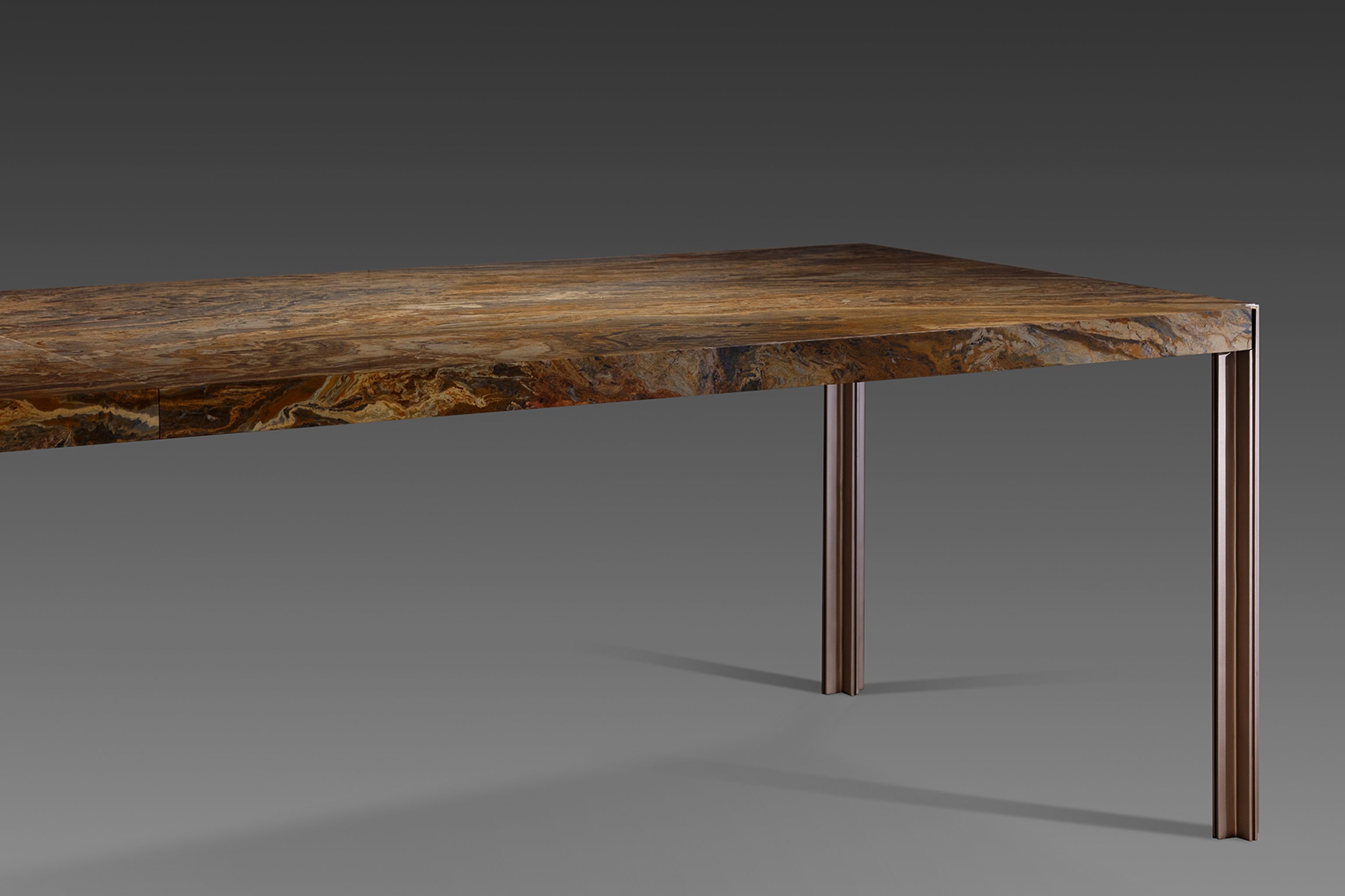
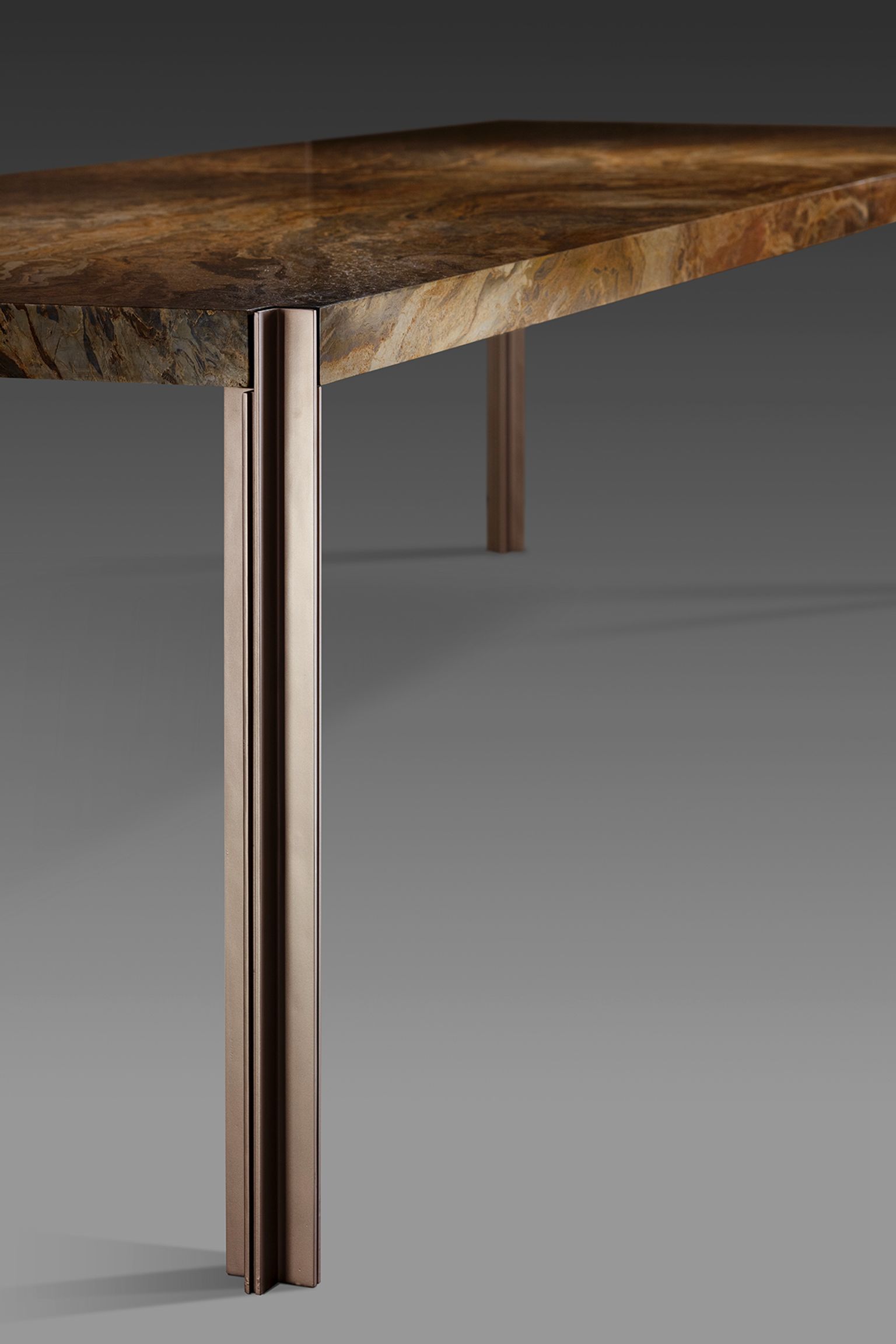
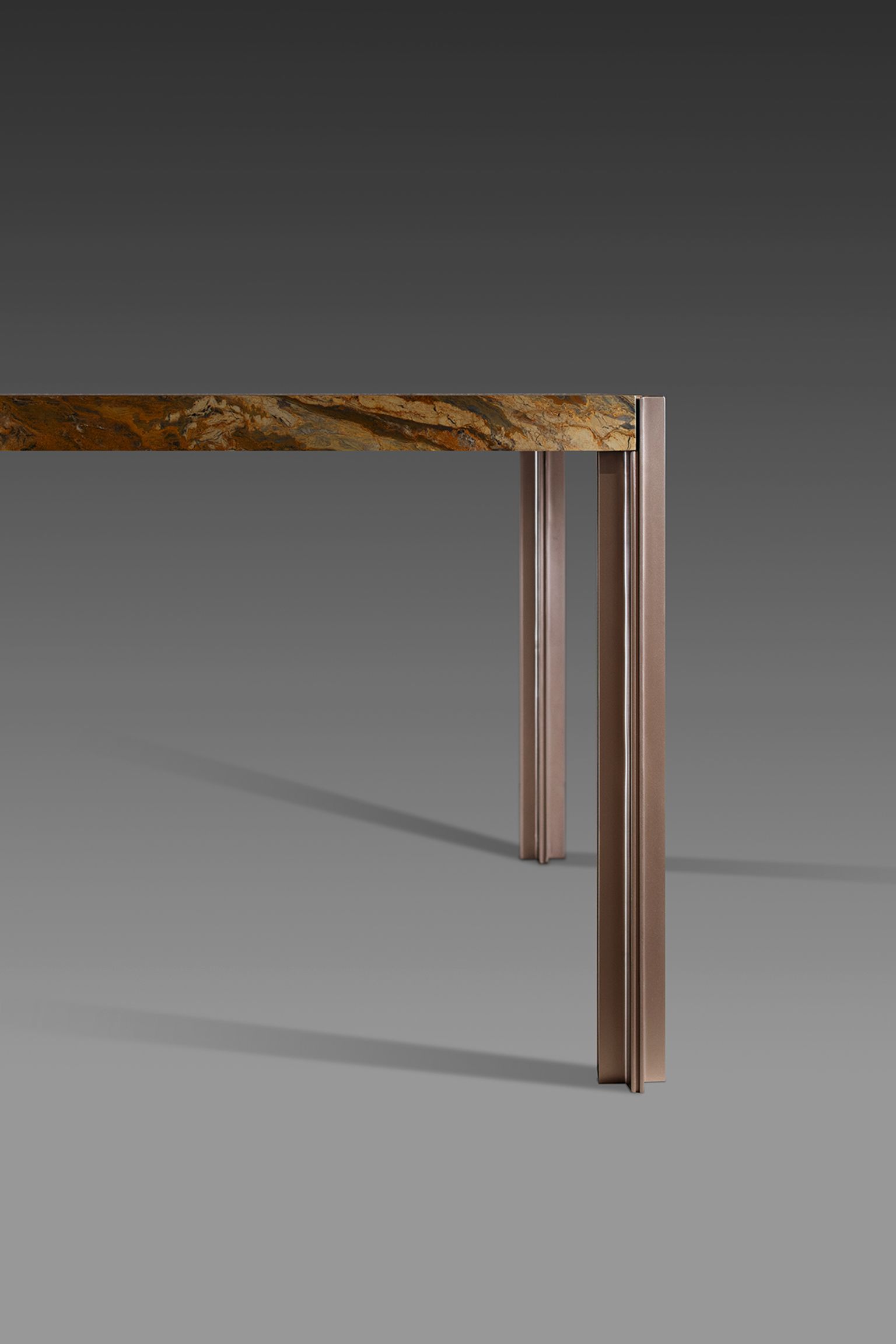
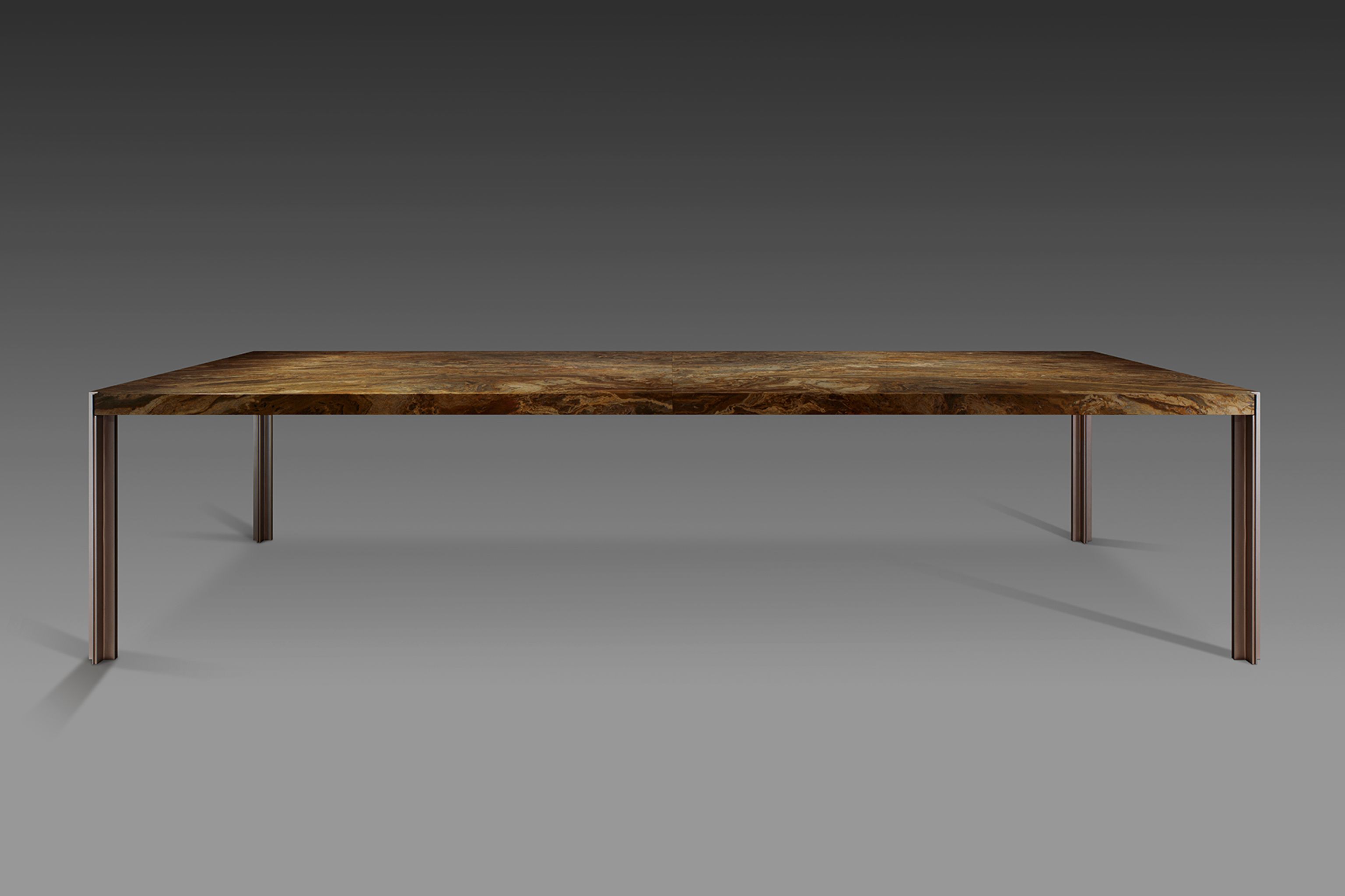
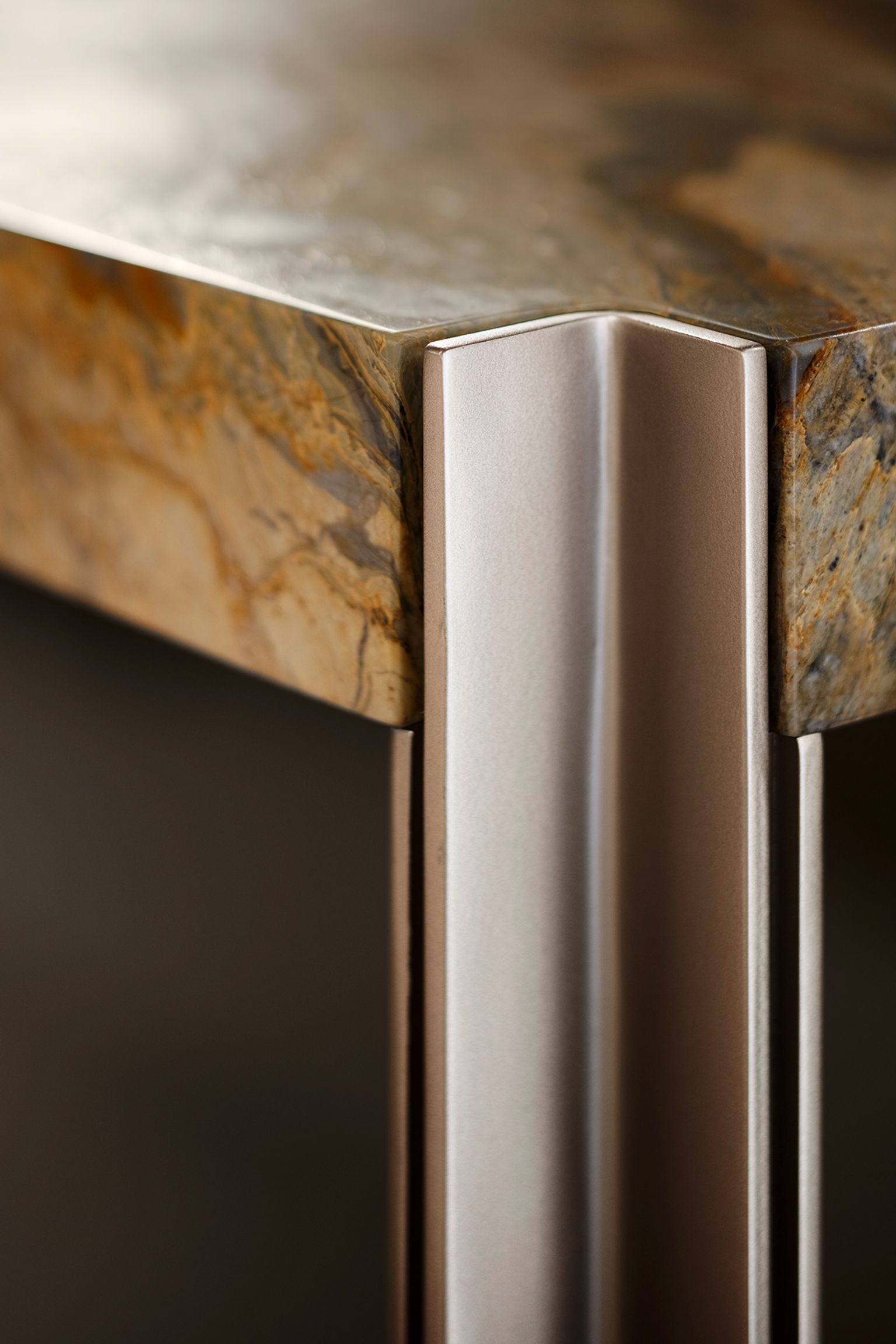
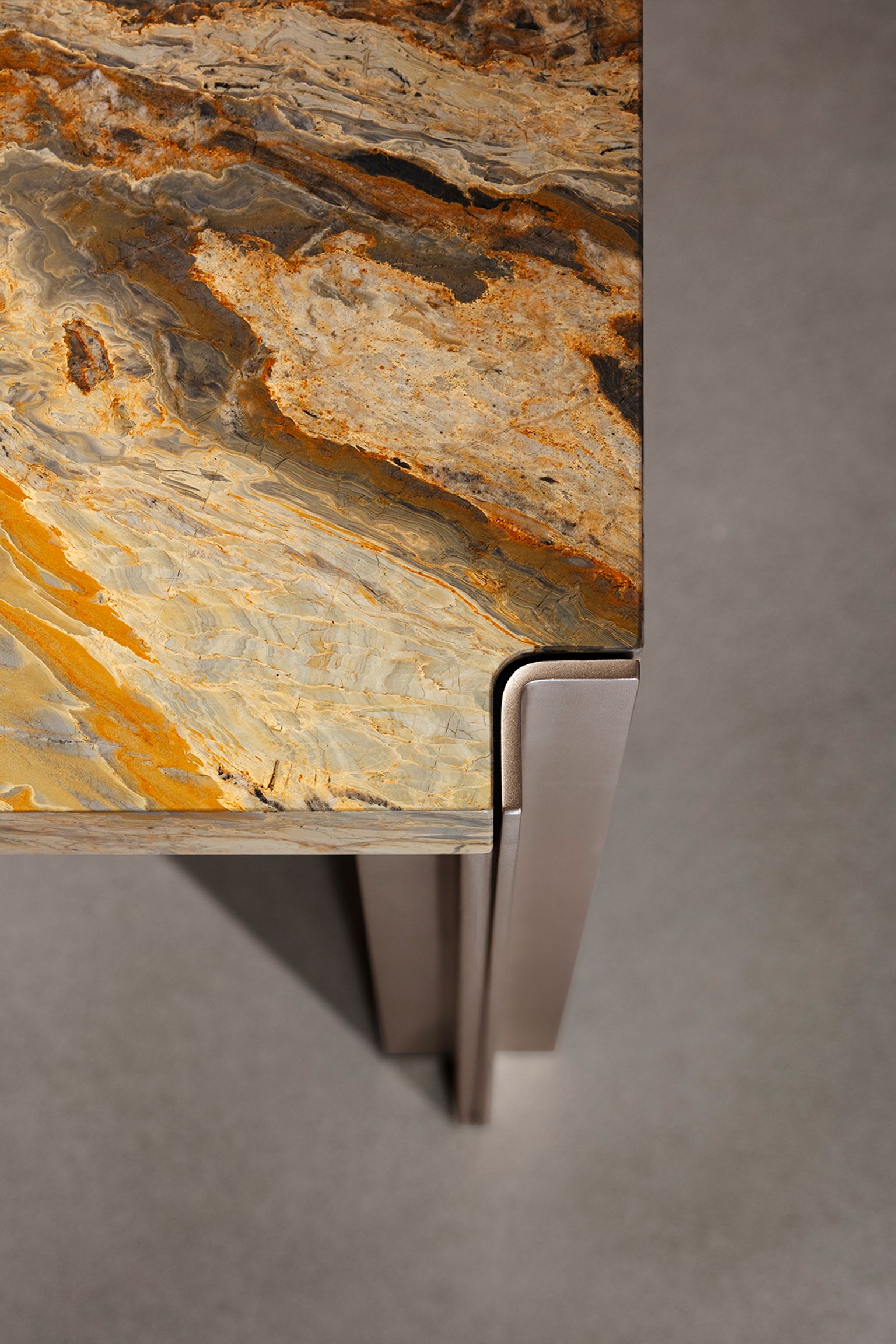
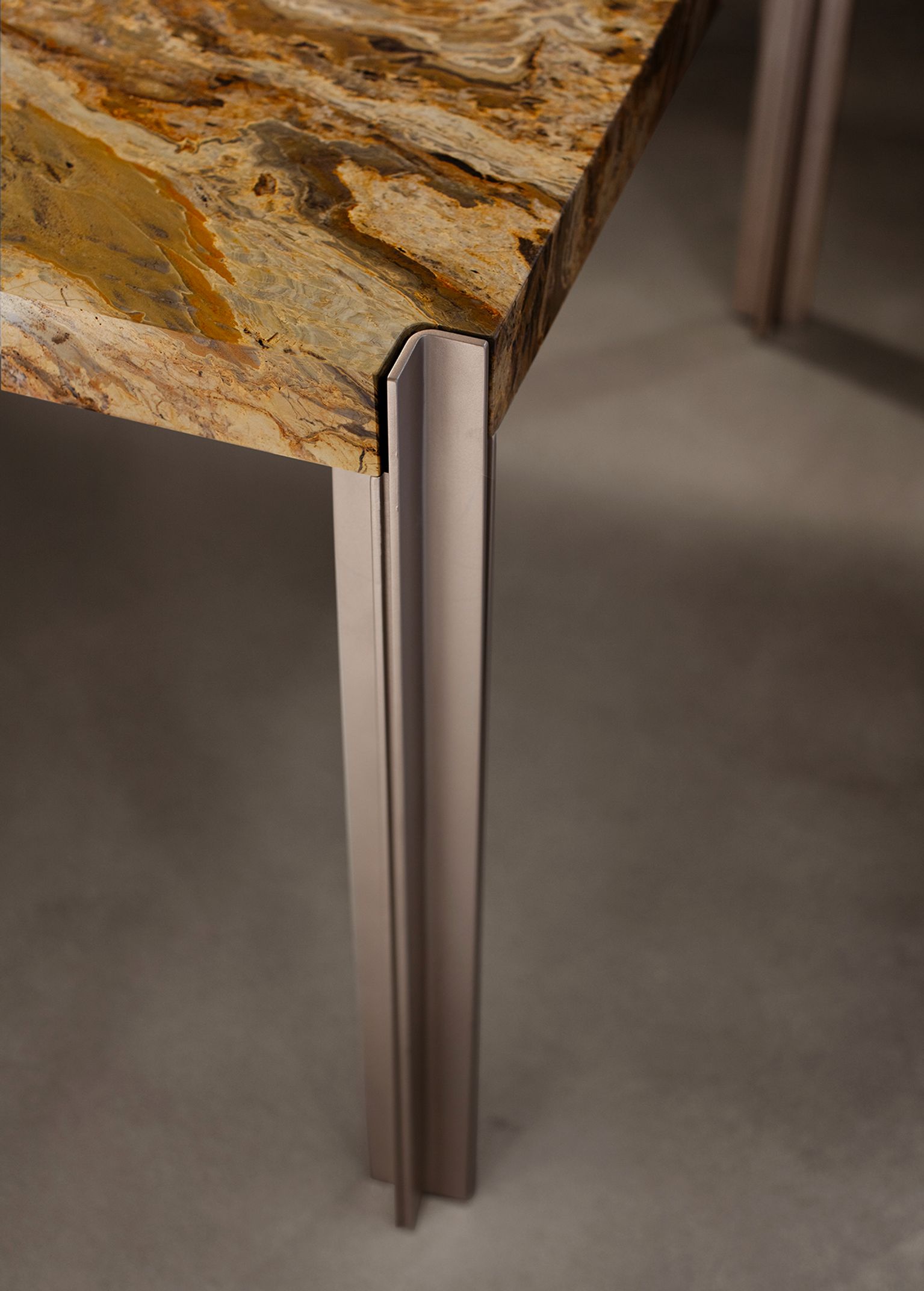
A single slab of stone is carried by four classic Miesian cruciform columns, each assembled from four L-shaped profiles. The slab’s corners are chamfered to accommodate the supports, making the relationship between stone and steel appear almost inevitable.
The result is deceptively simple and seemingly effortless, yet this simplicity depends on extraordinary care, thought and technical precision. The stainless-steel skeleton almost disappears beneath the stone, allowing a distinctly Miesian - and distinctly Márcio - magic trick to become reality: a substantial mineral mass appears lightly suspended.
The lightness of the steel and the richness of the stone’s texture and color embody the radical material sensibility of the Barcelona Pavilion and of Kogan’s own architecture. An entire architectural language is distilled into a table.

The Architecture of a Table
For Márcio Kogan, architecture has always been about more than buildings. The Brazilian architect and founder of Studio MK27 approaches design as a continuous exploration of proportion, material and detail, where the smallest element deserves the same consideration as the larger structure. This philosophy extends naturally into furniture, allowing the studio to translate its architectural language into objects that bring together formal clarity, material richness and meticulous construction.
The Barcelona Table, designed by Studio MK27 in collaboration with Brazilian design brand +55design, takes its point of departure from one of modernism’s most enduring icons: Ludwig Mies van der Rohe’s Barcelona Pavilion of 1929. Rather than reproducing its familiar forms, the table distils the architectural principles behind the pavilion into a contemporary piece of furniture. The result is an exercise in restraint, where a few carefully considered elements carry the weight of the entire design.

A Modernist Foundation
The reference to the Barcelona Pavilion is most apparent in the table’s cross shaped metal legs, which reinterpret the distinctive pillars of Mies van der Rohe’s architecture. Positioned at the outermost edges of the tabletop, the supports create a strong geometric framework while allowing the expansive surface to retain a sense of visual lightness. The challenge was to create a table that could extend to an impressive 3.3 metres without losing its apparent simplicity or structural elegance.
The solution lies in the relationship between the slender metal structure and the substantial stone top. Each element is reduced to its essential expression, yet their combination creates a carefully balanced composition. The legs provide a precise architectural rhythm, while the tabletop introduces a more organic dimension through the natural variations of the stone. It is a dialogue between geometry and geology, between the disciplined lines of modernism and the individual character of a material formed over time.


Brazilian Stone, Modernist Spirit
The choice of stone also gives the Barcelona Table a distinctly Brazilian identity. Developed with +55design, the piece uses marbles sourced from local quarries, including Yellow Bamboo, Donatello, Pinot Grigio and Oak Bamboo. Their varied colours, veining and mineral patterns introduce a degree of individuality into an otherwise rigorously controlled design. No two surfaces possess quite the same visual character, allowing the natural material to become an active part of the composition rather than a passive finish.
The table is produced entirely in Brazil, combining the precision of contemporary design with local materials and skilled craftsmanship. This connection between international modernist heritage and Brazilian production reflects a broader characteristic of Studio MK27’s work, in which references to architectural history are filtered through an acute sensitivity to context, texture and construction.
Ultimately, the Barcelona Table demonstrates how a familiar modernist vocabulary can be revisited without becoming an exercise in nostalgia. Its proportions, cross shaped supports and restrained material palette recall the ideals of an earlier architectural movement, yet the emphasis on natural stone and local craftsmanship gives the piece its own identity. Like a building reduced to its fundamental elements, the table finds its strength in the relationship between structure, surface and space. Its apparent simplicity is the result of a more complex ambition: to create an object that feels both timeless and unmistakably contemporary.