Béla Tarr
Sátántangó
- DirectorBéla Tarr
- WriterLászló Krasznahorkai
Nono Ayuso Watching this film feels like surrendering to time. It’s exhausting and hypnotic, but also strangely honest, despair shown without shortcuts.

Sátántangó: A Monumental Slow Cinema
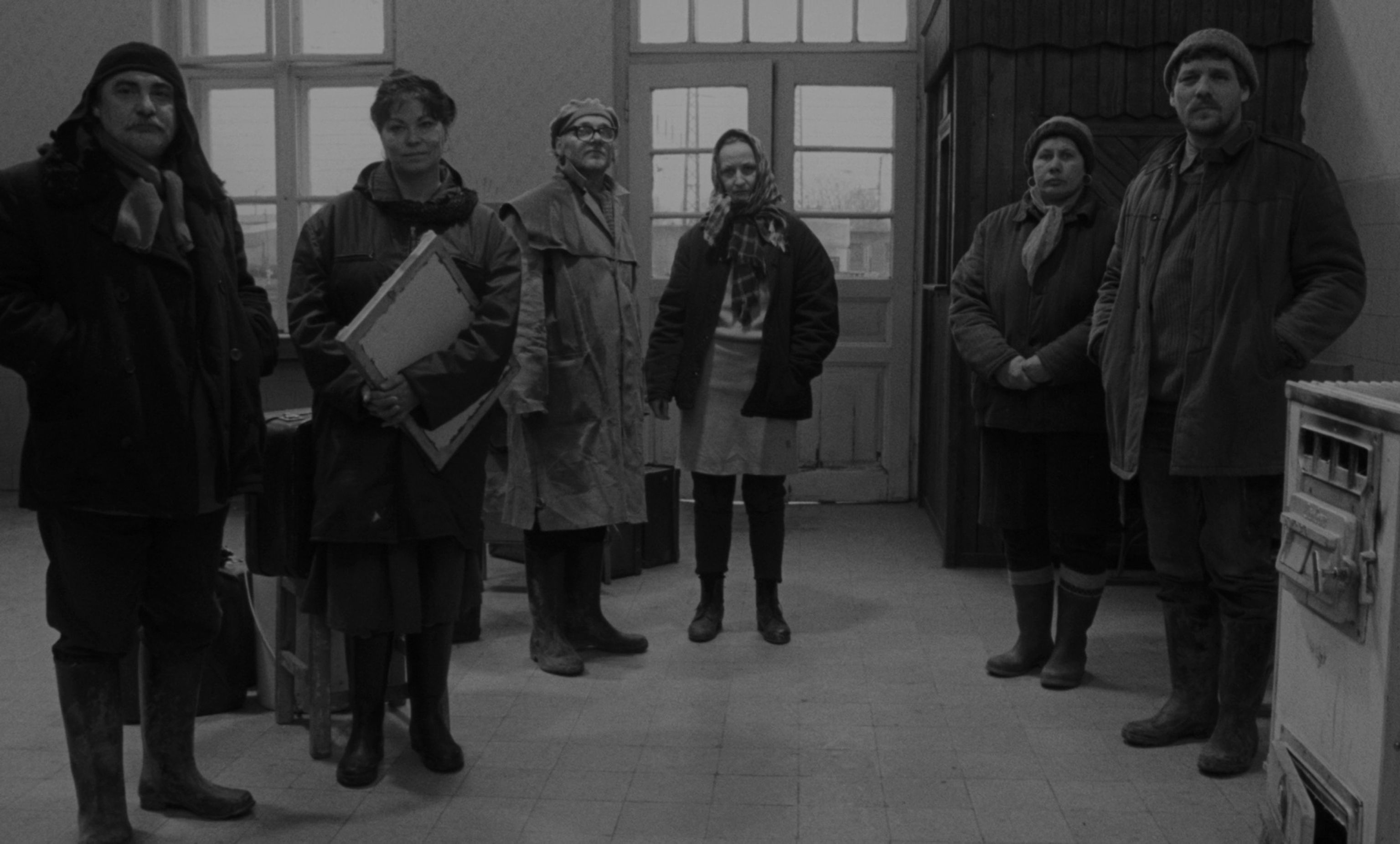
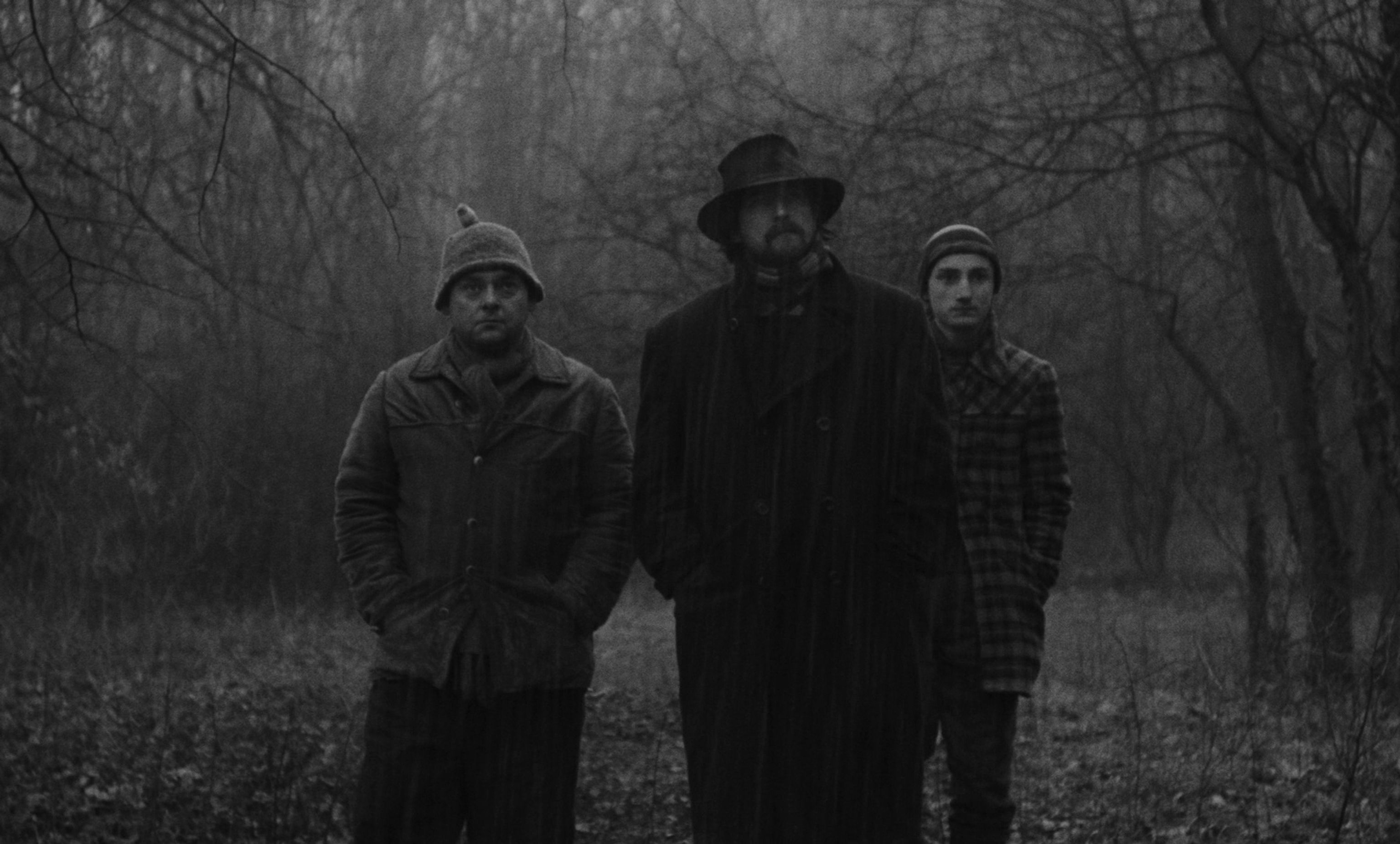
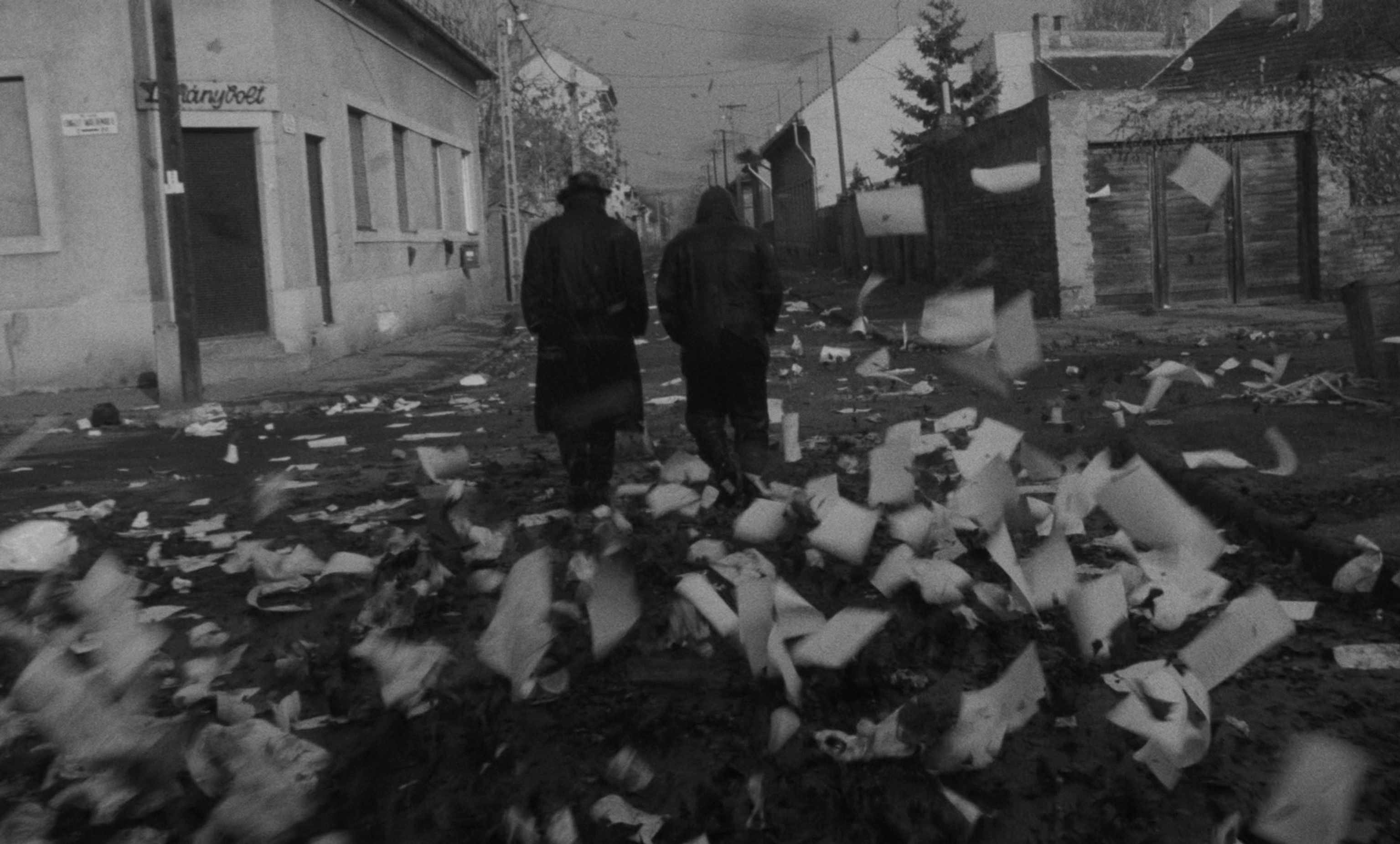
Béla Tarr’s Sátántangó (1994) is a seven-and-a-half-hour black-and-white epic based on László Krasznahorkai’s 1985 novel, depicting a decaying Hungarian village after the collapse of a collective farm. The villagers’ tentative plans for renewal are disrupted by the enigmatic Irimiás, whose charisma manipulates and reshapes the community, exposing themes of authority, nihilism, and moral indifference.
Tarr structures the film in twelve parts, mirroring the tango rhythm suggested by the novel, moving six steps forward, six back. Time itself becomes a central character, as Tarr’s long takes, some extending ten minutes, allow audiences to inhabit the slow unfolding of events, and to experience human inertia, fear, and small triumphs in real-time. Krasznahorkai’s literary vision, focused on existential despair and social collapse, informs every frame, lending the film a sense of eternal, almost apocalyptic resonance beyond its post-communist setting.

Cinematography, Sound, and Collaborative Craft
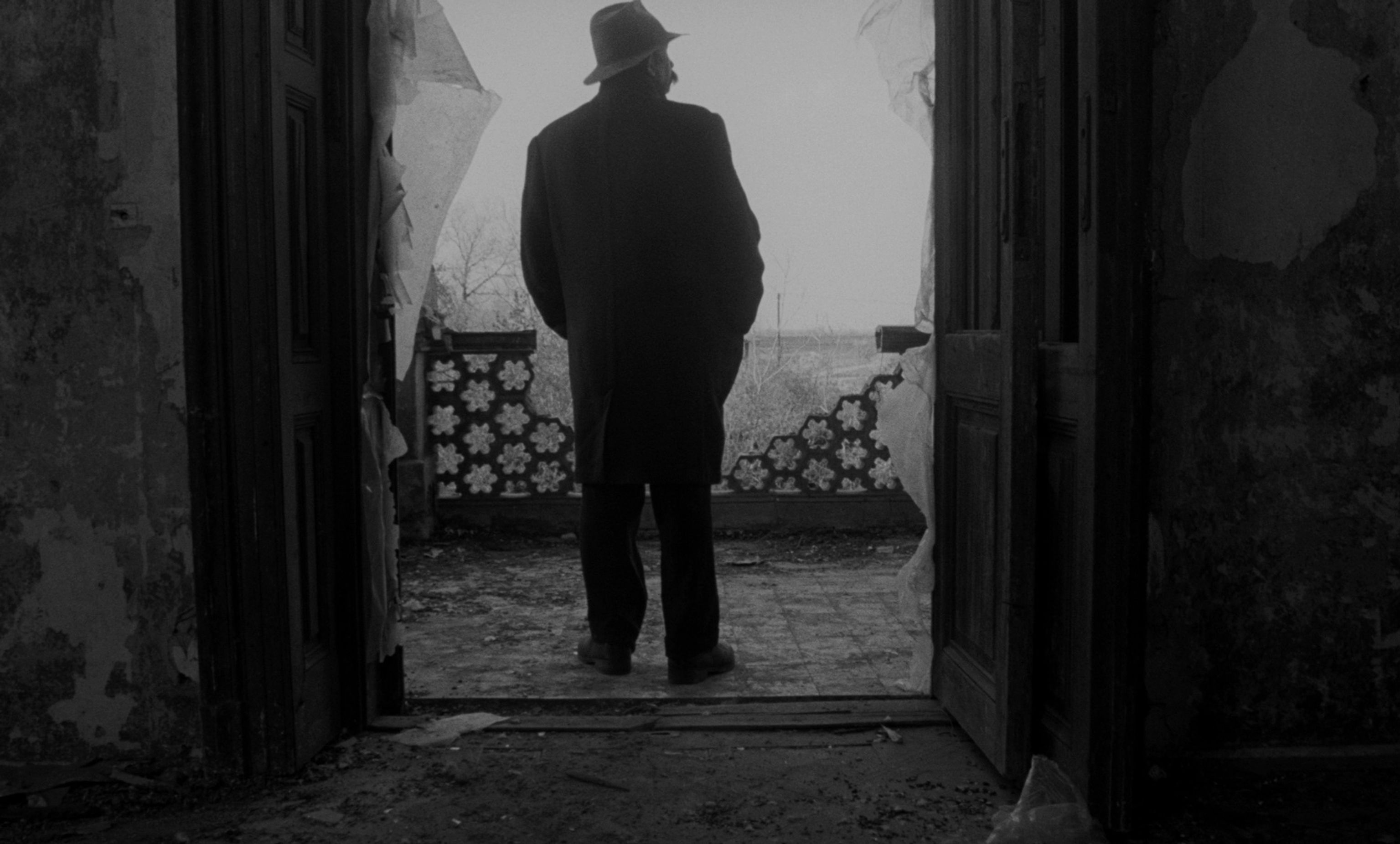
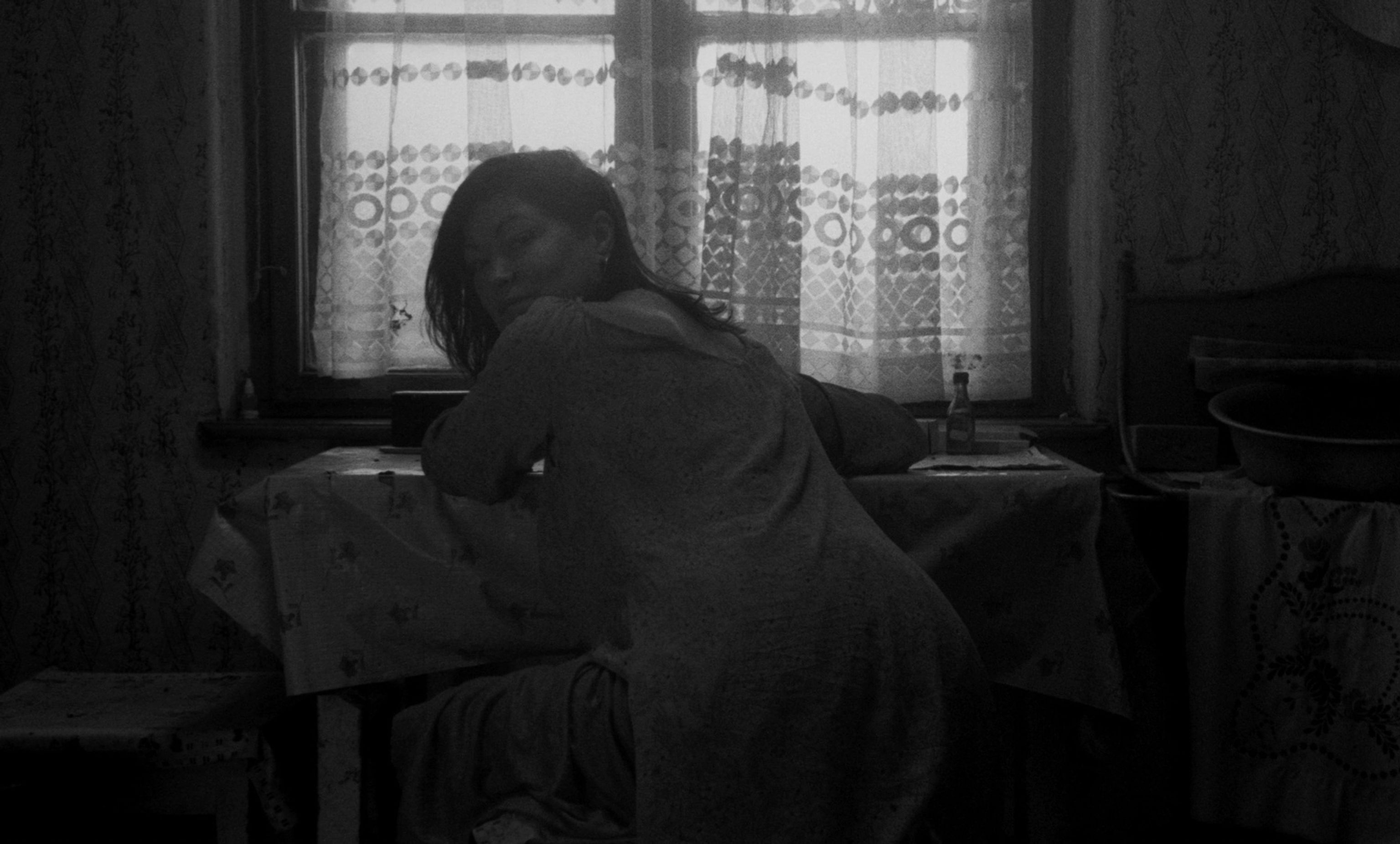
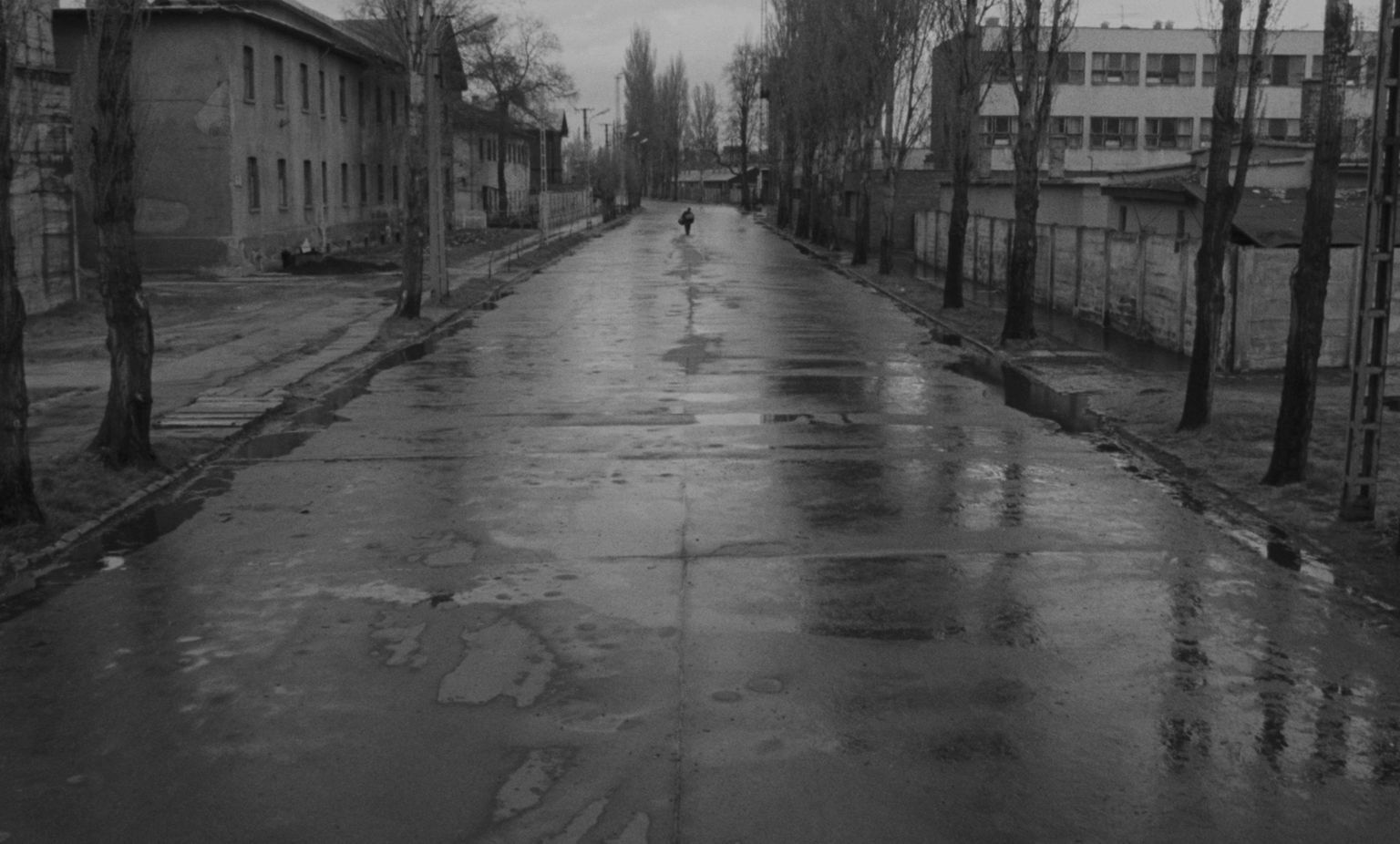
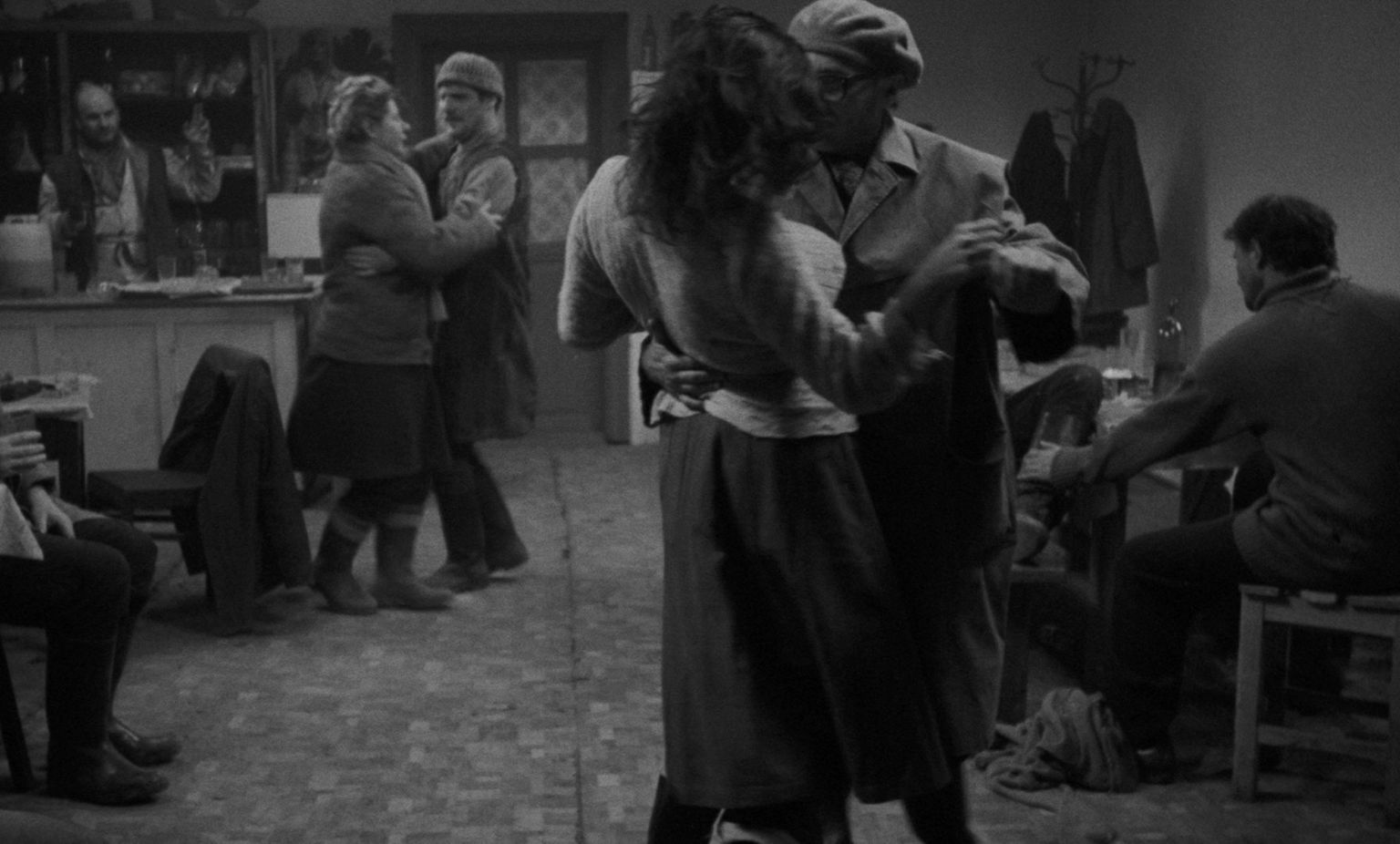
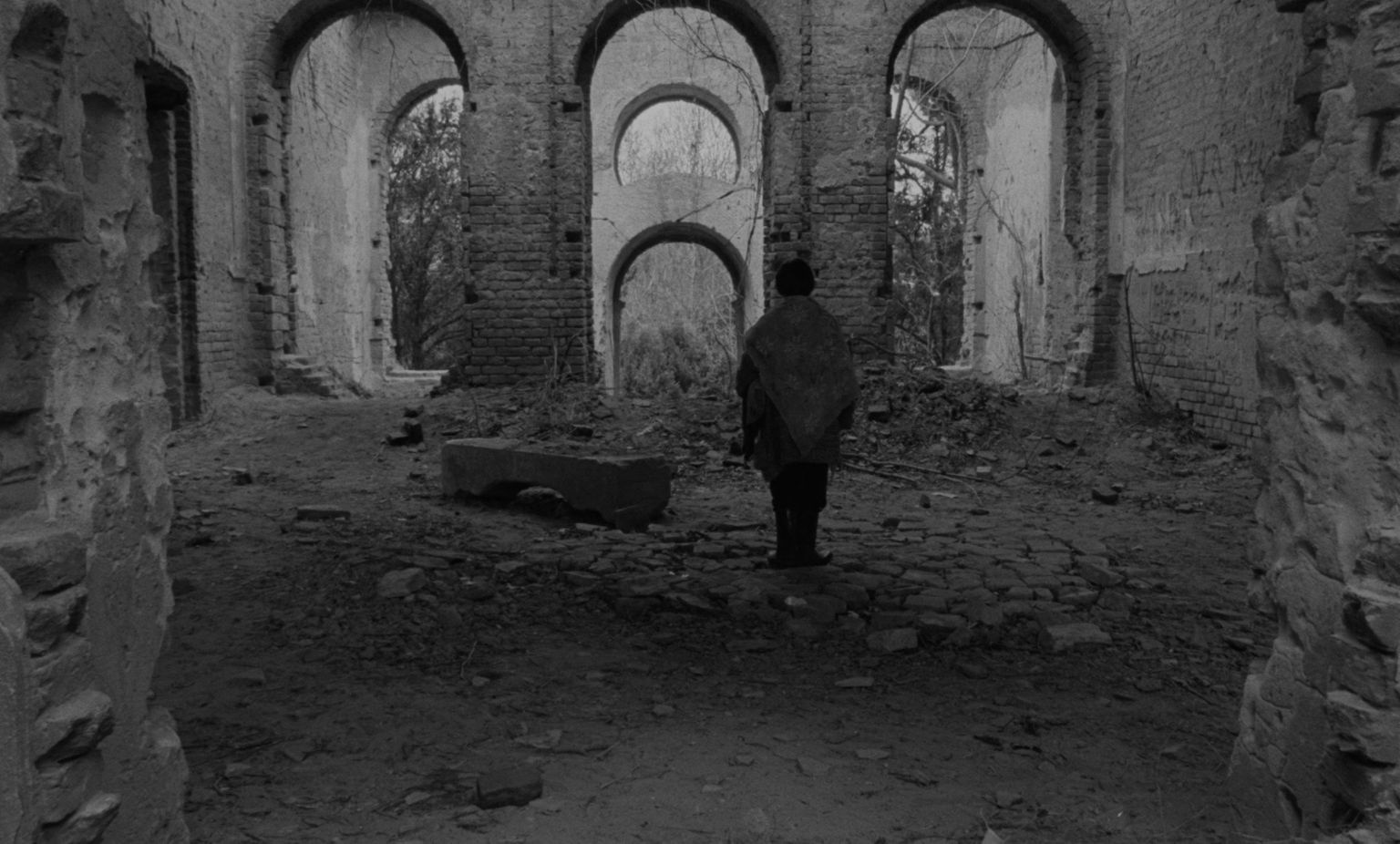
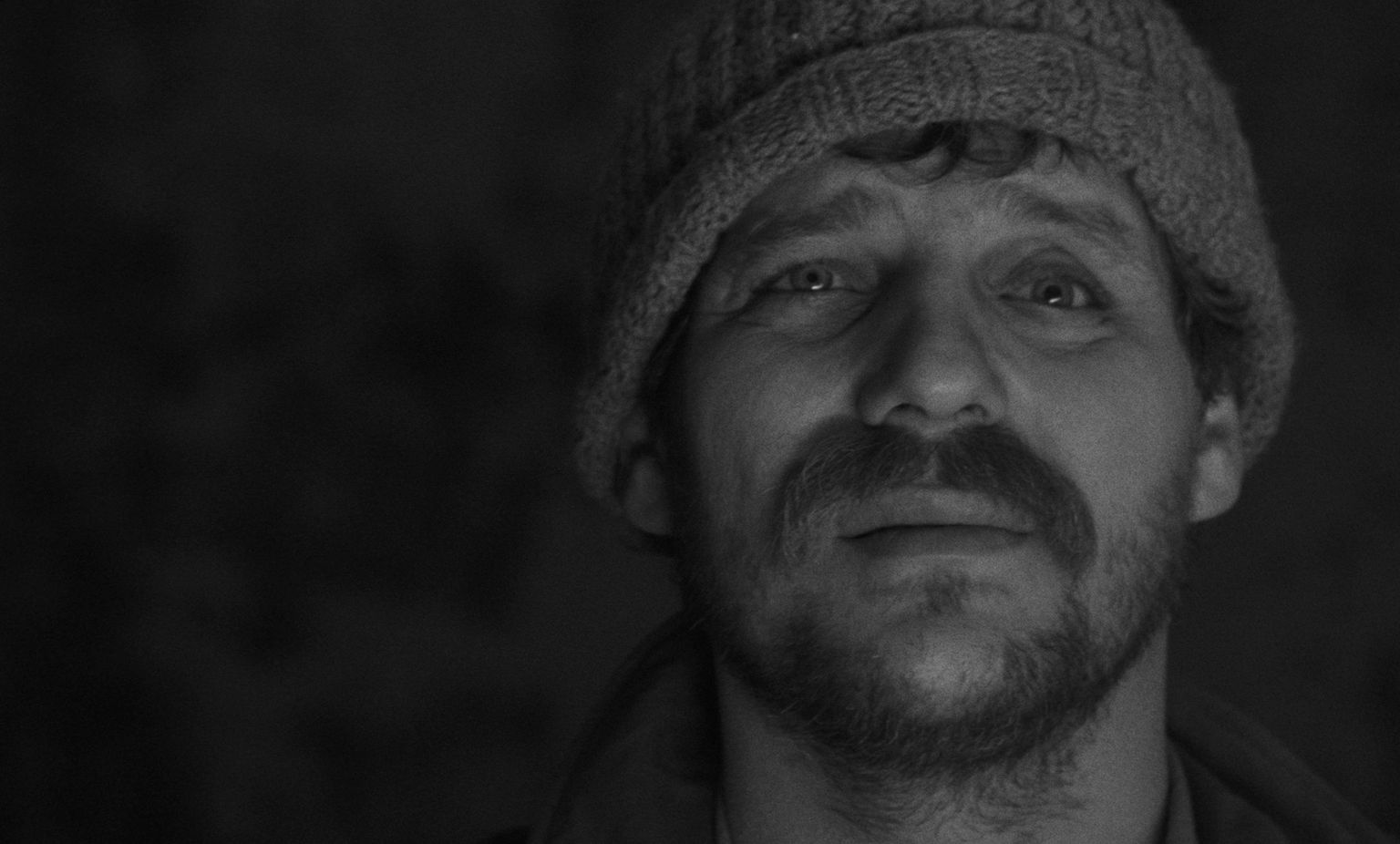
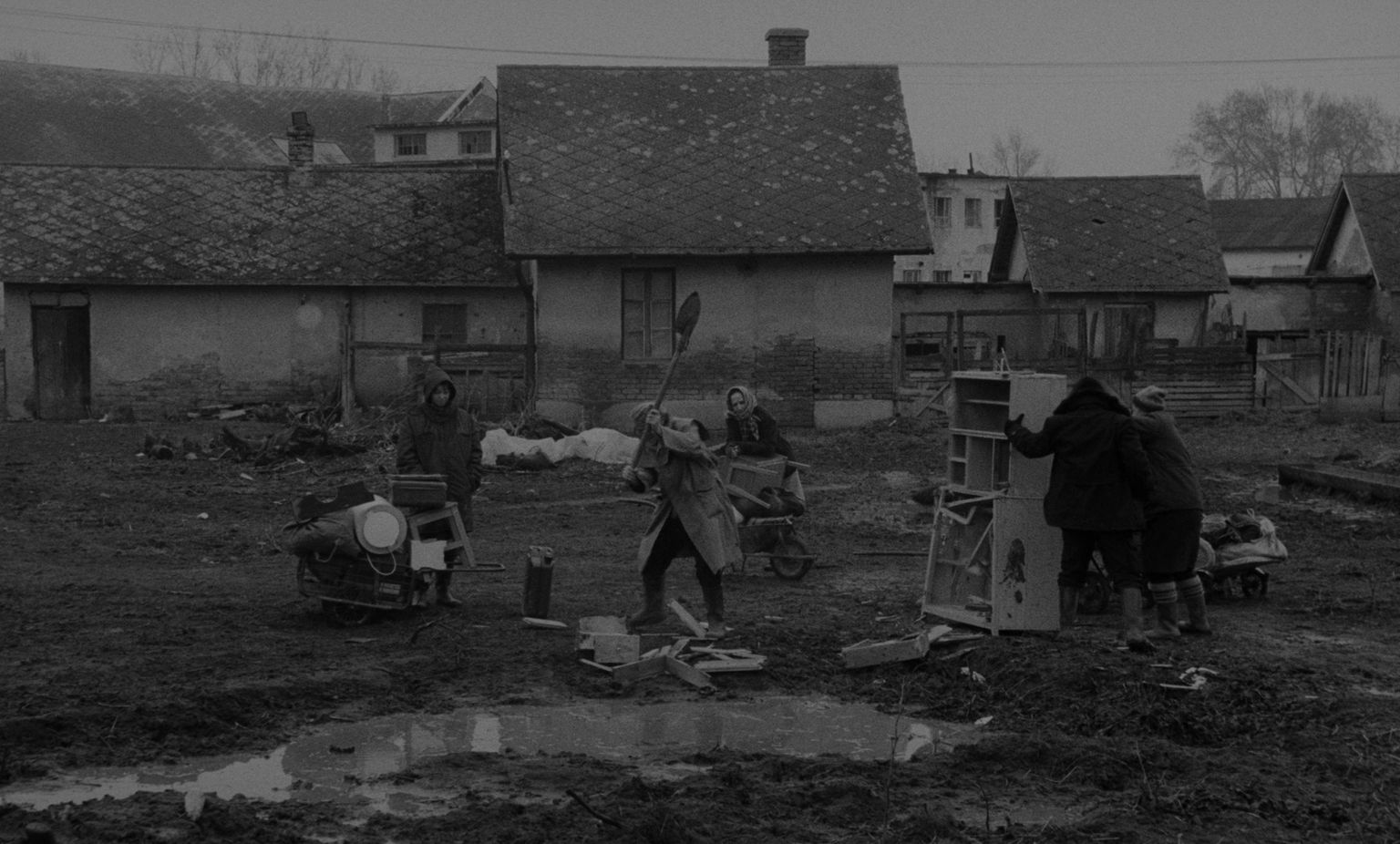
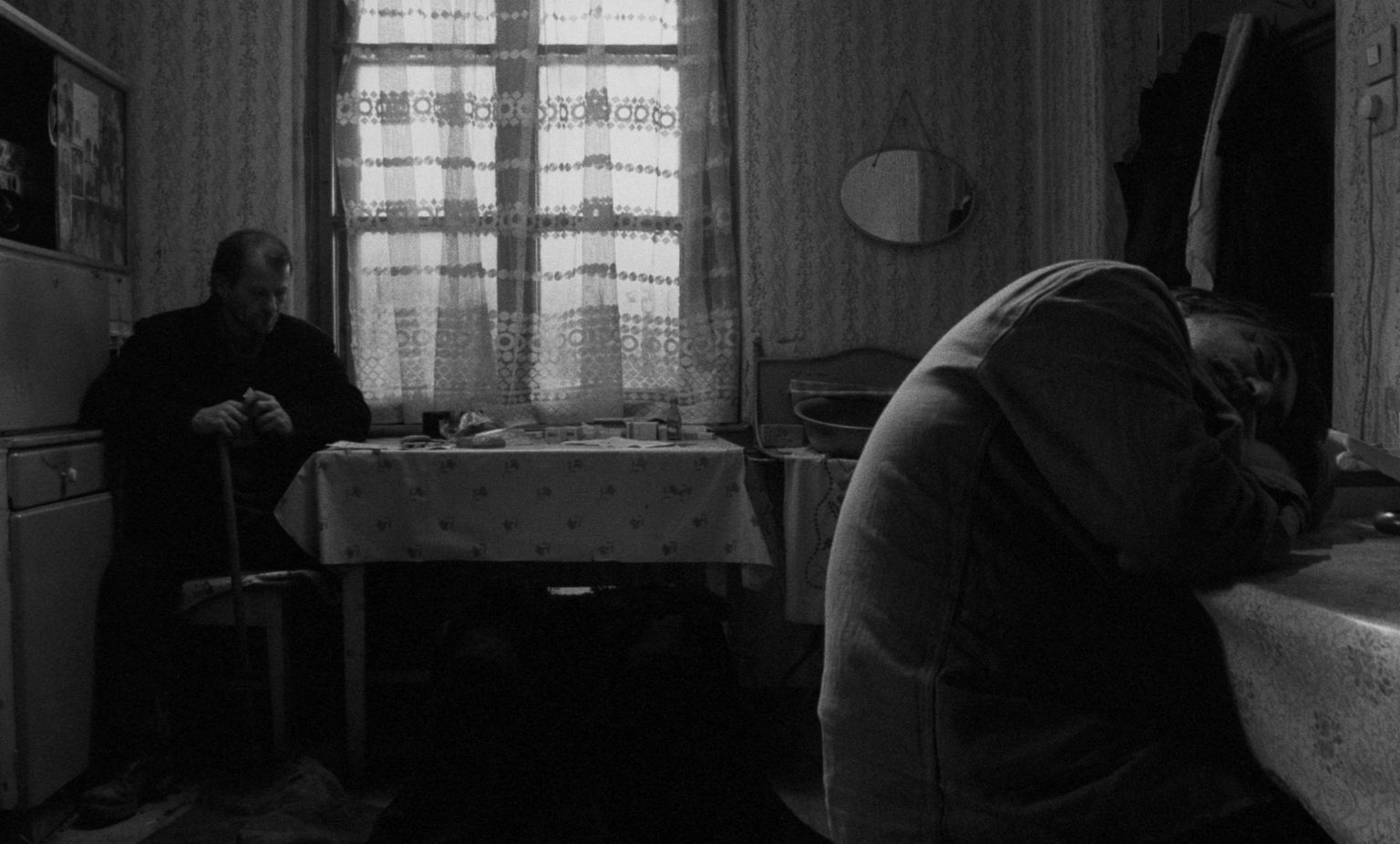
The film’s visual language is defined by stark, meticulously composed black-and-white cinematography by Fred Kelemen and seamless editing by Ágnes Hranitzky. Textures of mud, rain, and decrepit interiors are captured in long, uninterrupted takes, creating a tangible, immersive reality. The camera lingers on dance sequences, wandering villagers, and empty landscapes, while Mihály Víg’s accordion score, also featuring diegetic moments with his character Irimiás, adds melancholic, repetitive tangos, with distant church bells underscoring fate and inevitability.
Tarr’s method blends improvisation with precise pre-planning: the screenplay serves as a foundation, but performances, blocking, and even certain musical cues were developed on set, emphasizing a collaborative approach that merges narrative, image, and sound into one continuous flow. Tarr described this approach as aiming to show “what is really happening,” rejecting symbolic shorthand in favor of lived, palpable experience.





Literary Roots
Krasznahorkai’s novels are inseparable from Tarr’s cinematic style. Sátántangó extends the author’s preoccupations with human folly, social collapse, and moral ambiguity, exploring the villagers’ susceptibility to false prophets, the oppressive weight of authority, and the tragedy of indifference. Characters like the Doctor and Estike embody alternative moral responses, highlighting compassion, curiosity, and existential reflection in contrast to the villagers’ blind compliance. Tarr’s adaptation is both faithful and transformative, translating Krasznahorkai’s dense prose into a visual language of glacial pacing, cyclical structure, and immersive sound.
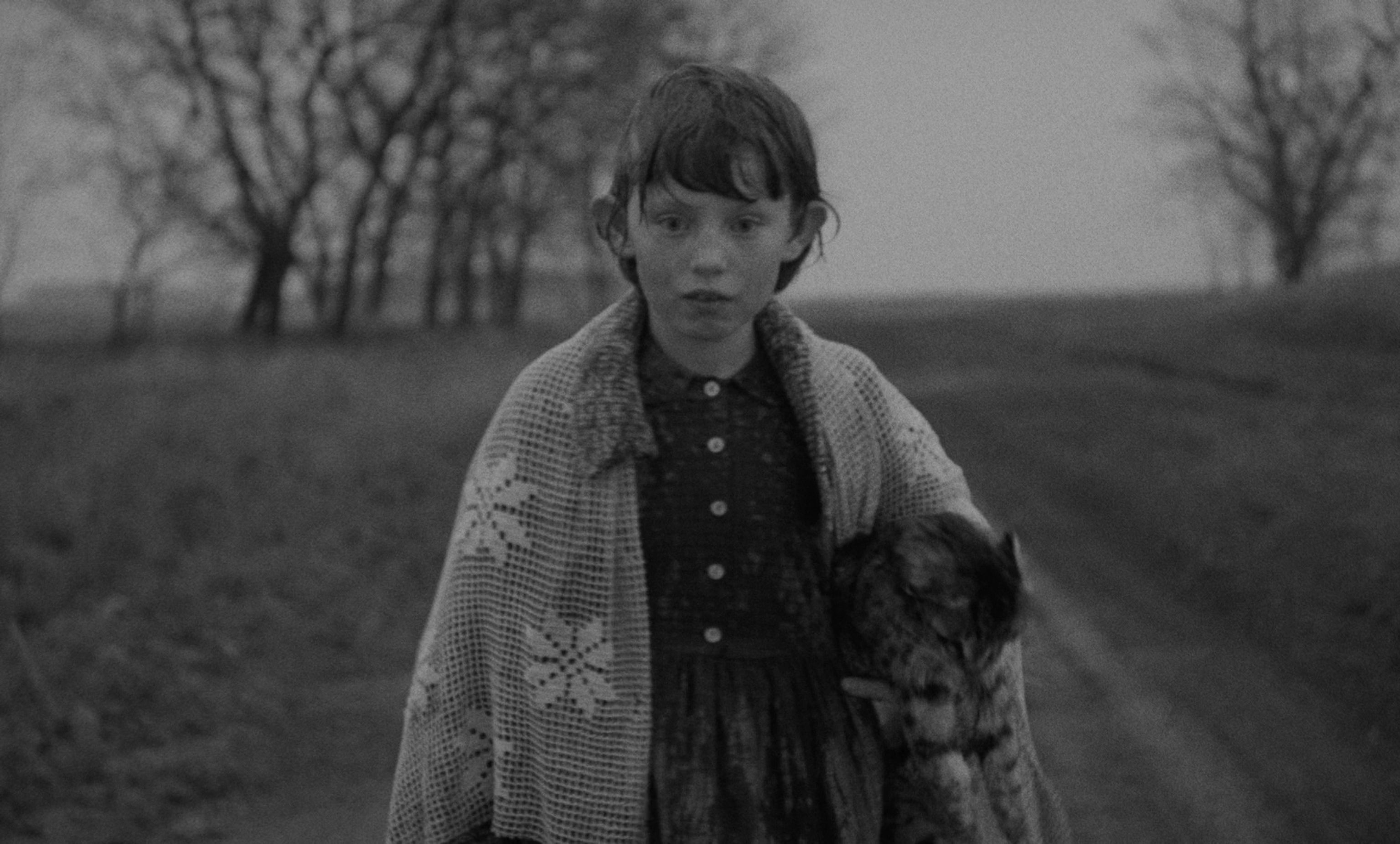
Interviews reveal Tarr’s insistence on stripping away contemporary markers - no cars, no newspapers - so that the story exists in an eternal, timeless space, while moments of dark comedy, cruelty, and surrealism punctuate the narrative, preserving the novel’s tragicomic tone. Controversial sequences, such as Estike and her cat, were filmed under veterinary supervision, highlighting ethical considerations in achieving realism without harm.
Legacy
Sátántangó remains a cornerstone of slow cinema, widely praised by Susan Sontag, Jonathan Rosenbaum, and critics worldwide. Its hypnotic pacing, existential weight, and immersive long takes have influenced generations of filmmakers, including Lav Diaz and Theo Angelopoulos. Recognized by the British Film Institute in Sight & Sound’s critics’ poll, it continues to attract cinephiles seeking transformative experiences of time, narrative, and morality. The film exemplifies Tarr and Krasznahorkai’s collaborative genius: a marriage of literature and cinema that fuses narrative, philosophy, music, and visual texture into a profound meditation on human nature, social collapse, and the subtle, inexorable passage of time. Even decades after its release, it challenges viewers to confront the stark realities of life, the allure of false authority, and the tragic beauty of fleeting human agency.