
Peter Zumthor
Swiss Pavilion
- ArchitectPeter Zumthor
- PhotographerRoland Halbe – rolandhalbe.eu
Praksis Arkitekter The Hannover Swiss Pavilion demonstrates how minimal means can produce maximum atmosphere – and quietly outperform almost everybody in architectural richness.

A Temporary Country Made of Wood
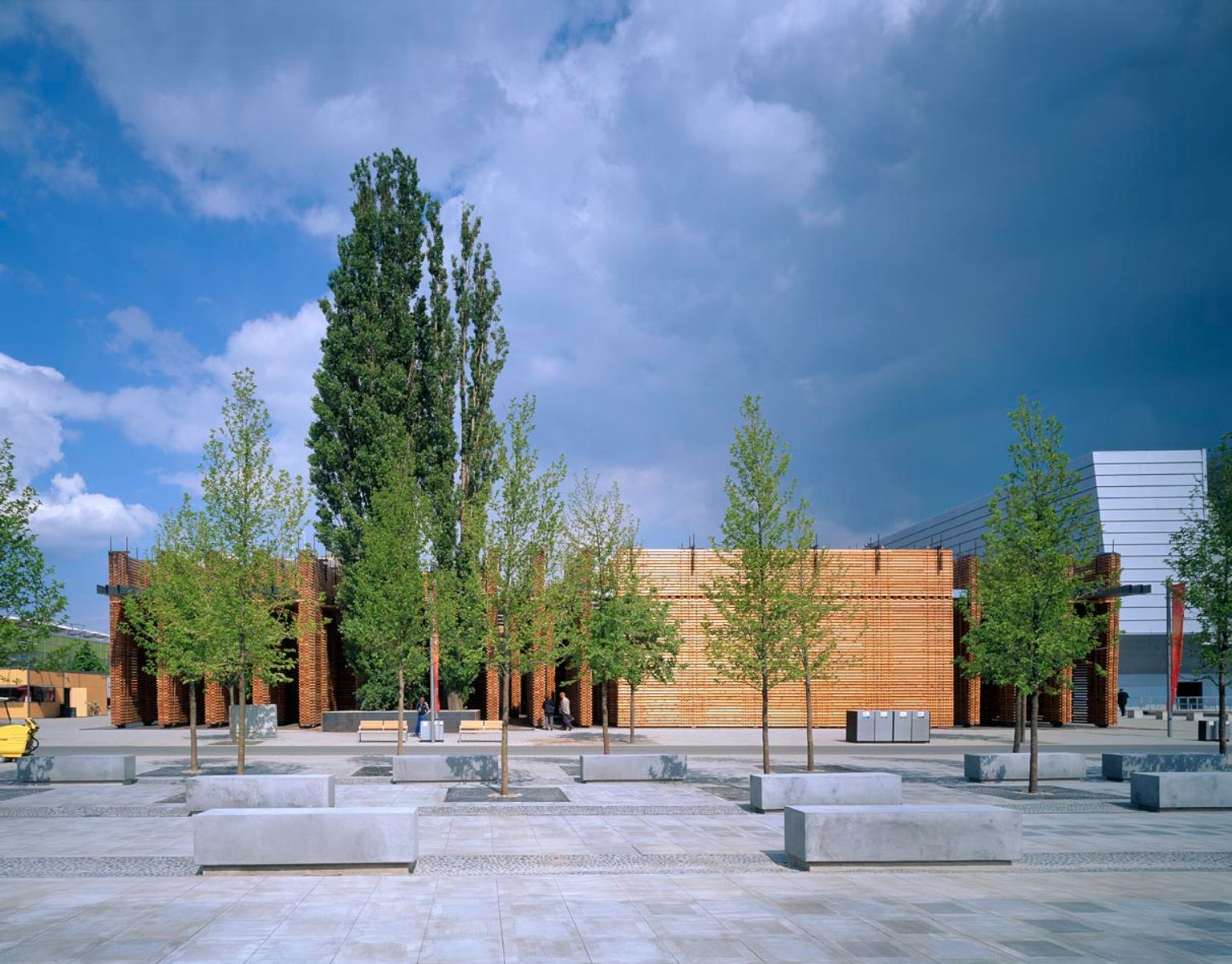
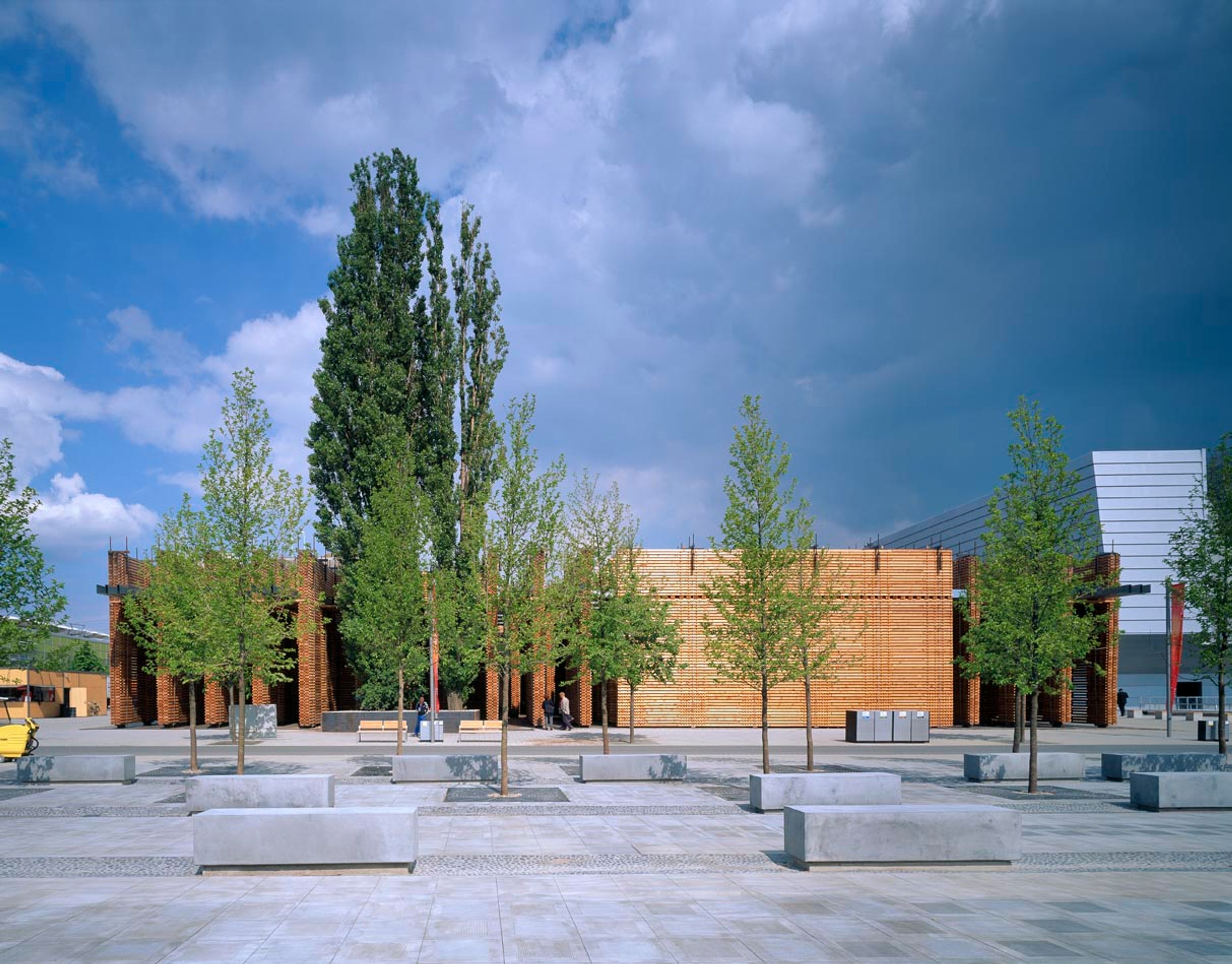
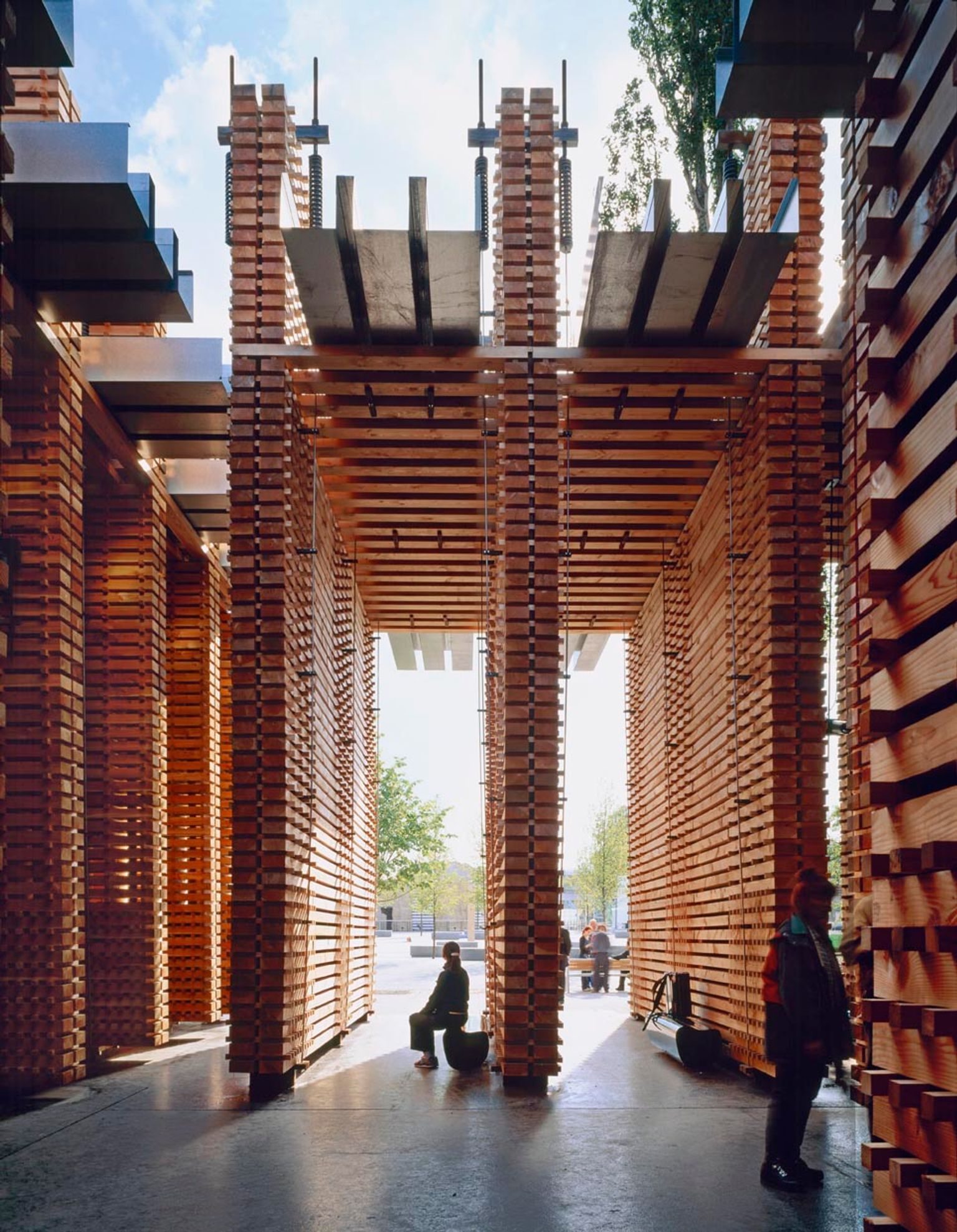
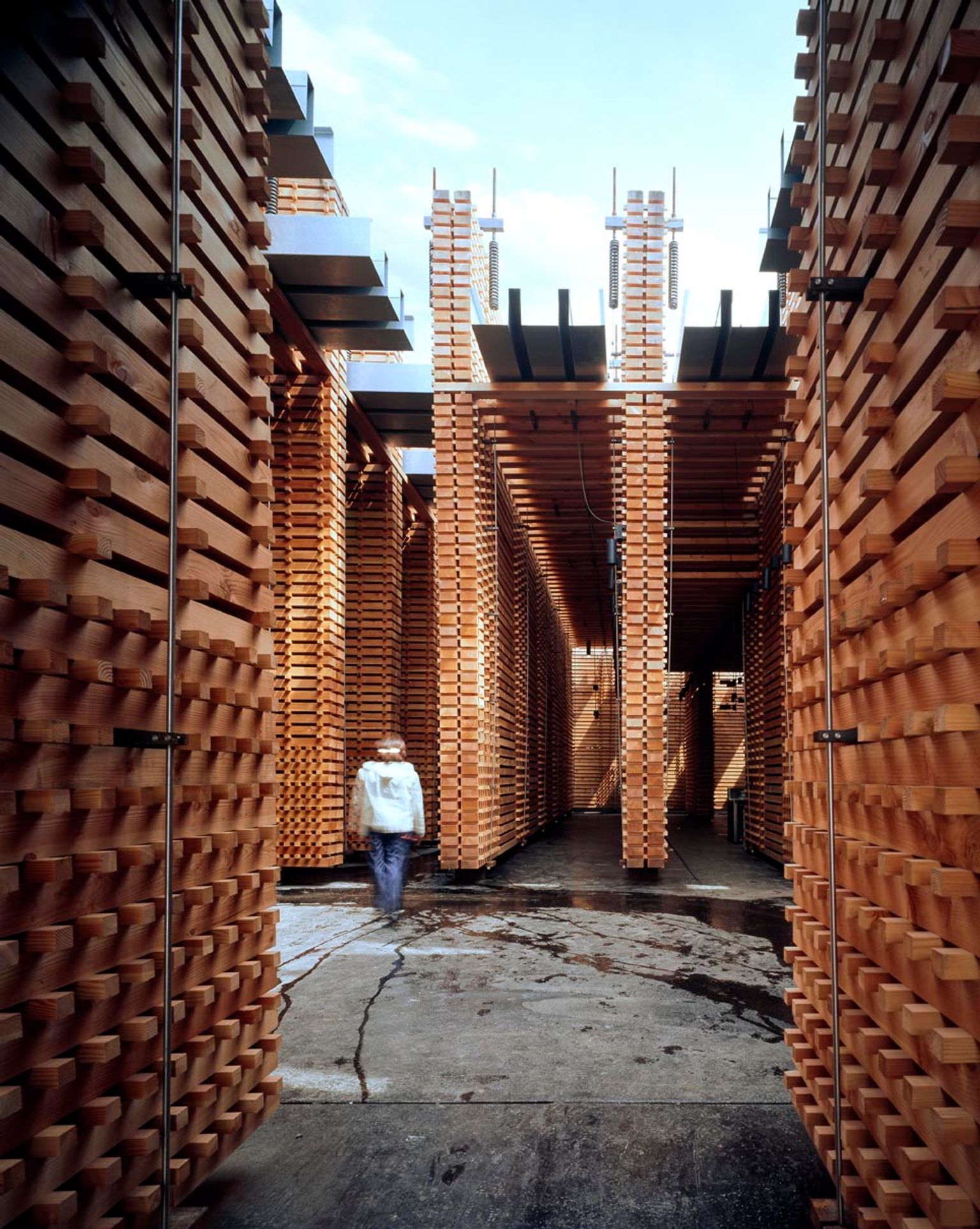
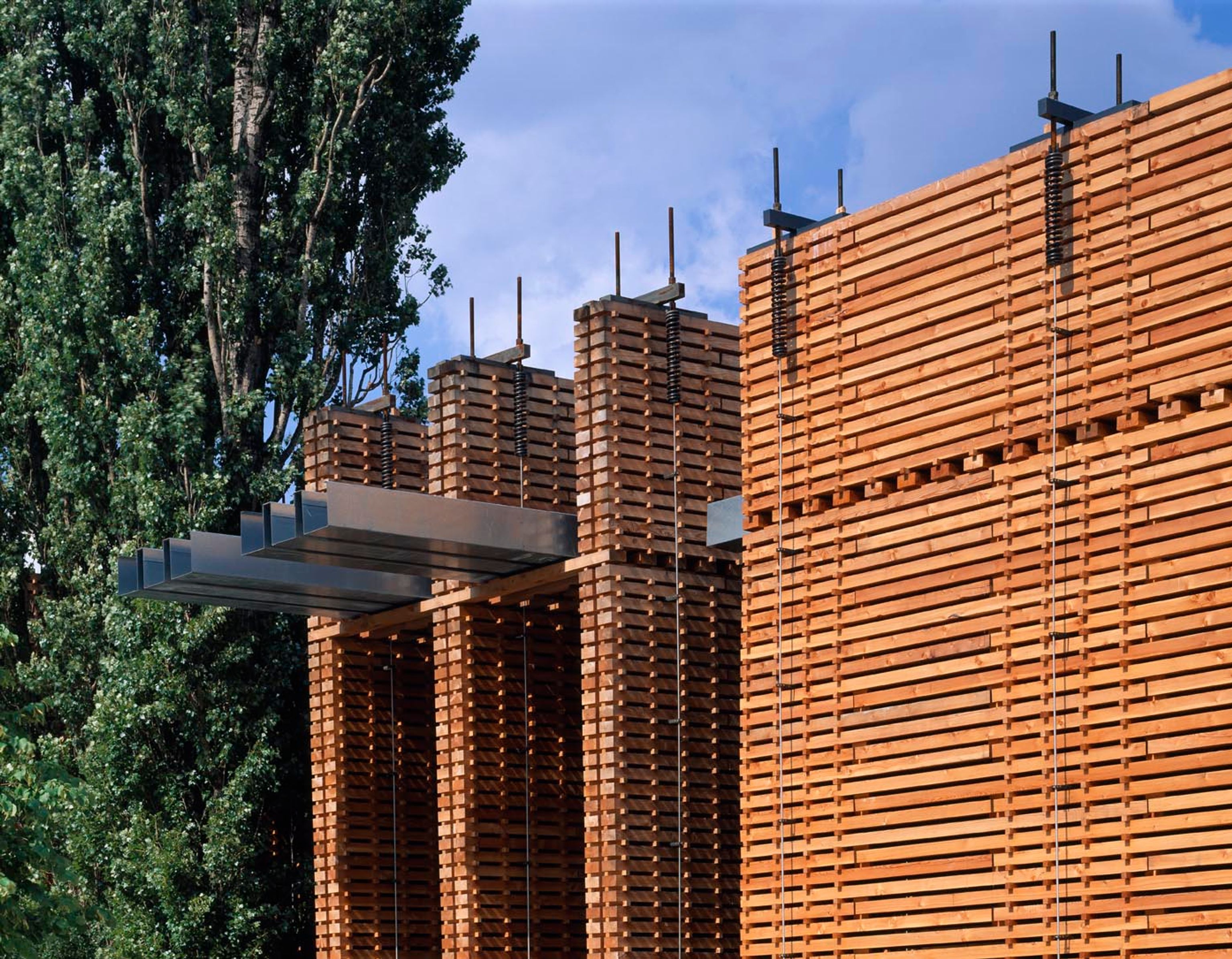
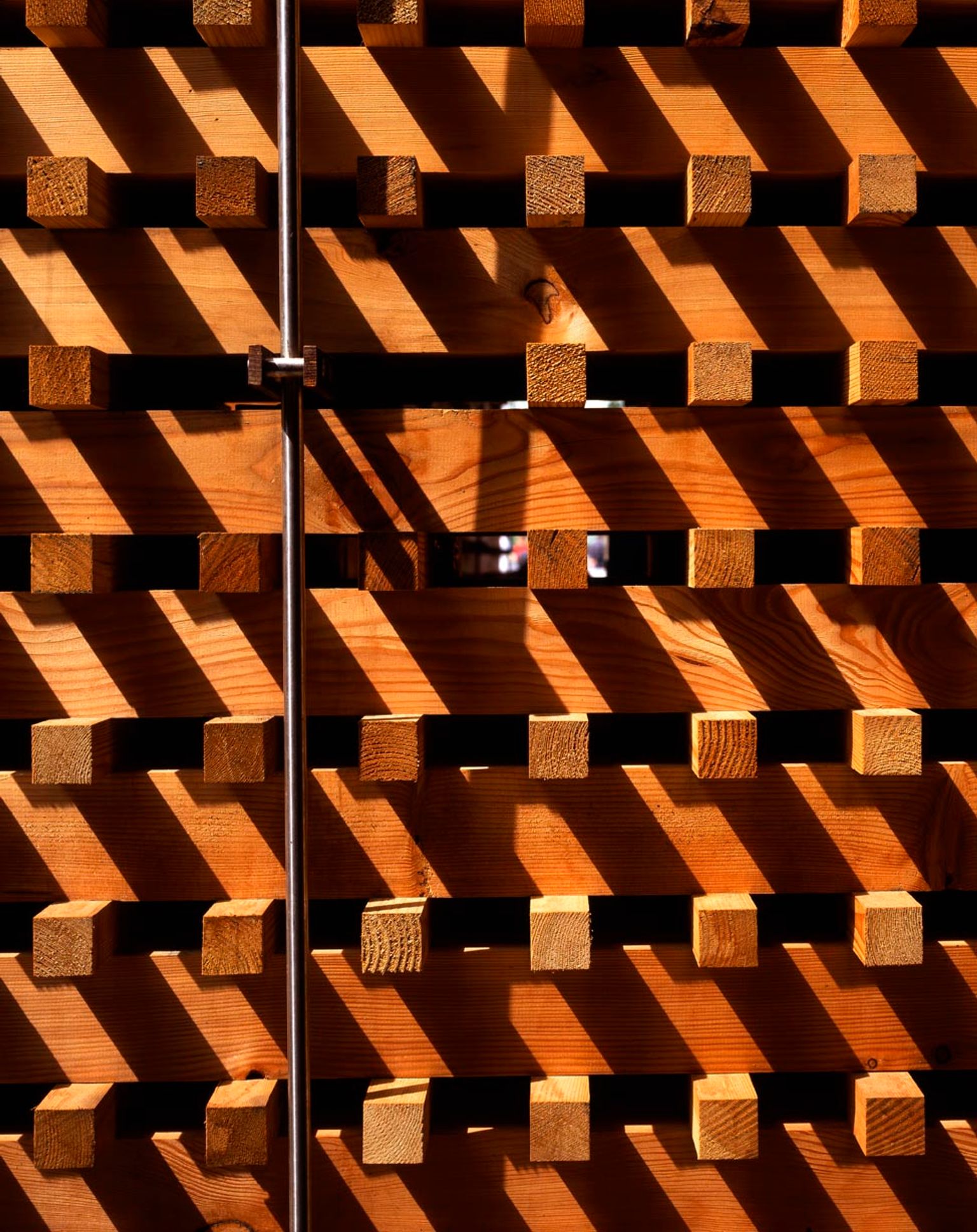
The Swiss Pavilion at Expo 2000 in Hannover was never meant to behave like a conventional building. Designed by Peter Zumthor, it was conceived as a temporary piece of architecture that would perform Switzerland rather than simply represent it. Built on a 50 x 50 meter footprint and rising only 9 meters, the pavilion was constructed almost entirely from Swiss timber, around 45,000 wooden beams stacked, layered, and tensioned into place. There were no nails, no glue, no permanent joints. Everything was held together through friction, steel rods, and compression, allowing the entire structure to be dismantled and reused after the exhibition.

From the beginning, the idea was not permanence but presence. Zumthor worked with Karoline Gruber and a wide network of collaborators to assemble not just a building, but a living environment, one that could shift with time, weather, and human activity. In this sense, the pavilion becomes less an object and more a situation: a temporary country built from wood, sound, and atmosphere.

The Sound Box: Architecture You Walk Through
At the core of the project is what Zumthor called the Sound Box, a dense, open labyrinth of timber walls arranged in a grid. These walls are not closed surfaces but stacked beams that allow air, wind, and light to pass through. You enter from any side, and immediately lose the idea of a single route or fixed perspective. Instead, the pavilion unfolds as a sequence of corridors, courtyards, and shifting spatial densities.
The architecture behaves like an instrument. As visitors move through it, they trigger changing acoustic conditions: footsteps soften on wood, voices echo differently in narrow passages, and live music, performed daily by musicians and singers, reverberates across the structure. There is no single composition. Instead, the pavilion is constantly re-tuning itself through human presence, weather conditions, and performance. It is architecture as an acoustic field rather than a static object.

A Landscape of Words, Light, and Fragments
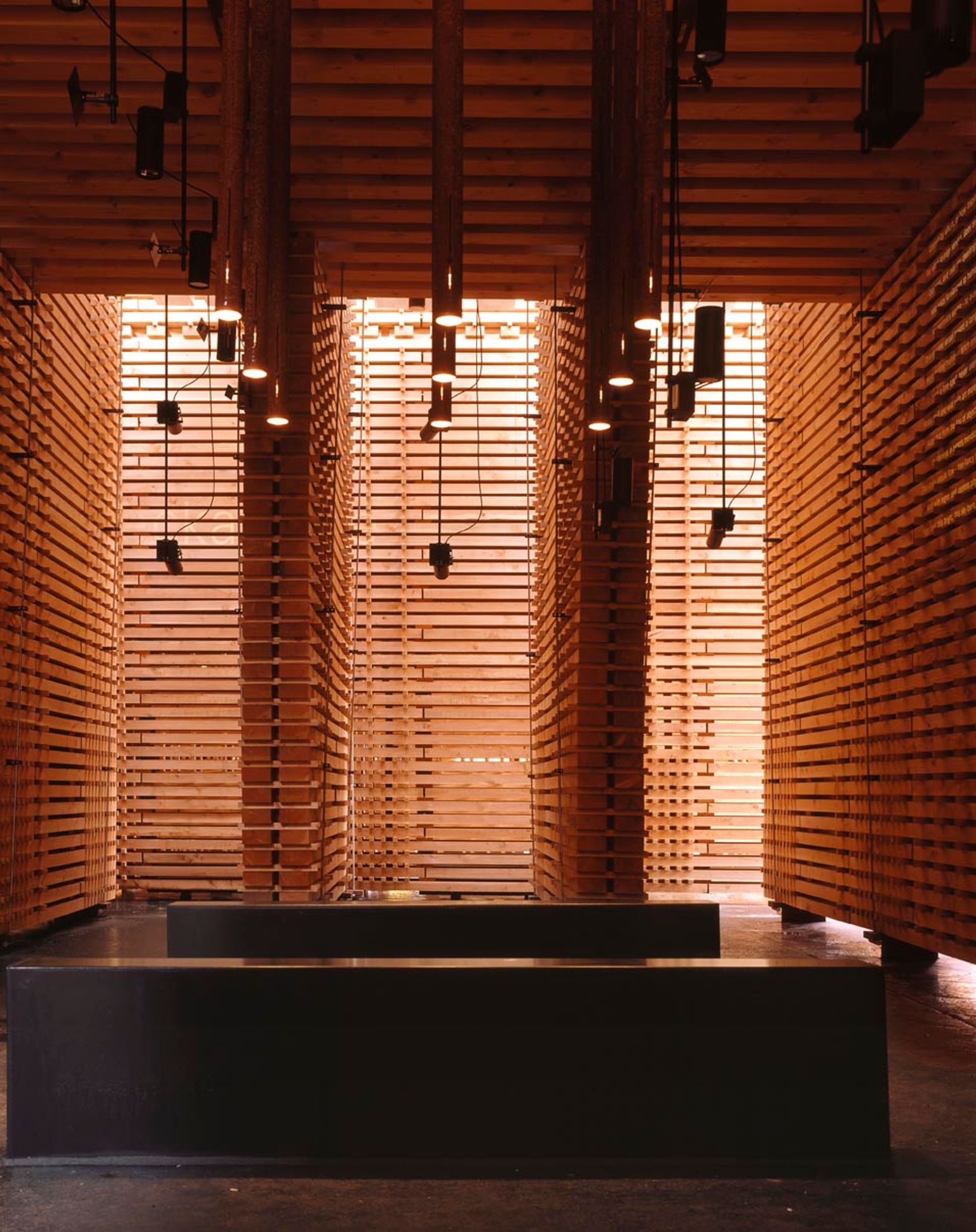
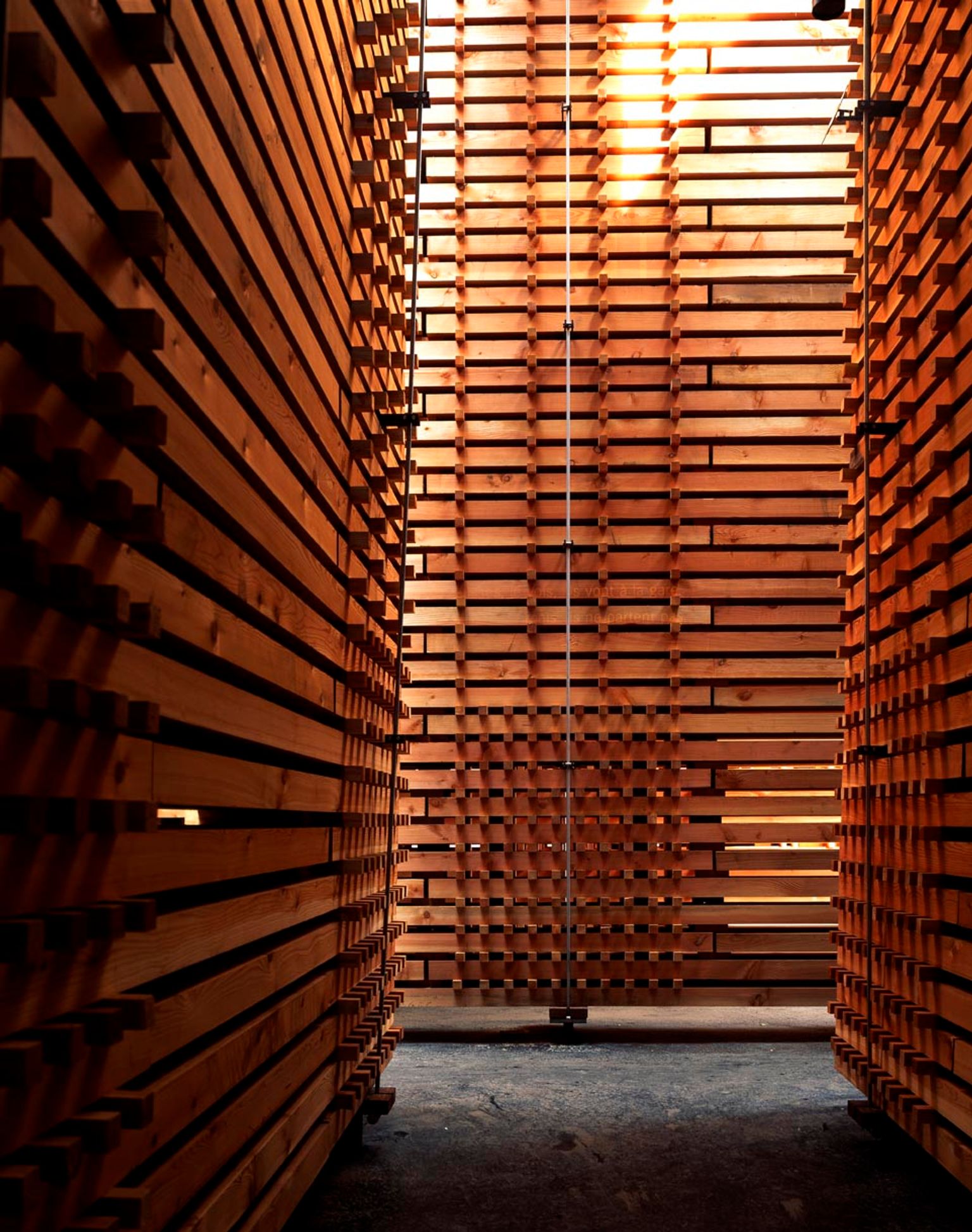
Inside the timber structure, light becomes another material. Suspended projectors cast sharp beams onto the wooden beams, projecting words, fragments of texts, and multilingual sentences across the surfaces. These are not designed to be read in sequence. Instead, they appear and disappear as visitors move, forming fleeting constellations of meaning.
The content is deliberately diverse: literary quotes, folk songs, statistical data, and poetic fragments connected to Swiss culture. Sometimes the words appear large and architectural, filling entire surfaces like banners; at other times they shrink into almost hidden inscriptions. The result is a shifting textual landscape, part library, part dream, where language behaves like light rather than information.
In this environment, reading is not a task but an accidental encounter. Meaning is unstable, always dependent on movement, distance, and attention.

The Everyday as Performance
Beyond sound and language, the pavilion extends into the most everyday sensory experiences: food and hospitality. Swiss cuisine is served inside the structure, but not as a fixed menu. It changes with seasons, visitor flow, and timing, becoming another layer of the pavilion’s constant transformation. Staff and visitors share the same space, blurring the line between exhibition and daily life.
Climate is equally present. The structure is open enough to let wind pass through, sunlight filter in, and even rain enter certain areas. Rather than resisting the environment, the pavilion absorbs it. This creates a condition where architecture is never fully separated from its surroundings, it is continuously negotiated through temperature, weather, and human movement.
What emerges is not a controlled interior, but a porous field where Switzerland is staged as hospitality, rhythm, and lived atmosphere.

Zumthor’s Architecture of Experience
Peter Zumthor, born in Basel in 1943, is known for an architectural language that resists spectacle in favor of intensity, material presence, and sensory clarity. His work, from the thermal baths in Vals to the Kolumba Museum in Cologne, consistently explores how spaces are felt rather than simply seen. He approaches architecture as something built from atmosphere: light, sound, texture, temperature.
The Swiss Pavilion is a direct expression of this thinking, but also a radical extension of it. Instead of designing a finished object, Zumthor constructs a system of conditions. The pavilion does not symbolize Switzerland, it behaves like it. It is structured like a memory that keeps rewriting itself through movement, sound, and interaction.
At Expo 2000, where many nations built images of themselves, Switzerland, through Zumthor’s pavilion, offered something quieter and more unstable: an environment that could only be understood by walking through it.