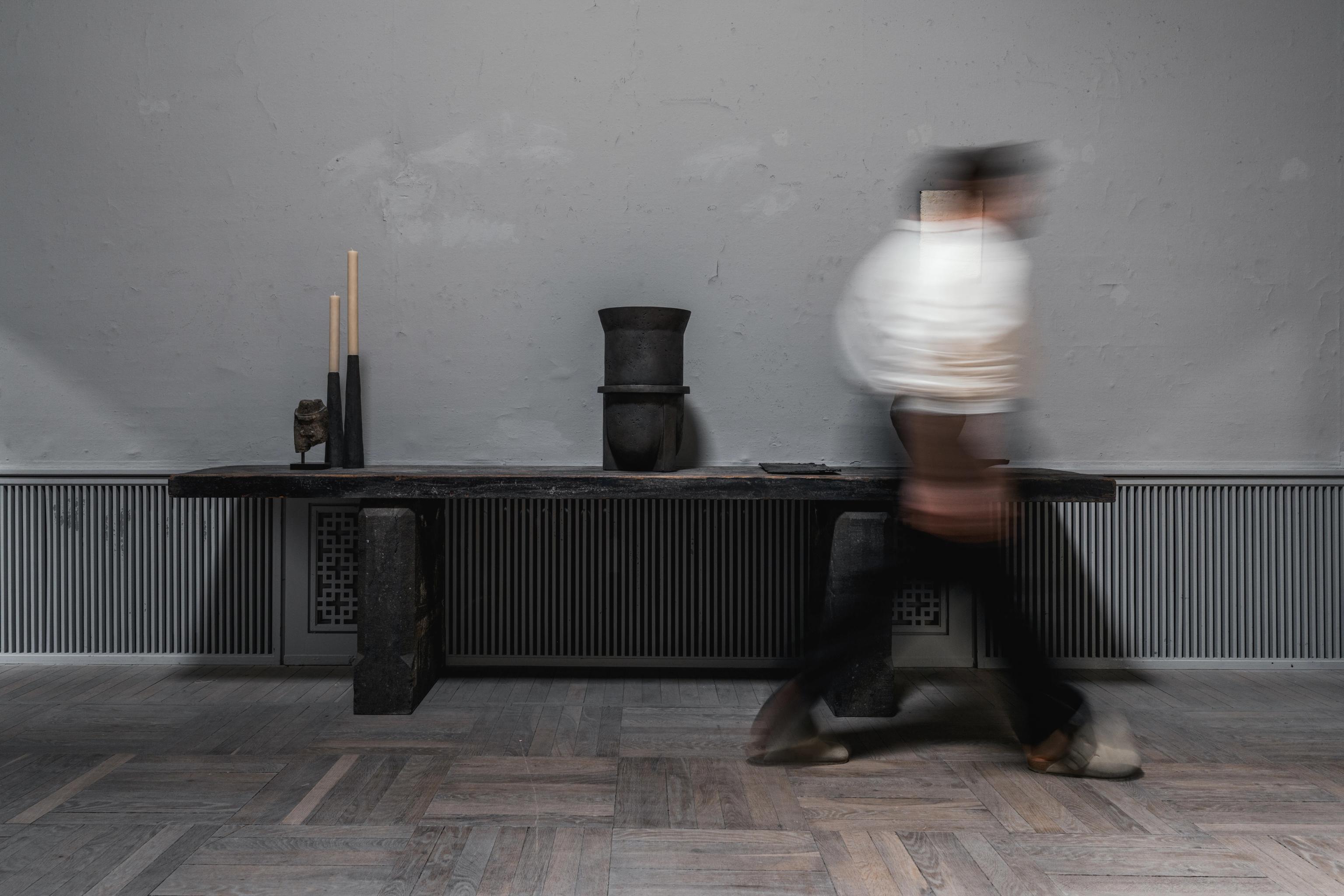

Michèle Lamy and Oliver Gustav
STAGING
- ExhibitionMichèle Lamy & Oliver Gustav
- DesignerRick Owens
- PhotographerIda Havn and Filip Gielda
Desiree Groenendal I have been visiting Rick Owens in Milan for years, and I have always been drawn to his furniture and the darker, more sculptural side of his design. In the Milan store, I usually only get to see a few individual furniture pieces within the larger Rick Owens universe, so seeing so many of them together at this exhibition was a very different experience for me.
What made it even more special was seeing Rick Owens’ work intertwined with Oliver Gustav’s own world at Studio Oliver Gustav. I have also followed and admired Oliver Gustav’s work for years, so bringing these two worlds together felt like the best of both worlds for me.
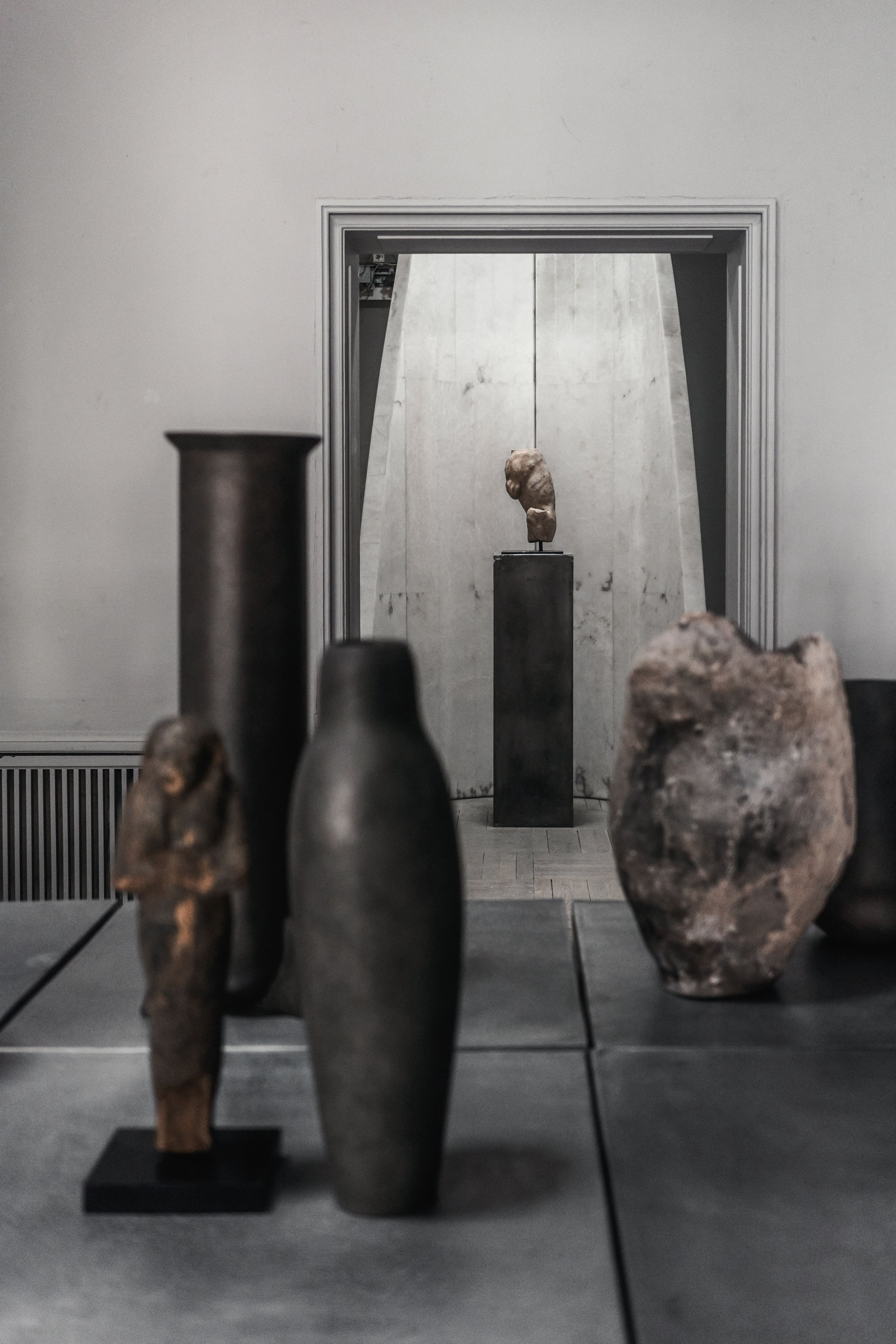

A Meeting of Worlds
Inside Studio Oliver Gustav’s neoclassical building in Copenhagen, STAGING brings together the distinct worlds of Michèle Lamy and Oliver Gustav in an atmospheric presentation of contemporary art, collectible design and spatial storytelling. The exhibition places Rick Owens’ sculptural furniture in dialogue with works by Scarlett Rouge, Giovanni Bassan, Kaare Golles and Rasmus Rosengaard, creating a setting where furniture, art and architecture become part of one continuous composition.
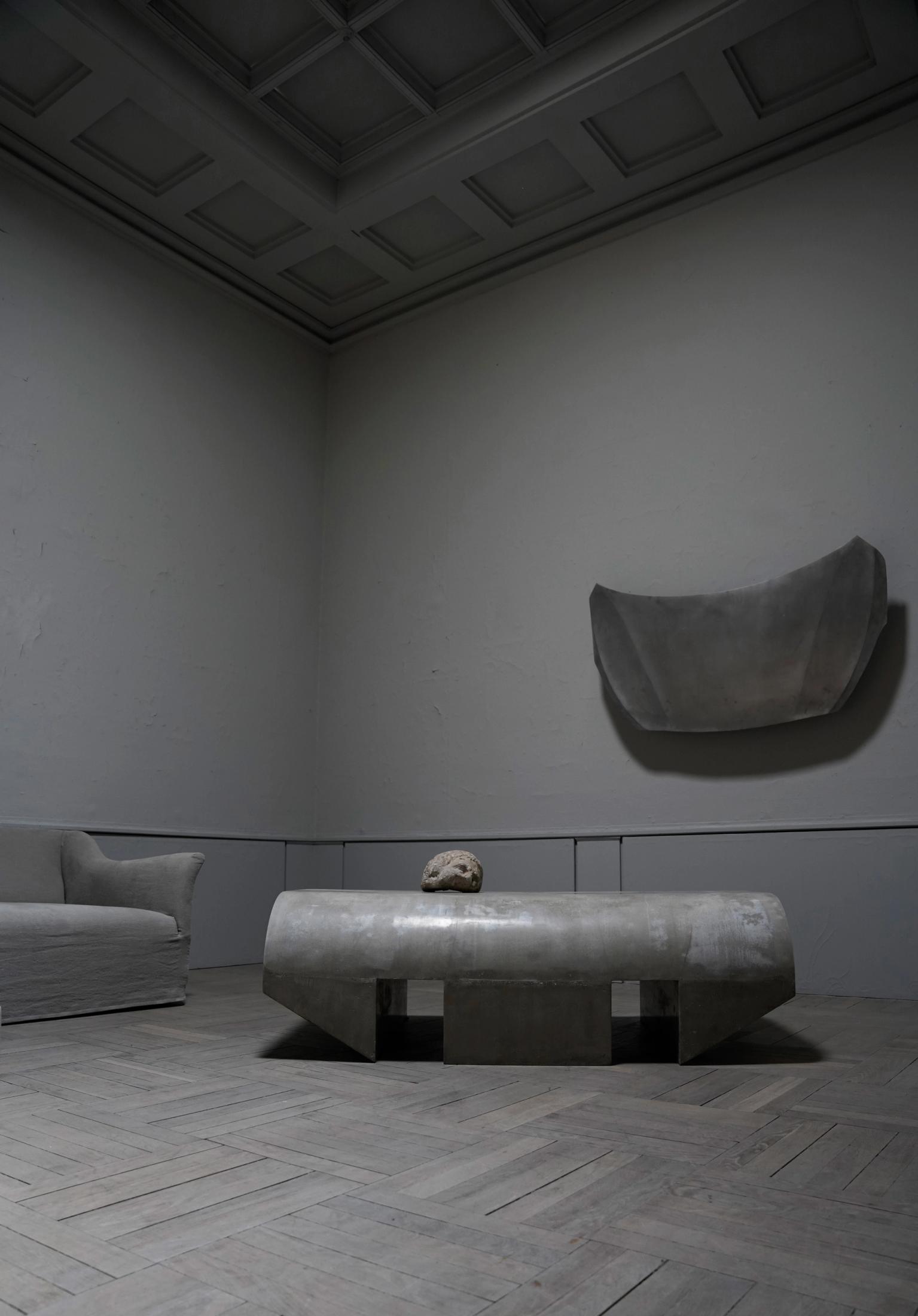

A Historic Setting
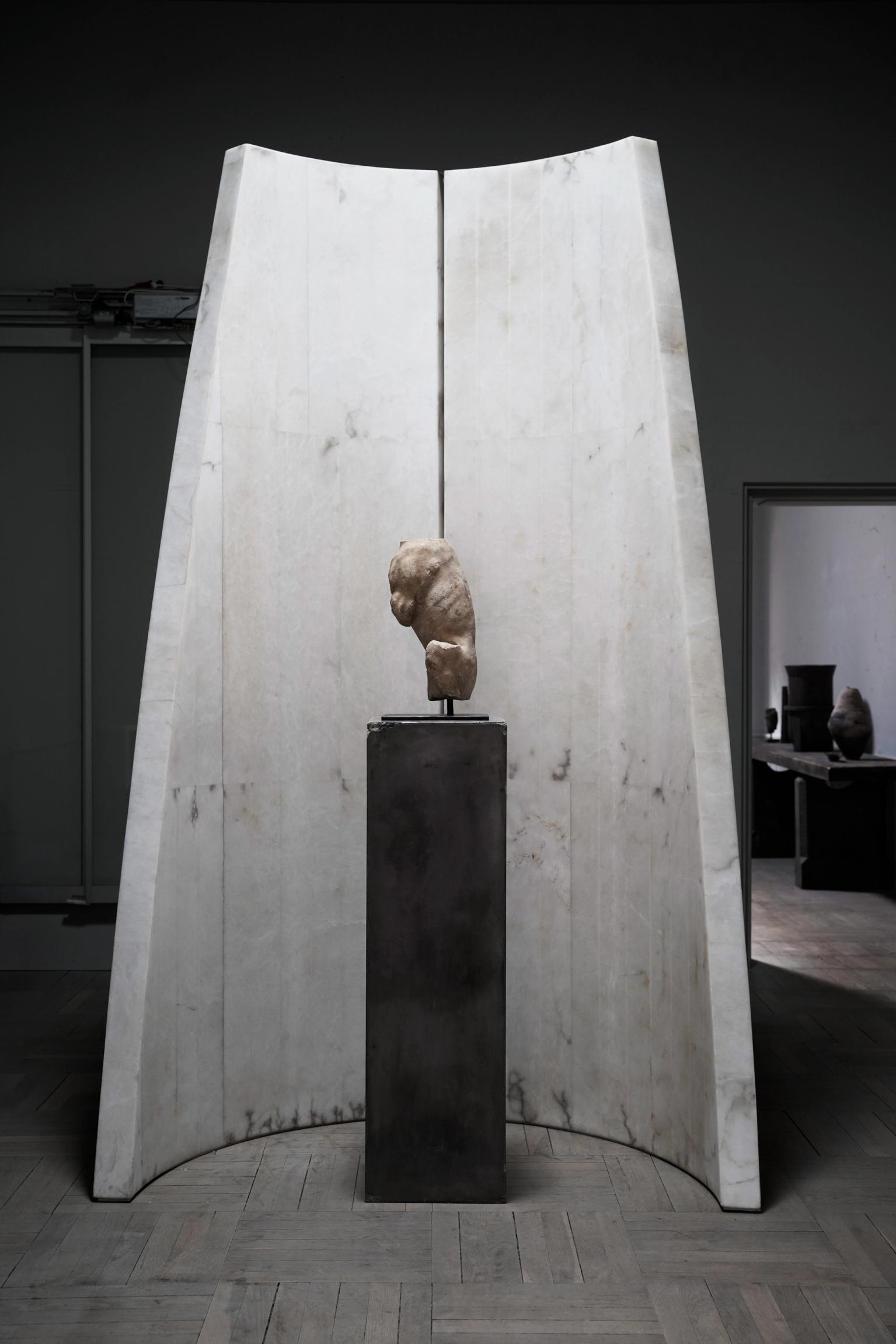
STAGING unfolds within Studio Oliver Gustav’s historic Copenhagen setting, a neoclassical building dating from the early 20th century. With its restrained architecture, worn surfaces and quiet, monumental character, the space provides a striking backdrop for the exhibition. Rather than functioning as a neutral gallery, the building becomes an active part of the presentation, its architectural qualities amplifying the materiality and scale of the works within it.
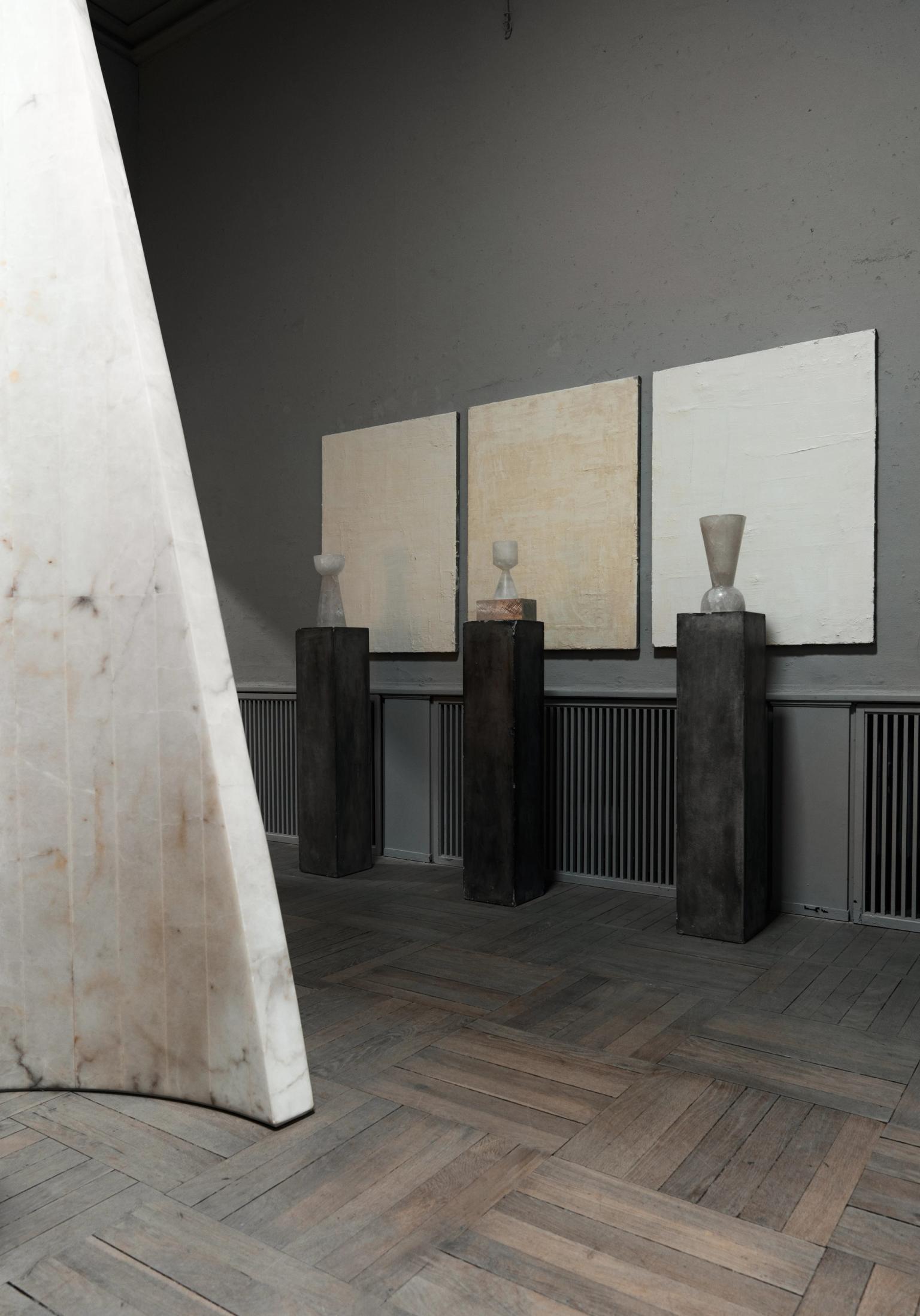

Rick Owens in Focus
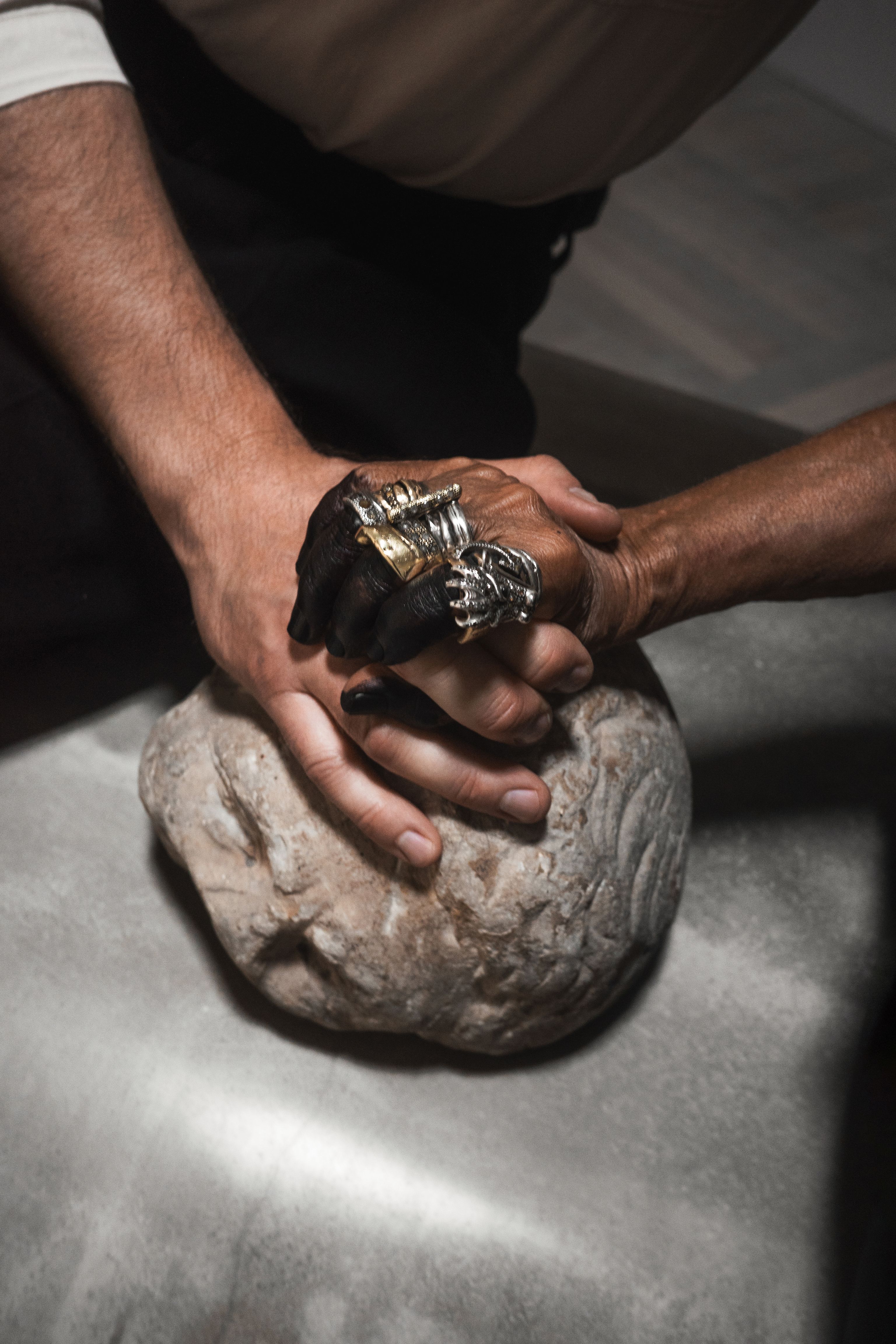
At the centre of STAGING is a selection of furniture by Rick Owens, whose sculptural approach transforms familiar domestic forms into monumental objects. Made from materials including concrete, alabaster, plywood, bronze, crystal and petrified wood, the pieces carry a raw, elemental quality. Tables, seating, screens and vessels appear less as functional objects and more as forms with their own physical presence, reflecting Owens’ longstanding interest in brutalist architecture, natural forms and unconventional materials.

Material Contrasts
The works surrounding Rick Owens’ furniture expand this material language while introducing moments of softness, fragility and reflection. Kaare Golles contributes sculptural works with tactile and reflective surfaces, while Giovanni Bassan’s ceramics bring a more delicate, handcrafted quality to the composition. Rasmus Rosengaard’s restrained works add another layer of texture, while Scarlett Rouge’s Maters Matter triptych introduces a more conceptual dimension. Composed of carved plaster, pigment and wood, the work considers femininity, nature and the idea of matter itself.

The Art of Staging
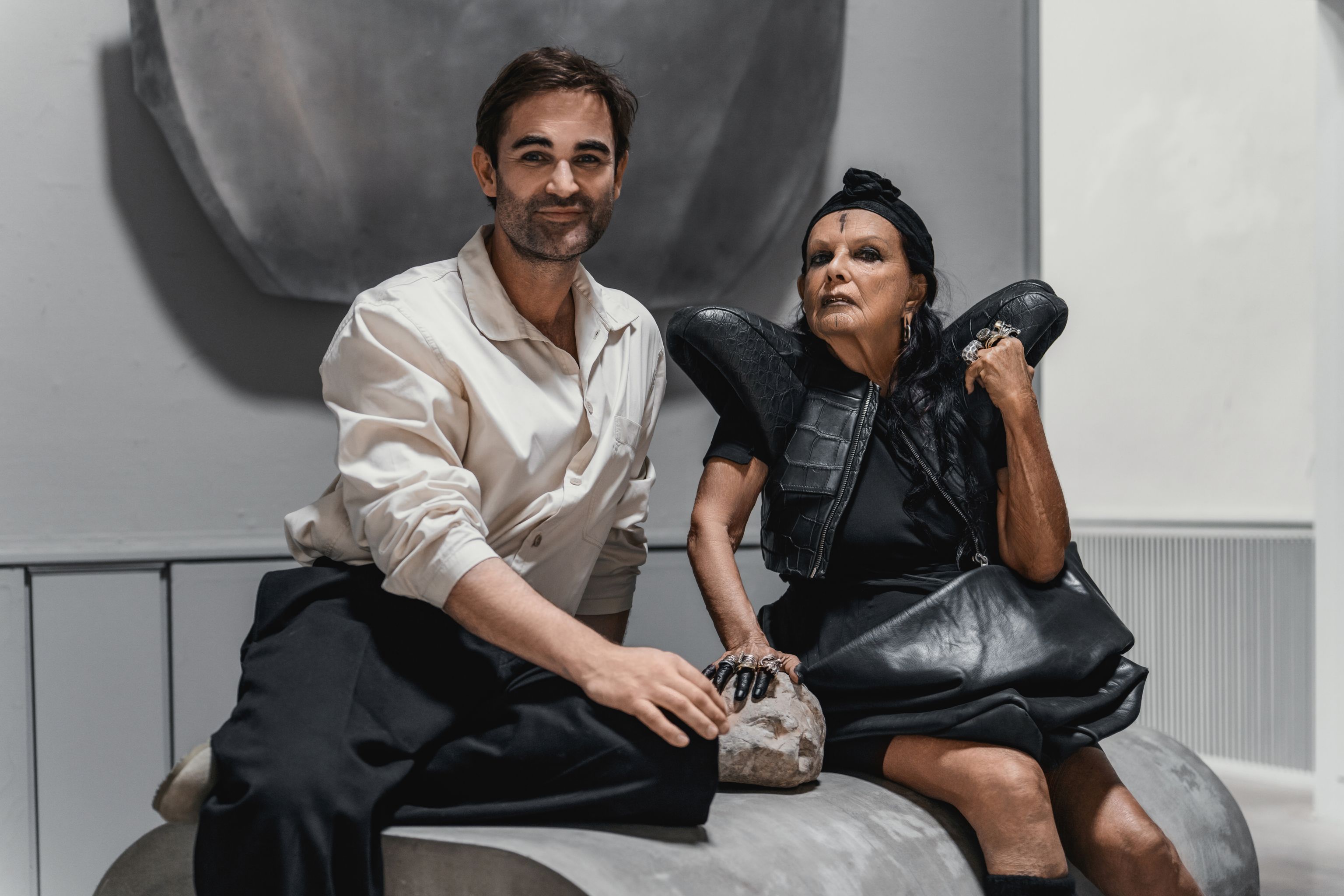
The exhibition is ultimately as much about arrangement as it is about individual works. Michèle Lamy and Oliver Gustav carefully position the objects to create tension between contrasting materials, scales and forms: hard against soft, matte against reflective, industrial against refined. Rick Owens’ monumental furniture is therefore not presented in isolation, but becomes part of a larger spatial dialogue with the artworks, Gustav’s own furnishings and the architecture of the building.

A Distinctive Language
STAGING reflects Oliver Gustav’s broader approach to design and curation, where historic objects, contemporary art and design are brought together through a highly considered spatial language. His interiors are defined by a restrained palette, natural materials and a tension between the old and the new. Here, that sensibility meets Michèle Lamy’s artistic vision and Rick Owens’ uncompromising material language, resulting in an immersive environment where every object contributes to the atmosphere of the whole.