
Power Figures
Nkisi N’Kondi
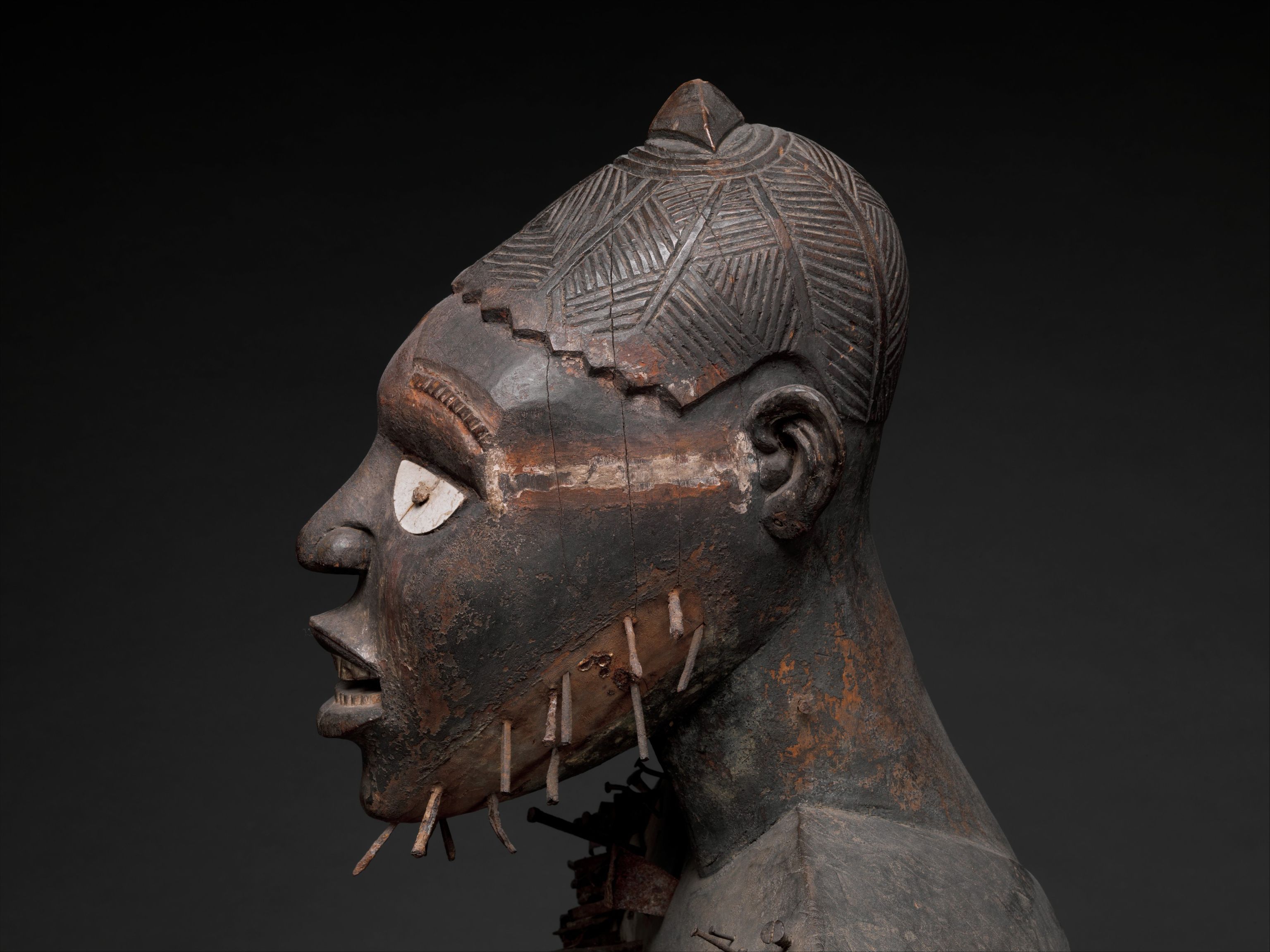
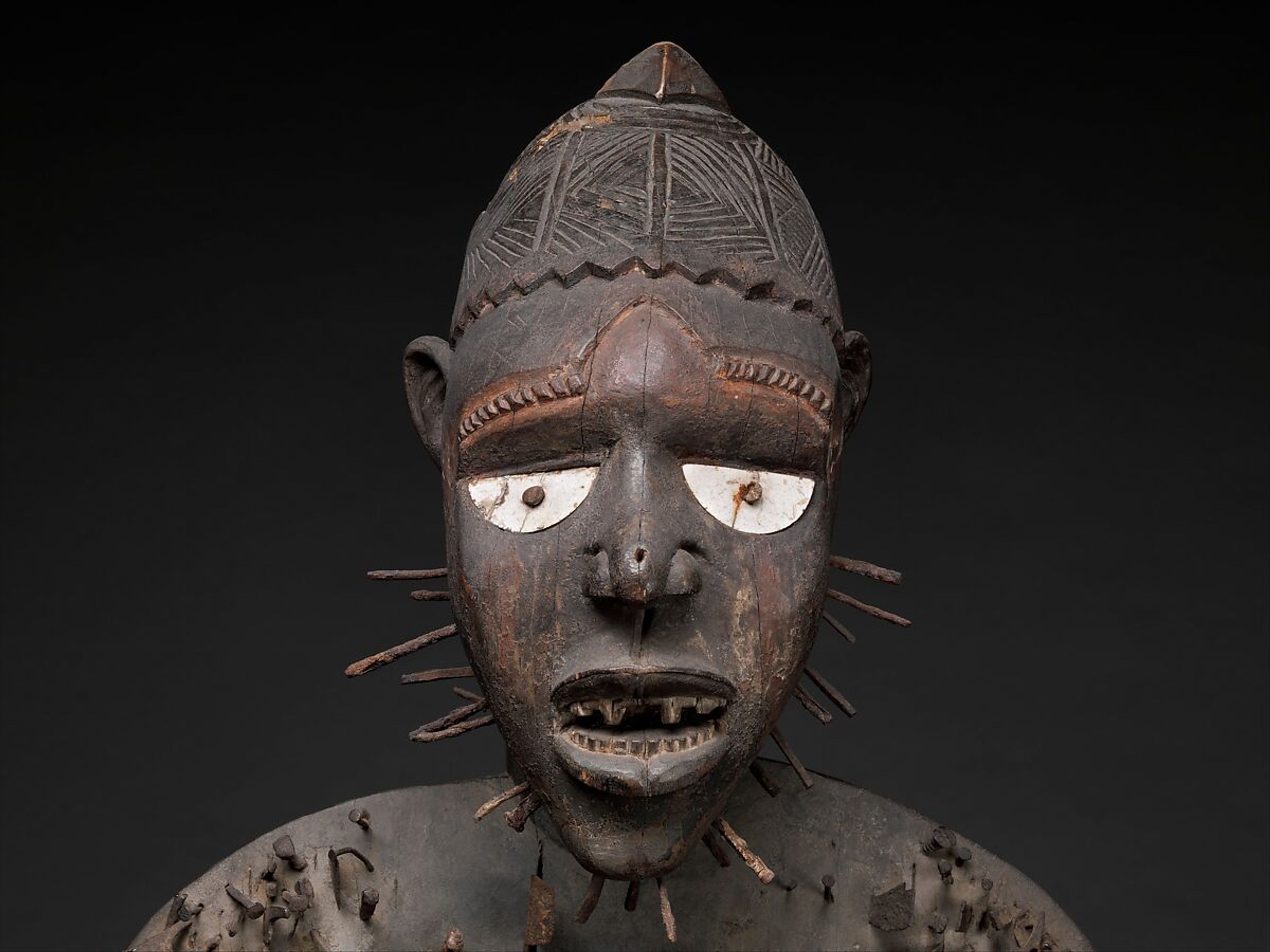
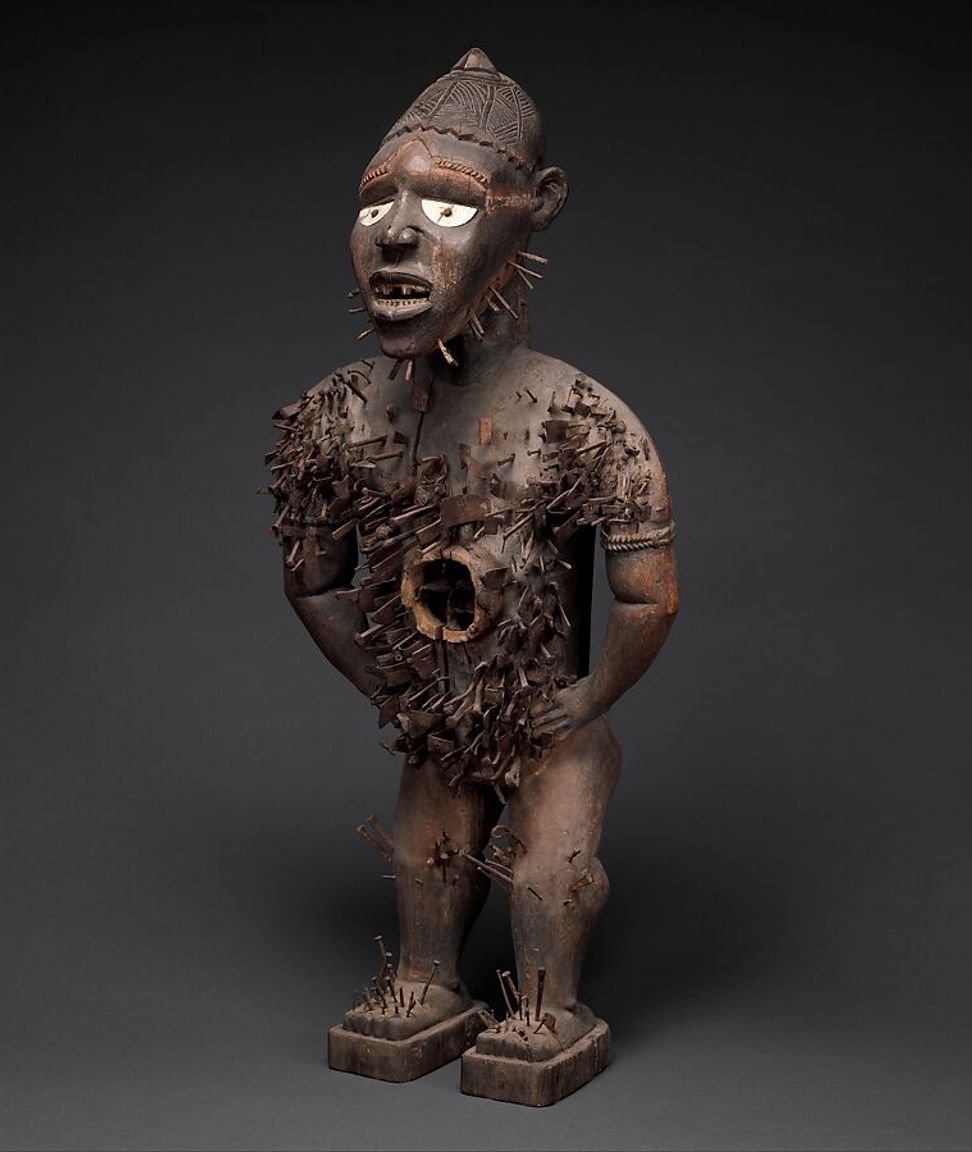
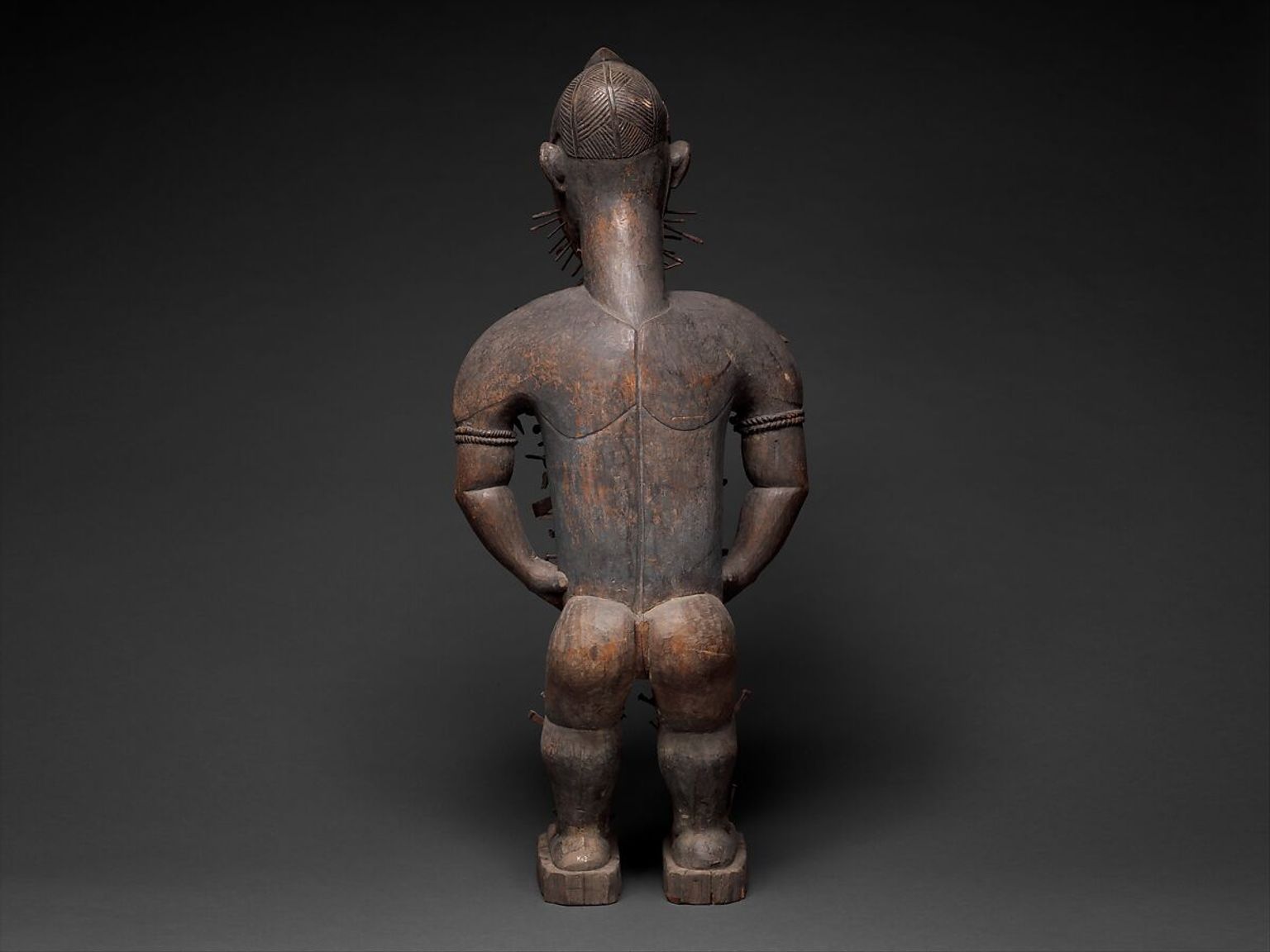
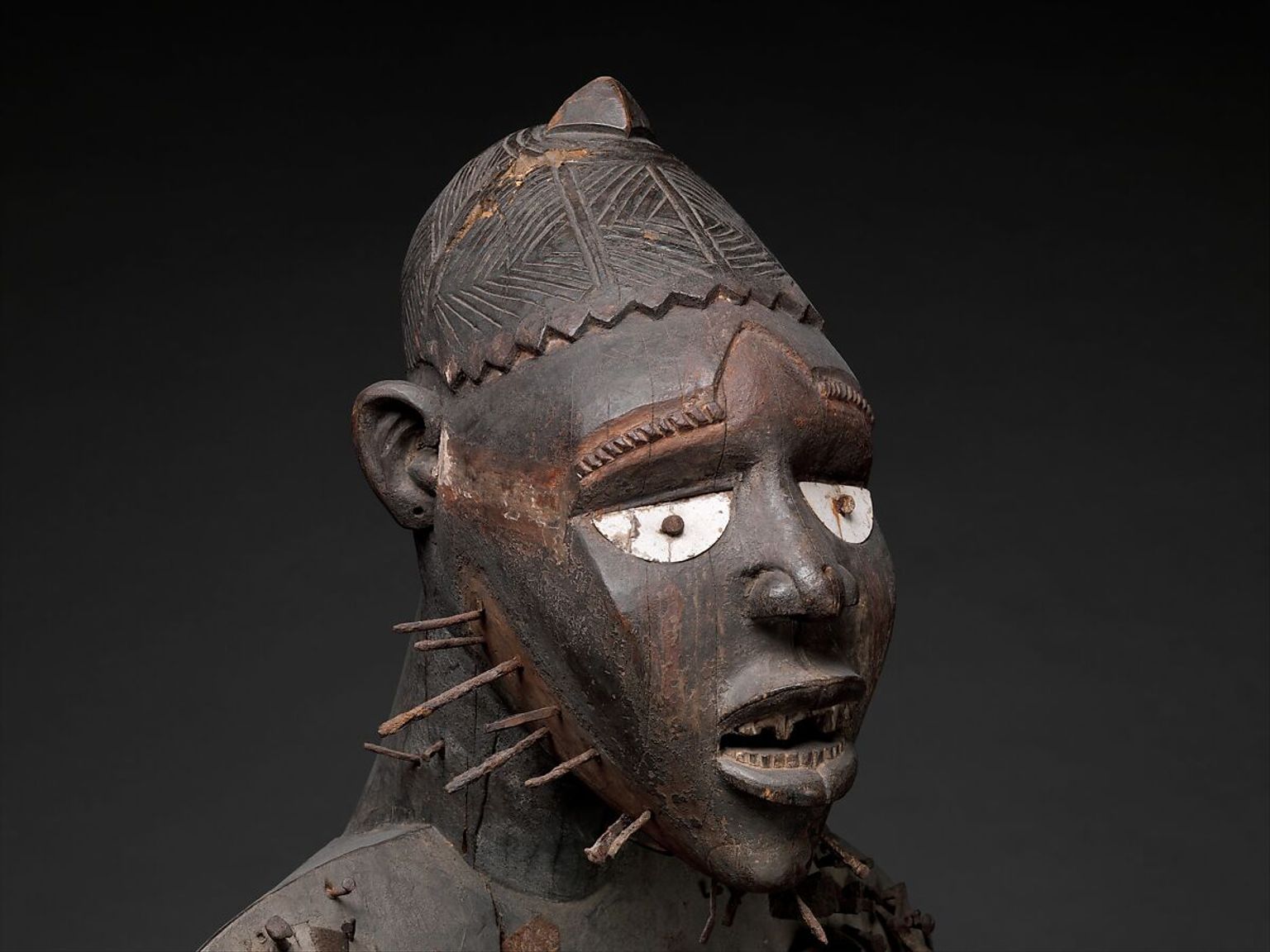
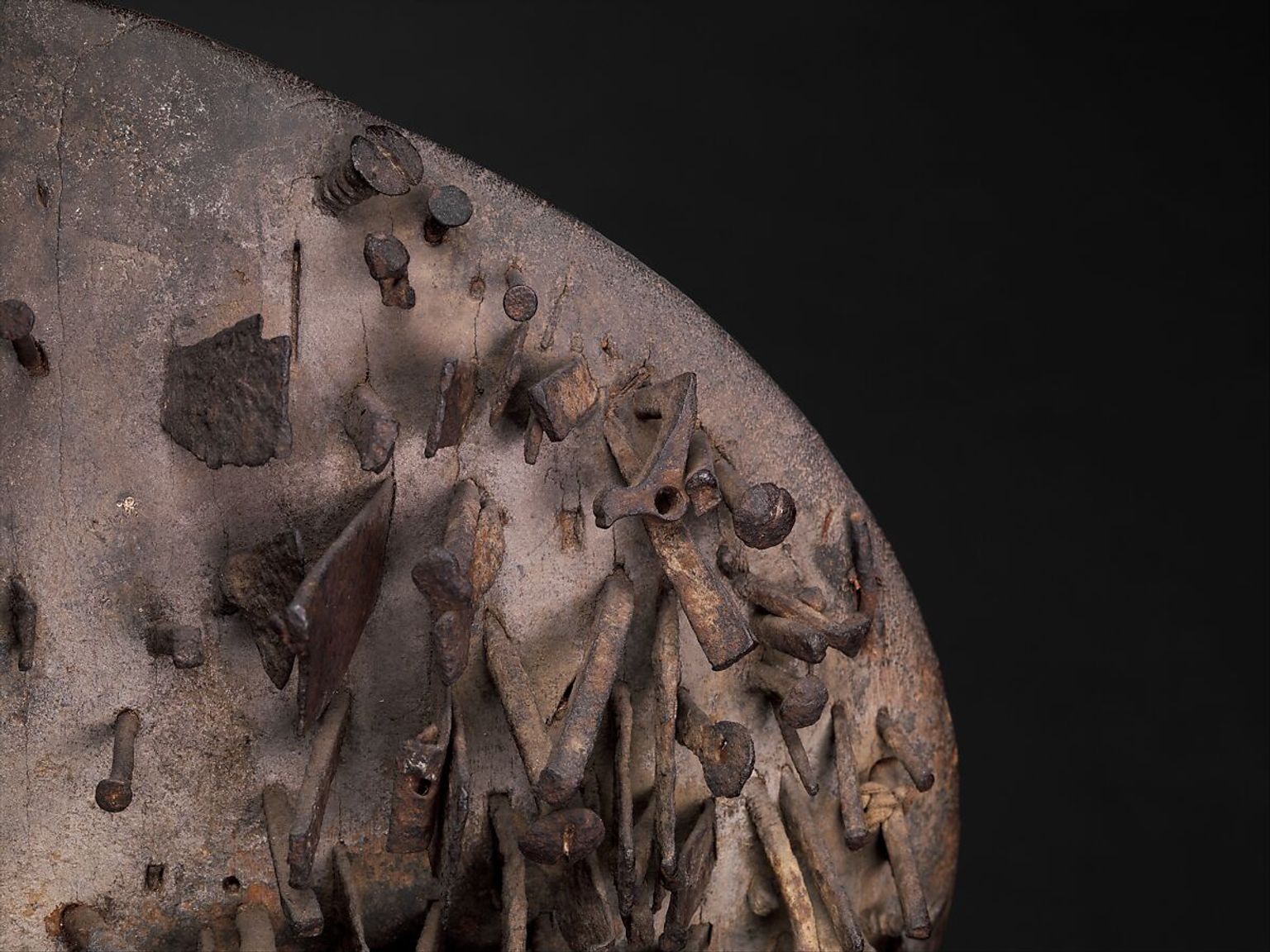
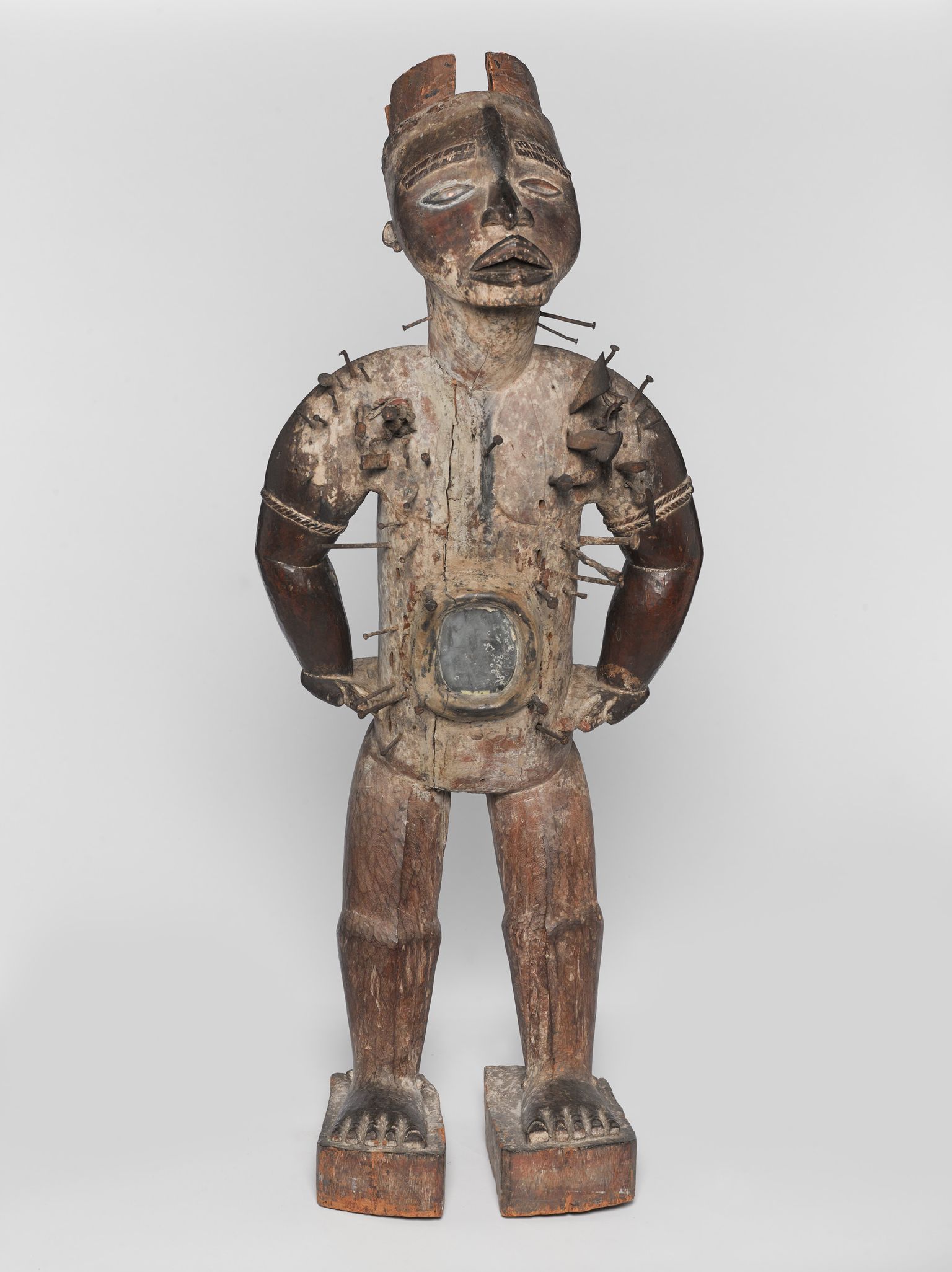
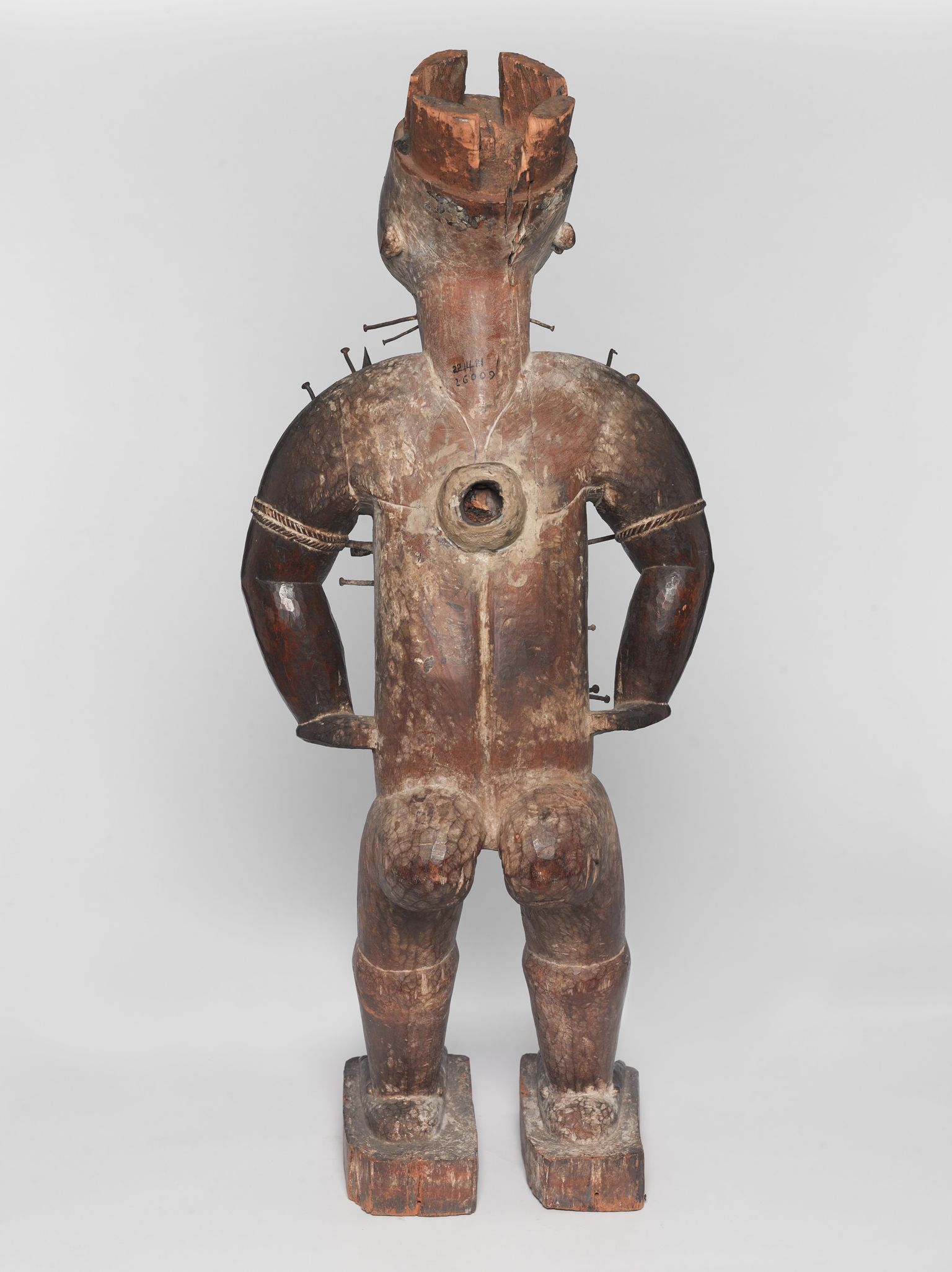
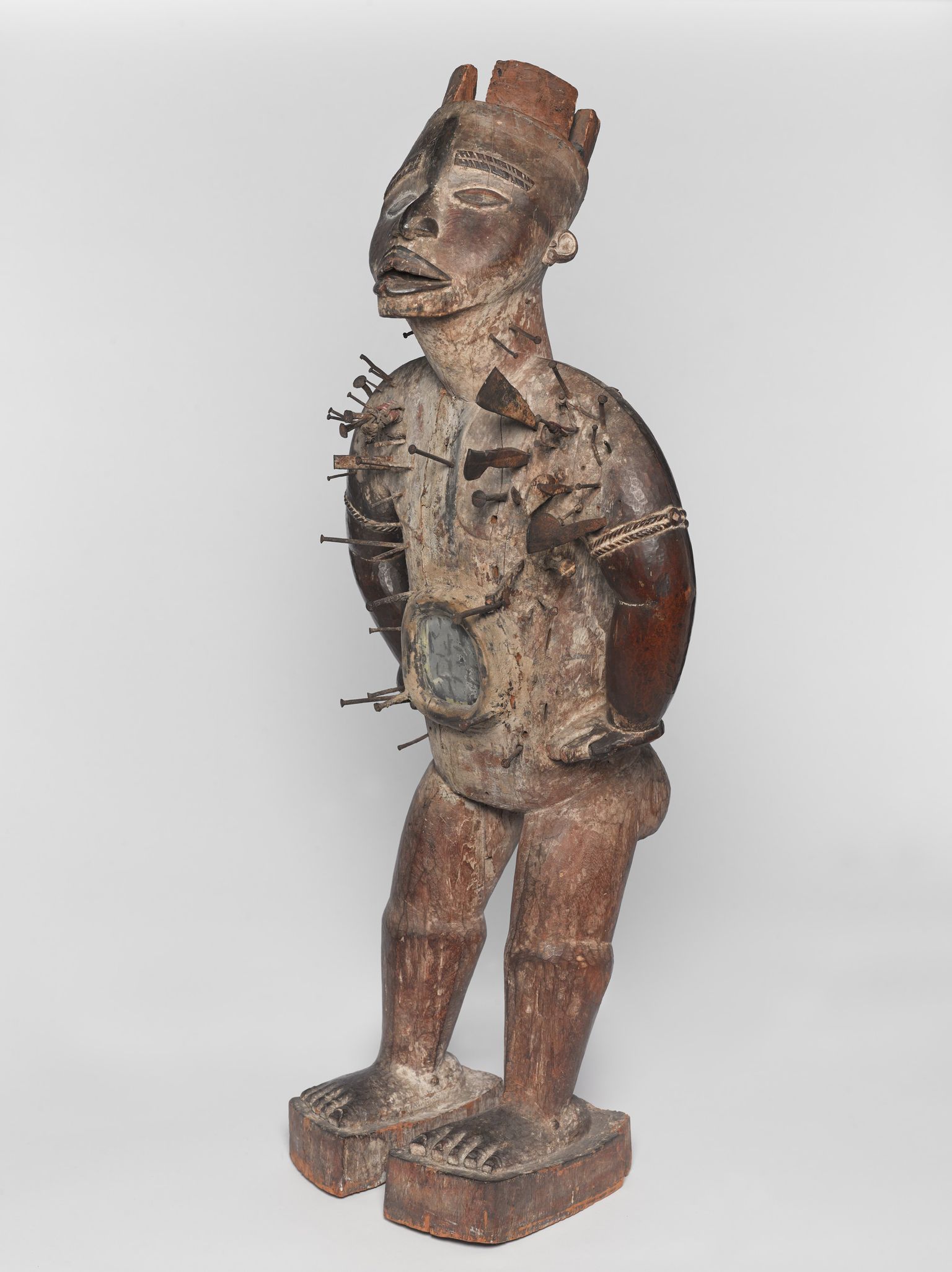
- CreditKakongo. Nkisi Nkondi (Power Figure), 19th century, with 20th century restoration. Wood, iron, glass, resin, kaolin, pigment, plant fiber, cloth. Brooklyn Museum, Museum Expedition 1922, Robert B. Woodward Memorial Fund, 22.1421. (Photos: Brooklyn Museum)
- CreditMangaaka Power Figure (Nkisi N’Kondi), The Metropolitan Museum of Art, New York
Thelonious Stokes I was with a good friend of mine named Vir, an incredible artist. He educated me. These works are alive. I want to make work that is alive.

Nkisi Nkondi: Art as Activated Power
Nkisi Nkondi power figures are among the most intricate and compelling forms of Central African art. Created by Kongo sculptors in collaboration with ritual specialists, or nganga, these figures were designed not merely as objects of visual contemplation, but as active vessels for spiritual energy. Known collectively as minkisi (singular nkisi), these works contained sacred medicines and substances that could be summoned to influence the physical and social world.
Each figure represents the fusion of artistry, ritual knowledge, and community governance – a living form of intellectual and spiritual creativity. Unlike conventional sculpture, Nkisi Nkondi were activated through careful ritual practices, making them dynamic participants in the cultural and moral life of the Kongo peoples.


Sculpted Authority and Collective Witness
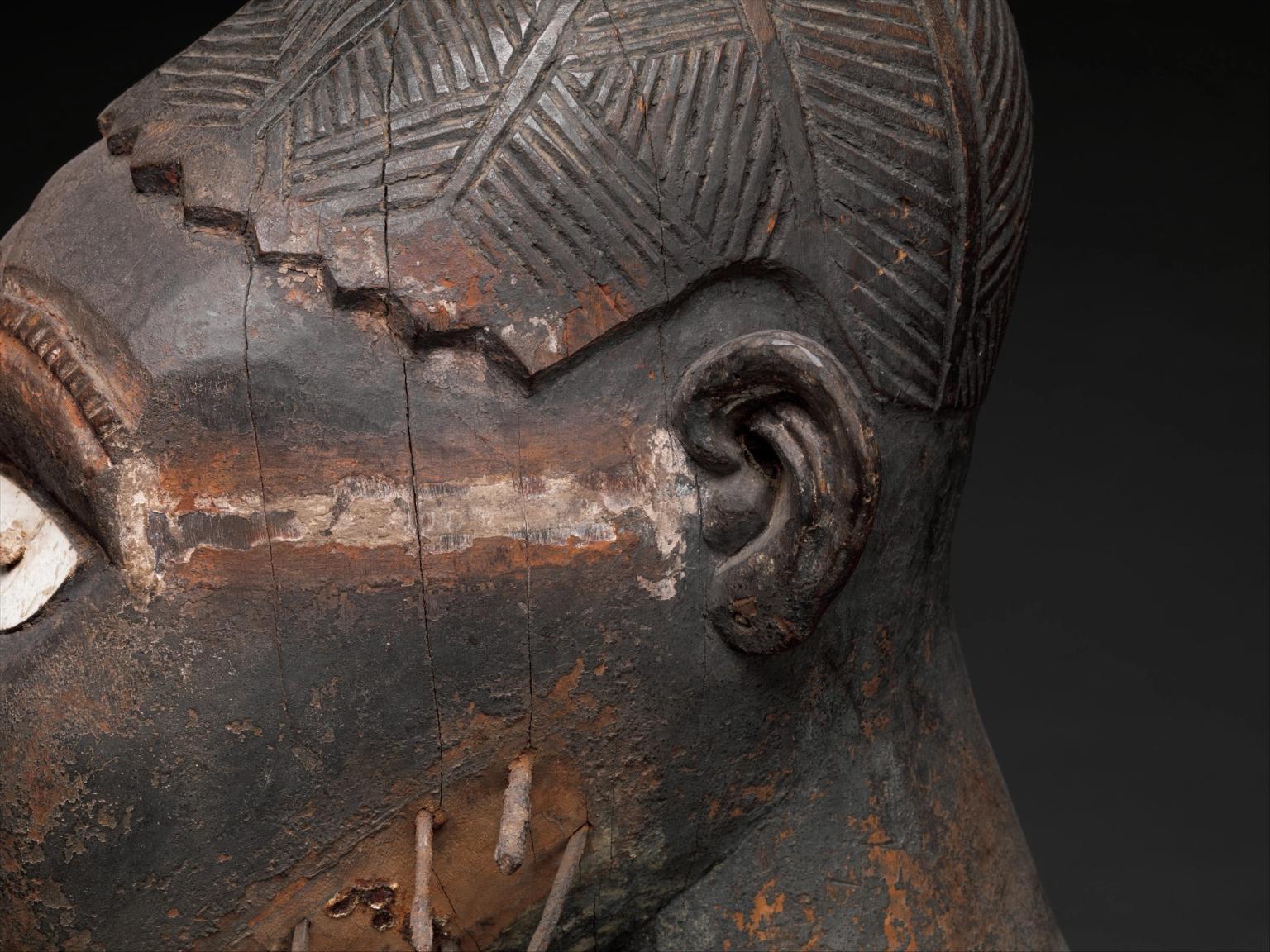
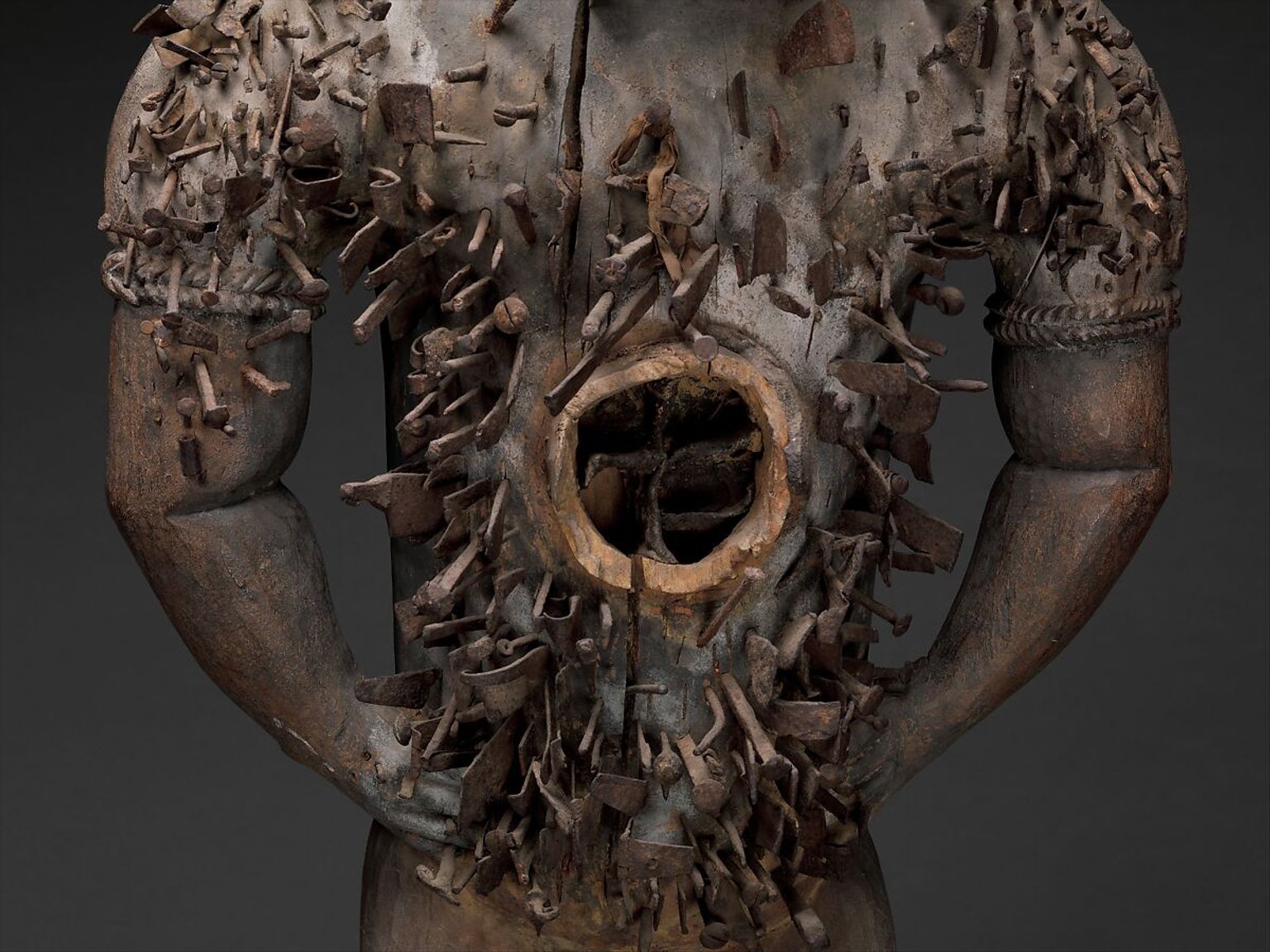
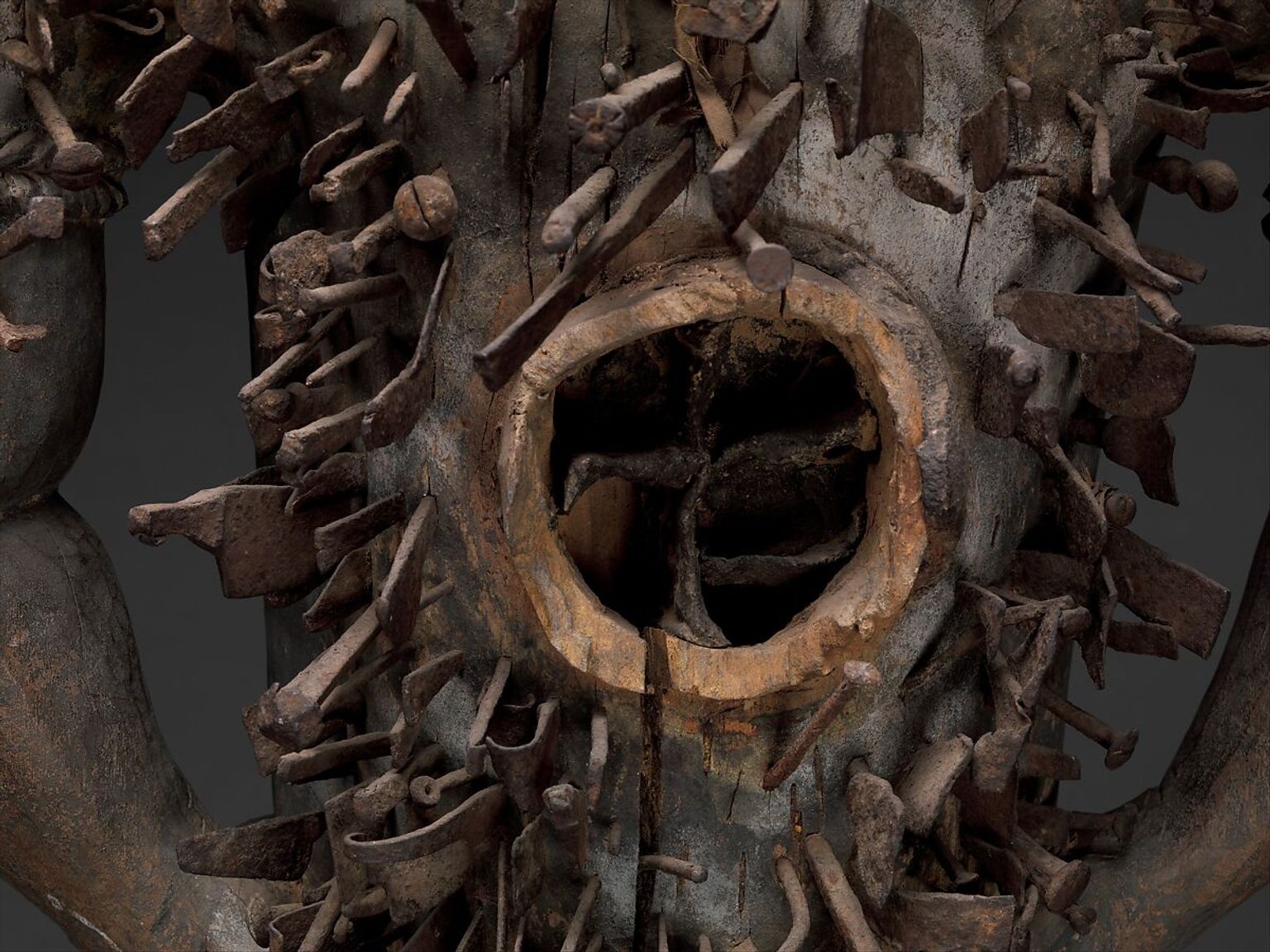
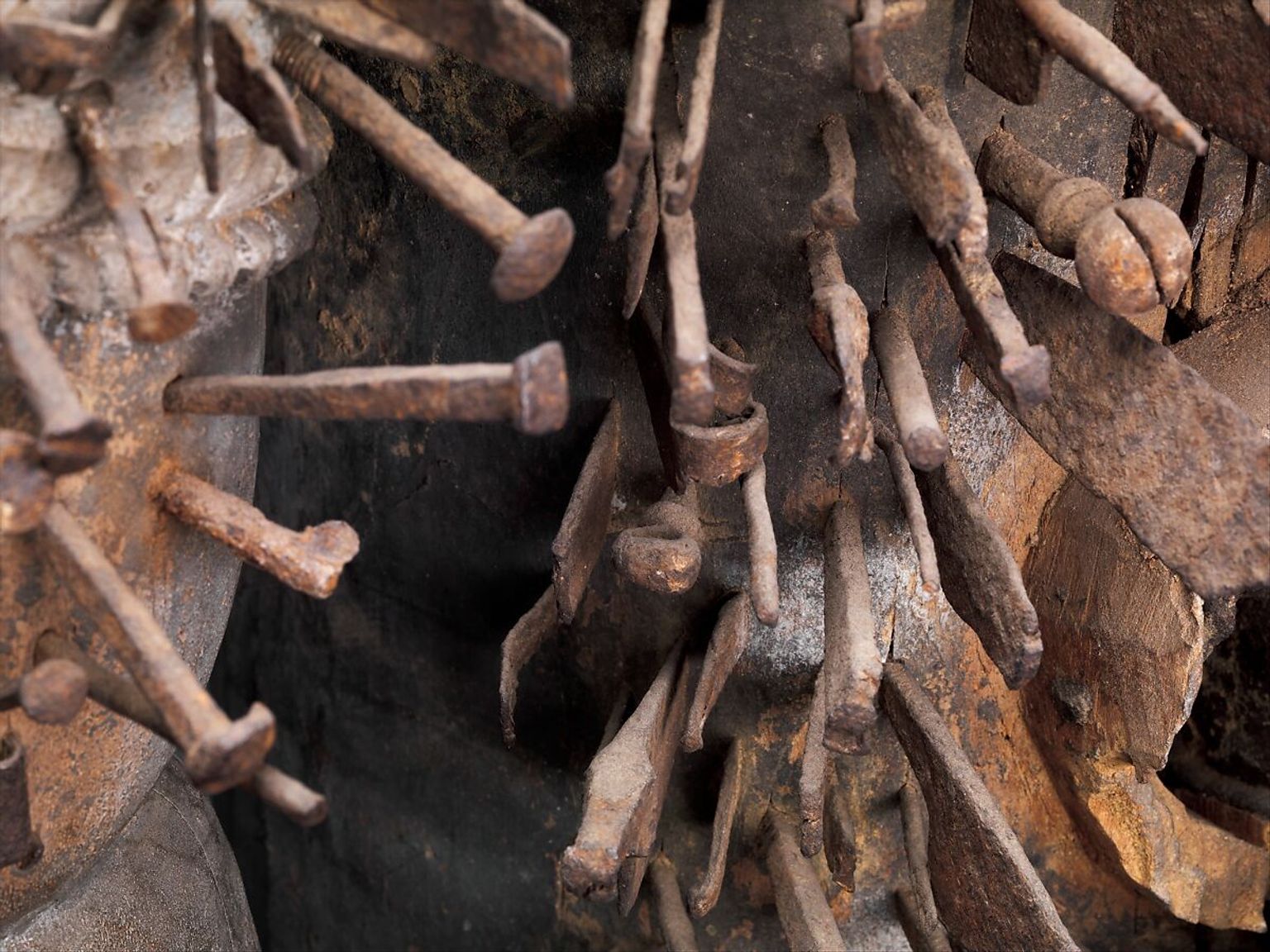
Every Nkisi Nkondi communicates authority and vigilance through its form. Figures like Mangaaka and Kakongo lean forward, arms akimbo, exuding the presence of an enforcing lord or presiding authority. Mirrors, metals, nails, and pegs are embedded throughout the sculpture, each element carefully placed to house spiritual power or record social acts. The mirrored surfaces allow spirits to observe human behavior, while the hollowed containers once held medicinal substances (bilongo) that empowered the figure’s force. Pegs or nails driven into the body encoded communal oaths, treaties, or unresolved disputes, rendering the sculpture a public record of human accountability. In these works, art and law, aesthetic and morality, converge into a single, potent form that commands attention and respect.





Ritual Collaboration and the Role of the Nganga
The power of Nkisi Nkondi lies not only in its material presence but in the ceremonial labor that animates it. While the sculptor shapes the form, the nganga activates the figure through chants, prayers, and the careful insertion of sacred substances. These rituals transform wood, metal, and pigment into conduits of spiritual force, capable of healing, protecting, or punishing according to the needs of the community.
The Nkisi Nkondi could be called upon to settle legal disputes, hunt wrongdoers, or intervene against witchcraft. Clients often participated in the process, sealing the ritual intent through actions like licking nails before they were inserted, binding the spiritual intervention to human agreement. In this sense, each figure represents a collaboration between artist, ritual specialist, and society, where creativity and belief coalesce into both visual and functional power.

Disempowerment, Resistance, and Enduring Legacy
Many Nkisi Nkondi visible today have been intentionally disempowered before leaving Africa, often by the very communities that created them. During the colonial era, European officials and missionaries feared the potency of these figures and sought to seize or destroy them. In response, Kongo priests sometimes removed the empowering substances from eyes, torso, and containers, rendering the figure inert while protecting its underlying spiritual logic. These acts of iconoclasm were not destruction, but deliberate resistance - assertions of agency and cultural survival.
Today, Nkisi Nkondi like Mangaaka and Kakongo are housed in museum collections, yet they continue to speak of African ingenuity, social structure, and the negotiation of power. They remind us that art can be both beautiful and functional, both material and immaterial, and that every sculpture carries the weight of history, ritual, and communal memory.


Nkisi Nkondi as Art
Beyond their spiritual and social functions, Nkisi Nkondi figures reveal the extraordinary artistry of Kongo sculptors. The careful carving, the intricate placement of nails, blades, and other materials, and the interplay of reflective surfaces with pigments and metals demonstrate a sophisticated visual language. Each figure is a composition of form, texture, and symbolism, designed not only to channel spiritual forces but also to communicate power and presence. In this sense, Nkisi Nkondi stand as profound works of art, where ritual, aesthetics, and community converge, continuing to inspire reflection on the expressive potential of sculpture.