Walid Labri
New Balance - Two Swords
- ClientNew Balance
- DirectorWalid Labri
- Production CompanyDIVISION
- CinematographerChristopher Ross
- MusicHildur Guðnadóttir
DAN PETERS As a pitcher myself growing up, I found this recent work to be a beautiful subversion of the sports genre - trading adrenaline for atmosphere. It’s a tense, rhythmic exploration of the ego, suggesting that Ohtani’s greatest feat isn't his physical gifts, but his ability to survive the suffocating expectations of the man in the mirror. The work hit because it was timely and leaned into an athlete at the top of his game, without a hard sell for the product.


Two Swords in the Dark
Under the glare of stadium lights, there is no crowd, no cheering, and no scoreboard. Only the rhythm of repetition. A pitching machine hums in the silence, launching ball after ball toward Shohei Ohtani as he swings again and again. This is the world of the New Balance spot directed by Walid Labri and produced by DIVISION, a film that turns the quiet intensity of practice into cinematic drama.
Rather than showing the spectacle of a game, the film focuses on the unseen hours that shape greatness. Ohtani trains alone on an empty field at night, surrounded only by the mechanical pulse of the pitching machine and the echo of the bat meeting the ball. The simplicity of the setting, combined with stark black and white imagery, creates a mood that feels almost meditative. It is a portrait of discipline rather than victory.


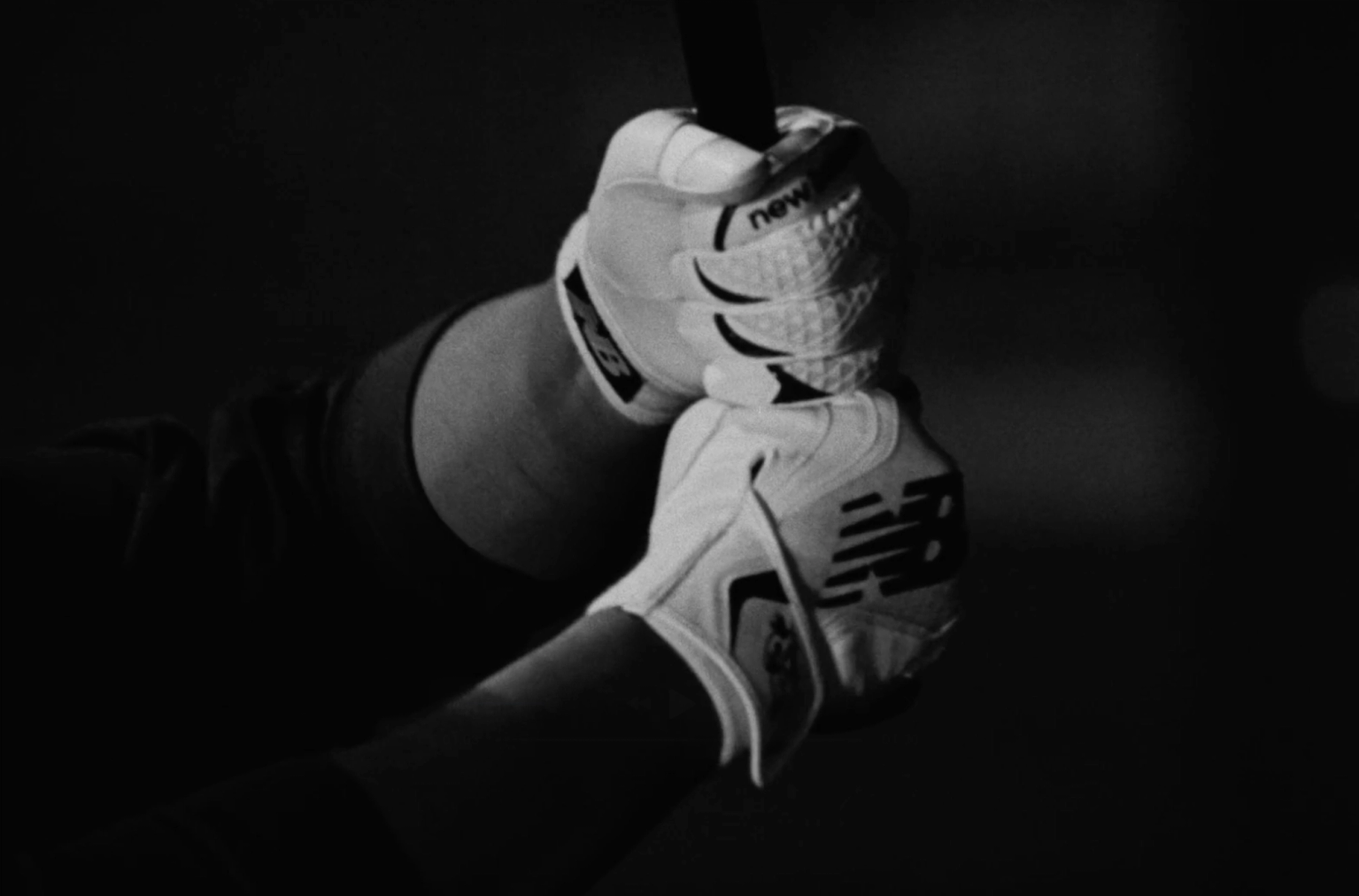

Facing Your Greatest Opponent
At the heart of the film lies a powerful metaphor. Ohtani is not just practicing against a machine or an opponent. He is, in a sense, practicing against himself. In one moment he appears as the batter. In another, he is the pitcher. The two roles mirror each other, capturing the rare duality that defines his career.
Few players in modern baseball dominate both sides of the game, yet Ohtani has built his reputation as a player who throws with the precision of an elite pitcher and hits with the power of a slugger. The film visualizes this dual identity by framing his training like a silent duel between two versions of the same athlete. Each swing, each pitch, becomes a challenge issued from one side of himself to the other.
The message is simple but profound. The greatest competition does not always come from across the field. Often it comes from within.


The Quiet Philosophy of New Balance
The film also reflects the philosophy that has long shaped New Balance storytelling. Rather than leaning on hype or spectacle, the brand has often celebrated the craft and patience behind athletic excellence. In this spot the focus remains on effort, repetition, and the solitary moments that audiences rarely see.
Walid Labri’s direction emphasizes this idea through restraint. The empty stadium, the slow rhythm of the machine, and the minimal visual palette strip the story down to its essentials. What remains is the sound of practice and the image of an athlete returning to the plate again and again.
By the time the machine hums back to life for another pitch, the point is clear. Greatness is not built in front of the crowd. It is forged in the quiet, long before the lights come on.