
Thomas Struth
Museum
- PhotographerThomas Struth
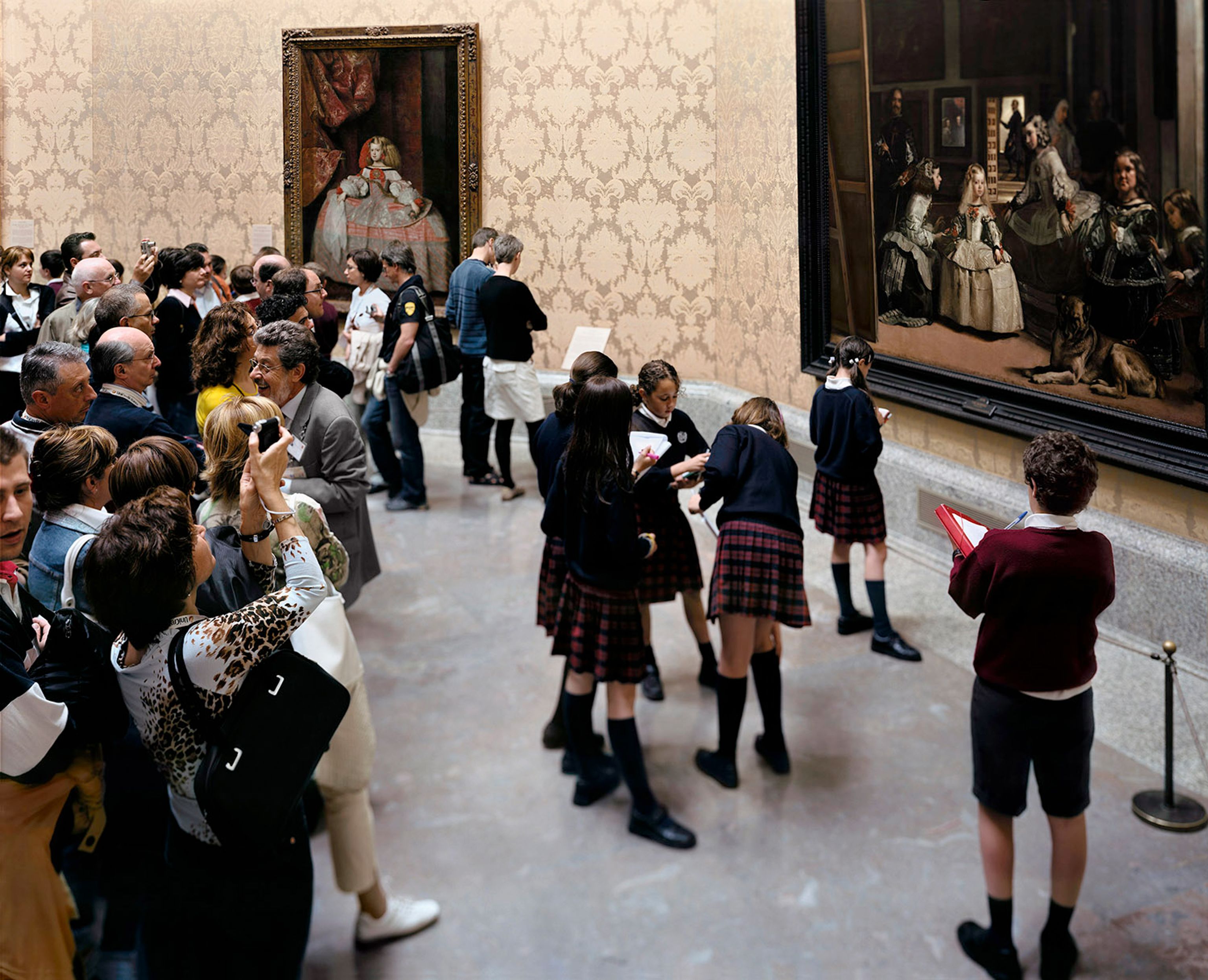
GREGORI CIVERA A wise use of cultural reference: looking at Struth’s photographs, the viewer sees at once Las Meninas and a group of students, creating a complex image that is as much about one as it is about the other. There’s the imposing formality of the museum and the informal attitude of the visitors.
Watching the Viewers
In 1989 the German photographer Thomas Struth began a photographic project that would become one of the most recognizable bodies of work in contemporary photography. Known as the Museum Photographs, the series shifts attention away from artworks themselves and instead focuses on the people who come to see them. Struth positions his large format camera inside museum galleries and quietly observes visitors as they stand, sit, or gather in front of famous paintings. The result is a subtle reversal of roles. Instead of looking at art, we find ourselves looking at those who are looking.
Struth was interested in museums as social spaces. He often described them as modern cultural temples where visitors perform a quiet ritual of observation and contemplation. By photographing these moments, he captures the small gestures that reveal how people relate to art. Some viewers lean forward with concentration. Others stand back, folded arms suggesting distance or uncertainty. Groups cluster around a guide, while solitary figures appear absorbed in private thought. These scenes reveal museums not just as repositories of masterpieces but as stages where cultural behavior unfolds.
The Dialogue Between Past and Present
Many photographs in the series create striking visual conversations between the historical artwork and the contemporary audience standing before it. A well known example was taken at the Art Institute of Chicago, where visitors sit on a bench in front of the painting A Sunday Afternoon on the Island of La Grande Jatte by Georges Seurat. The museum visitors resting on the bench mirror the relaxed figures inside the painting itself. Struth’s photograph quietly collapses more than a century of time. Painted figures enjoying a park scene seem to echo the posture and stillness of real people contemplating them.
This kind of visual resonance appears throughout the series. Tourists, students, and casual visitors become part of the composition in ways that resemble the artworks they observe. The photographs reveal how artworks continue to live through the attention of new audiences.

Turning Spectators Into Subjects
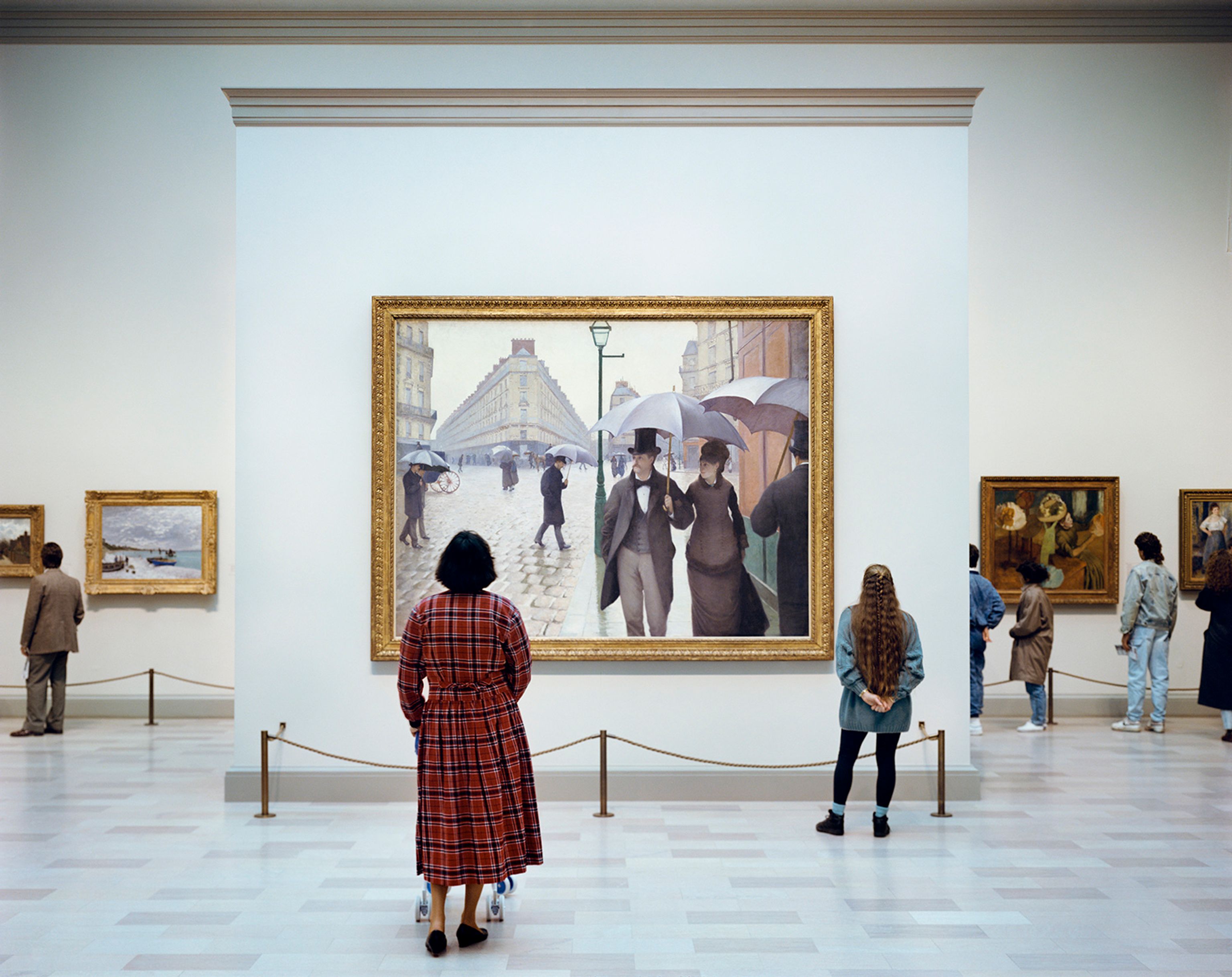
Technically, the images are made with great patience. Struth uses a large format camera, often waiting for a moment when the arrangement of viewers and artworks forms a balanced composition. He does not direct the visitors. Their gestures and movements remain natural, which gives the photographs a documentary quality despite their careful structure.
The importance of the Museum Photographs lies in how they transform the act of viewing into the central subject of art. Struth suggests that artworks are not static objects frozen in history. They gain meaning through the people who encounter them. By photographing these encounters, he creates a layered portrait of cultural life where past and present share the same frame.
In the end, the series asks a quiet but powerful question. What does it mean to look at art in the modern world. And perhaps just as importantly, what does our way of looking reveal about ourselves.