
Catherine Hyland
Lithium Mining, Atacama Desert
- PhotographerCatherine Hyland
Edmund Sumner Historically, landscape photography and social documentary photography have, if I’m honest, left me a little cold but there’s a new generation of photographers emerging whose work brings the two together in a way I find genuinely compelling. They borrow from architectural photography, a precision of composition, a control of space, and combine it with a cinematic sensitivity to colour and atmosphere…

Edmund Sumner´s perspective on Catherine Hyland's Lithium Mining, Atacama Desert
…Within Catherine Hyland’s capturing of these visually striking landscapes, she embeds carefully researched social and environmental narratives. What results is something quite powerful: images that are formally beautiful, yet conceptually unsettled. I was fortunate enough to acquire an A1 print from one such series, and what stays with me is not clarity, but ambiguity. I’m left with as many questions as answers.
And I love that.

A Landscape of Extraction
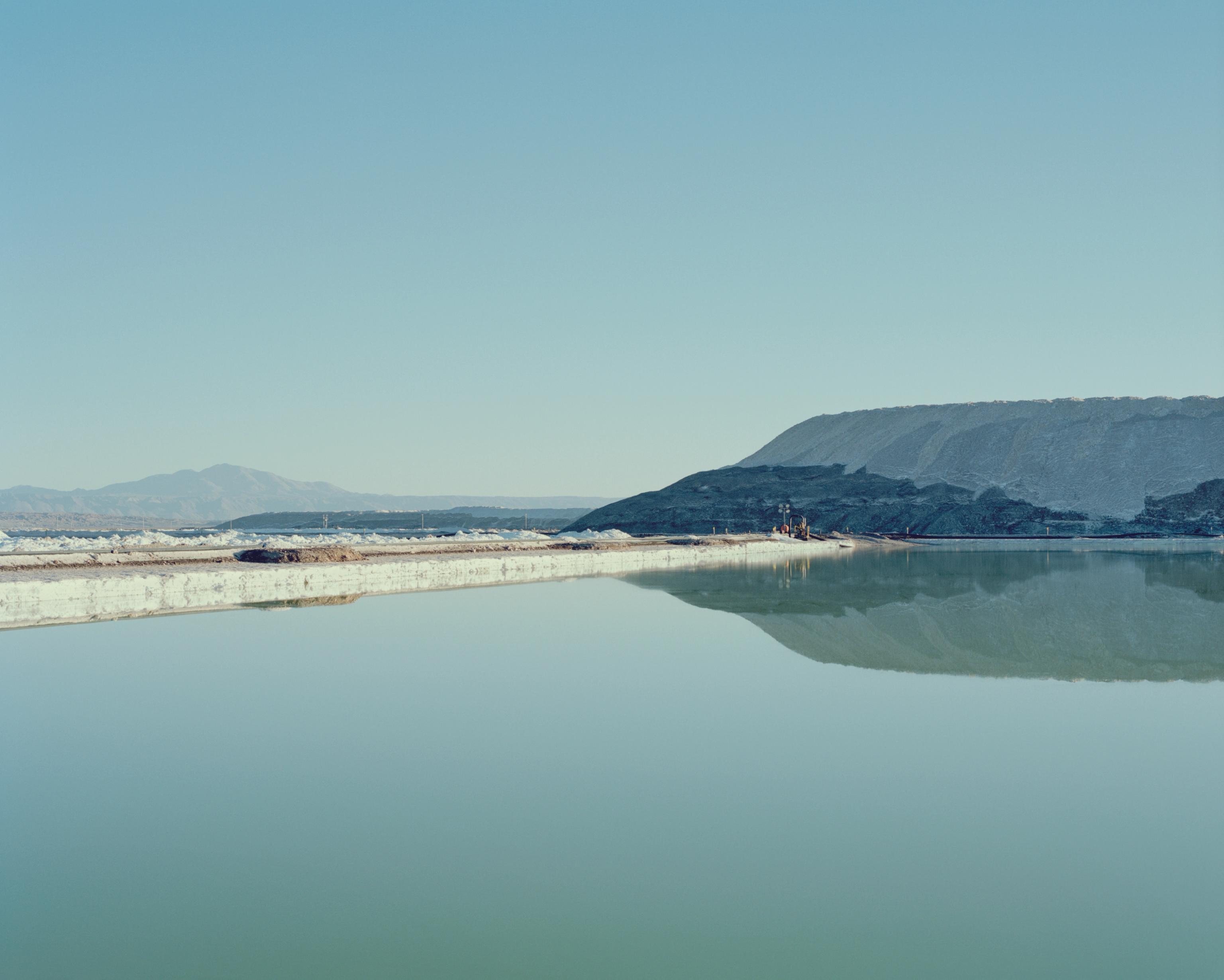
In Lithium Mining, Atacama Desert (2018), Catherine Hyland turns her lens toward one of the most remote and resource-critical landscapes on earth: the salt flats of northern Chile. At over 4,000 metres above sea level, the Atacama is the driest desert in the world, a place of vast horizons, mineral crusts, and near-total absence of rain. Yet beneath this apparent emptiness lies one of the planet’s richest reserves of lithium, the element powering everything from smartphones to electric cars.
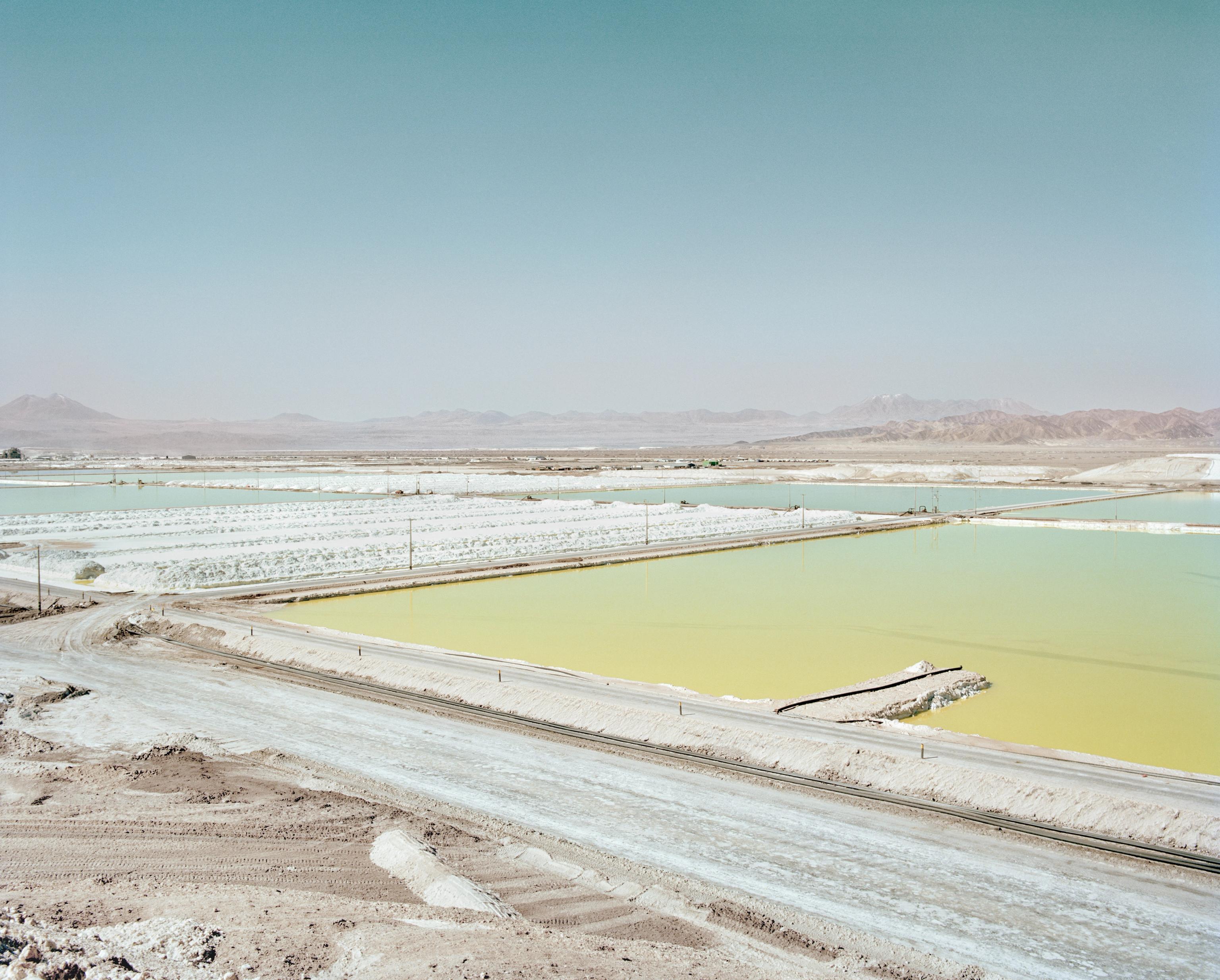
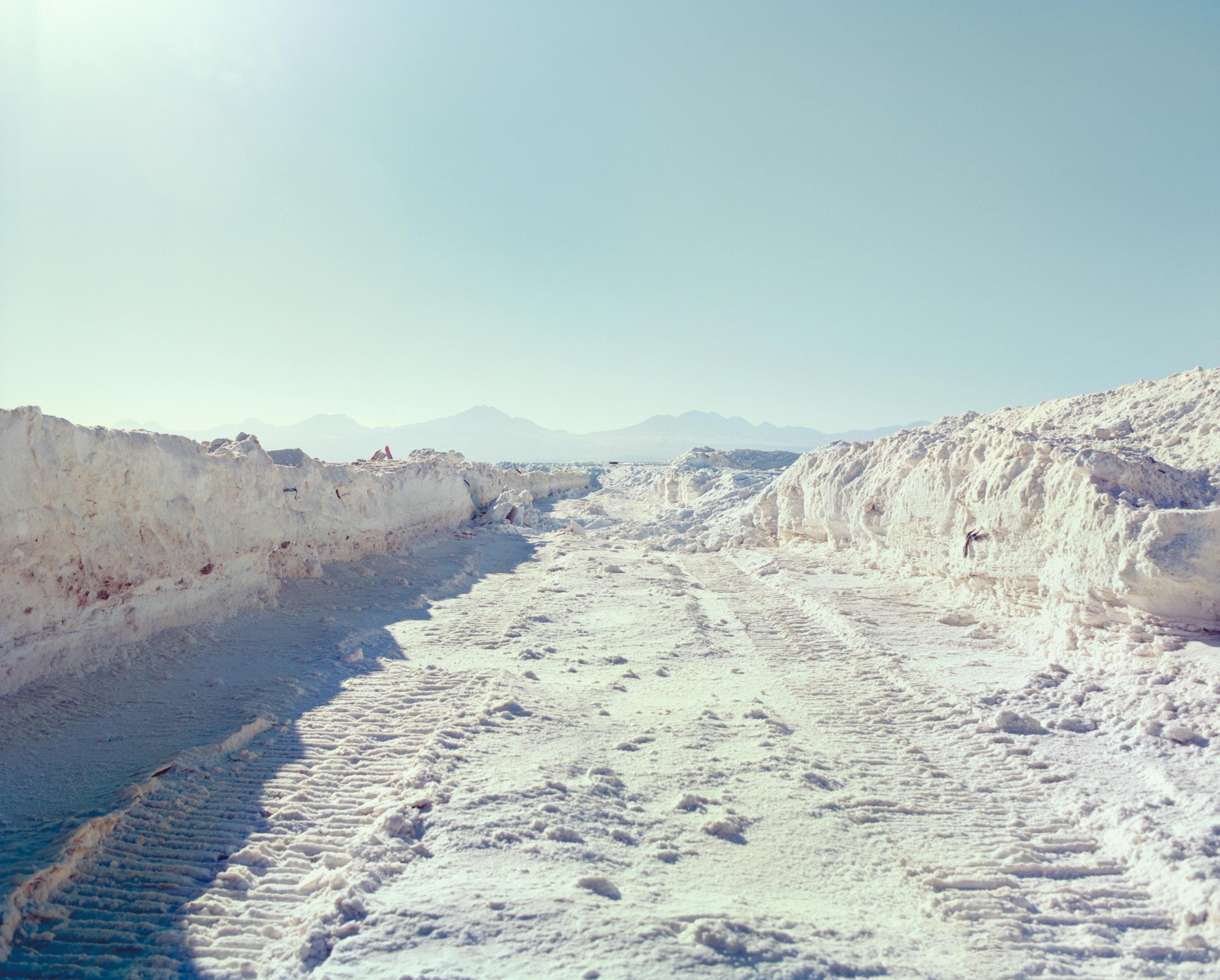
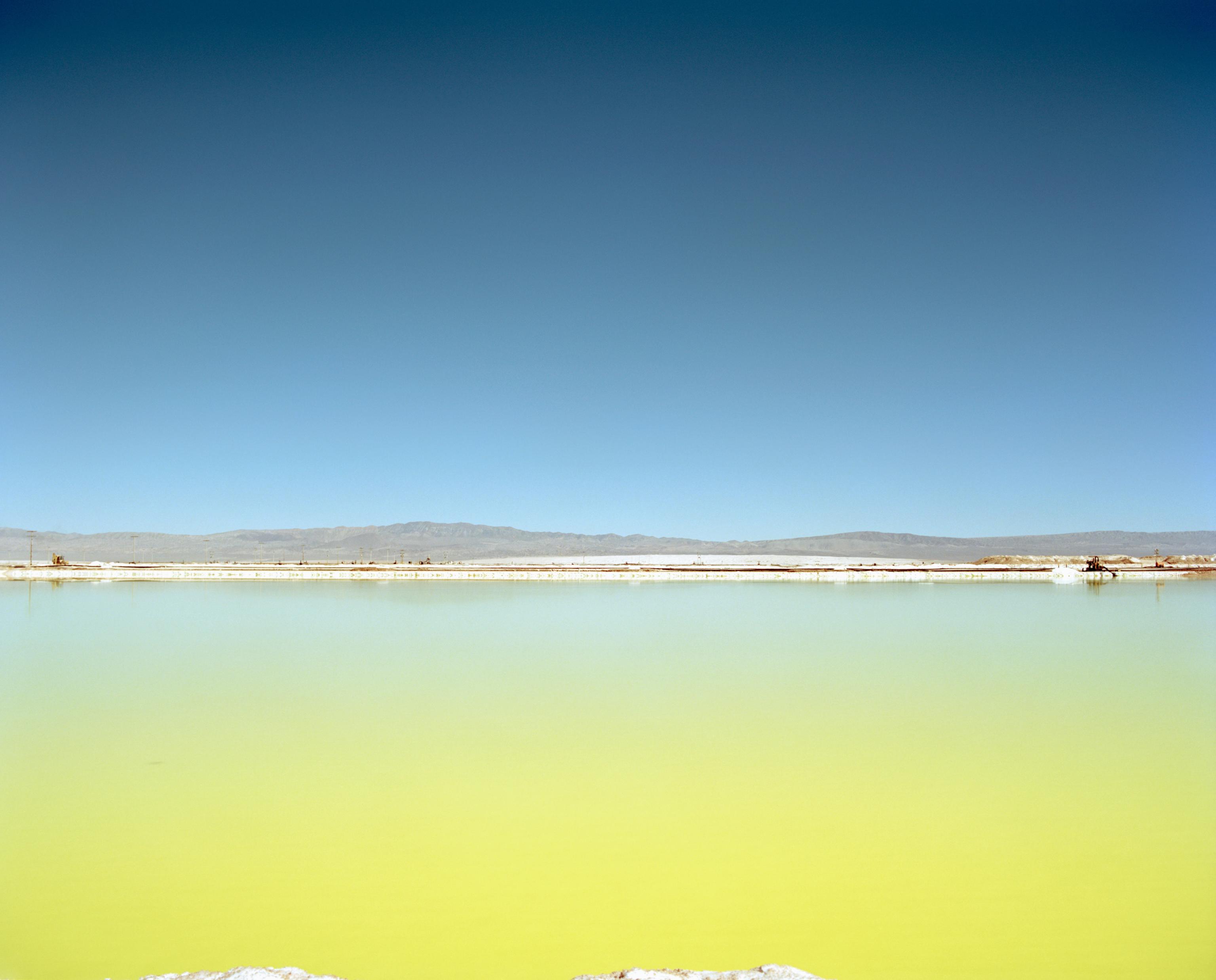
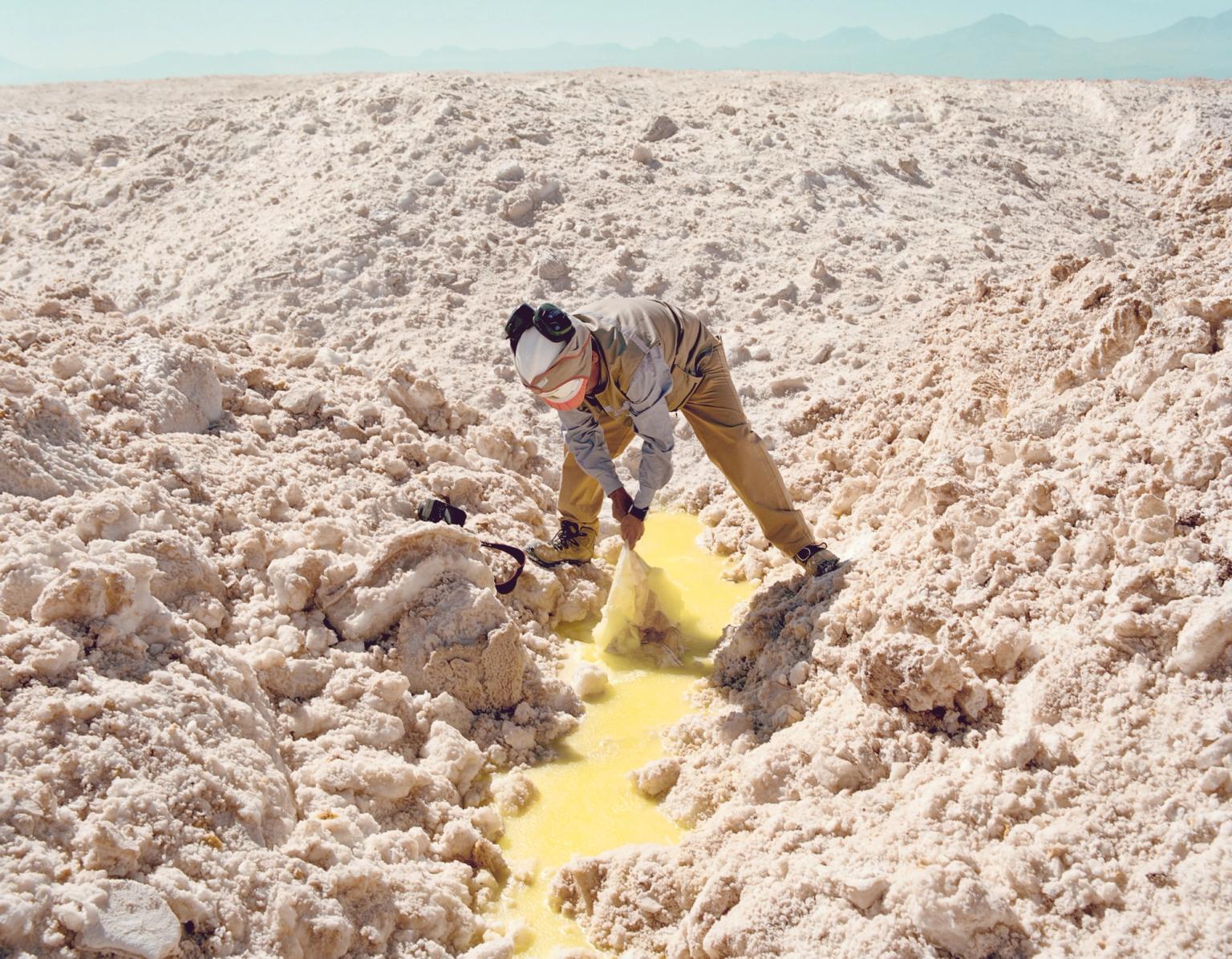
Hyland’s images capture this paradox with striking clarity. Pools of sky-blue brine, streaks of yellow chemical residue, and geometric grids cut across a white, desiccated terrain. What appears at first almost abstract - painterly, even - is in fact a highly controlled industrial process unfolding at monumental scale.

How Lithium Takes Shape
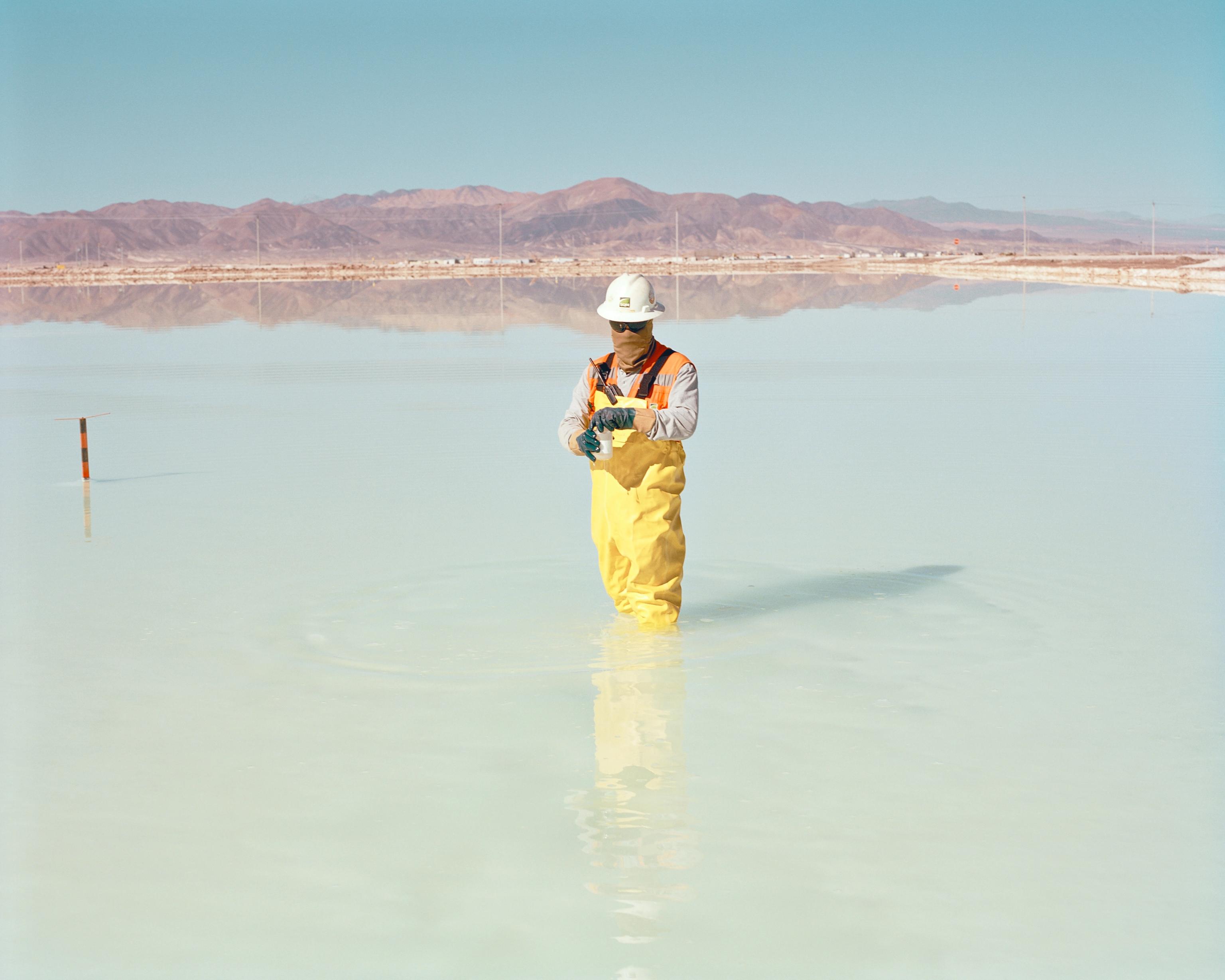
The series traces the transformation of lithium from underground brine into a usable material. In the Salar de Atacama, mineral-rich liquid is pumped to the surface and distributed into vast evaporation ponds. Under the desert sun, the water slowly disappears, leaving behind increasingly concentrated salts. The shifting colours, from pale green to deep blue and yellow, mark different stages in this process.
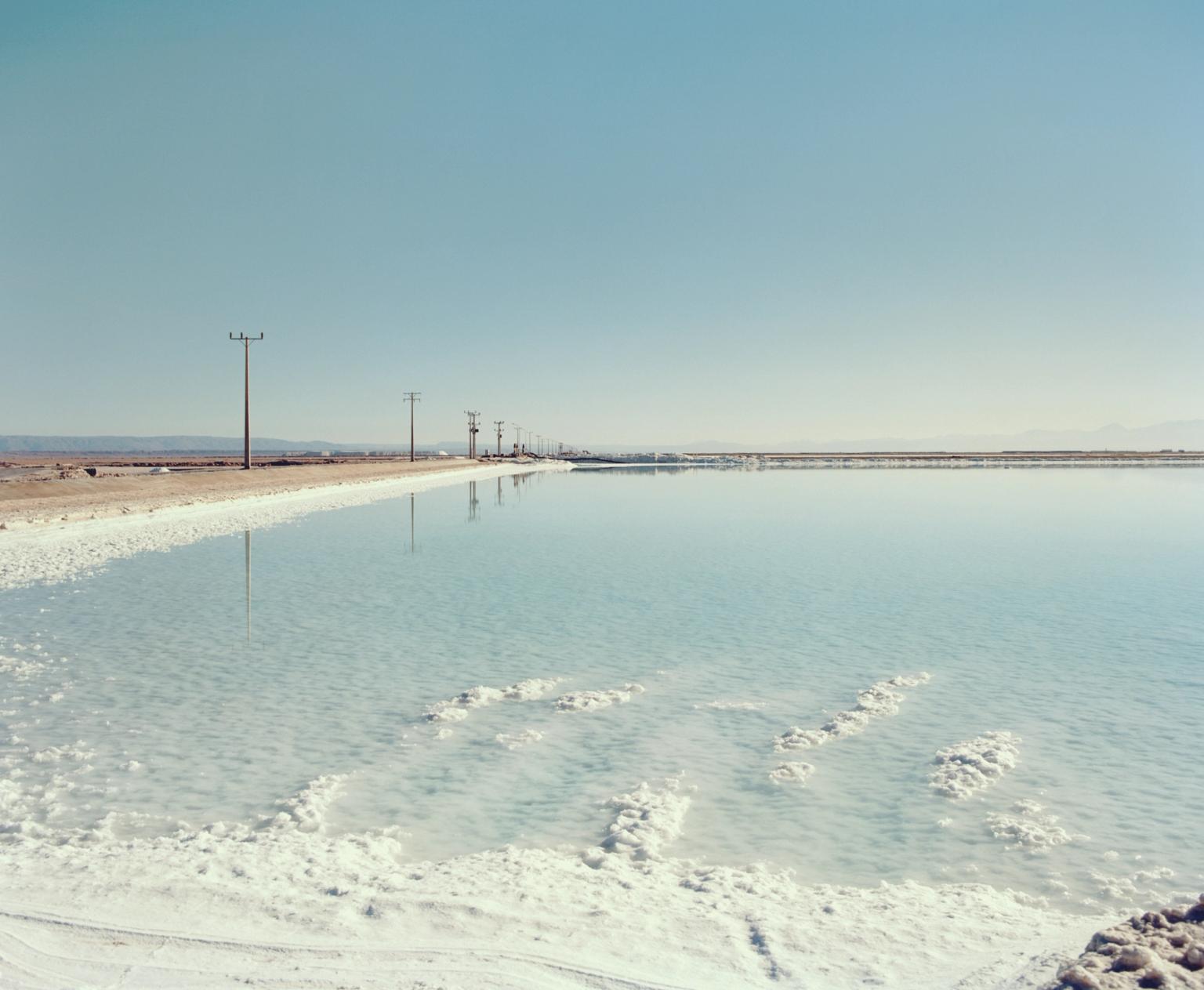

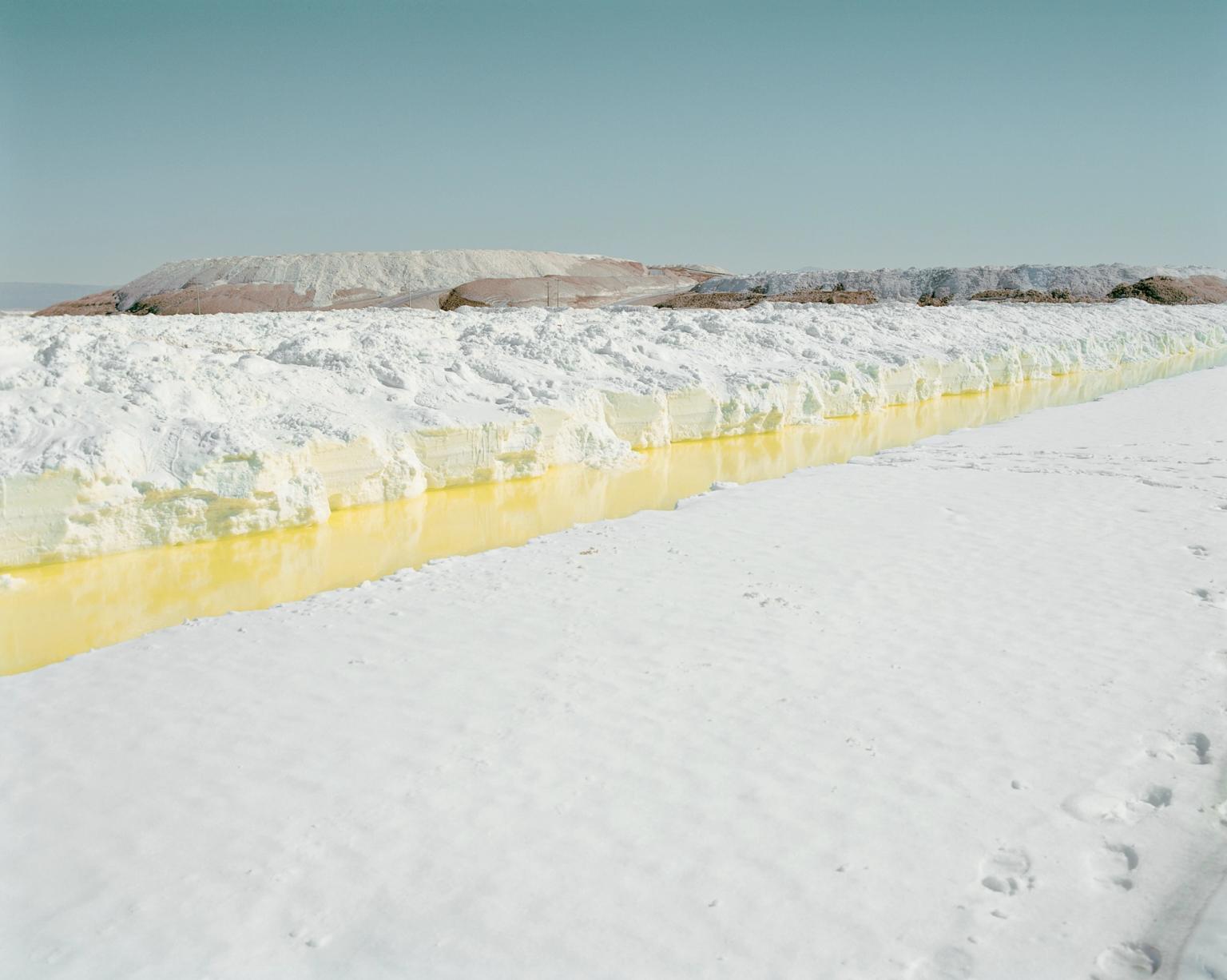

Hyland documents this system not as spectacle, but as structure. Roads bisect the landscape, pools are arranged in strict grids, and the terrain is flattened into something measurable and controlled. It’s a landscape reorganised for extraction, where natural chaos is translated into industrial order.

Control vs. Scale
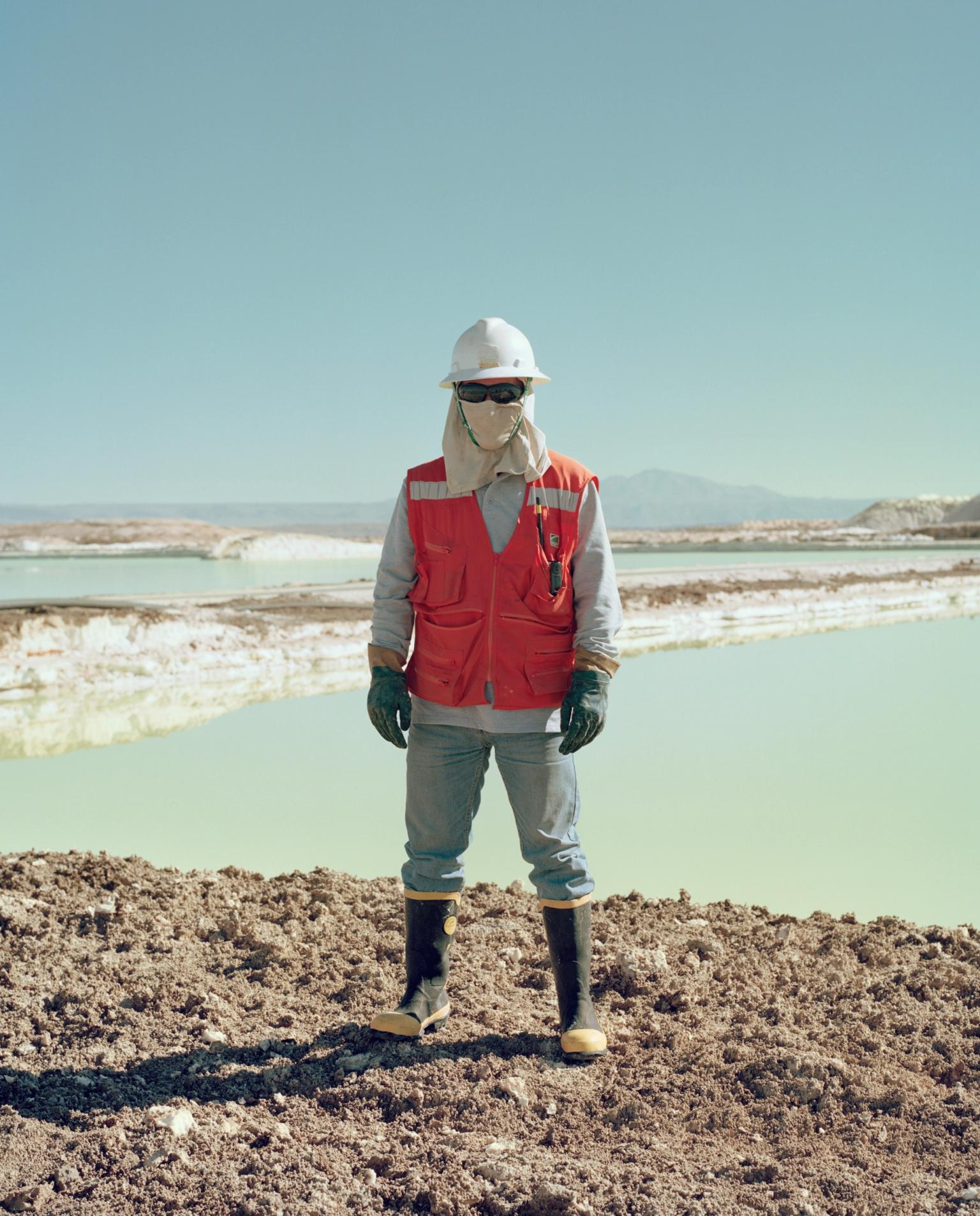
A recurring tension in Hyland’s work is the idea of control, and its limits. The mining infrastructure suggests precision and dominance, yet human presence remains almost invisible. Workers appear as tiny figures against an overwhelming horizon, and even the most rigid systems seem fragile within the scale of the desert.
This dynamic echoes her broader practice, which often explores how humans attempt to organise and define land through grids, boundaries, and systems. In the Atacama, those interventions feel both powerful and temporary, imposed onto a landscape that ultimately exceeds them.

The hidden cost of energy
Beneath the visual clarity of the images lies a more complex reality. Lithium extraction in the Atacama requires vast amounts of water, up to 500,000 gallons per ton, drawn from underground reserves in an already fragile ecosystem. In a region facing prolonged drought, this has direct consequences for local communities, wildlife, and long-standing ways of life.
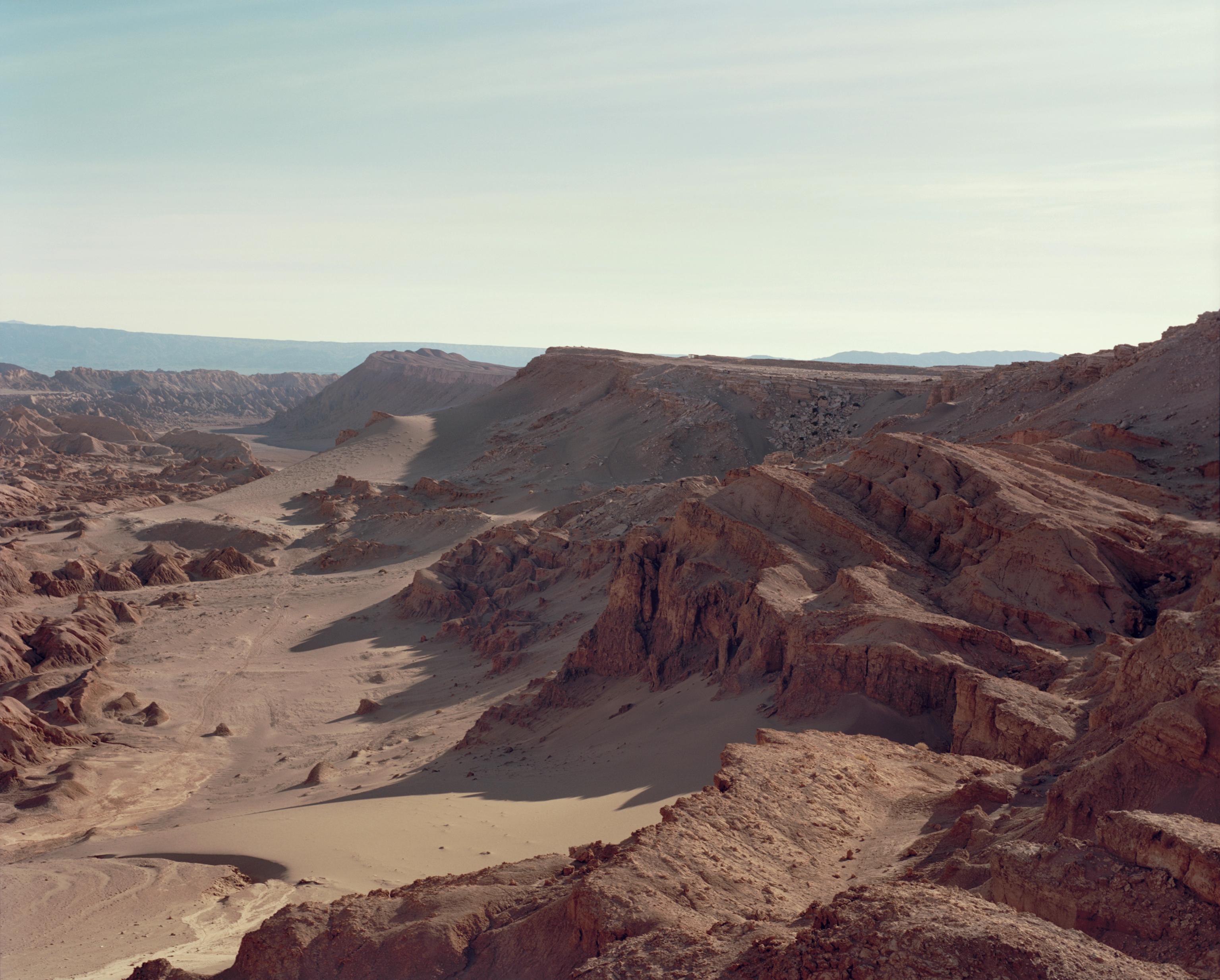

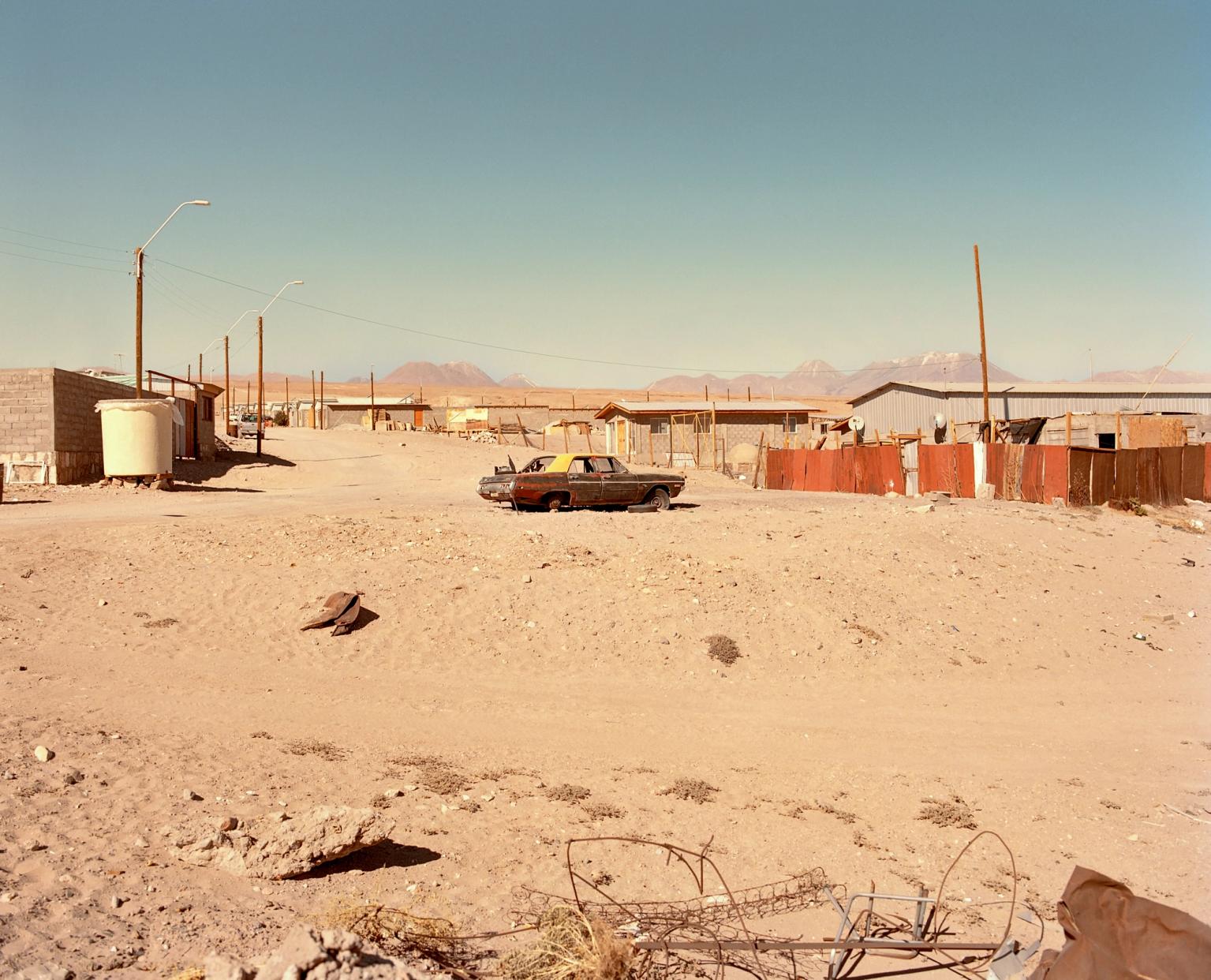
Hyland’s photographs don’t illustrate this impact directly, but they point toward it. Dried riverbeds, abandoned vehicles, and sparse settlements appear as quiet indicators of a shifting environment. The work raises a broader question: what does it mean that the “clean energy” powering our digital lives is rooted in such material and ecological strain?

Catherine Hyland
Based in London, Catherine Hyland is known for her large-format landscape photography exploring the relationship between people and the environments they inhabit. Her work often examines how land is shaped, physically and politically, through systems of control, extraction, and representation.
In Lithium Mining, this interest becomes sharply focused. The series connects a remote desert to a global network of consumption, revealing how even the most intangible technologies are grounded in physical, finite resources. What emerges is not just a portrait of a place, but of a system, one where landscape, industry, and everyday life are inseparably linked.