
Jesper Gøtz, Mia Boland and Sara Macedo
Lille Bakery
- FoundersJesper Gøtz, Mia Boland, and Sara Macedo
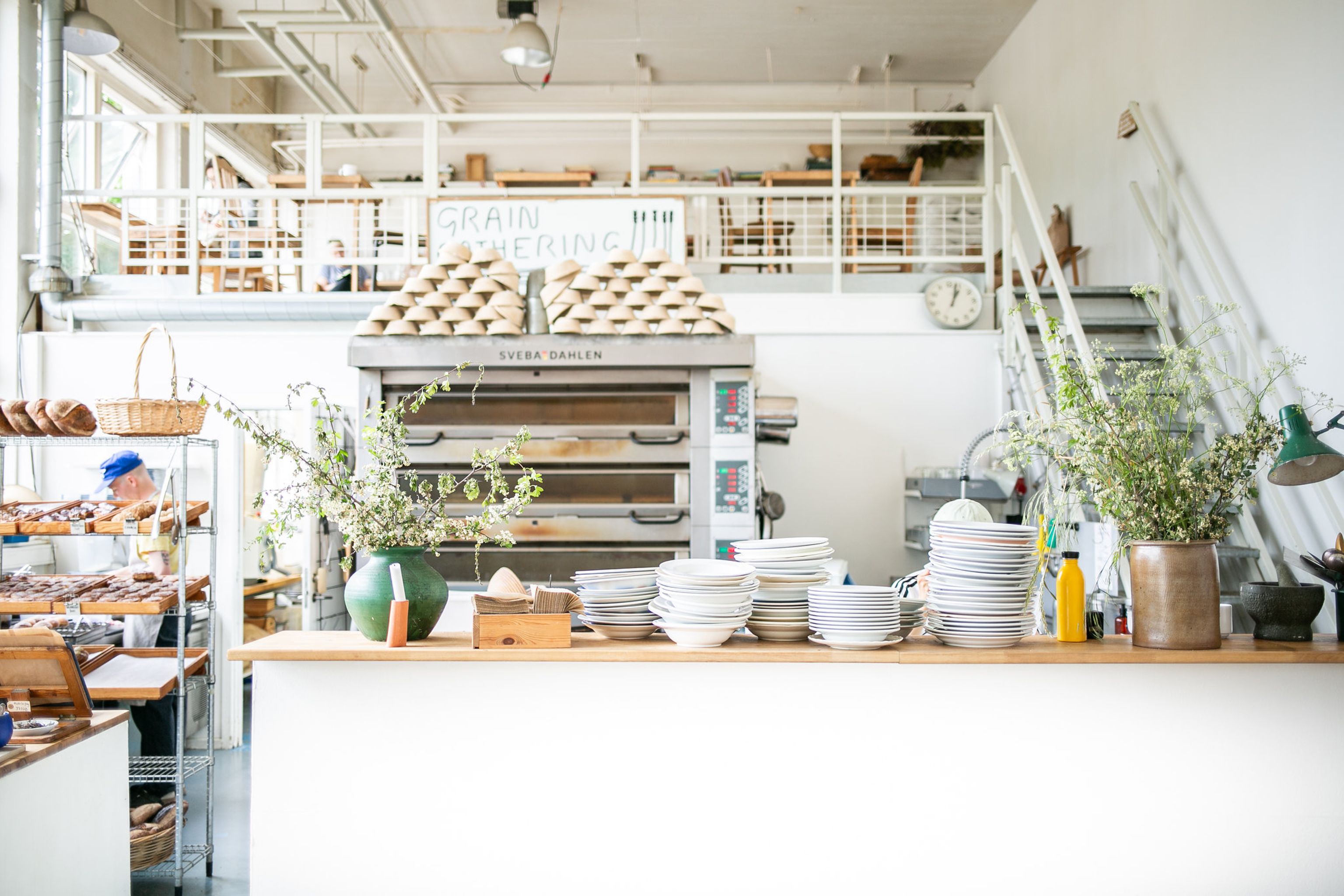
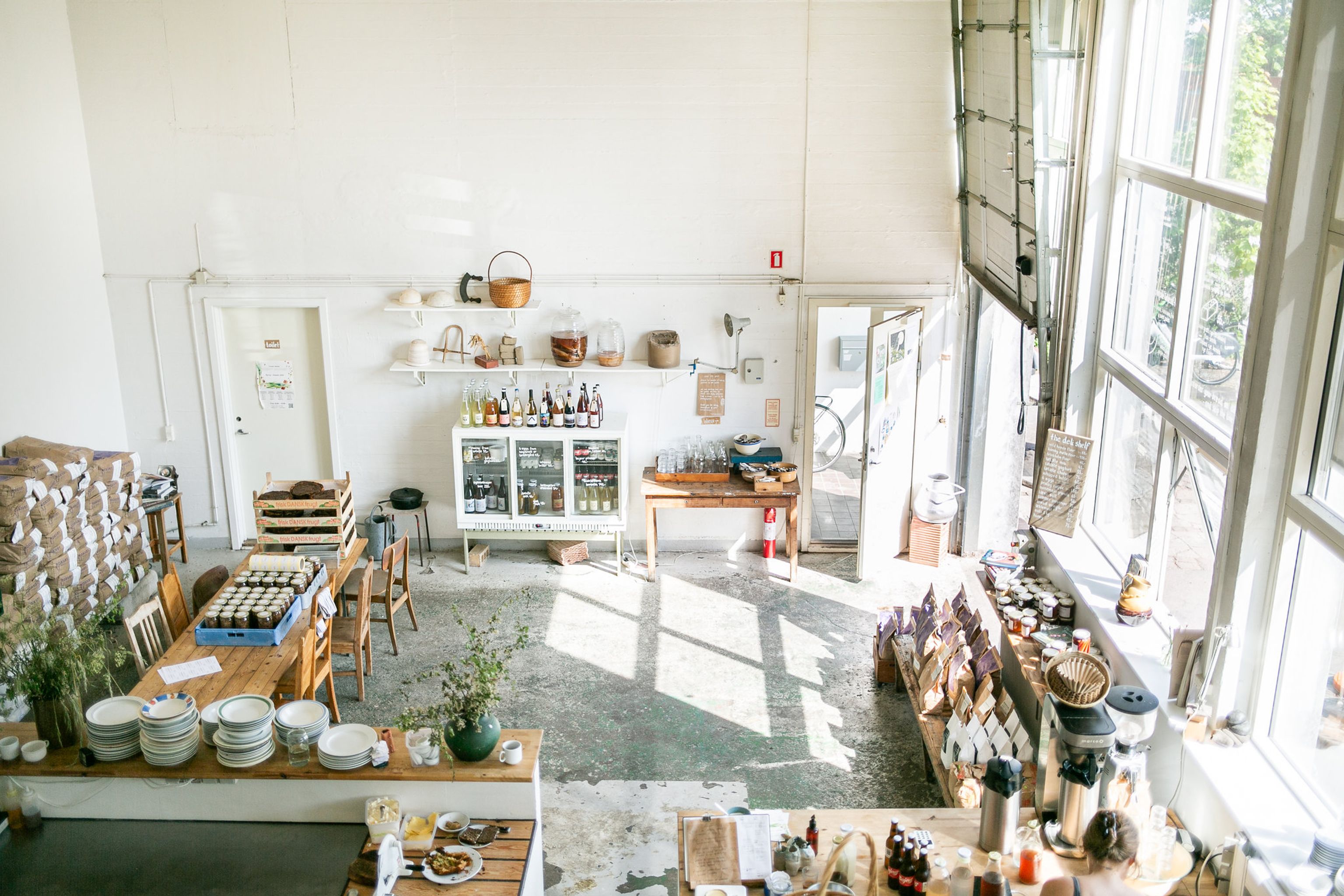
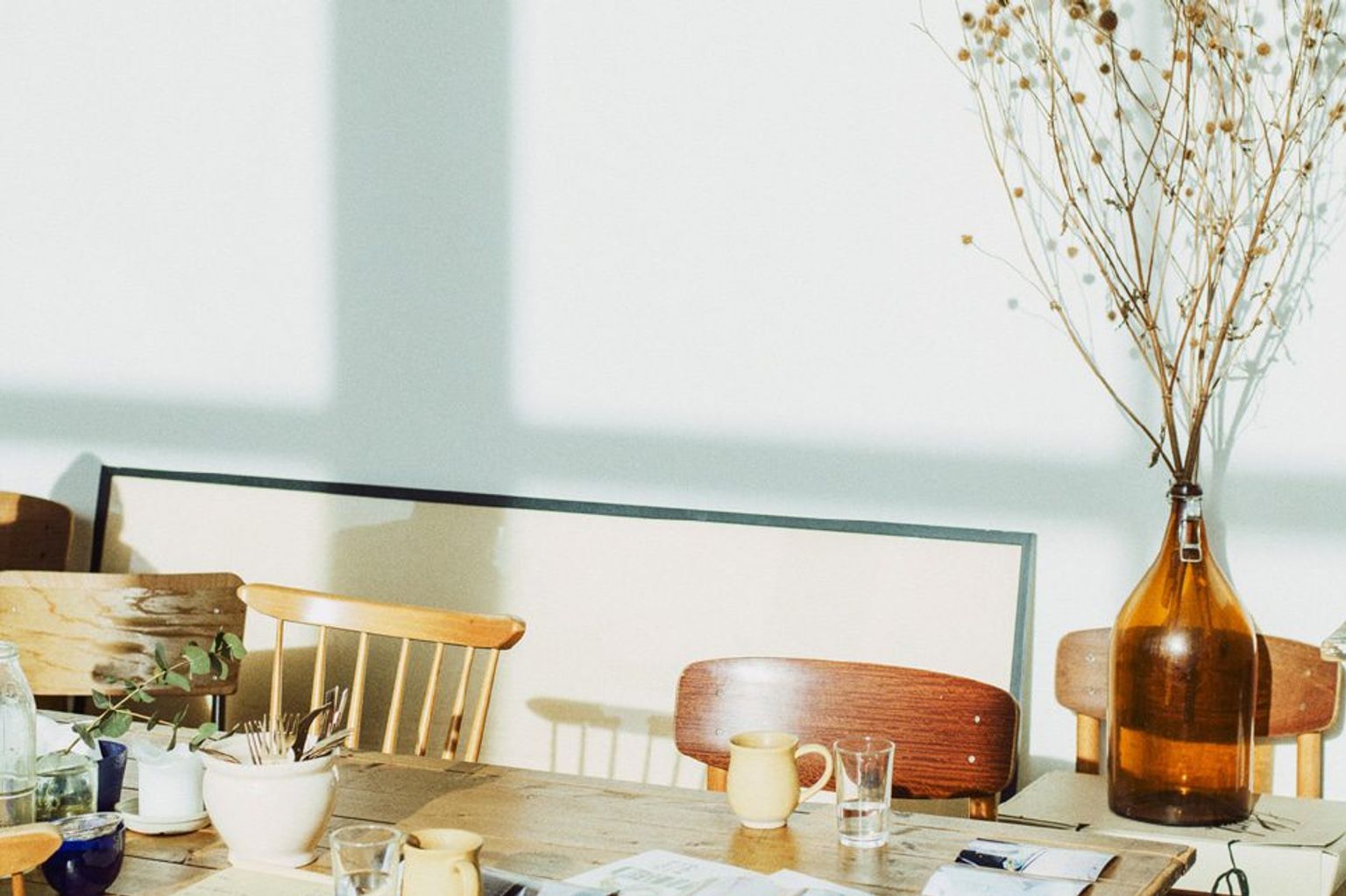
Frederik Gustav Lille Bakery feels like an active workshop that also functions as a café. The space previously housed a ceramics workshop, and today the kilns have been replaced by baking ovens. For us, it is precisely the raw and undesigned quality that makes the place special; the furniture is worn and either wobbles or creaks, the acoustics are slightly chaotic, yet the atmosphere is always strong.

Lille Bakery - An Industrial Harbor Micro-Community
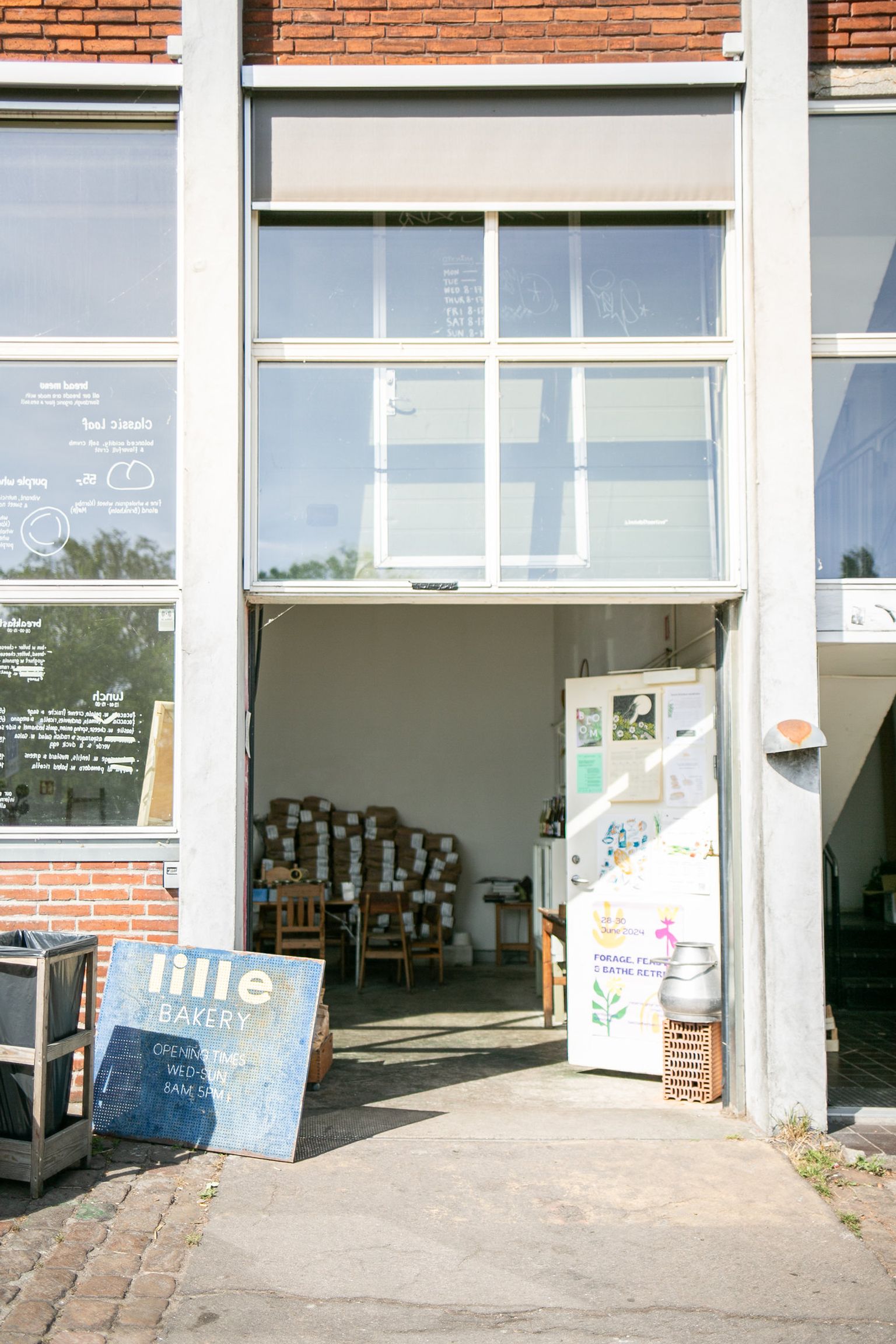
Tucked away in the former shipyard district of Refshaleøen, Lille Bakery transforms a residual industrial landscape into a contemporary gathering point for craft food culture. The bakery was founded in 2018 by Jesper Gøtz, Mia Boland, and Sara Macedo, who previously worked at Restaurant 108, establishing the project as an artisanal organic bakery and eatery focused on local, sustainable, and community-oriented food.
The harbour location is part of the experience: a quiet edge of the city where former production halls have been reinterpreted as spaces for culinary and social life. High ceilings, raw surfaces, and a deliberately understated interior language frame the bakery’s spatial character, reflecting the philosophy that smallness enables precision and care in every material and gesture.

Craft, Collaboration, and Ethical Production
At the core of the bakery lies a production ethos rooted in responsible sourcing and artisanal discipline. The founders work closely with Danish farmers, fishermen, and craftsmen who share a commitment to organic and environmentally respectful agriculture. Danish grains, seeds, and salts form the backbone of the baking practice, allowing flavour, texture, and seasonal variation to emerge from local landscapes rather than imported standardisation.
This philosophy extends beyond supply chains into the social identity of the project: Lille Bakery began as a community-supported initiative financed through personal savings and a crowdfunding campaign, gathering more than 200 backers who believed in the vision. The result is a craft ecosystem where ethics and taste are inseparable.

The Poetry of Everyday Food
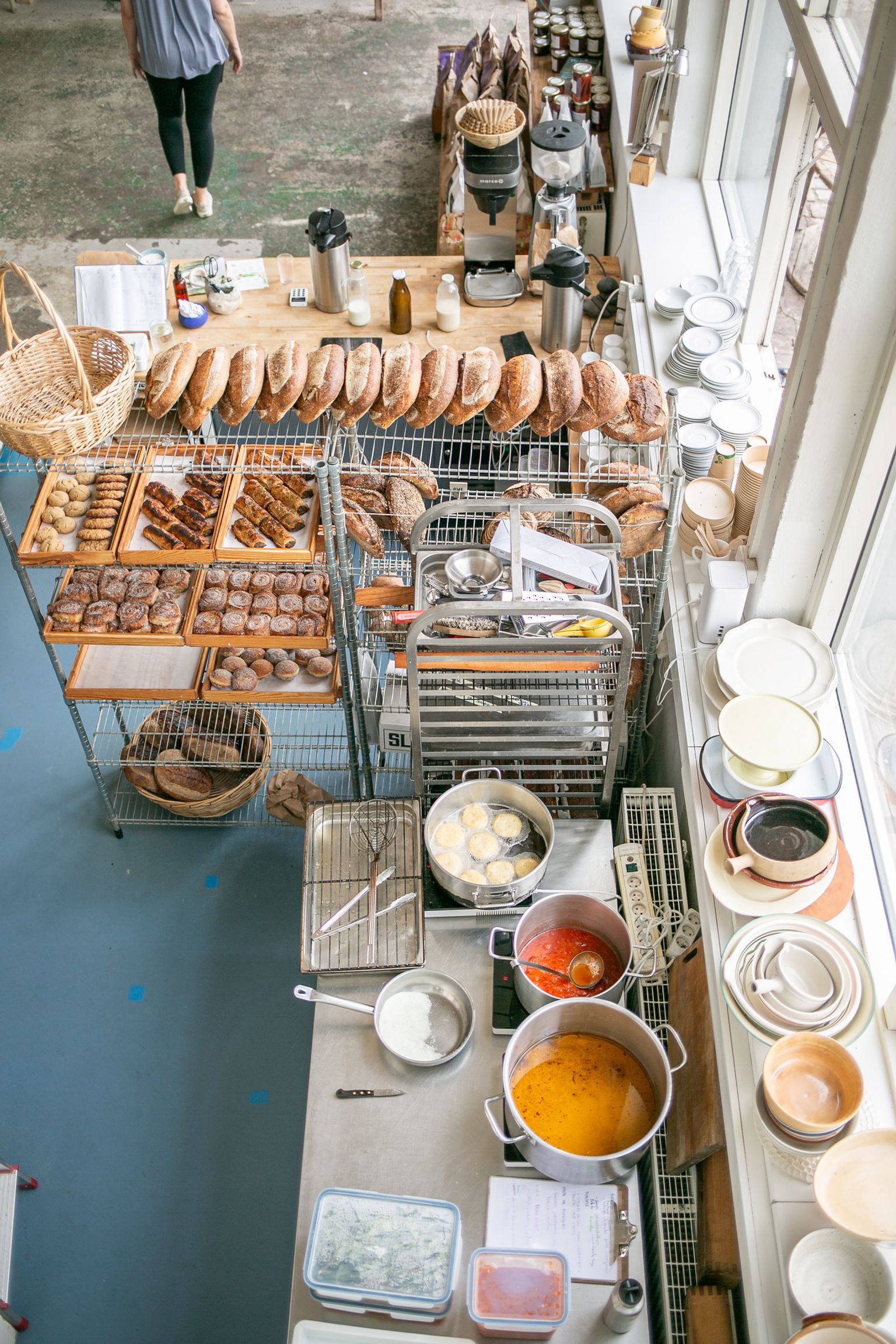
The culinary signature of Lille Bakery is found in its interpretation of familiar baked forms through high-quality ingredients and restrained experimentation. From deeply caramelised sourdough loaves to Berlin-style doughnuts filled with or without cream, the menu balances tradition and subtle innovation. Seasonal pastries such as rhubarb spandauer, sugar-dusted doughnuts, and sausage rolls coexist with simple meal plates of buttered bread, cheese, cured meat, yoghurt, soft-boiled eggs, and seasonal soups shaped by agricultural rhythms, spring peas and stone fruits, winter lamb and bean stews. Coffee is served in a classic, almost nostalgic style that reinforces the bakery’s focus on food rather than spectacle.

Interior Atmosphere and Found Object Aesthetics
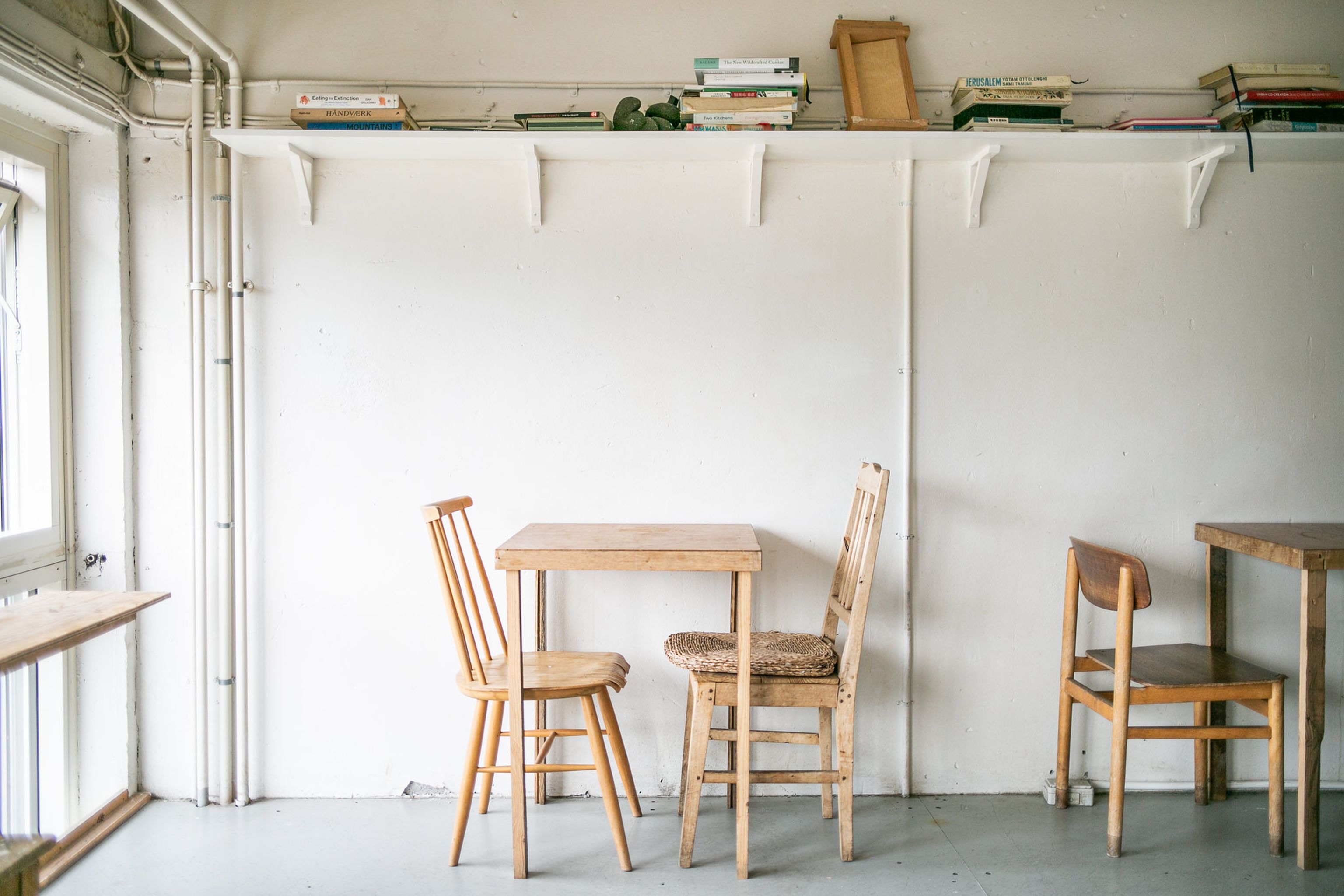
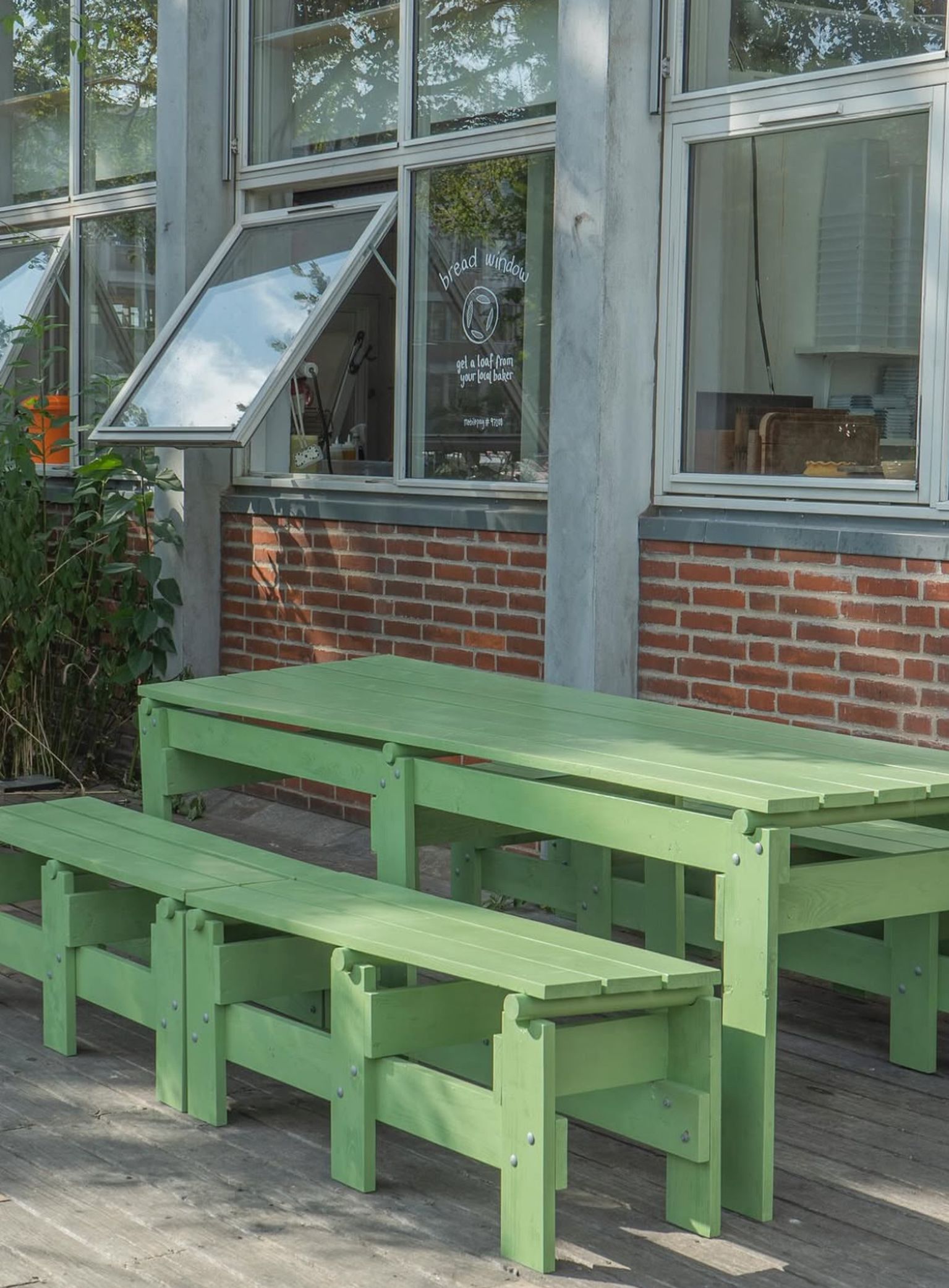
The spatial interior of Lille Bakery reflects an informal architectural curation where furniture appears assembled across time. Mismatched chairs, reused tableware, and vintage elements coexist without strict uniformity. Outside, orange lounge seating and green Danish larch benches, created for the outdoor deck by designer Lasse Hedevang, soften the industrial courtyard and form a transitional zone between harbour landscape and social gathering space. The design follows the idea that small environments matter – a principle reflected in the bakery’s name – prioritising intimacy, durability, and tactile material presence over decorative complexity.

A Destination Built Around Community and Slow Movement
Popular and especially busy during weekends, Lille Bakery has become a quiet destination in Copenhagen’s contemporary food culture. Visitors often travel across the harbour to reach Refshaleøen, passing transformed industrial zones that now host art, restaurants, and cultural spaces. Queueing is part of the experience, but service is efficient and movement remains fluid. The bakery’s success lies in consistency rather than spectacle, a belief that “when you are small, everything matters.” It represents a Nordic interpretation of craft urbanism where production, landscape, and community interaction function as a unified, slow-moving system.