
Heatherwick Studio
Learning Hub - The Hive
- ArchitectHeatherwick Studio
- PhotographerHufton + Crow
Melike Altınışık A radical reinterpretation of educational space. The absence of corridors and the vertical stacking of rounded learning pods encourage interaction and informal exchange. It challenges how architecture can reshape collective learning environments.

Redefining the University in the Digital Age
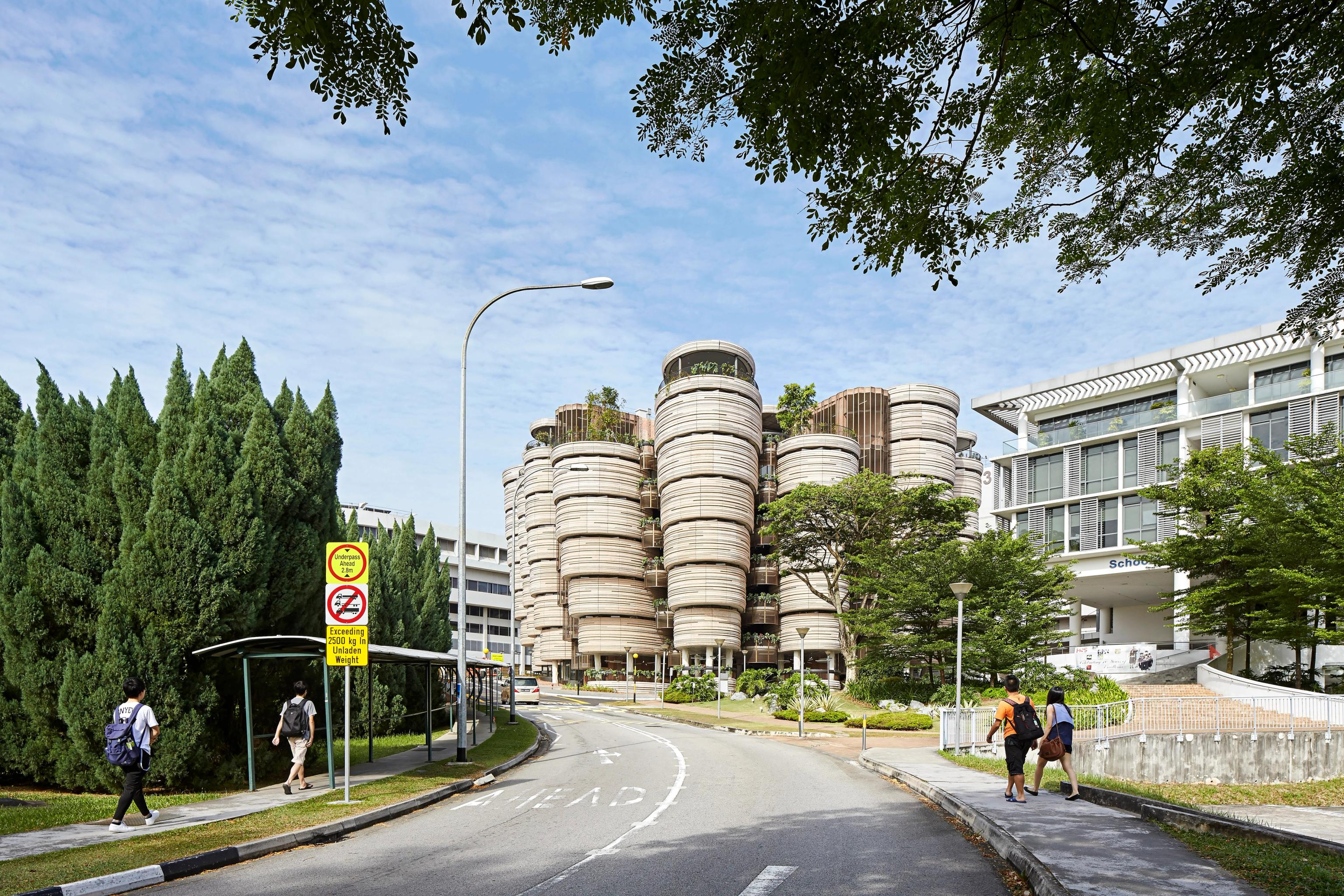
The Hive Learning Hub at Nanyang Technological University (NTU), Singapore, designed by Heatherwick Studio in collaboration with CPG Consultants, responds directly to the shifting role of campuses in the 21st century. Traditional lecture halls and corridors, once the backbone of university design, no longer reflect how students engage with knowledge. Entire degrees can now be completed online, and information is accessible anywhere, at any time.
In this context, The Hive emphasizes the university’s most vital resource: social interaction. It reframes the campus as a place to connect, experiment, and exchange ideas, where informal encounters are valued as much as formal instruction. By embedding interdisciplinary and communal spaces into its core, the building creates an environment that fosters innovation, collaboration, and the spontaneous sparks that drive new research and entrepreneurial activity.

An Architecture of Interaction
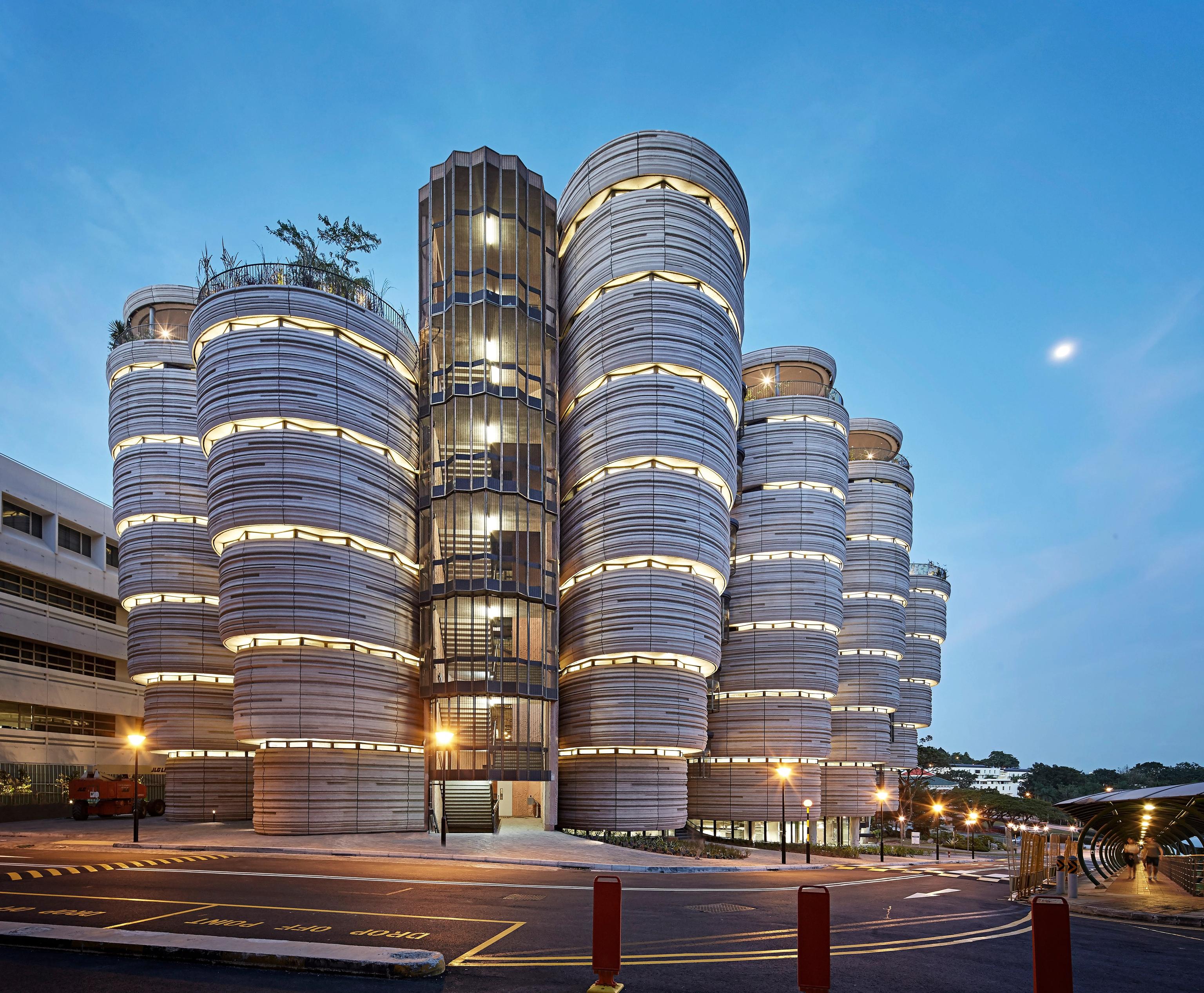
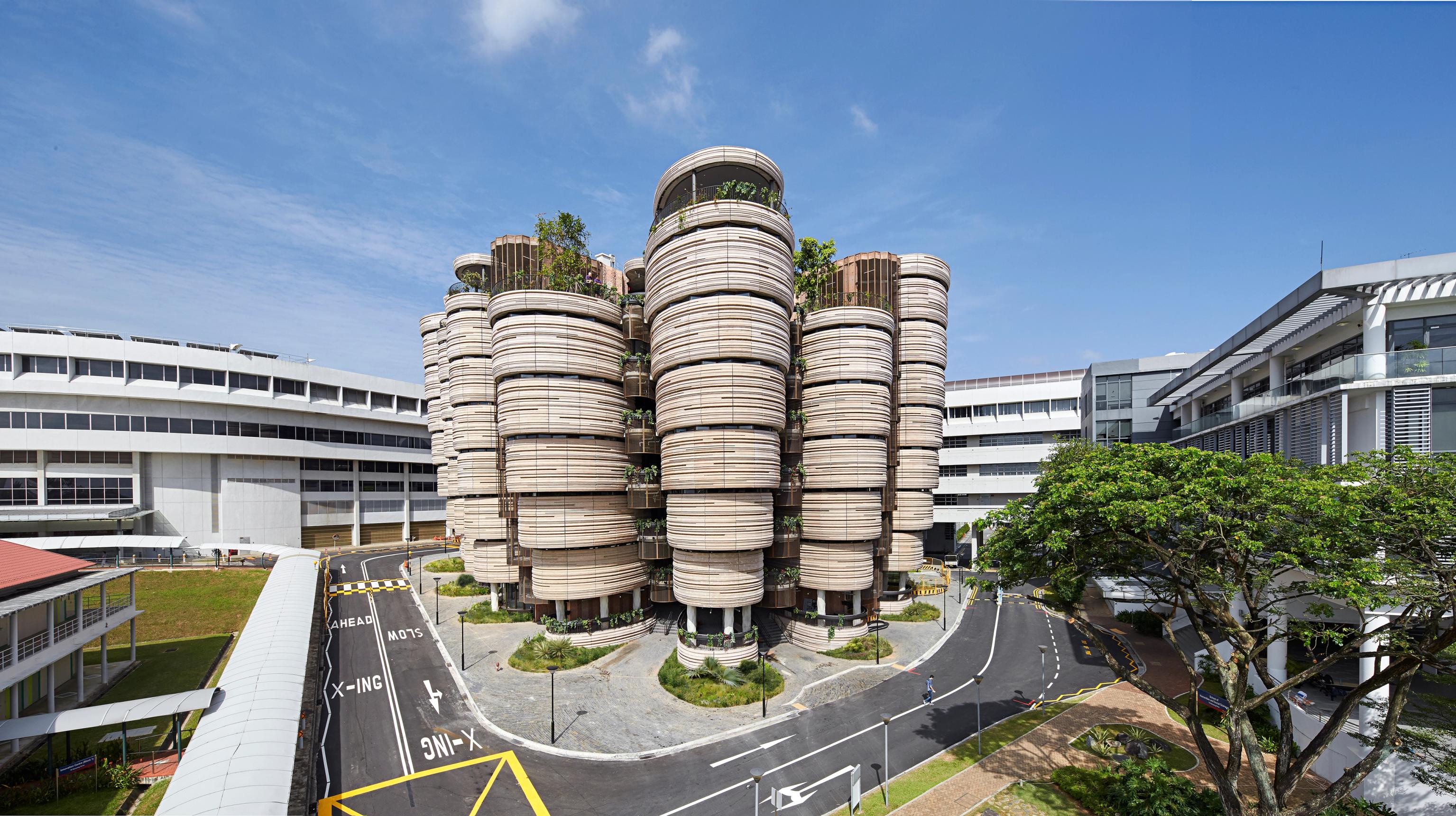
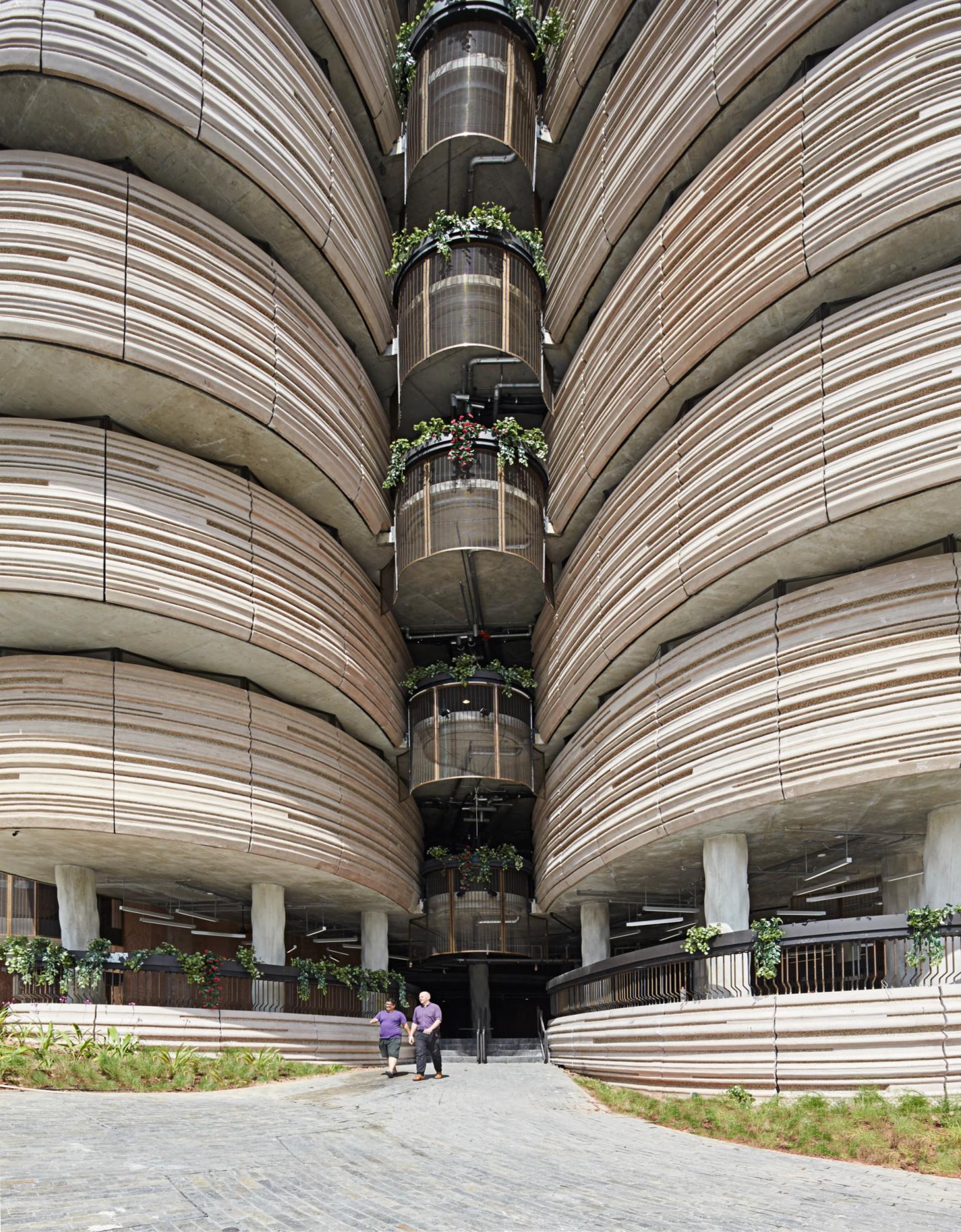
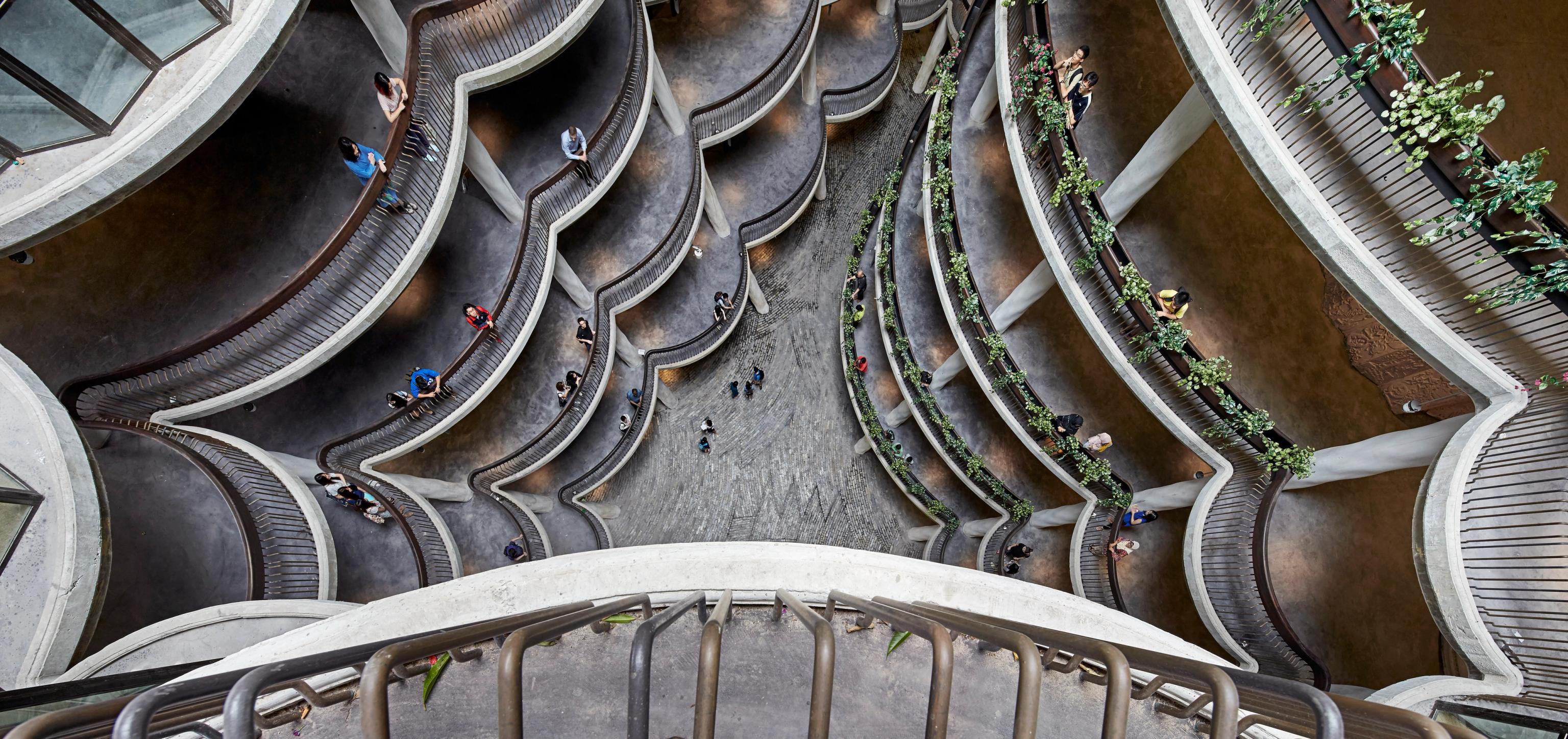
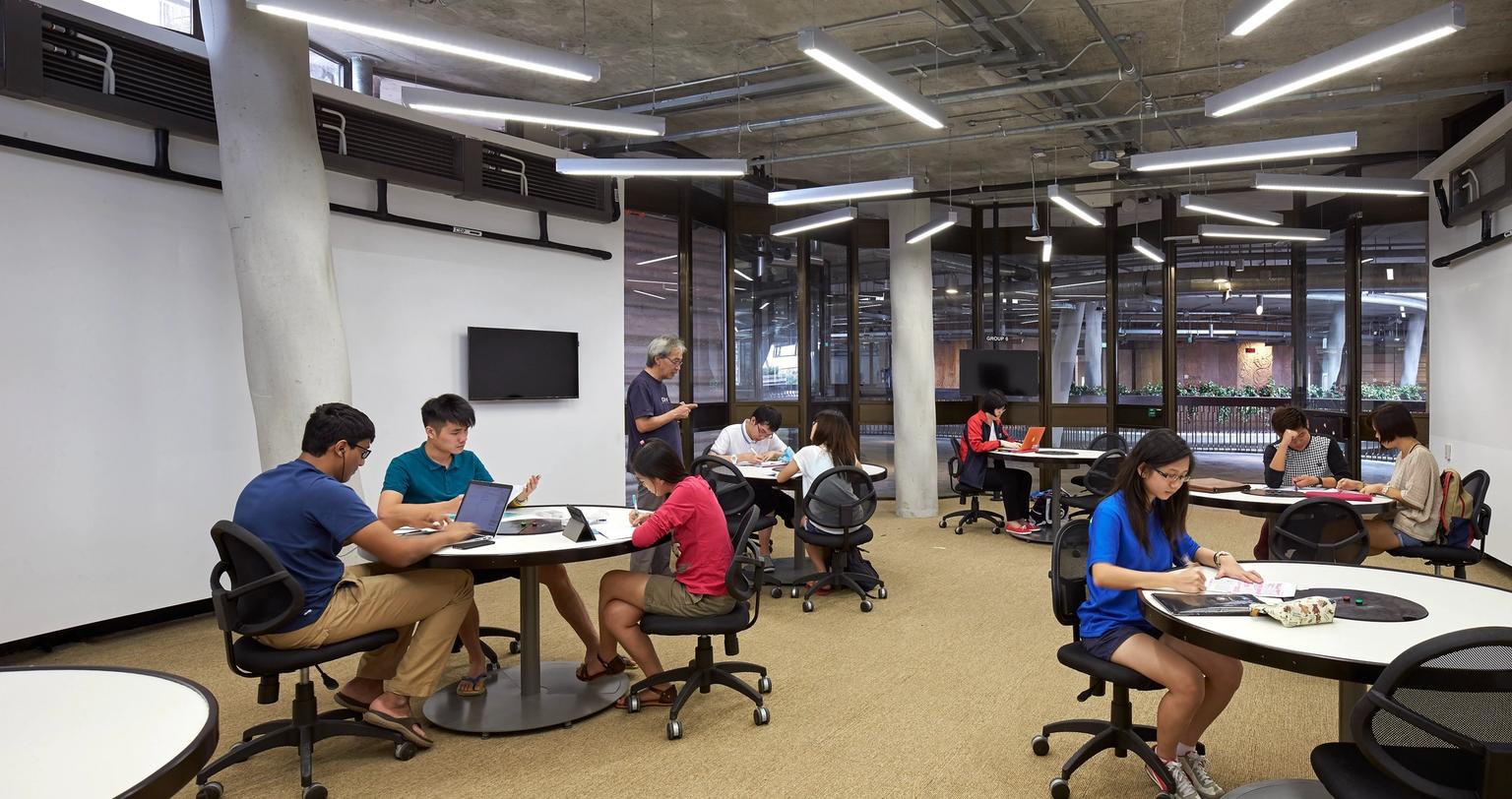
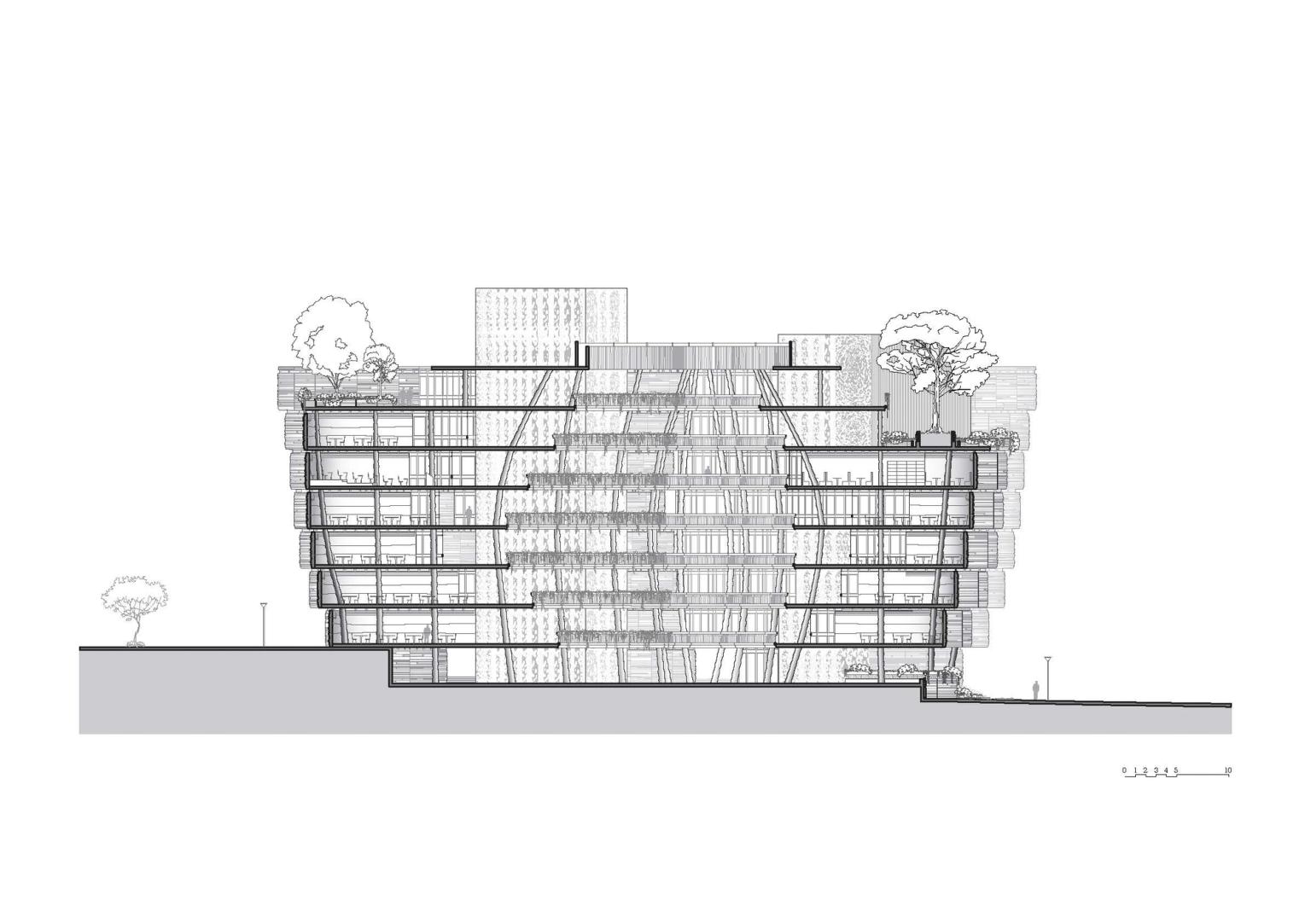
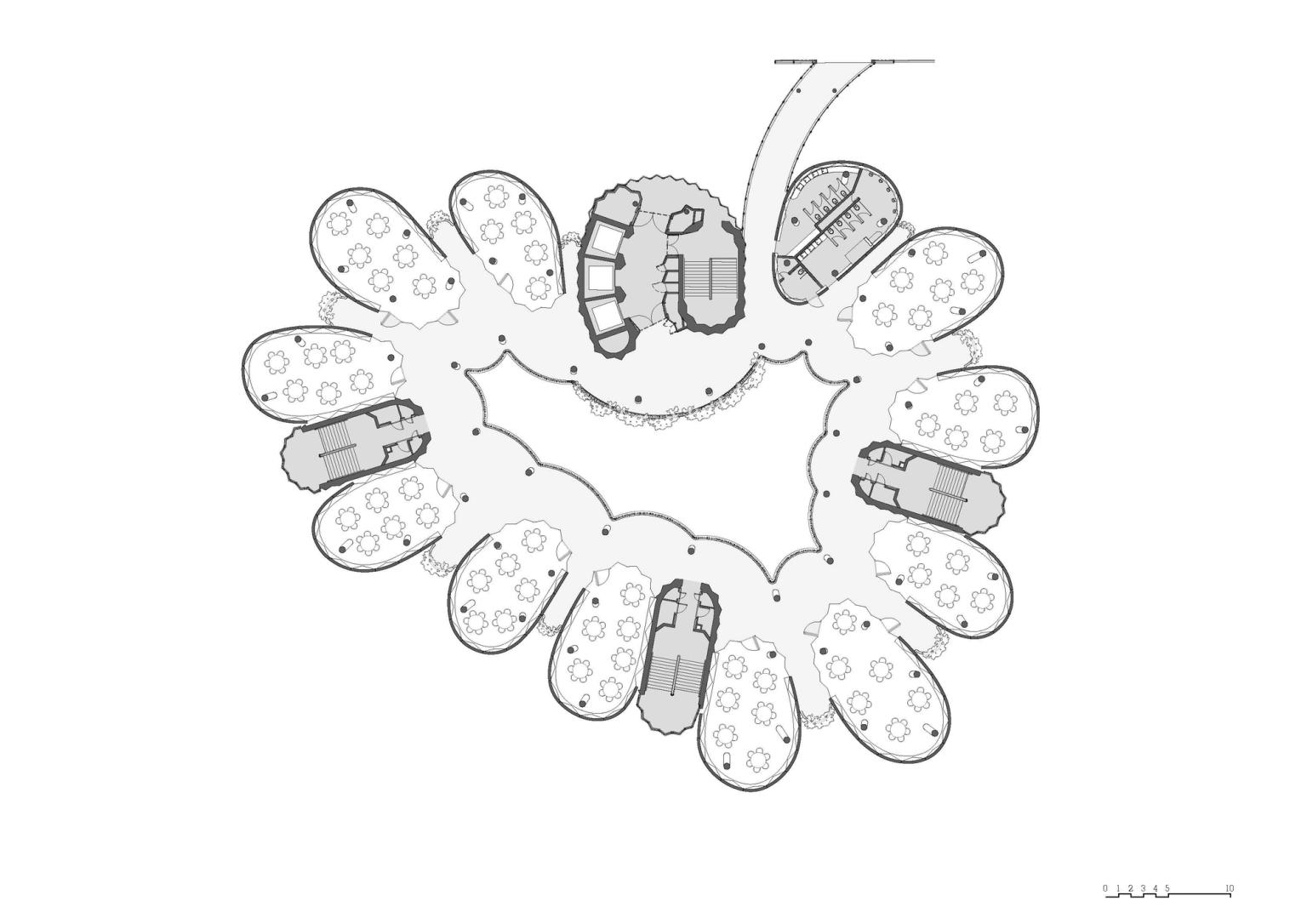
Departing from linear, hierarchical classrooms, The Hive’s twelve conical towers house fifty-six tutorial rooms, each deliberately cornerless to remove the traditional “front of the class.” These pods taper inward at the base around a central atrium, a vertical social loop linking all levels. Circulation areas, terraces, and intimate nooks are interwoven with classrooms, allowing students and faculty to pause, gather, or observe without formal instruction.
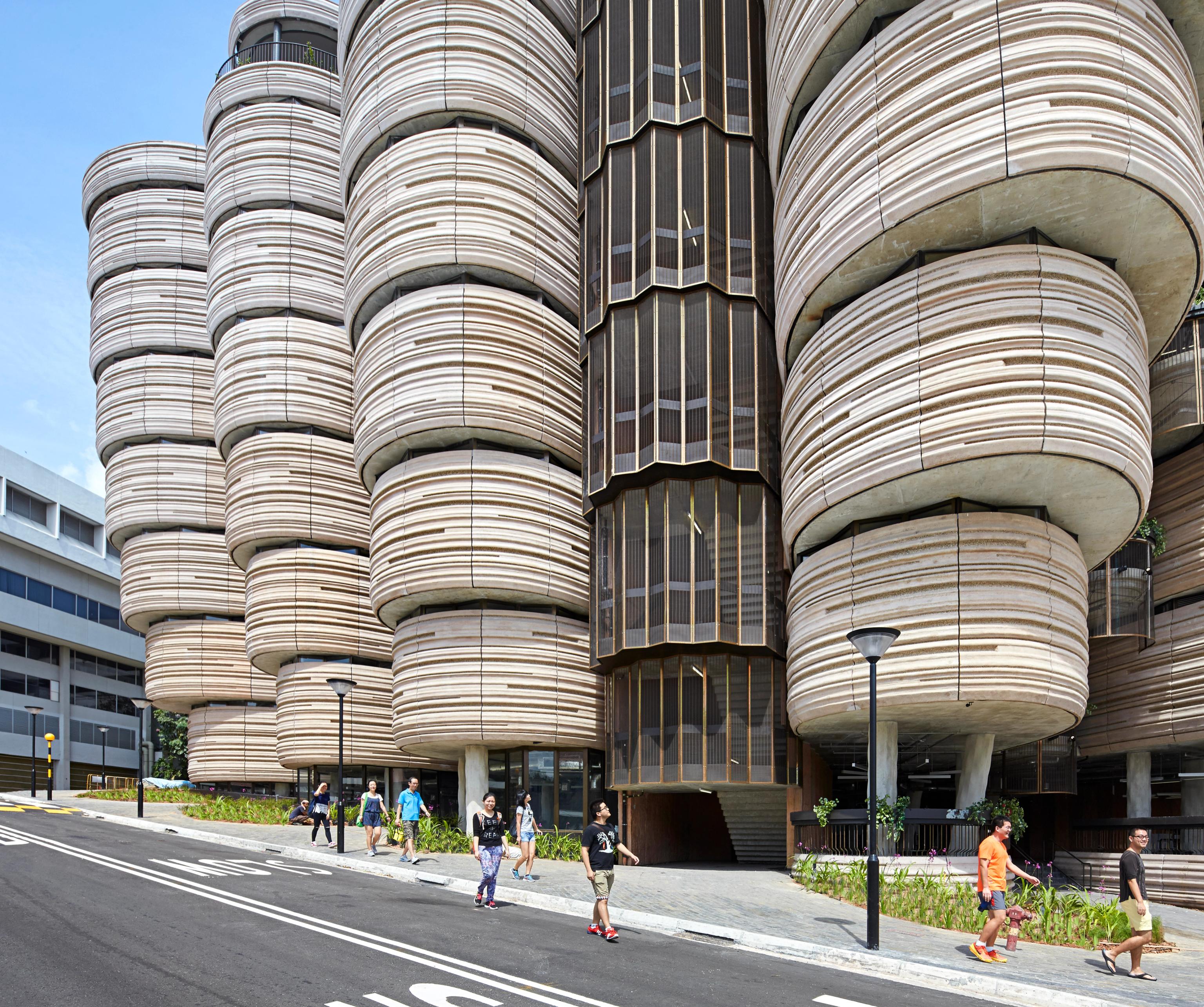

This porosity extends to the ground plane: the building can be entered from multiple directions, integrating with the surrounding campus. Balconies and plant-filled terraces blur boundaries between formal and informal learning, encouraging cross-disciplinary exchange in every moment of transit. Heatherwick Studio’s design places social proximity at the heart of pedagogy, turning movement, visibility, and shared space into tools for learning itself.
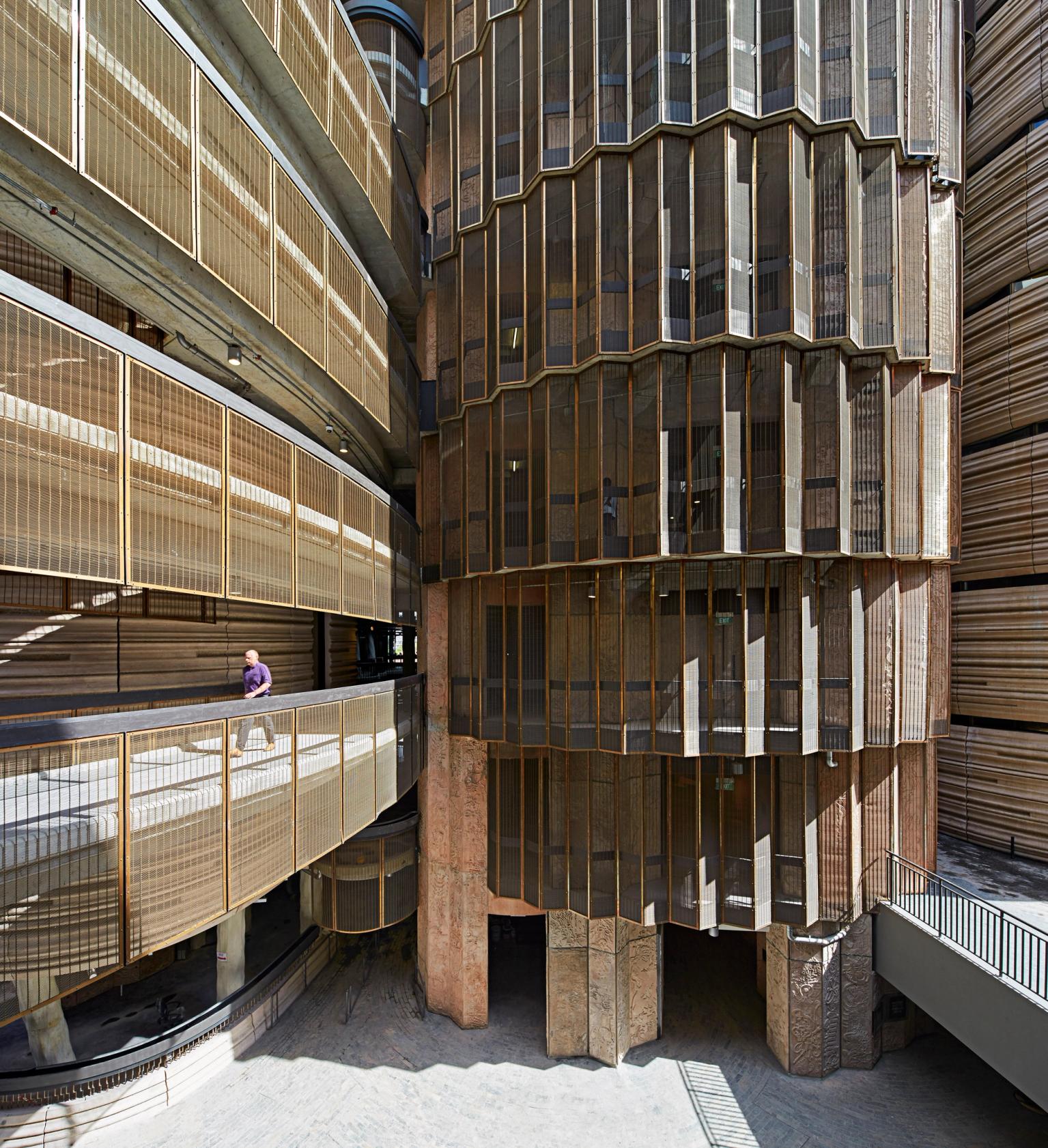

Material Intelligence and Artisanal Craft
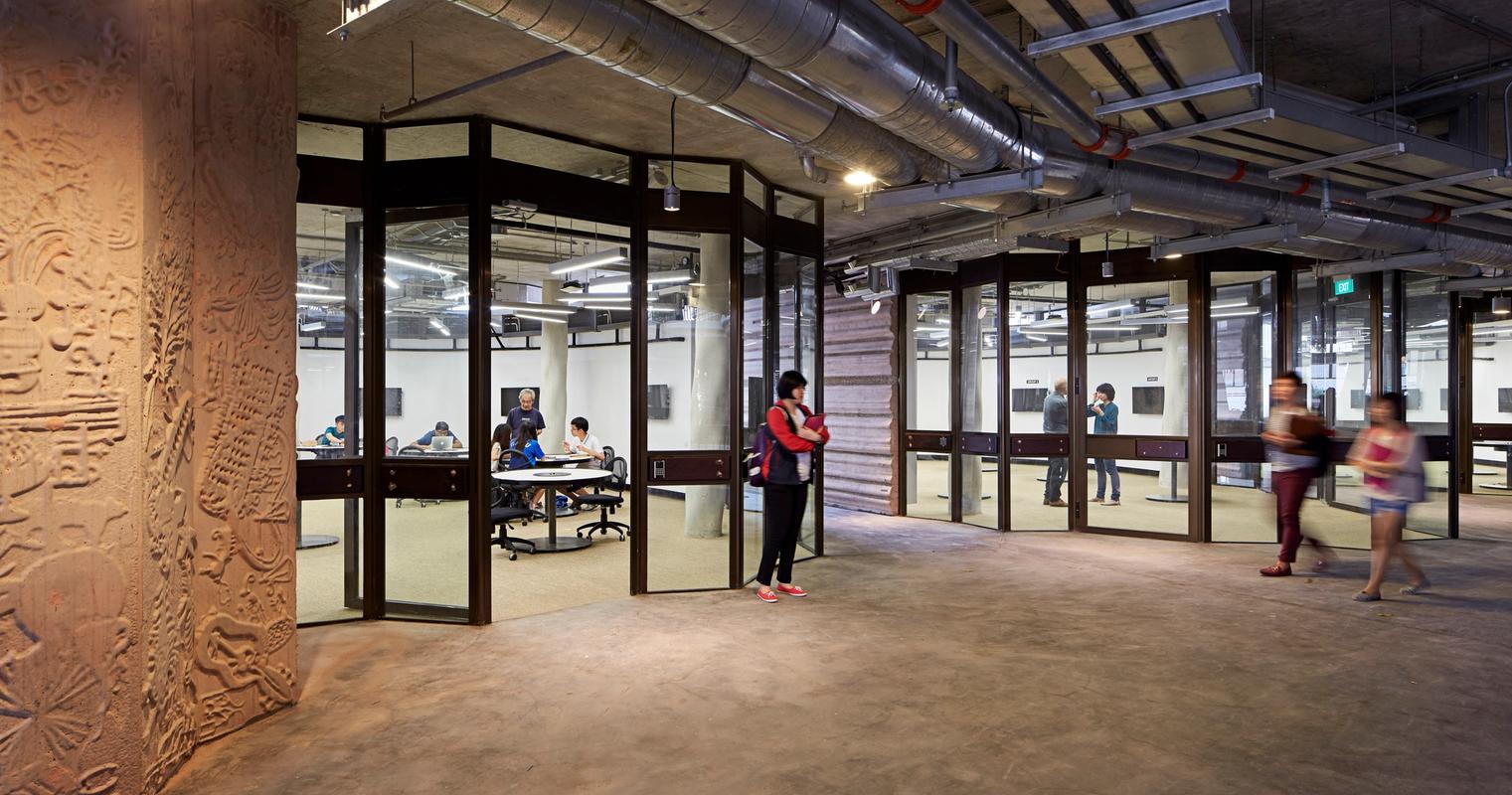
Every element of The Learning Hub demonstrates attention to materiality and craftsmanship. Concrete is celebrated as both structural necessity and design gesture: sixty-one angled columns with undulating textures support the towers, while horizontal striped façade panels, cast from ten adjustable silicone molds, create depth and rhythm across the building’s surface.
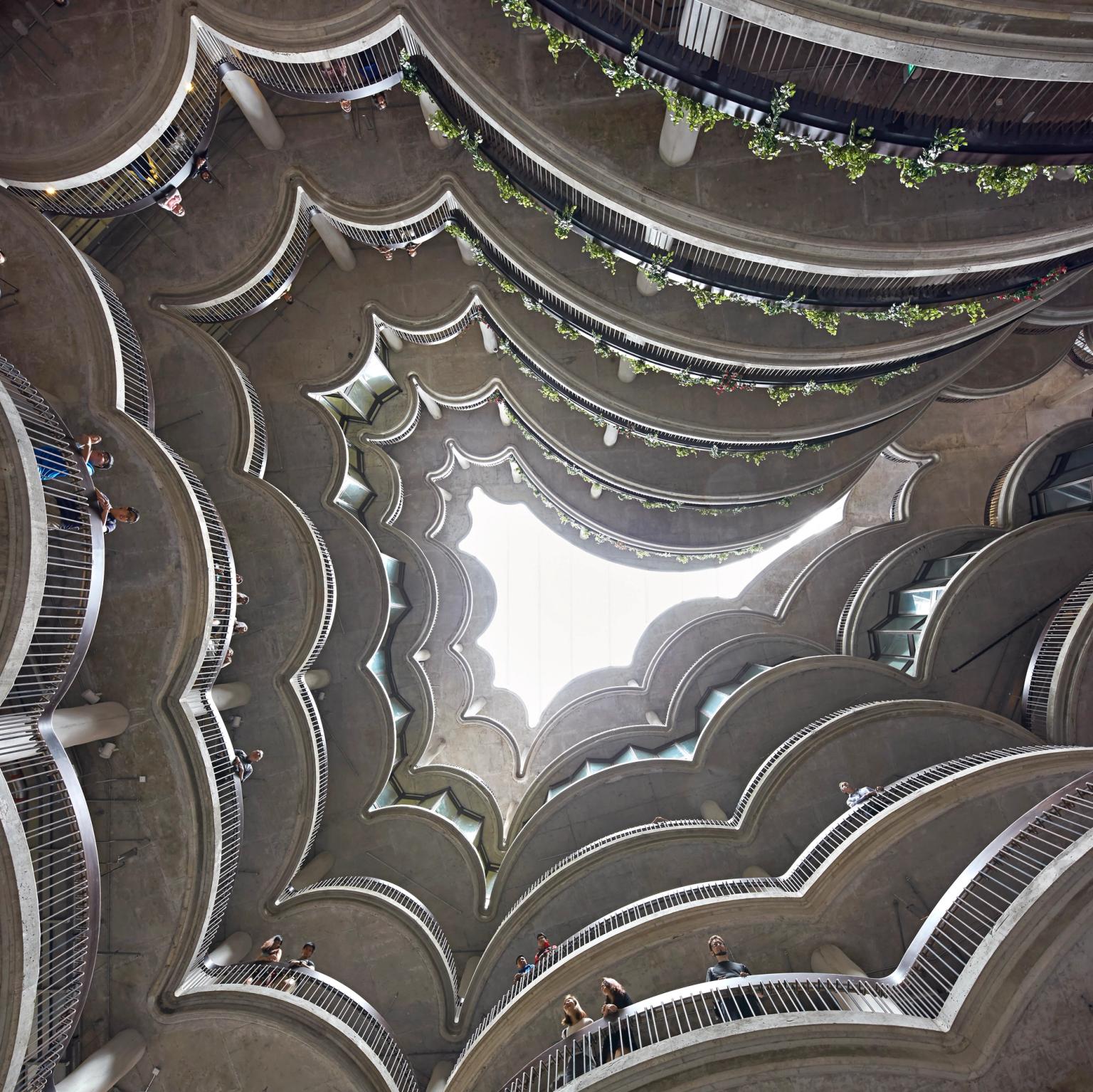

Circulation cores are adorned with 700 three-dimensional illustrations by British artist Sara Fanelli, referencing literature, art, and science, and acting as visual prompts for reflection and curiosity. The tactile treatment of materials – columns, stairs, and walls – renders the building “handmade from wet clay,” reinforcing its human scale and the narrative embedded in construction. Even the stacking of pods into towers reflects an exploration of balance, modularity, and spatial connectivity, linking structure and pedagogy seamlessly.

Sustainability as Spatial Experience
Beyond form and program, The Hive embodies environmental intelligence. Its central atrium functions as a passive ventilation system, mitigating Singapore’s heat and humidity, while terraces and garden nooks provide microclimates that enhance comfort and biodiversity. This integration of natural systems earned the building Green Mark Platinum certification, Singapore’s highest environmental standard. But sustainability is not only technical; it is performative. Every balcony, corridor, and social space demonstrates how environmental strategies can intersect with human interaction, making passive ventilation, daylighting, and natural airflow inseparable from the social life of the campus. The design shows that ecological performance can be a lived experience, not just a checklist.


From Pedagogy to Campus Culture
The Hive Learning Hub has become an iconic presence within NTU’s 200-hectare campus, colloquially known as the “dim sum basket building” for its stacked conical forms. Its architecture reflects the university’s ambition to cultivate creativity, entrepreneurship, and social awareness. By dissolving hierarchies between faculty and students, and integrating formal classrooms with casual gathering spaces, The Hive transforms the act of learning into a communal, participatory experience.


The building fosters interconnection and chance encounters across disciplines, reinforcing NTU’s vision of a “univer-city” where education extends beyond the classroom. Its playful geometry, material tactility, and environmental intelligence collectively position The Hive as a benchmark for contemporary university design: a space where architecture itself becomes a catalyst for collaboration, imagination, and experimentation.