
Hiroshi Naito
Kioi Seido
- ArchitectHiroshi Naito
- PhotographerFinbarr Fallon
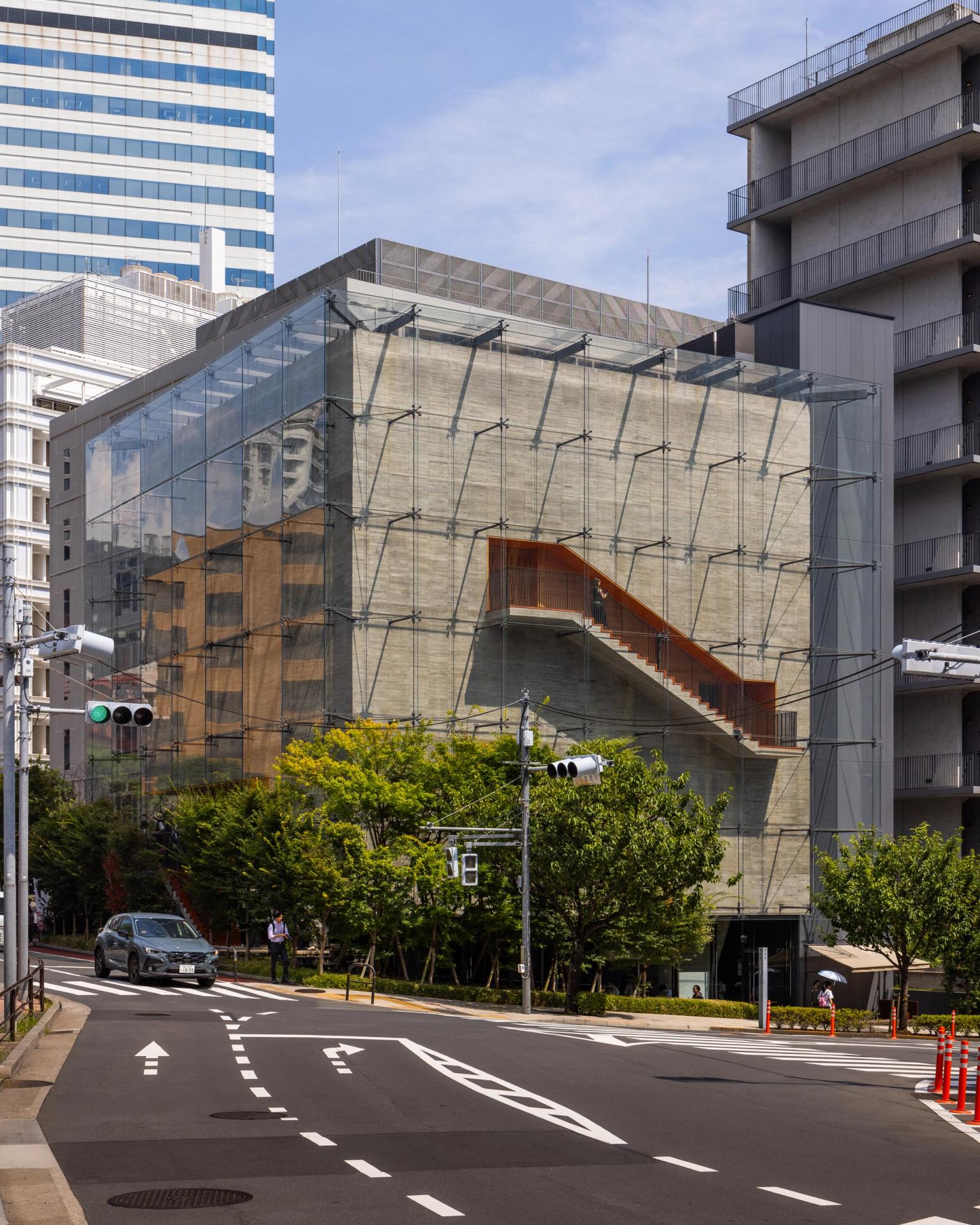
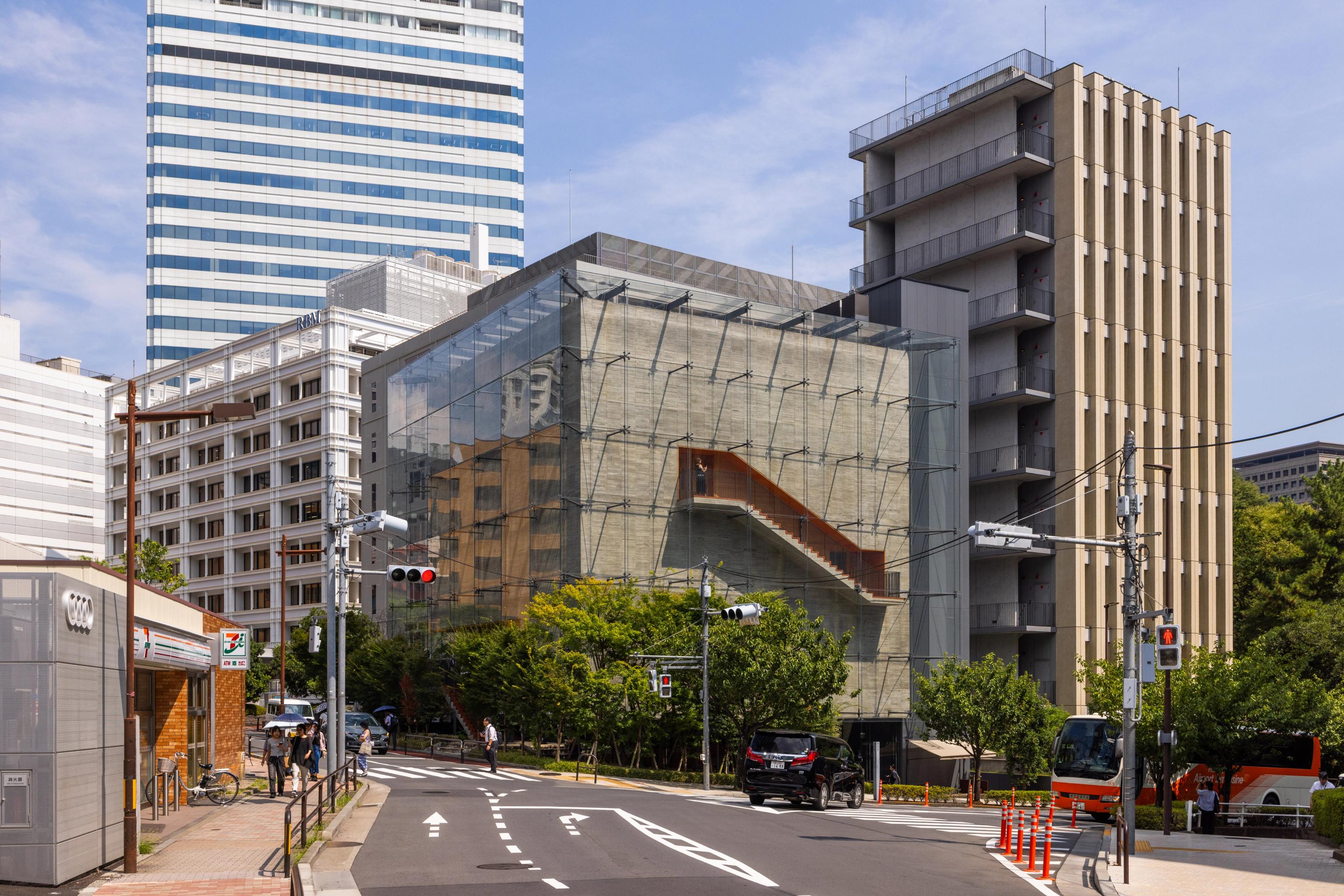
Thomas Lykke We were lucky to visit Kioi Seido in Tokyo during a short window when the building was open to the public. The building was designed by architect Hiroshi Naito and has no specific purpose, according to the brief. The five-storey structure resembles a modern Pantheon, where a combination of roughness, tranquility and natural light creates a very special atmosphere inside.

A Building Without a Purpose, in the Middle of Tokyo
Kioi Seido stands quietly in central Tokyo, almost refusing to announce itself. Designed as a five-storey concrete structure wrapped in glass, it carries a strange and deliberate contradiction: it was conceived with no fixed function at all. Instead of being shaped by program or commercial need, it begins from an idea – what happens when architecture is allowed to exist before purpose? Slightly lifted from the ground, the building reveals an entrance level that feels more like a threshold than a lobby, where visitors first step into a space that is already halfway between public and abstract. Above it, a heavy yet calm concrete volume seems to hover, as if detached from the usual demands of the city around it.

Hiroshi Naito and a Practice of Quiet Permanence
Behind Kioi Seido is Hiroshi Naito, a Japanese architect known for working at the intersection of material honesty and atmospheric depth. His practice has consistently focused on buildings that feel grounded in time rather than trend, structures that aim to last not only physically, but emotionally. Trained at Waseda University and shaped by experiences in both Spain and Japan, Naito’s architectural language often resists spectacle in favour of continuity, texture, and human scale. In Kioi Seido, that philosophy is pushed further: instead of designing a building to solve a problem, he designs one to hold questions open.

What makes his position important here is not just authorship, but attitude. Naito approaches architecture as something closer to a cultural surface than an object, something that absorbs history, material memory, and collective emotion without reducing them into simple narratives.

The Idea of “No Purpose” and the Jomon Influence
The starting point of Kioi Seido was unusually open. Commissioned by the RINRI Institute of Ethics, Naito was given one instruction: to think about the Jomon period, Japan’s prehistoric era known for its primitive pottery, rope patterns, and deeply expressive material culture. From this emerged a building that deliberately avoids clarity of function. Instead, it leans into ambiguity as a design method.
The reference to Jomon thinking is not nostalgic, it is structural. It suggests a time before architecture was defined by efficiency or typology, when form and ritual were inseparable. At the same time, Naito also looks toward the Roman Pantheon as a parallel model: a building whose purpose is still debated, yet whose spatial clarity remains undeniable. Between these two references, ancient Japan and classical Rome, Kioi Seido positions itself as a “modern Pantheon,” not as imitation, but as a shared condition of timelessness created through uncertainty.

Material Layers
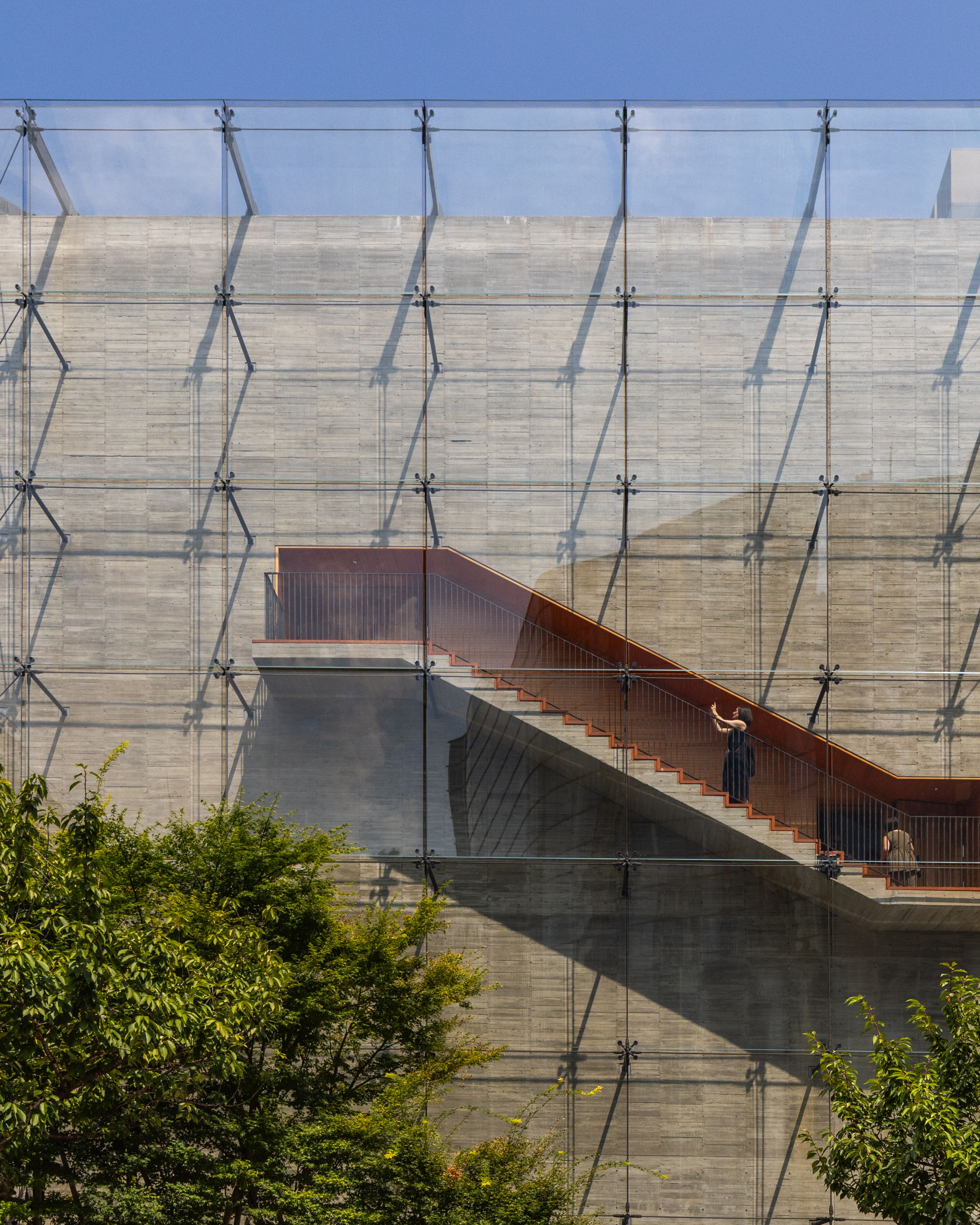
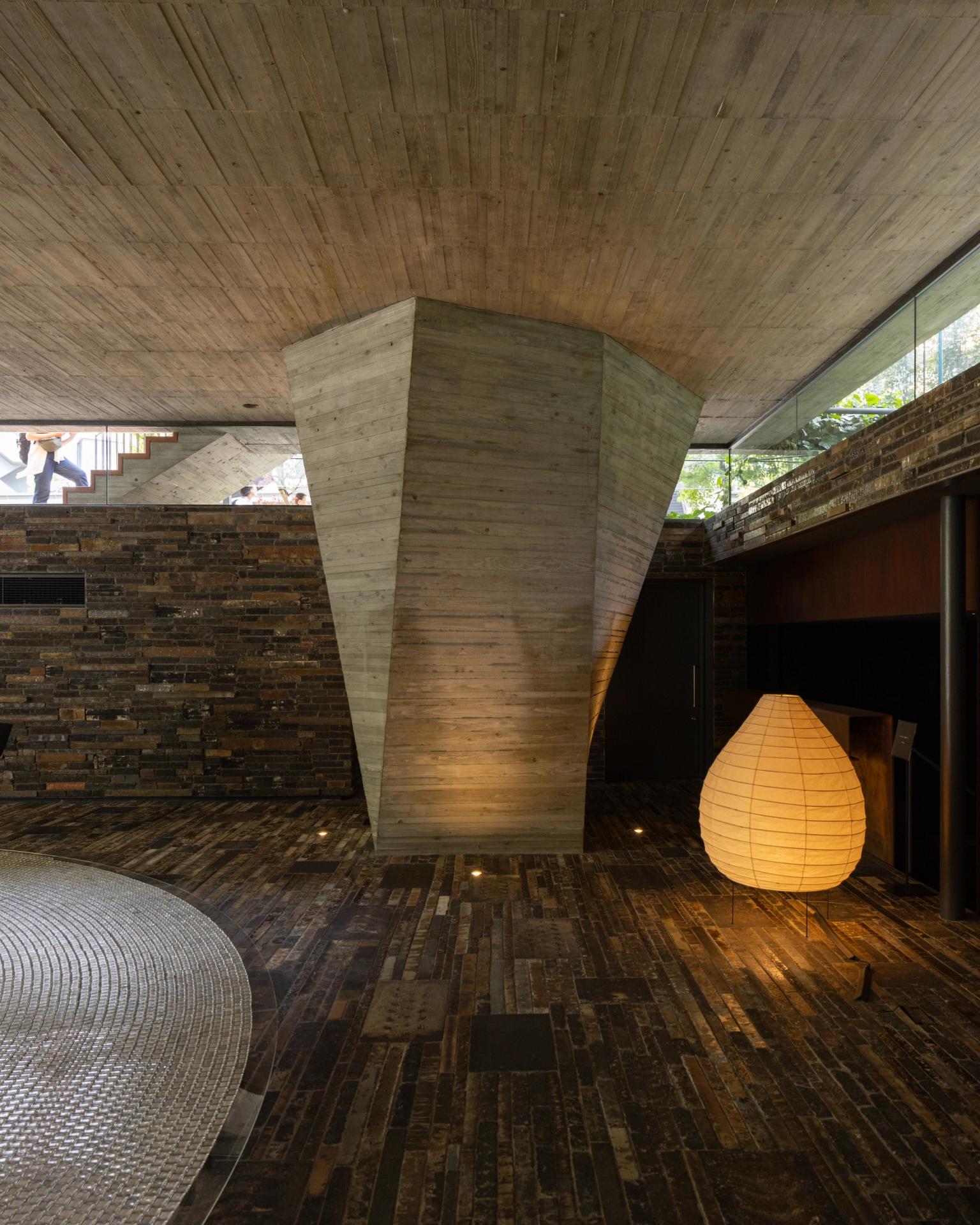
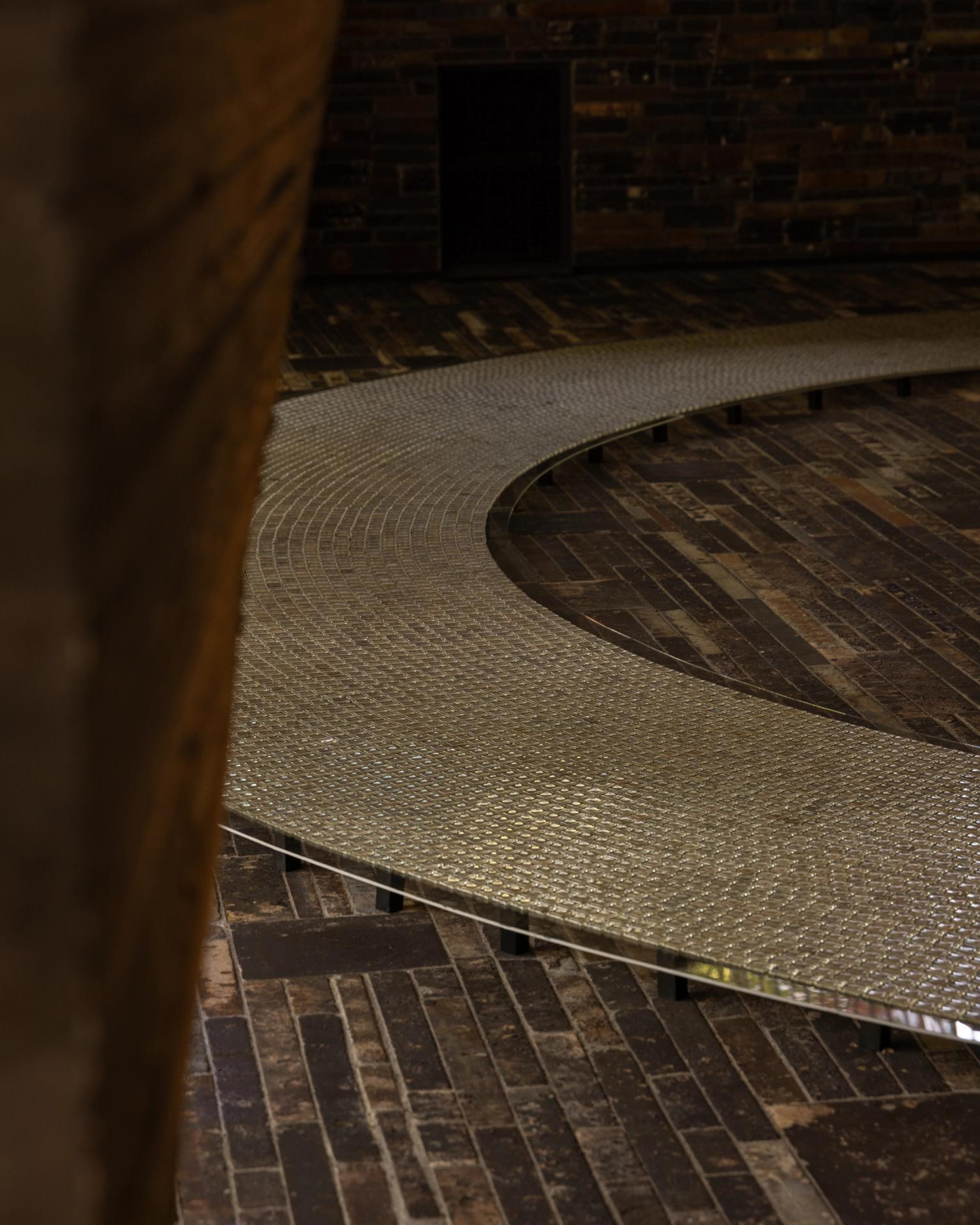
At the centre of Kioi Seido is a 15-metre concrete cube enclosed within a glass skin, lifted 3.6 metres above the ground. This base level is more than structural, it acts as an entry field and first gallery, grounded by a surface of repurposed kawara roof tiles from Shimane Prefecture. Their irregular tones and textures immediately set the tone: this is a building assembled through fragments of time rather than uniform finish.
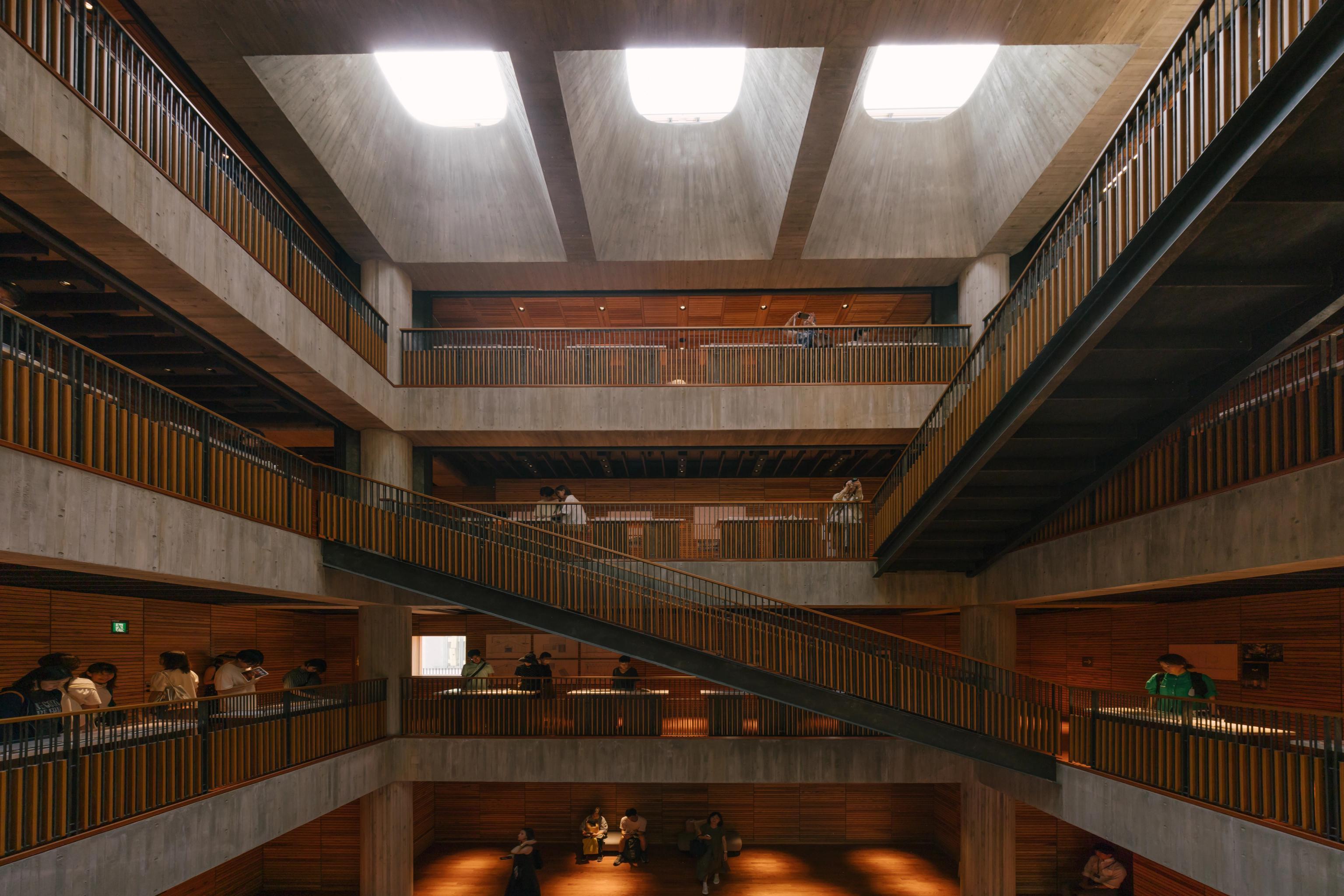
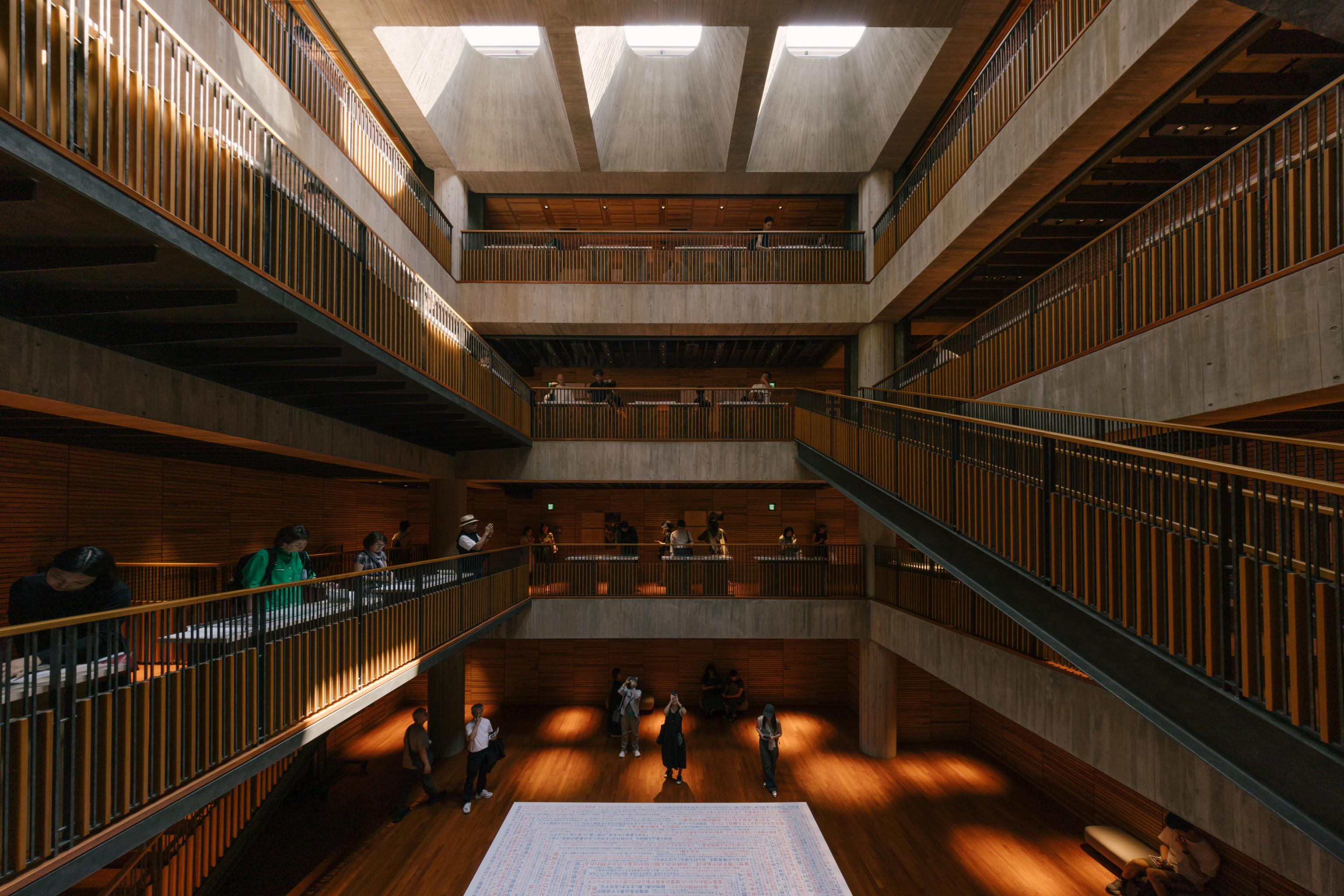
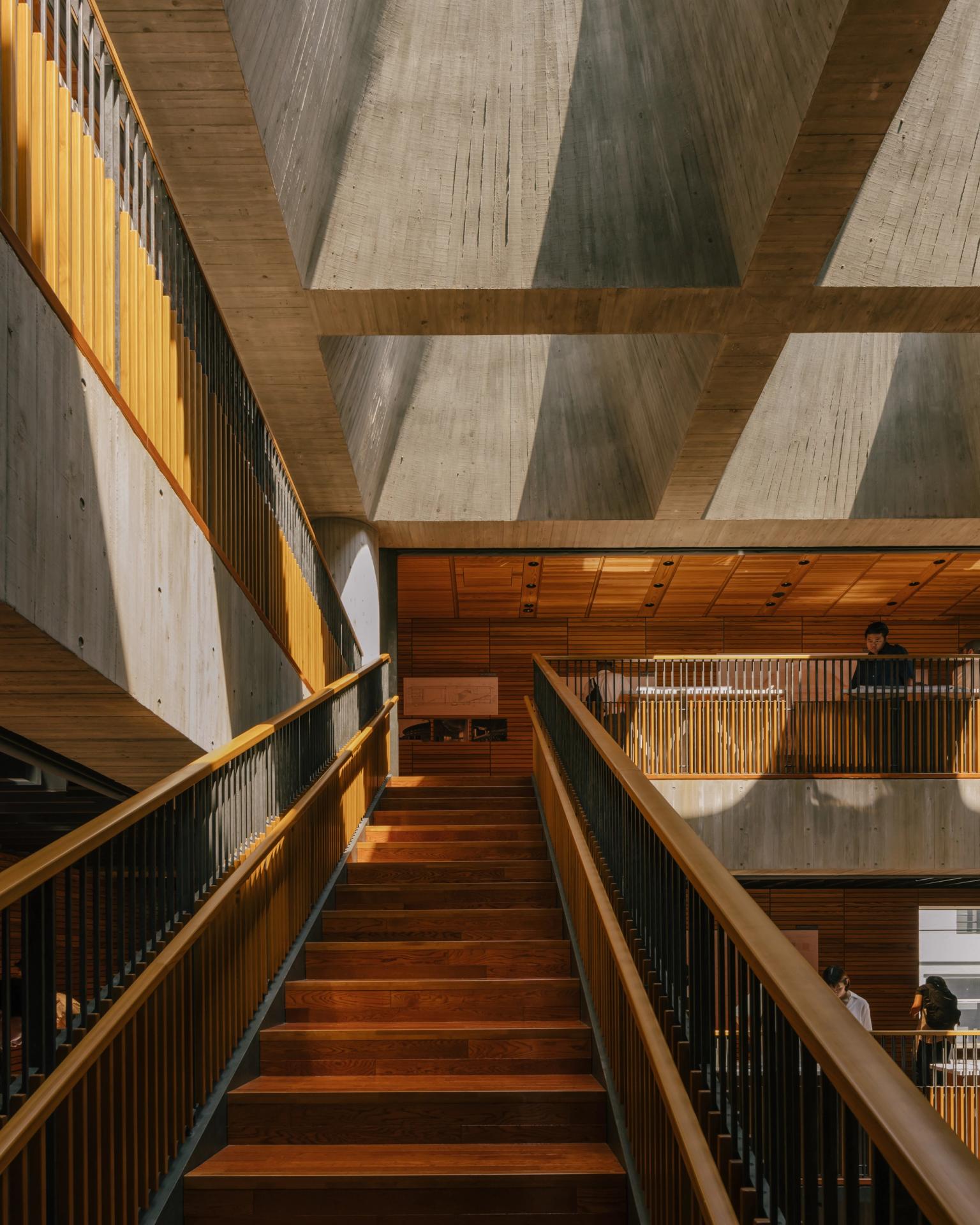
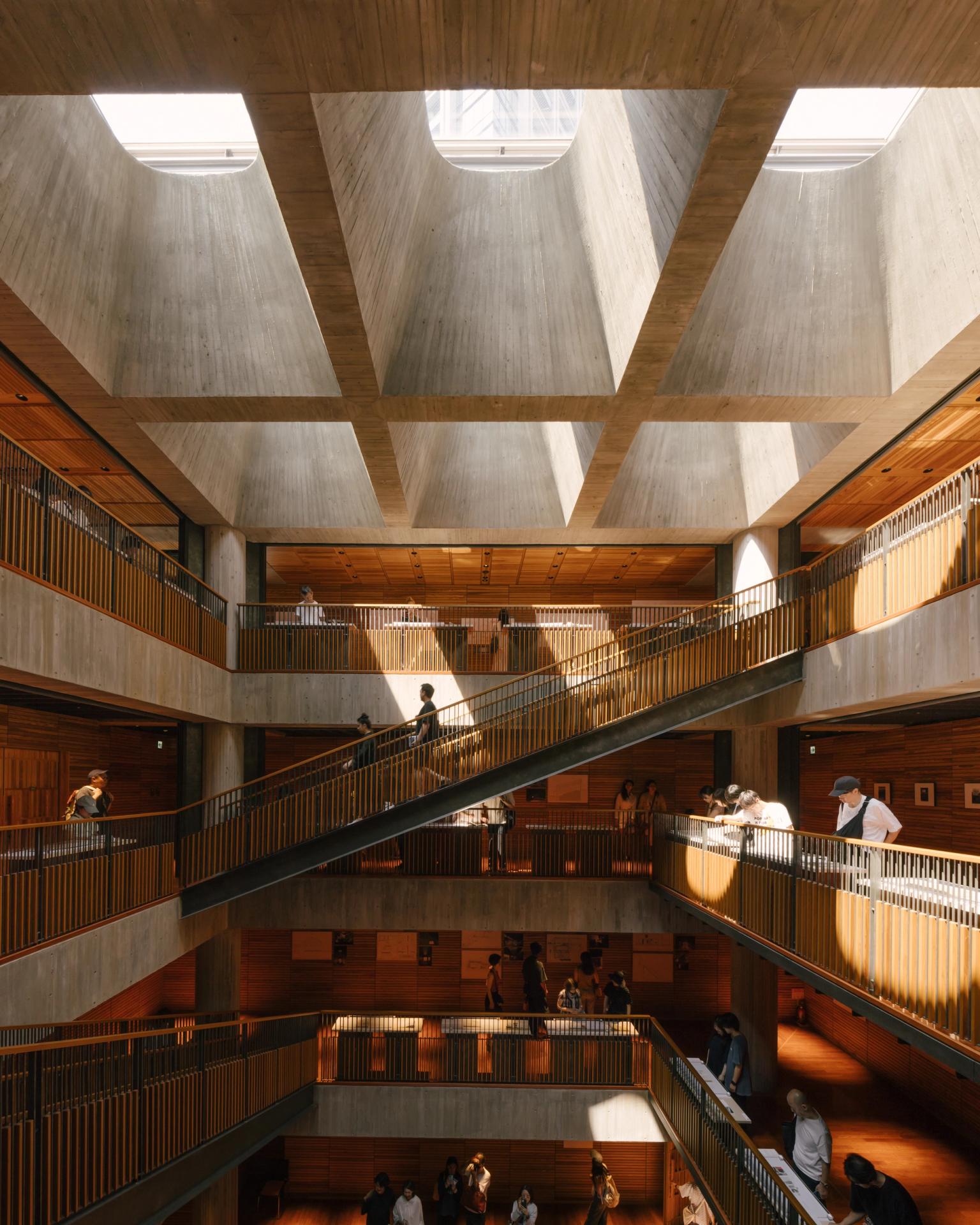
Above, the spatial atmosphere shifts. Timber-stamped concrete softens the monolithic volume, while cedar wood introduces warmth across stairs, walls, and balconies. The contrast is deliberate but not aggressive, hard and soft materials are allowed to coexist without hierarchy. Light enters through nine coffered skylights, filtering down into the central atrium as a slow, vertical presence. The result is a space that feels less constructed than assembled through layers of light, material, and air.


Movement Through a Vertical Landscape
The most defining experience of Kioi Seido is movement. As visitors ascend through the building, the space expands into a vast vertical atrium that connects all upper levels. Four large polygonal pillars hold the structure in place, yet visually they recede into the background, allowing the interior void to dominate perception. The architecture does not guide you in a straight narrative, it invites drifting, pausing, and looking back.
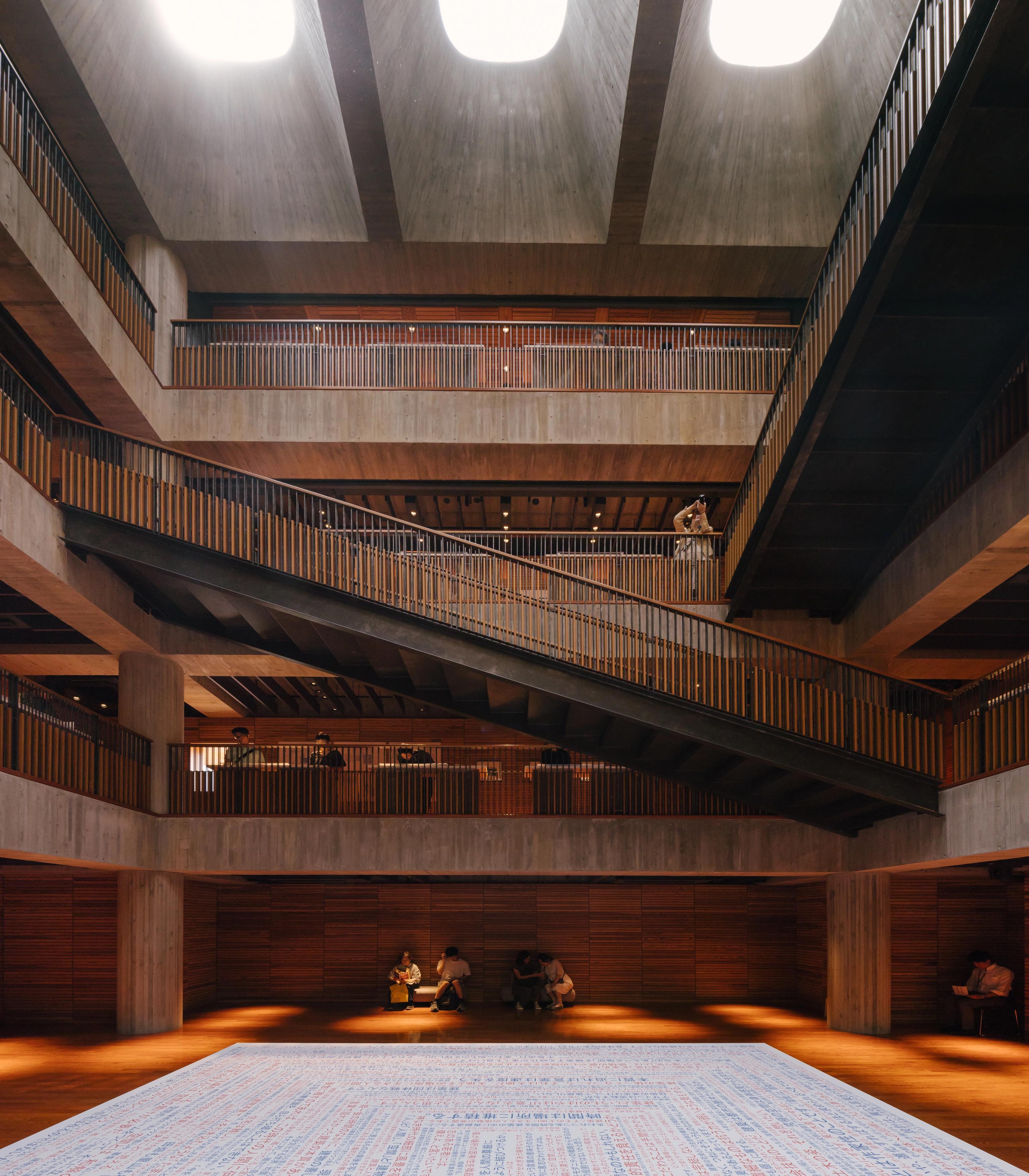

Each floor reveals a slightly different reading of the same volume. Glass edges shift reflections, cedar surfaces warm the atmosphere, and the central void remains constant, like a shared axis of silence. Rather than separating levels into functions, the building treats them as variations of one continuous spatial condition. The experience becomes less about destination and more about gradual exposure, how architecture changes as the body moves through it.
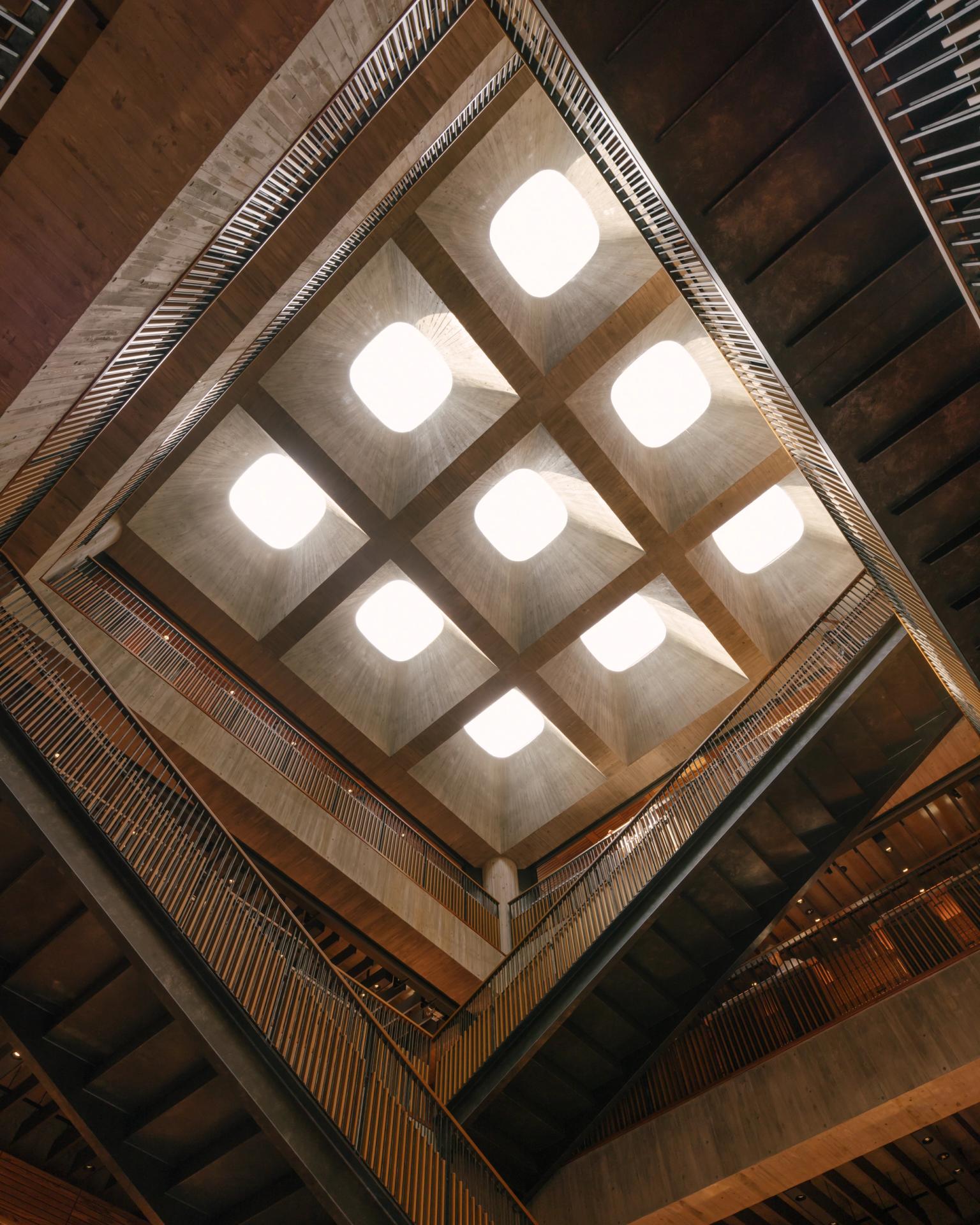

A Space That Opens Itself Temporarily
When Kioi Seido was opened to the public for a limited exhibition, it revealed another layer: architecture as an active participant rather than a closed object. Temporary installations, archival drawings, and visitor movement transformed the building into something closer to a living study. Even without a defined program, the space naturally generated behaviour, people paused, observed, returned, or simply stood still within the atrium light.
This temporary opening reinforced the central paradox of the project. A building designed without purpose still produces meaning through use. Not fixed or prescribed, but emerging through presence. In that sense, Kioi Seido does not reject function, it simply refuses to start from it. Instead, it allows architecture to be experienced first, and understood only afterwards.