
Araya Rasdjarmrearnsook, Elmgreen and Dragset, Francesco Arena, Fujiko Nakaya, Richard Long and ubatsat
Khao Yai Art Forest
- ArtistAraya Rasdjarmrearnsook, Elmgreen and Dragset, Francesco Arena, Fujiko Nakaya, Richard Long and ubatsat
- PhotographerKrittawat Atthsis, Puttisin Choojesroom and Nawaphon
SHOHEI SHIGEMATSU Bangkok is evolving into one of the world’s foremost contemporary art hubs. The Bangkok Kunsthalle and Khao Yai Art Forest, are two new institutions that embody this development. They respectively represent two ends of a spectrum: art as a catalyst for urban transformation and art as embedded in the stillness of untouched nature.


Khao Yai Art Forest
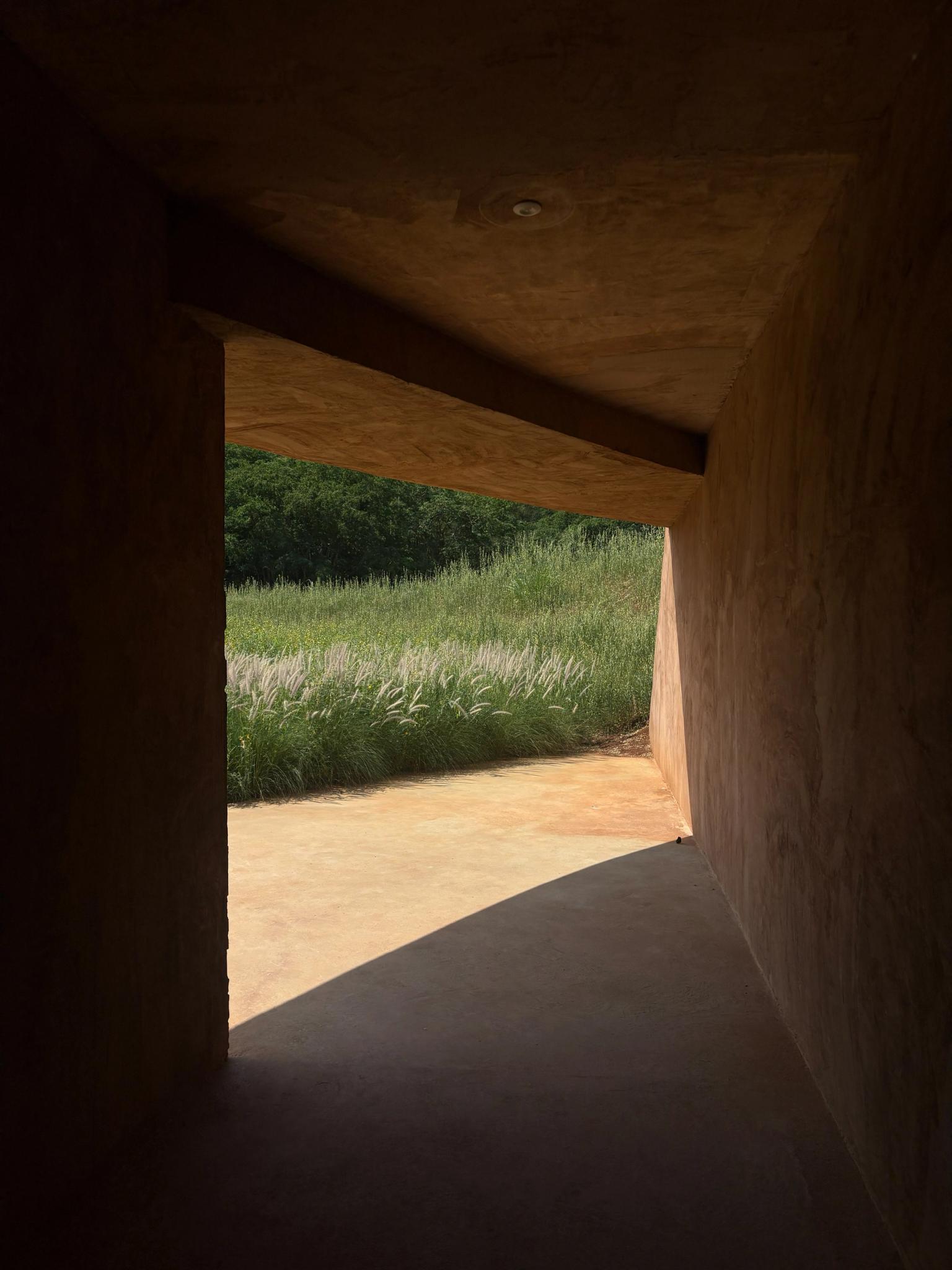
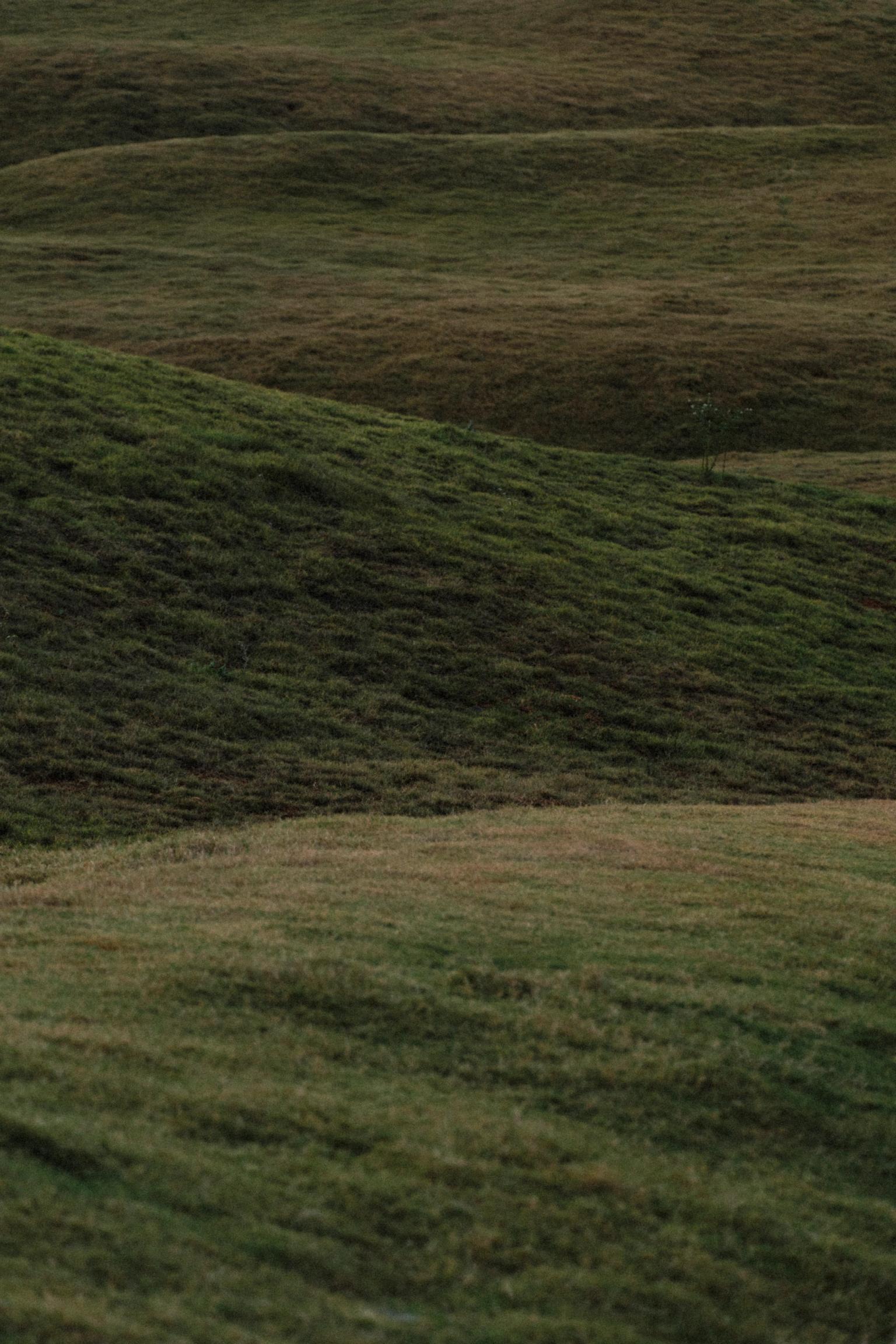
Khao Yai Art Forest is a new kind of institution where art and nature are developed together rather than separately. Located across 36 hectares beside Khao Yai National Park in Thailand, the site transforms former agricultural land into a living space for ecological restoration, artistic experimentation, and public engagement. Instead of presenting art inside traditional white gallery walls, the forest allows artists to create large scale and site specific works directly within the landscape. The project focuses on healing nature, not only through environmental restoration, but also through new ways of thinking, making, and living with the natural world. Visitors are invited to experience art as part of a wider relationship between land, community, and time.
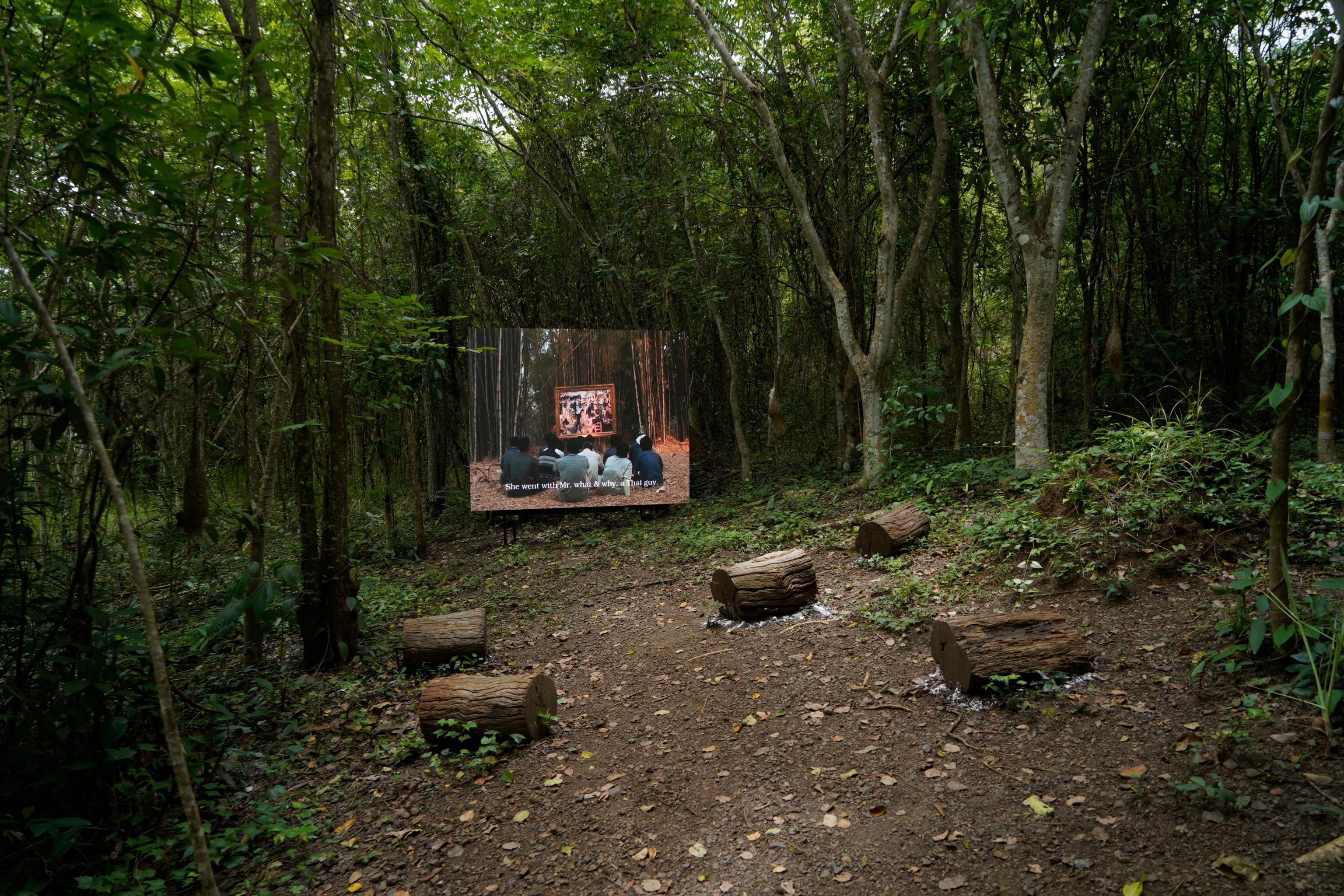

Two Planets Series
In Two Planets Series, Thai artist Araya Rasdjarmrearnsook creates an unusual encounter between rural Thai villagers and famous Western paintings. Reproductions of works by artists such as Manet, Renoir, Millet, and Van Gogh are placed outdoors in forests, fields, and riverbanks, where local villagers gather to observe and discuss them. Their reactions are spontaneous, honest, and often humorous, shaped by daily life rather than art history. Instead of trying to explain the paintings through academic language, the work embraces misunderstanding as something valuable. It reveals how art changes meaning depending on who sees it and where it is seen, showing that true dialogue does not always require perfect understanding.
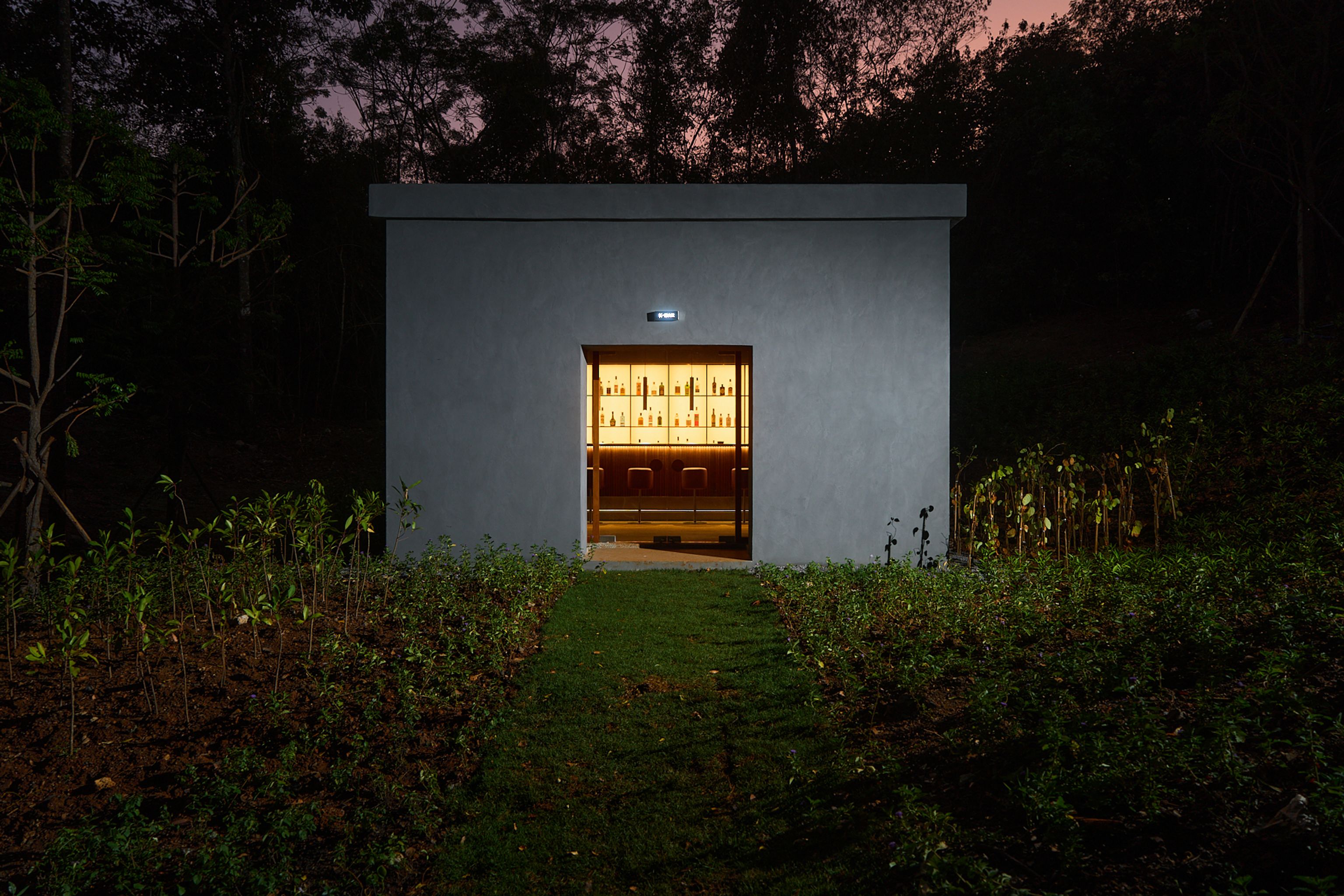

K BAR
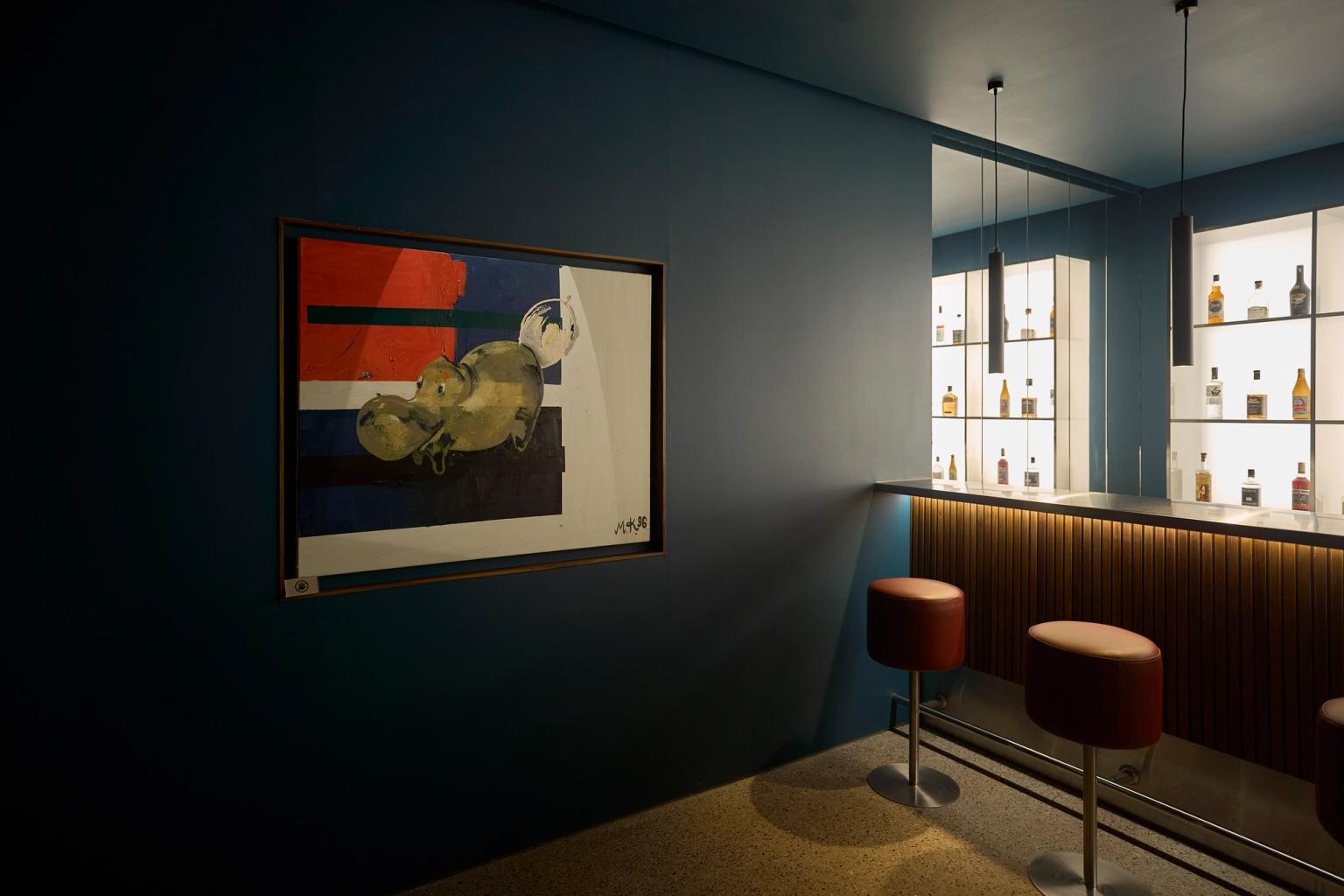
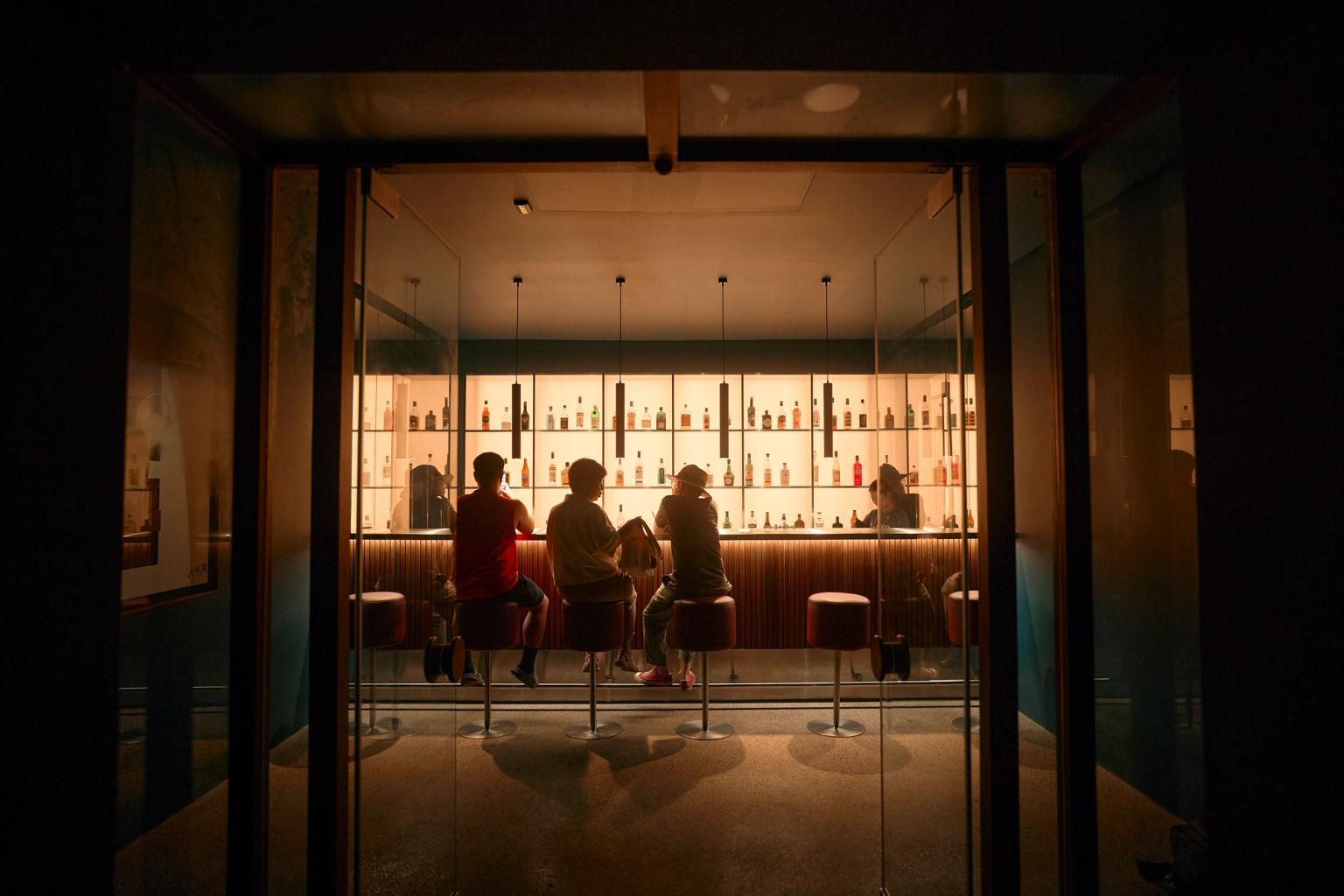
Created by the Scandinavian artist duo Elmgreen and Dragset, K BAR is a small, elegant bar hidden deep within the forest of Khao Yai Art Forest. Inspired by urban nightlife and dedicated to the late artist Martin Kippenberger, the pavilion is designed to seat only six guests and opens just once a month. Most visitors encounter it closed, looking through the glass door into its carefully designed interior of red leather stools, terrazzo floors, and backlit shelves. This creates a strange tension between invitation and distance. The bar feels both familiar and unreachable, transforming a social space into a sculptural object. K BAR questions ideas of access, luxury, and hospitality by placing metropolitan desire in the middle of untouched nature.



GOD
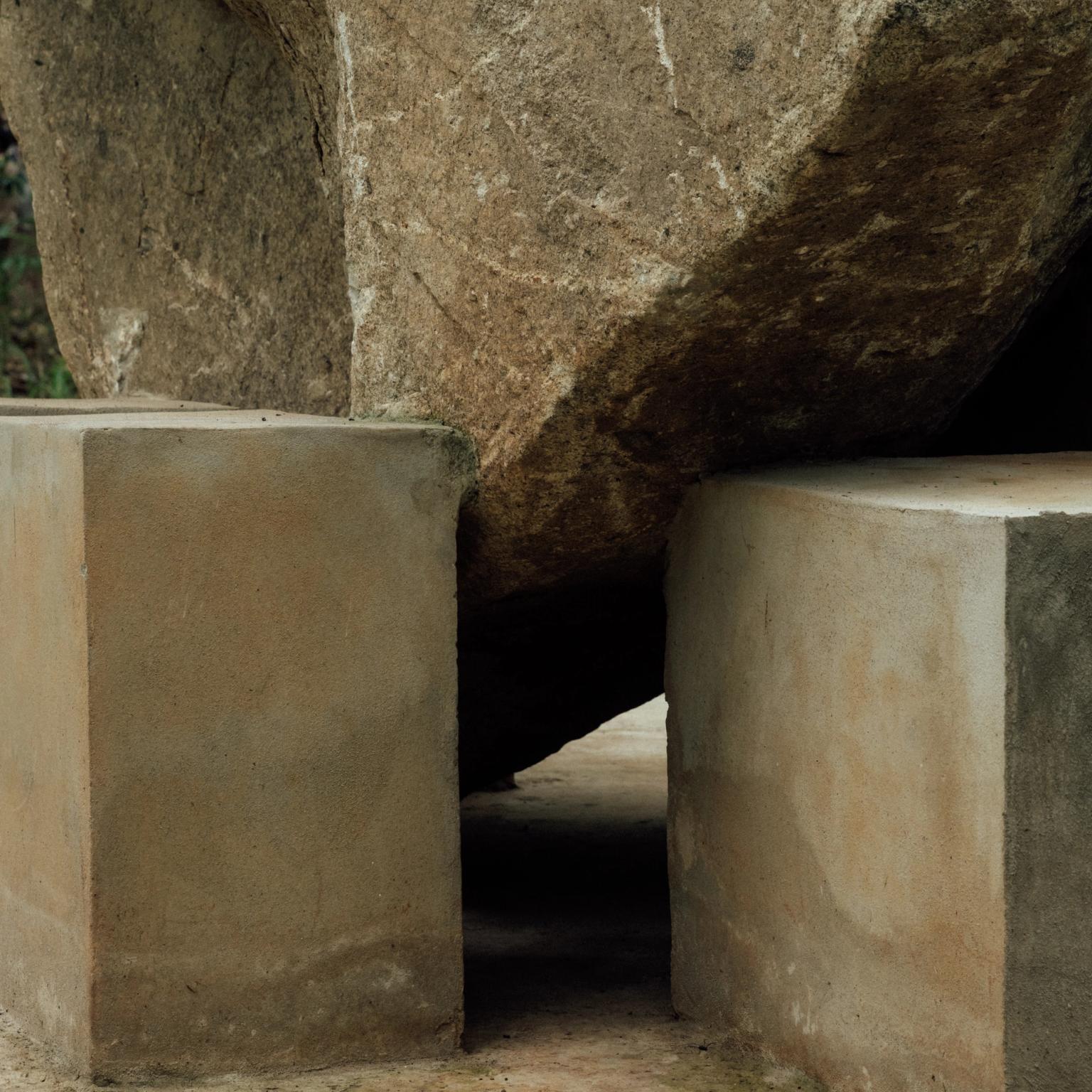
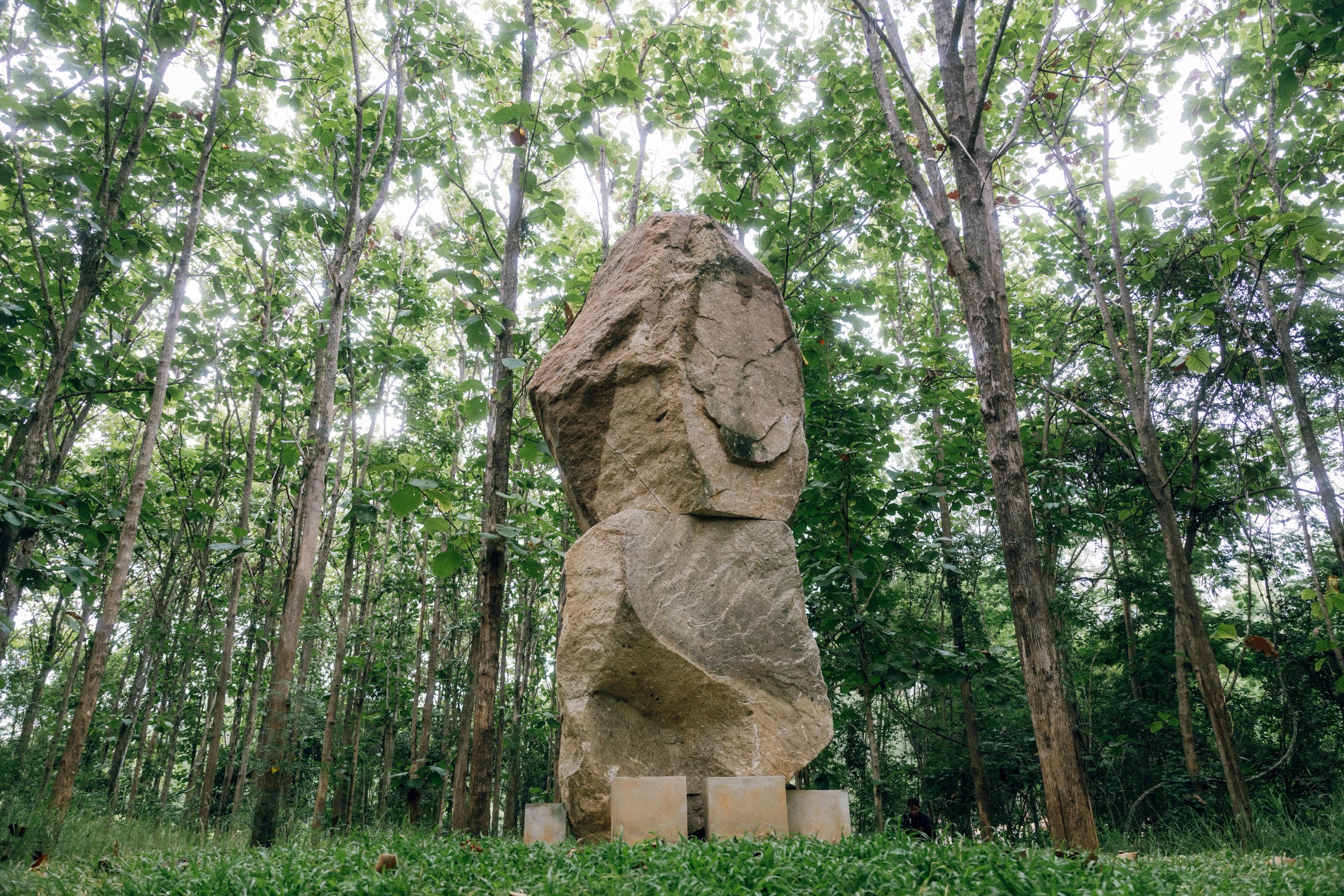
Francesco Arena’s sculpture GOD is one of the most minimal yet powerful works in Khao Yai Art Forest. It consists of two large stones stacked vertically, carved with the letters G, O, and D. Only when the stones are joined does the full word appear, yet at that moment it becomes hidden from view. This simple gesture transforms language into something physical and mysterious. The work does not represent religion through symbols or images, but through silence, weight, and presence. Visitors are encouraged to approach closely, touch the stone, and feel its texture and temperature. In the quiet of the teak forest, GOD becomes less an object to look at and more an experience of reflection, doubt, and belief.

Khao Yai Fog Forest
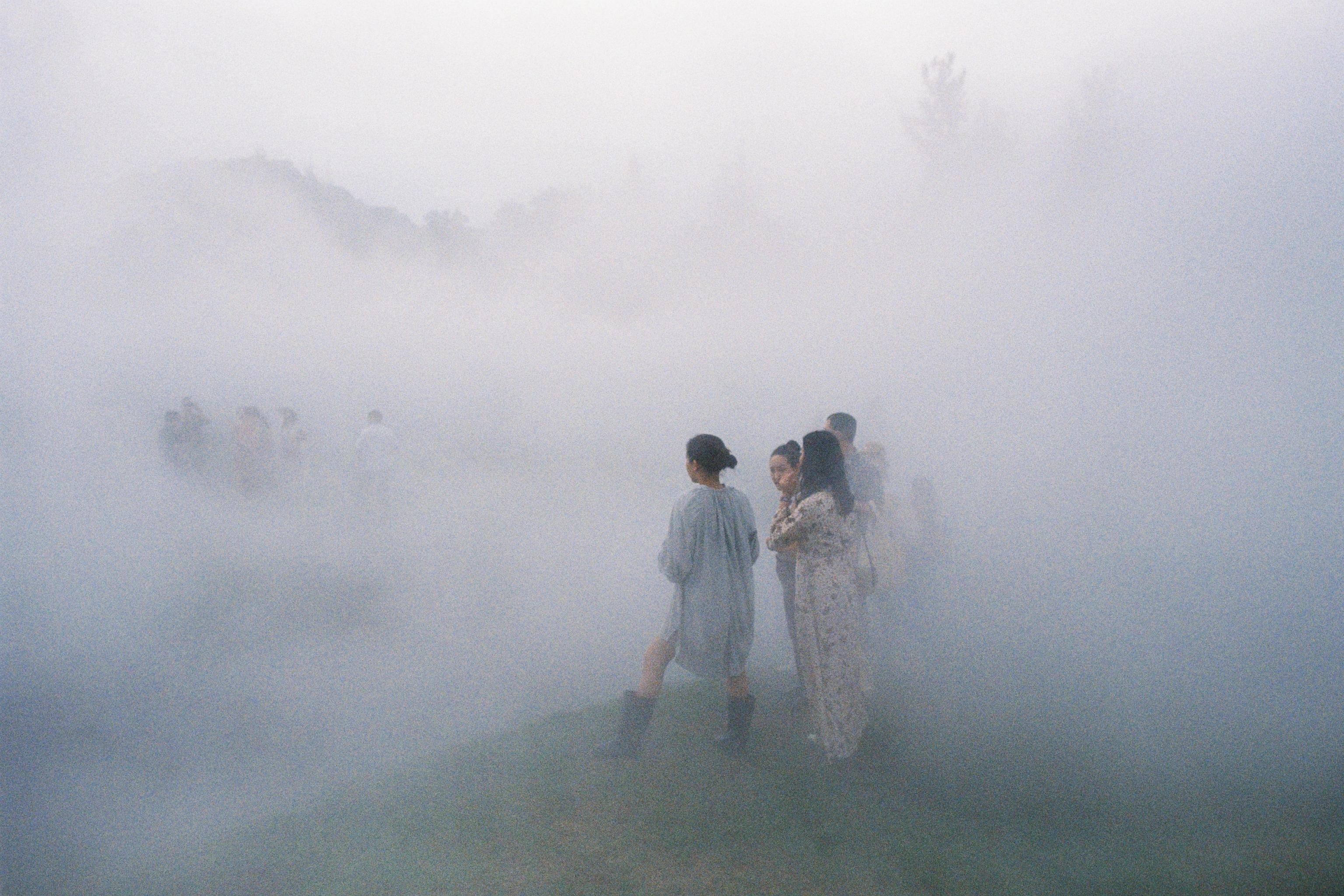
Japanese artist Fujiko Nakaya’s Khao Yai Fog Forest is her largest permanent fog installation and a striking example of art created through natural forces. Using pure water and a system of micro nozzles, the work produces clouds of artificial fog that move with the wind, humidity, and temperature of the landscape. The entire hillside was carefully shaped to guide the movement of the fog, turning the land itself into part of the sculpture. Visitors walk through shifting white mist, often losing their sense of direction and relying on touch, sound, and instinct instead of sight. The work creates a powerful sensory experience where nature feels both familiar and unknown, encouraging a deeper awareness of the environment.

Madrid Circle
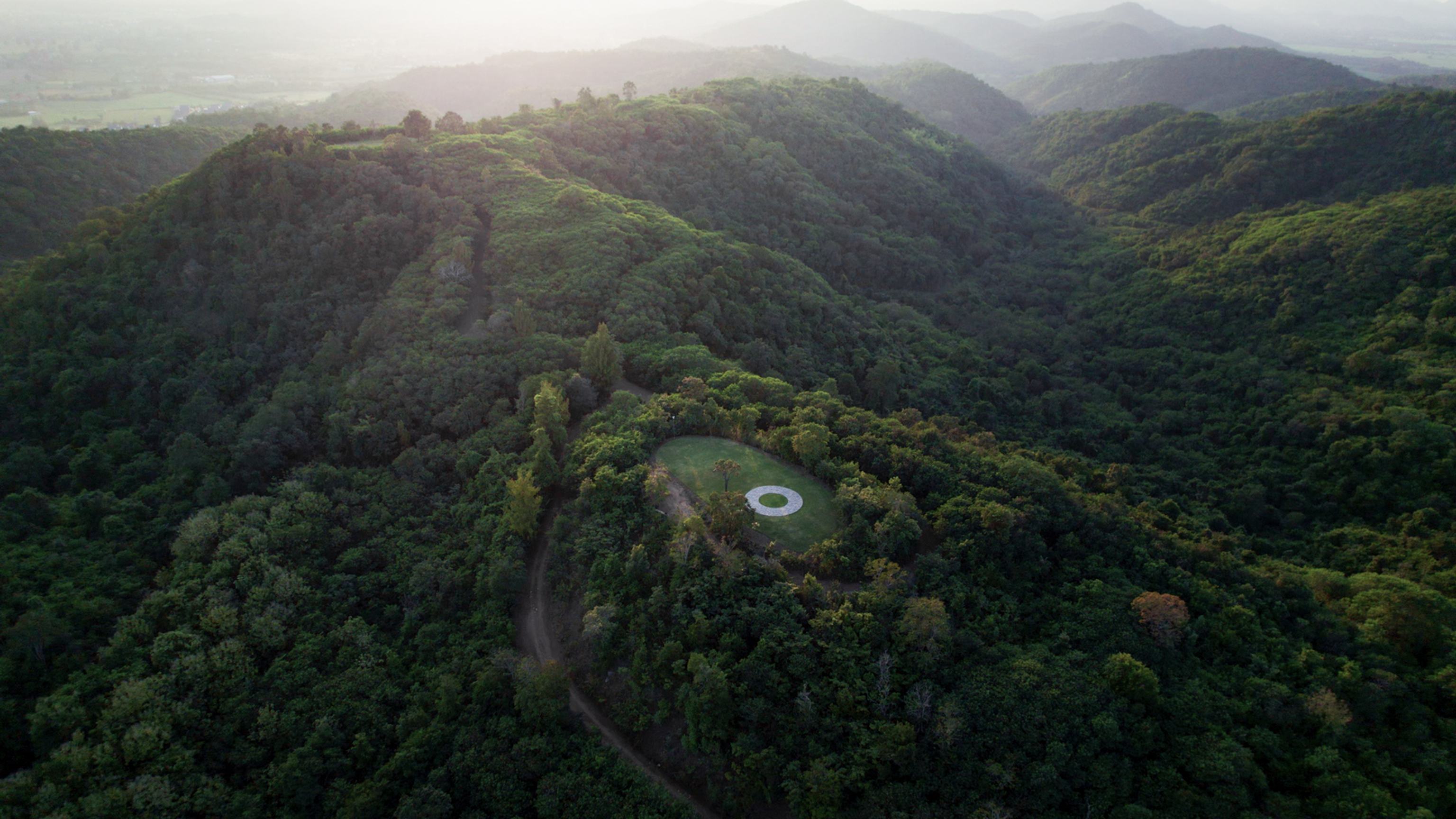
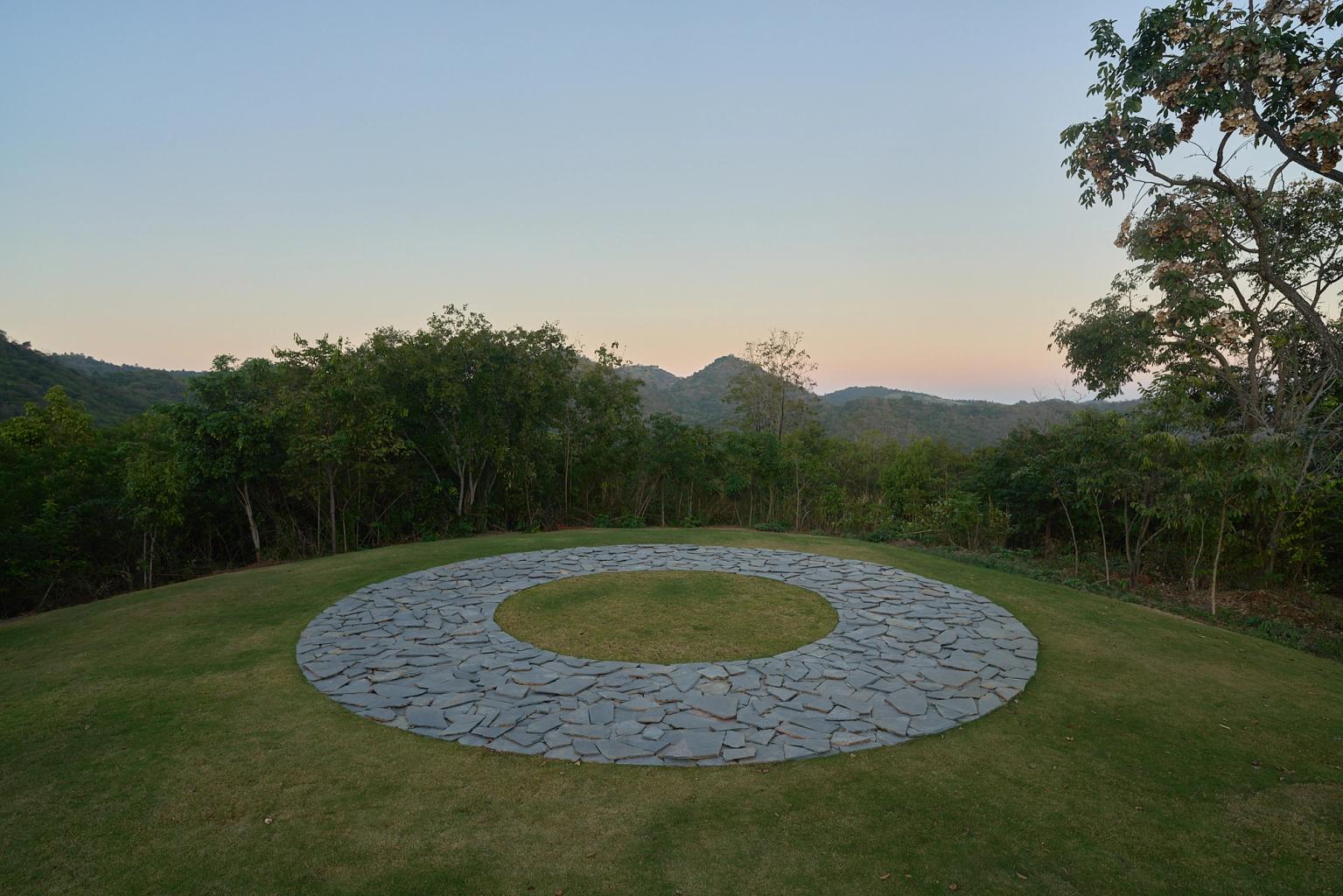
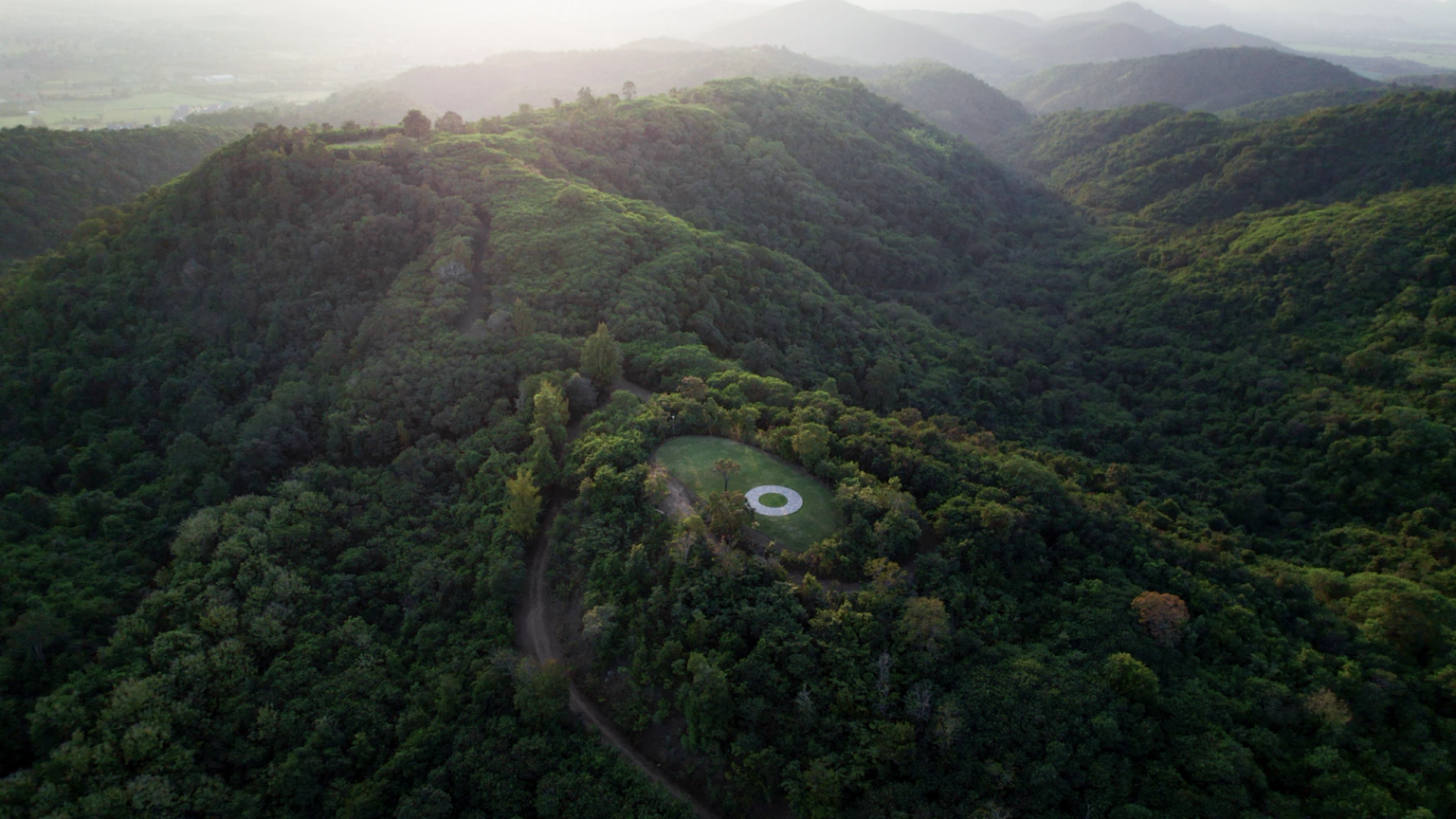
Richard Long’s Madrid Circle is a simple arrangement of slate stones placed in a perfect circle at the highest point of Khao Yai Art Forest. Although visually minimal, the work carries strong meaning through its location and the journey required to reach it. Visitors must walk several kilometers uphill through uneven forest paths before arriving at the circle, making movement itself part of the artwork. Long has long treated walking as a form of sculpture, where the act of crossing a landscape becomes the creative gesture. In this setting, the circle becomes a quiet place for rest and contemplation. It does not dominate nature, but gently frames it, allowing visitors to experience time, space, and stillness more deeply.

Pilgrimage to Eternity
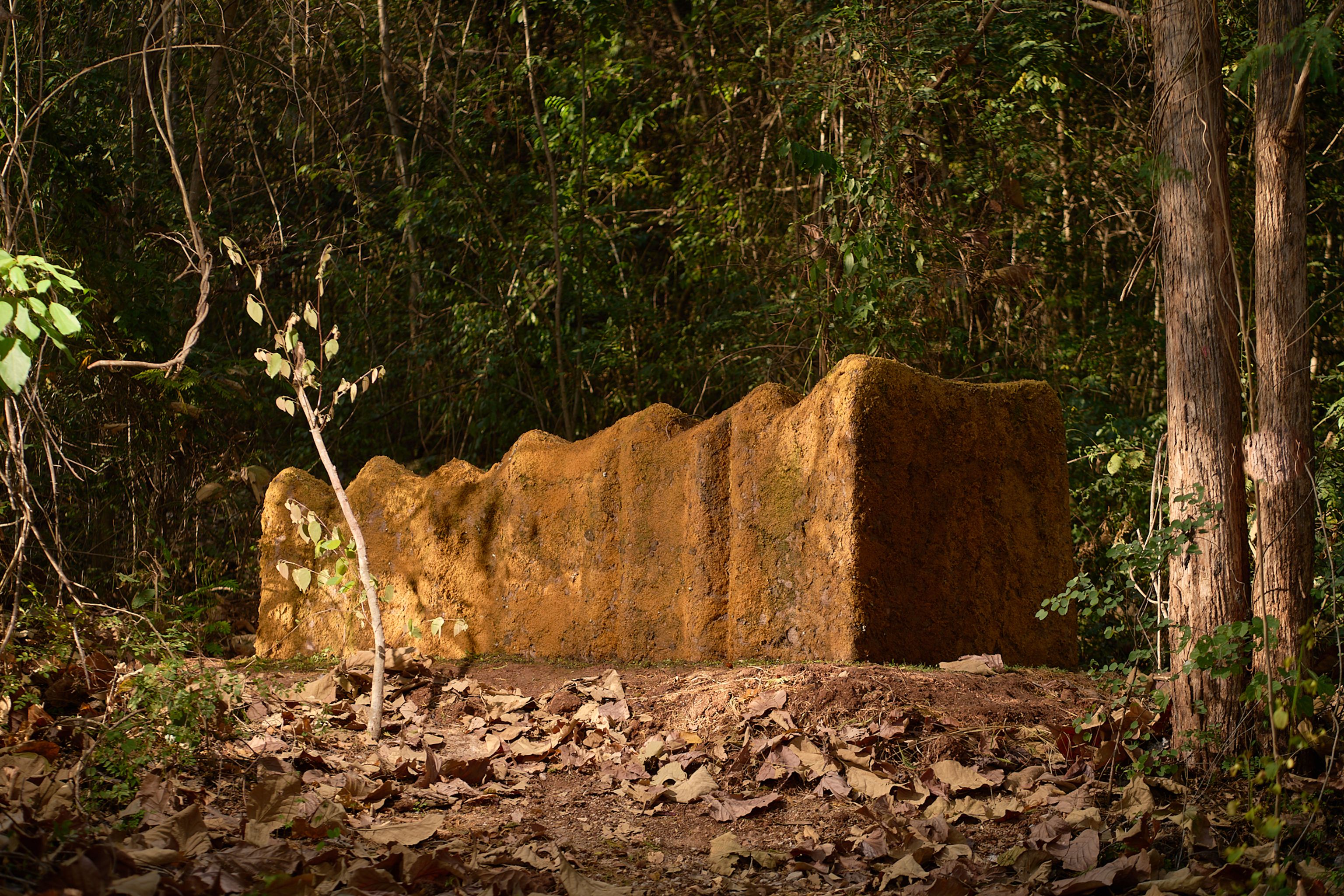
Pilgrimage to Eternity by Thai artist ubatsat reimagines the traditional Buddhist stupa as a living process rather than a permanent monument. Instead of building one finished structure, the artist created nine sculptural forms scattered throughout the forest using molds normally hidden during stupa construction. These molds, usually seen only as temporary tools, become the artwork itself. Visitors move between the sculptures as if following a pilgrimage path, with walking and reflection becoming central to the experience. Over time, rain, heat, plants, and decay slowly change the forms, allowing nature to participate in the work. The project reflects Buddhist ideas of impermanence and interdependence, showing that transformation itself can be sacred.