
Suyama Peterson Deguchi
Junsei House
- ArchitectSuyama Peterson Deguchi
- PhotographerCharlie Schuck
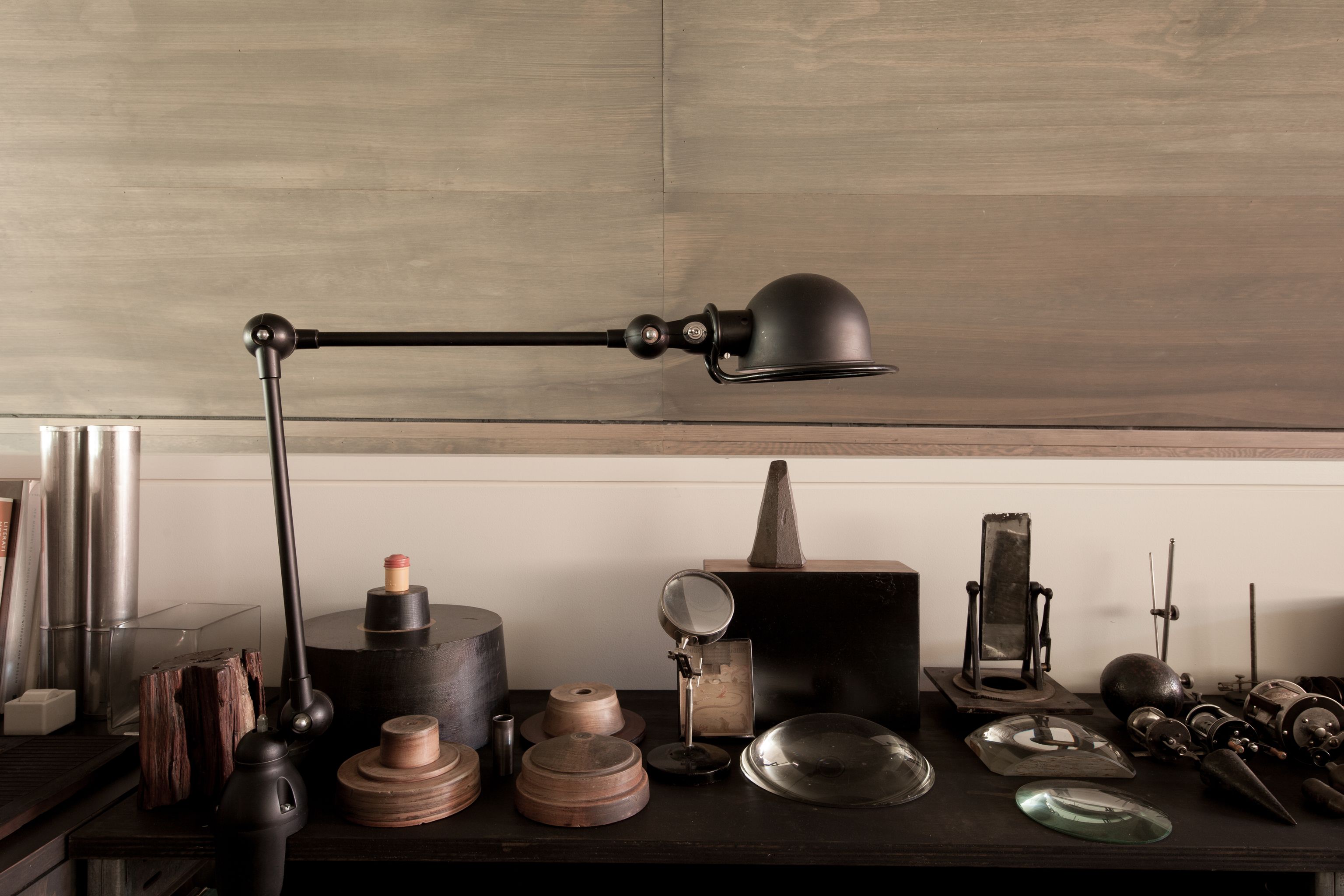
Thomas Lykke We met George Suyama in Seattle some years ago, and we really like his own house, which was created with a true holistic approach to craft a space that gives one a feeling of completeness, eliminating the need for more things. Junsei means “purity” in Japanese. Natural light floods inside, and I love the fact that George Suyama was determined not to remove a single tree and to reduce the structure's noise to blend into the natural surroundings. It feels like a refuge in a chaotic world.

A House Called Purity
Junsei House by Suyama Peterson Deguchi is not trying to impress at first glance. It is quiet, almost restrained, and deliberately so. The name Junsei translates roughly from Japanese as “purity,” and that idea runs through the entire project, not as a visual theme, but as a way of thinking. The house was designed for a couple who wanted something radically simple: a place that removes excess, slows down daily life, and redefines what “enough” actually means. Instead of adding layers, the architects subtract. What remains is architecture reduced to essentials, light, structure, nature, and movement.
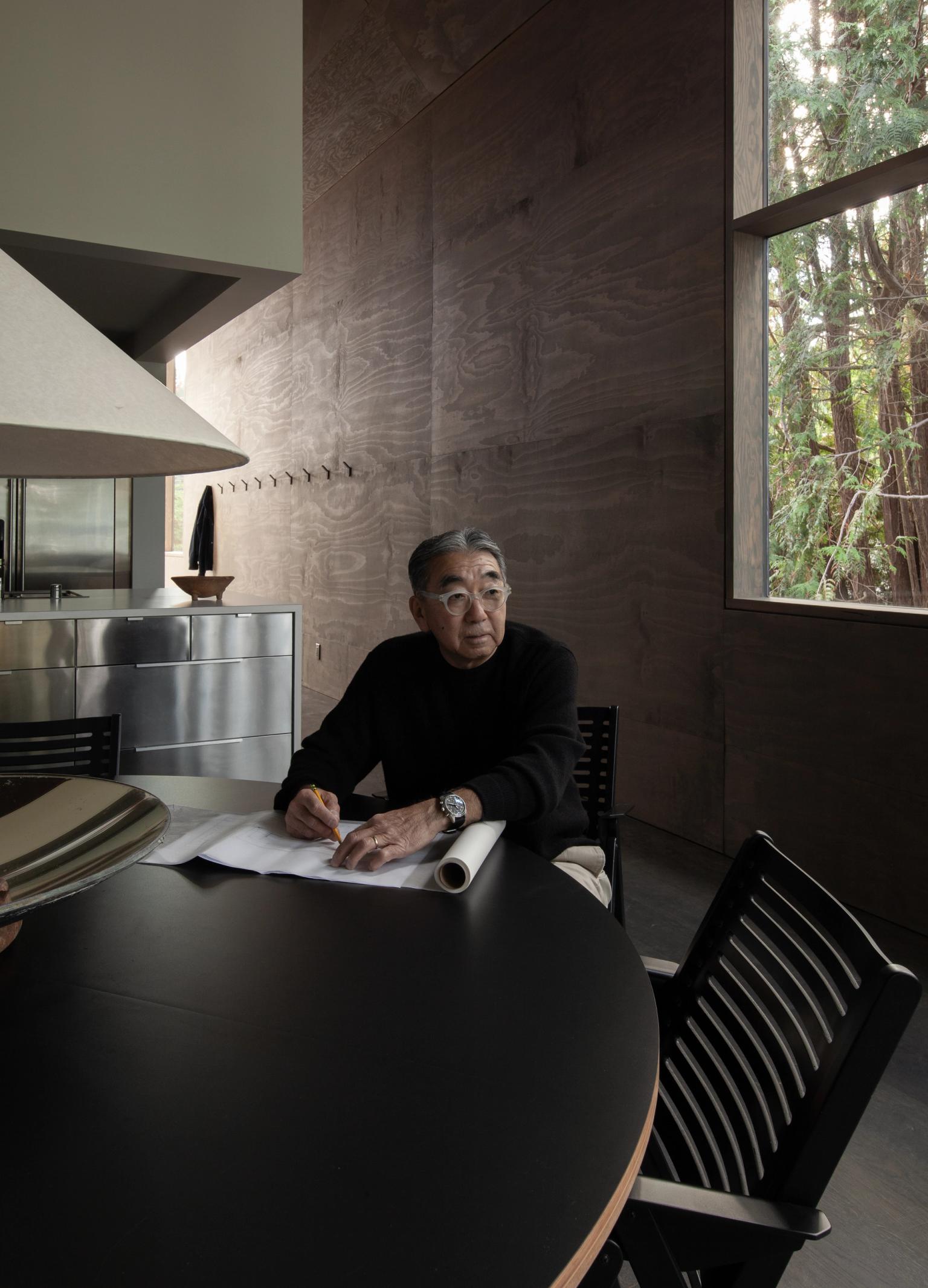

Located on a wooded site near the Puget Sound in Seattle, the house sits deeply embedded in its landscape. The architects, Suyama Peterson Deguchi, are a practice rooted in the Pacific Northwest tradition of careful building, where craftsmanship and site sensitivity matter as much as form. Led by George Suyama, the studio is known for work that avoids spectacle and instead builds atmosphere through proportion, material honesty, and calm spatial rhythm. Junsei House continues this lineage, but pushes it further into reduction, almost like a study of how little architecture actually needs to become meaningful.

A Thin Line in the Landscape
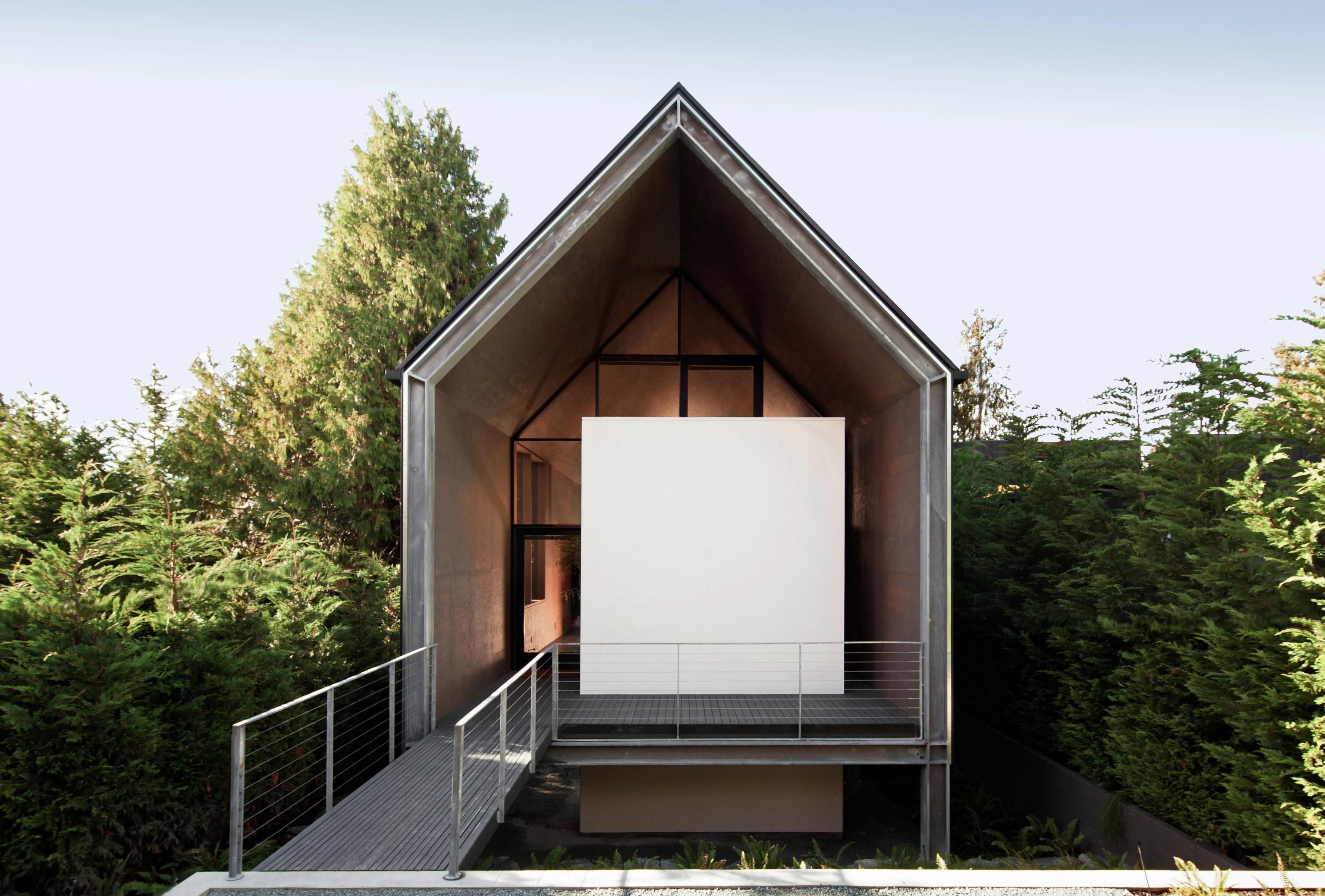
The first decision already defines everything else: scale. The house measures only 18 feet by 80 feet, an unusually narrow footprint that immediately limits excess. This is not an arbitrary gesture, it is a direct response to the site. The architects deliberately avoided disturbing the existing forest, keeping all trees in place and reducing excavation to protect the root systems. Rather than clearing the land for a perfect architectural object, the house is inserted carefully between what already exists.
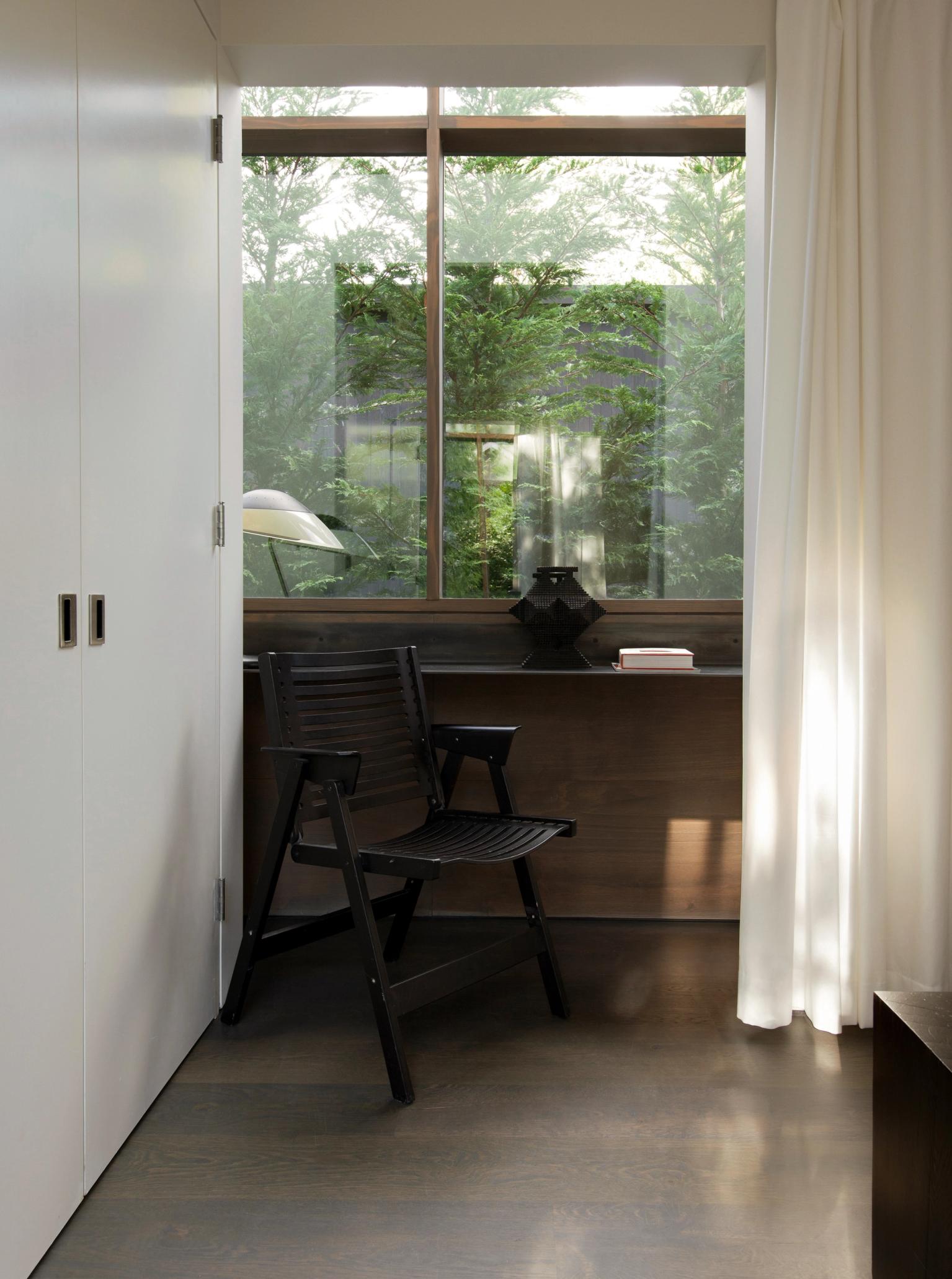

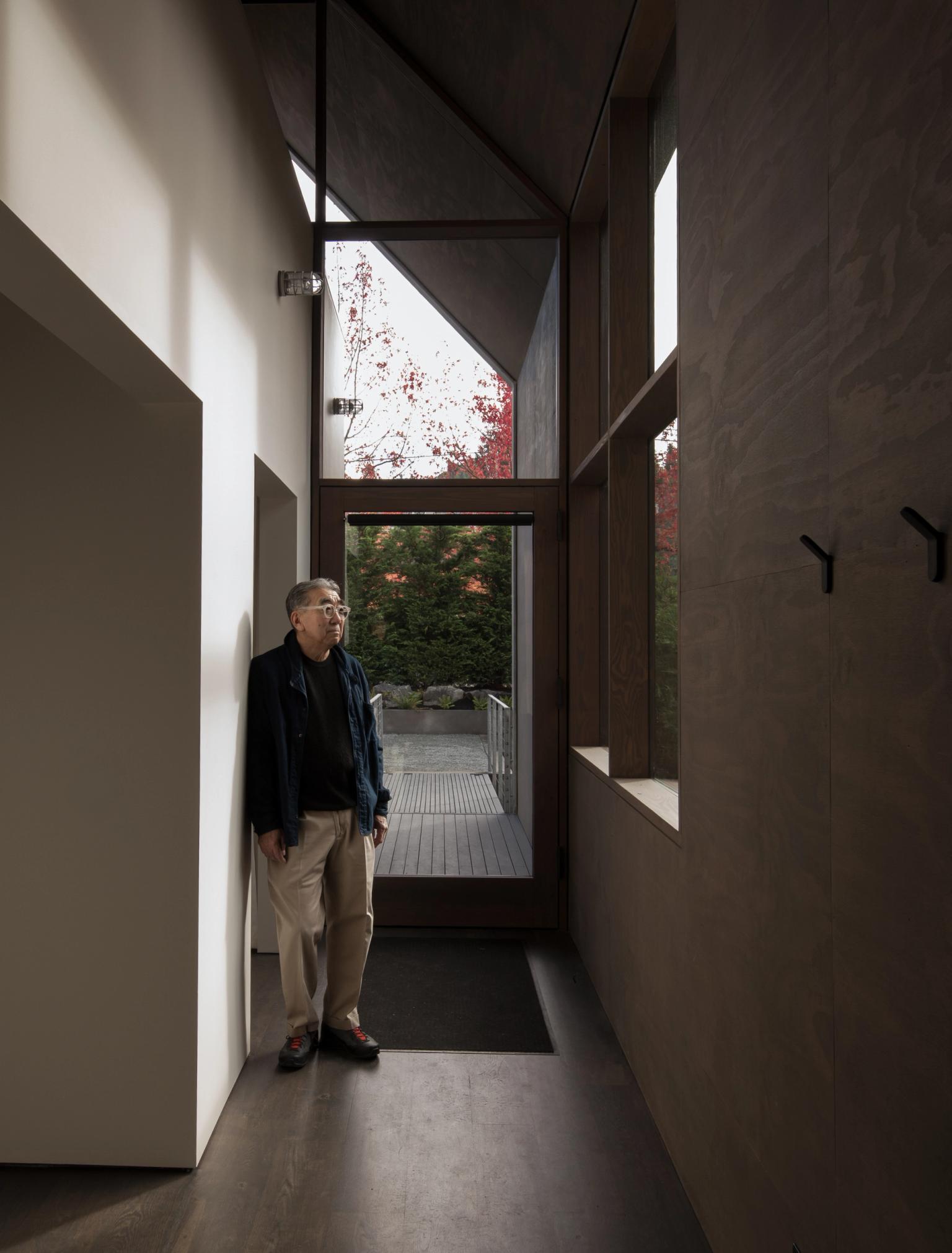
This respect for the terrain shapes the experience of arrival. A wooden walkway leads into the building, bringing you into the middle level rather than a conventional ground entry. There is no monumental front, no clear hierarchy. Instead, the house unfolds quietly, almost like a continuation of the path through the trees. A central tree remains intact within the composition, becoming a visual anchor that disrupts the idea of a single, fixed view. Instead of framing the landscape as a single image, the house breaks it apart, blocking, revealing, and slowly reordering how you see the water and forest beyond.

Rooms That Don’t Stay Still
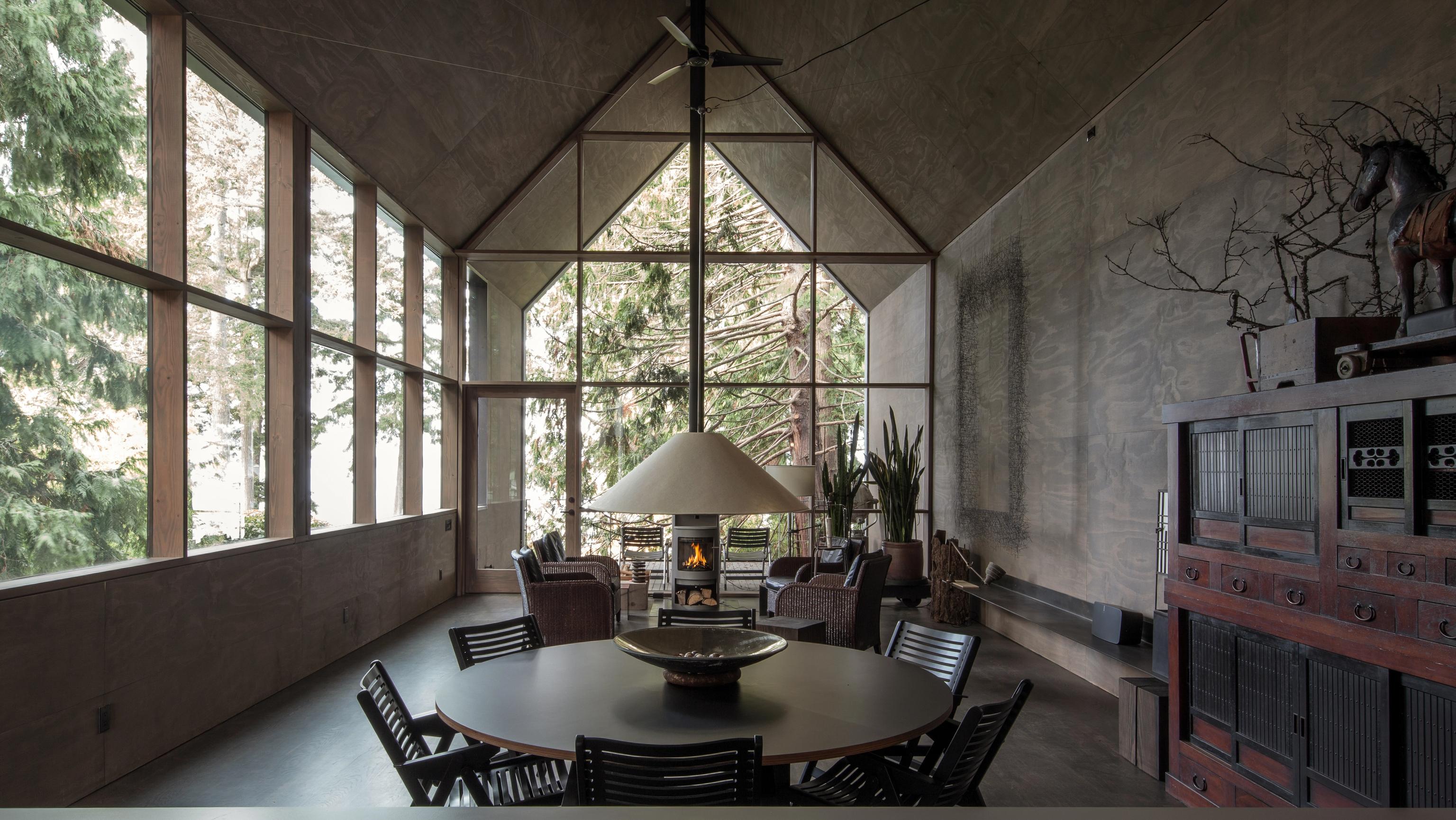
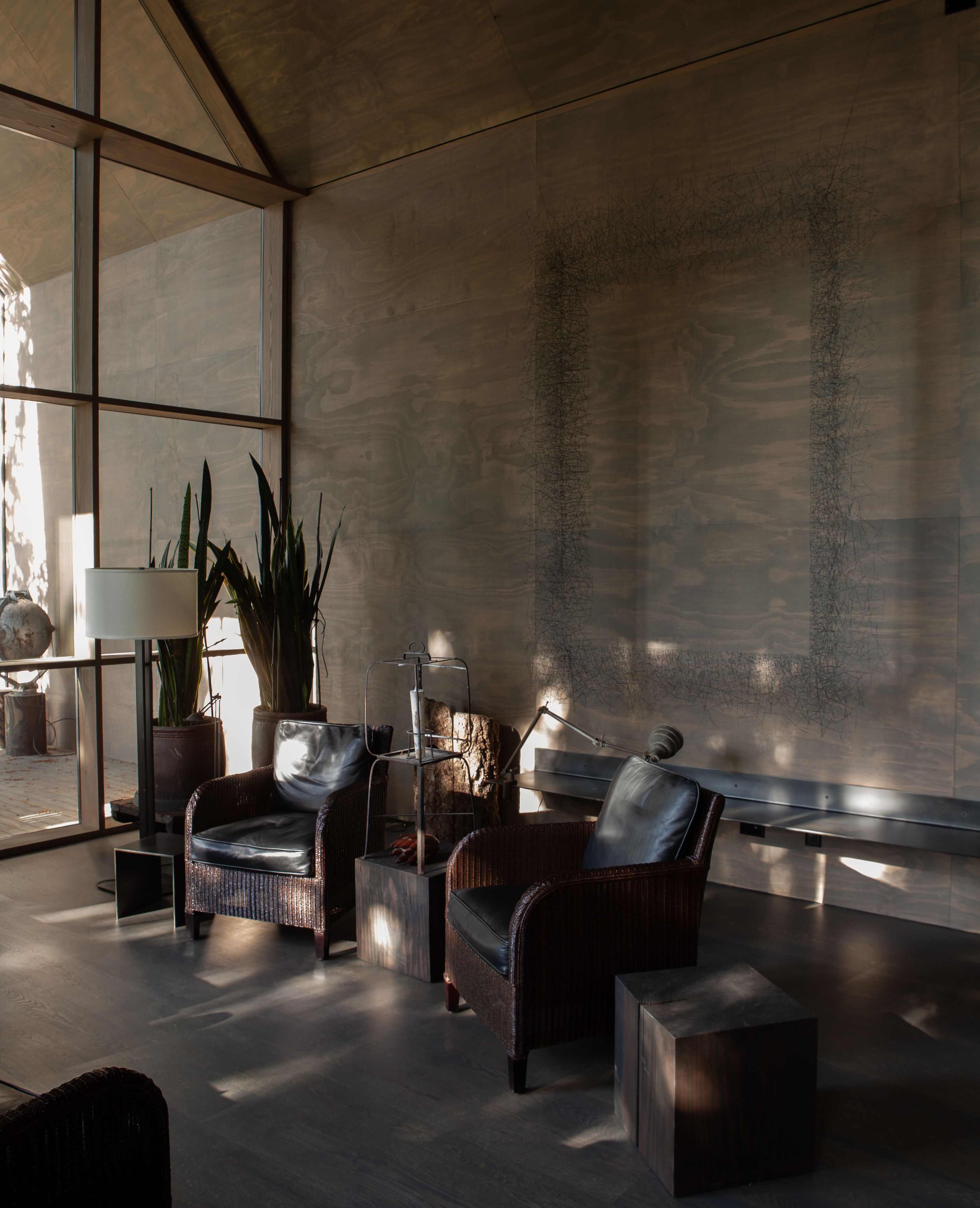
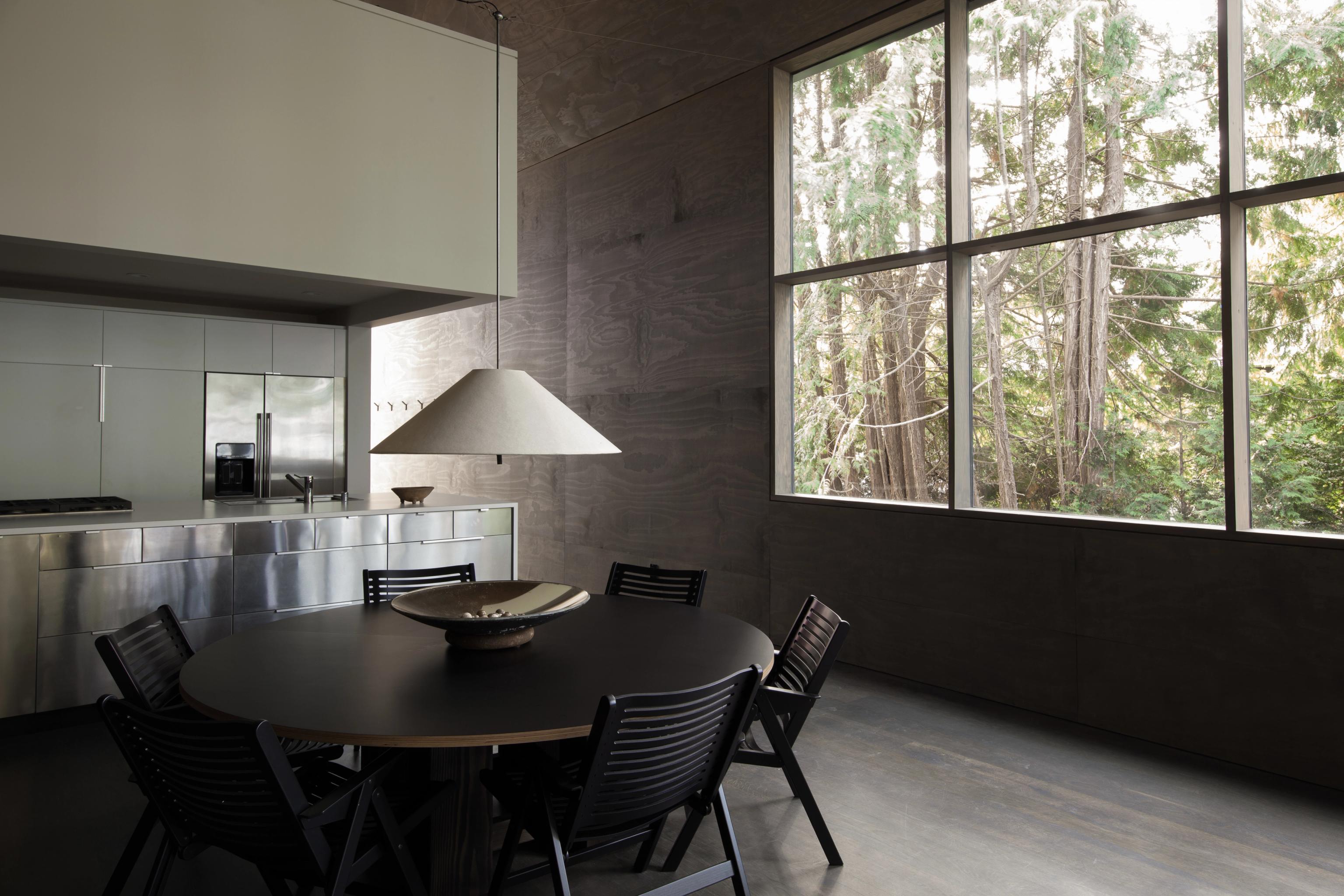
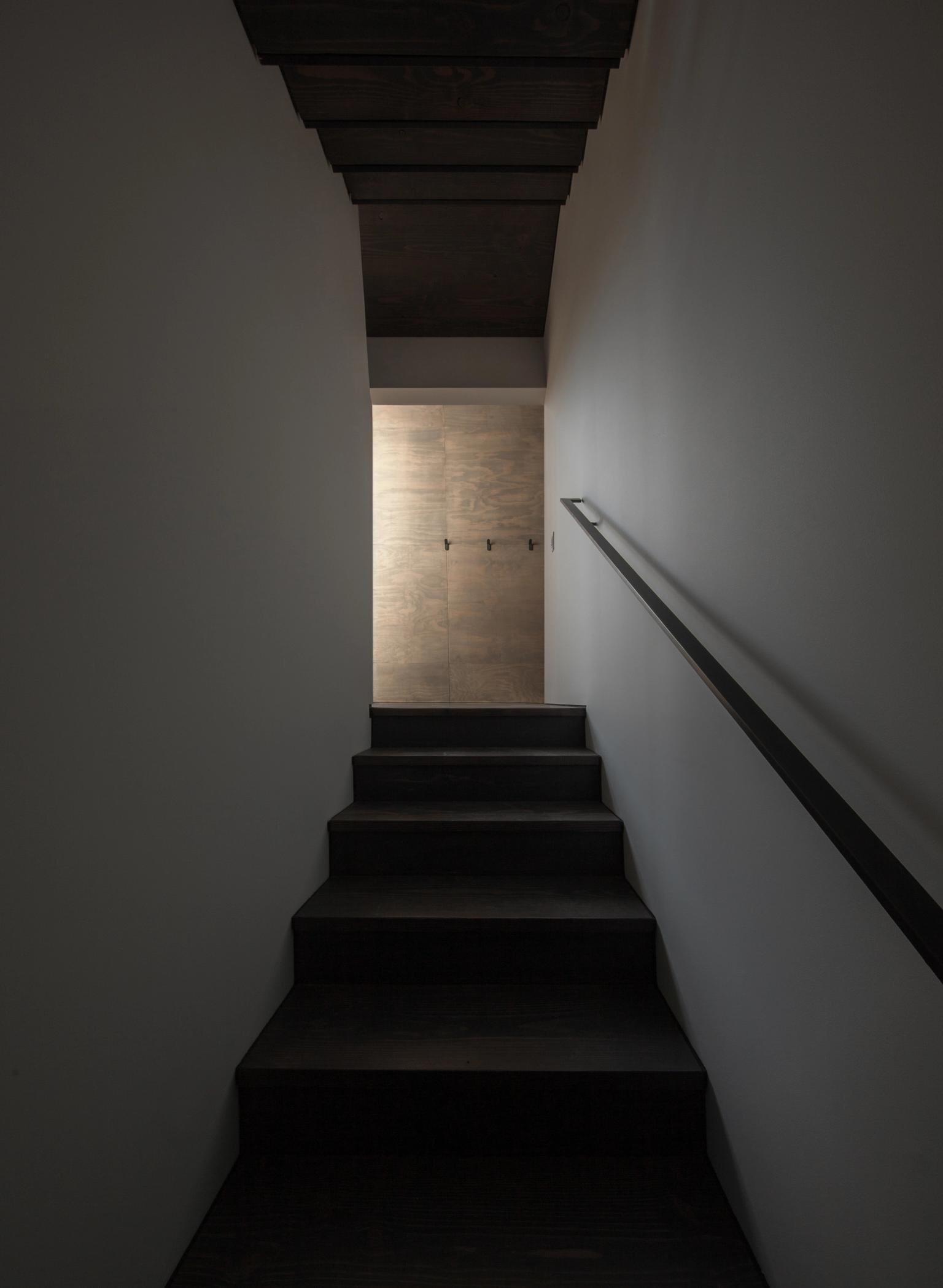
Inside, Junsei House avoids the idea of fixed functions. The layout is open, but not empty in a generic sense. It is structured through sequence and subtle thresholds. The master bedroom sits near the entrance, unusually close to arrival, while a central staircase with open treads becomes both circulation and spatial connector. Further inside, the kitchen opens directly into a double-height living space, creating a sense of continuous volume rather than separate rooms.

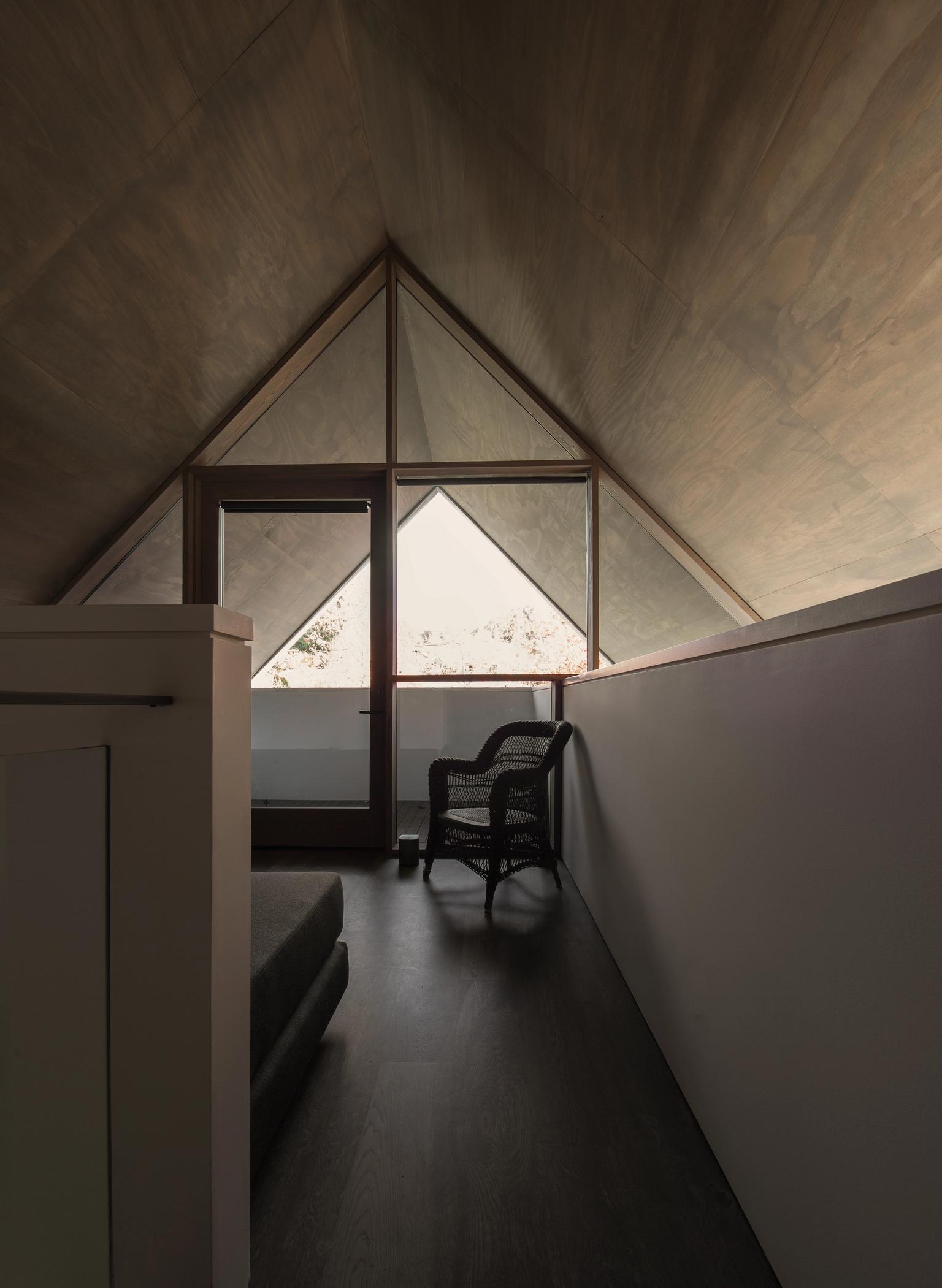

The structure itself supports this openness. The living areas are lined with weathered plywood, and large floor-to-ceiling windows on the western facade flood the interior with light. These openings are not just about views, they are about time. Light shifts across surfaces, marking the day and changing how the space feels without any physical alteration. At one point, the house opens to a terrace, offering brief, fragmented glimpses of water rather than a full panorama. Even the upper level refuses to become dominant; it exists only partially as a loft and small workspace, almost like a secondary thought suspended above the main volume.

Material Simplicity, Structural Clarity
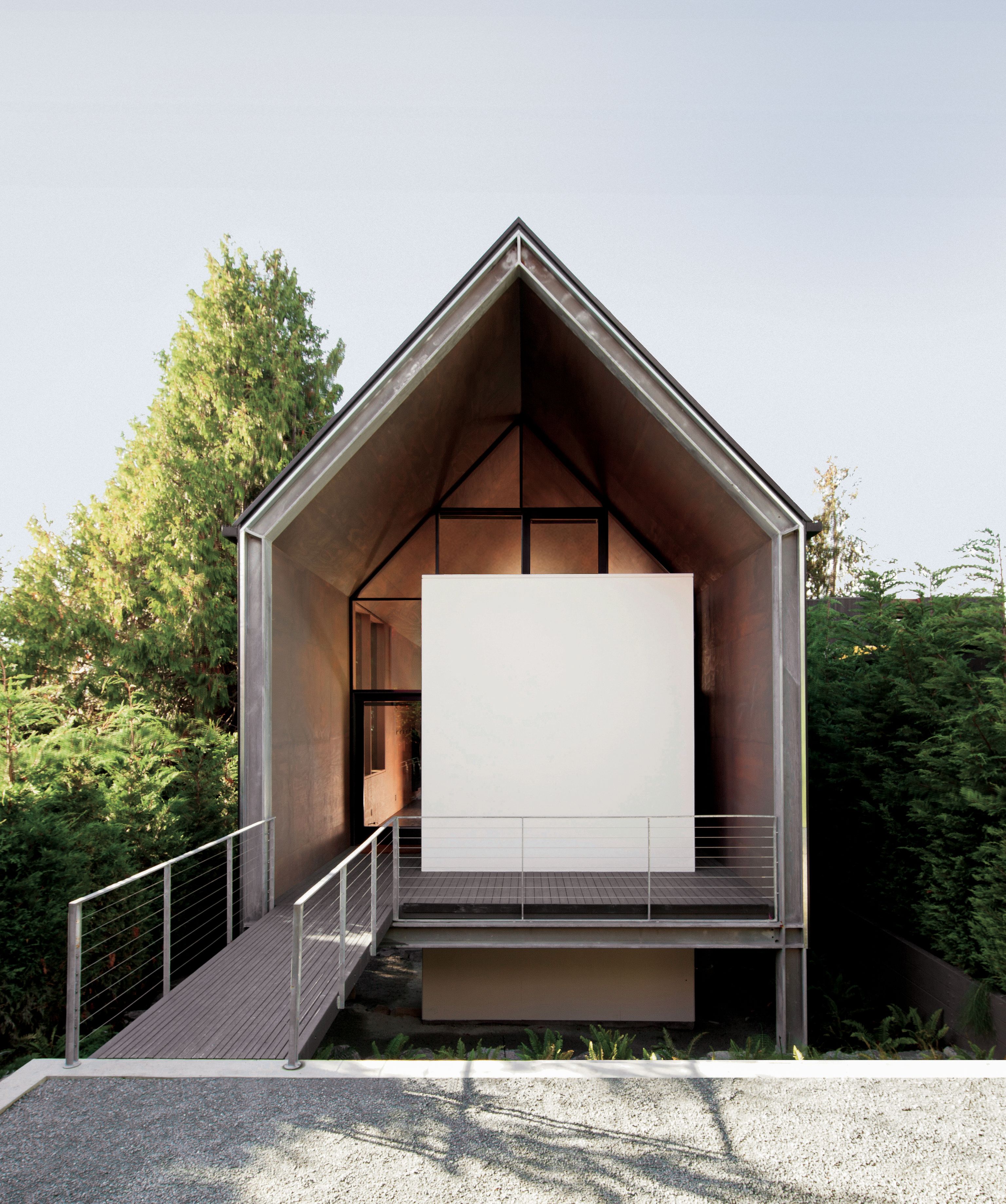
Material choices reinforce the house’s philosophy of reduction. The exterior is clad in corrugated metal, an economical, almost industrial surface that avoids any sense of preciousness. It is plain, durable, and slightly reflective, allowing the house to sit quietly among the trees rather than compete with them. Inside, however, the material atmosphere shifts toward warmth: plywood and natural wood define surfaces, creating a soft contrast between exterior restraint and interior intimacy.
The structure itself is exposed and legible. A pilotis-like condition lifts part of the building, allowing parking and utilitarian functions to sit beneath the main living spaces. This separation of service and living zones is not hidden, it is part of the architectural clarity. Even the roof, with its simple gabled form, references traditional domestic structures without nostalgia. It is less about style and more about reducing everything to recognizable, functional logic. The result is a house that feels almost diagrammatic in its honesty, where every element is allowed to remain visible and unembellished.

Architecture That Changes How You Live
What defines Junsei House is not only its construction, but its intent. Suyama Peterson Deguchi approach sustainability here not as technology or performance metrics, but as a shift in behavior. The house is designed to influence how its inhabitants live, how much they use, how they move, how they occupy space. As George Suyama describes it, the goal is to eliminate the feeling of lack by removing unnecessary excess. In that sense, the house is less a container and more a quiet system of reorientation.
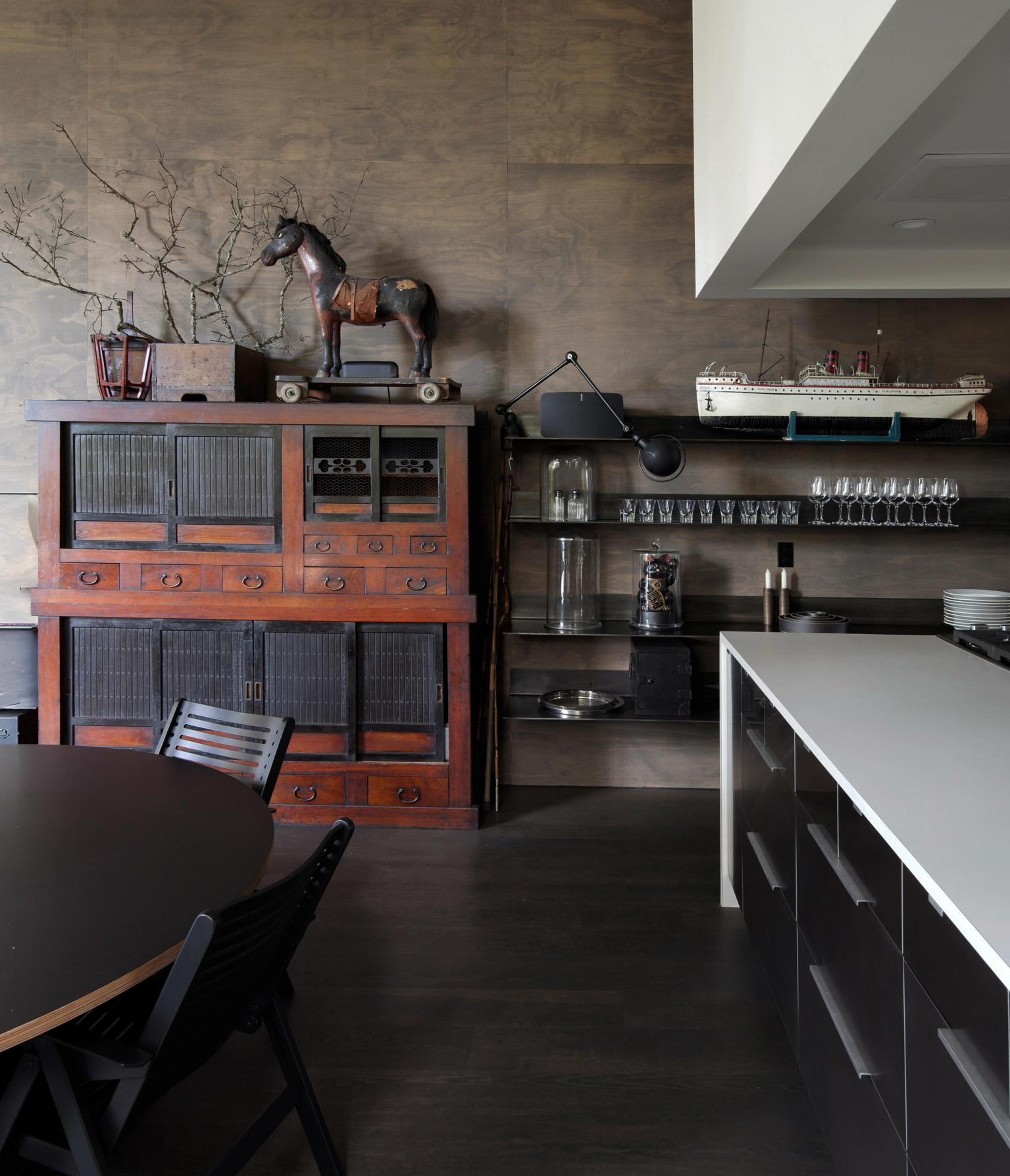

The openness of the plan allows flexibility, and with it, a constant reevaluation of daily routines. Spaces are not assigned rigid meanings; they adapt to seasons, light, and use. Furniture is minimal, often chosen as much for atmosphere as function, and the architecture becomes a background for life rather than its centrepiece. In a world of constant visual and technological noise, Junsei House offers something different: a controlled quietness that does not isolate, but instead sharpens awareness of surroundings, time, and self.