
Arquitectura-G
House II
- ArchitectArquitectura-G, Jonathan Arnabat, Jordi Ayala-Bril, Aitor Fuentes, and Igor Urdampilleta
- Project TeamJoão Salsa
- PhotographerFrancisco Ascensão and Maxime Delvaux
Pablo Bofill Arquitectura-G belong to a generation that has managed to reinterpret the Mediterranean tradition without nostalgia.

House II in Sintra
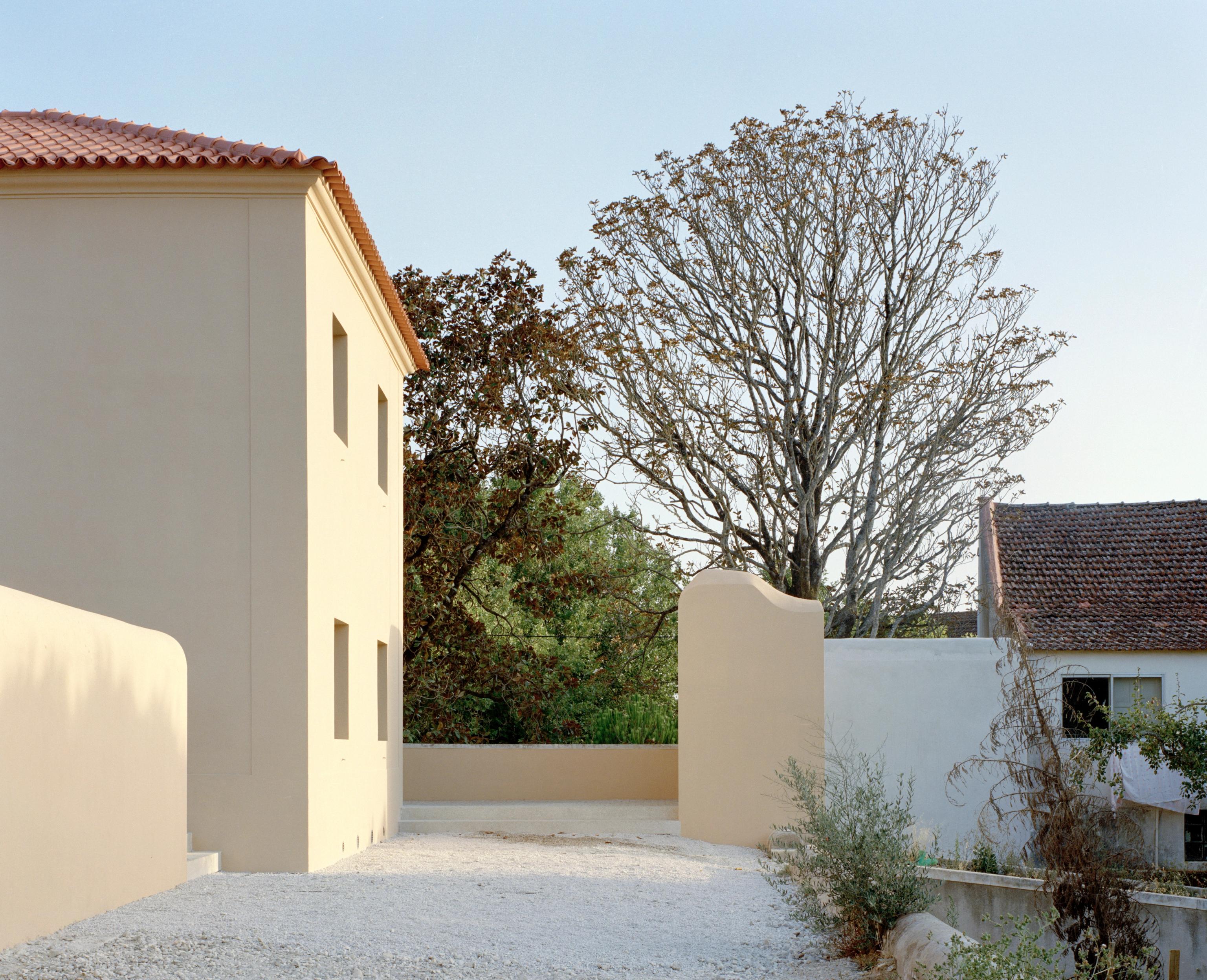
Set within the rolling landscape of Sintra, House II is a carefully considered transformation of a historic agricultural building that once formed part of a quinta de recreio, the grand recreational estates that shaped the Portuguese countryside for centuries. Designed by Barcelona-based studio Arquitectura-G, the project turns a long-abandoned structure into a contemporary dwelling while remaining deeply connected to its past. Originally, the building served a dual purpose, housing both a wine cellar and modest living quarters for estate workers. Decades of neglect had left it fragmented and underused, yet its architectural character remained intact. Rather than treating the building as a relic to be preserved or a blank slate to be reinvented, House II occupies a more nuanced position, embracing the complexity of its history while introducing a radically new spatial experience.


A Vision Beyond a Single Building
The house is part of a much larger effort to revive an entire estate that had gradually fallen dormant over time. House II represents the third intervention completed by Arquitectura-G on the property, contributing to an ongoing strategy aimed at restoring vitality to the surrounding vineyards, orchards, forests, gardens, and agricultural infrastructure. At the heart of this vision is the idea of creating a self-sufficient landscape shaped by the principles of permaculture, where architecture operates in dialogue with ecology rather than apart from it. Within this broader context, the renovation extends beyond questions of domestic space. The project becomes a piece of a larger territorial framework, helping re-establish relationships between built structures, agricultural production, and the natural environment. It is an approach that understands architecture not as an isolated object but as part of a living ecosystem.


Building Within Existing Walls
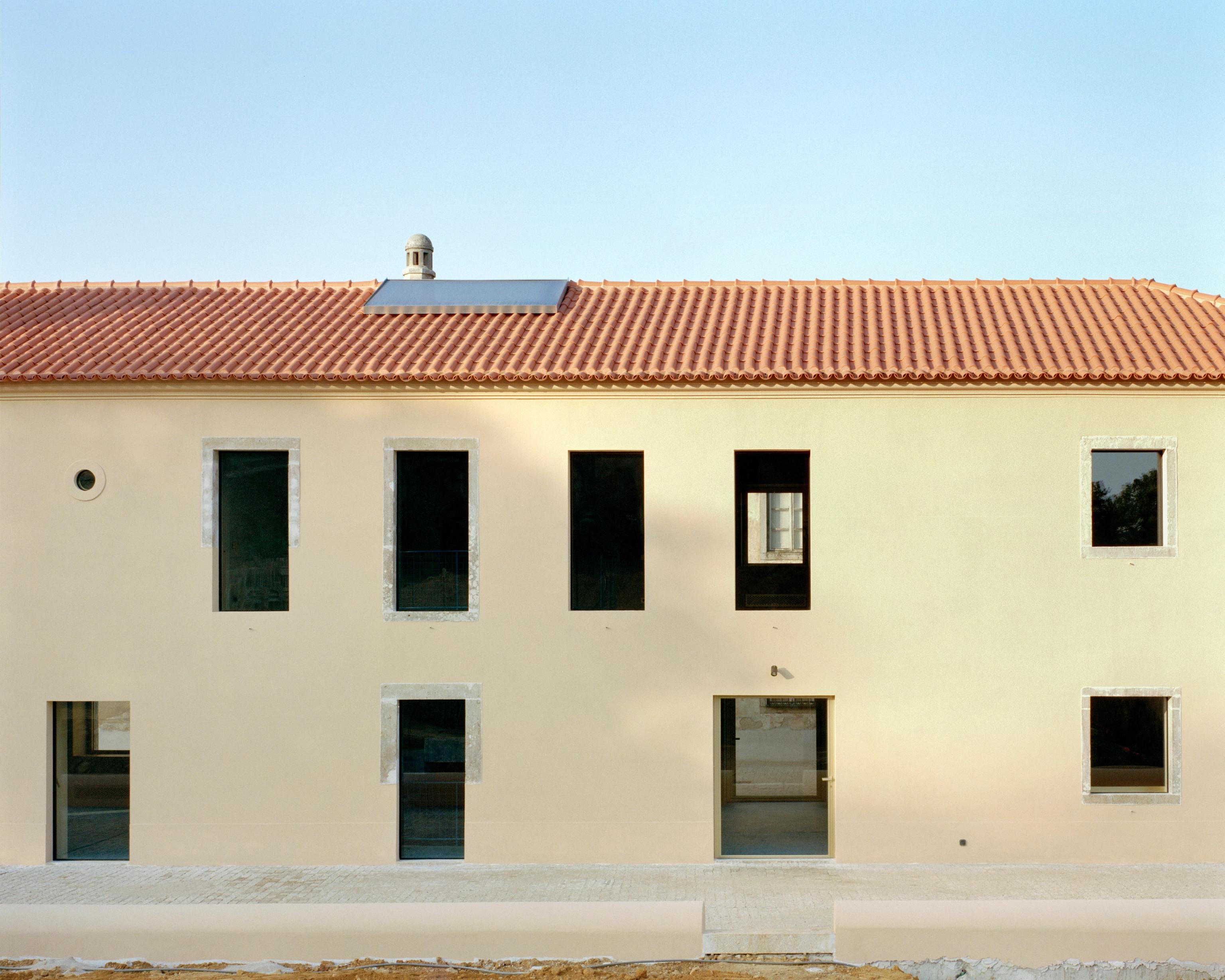
One of the project’s defining challenges came from the strict planning regulations governing the site. The existing volume, façades, and roof were protected, preventing any substantial alterations to the building’s external appearance. Rather than viewing these constraints as obstacles, Arquitectura-G used them as an opportunity to focus their intervention inward. The original structure was hollowed out almost entirely, leaving only its perimeter walls standing. Within this preserved shell, the architects inserted an entirely new architectural body, creating a dialogue between permanence and transformation. The result is a project that reveals little from the outside yet unfolds dramatically once entered. The contrast between the restrained historic exterior and the unexpected spatial intensity of the interior gives the house much of its character and tension.

The Blue Concrete Spine
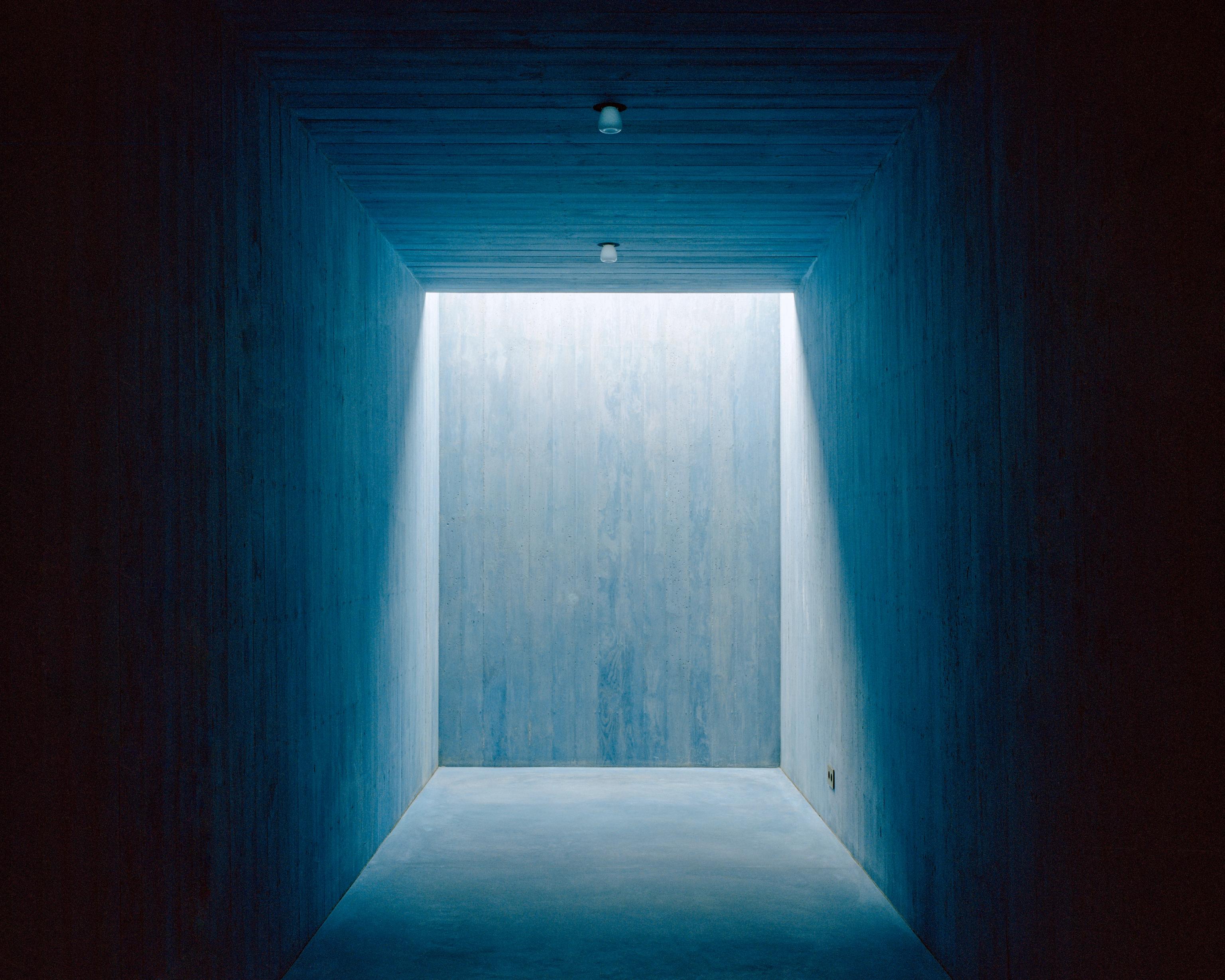
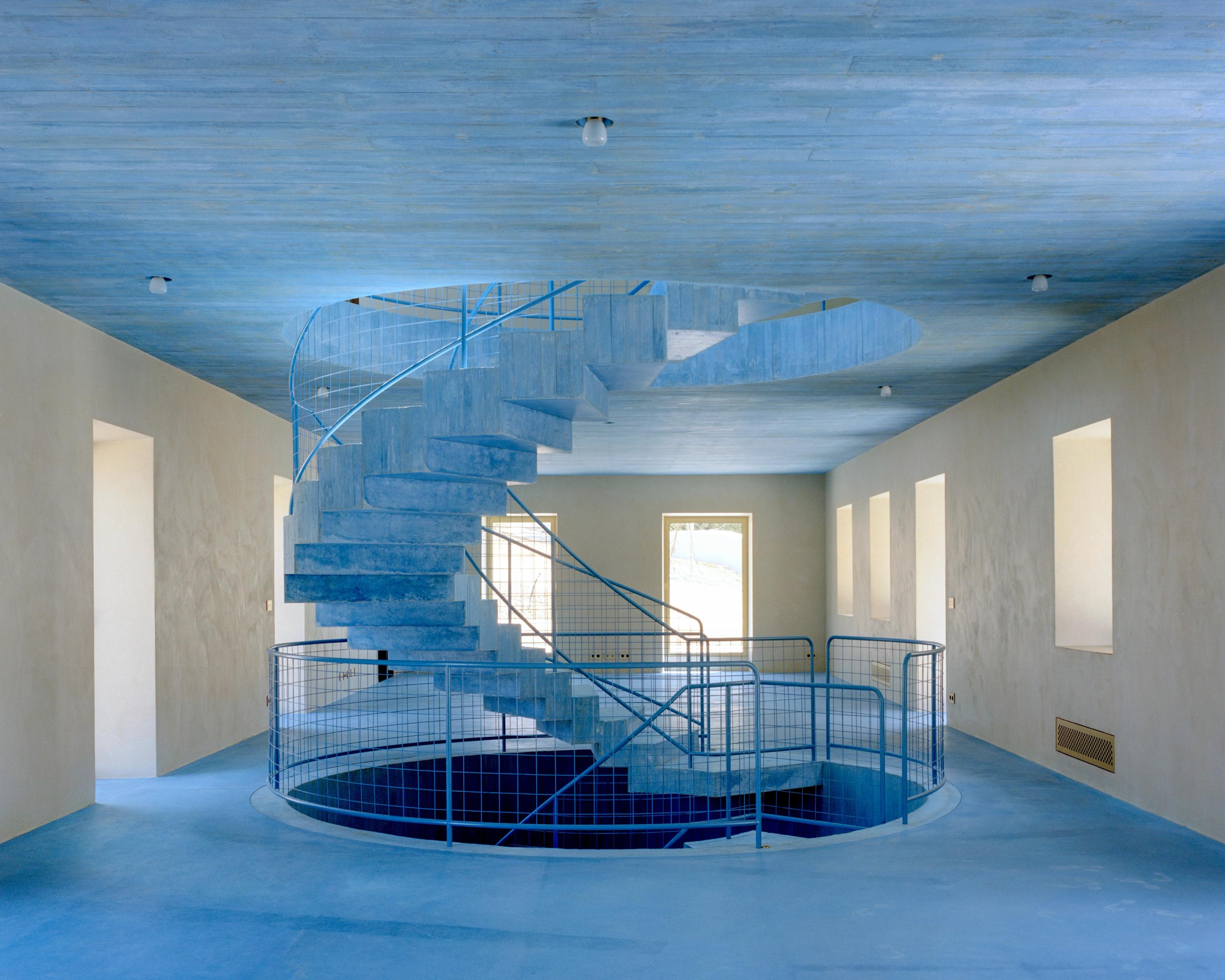
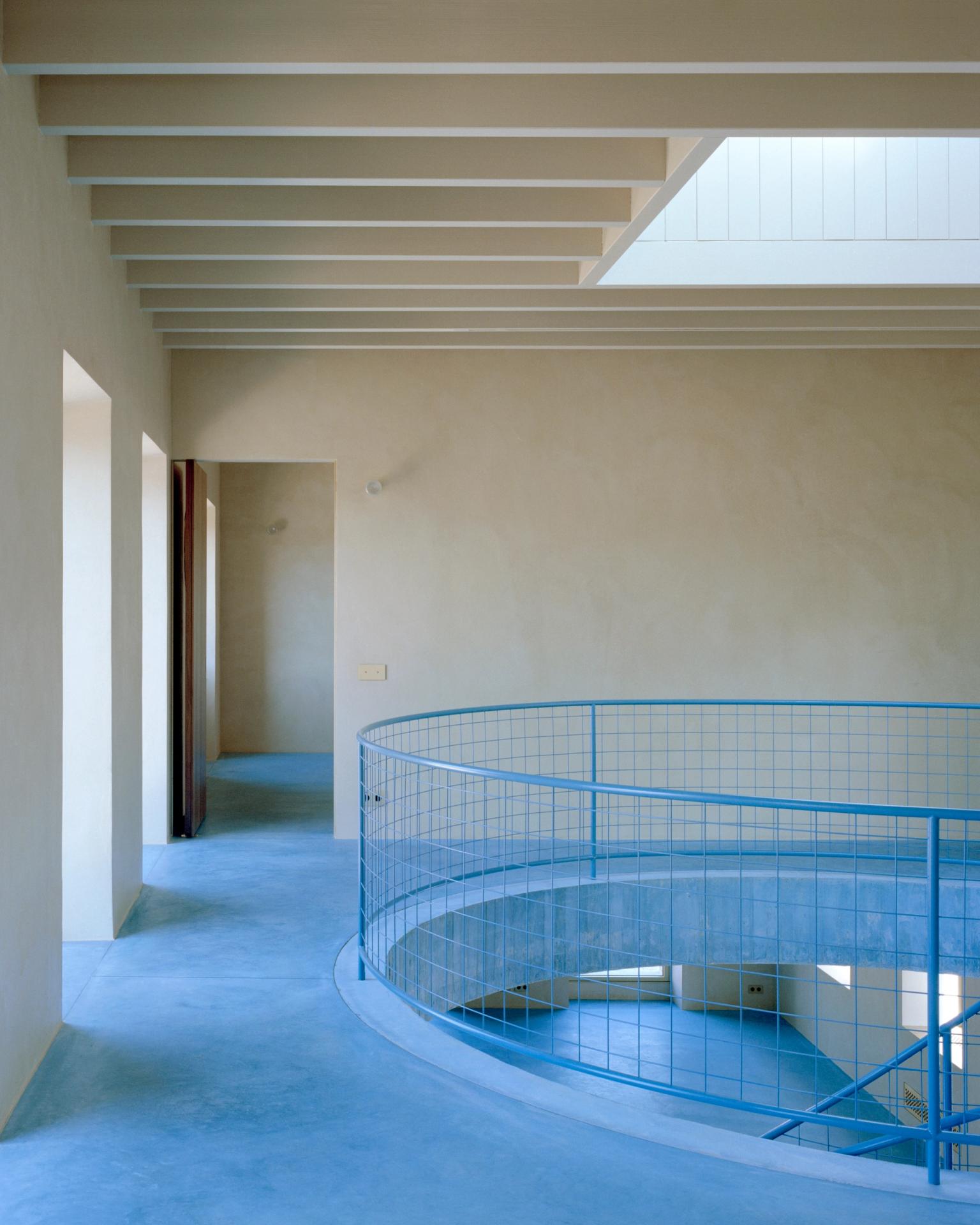
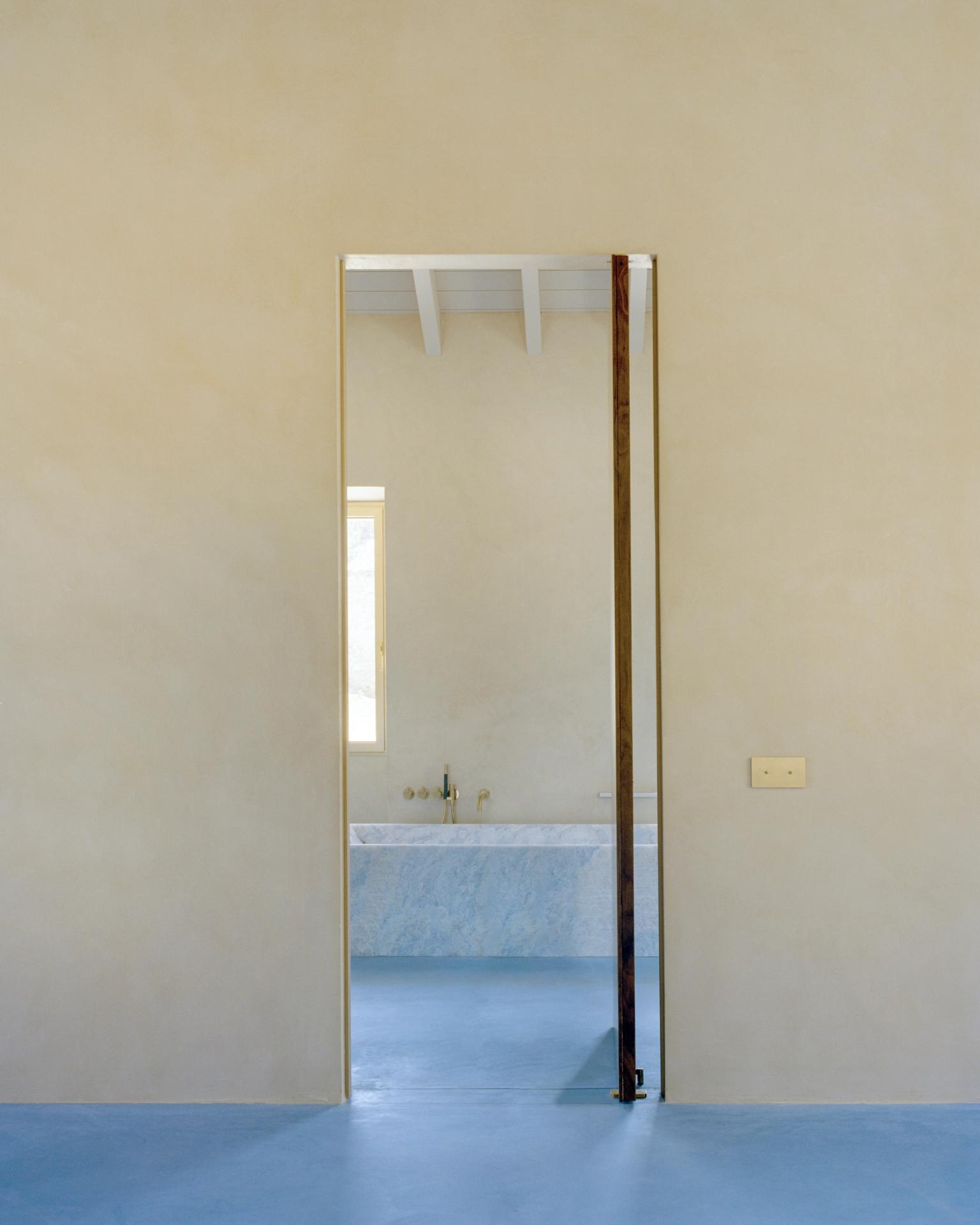
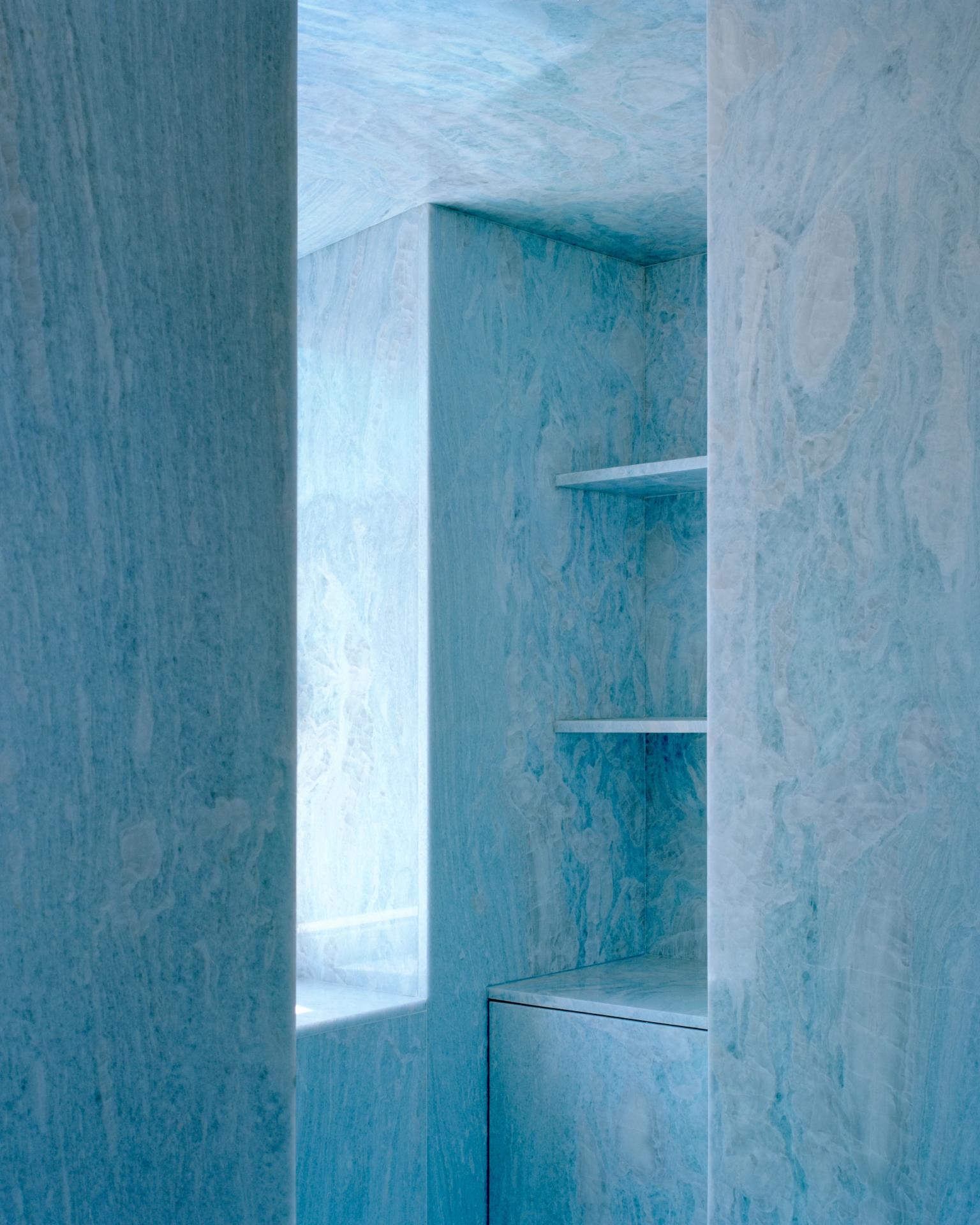
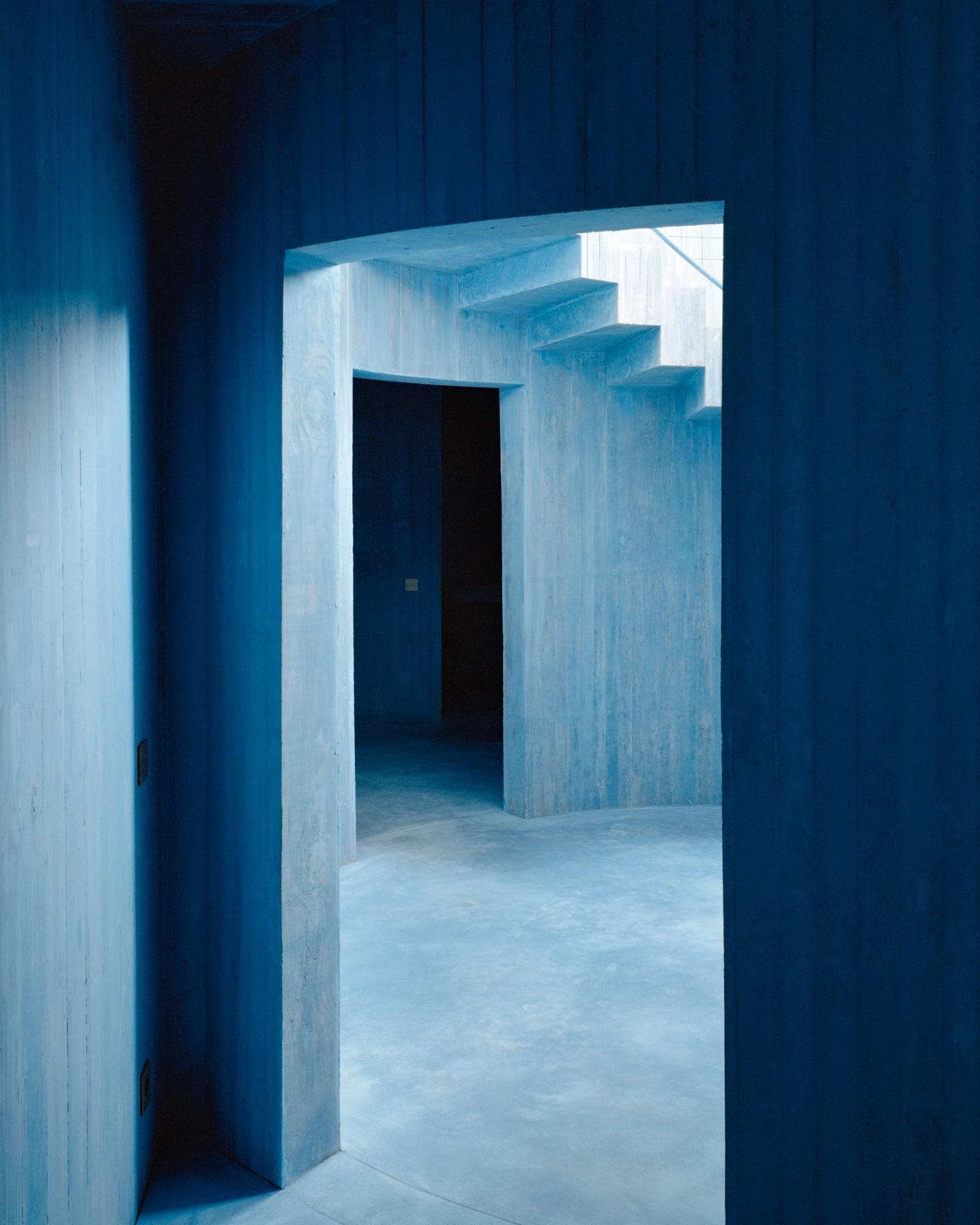
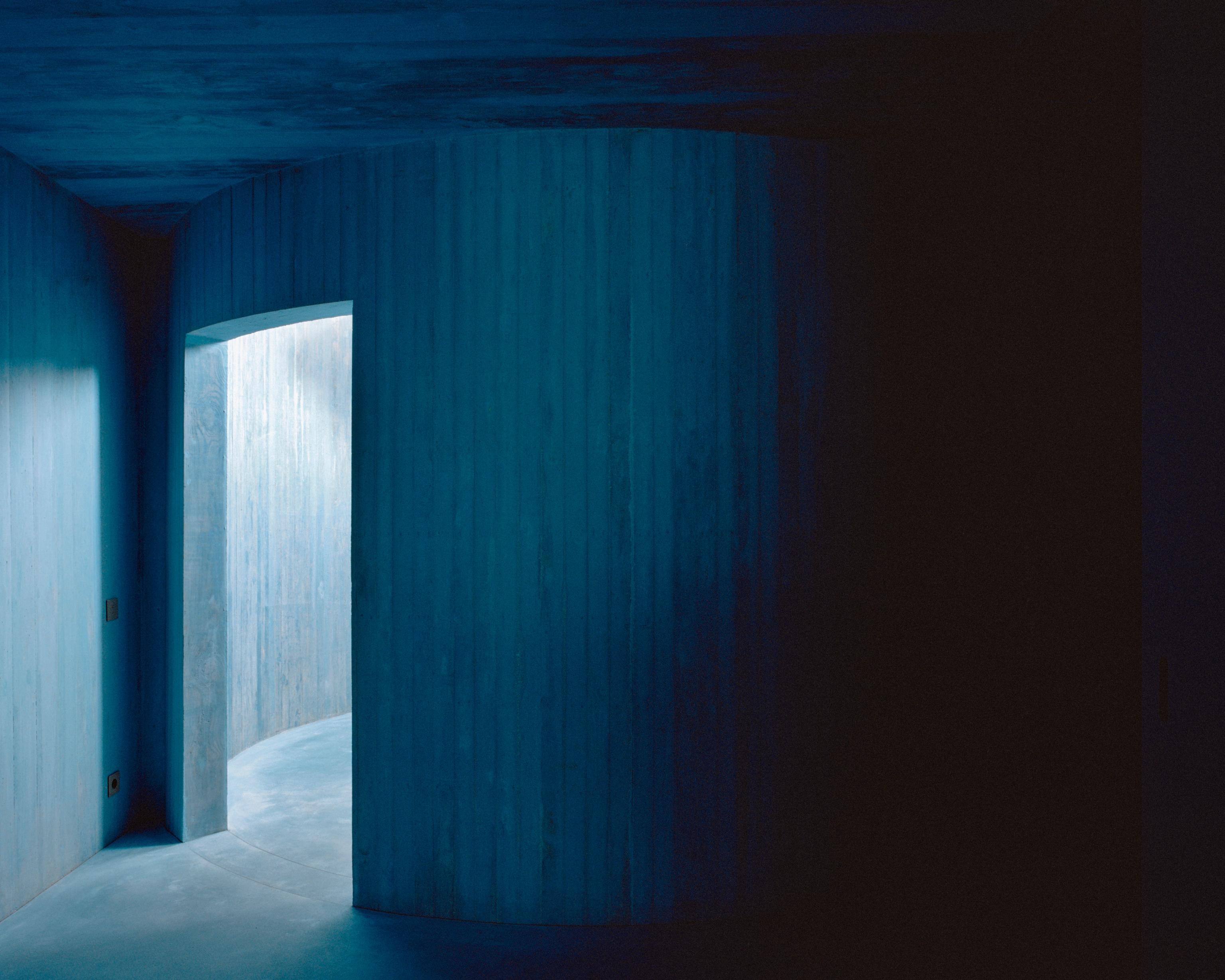
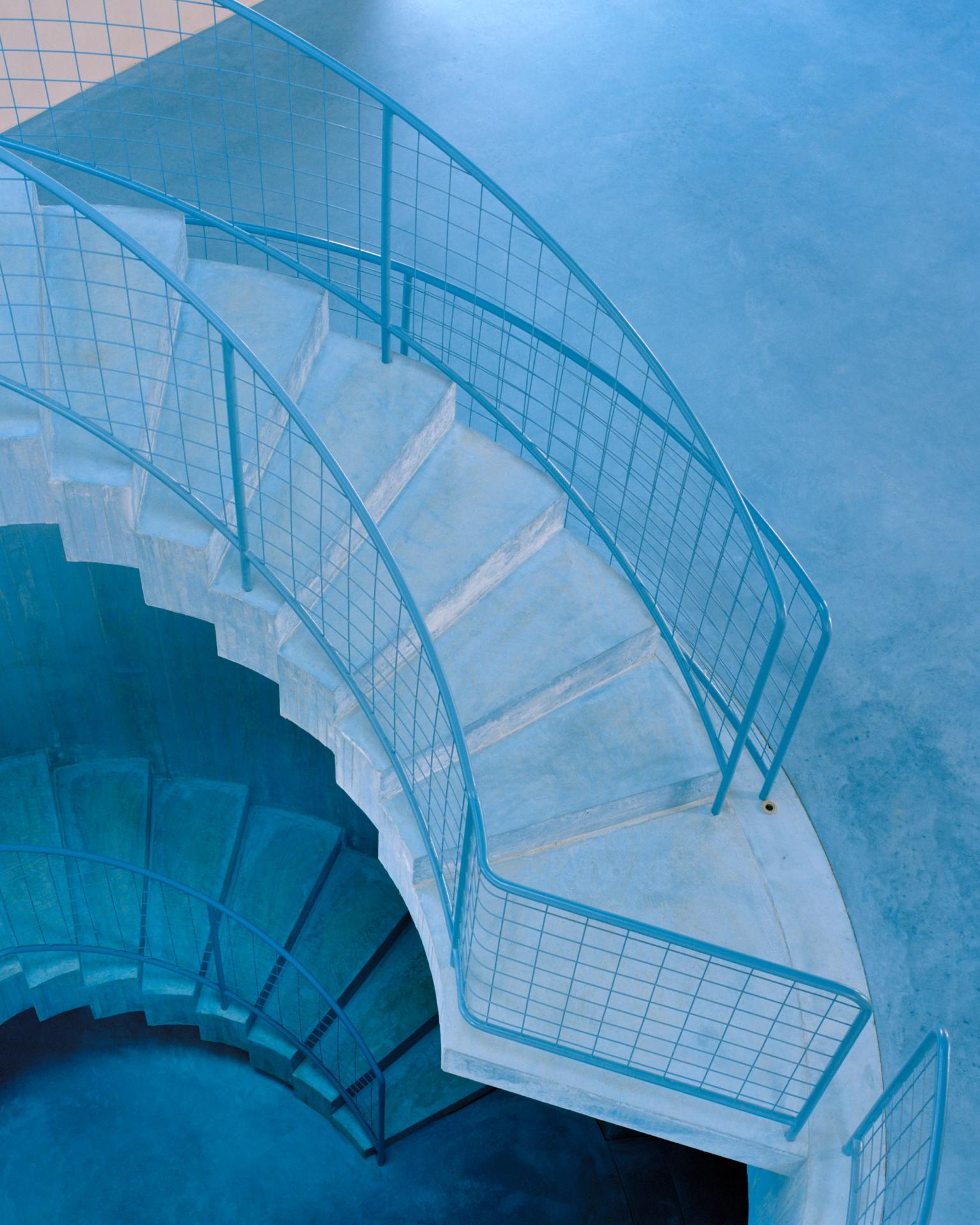
At the centre of the project is a remarkable blue-pigmented concrete structure that acts simultaneously as staircase, floor system, circulation route, and spatial organiser. Rising from the basement wine cellar, where traces of the building’s original programme remain visible, the concrete core spirals upwards through a helical staircase before expanding into the upper levels of the house. More than a structural intervention, it functions as the conceptual heart of the project. The vivid blue colour is not applied as a finish but integrated directly into the concrete itself, giving the material a depth and permanence that feels almost geological. Throughout the house, the blue shifts in character as natural light changes, appearing dense and shadowy in the cellar while becoming lighter and more luminous in the upper floors. This singular gesture transforms the interior into a coherent architectural landscape, where colour, structure, and movement become inseparable.

Light, Atmosphere, and Domestic Life
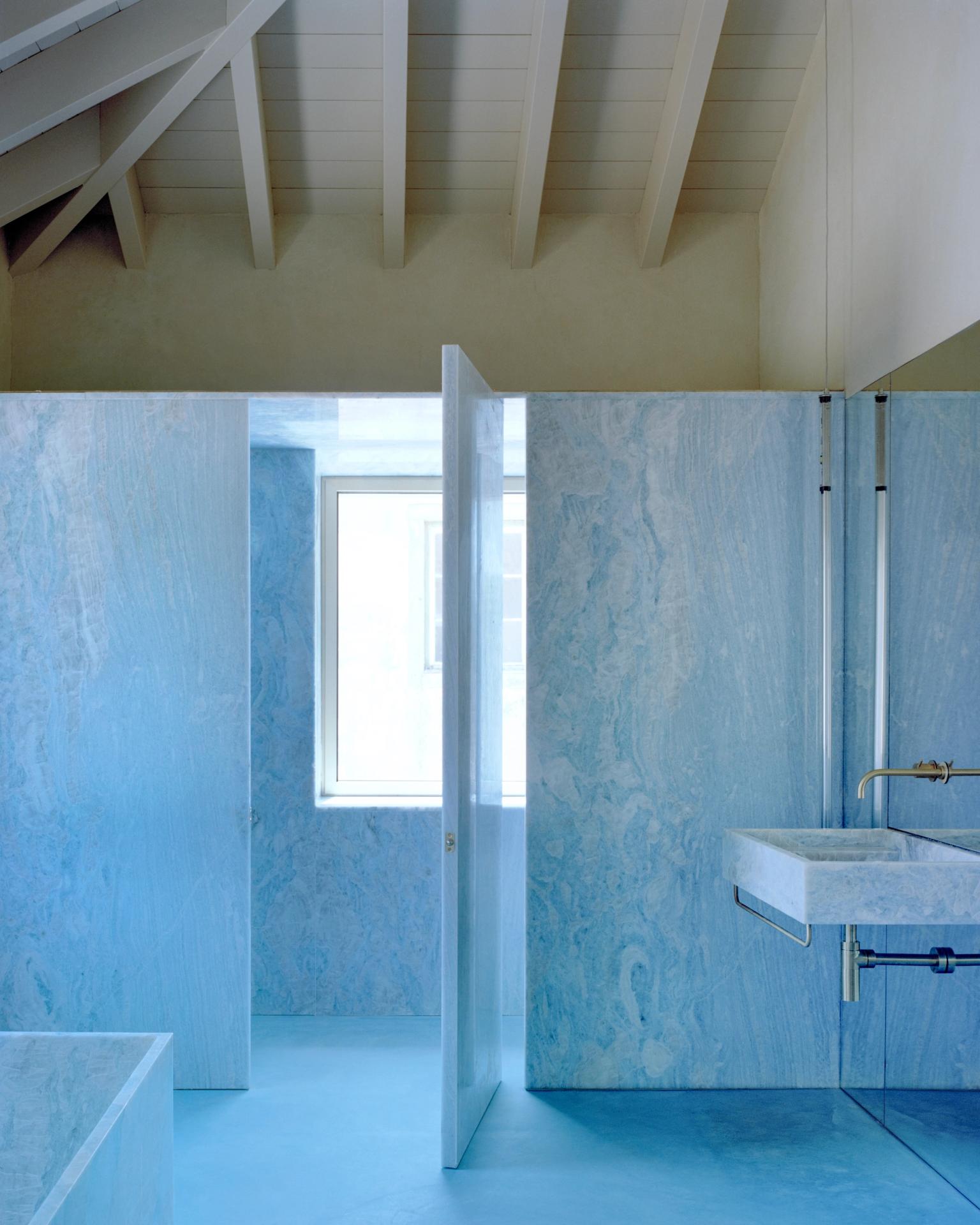
The spatial organisation of House II revolves around the relationship between light and movement. A large skylight positioned above the staircase draws daylight deep into the centre of the building, creating a vertical shaft of light that connects every level. Around this illuminated void, the domestic programme unfolds with remarkable clarity. The ground floor is conceived as a continuous open-plan environment where the kitchen, dining room, and main living area flow together around the staircase. Upstairs, bedrooms occupy the quieter ends of the building, while a secondary living space sits directly beneath the skylight, benefiting from the soft zenithal light that fills the interior throughout the day. What was once a series of disconnected rooms linked by multiple staircases has been transformed into a unified and fluid home, where circulation, light, and everyday life are carefully choreographed through architecture.

Arquitectura-G’s Approach
Founded in Barcelona in 2006 by Jonathan Arnabat, Jordi Ayala-Bril, Aitor Fuentes, and Igor Urdampilleta, Arquitectura-G has established itself as one of the most distinctive architectural practices working today. The studio is known for projects that combine rigorous spatial thinking with an experimental approach to materiality, often finding unexpected opportunities within existing buildings. Their work spans housing, retail, cultural spaces, furniture design, and urban interventions, yet a consistent interest runs throughout: the ability to create powerful architectural experiences through relatively simple means.
In House II, this philosophy is evident in every decision. Rather than relying on complex forms or excessive gestures, the project achieves its impact through the careful interplay of colour, light, structure, and context. The result is a renovation that feels both bold and restrained, a contemporary insertion that honours the memory of the building while demonstrating how architecture can generate entirely new possibilities from what already exists.