
Carlo Scarpa
Giardino delle Sculture
- ArchitectCarlo Scarpa
- PhotographerOrazio Saluci
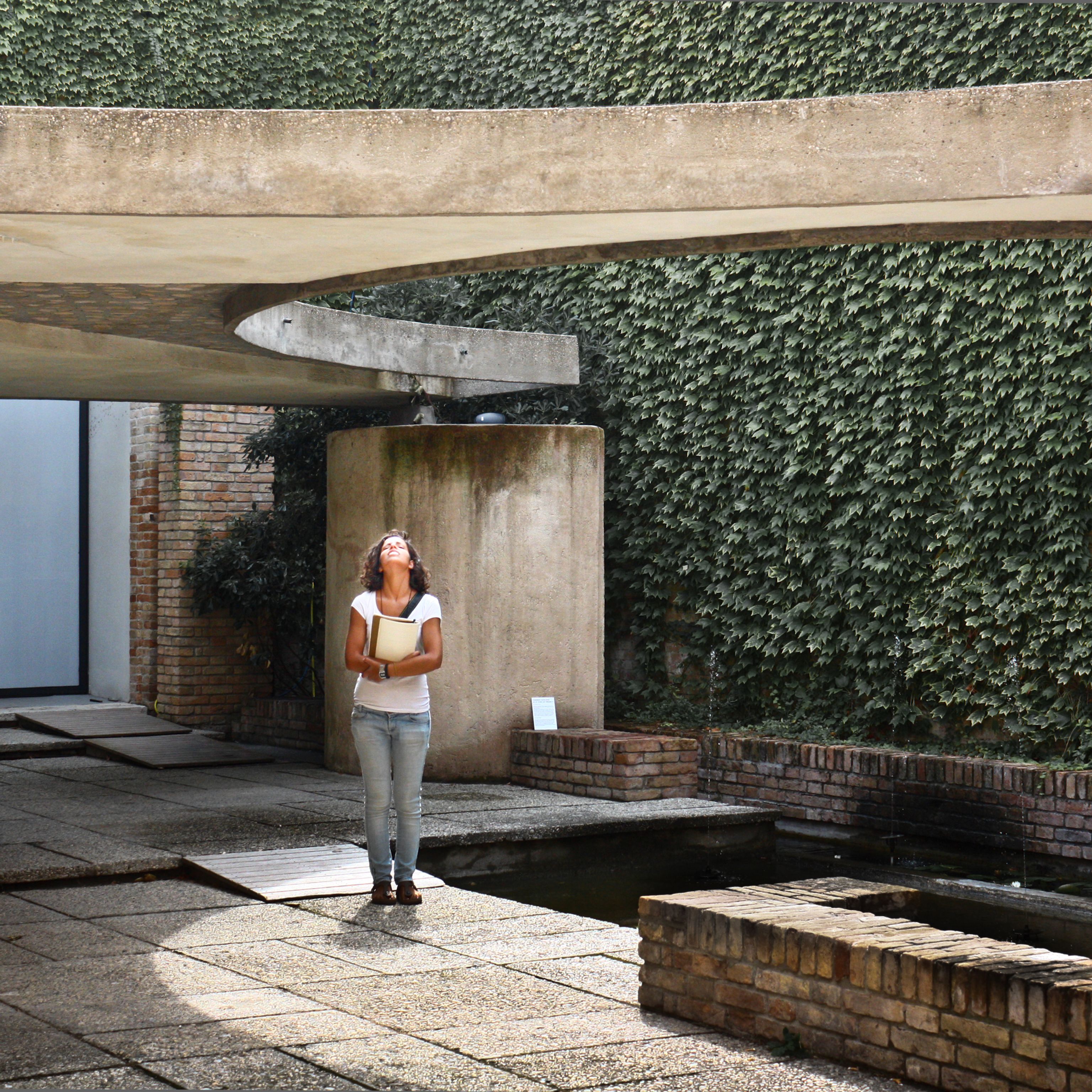
Raquel Font The Giardino delle Sculture demonstrates that no decision is too small to matter and that the intensity of a space does not depend on the scale of the architectural gesture. Scarpa does not simply design a roof, but an extraordinary choreography of water, vegetation, sculpture, light, and shadow that ensures the project is never perceived in quite the same way twice.

A Garden Within the Biennale
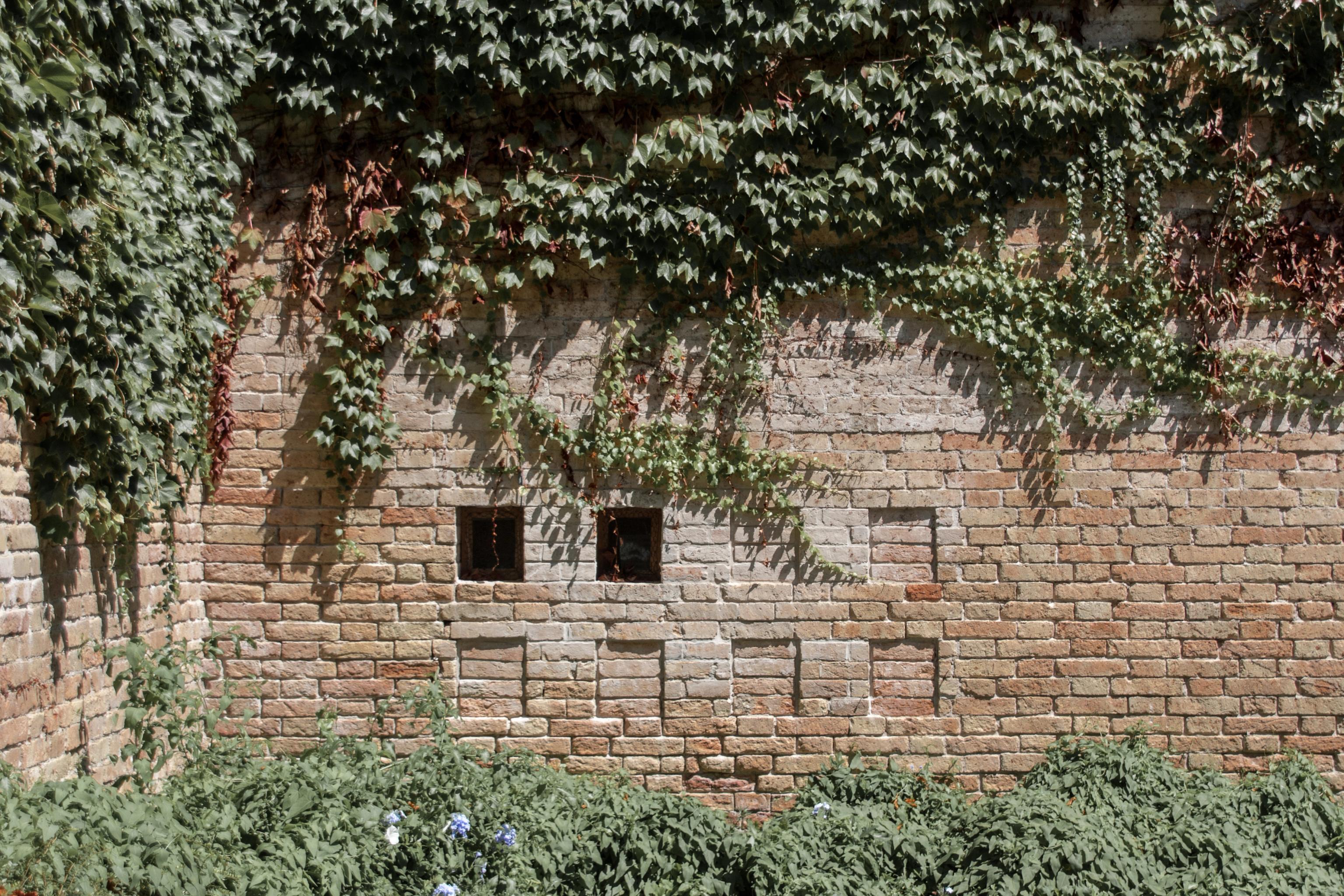
Hidden inside the Giardini della Biennale in Venice, the Giardino delle Sculture is a small courtyard designed by Carlo Scarpa in 1952. Created as part of his renovation of the Italian Pavilion for the 26th Venice Biennale, the garden transformed what had previously been an enclosed room into an open-air space for sculpture, rest and contemplation. Rather than treating the garden as simply a setting for artworks, Scarpa conceived it as an architectural experience in its own right, a place where landscape, water, light and material become part of the exhibition.


An Intervention of Light and Matter
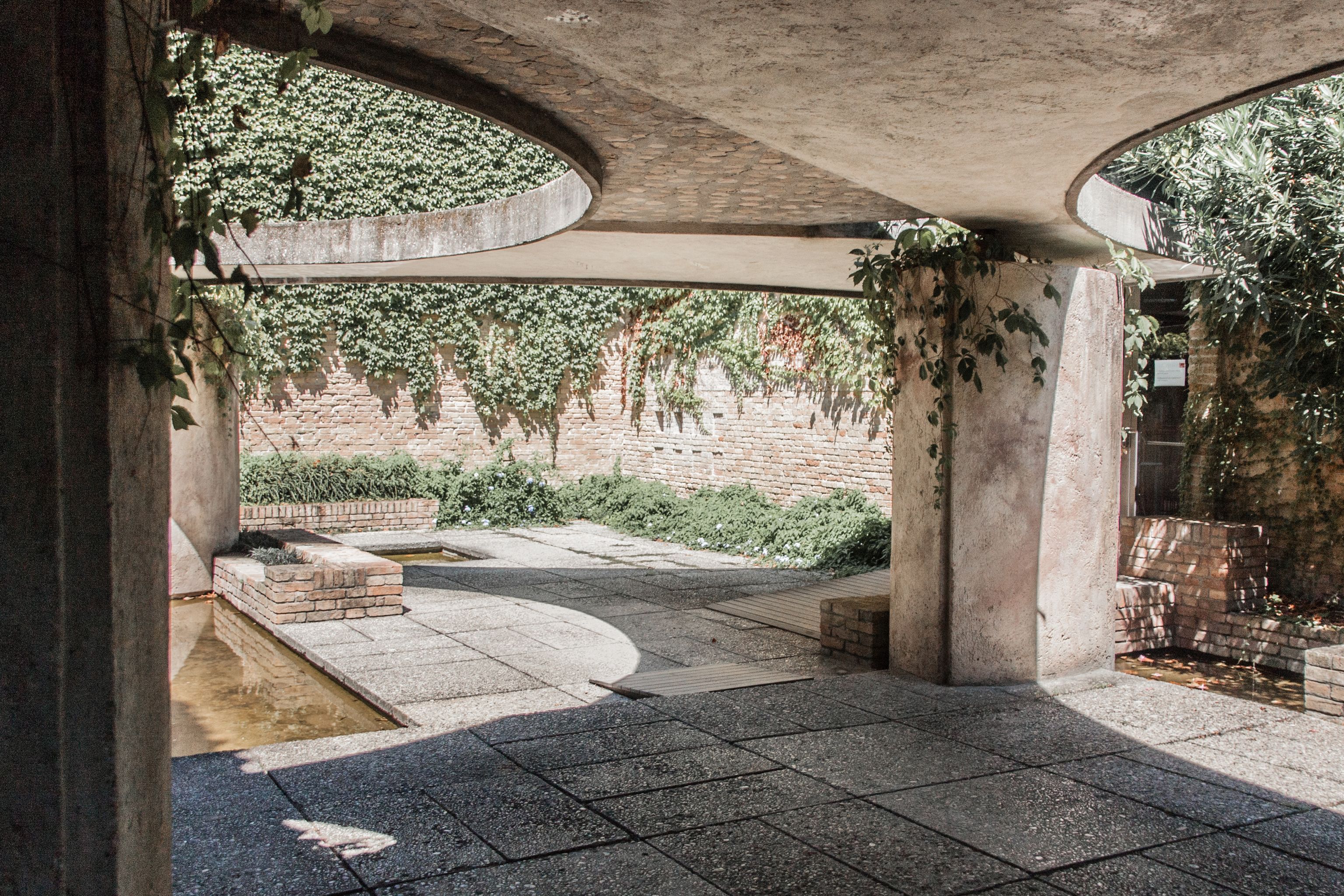
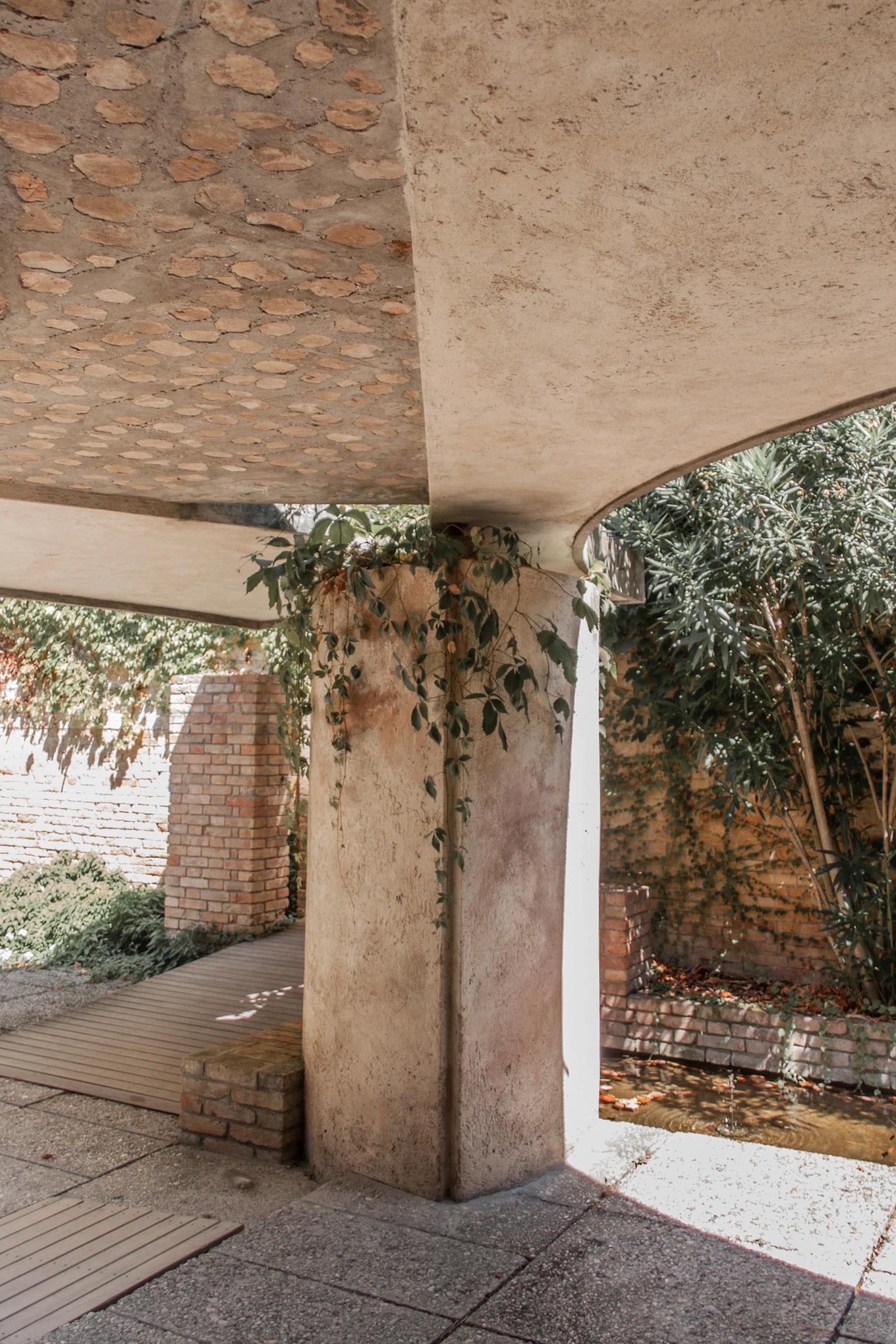
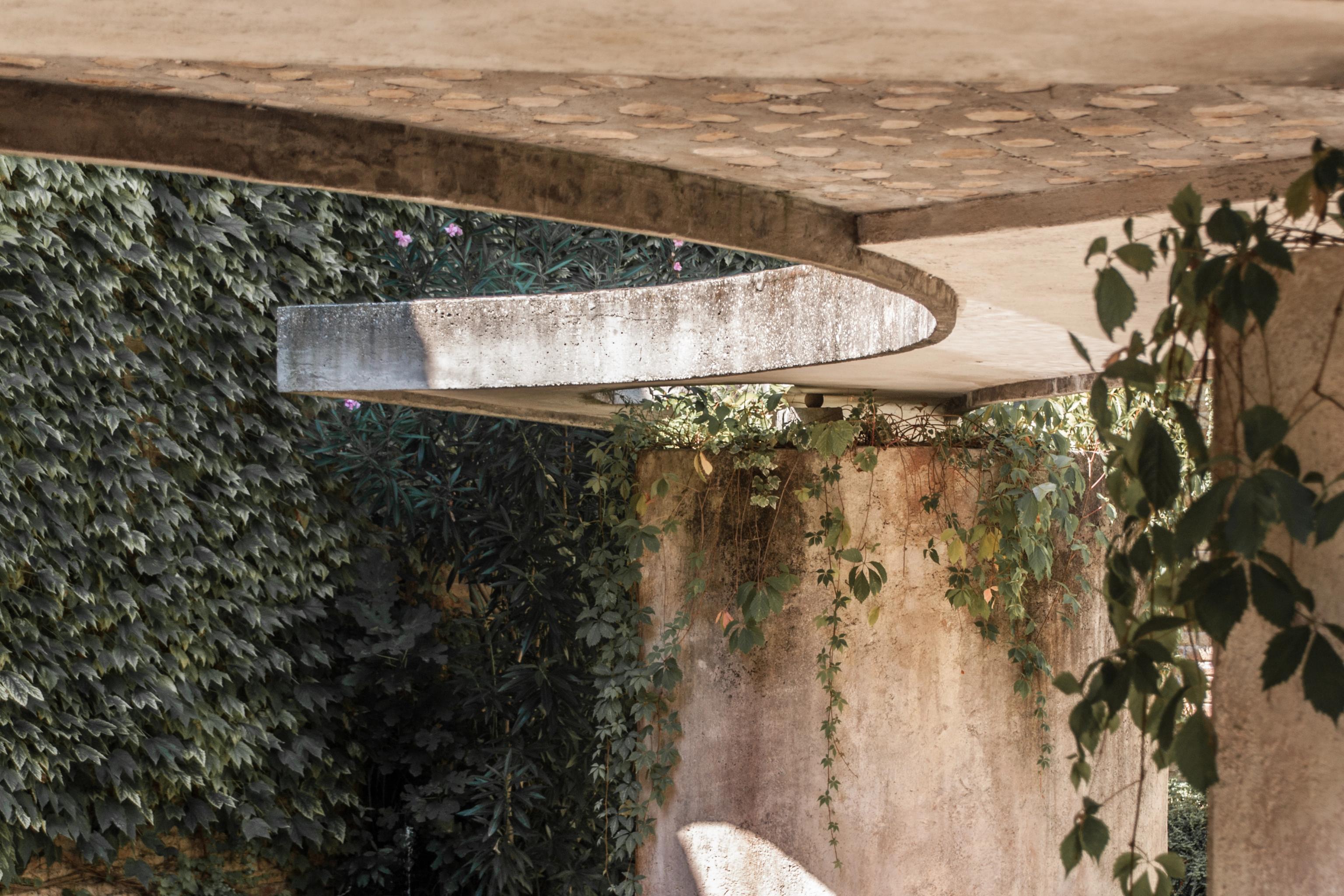
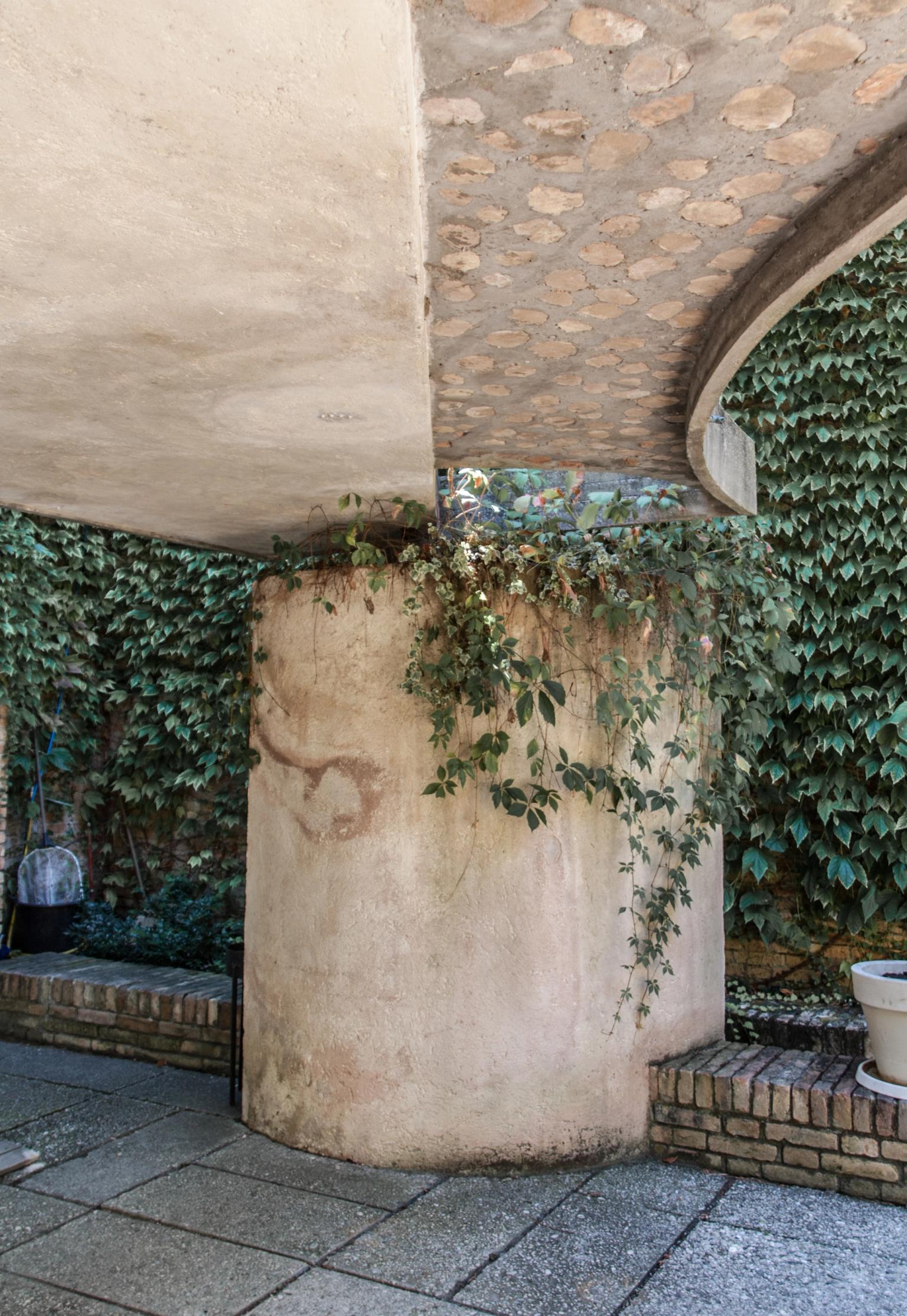
Scarpa’s approach was deliberately restrained. The roof of an existing room was removed and the plaster was stripped from its walls, revealing the old brickwork and allowing the space to open towards the sky. At its centre sits La Pensilina, a concrete canopy supported by three elliptical columns. Small steel spheres sit between the columns and the roof, creating an almost weightless effect as the heavy concrete plane appears to float above them. Throughout the day, changing sunlight moves across the surfaces, producing shifting patterns of light and shadow.

Water, Architecture and Pause
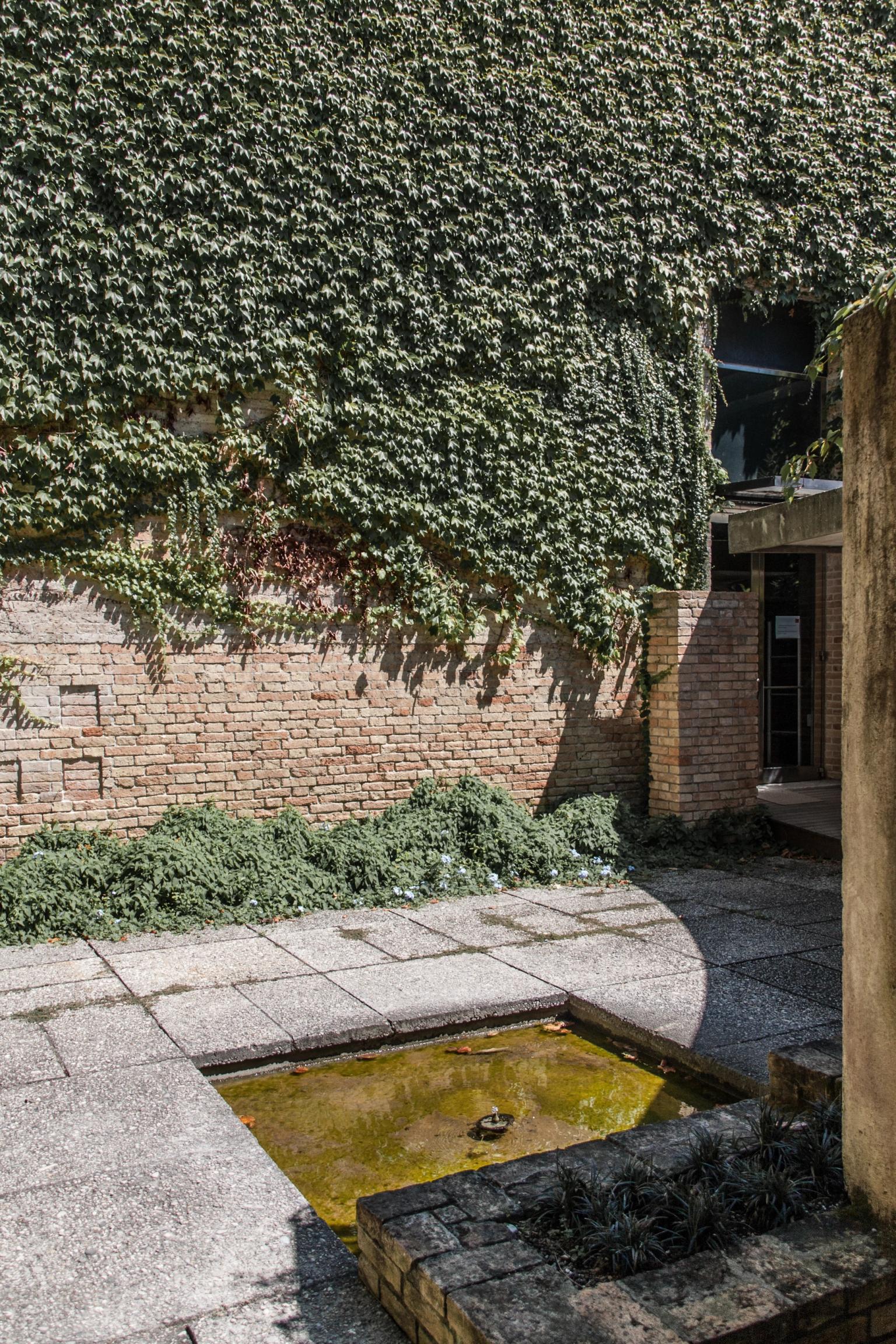
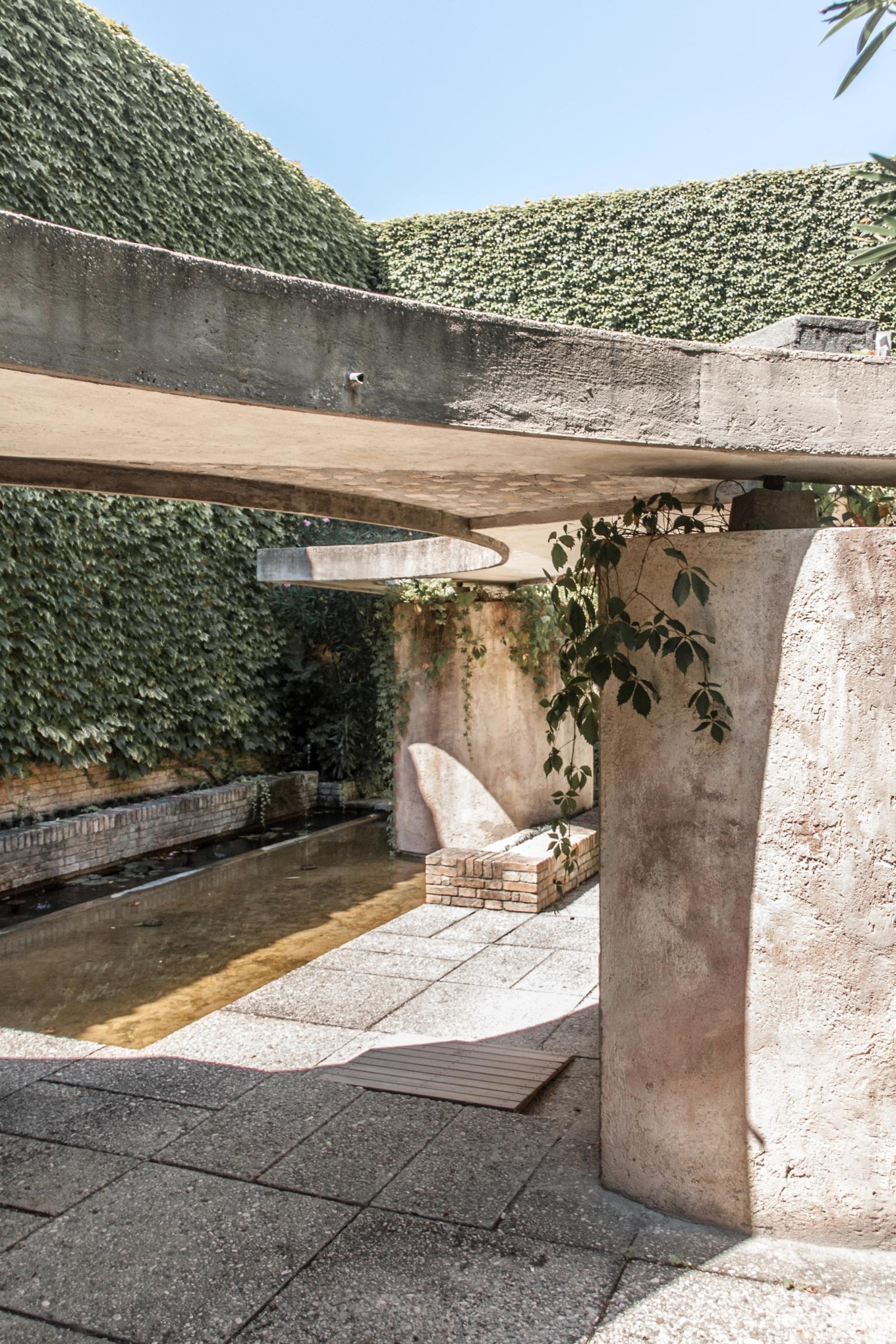
Water is central to the atmosphere of the garden. Shallow reflecting pools surround the concrete paving, catching fragments of sky and architecture while small channels allow water to move through the space. The sound of water falling onto copper discs was intentionally introduced to create a sense of calm and meditation. For Scarpa, water was never simply decorative; it was a material that could connect architecture to its surroundings. Here, the courtyard becomes a small piece of Venice itself, half earth, half water, with the sky contained within its walls.

Carlo Scarpa’s Venetian Language
The garden reflects many of the ideas that run throughout Scarpa’s work: an intense attention to craftsmanship, an interest in history and a sensitivity to the relationship between old and new. Born in Venice in 1906, Scarpa developed his understanding of material through architecture, design and, notably, his fifteen-year collaboration with the Murano glassmaker Venini. His work is characterised by carefully choreographed encounters between stone, concrete, glass, water and light, often creating architecture that is experienced as much through movement and touch as through form. The Giardino delle Sculture is an early and particularly clear expression of this approach.

When the Garden Becomes the Artwork
What makes the Giardino delle Sculture so distinctive is the way it dissolves the boundary between architecture and art. The sculptures are not simply placed within a neutral landscape; instead, the garden frames how they are encountered, while the architecture itself becomes part of the experience. As artist Gabriel Orozco observed of the space, it is difficult to display sculptures there because the garden itself is a sculpture. More than seventy years after its creation, the recently restored courtyard continues to offer a quiet counterpoint to the intensity of the Biennale, a place where Scarpa’s architecture is understood not through spectacle, but through light, sound, water and the passage of time.