
Rick Owens
Furniture
- DesignerRick Owens
- GalleryCarpenters
- PhotographerCourtesy Carpenters
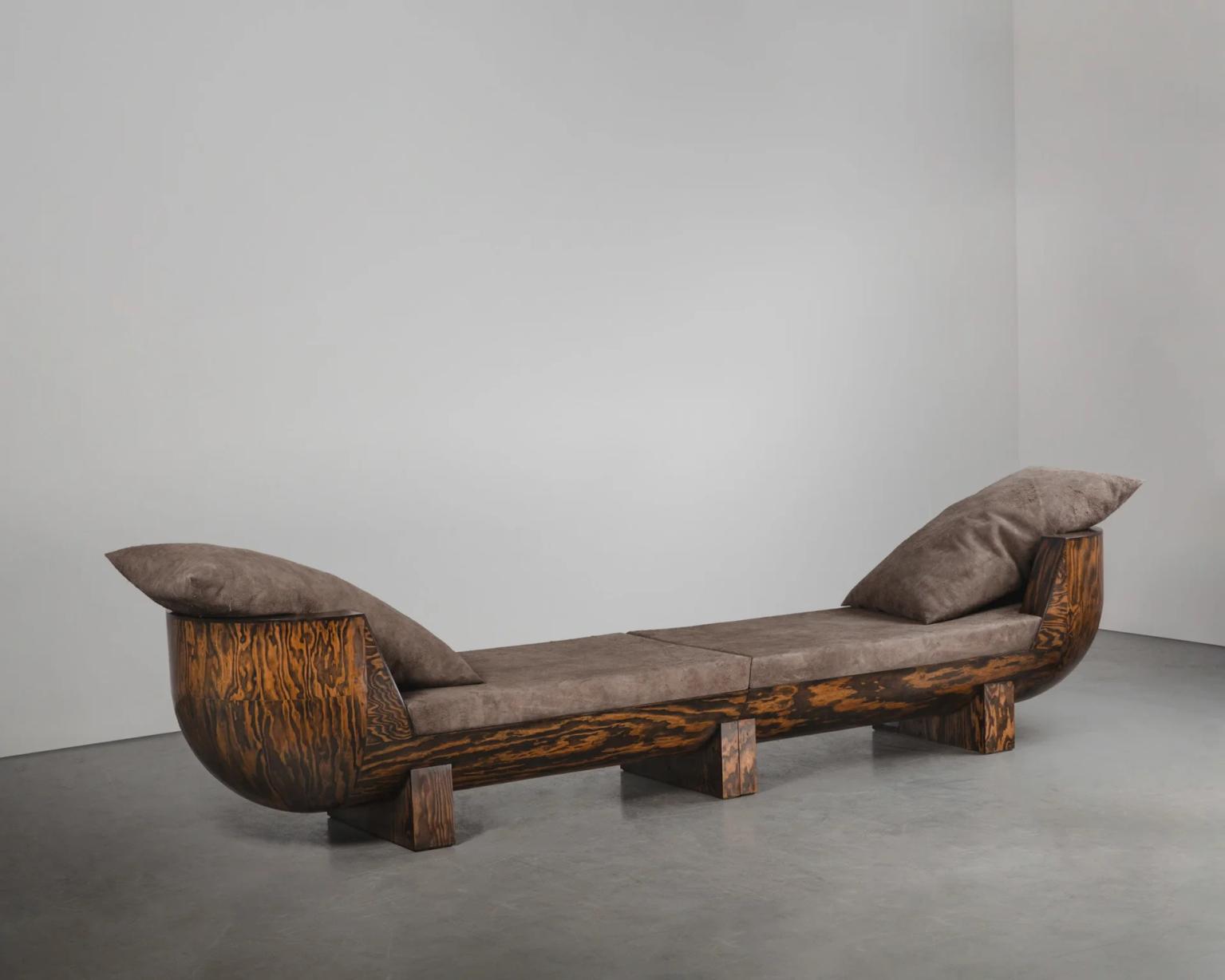
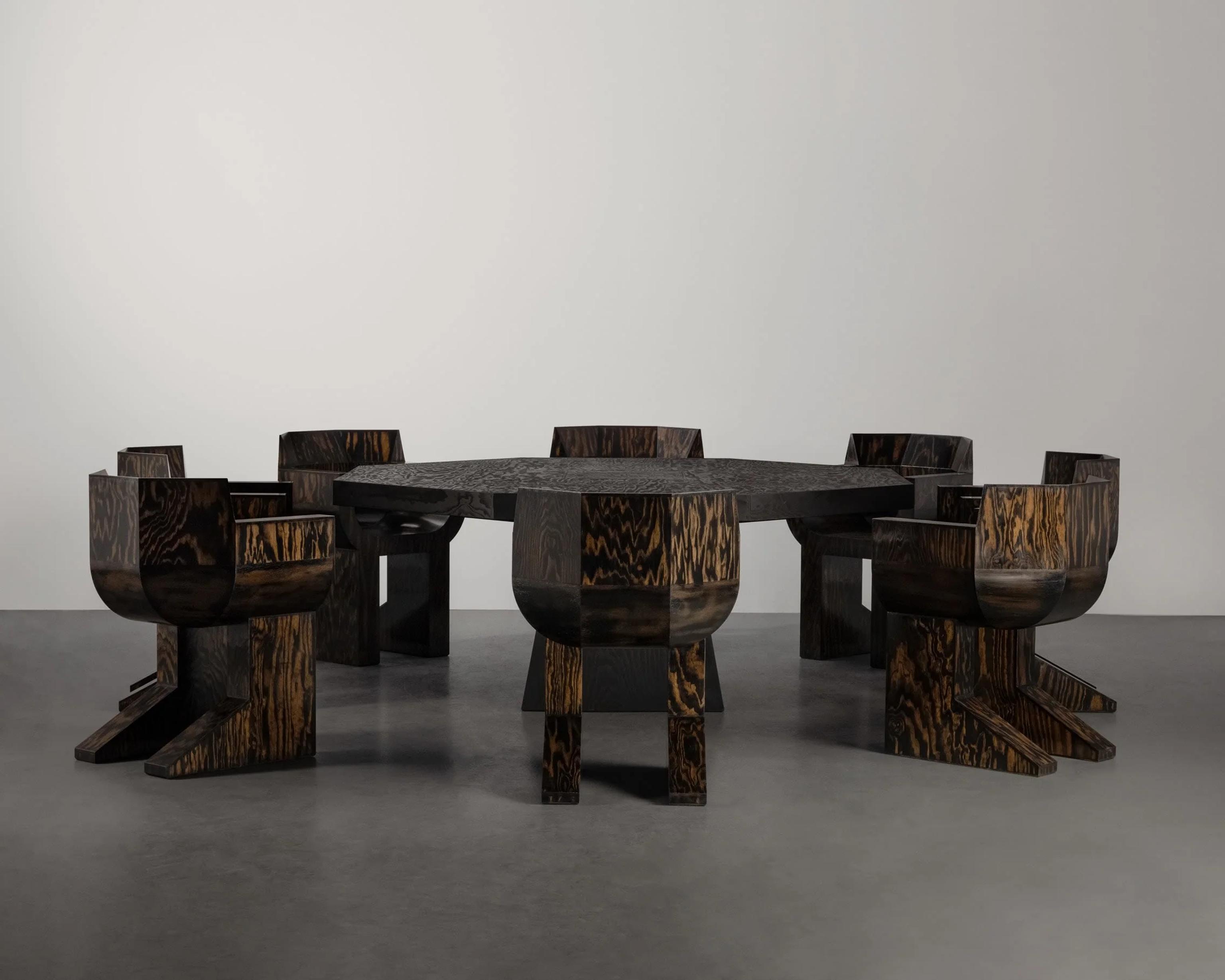
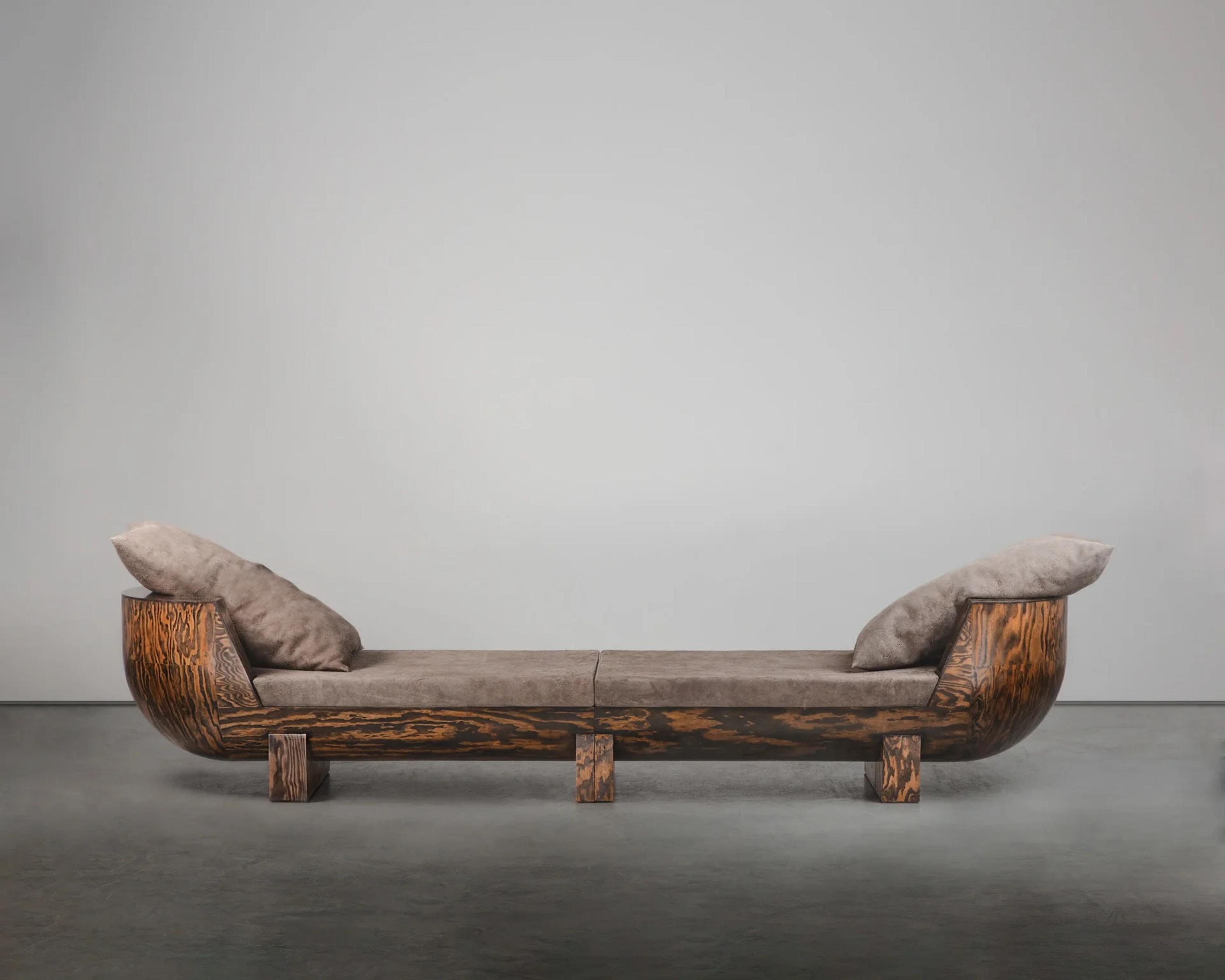
- Cover ImageRick Owens, Set of Octoplug Black Plywood and 8 Gallic Chairs Tigré, 2022. Courtesy Carpenters
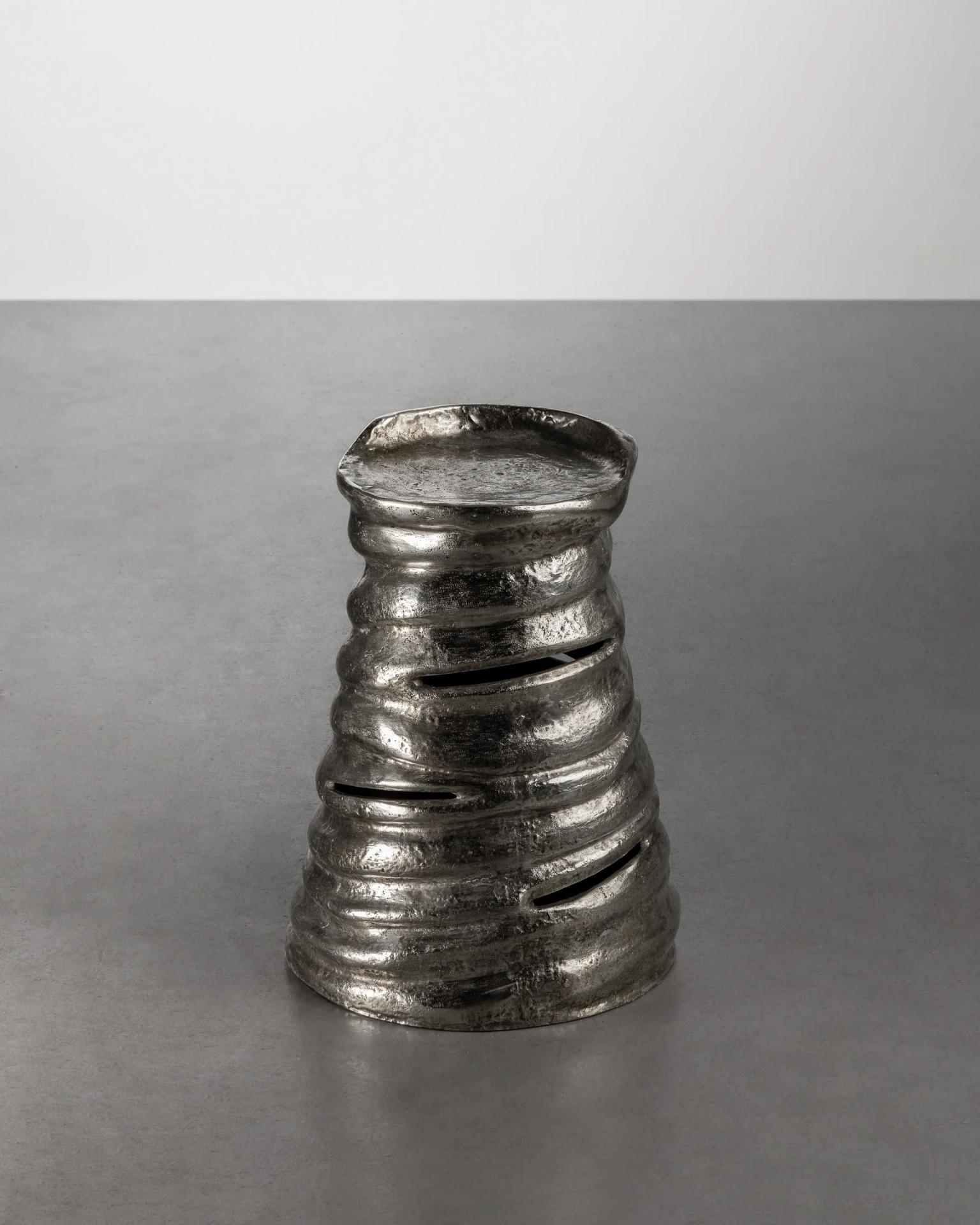
JACOB BRINTH I love his raw brutalist aesthetic to furniture. His monumental pieces make everyday things like beds and stool feel like ritualistic moments.


Beyond the Boundaries of Design
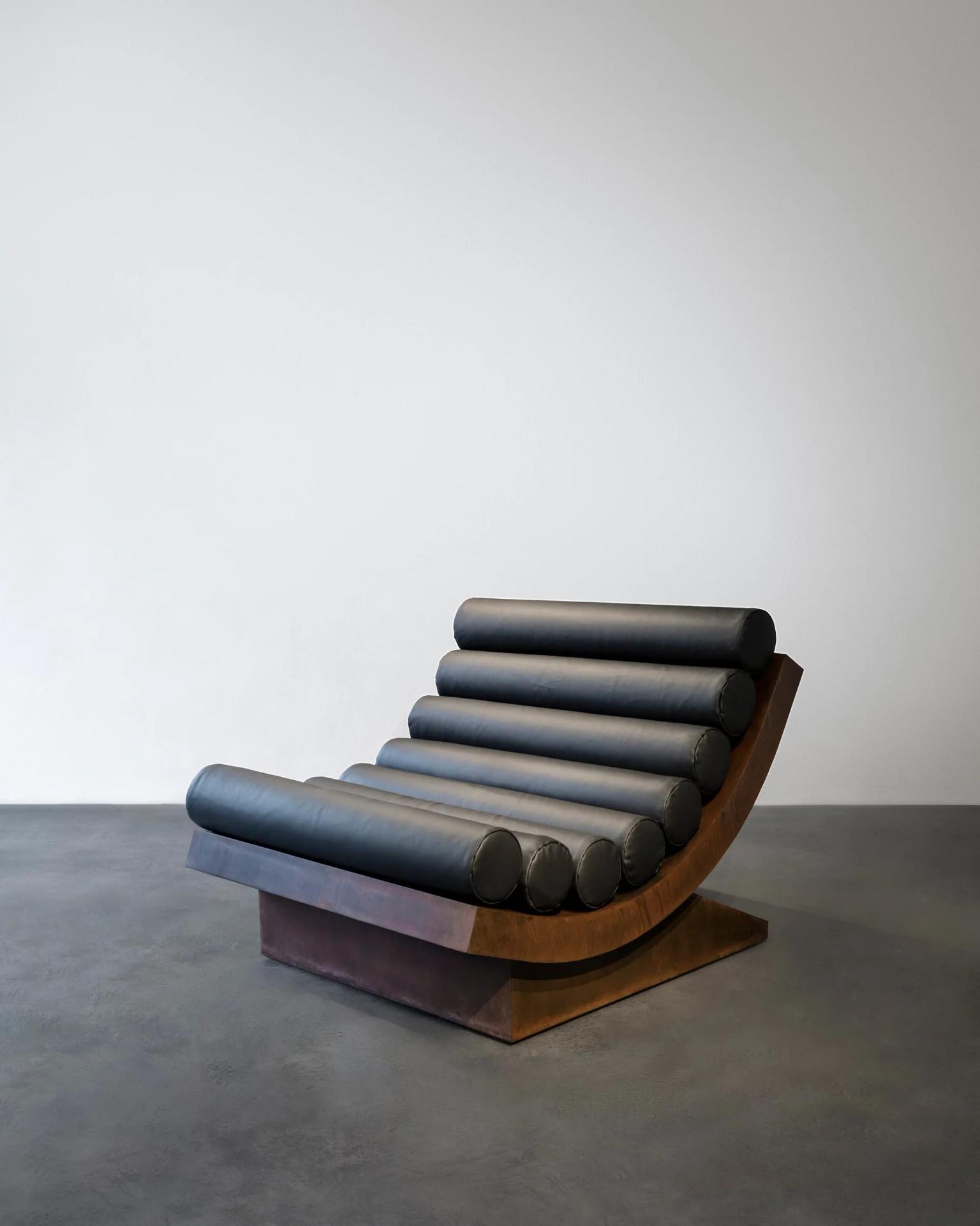
For Rick Owens, furniture is more than an exercise in function. It is an extension of a personal universe where architecture, sculpture, fashion and raw material converge. Best known for his dark, uncompromising approach to fashion, the American designer has developed an equally distinctive language in furniture, creating objects that feel ancient and futuristic, brutal and strangely elegant. His pieces occupy a space between the domestic and the monumental, challenging the familiar idea of what furniture should look like and how it should inhabit a room.
Owens began exploring furniture in 2005, initially creating bespoke pieces for his own home. What started as a way to shape his immediate surroundings gradually evolved into a substantial body of work. Drawing inspiration from figures such as Eileen Gray and Constantin Brâncuși, alongside the improvised architecture of California skateparks, he combines modernist clarity with primitive forms and an almost ritualistic sense of presence. His furniture does not simply furnish a space. It defines its atmosphere.

The Beauty of Raw Materials
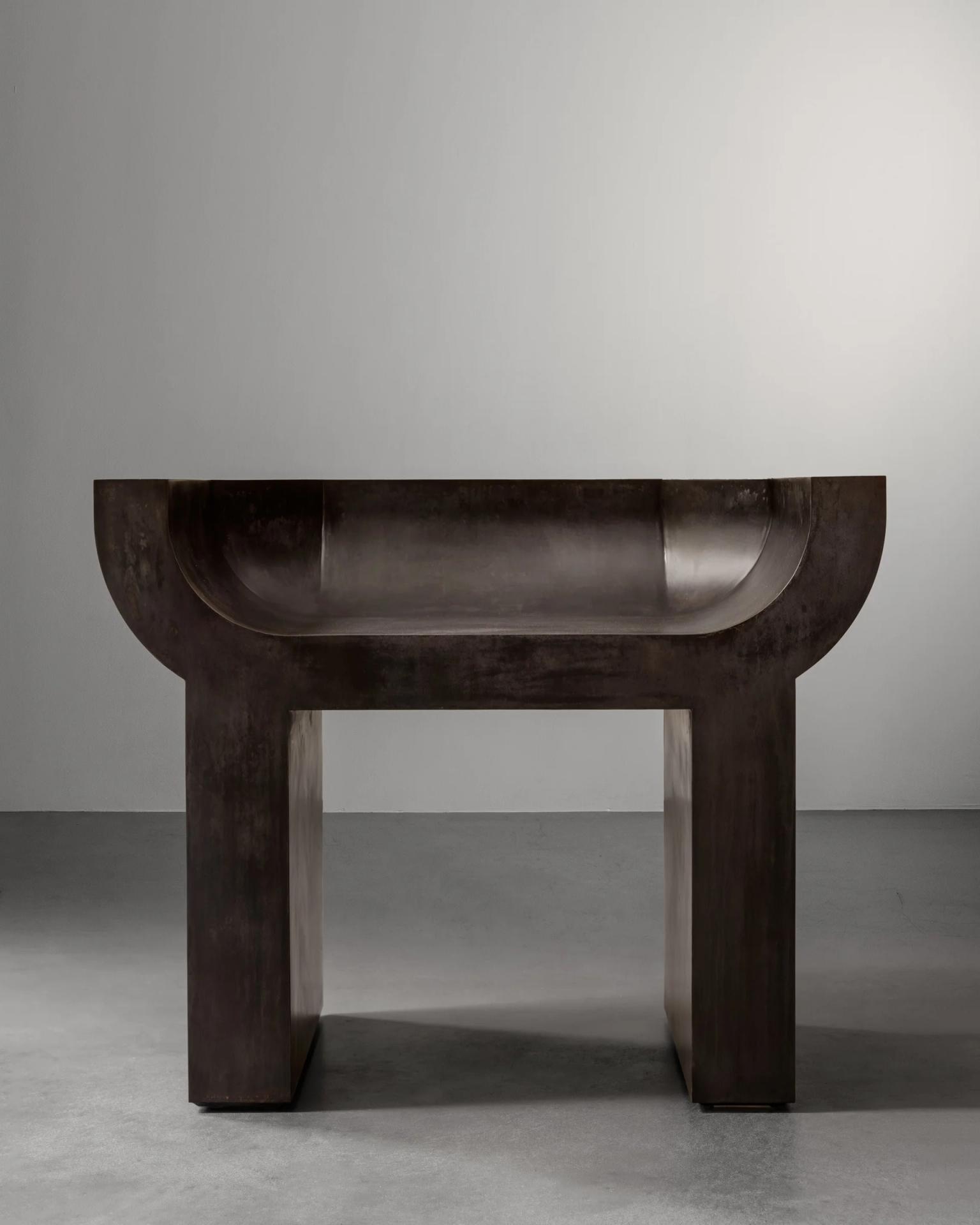
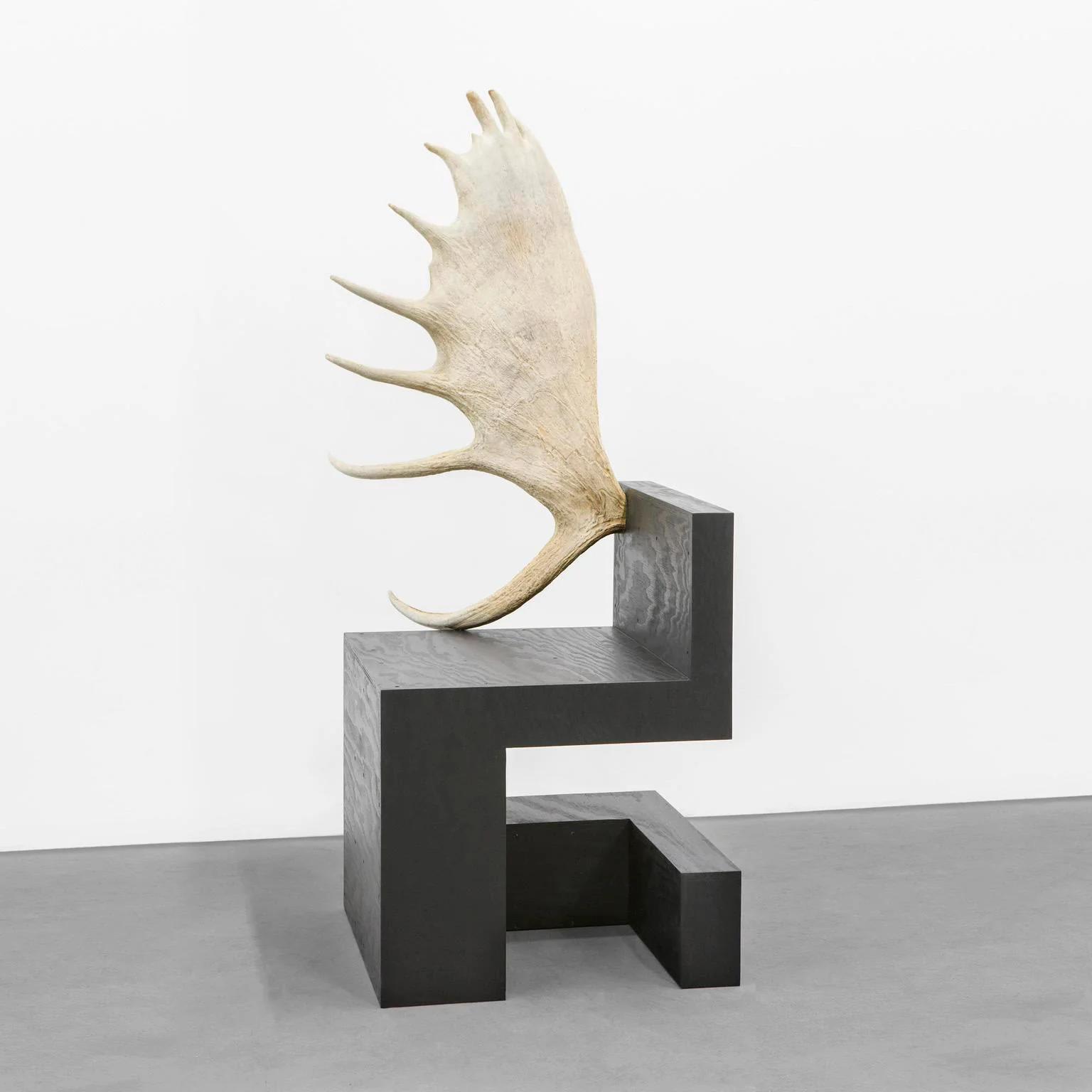
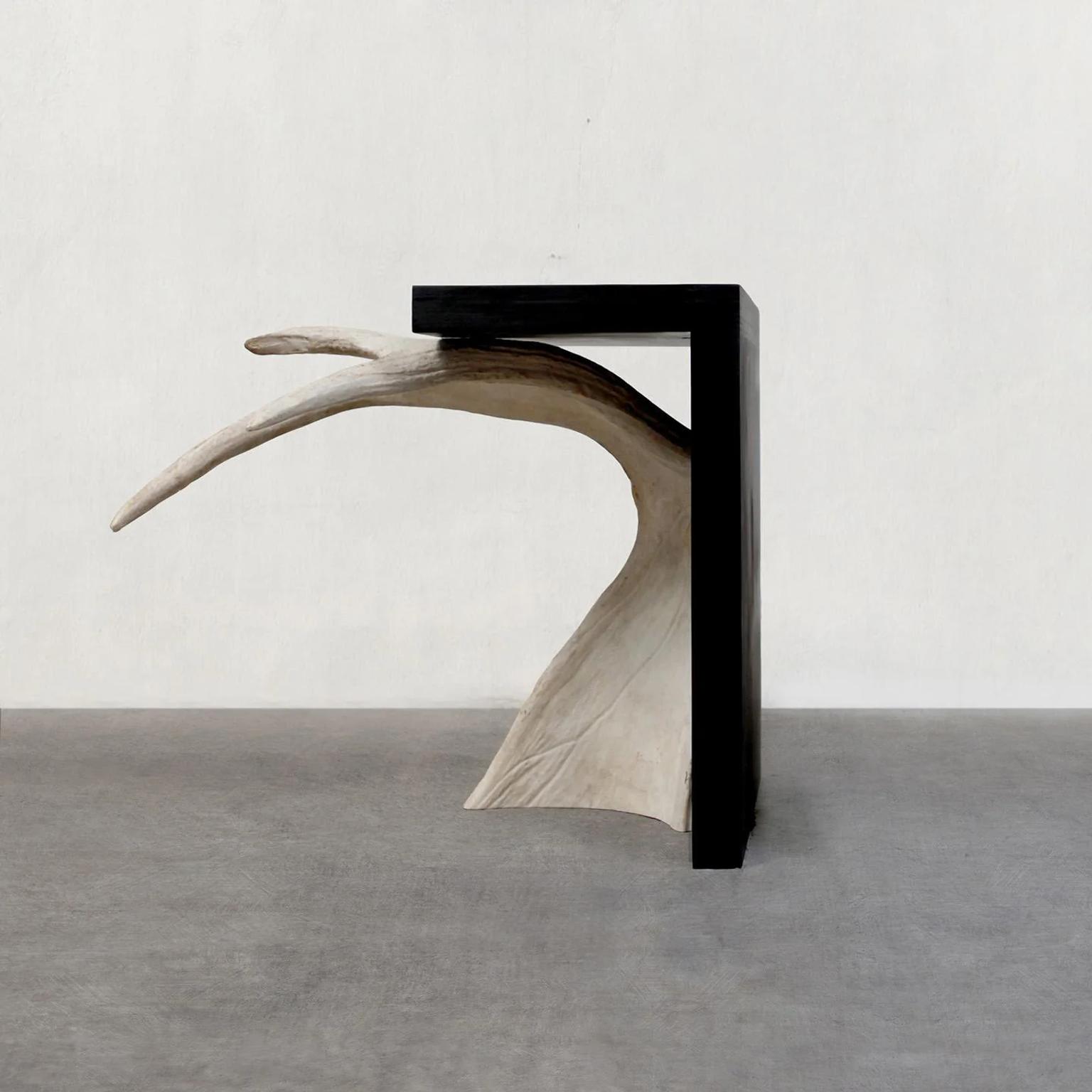
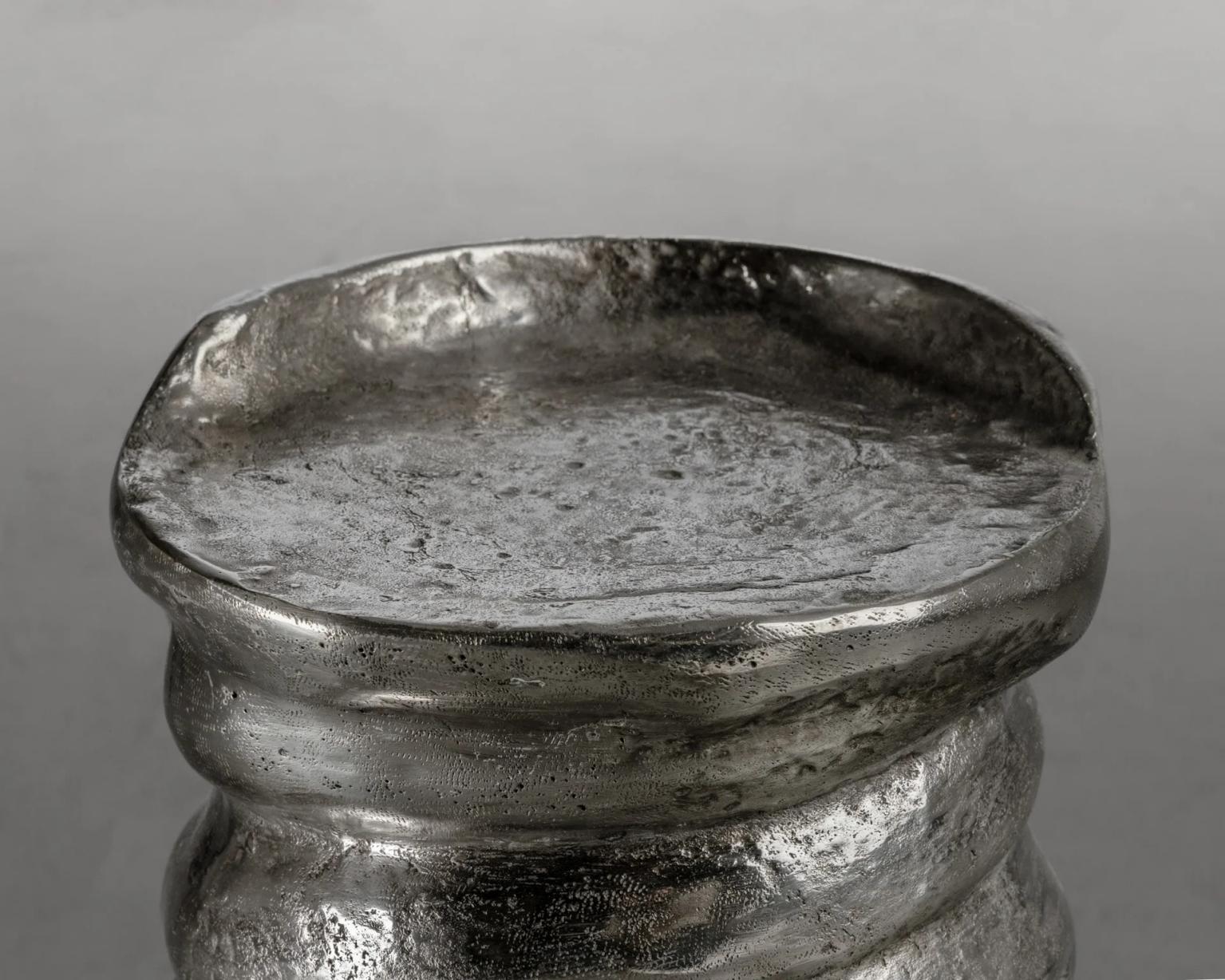
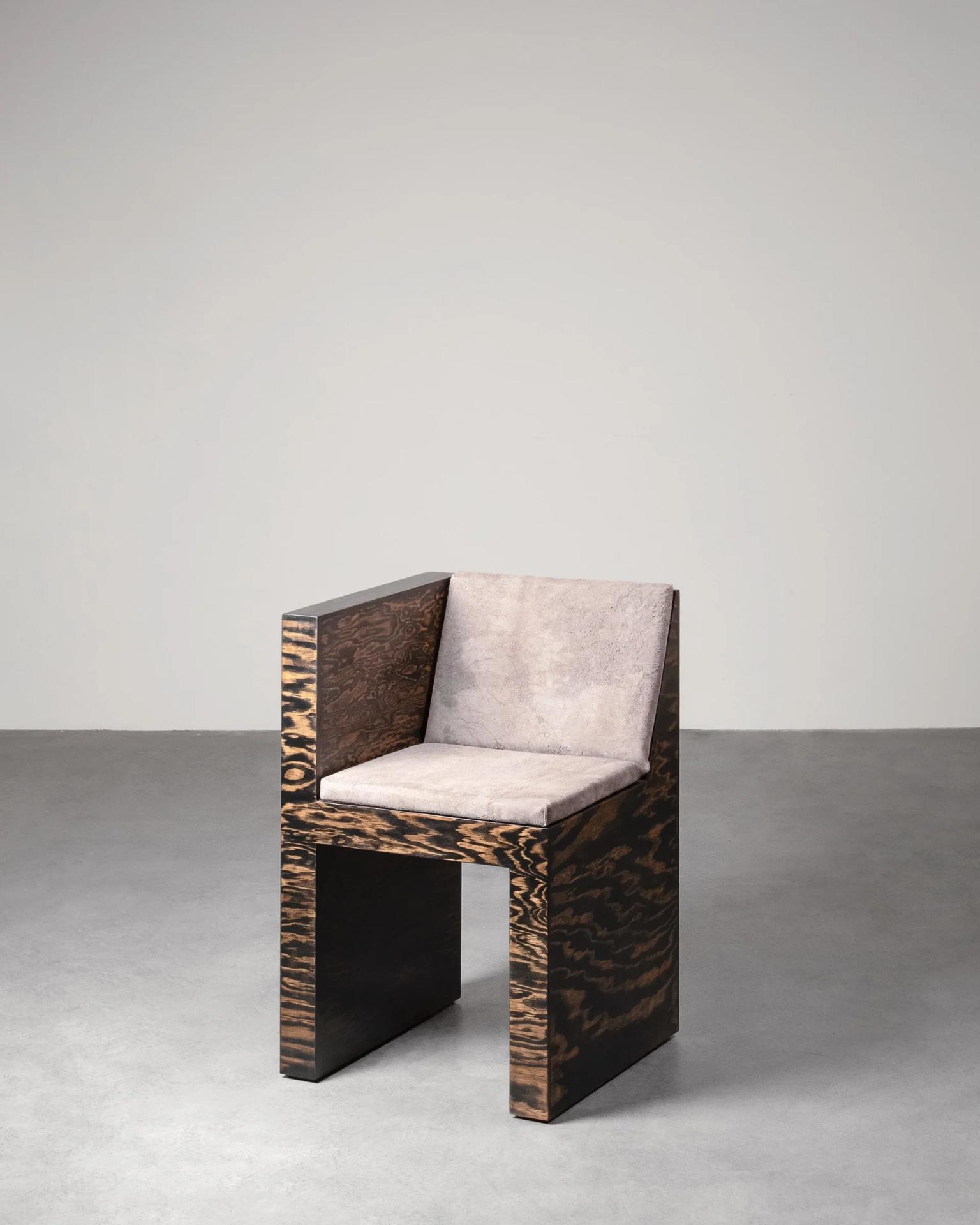
Materiality is central to Owens’ practice. Raw plywood, marble, alabaster, petrified wood, metal and antlers are transformed into objects that celebrate the tension between nature and human intervention. Rather than concealing the origins or imperfections of his materials, Owens allows their weight, texture and irregularity to become part of the design. Surfaces appear weathered, scorched or mineral like, carrying an impression of geological time.
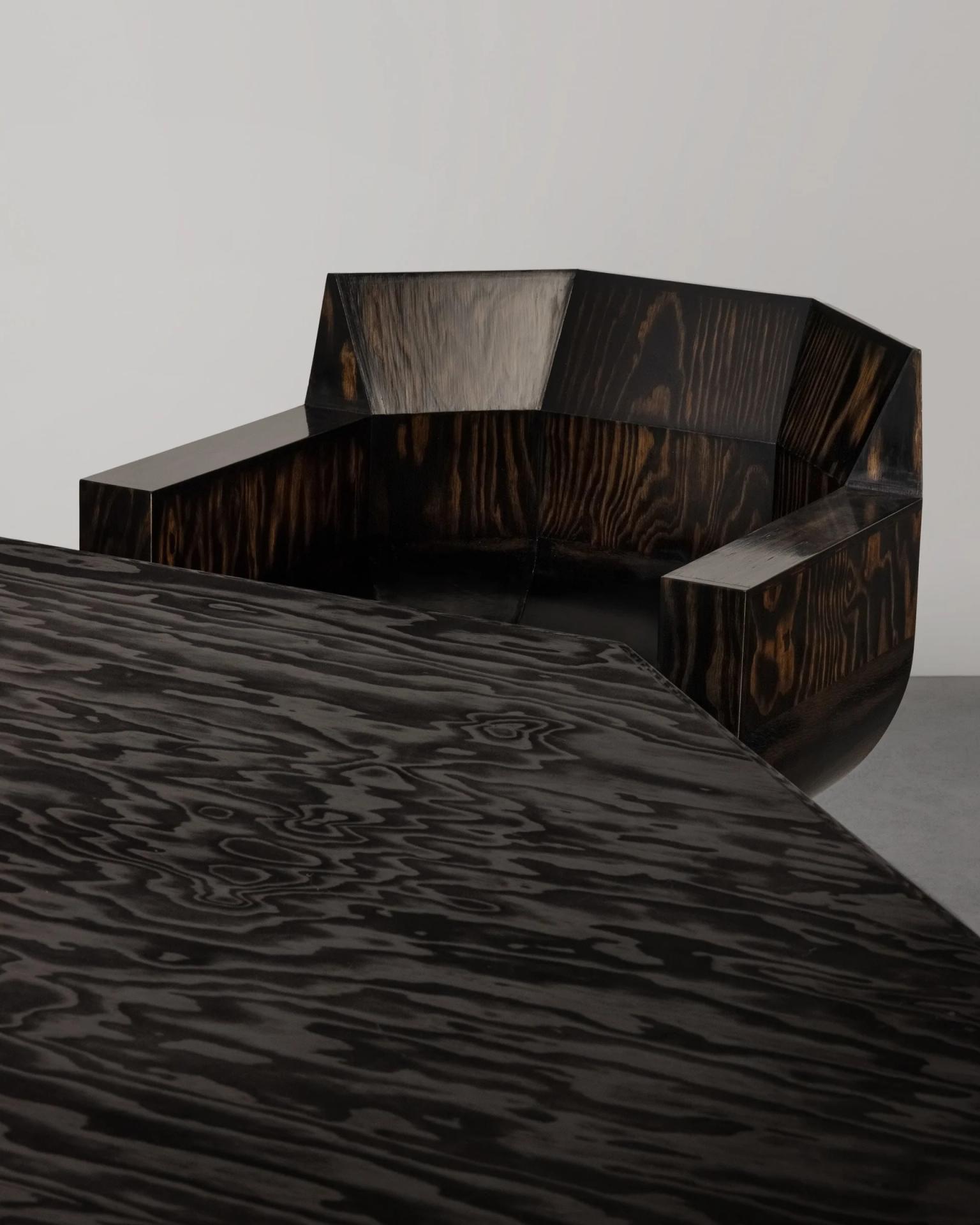

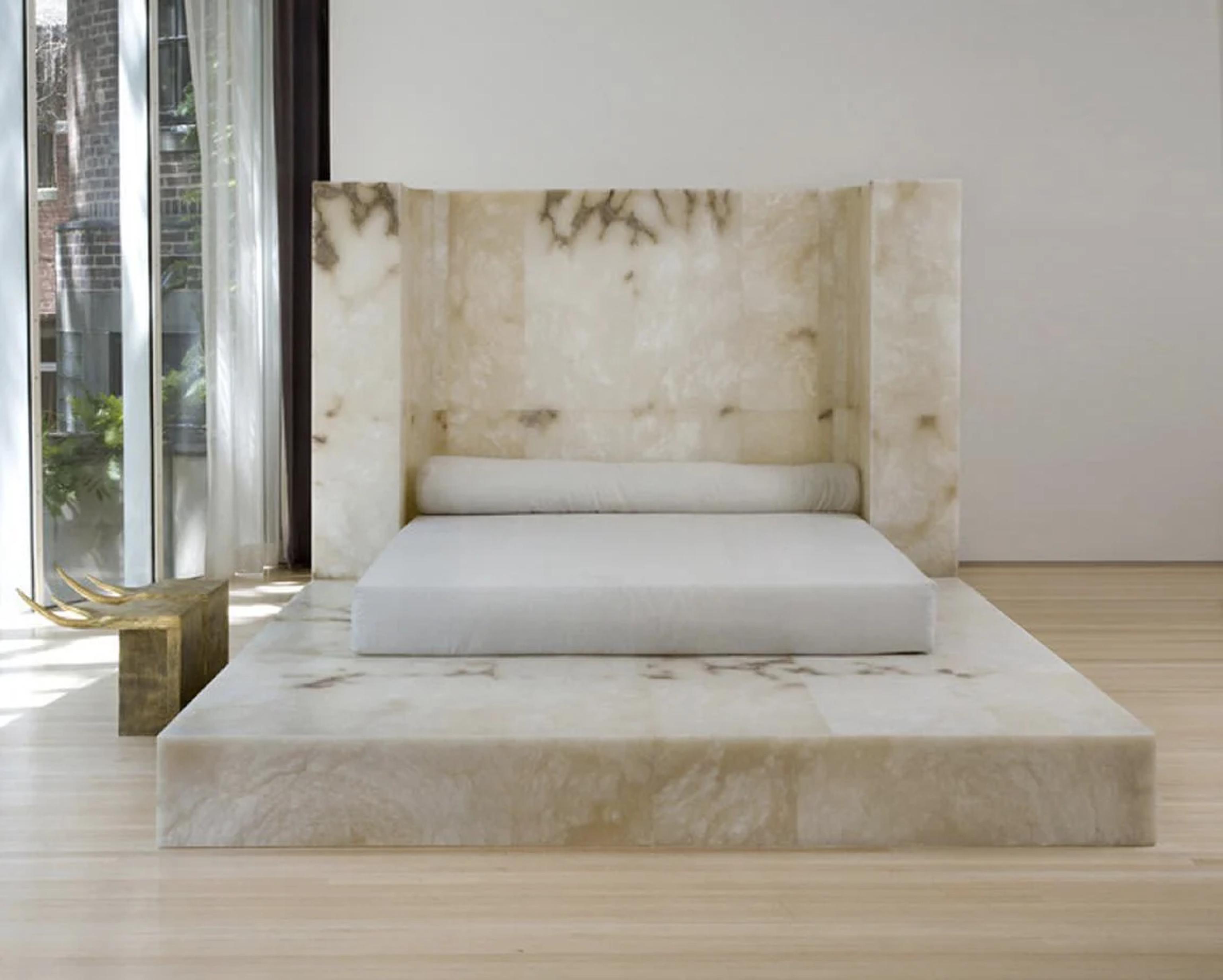
His palette is often reduced to black, white, grey and muted earth tones, allowing shape and texture to take precedence over decoration. Chairs, tables, beds and stools become architectural presences, defined by heavy volumes, unexpected proportions and sculptural silhouettes. The Curial chair, with its ceremonial character, and the Antler Bed, which brings an almost primordial quality to the bedroom, suggest objects that might belong as naturally to an ancient sanctuary as to a contemporary interior.
In more recent works, oxidised steel and rust introduce another dimension to this material language. Corrosion becomes an aesthetic in its own right, revealing how surfaces change and evolve over time. Imperfection is not something to be corrected, but something to embrace. The resulting objects possess a raw physicality that feels both uncompromising and deeply considered.

Objects Built to Endure
The collaboration between Owens and his partner Michèle Lamy has been fundamental to the development of the furniture collection. Together, they approach design as an ongoing exploration of form, craftsmanship and atmosphere, working with skilled artisans to realise pieces that often sit closer to collectible art than conventional industrial design. Their process values experimentation and the possibilities of materials pushed beyond their expected limits.
Unlike fashion, which moves through seasonal cycles, furniture carries a different relationship with time. It becomes part of the architecture of everyday life, accumulating associations and eventually becoming part of a personal or cultural history. This permanence gives Owens’ furniture a particular gravity. Its visual language may be confrontational, yet the objects are designed to be lived with, touched and experienced.
Ultimately, Rick Owens creates furniture that resists easy categorisation. It is functional without being ordinary, luxurious without relying on polish, and sculptural without abandoning its relationship with the human body. Each piece feels like a fragment of a larger world, one in which beauty emerges from darkness, material honesty and the powerful simplicity of form. Rather than following trends, Owens builds objects that seem to exist outside them, inviting us to reconsider not only the furniture around us, but the emotional and architectural character of the spaces we inhabit.