
HGA Studio
Finca Talluca
- ArchitectHGA Studio
- PhotographerPeter Tanevski and Anson Smart
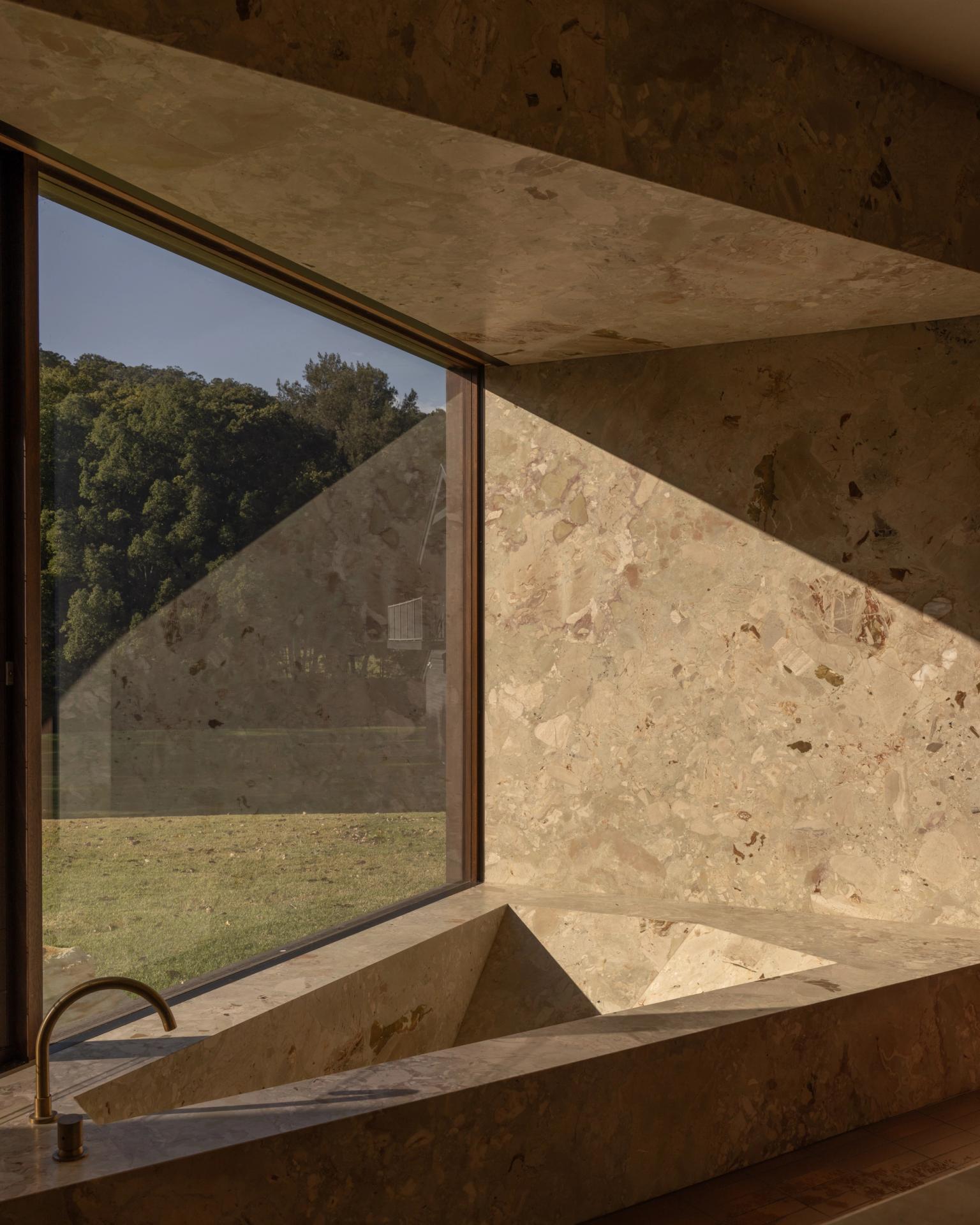
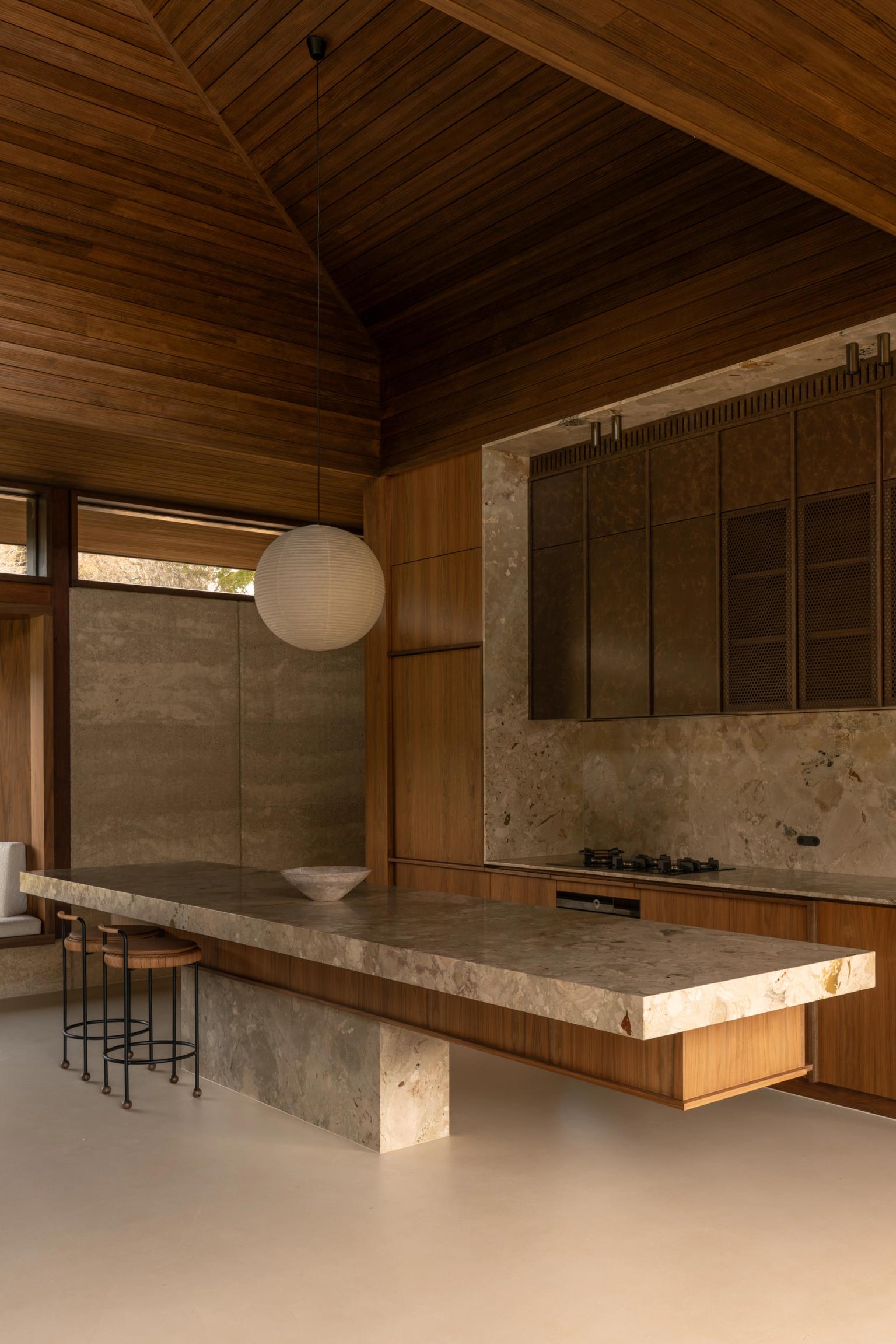
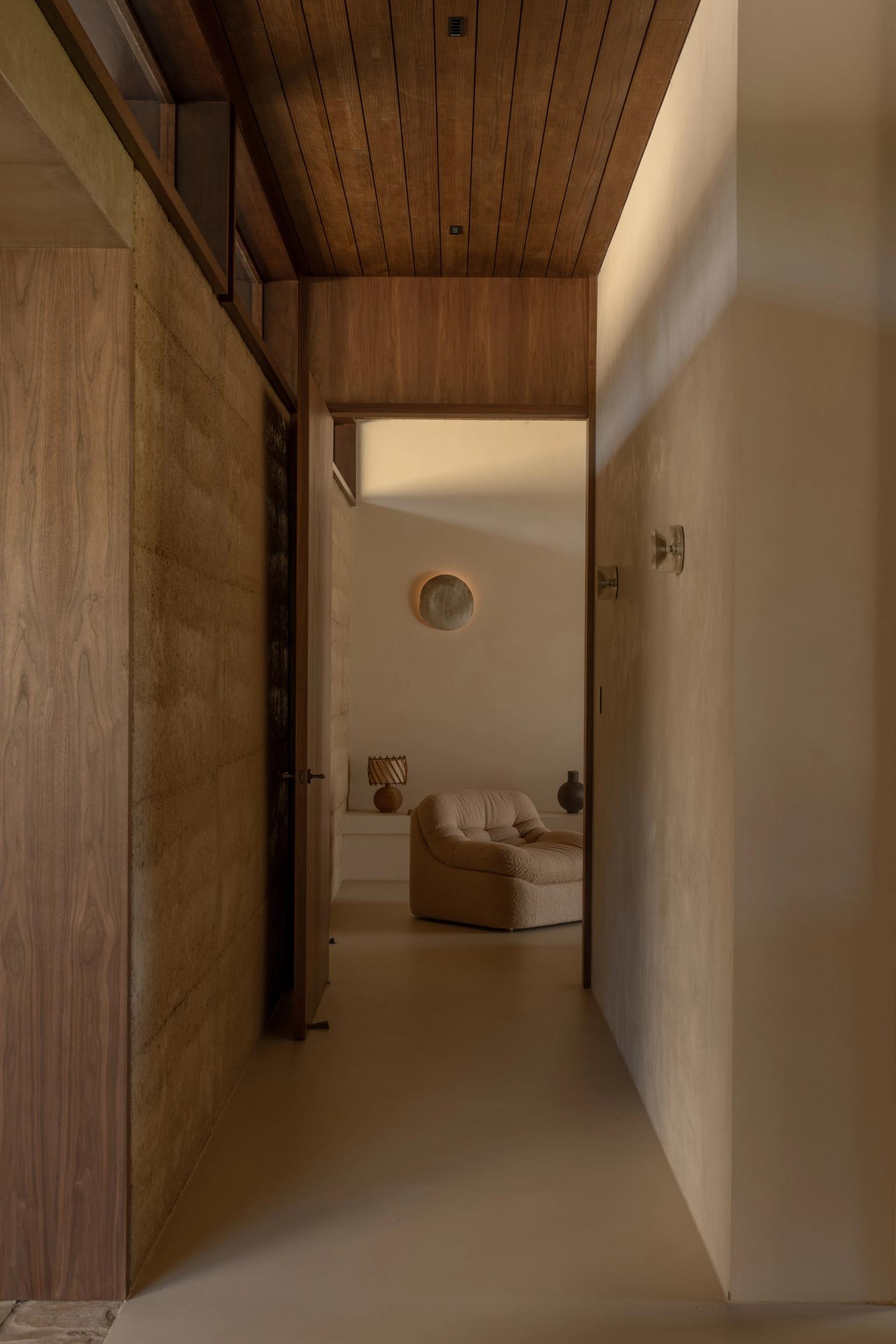
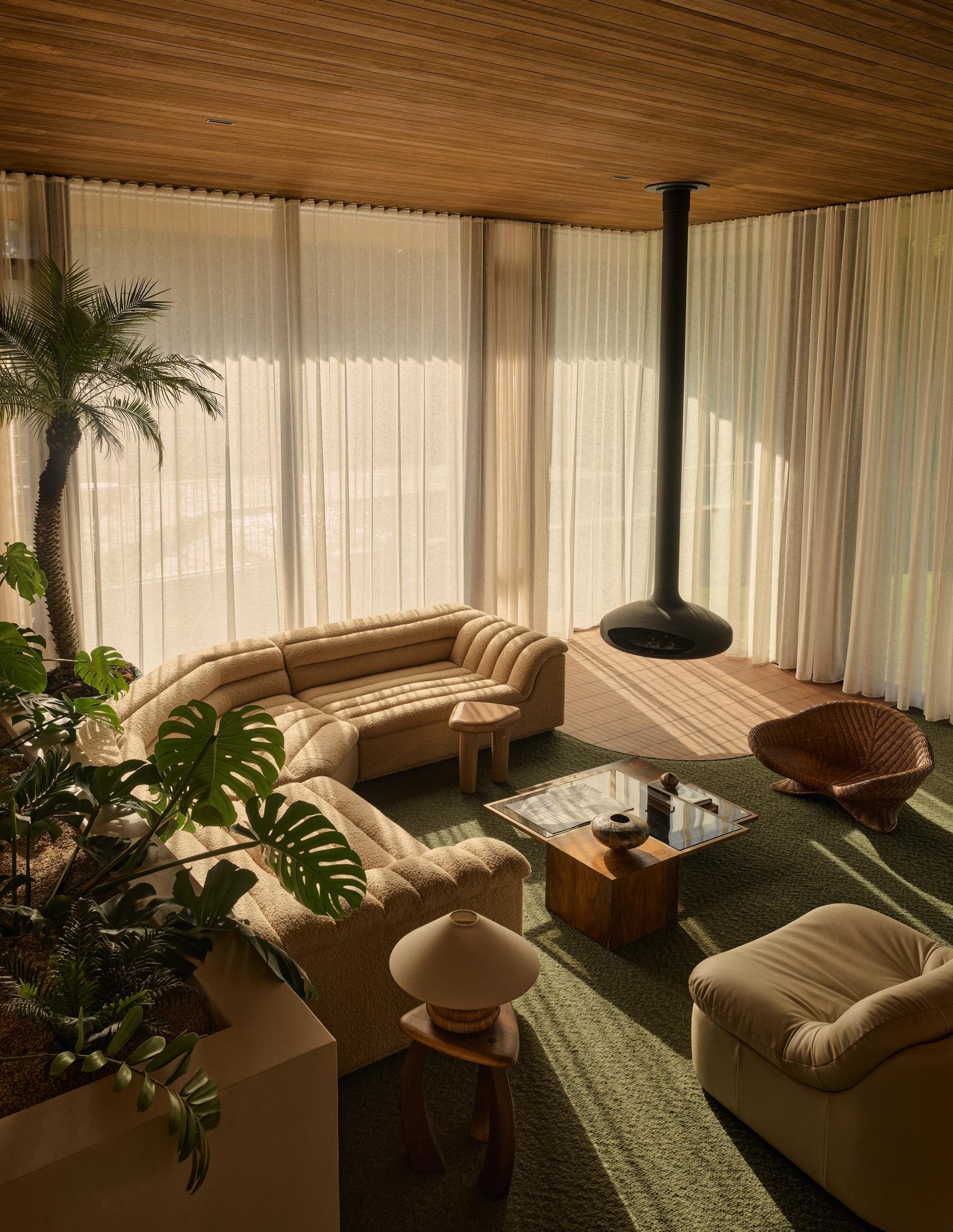
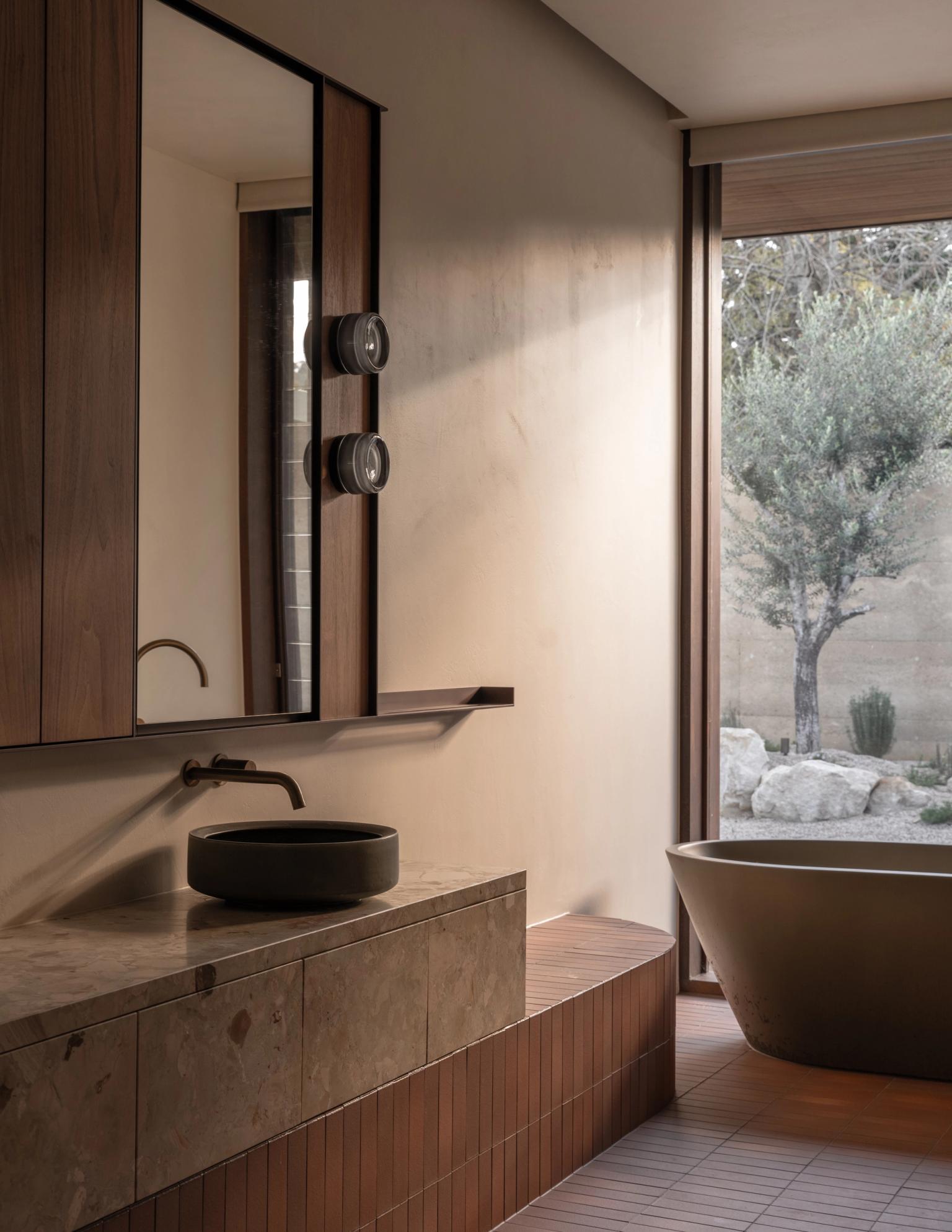
Lara Joy I admire how the space combines elements of Australia’s landscape and flora with bold architectural gestures and a mid-century–inspired atmosphere. Natural materials, rammed earth, wood, textured stone, and terracotta, are paired with soft, curved forms, creating a warm and inviting interior.
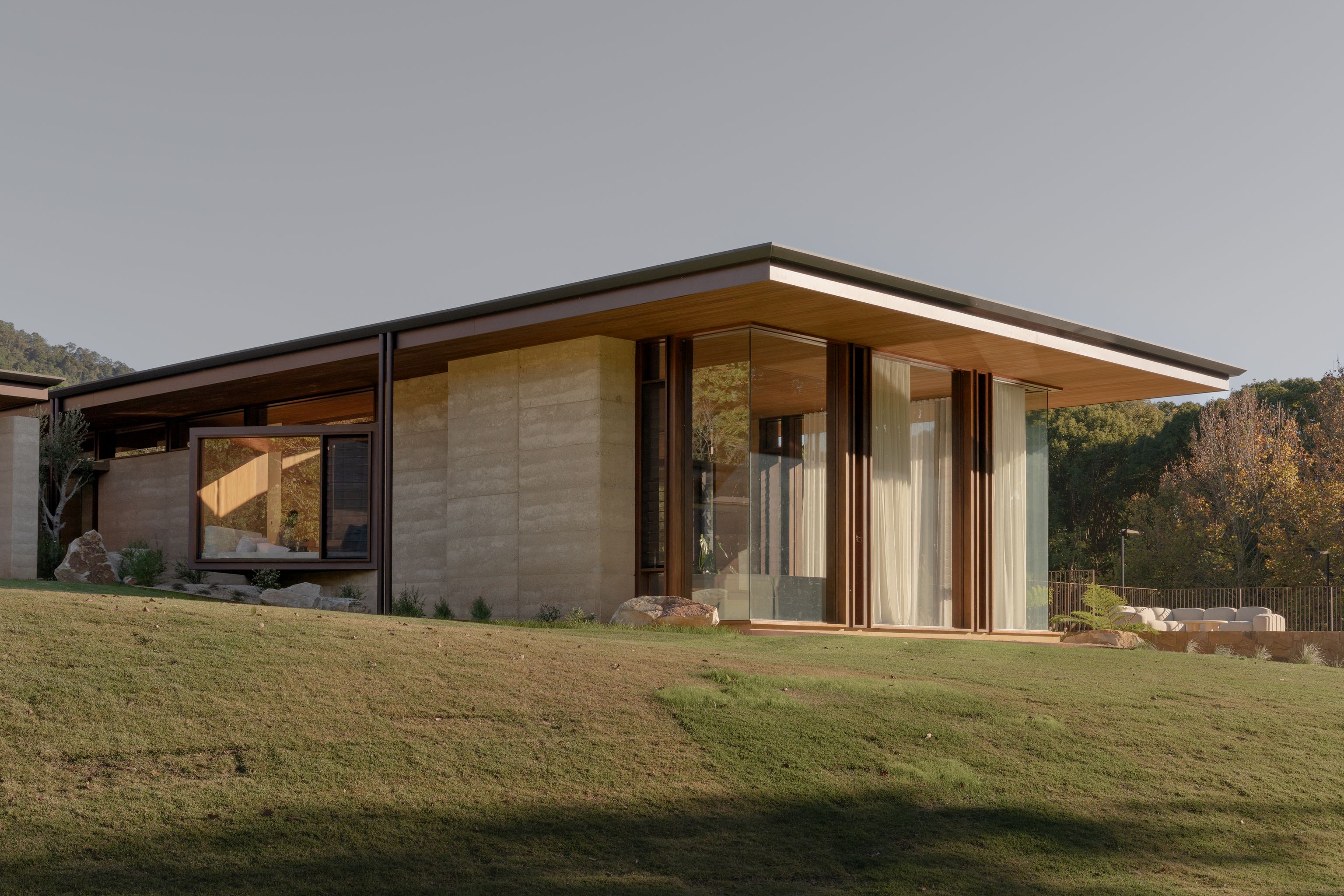

River Landscape as the Starting Point
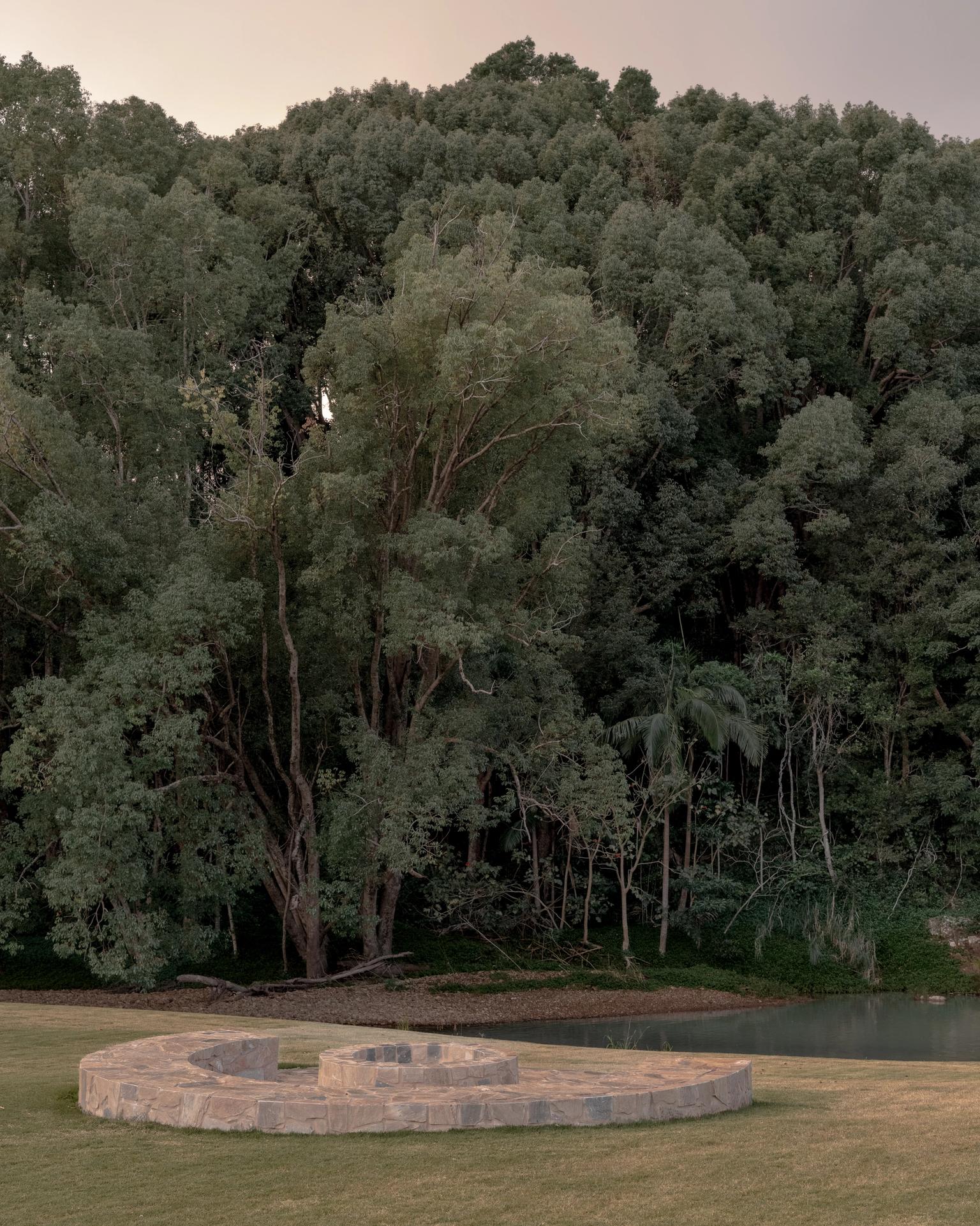
Finca Talluca by the award-winning Byron Bay architects, HGA Studio, is set directly on the banks of Currumbin Creek on Yugambeh Country in Australia, where the house is designed as a response to the slow movement of water, dense vegetation, and shifting ground levels. Rather than treating the site as a flat plot for construction, the project reads it as a layered landscape that already contains its own order. The building stretches along the edge of the river and gradually opens toward it, allowing the water to become a constant presence in daily life. At the same time, the house carefully protects itself from the more public side of the site, creating a quiet balance between exposure and retreat. This dual orientation sets the tone for the entire project: a home that is always negotiating between openness to the landscape and a need for enclosure.
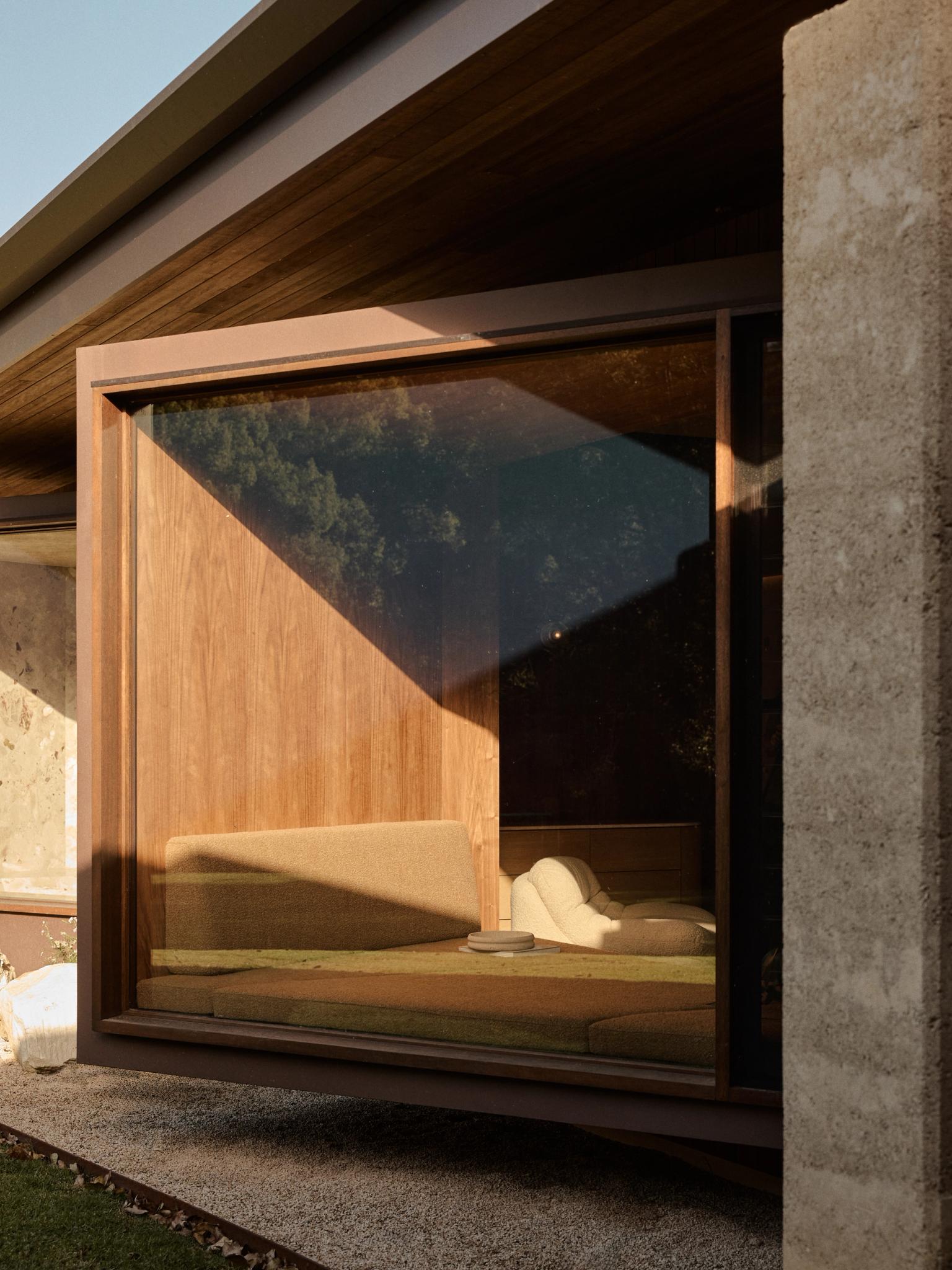

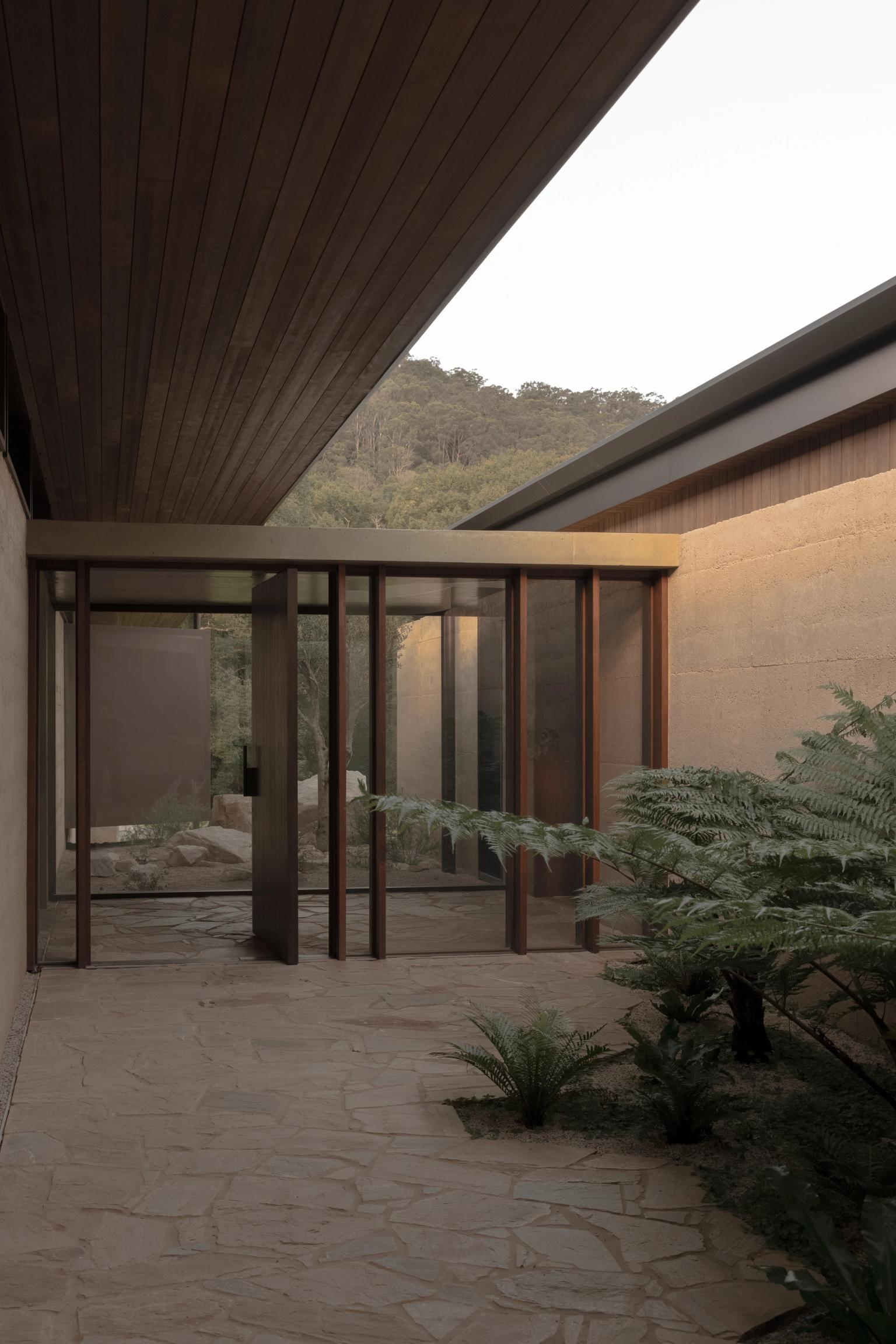

Rammed Earth as Structure and Atmosphere
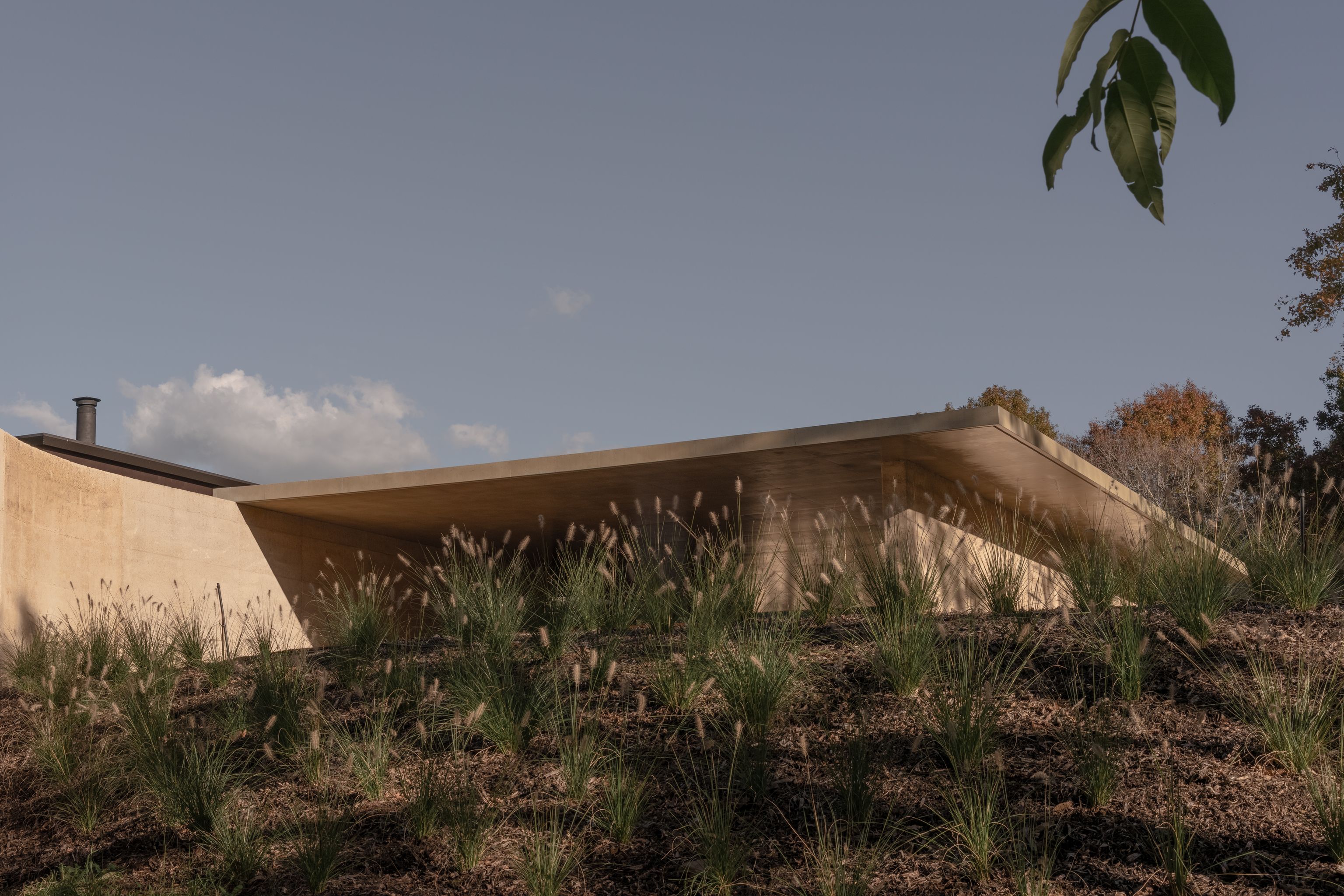
The most defining element of Finca Talluca is the use of thick rammed earth walls, which act as structural “spines” running through the house. Designed by HGA Studio, these walls are not just construction elements but the main spatial organisers of the project. They divide, support, and guide movement while also giving the house its material identity. Their layered texture reflects the geology of the riverbanks outside, as if the building has been formed from compressed soil over time rather than newly constructed. As the walls shift from the public edge of the site toward the interior, they increase in density and enclosure, creating a clear gradient of privacy. This allows the architecture to feel both grounded and directional at the same time, where the earth itself becomes the logic behind how the house is experienced.
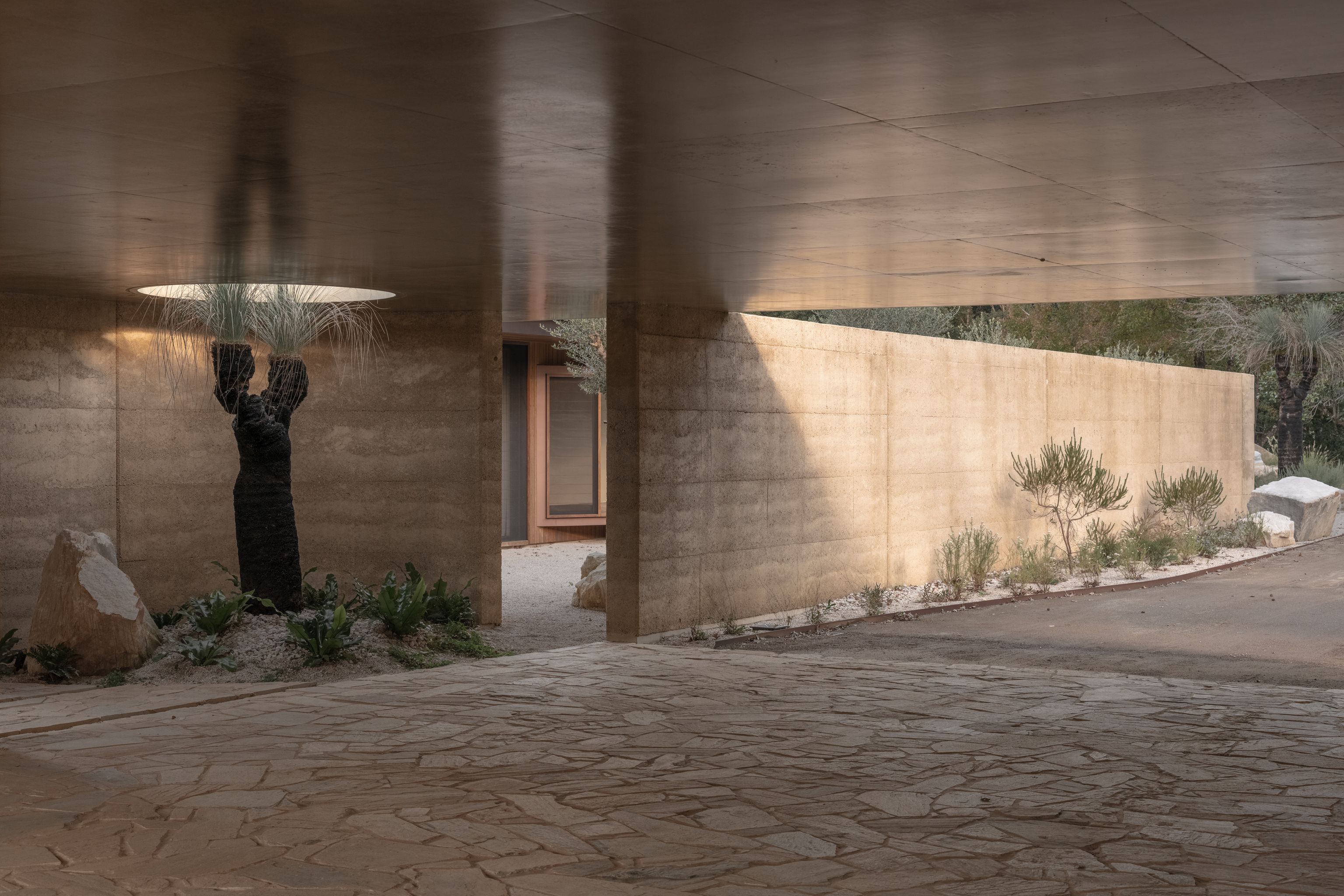

A Fragmented Plan
Instead of a single continuous interior, the house is organised as a T-shaped sequence of spaces that unfold gradually through courtyards, corridors, and open rooms. Movement is never direct; it is broken into smaller transitions that constantly shift between compression and release. Private bedrooms are placed either toward enclosed gardens or facing the river, while shared living areas extend outward toward the creek and step down with the terrain. These shifts in level and enclosure create a sense that the house is not simply walked through, but slowly discovered. Timber-lined connectors between the heavier rammed earth volumes soften the transitions and make the sequence feel less like a rigid plan and more like a lived landscape of connected moments.


Precision Hidden Inside Heaviness
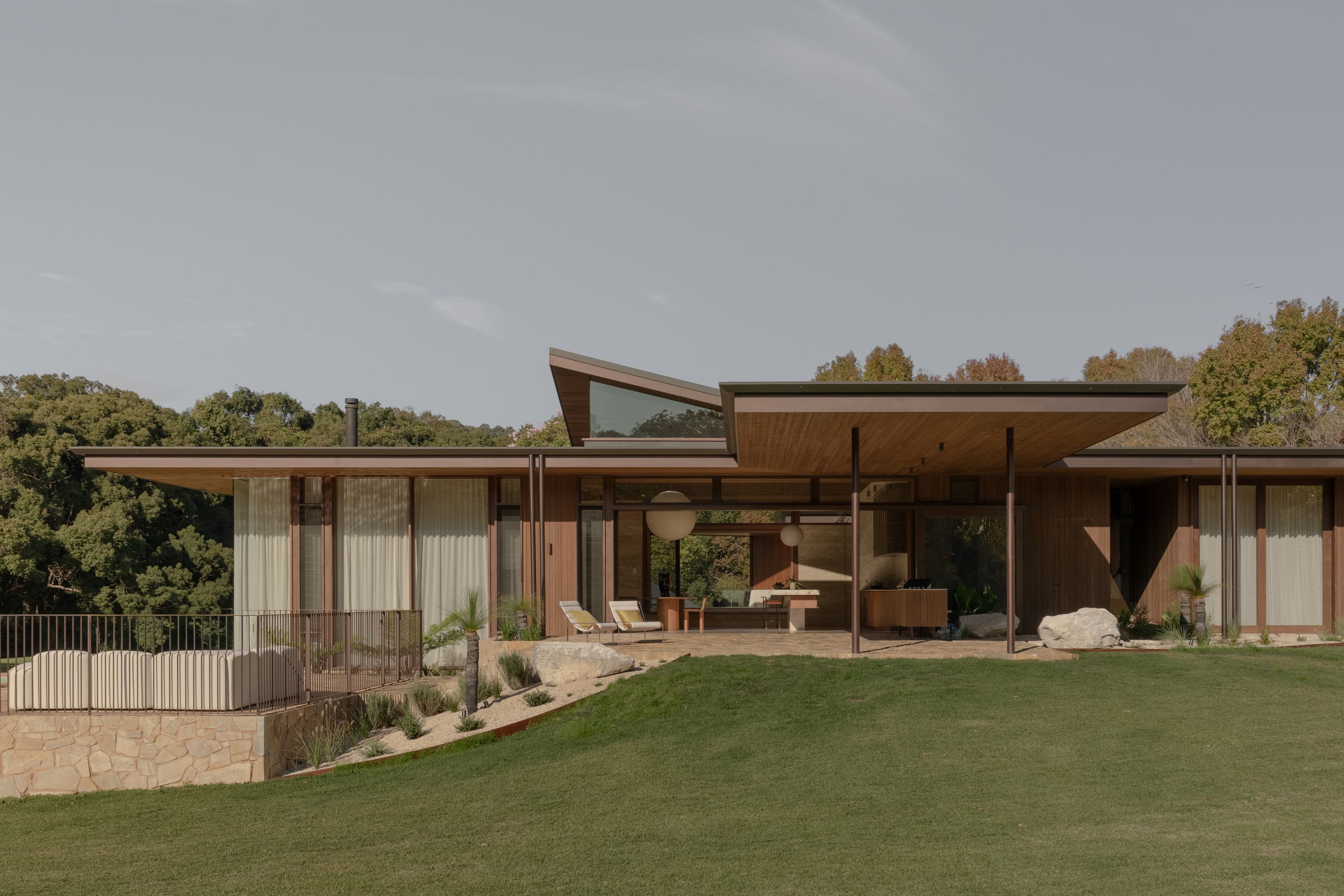
Although the material language of Finca Talluca feels heavy and grounded, the project relies on a high level of technical precision that is deliberately kept invisible. One of the most striking examples is the kitchen and dining area, where a glazed corner appears to fold out from the roof structure without visible support. Behind this simplicity is a complex steel engineering solution that allows the structure to disappear into the architecture rather than define it. This approach is repeated throughout the house, where structural decisions, services, and detailing are carefully integrated so that nothing interrupts the calm reading of the spaces. The result is a building that feels effortless, even though it is shaped by highly controlled construction logic.


Material Contrast as a Tropical Condition
Across the entire project, HGA Studio works with a balance between heavy and light materials to respond to the tropical climate and the surrounding landscape. Rammed earth and stone anchor the house to the ground, while timber and large glass openings introduce softness, warmth, and transparency. The interiors extend this dialogue by allowing views, breezes, and vegetation to constantly enter the space, so that the boundary between inside and outside is never fixed. Rather than aiming for a purely minimal or purely rustic expression, the house combines both into a layered domestic environment where architecture and landscape are continuously intertwined. This creates a home that feels stable but never closed, structured but still deeply connected to its natural surroundings.