
b720 Fermín Vázquez Arquitectos
Encants Market
- Architectb720 Fermín Vázquez Arquitectos
- PhotographerRafael Vargas
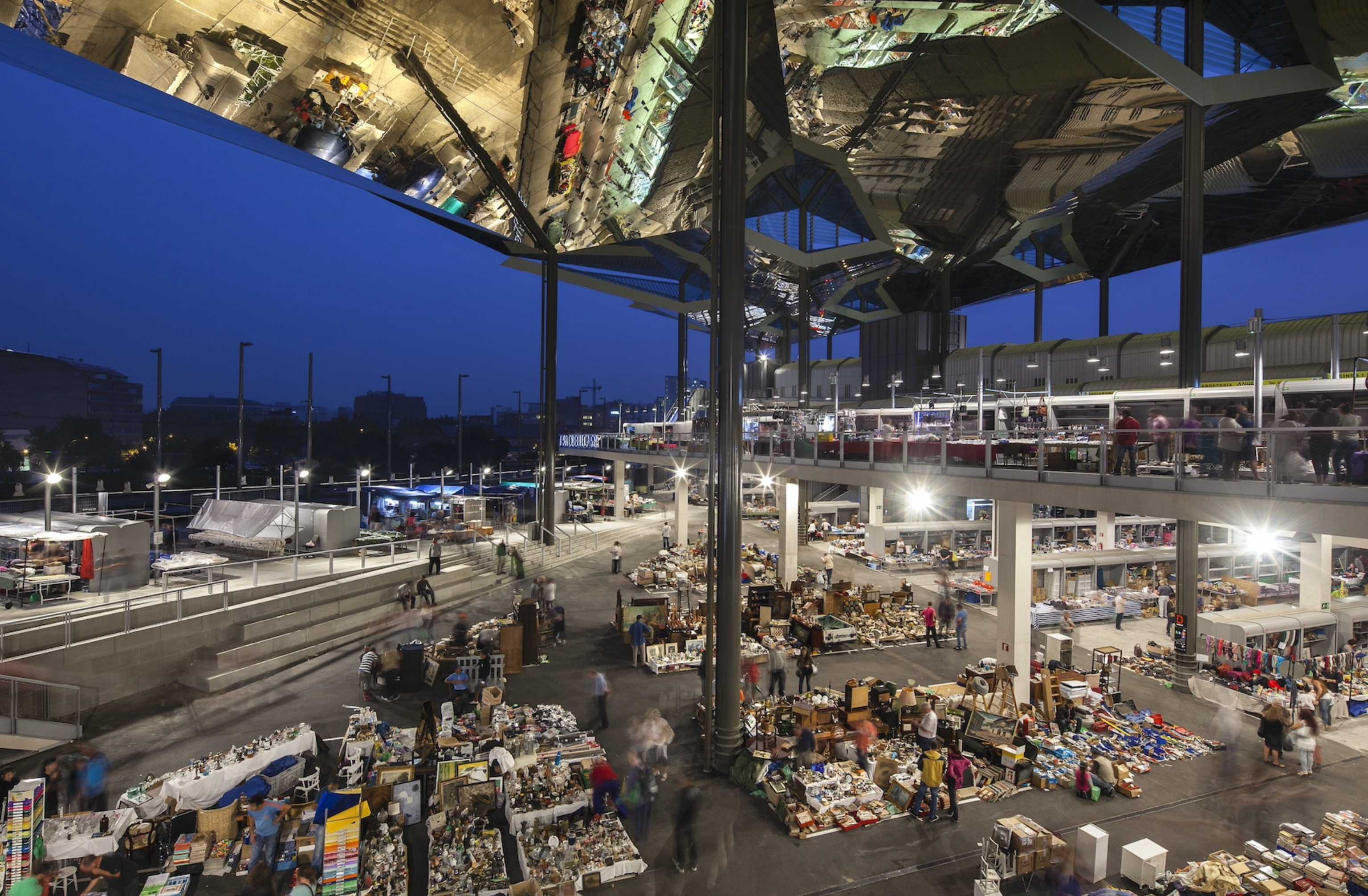
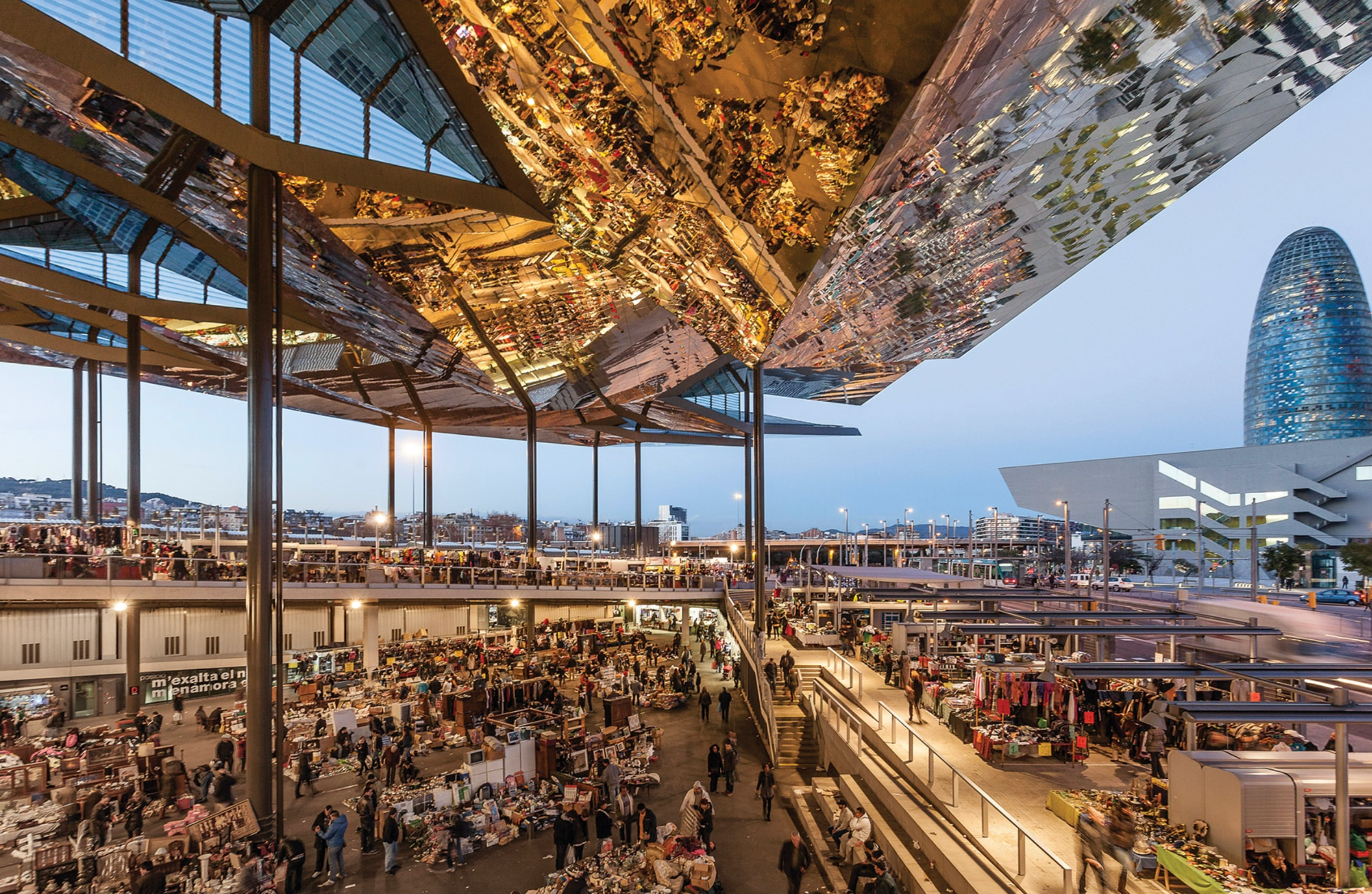
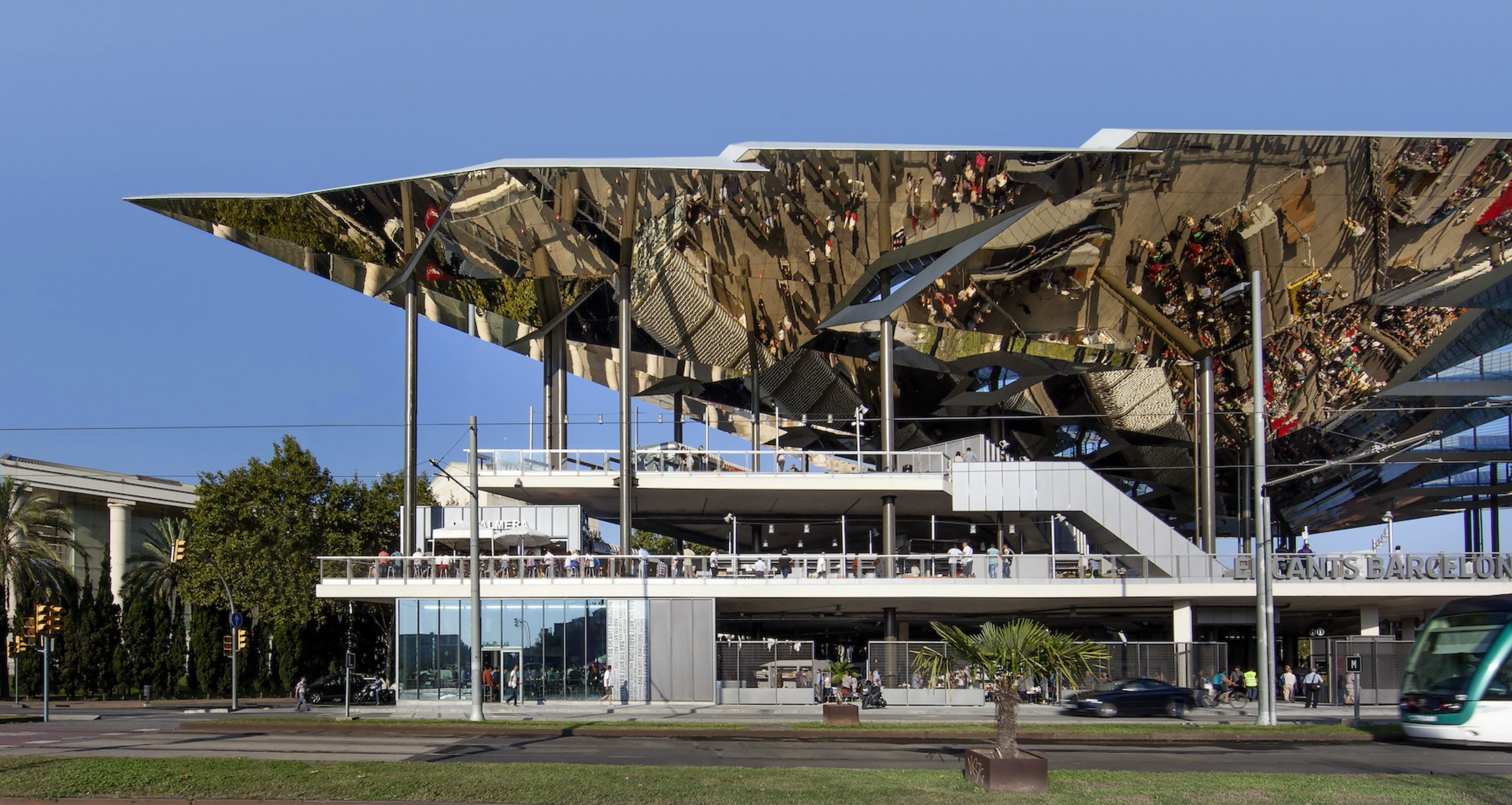
SHOHEI SHIGEMATSU The design creates a permanent presence for the market without compromising its integration with the city. A continuous plaza fluidly extends the pedestrian shopping experience. The faceted, reflective canopy reconstitutes scenes of city life as a kaleidoscopic backdrop.

A Market That Reflects the City
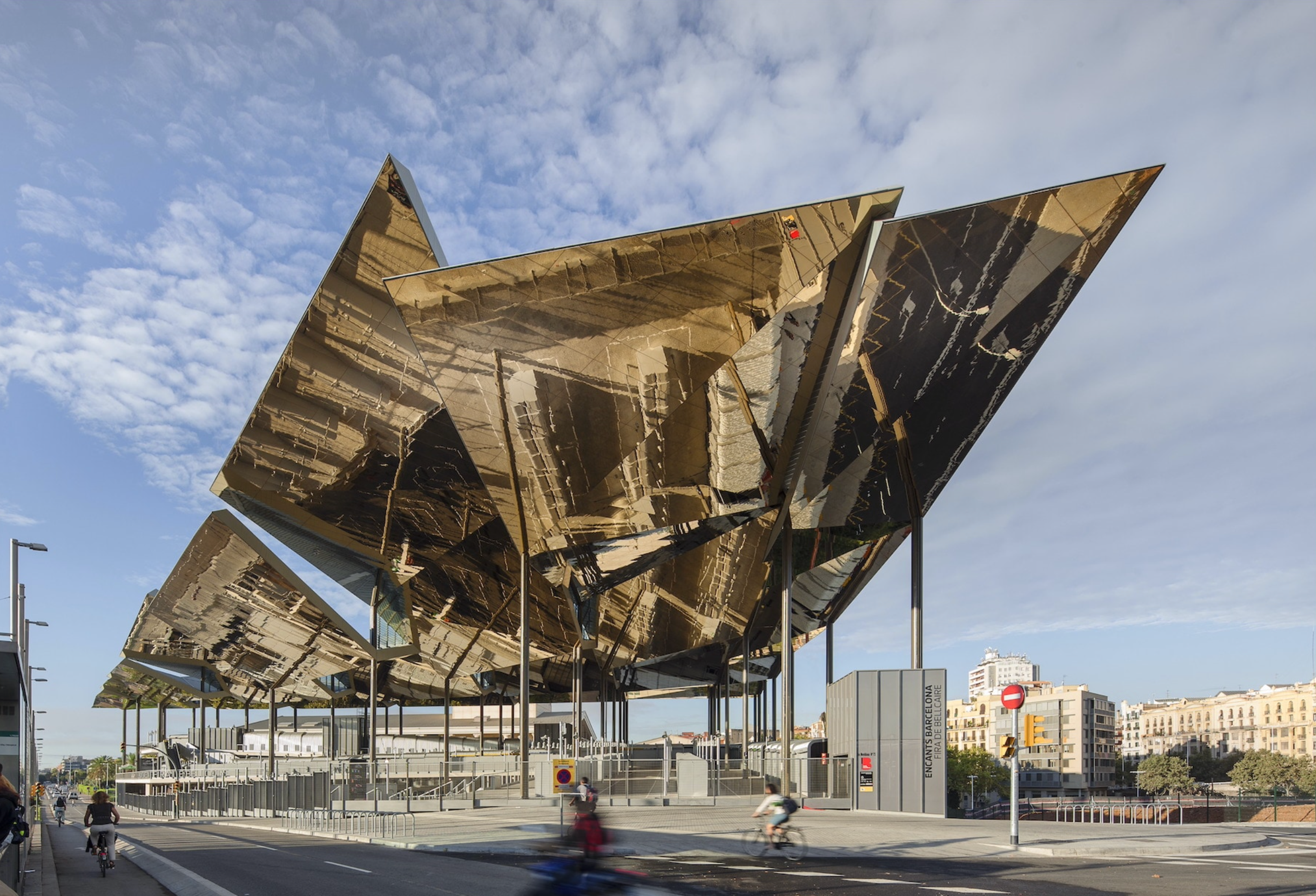
In Barcelona, a city long defined by its openness and layered urban life, the renewed Encants Market emerges as both continuation and reinvention. Designed by b720 Fermín Vázquez Arquitectos, the project replaces a deteriorated infrastructure with a vibrant civic space that repositions one of Europe’s oldest flea markets within the evolving fabric of the city. Set beside Plaça de les Glòries, it operates as a mediator between infrastructures, neighborhoods, and one of Barcelona’s primary urban axes, the Avenida Meridiana.
The market is not conceived as a closed building but as an extension of the street itself. Its architecture dissolves boundaries, embracing the spirit of traditional open-air trading while introducing a contemporary spatial logic. Here, commerce unfolds as movement, encounter, and improvisation rather than fixed retail order.

An Architecture of Continuity and Exchange
At the heart of the project lies a simple yet powerful idea: continuity with public space. The ground plane folds and rises, erasing the conventional distinction between inside and outside. This gesture transforms circulation into experience, allowing visitors to drift through an uninterrupted sequence of stalls arranged along a gently sloping promenade. The absence of barriers encourages adaptability, enabling vendors, buyers, and passersby to shape the market dynamically each day.
Rather than imposing a rigid structure, the design amplifies the unpredictability inherent in second-hand trade. Auctions, chance discoveries, and informal exchanges find their place within a spatial system that prioritizes openness and fluidity. The market becomes less a building and more an urban condition, where architecture supports, rather than controls, the life within it.

The Golden Canopy and the Theatre of Everyday Life
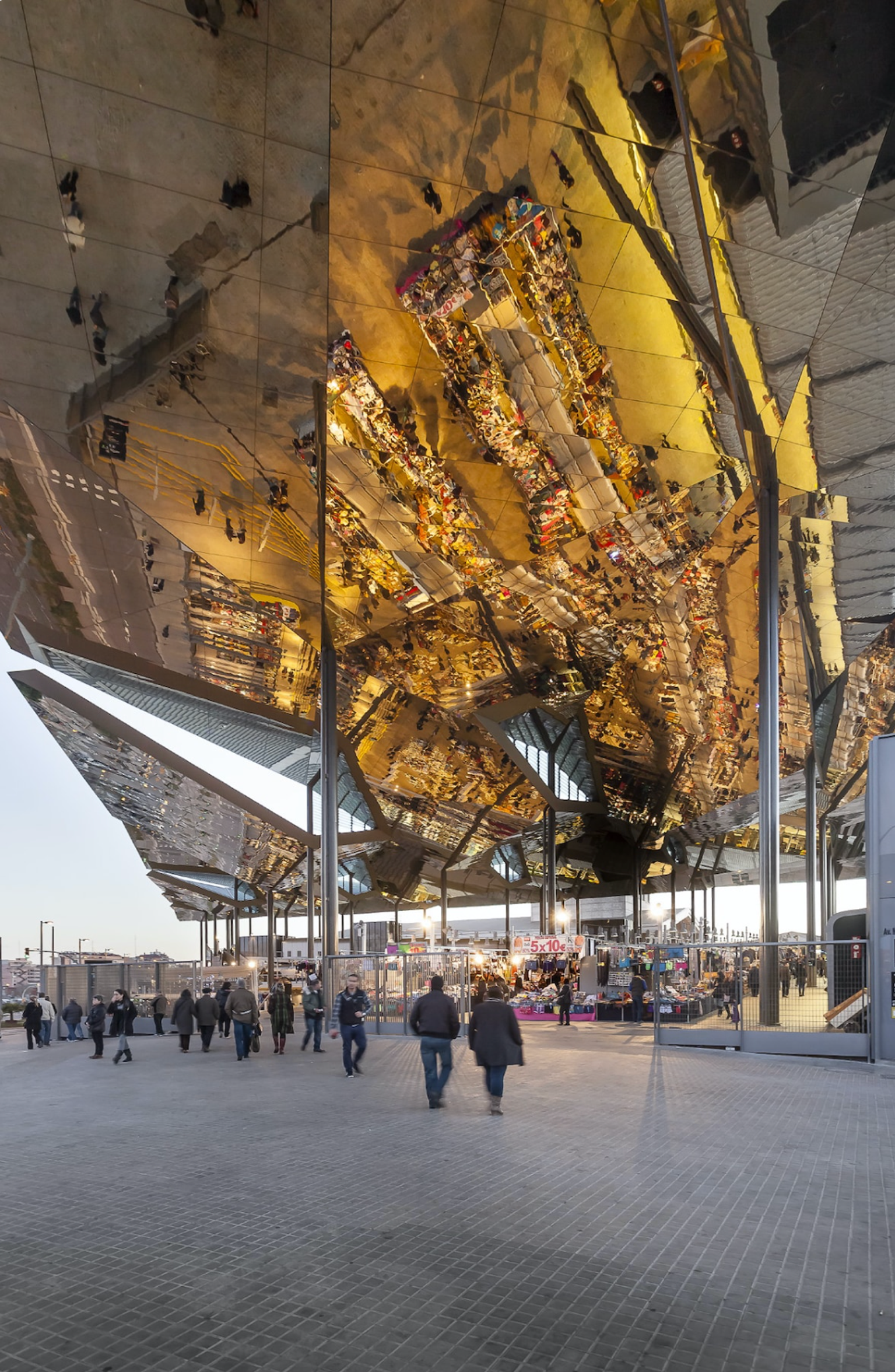
If the ground dissolves into the city, the roof gives the market its identity. A vast, hovering canopy stretches across the site, open on all sides and extending to the edges of surrounding sidewalks. Its underside, clad in a faceted golden surface, acts as a monumental mirror. It reflects fragments of the city, the movement of people, and the constant activity below, multiplying the energy of the market into a shifting kaleidoscope.
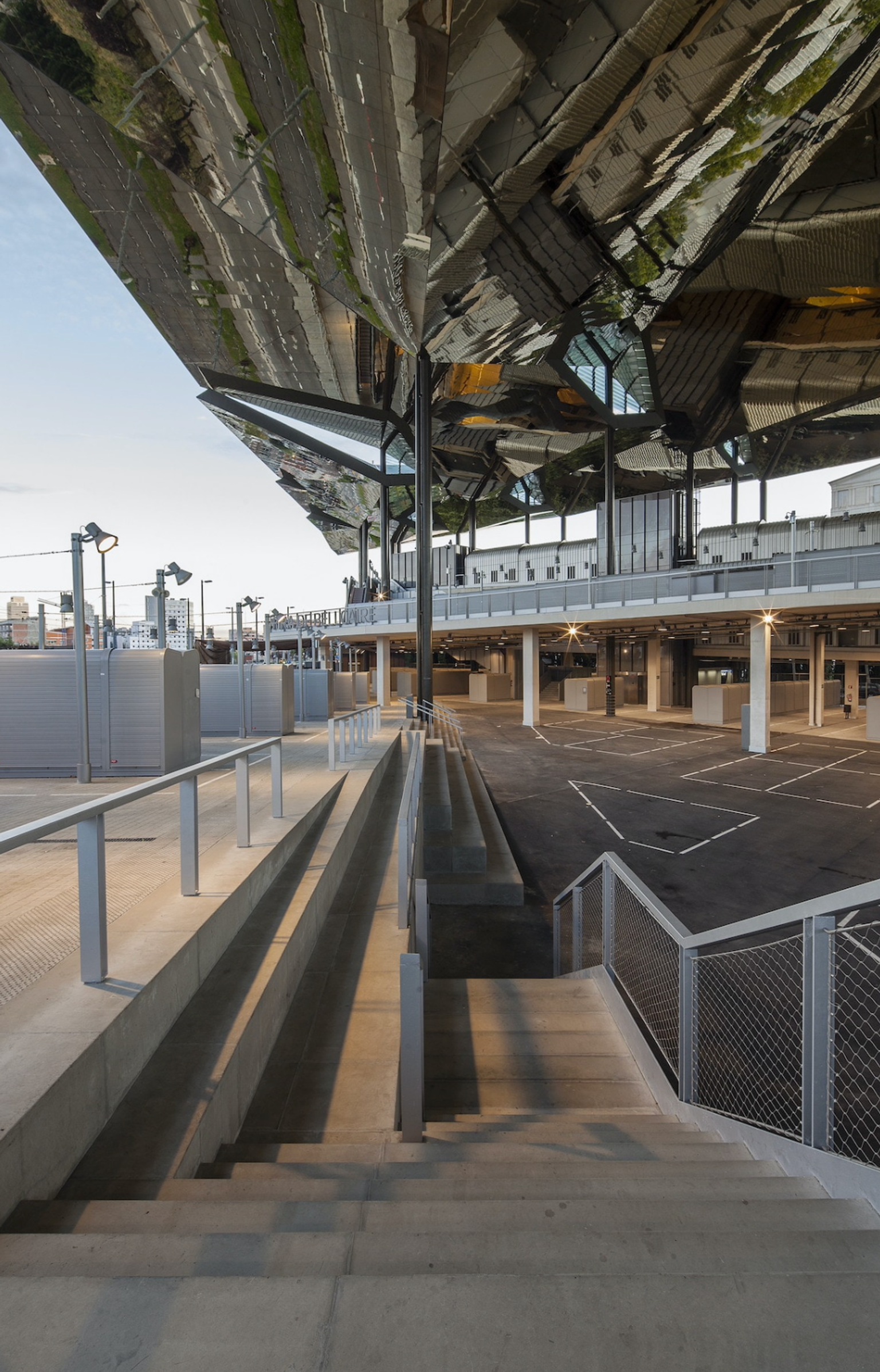

This luminous ceiling is both protective and expressive. It shelters vendors and visitors from sun and rain while simultaneously announcing the presence of the market from afar. The reflections animate the space, turning everyday transactions into a kind of urban spectacle. In this interplay of light, movement, and commerce, the Encants Market becomes a stage where the ordinary is continuously reimagined.
More than a commercial venue, the project captures the essence of Barcelona itself: open, diverse, and in constant transformation. It is a market full of opportunities, where architecture does not simply house activity but elevates it, reflecting the city back to itself in ever-changing ways.