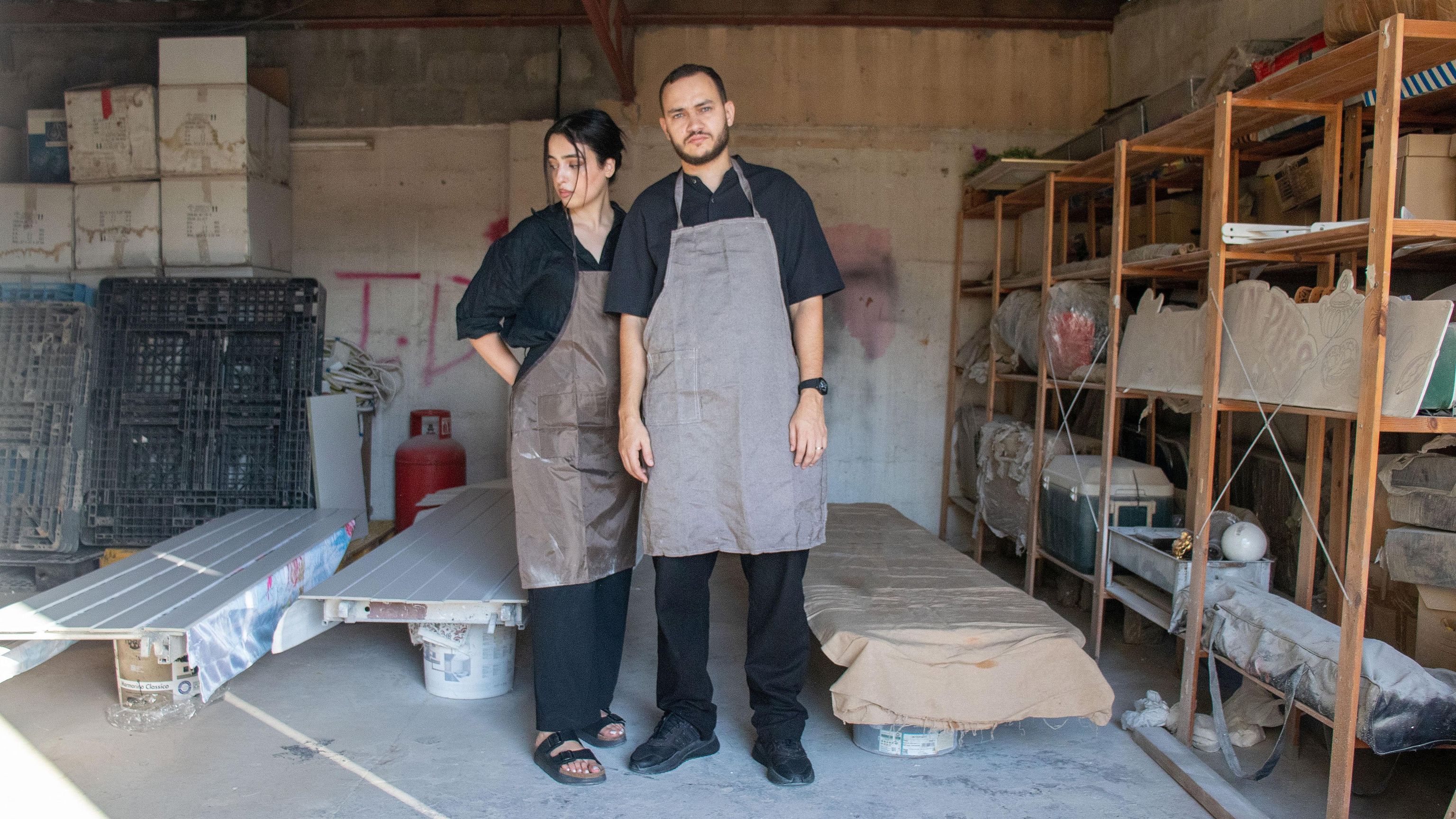

Sara Farha and Khaled Shalkha
Datecrete
- CreatorsSara Farha and Khaled Shalkha
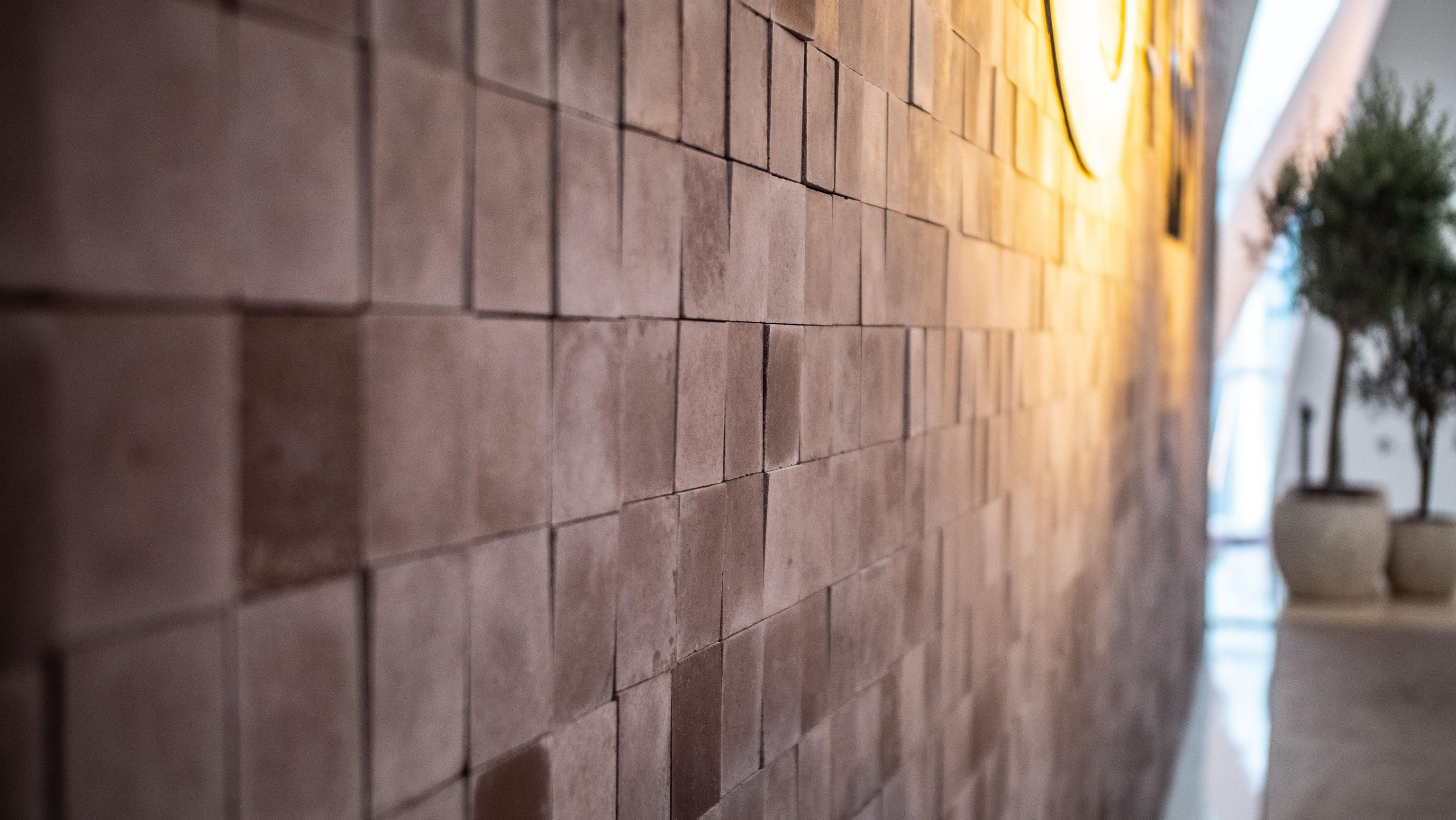
Rasmus Alstrup Datecrete Studio, founded by architect and material‑researcher Sara Farha and chemical engineer Khaled Shalkha, develop Datecrete as a sustainable, cement‑ and resin‑free building material based on crushed date seeds, turning an abundant agricultural by‑product into a high‑performance construction and design material. Datecrete has been used to create artisan tiles and pavers, for example in the BKRY x MOTF Pop-Up (2025), demonstrating how date-seed based Datecrete can serve as a sustainable, cement-free building surface for flooring, tiling and architectural finishes.










Pioneering Sustainable Design
Datecrete Studio & Lab, founded by Sara Farha and Khaled Shalkha, is redefining what sustainable architecture can be in the MENA region. Their material innovation, Datecrete, is a cement- and resin-free concrete alternative made entirely from date pits, transforming agricultural byproducts into architectural objects. Farha brings expertise in urban planning and material research, exploring how space and material intersect, while Shalkha applies chemical engineering principles to optimize alternative binders and sustainable composites.
Together, they create objects that are both slow-made and deeply connected to regional heritage. Their work has attracted global attention, appearing in publications such as GQ, Architectural Digest Middle East, and Dezeen, positioning Datecrete as a model for environmentally conscious, culturally grounded design.


From Seed to Science
The material itself is rooted in rigorous research and regional ecology. Date pits, typically discarded after date processing, contain cellulose, lignin, and hemicellulose, giving them a wood-like composition suitable for composites. The development of Datecrete began in 2022 during the Tanween by Tashkeel program, where Farha and Shalkha explored these byproducts for their mineral and carbon content.
Their research integrated insights from historical MENA building techniques, providing knowledge about material durability, structural performance, and environmental adaptation. Through iterative testing – including oven-roasting, varying particle sizes, drying methods, and mix ratios – they developed a lab-validated binder system. Each experiment refined the balance between aesthetic qualities, strength, and workability, transforming an overlooked agricultural residue into a high-performance material.






Crafting the Material
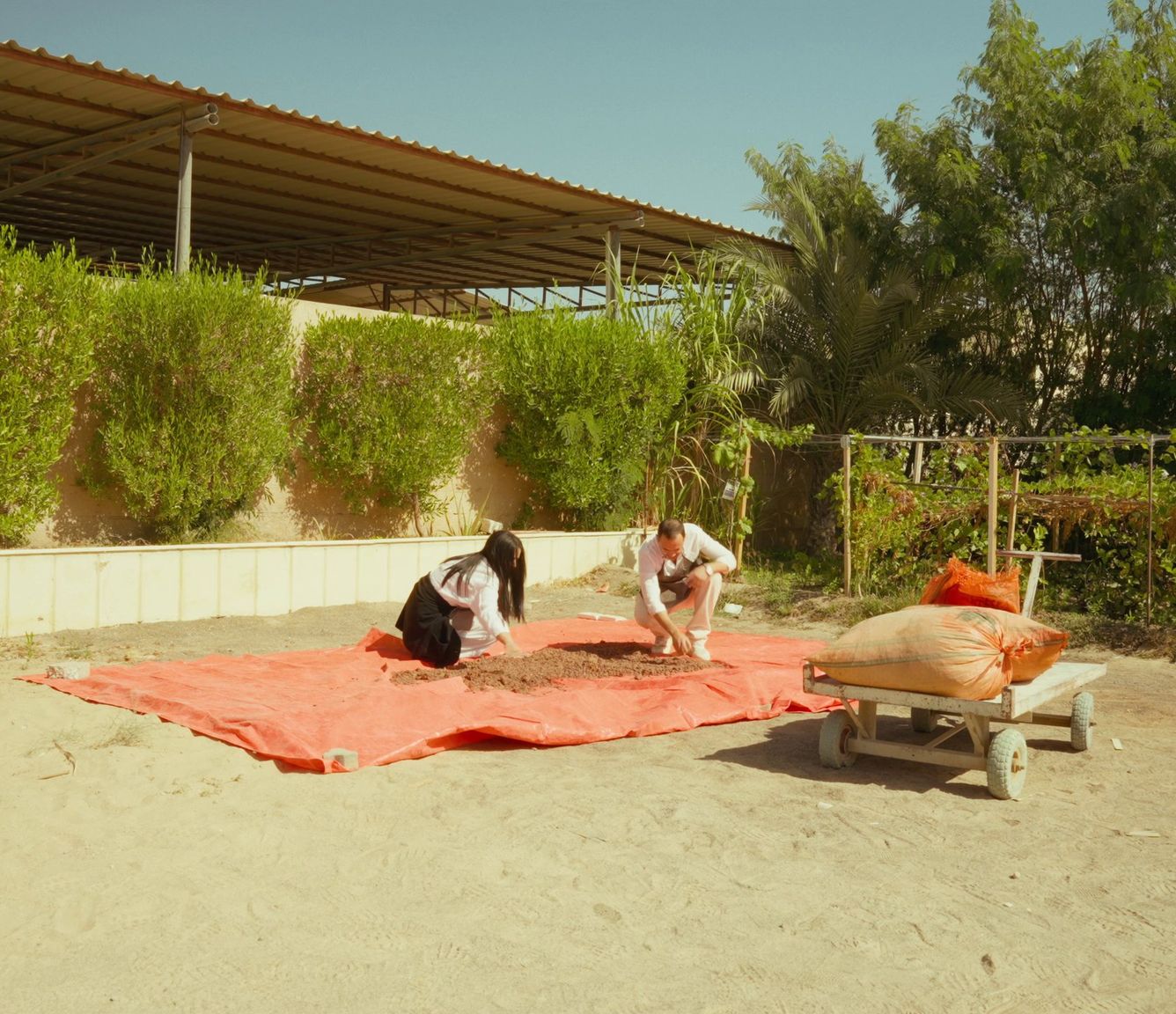
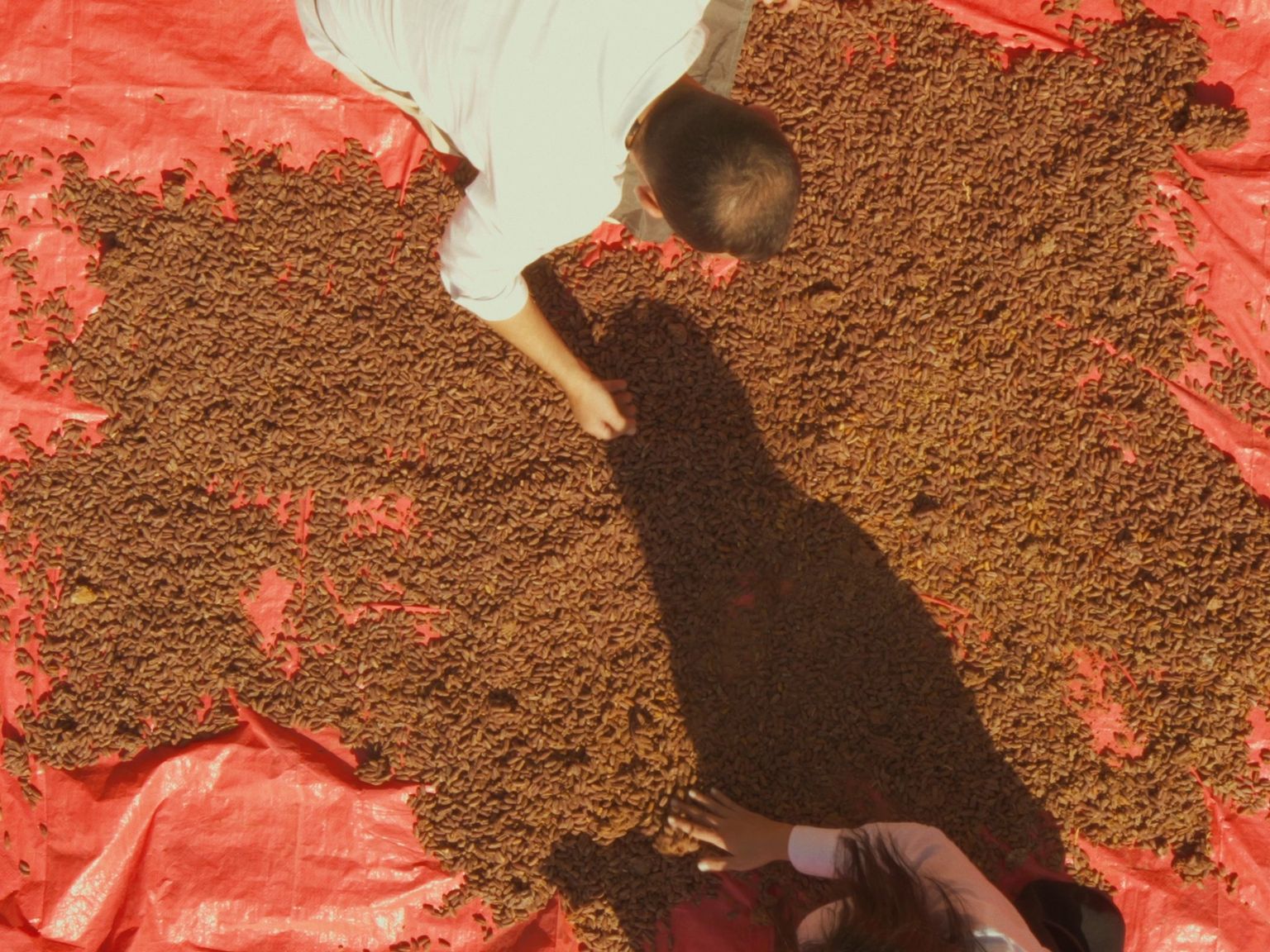
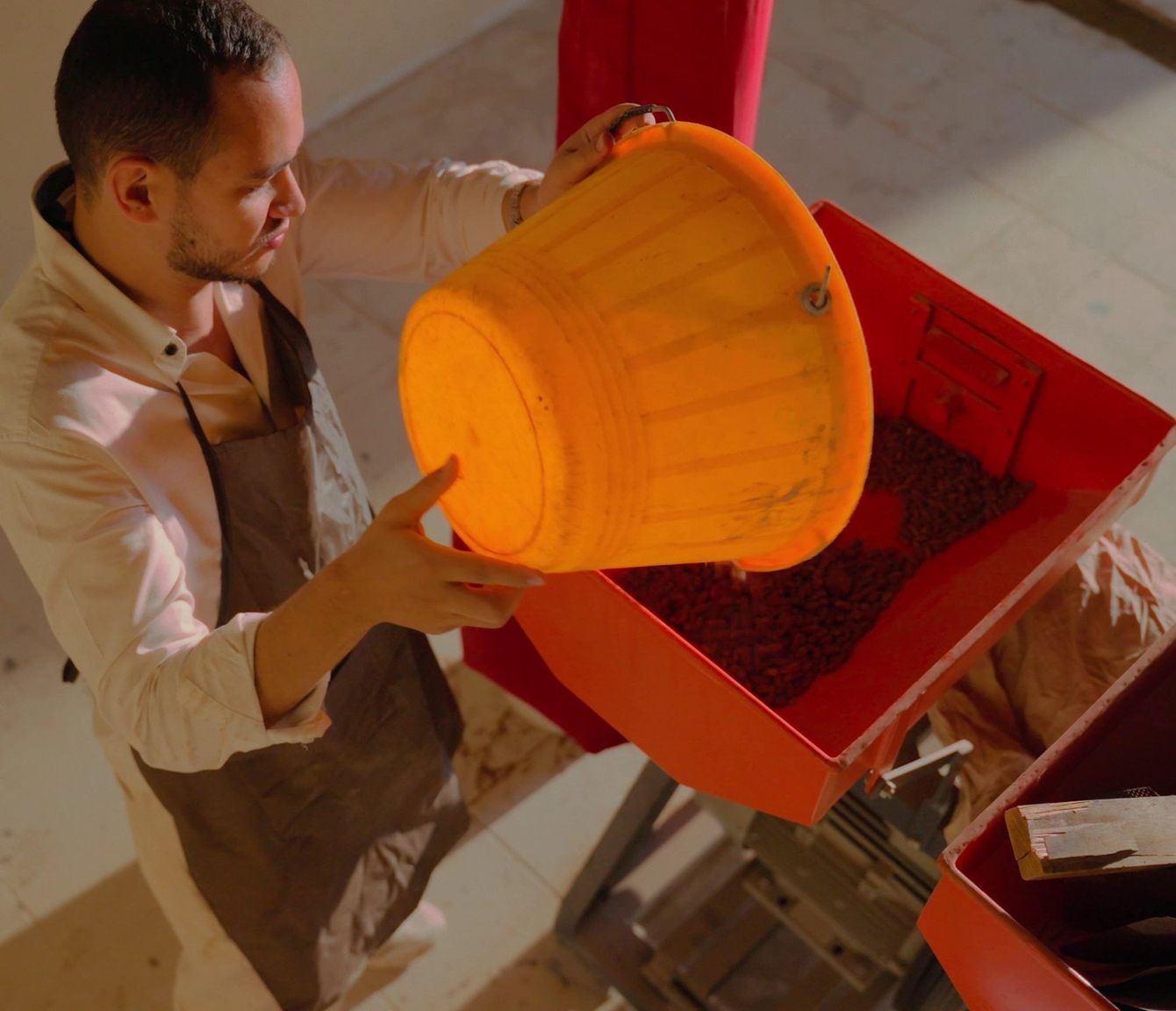
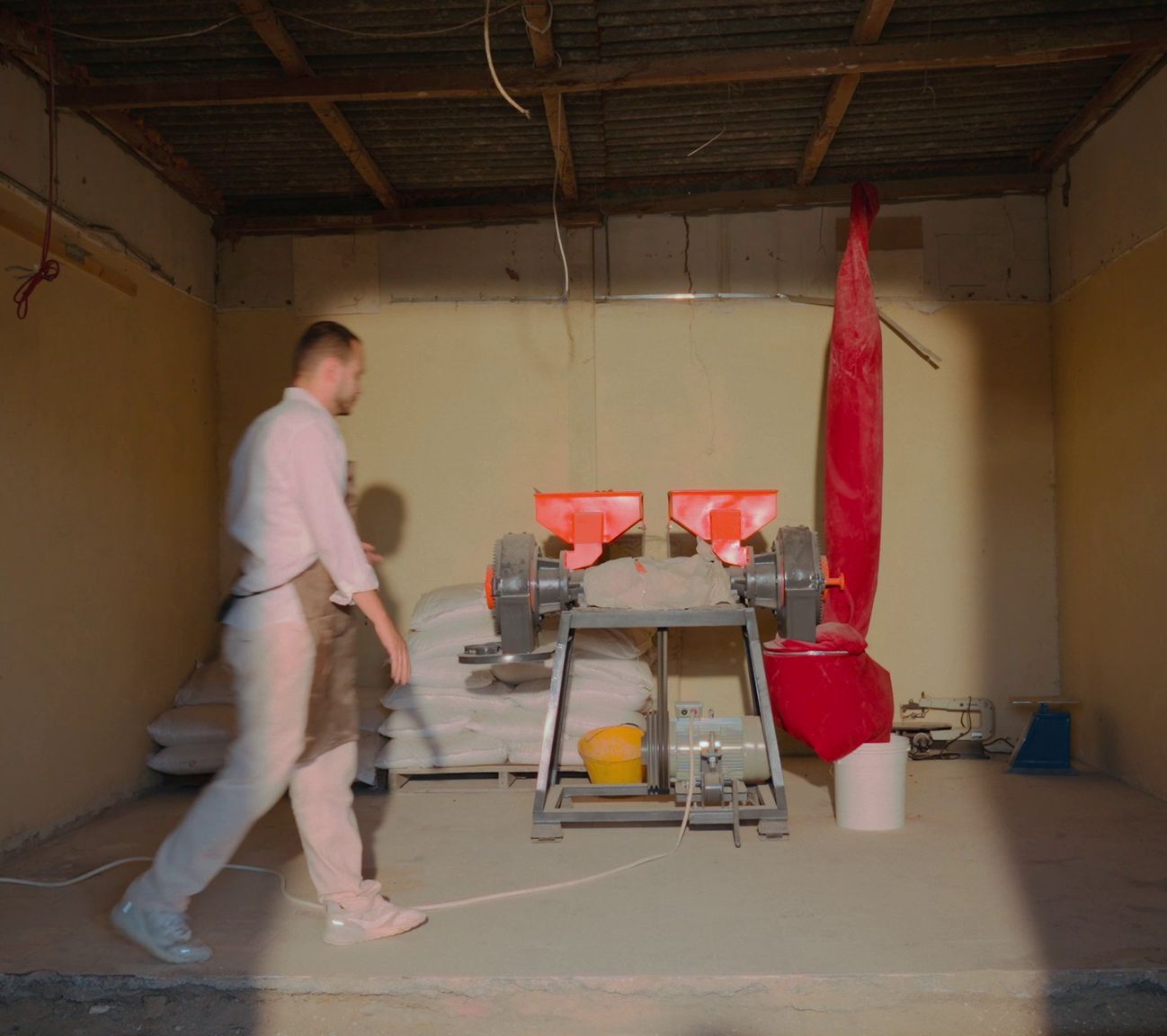
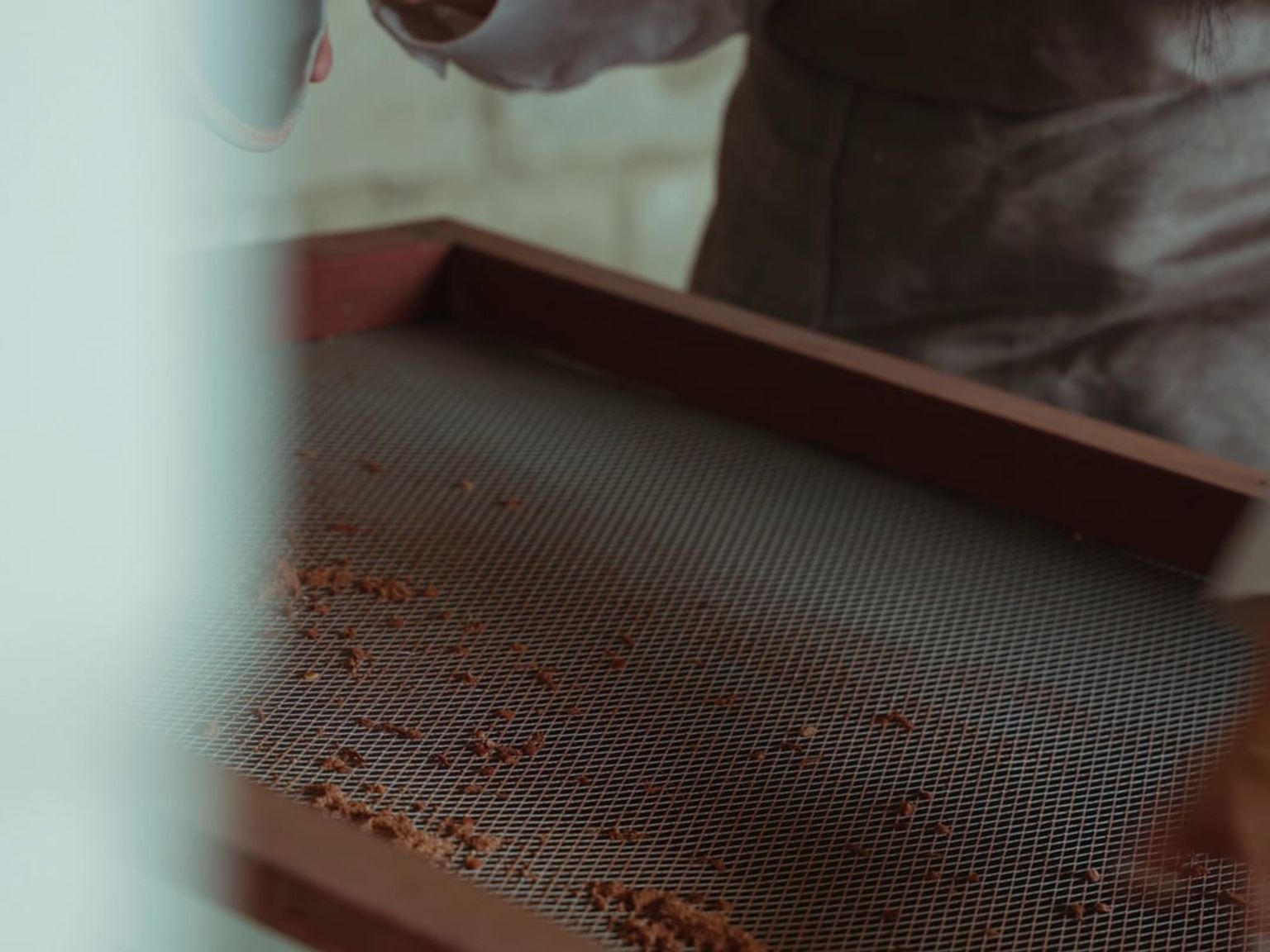
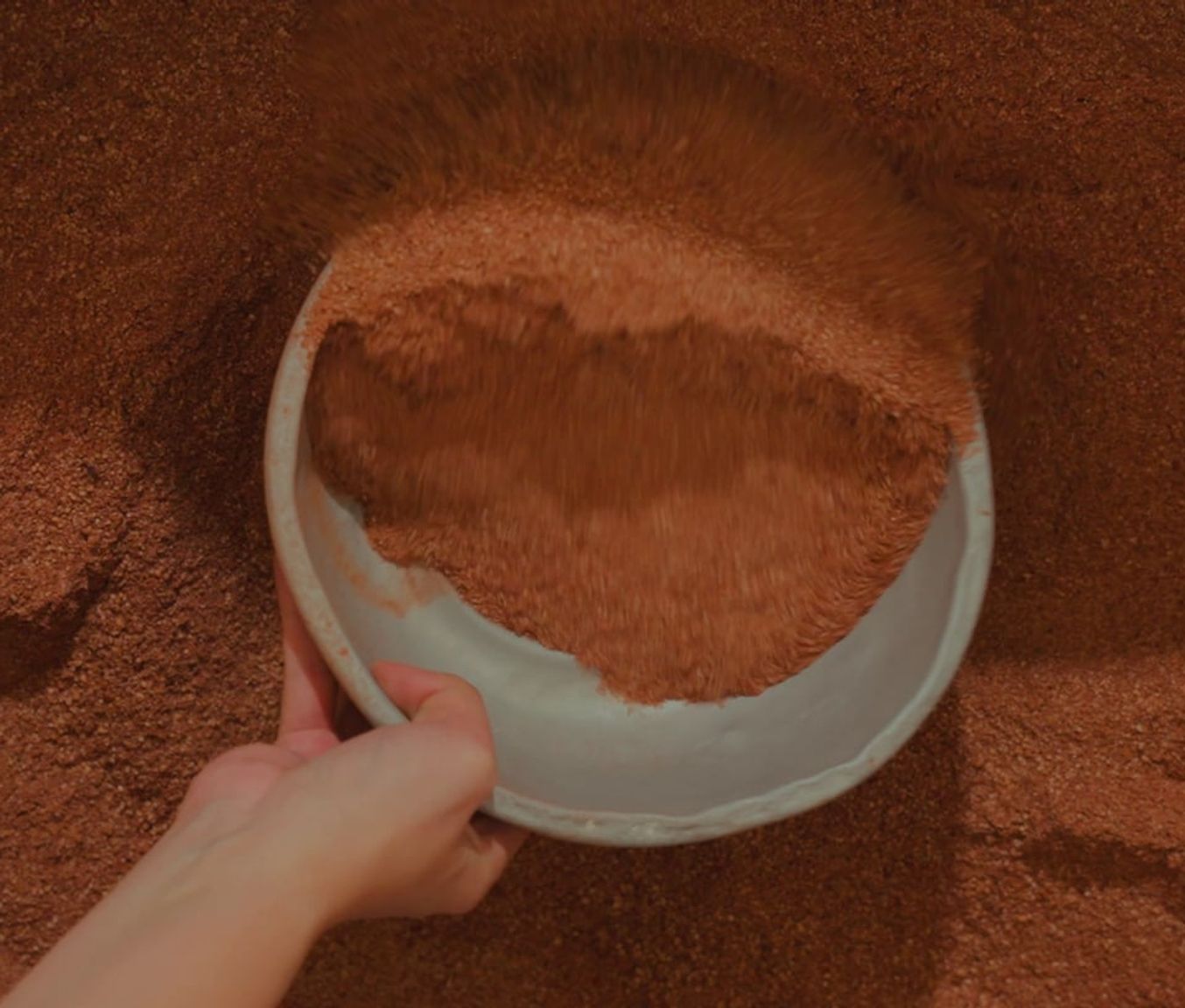
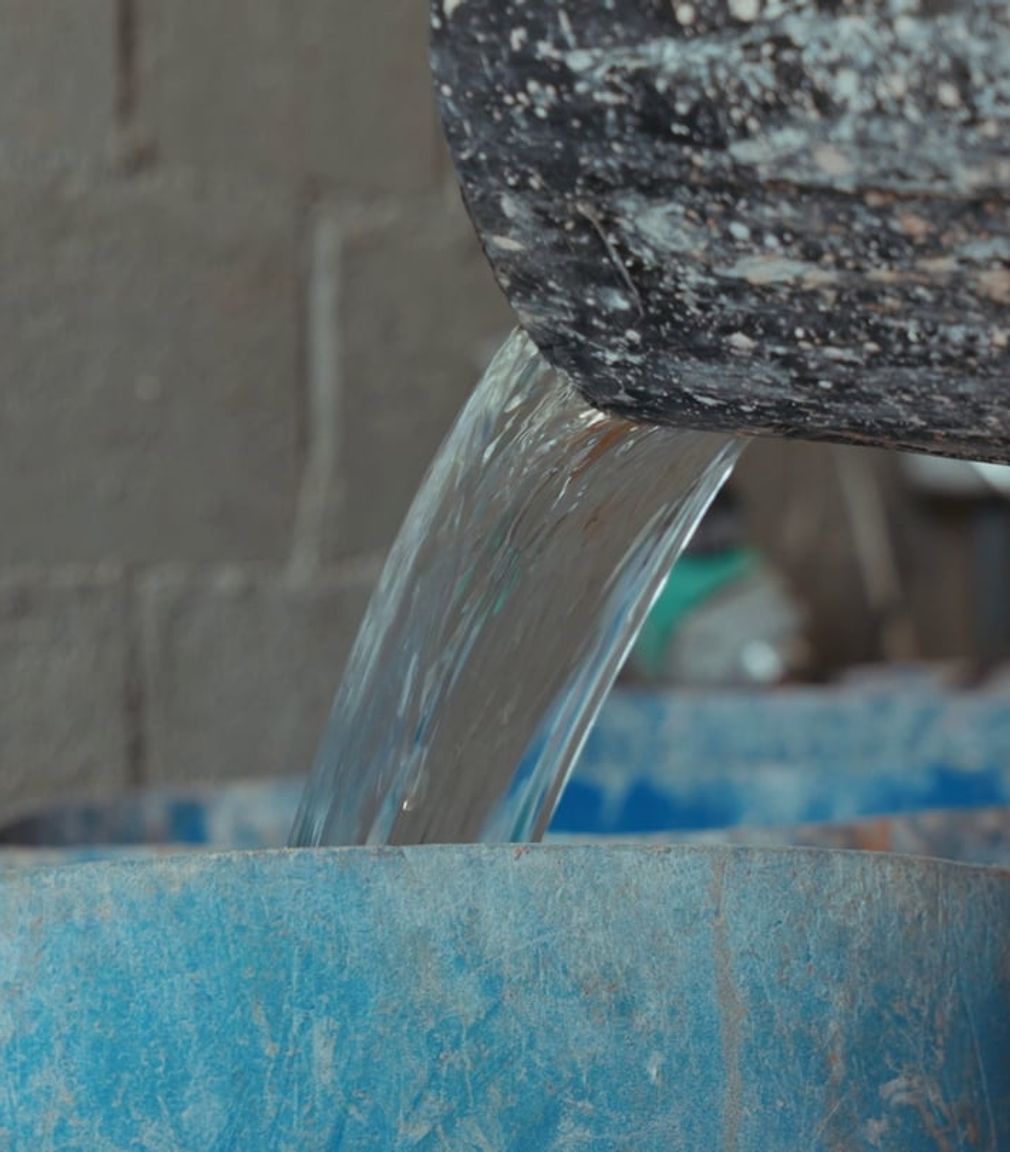
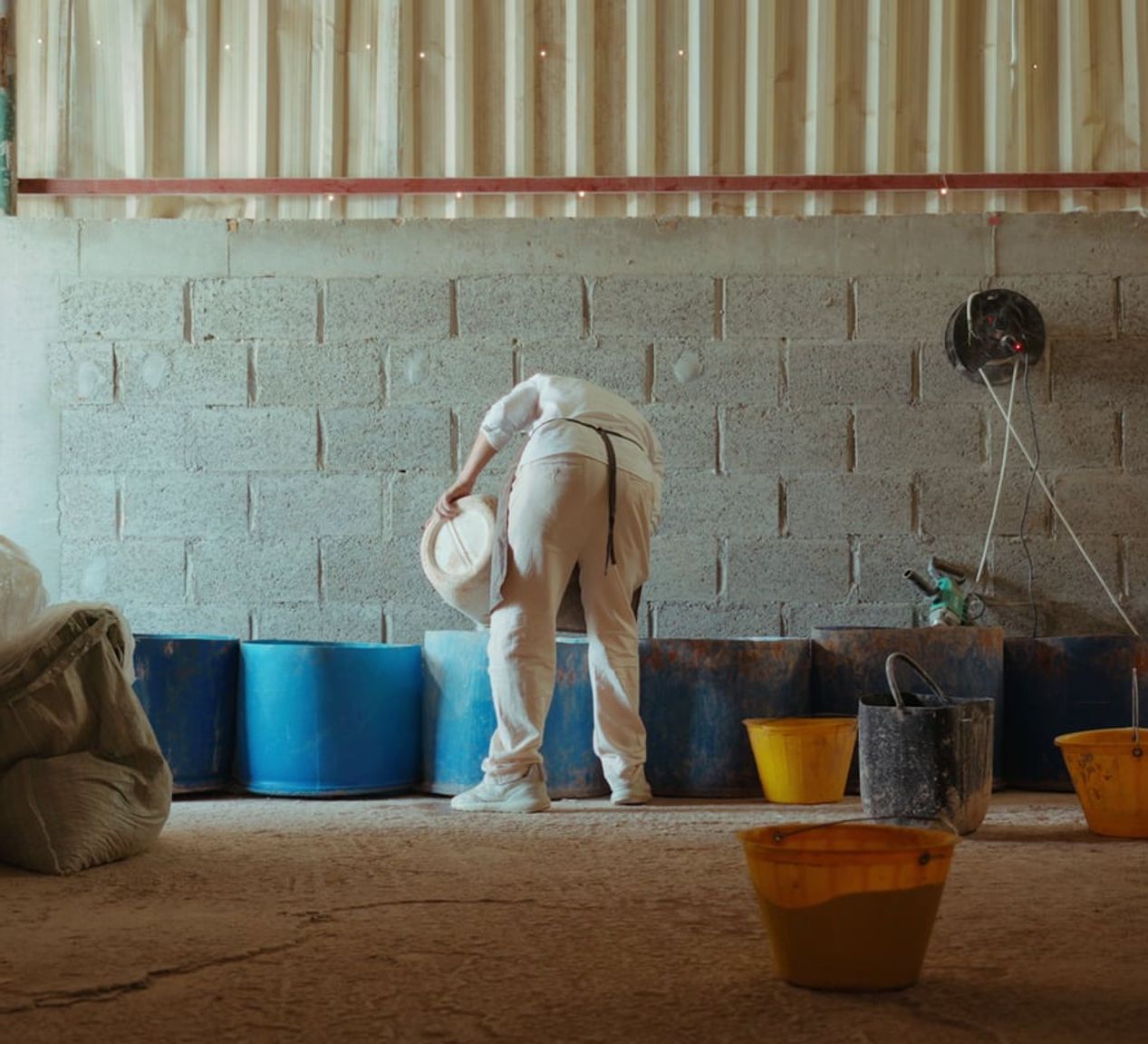
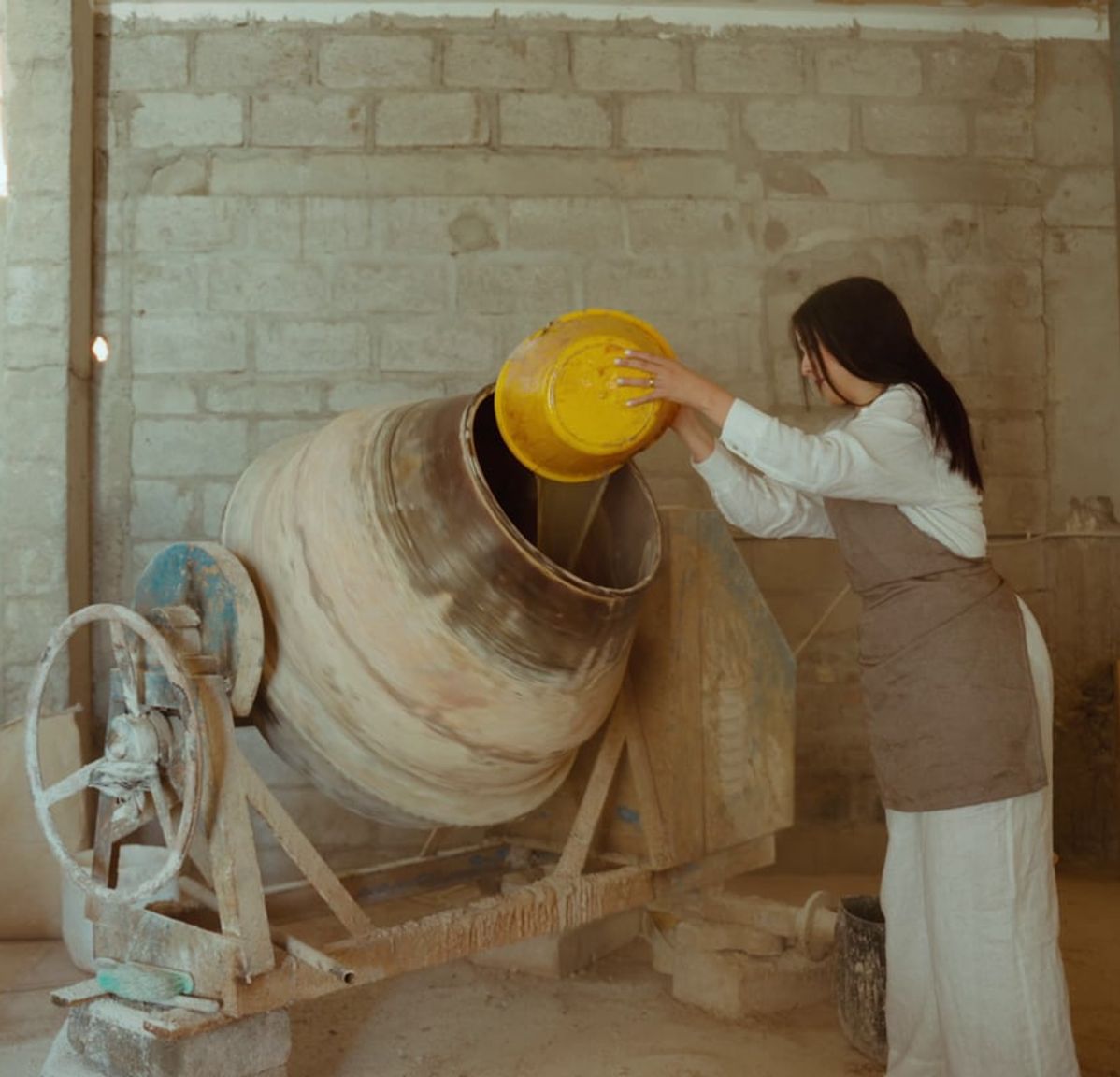
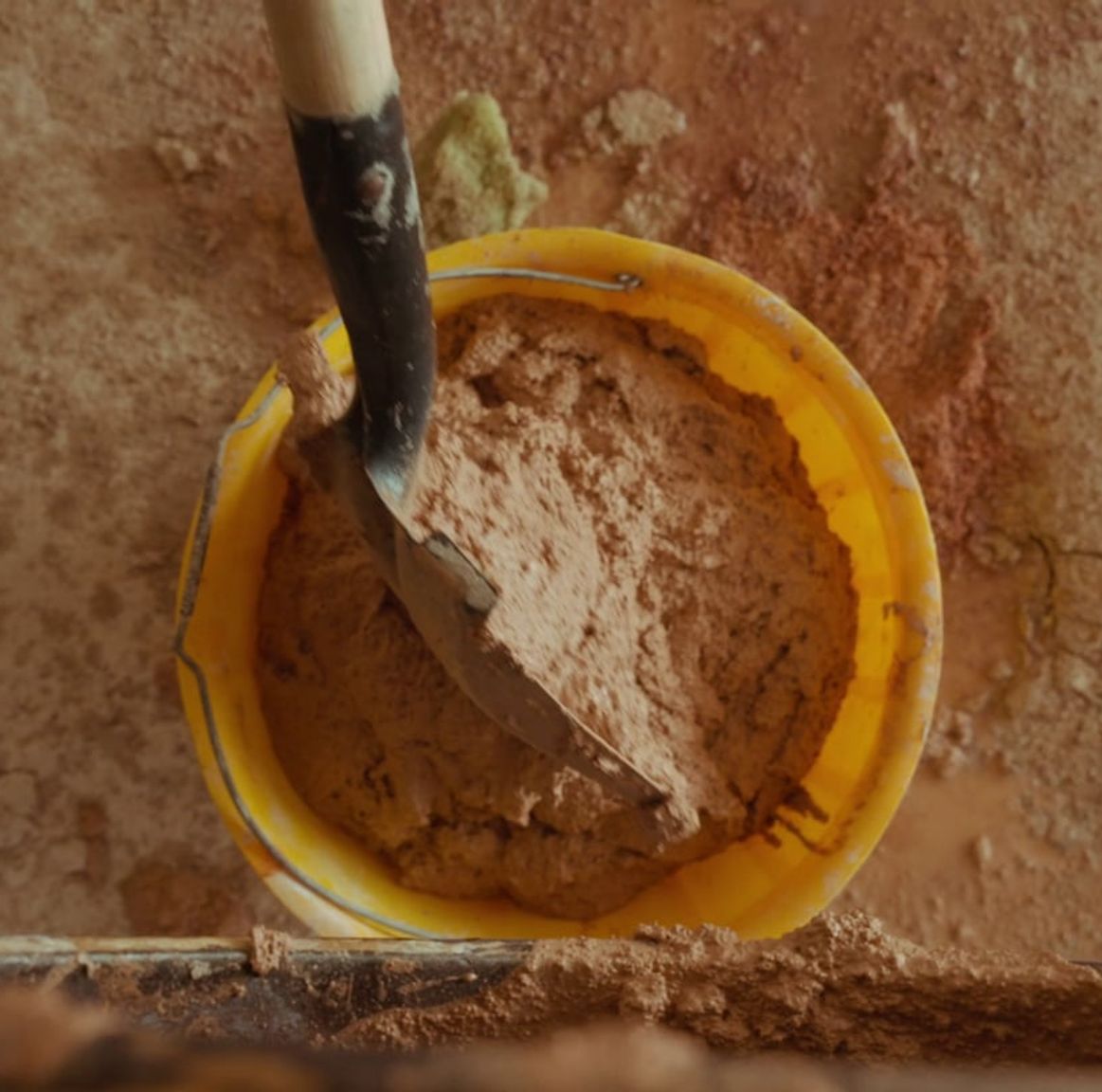
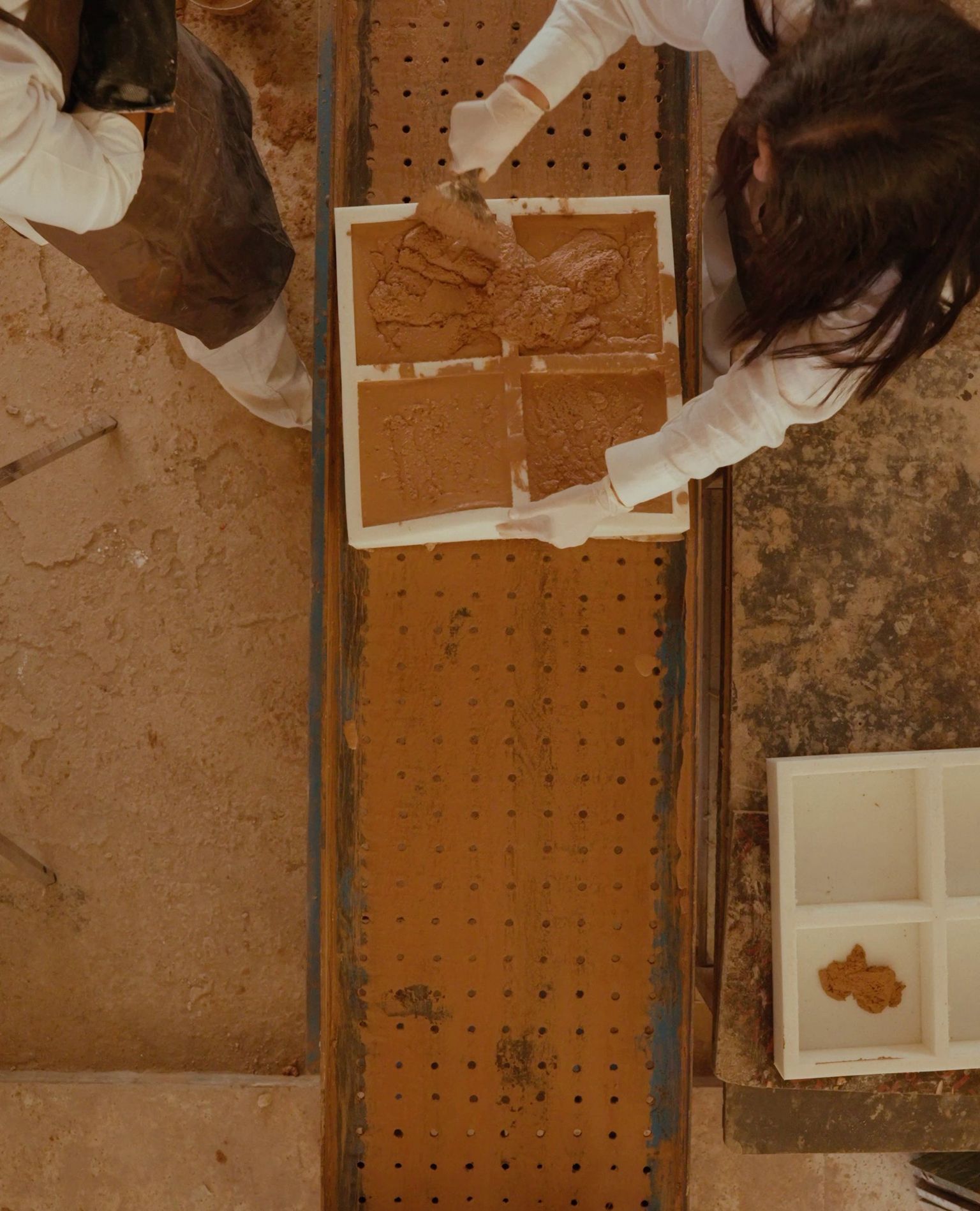
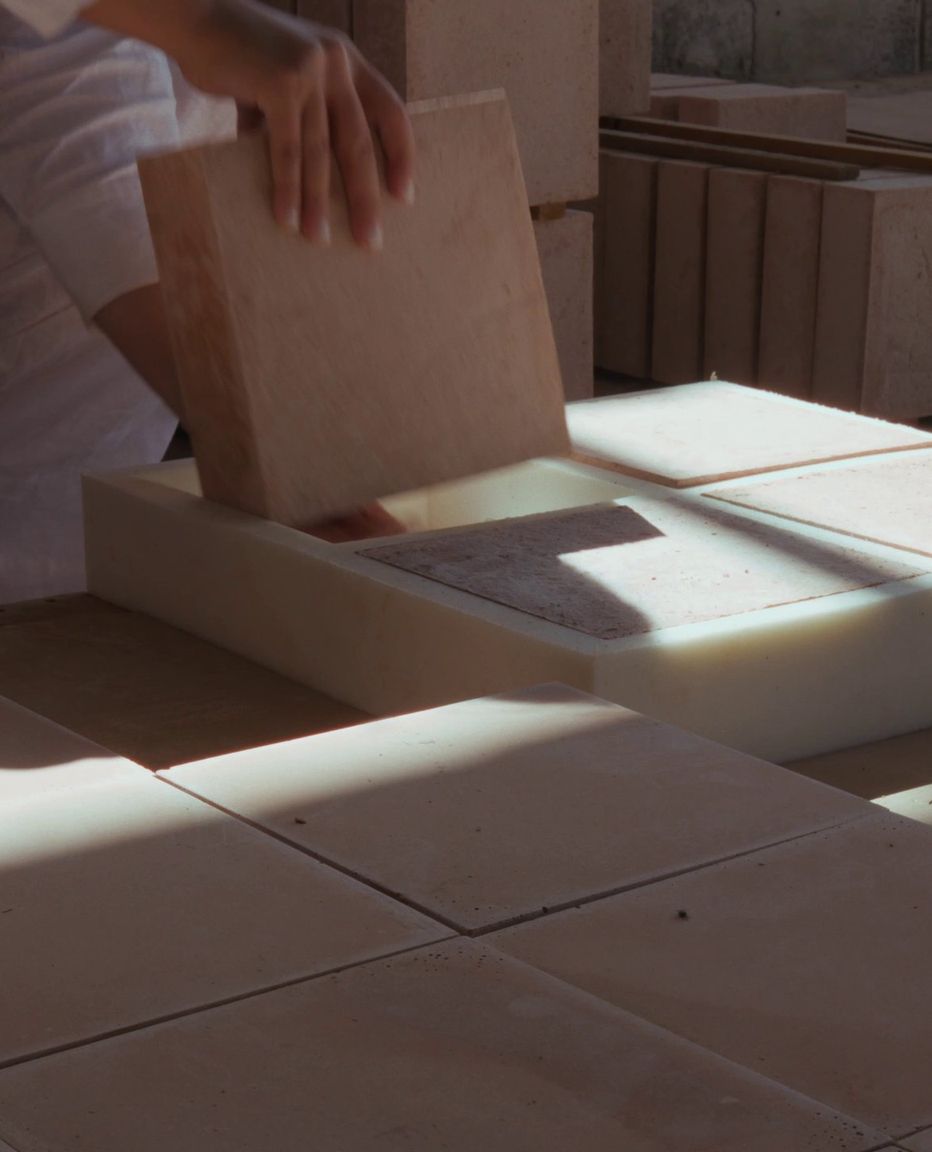
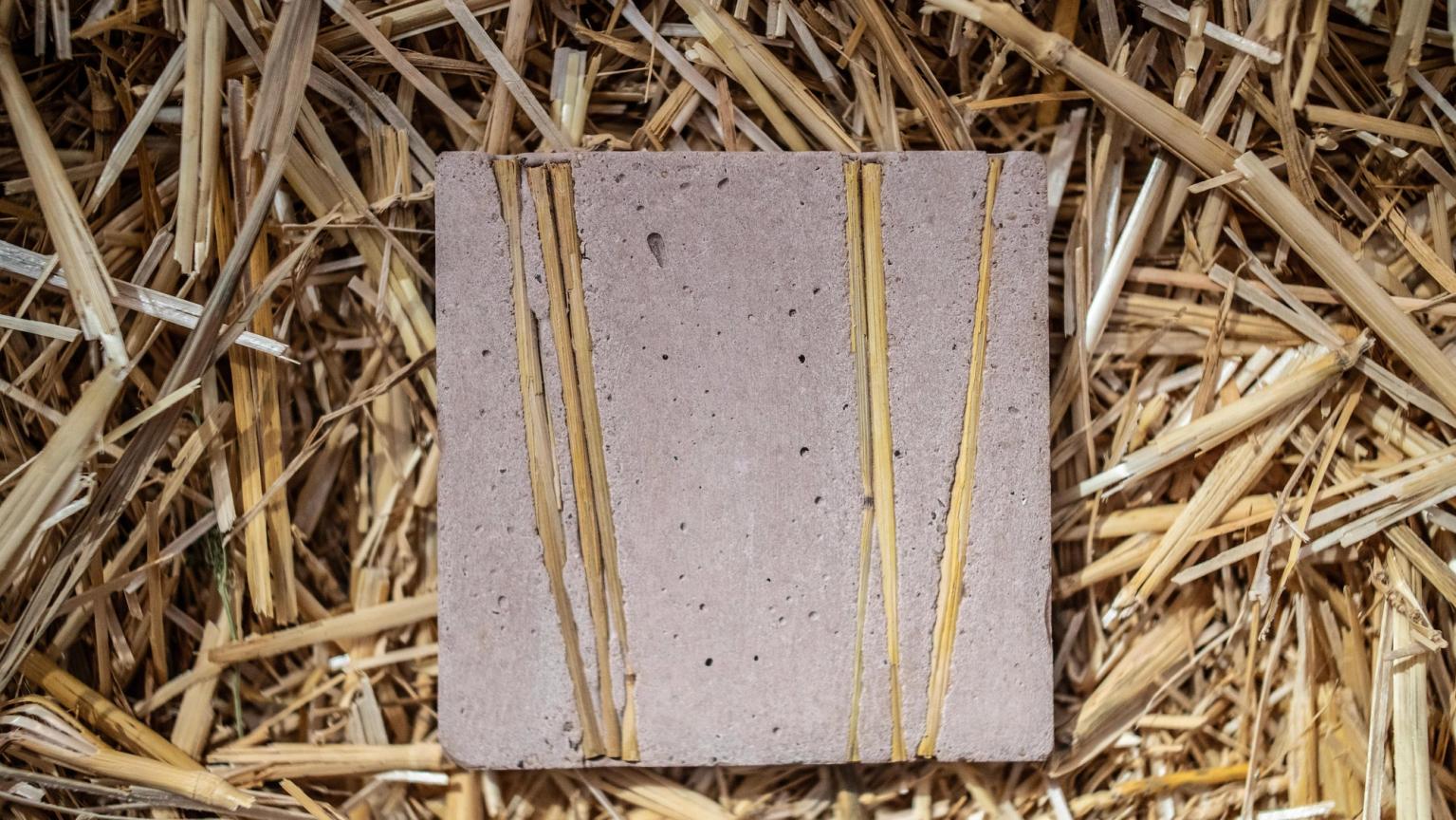
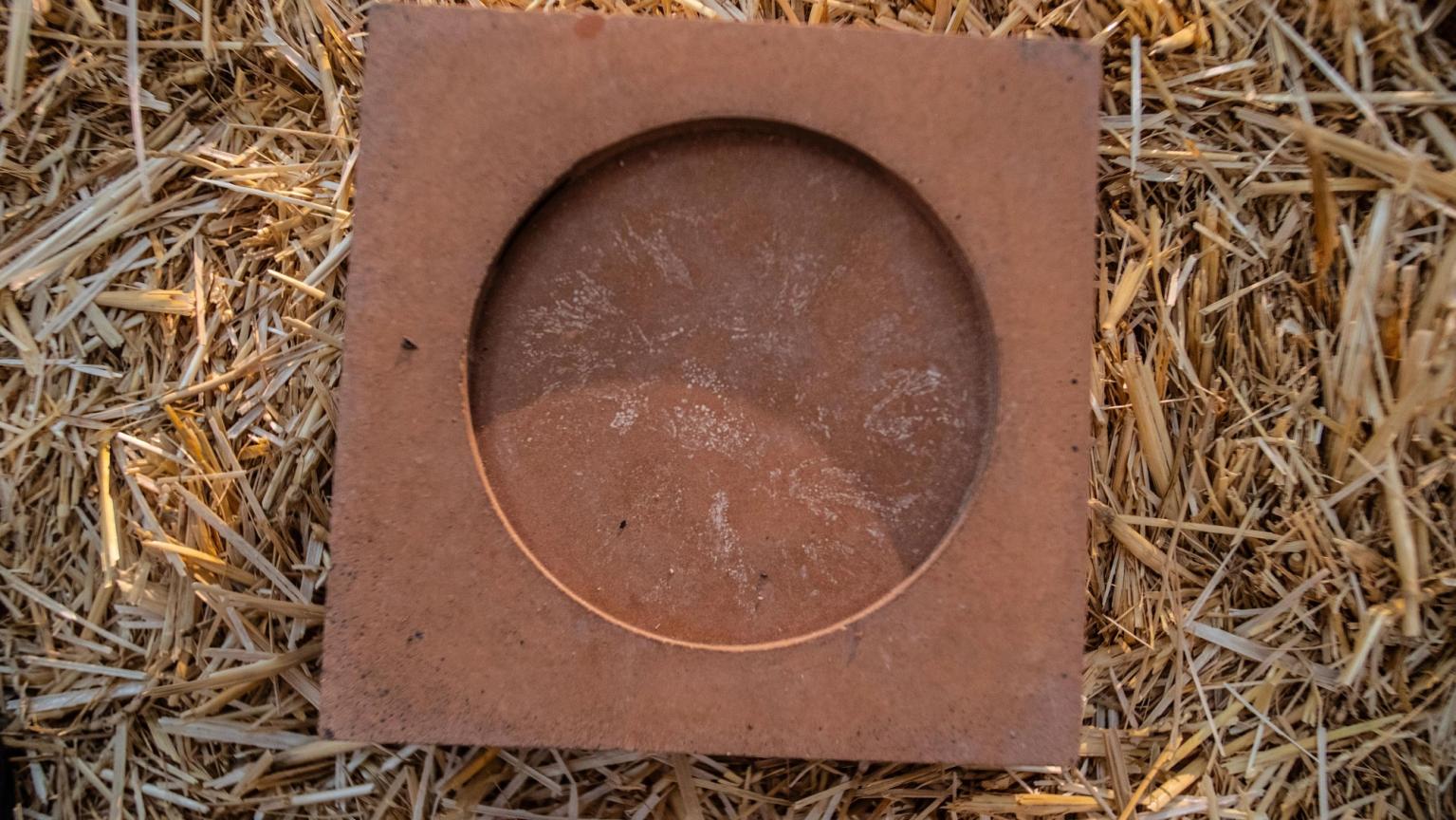
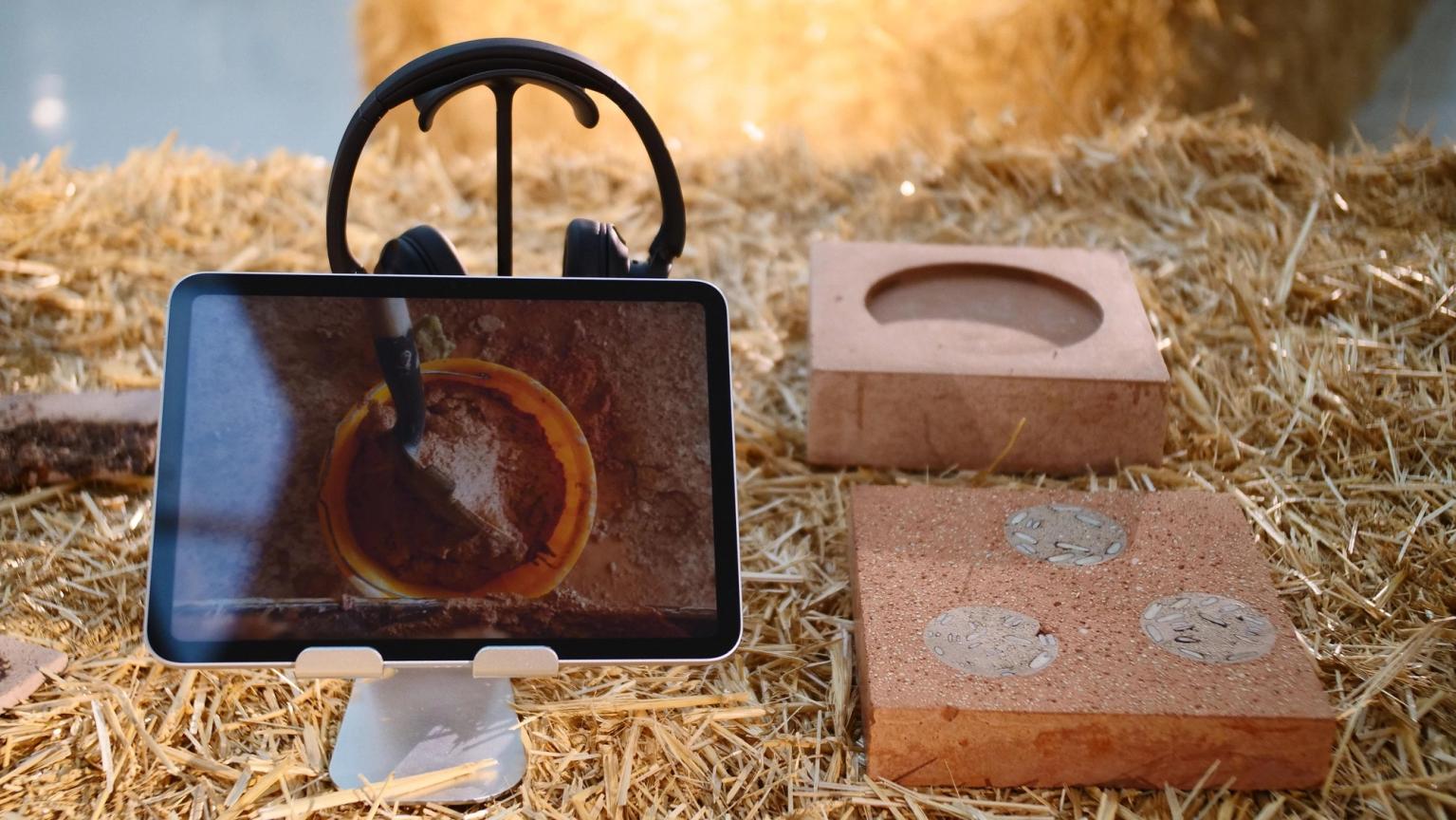
Datecrete’s transformation from raw date pits to finished architectural elements is entirely hands-on. Seeds are collected from local date-processing factories, dried under controlled conditions, and roasted to unlock color and structural potential. The roasted pits are finely ground into powder and blended with a natural binder before being cast into tiles, panels, furniture, and custom forms. Controlled curing ensures durability, while surface treatments enhance usability and visual appeal. Early prototypes also experimented with incorporating wheat and cocoa husk byproducts, demonstrating the material’s versatility. Every step reflects a fusion of meticulous scientific research and artisanal craft, creating objects that are both functional and narratively rich, honoring the cultural significance of the date seed.


BKRY x MOTF Pop-Up
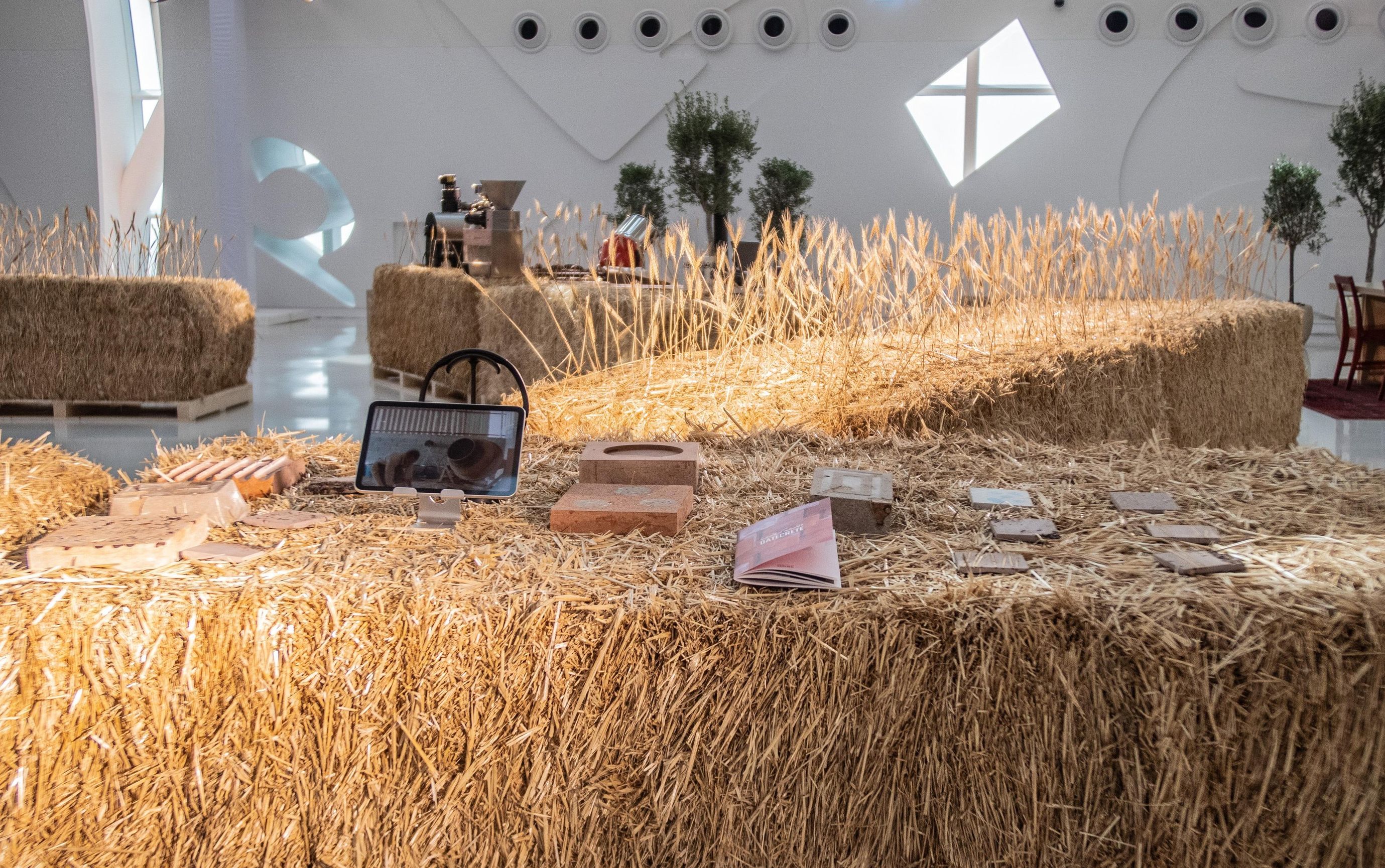
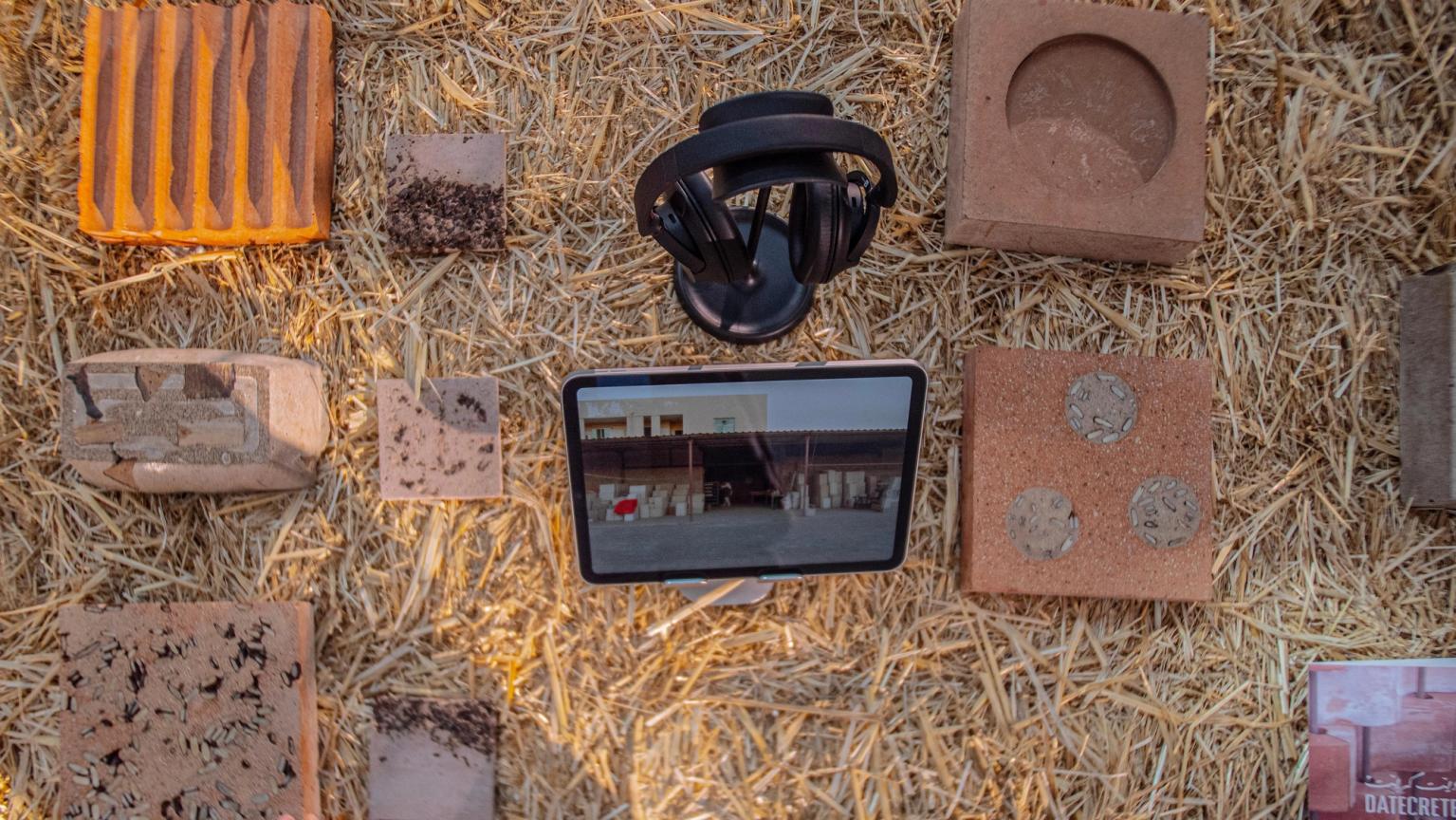
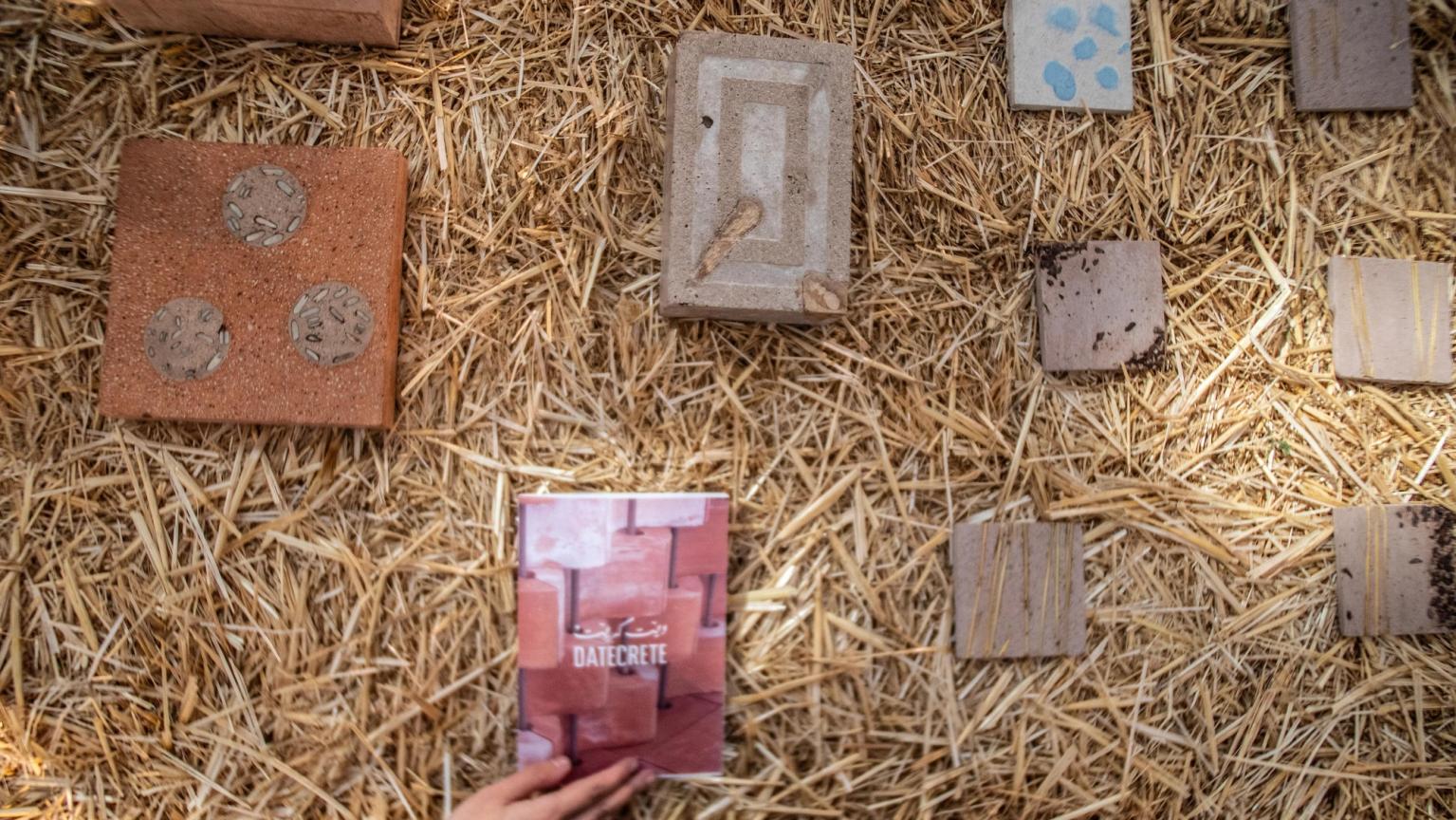
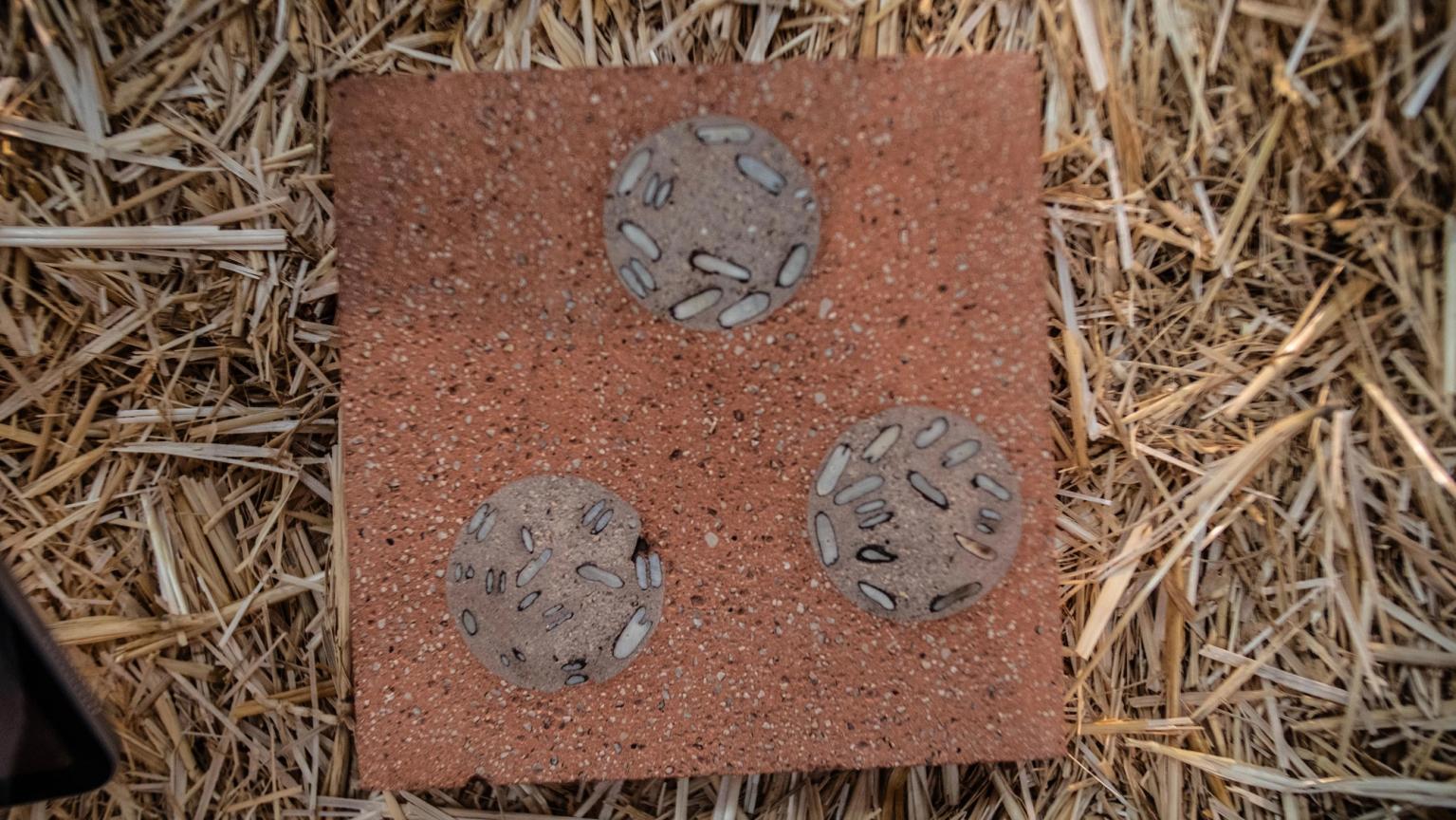
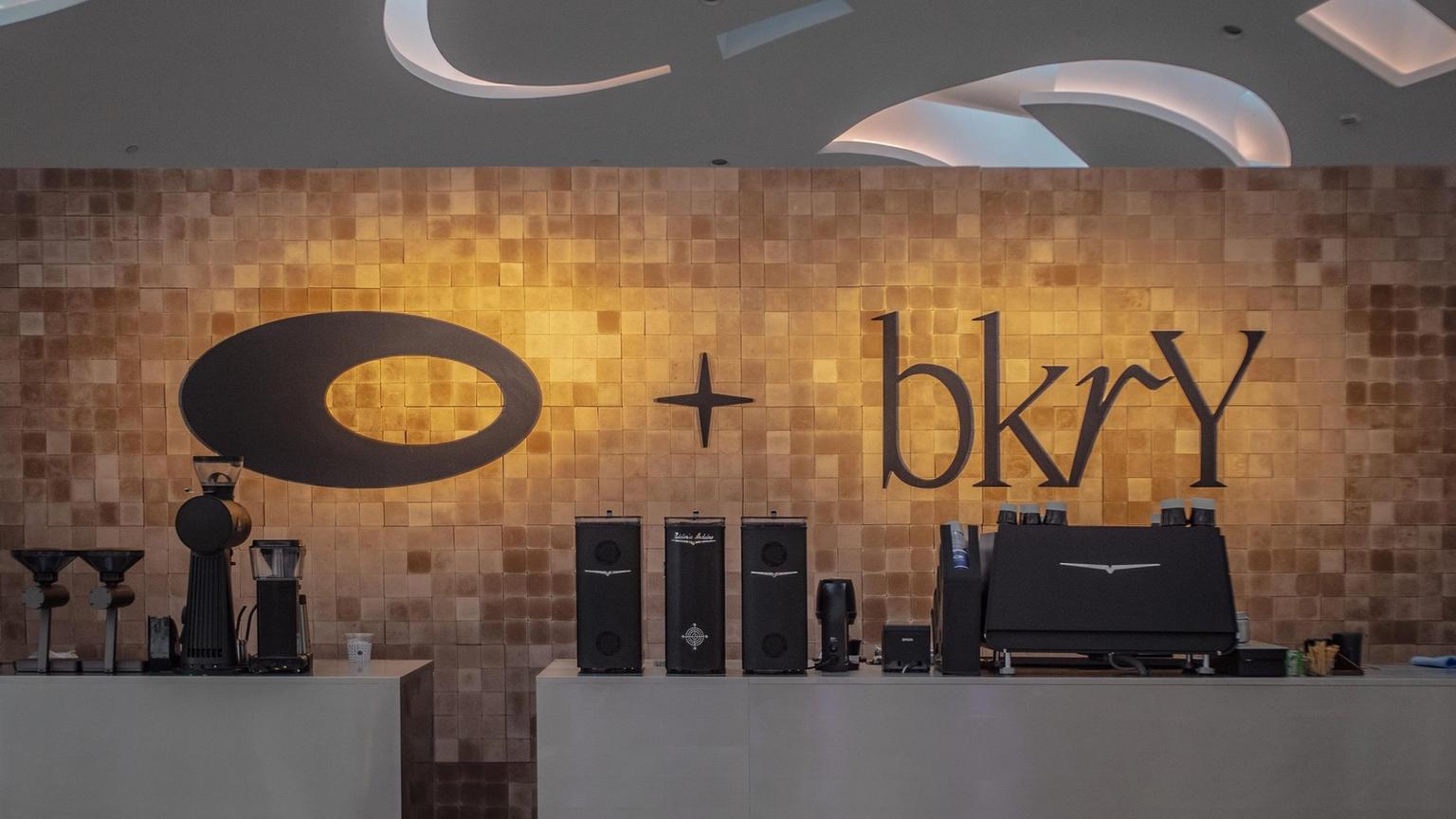
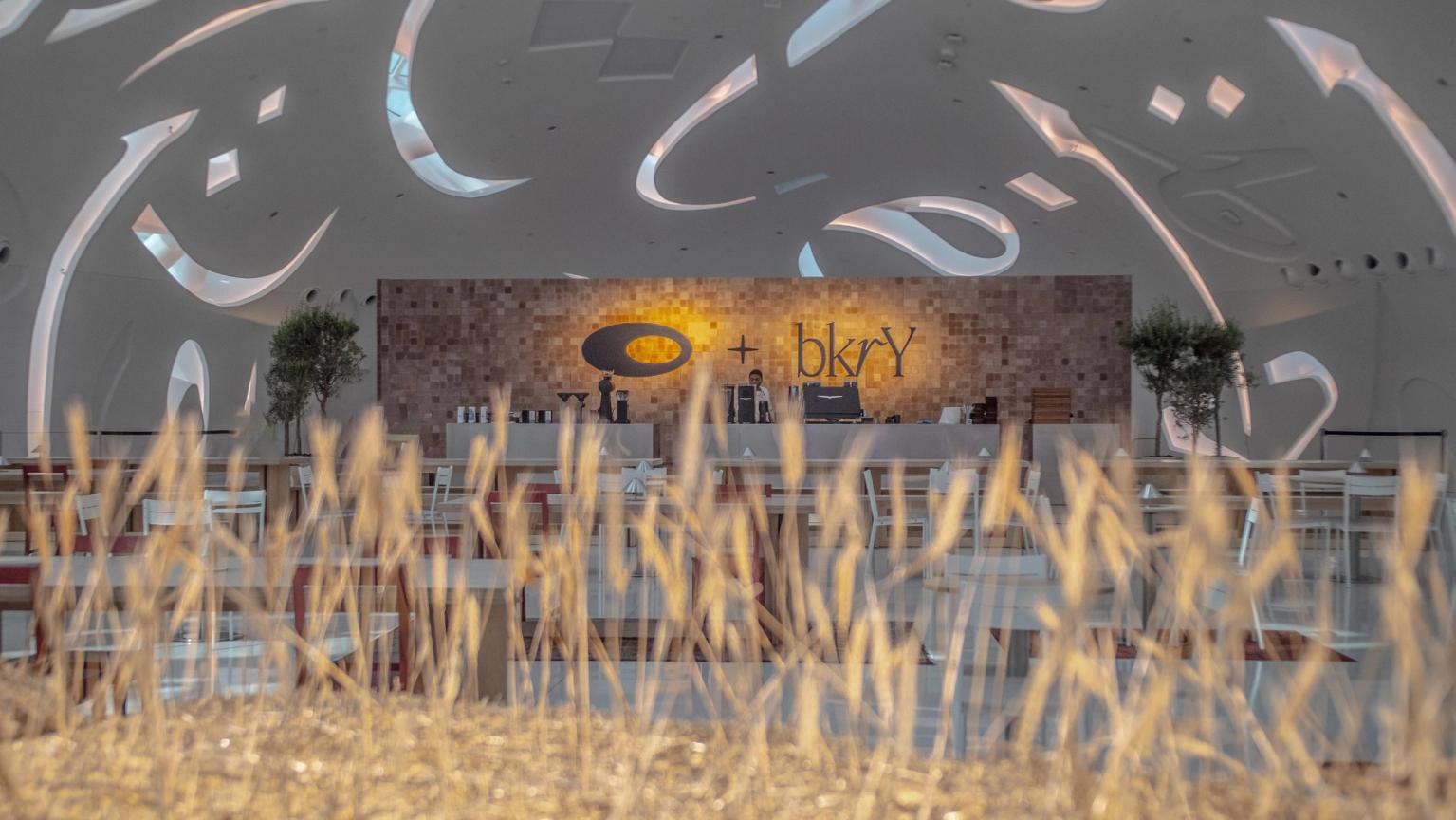
In 2025, Datecrete’s principles of sustainability, research, and regional storytelling were showcased at the BKRY x MOTF Pop-Up. Chocolate-toned Datecrete tiles formed an immersive backdrop for an installation exploring regenerative agriculture. Displayed on platforms of Saba Sanabel wheat stalks, the exhibit incorporated early prototypes embedding intercepted wheat and cocoa husk byproducts, highlighting the intersection of food systems and the built environment. This activation placed Datecrete in dialogue with initiatives like BKRY’s The Waste Lab and Wildfarmed’s innovative flour programs.
The installation emphasized how discarded organic materials can be transformed into functional, beautiful architectural forms, demonstrating the studio’s commitment to environmental responsibility, material experimentation, and culturally informed design.