
the work of
César Béjar
- Photographer César Béjar
- ArchitectNEMESTUDIO and Taller Héctor Barroso
Edmund Sumner As a photographer working internationally since 1998, one quickly understands that each country, each culture, brings with it a distinct visual language. American architectural photography, for example, often leans toward the overtly commercial: saturated colour, extensive lighting, and a highly controlled image, often paired with a more straightforward narrative. In contrast, Mexican architectural photography has developed a voice I greatly admire, one that feels both grounded and nuanced. It draws, perhaps, from a European ‘miserabilist’ tradition - flatter light, reduced colour - yet operates within an abundance of extraordinary natural light, alongside an architectural scene that is arguably leading the world today. One photographer I particularly admire is César Béjar…
Edmund Sumner´s perspective on César Béjar
…He is trained as an architect and brings that spatial understanding into his work. But where Lorenzo’s images can feel cool, almost clinical, Béjar allows for a more painterly sensibility, a creative tension that softens the frame and opens it up to interpretation. This is not about accuracy versus expression. What matters is how the architecture is portrayed, and how that portrayal leads to a more empathetic understanding of the culture and society it represents.
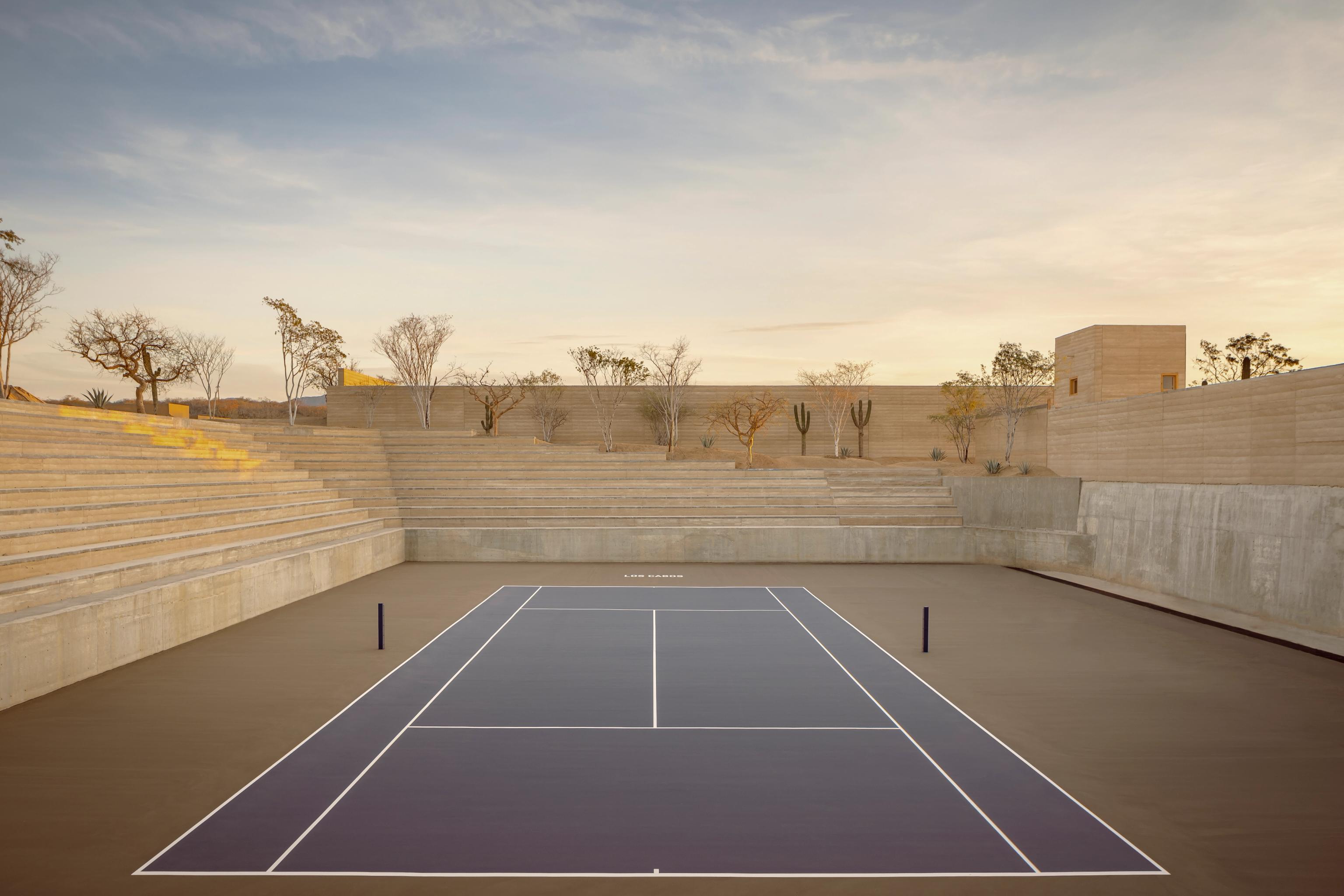
A simple image - a tennis court, for instance - can become something more. A collision, or perhaps a quiet collusion, of worlds: cactus and rammed earth set against the imposed geometry of the court, the net absent. A dialogue between Mexican tradition and Western influence.
A space suspended between cultures. A trace of something unresolved.
A Dual Practice in Architecture and Image
César Béjar works at the intersection of architecture and photography, a dual practice that continuously feeds itself. Trained as an architect at the University of Guadalajara (2015), with studies in Madrid, he is the founder of César Béjar Studio. Here, he develops architectural projects while simultaneously documenting the built environment through his own lens. Rather than separating the two disciplines, he treats them as a single continuous process, where designing and seeing become part of the same way of working. His visual language has been widely published and exhibited internationally, but at its core remains grounded in a direct interest in how architecture is built, experienced, and represented.
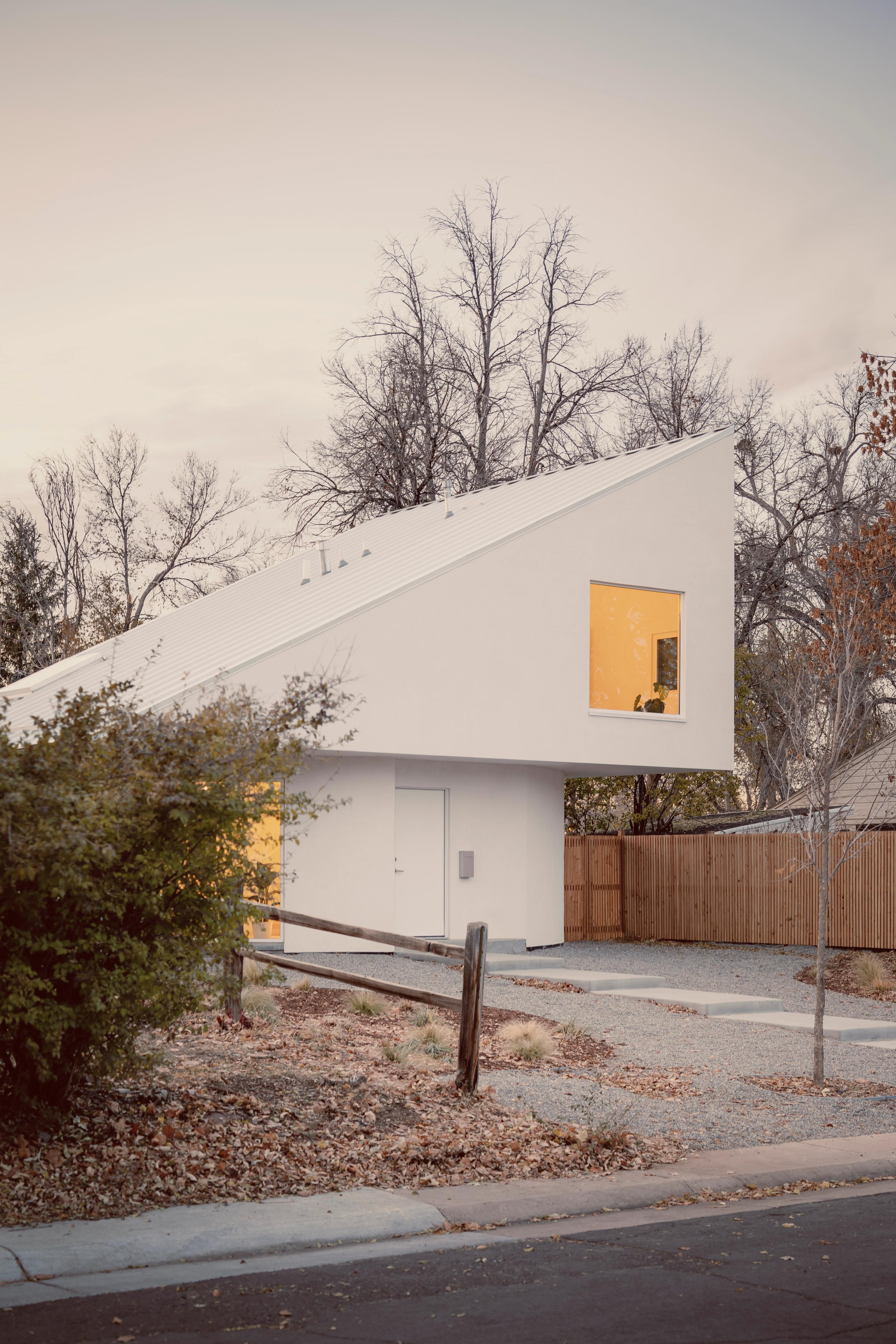

House NEMESTUDIO - Denver, United States
Designed by NEMESTUDIO, House NEMESTUDIO in Denver explores a clear architectural tension between geometry, volume, and everyday living. The house is composed through the interplay of two primary forms: a circular base and a rectangular roof structure placed above it. This simple but deliberate misalignment creates spatial shifts both inside and outside, shaping how light, movement, and use unfold throughout the house. The ground level is defined by an open circular plan containing shared domestic functions, kitchen, bathroom, and living space, designed to remain flexible in use. Above, a more private upper level introduces rooms for rest and withdrawal. Built with a low-budget approach using standard construction systems, the project reframes limitation as a spatial driver, allowing small shifts in structure to generate multiple ways of inhabiting the home.
Cabo Sports Complex - Los Cabos, Baja California Sur
Located in the desert landscape of Los Cabos, the Cabo Sports Complex by Taller Héctor Barroso is a large-scale sports facility designed to merge with its surroundings rather than dominate them. César Béjar’s photography captures how the project is defined by rammed earth walls, horizontal lines, and carefully positioned voids that respond directly to light, wind, and the harsh sun of Baja California. The complex includes courts, a sunken stadium known as “The Crater,” and a series of supporting program spaces organized through a strict north-south orientation for the tennis courts. Rather than presenting architecture as an isolated object, the project operates as an extension of the terrain, where built form and landscape continuously overlap.
Photographing Architecture as Spatial Translation
Across both projects, Béjar’s photographic approach does not simply document architecture but translates it into atmosphere, proportion, and rhythm. His images often emphasize how materials sit in light, how spaces open or compress, and how structures relate to their context rather than stand apart from it. This perspective is shaped by his background as both architect and photographer, allowing him to read buildings not only as completed objects but as spatial sequences. The result is a body of work where photography becomes an extension of architectural thinking, rather than a record of it.
Based in Mexico, César Béjar continues to develop architectural projects across regions such as Los Cabos, Guadalajara, Riviera Maya, and beyond, while maintaining an international photographic practice. His work has been published in leading architecture and design platforms including The New York Times, The Architectural Review, El Croquis, and others, and has been exhibited in cities such as Chicago, Mexico City, and Guadalajara. Through this ongoing dialogue between making and documenting, his practice reflects a contemporary Mexican architectural sensibility, rooted in material tradition, but constantly reframed through image, context, and observation.