
JB Blunk
Blunk House
- ArchitectJB Blunk
- PhotographerLeslie Williamson
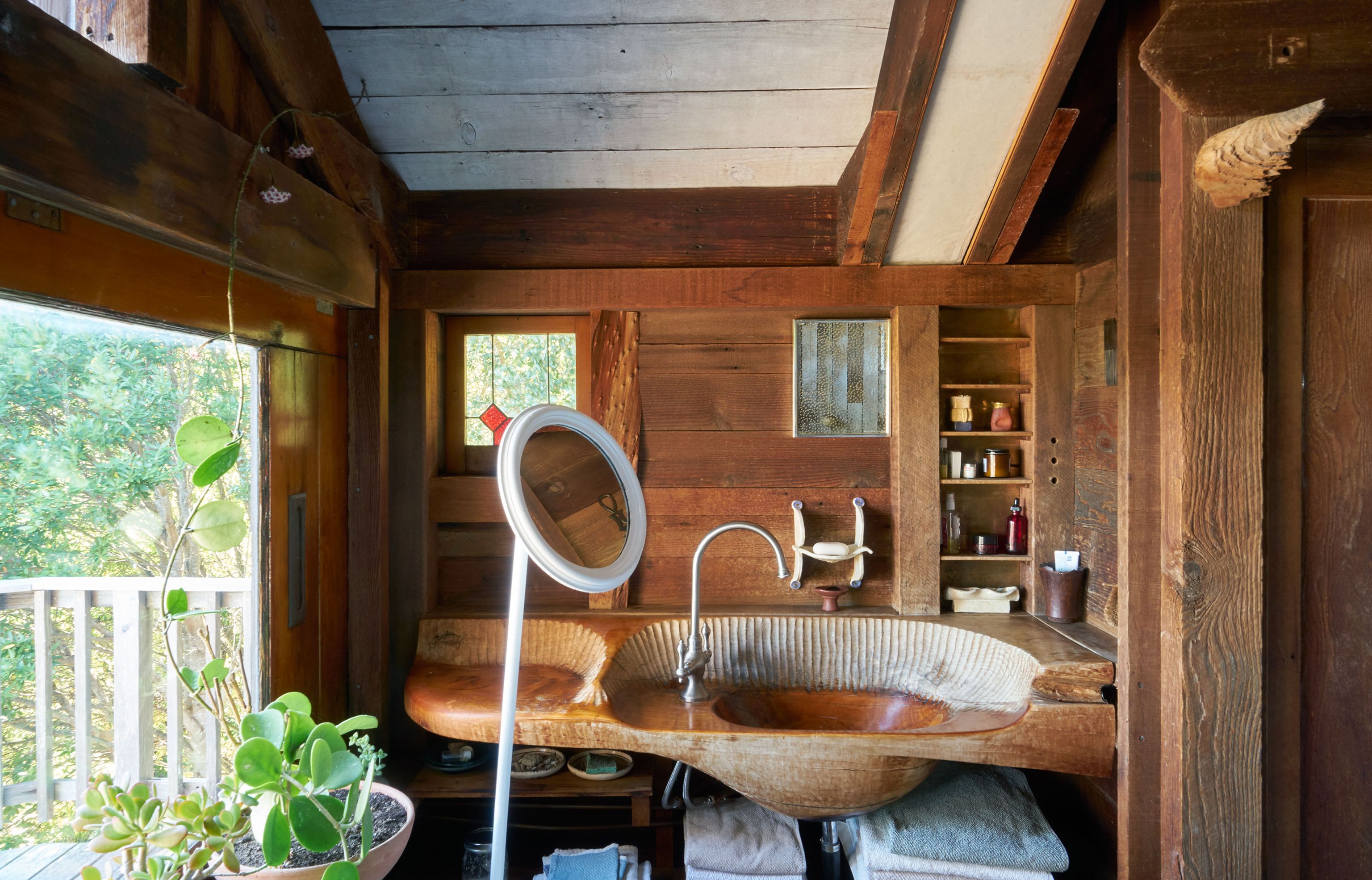
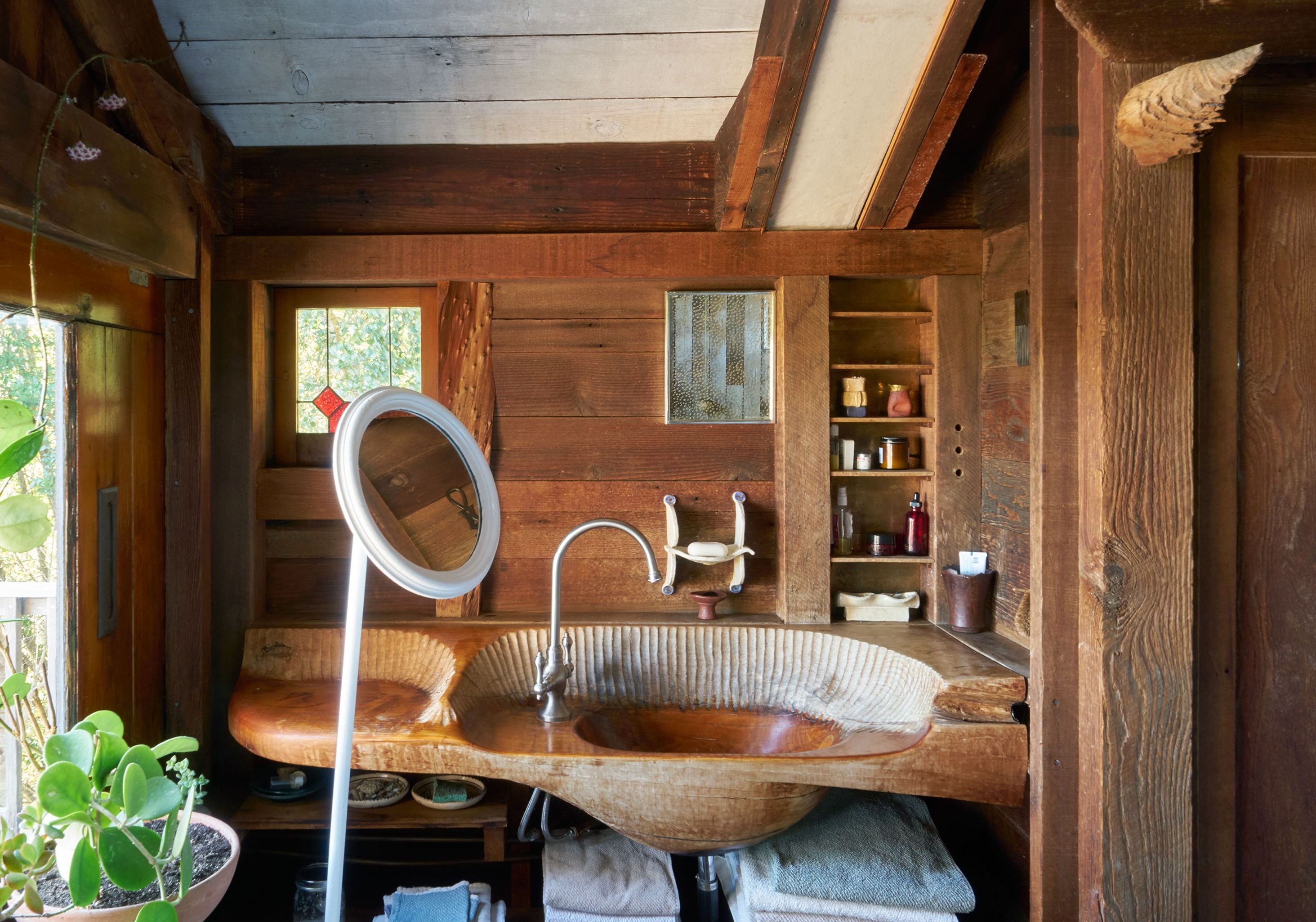
Carsten in der Elst This hand-carved cypress bathroom sink is my definition of character, boldness and a direct approach to interior design. The entire JB Blunk Estate feels like a total work of art, and I imagine it’s almost impossible to choose a favorite corner of the house.

A Landscape Turned Into a Home
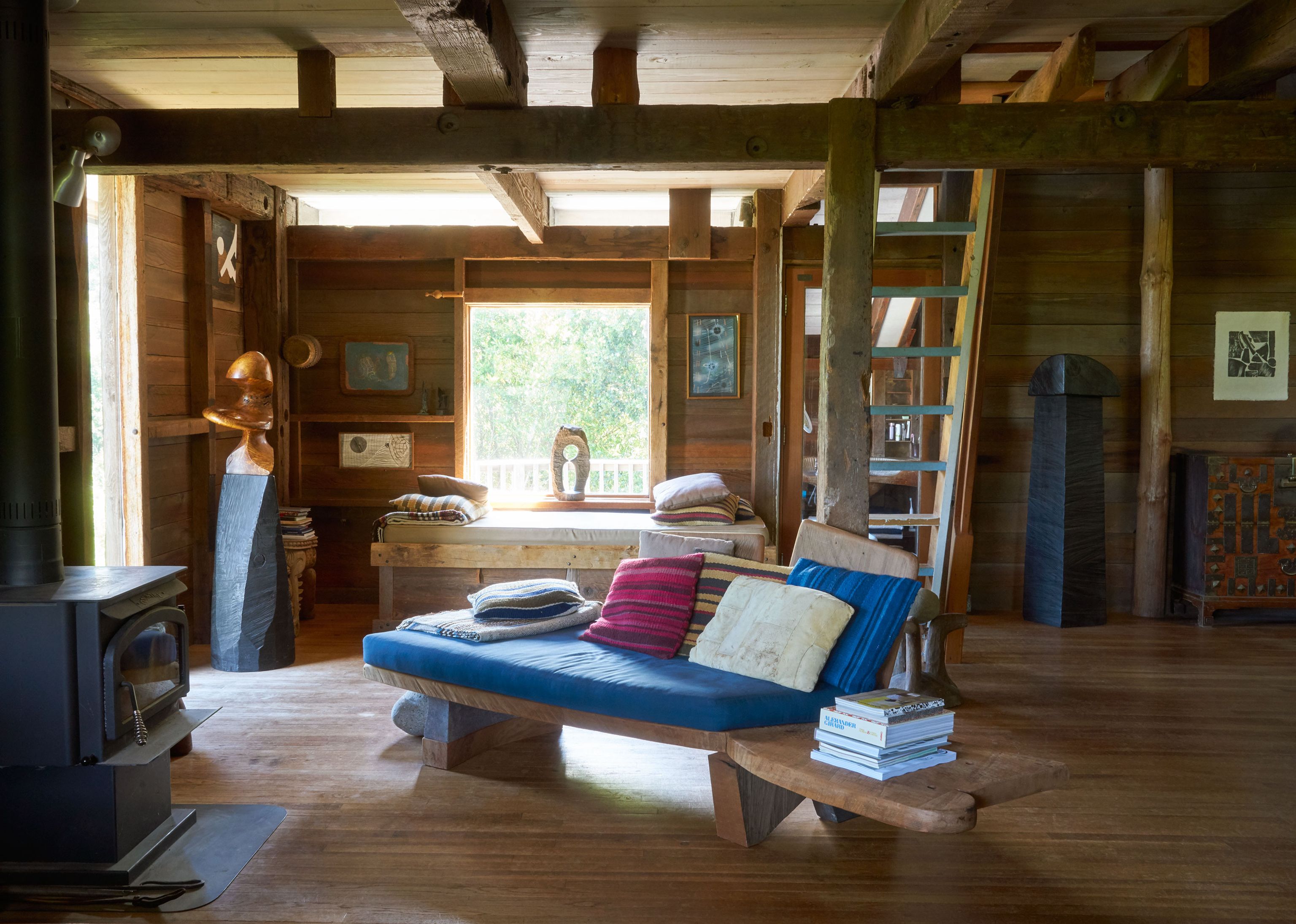
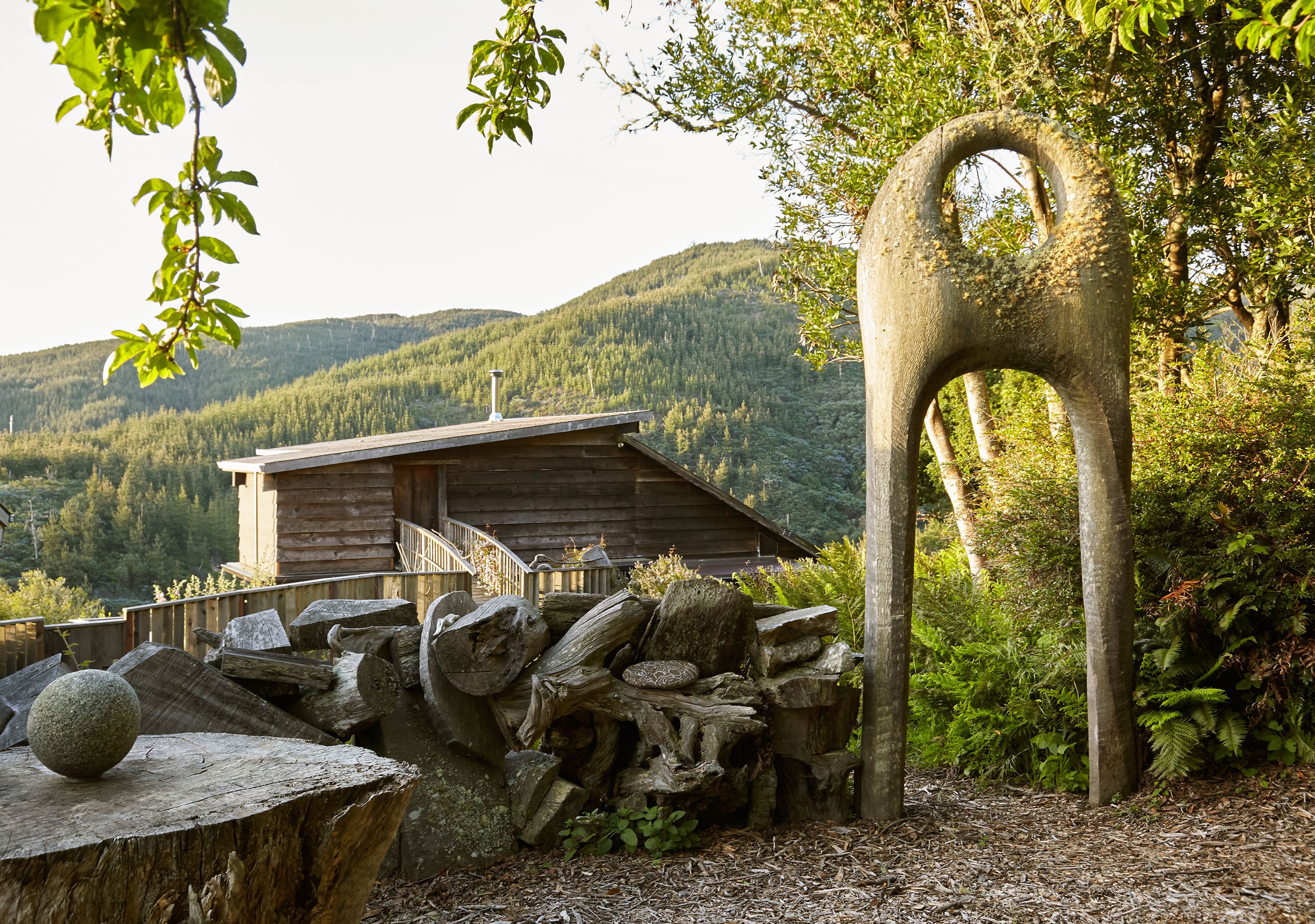
Blunk House is the most personal and enduring work of American sculptor J.B. Blunk, developed gradually between 1959 and the early 1960s on a wooded ridge above Inverness in Northern California. Overlooking Tomales Bay, the site was not treated as a neutral plot of land, but as an active material in itself. From the beginning, Blunk and his first wife, Nancy Waite, approached the project as something far beyond domestic architecture. Blunk famously described the entire setting, structure, workshop, garden, animals, and surrounding terrain, as a single unified artwork, a “one big sculpture,” where daily life and artistic production were inseparable.

A Life Shaped Between Japan and California
J.B. Blunk’s approach to building and making was deeply shaped by his experiences after serving in the Korean War, when he remained in Japan instead of returning immediately to the United States. There, he encountered a way of working where craft, environment, and living space existed as one continuous system, influenced by figures such as Isamu Noguchi and master ceramic traditions he studied under Rosanjin Kitaoji. When he returned to California in 1954, this philosophy became the foundation for everything he later built. In 1957, he and Nancy Waite settled in Marin County after being offered land by artist Gordon Onslow Ford, giving them the rare opportunity to construct a home entirely on their own terms.

Built Slowly, Made from What Was Found
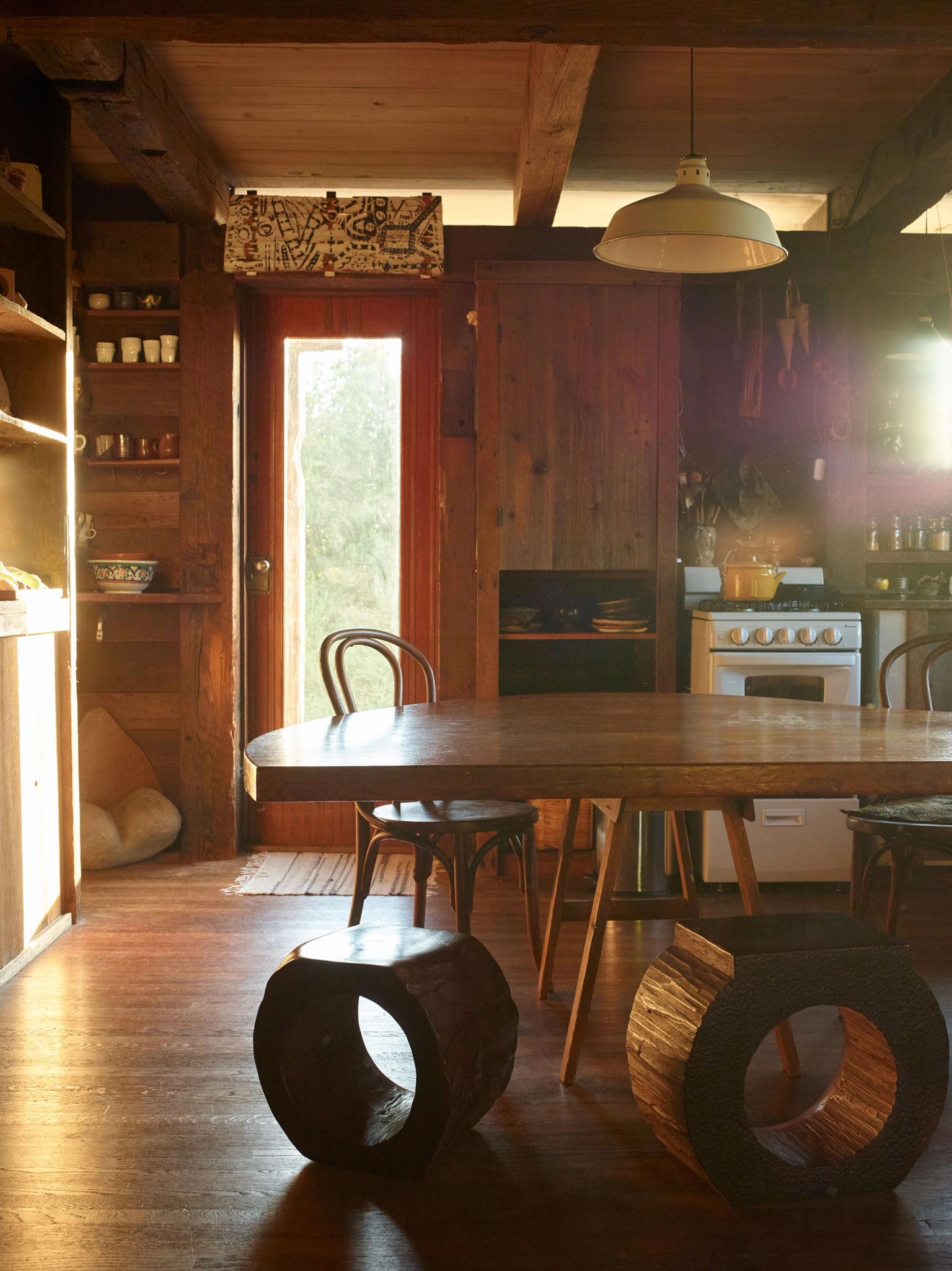
Construction of the house unfolded over years with very limited financial resources, which led Blunk to rely almost entirely on reclaimed and naturally sourced materials. Redwood beams were salvaged from shipyards, weathered timber was collected from defunct lumber yards, and discarded architectural elements such as doors and windows were reused rather than replaced. The structure was essentially “assembled” around what was available, rather than following a fixed architectural plan. This method also defined the spatial logic of the building: openings align with forest views and shifting daylight, while the form of each room is determined by the length and character of recovered materials. The result is a building that feels grown rather than constructed.

Interior Worlds of Function and Sculpture
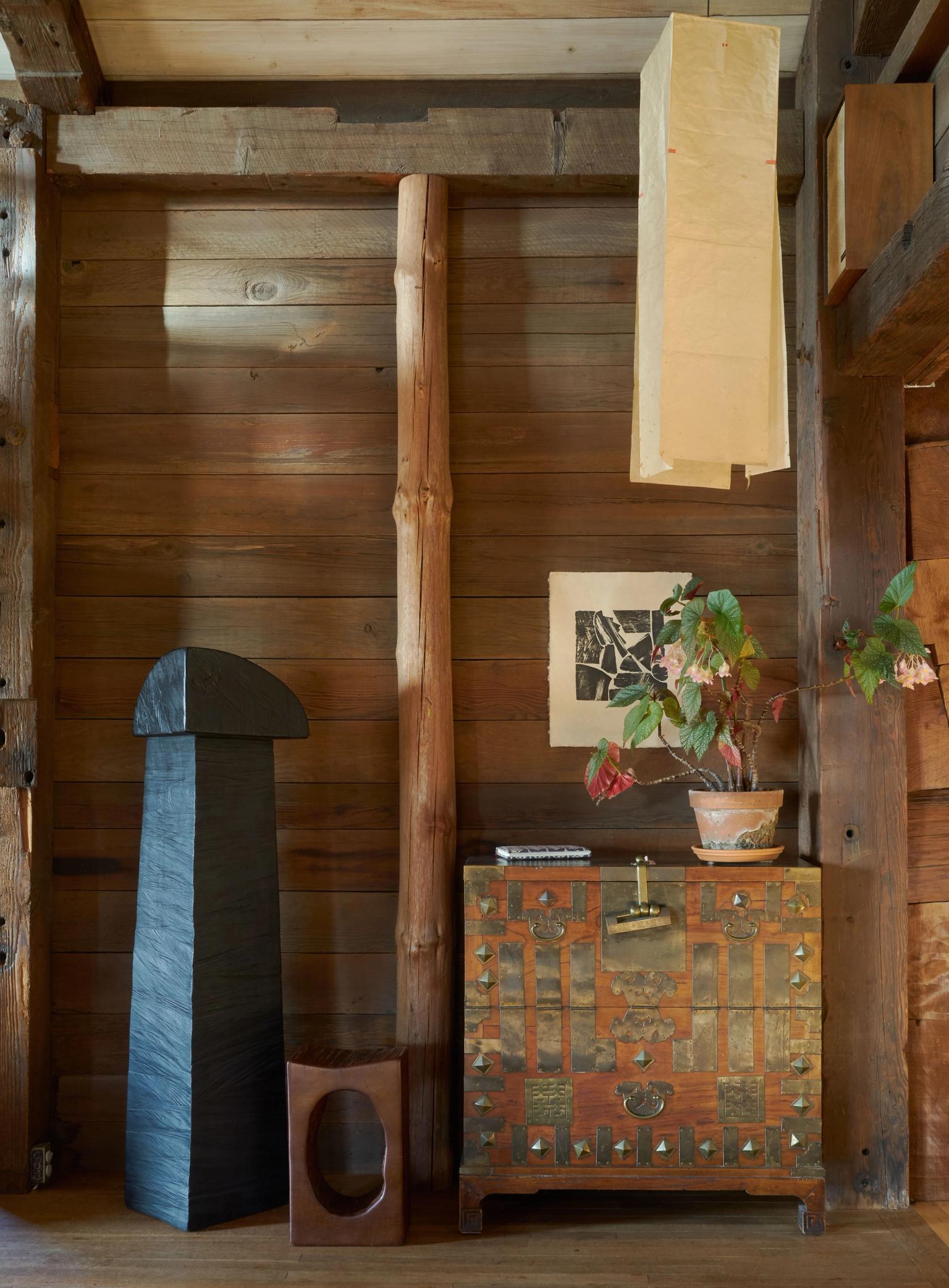
Inside, Blunk House extends the same material logic into every detail of daily life. Furniture, surfaces, and utilitarian objects were all created by Blunk himself, often carved directly from wood using chainsaws, chisels, and improvised tools. A cypress trunk became a bathroom sink; fragments from studio production were reassembled into a “scrap wall” made from redwood remnants; and salvaged glass, stone, and metal were integrated into doors, handles, and fittings. The interior also became a display environment for objects collected during Blunk’s travels through Japan, Indonesia, and South America, placed alongside his own ceramics, sculptures, and works by friends. Rather than a static arrangement, the space was continuously reconfigured, reflecting an ongoing dialogue between use, memory, and making.
A House That Never Stopped Evolving
Blunk lived in the house until his death in 2002, and its role has continued to shift without losing its original identity. Afterward, it functioned as an artist residency, most notably through the JB Blunk Residency, which welcomed international artists into the home and studio environment, allowing them to work directly within the same conditions that shaped Blunk’s practice. Over time, the house has witnessed generations of change, family life, departures, returns, and new creative occupants, while remaining fundamentally intact in spirit. Instead of becoming a preserved monument, it continues to operate as an active, lived-in structure, embodying Blunk’s belief that making, living, and nature are not separate categories, but part of the same ongoing process.