
Christian Thompson
Black Gum
- PhotographerChristian Thompson
Jessica Bellef As a Bidjara man, Thompson’s work references the history of Indigenous peoples in Australia and his personal experiences. He presents the complexity of this history through incredible costuming and makeup, often depicting himself as sublime characters that demand attention. Thompson’s work has been acquired by all the major Australian art institutions, and I’m instantly stopped in my tracks whenever I see one on display.
Between Identity and Representation
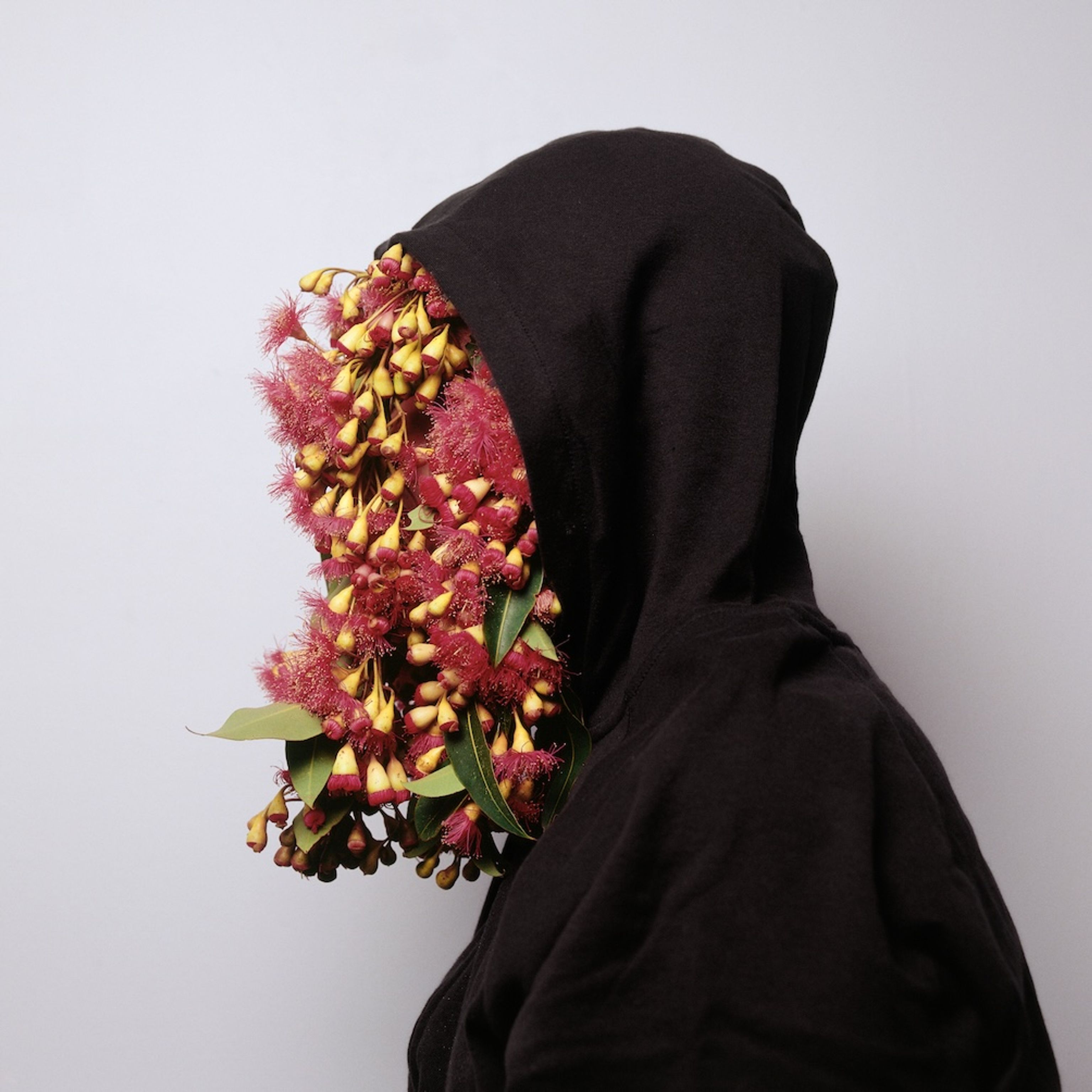
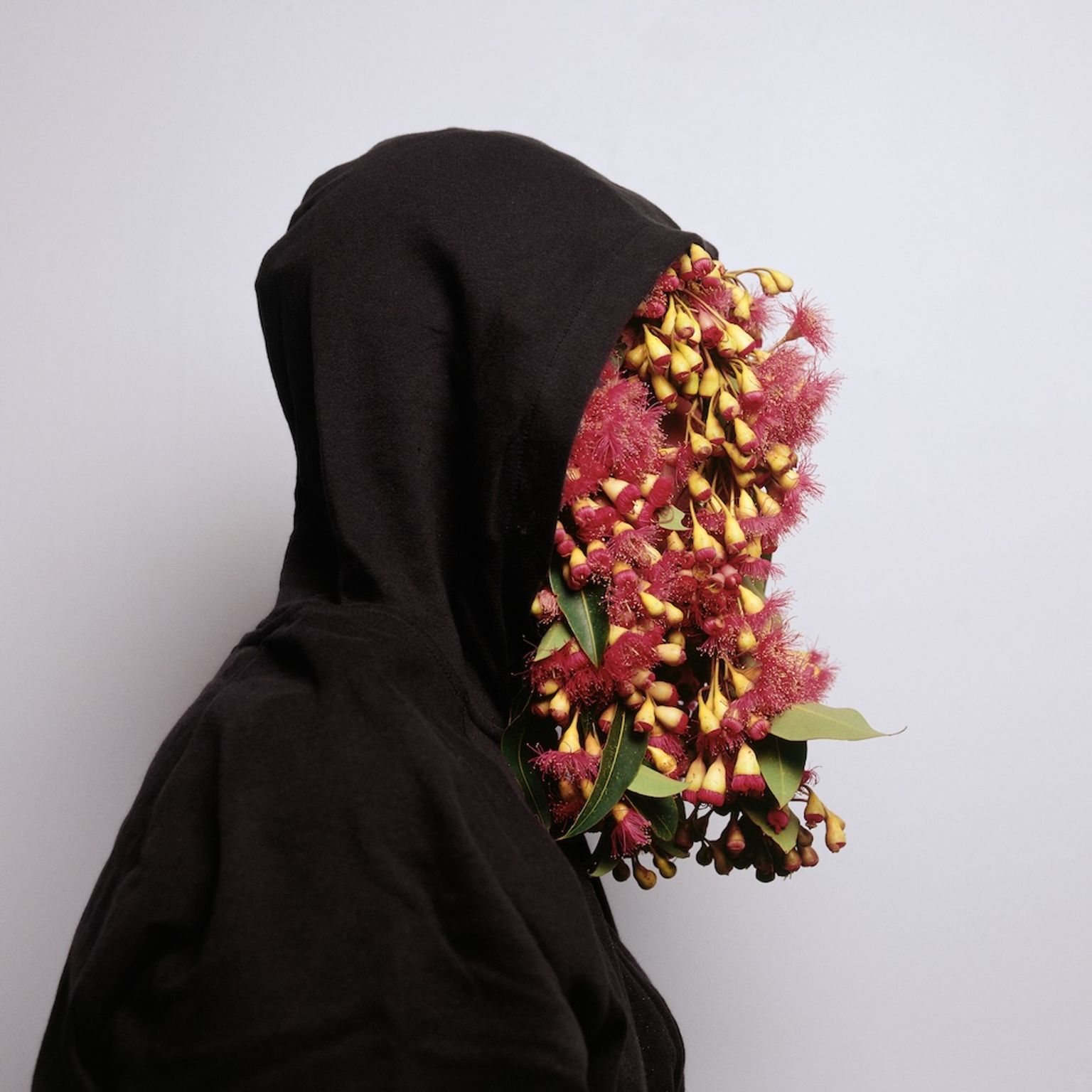
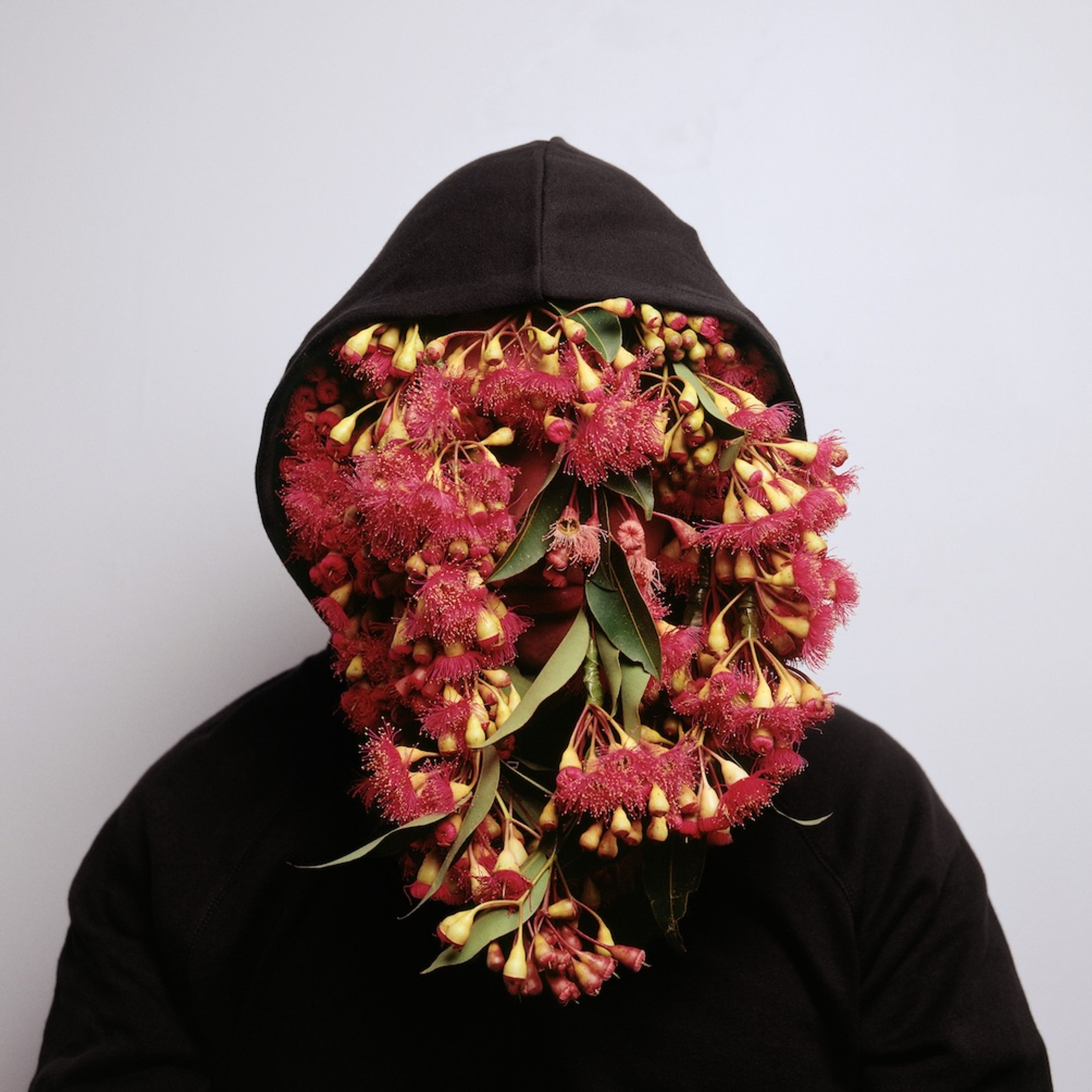
In Black Gum, part of Australian artist Christian Thompson’s photographic series Australian Graffiti (2008), the artist covers his face with eucalyptus blossoms while wearing a black hoodie. The image brings together two distinct symbols: native Australian flora and a garment associated with global black youth culture. By combining them, Thompson explores Indigenous identity, belonging and the stereotypes that continue to shape how Aboriginal people are seen and represented.

Memories of Country
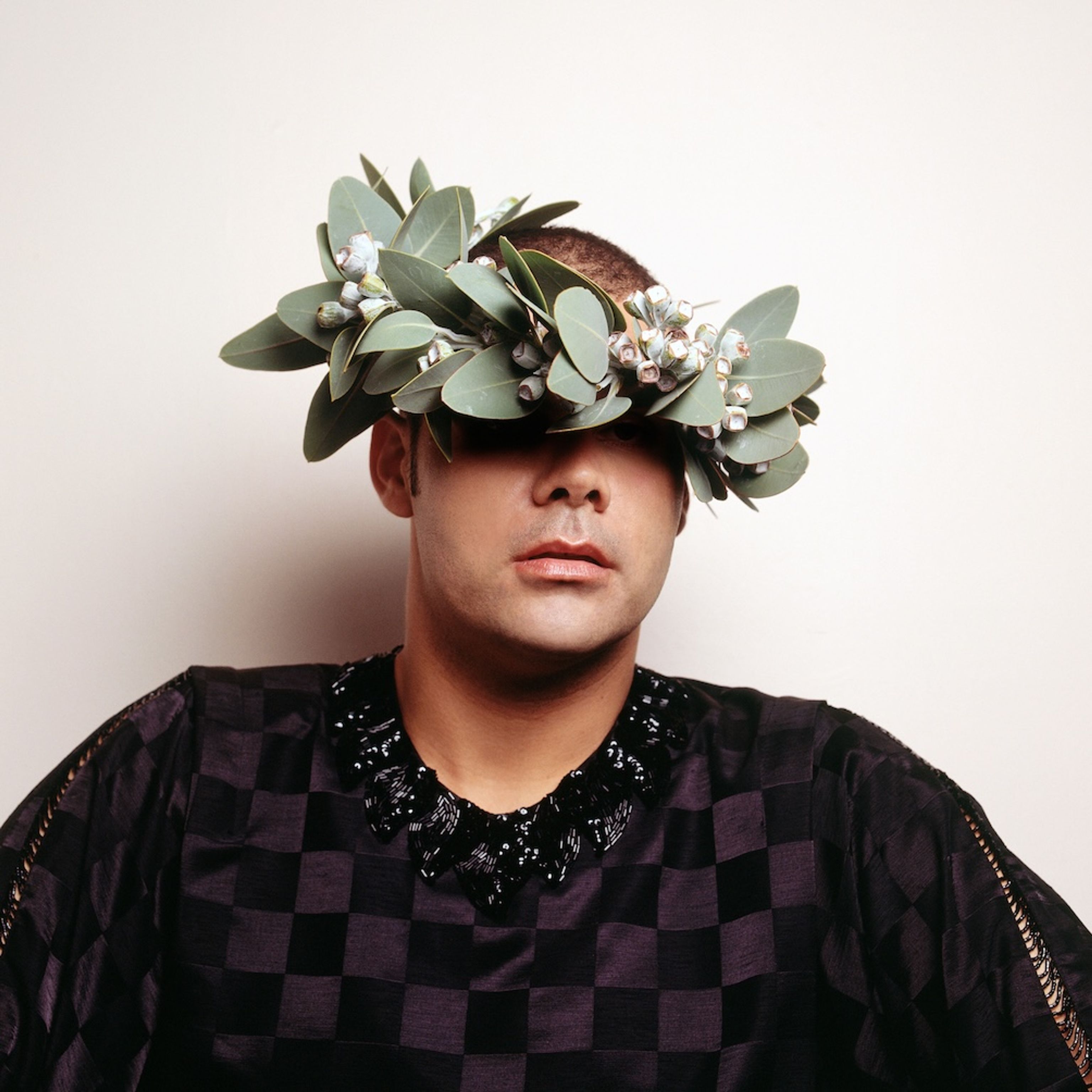
Thompson is a Bidjara man from Barcaldine in central-west Queensland, and memories of growing up in the Australian outback are central to Australian Graffiti. The series draws on the desert flowers he remembers from childhood, which would transform the landscape when they came into bloom. He makes headdresses from native flowers and leaves, including eucalyptus, banksia and kangaroo paw, turning these plants into more than decorative elements.
For Thompson, the flowers represent both a personal connection to his homeland and a broader relationship to Country. They also carry associations with Australian identity and patriotism. Often described as Australian natives, the plants take on a more complex meaning in his work, addressing historical ideologies that have reduced Aboriginal people to part of the natural landscape rather than recognizing them as people with their own cultures, histories and sovereignty.

Concealment and Visibility
In Black Gum, a cluster of eucalyptus blossoms obscures Thompson’s face beneath the hood of his black sweatshirt. This concealment is characteristic of his conceptual portraits, in which his own body becomes a means of carrying ideas about identity, history and culture. Rather than simply presenting himself to the viewer, he uses costume, gesture and natural materials to construct an image with several layers of meaning. The black hoodie introduces another dimension. Recognisable across different countries and cultures, it references black youth culture while pointing to the discrimination experienced by Aboriginal and Torres Strait Islander people in Australia. The covered face also complicates the idea of portraiture: Thompson is both the subject of the photograph and a figure through which broader social and political histories are explored.

The Meaning of Australian Graffiti
The series’ title suggests an assertion of identity and belonging. Like graffiti, which can mark a place and declare a presence, Thompson’s portraits establish an Indigenous presence that is both ancient and ongoing. The flowers and carefully constructed headdresses become a way of making that presence visible, while the concealment of the face protects the subject from being fully exposed or defined by the viewer. This tension is particularly evident in Black Gum, which belongs to a group of three photographs featuring the same hooded figure in different poses. The images resemble mugshots, drawing attention to the disproportionately high rates of Indigenous incarceration in Australia. The work connects the individual figure to wider systems of discrimination, using a familiar visual format to question the structures behind it.


Reclaiming Representation
Thompson’s work responds to a longer history of representing Indigenous Australians through the eyes of others. Through his self-portraits, he takes control of how his body and cultural identity appear before the camera. Rather than reproducing historical images, he uses his own image, costume and symbolism to create new representations that connect the past with the present.
His wider practice spans photography, sculpture, video, performance and sound, and often explores identity, sexuality, gender, race and memory. Thompson completed a doctorate in fine art at the University of Oxford in 2015, becoming the first Aboriginal Australian admitted to the university in its 900-year history. Across these different mediums, he continues to examine how identity is formed, represented and understood.


A Symbol of Presence
In Black Gum, the eucalyptus blossoms are at once fragile and powerful. They evoke the colours and memories of Thompson’s childhood while carrying a wider significance connected to Country, identity and the right to self-representation. Set against the black hoodie, they bring together personal memory and contemporary political realities in a single image. The photograph does not offer a straightforward portrait of the artist. Instead, it uses concealment, symbolism and the history of portraiture to challenge familiar ways of seeing Indigenous identity. What emerges is an image that asserts belonging while resisting the assumptions through which that belonging has so often been defined.