
Simon Norfolk
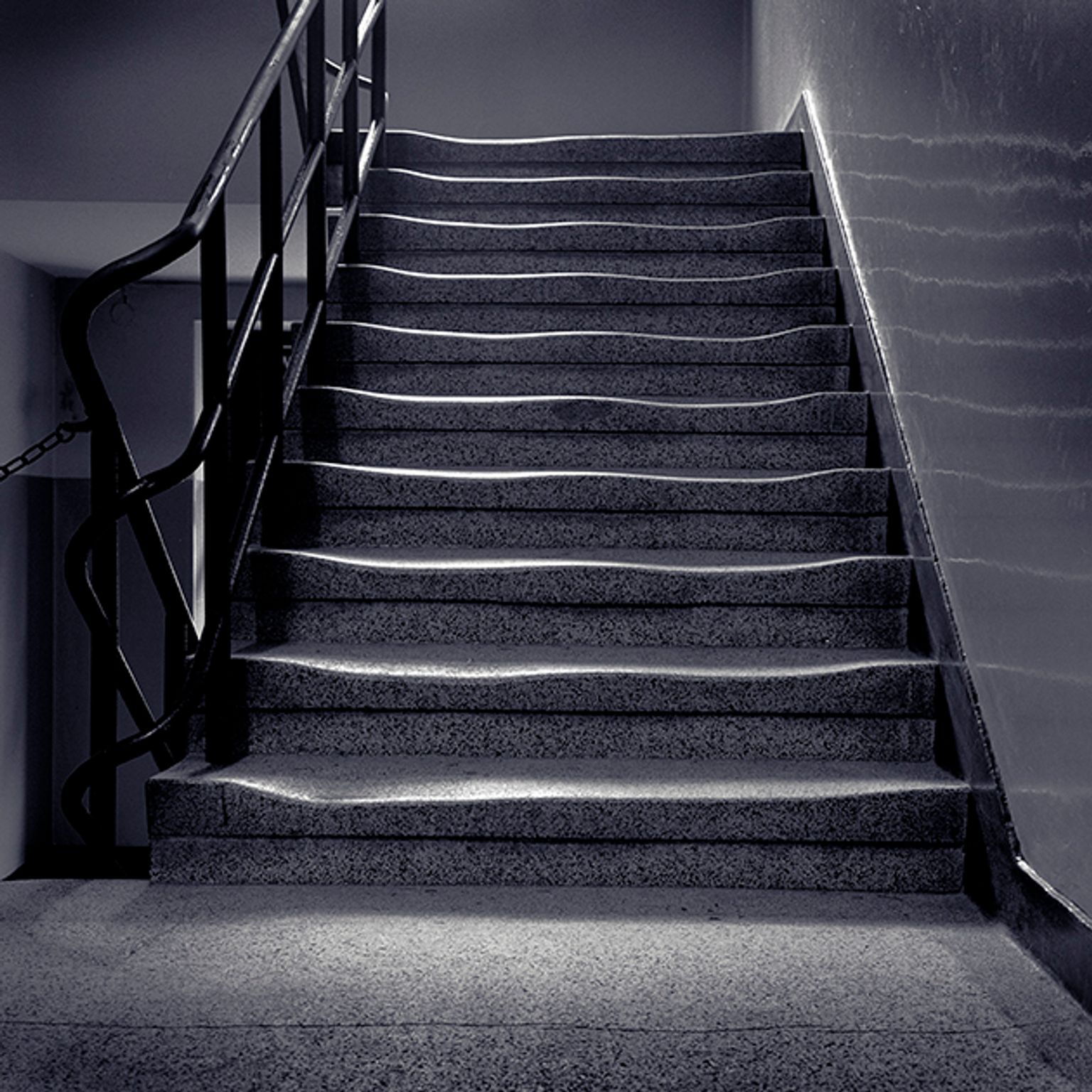
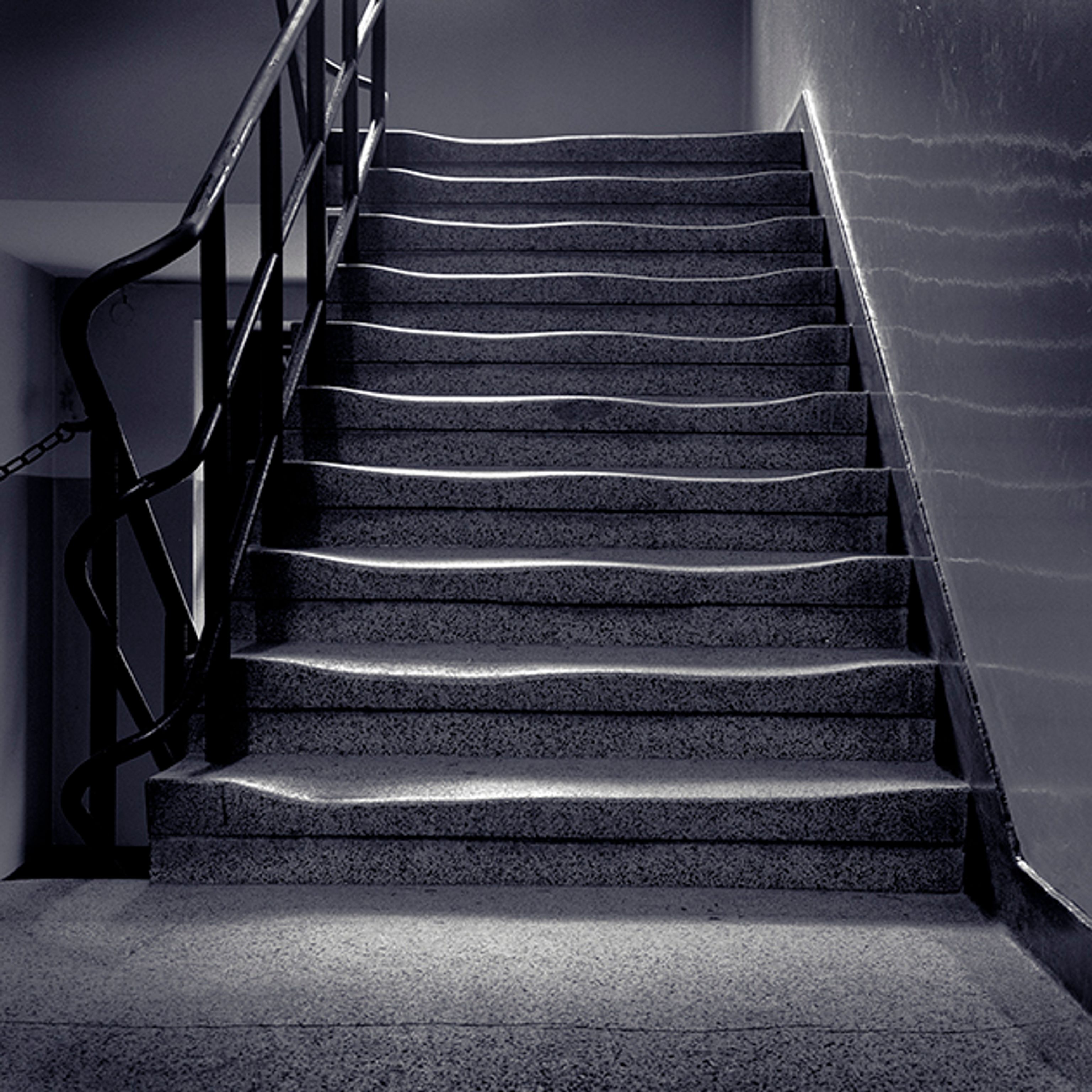
Auschwitz: Staircase in a prison block
- PhotographerSimon Norfolk
Edmund Sumner Simon Norfolk has long shaped my thinking – the way a single, almost incidental detail can carry the weight of a much larger truth. A staircase, worn down by time. Stone softened by thousands of footsteps. Only later do you realise it is the central stair at Auschwitz concentration camp. The image doesn’t change - but everything else does.This is the power of traces.

For Most of It I Have No Words
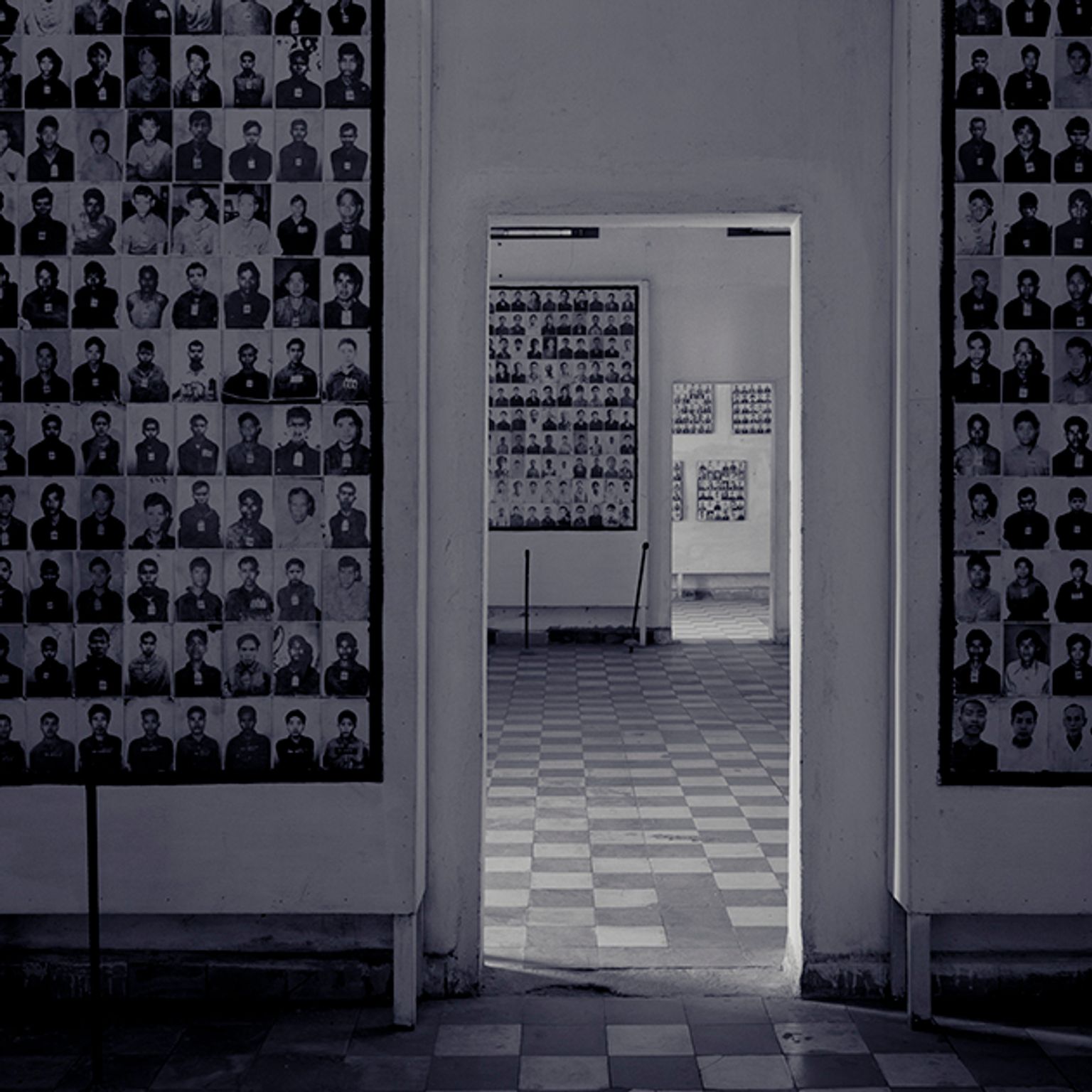
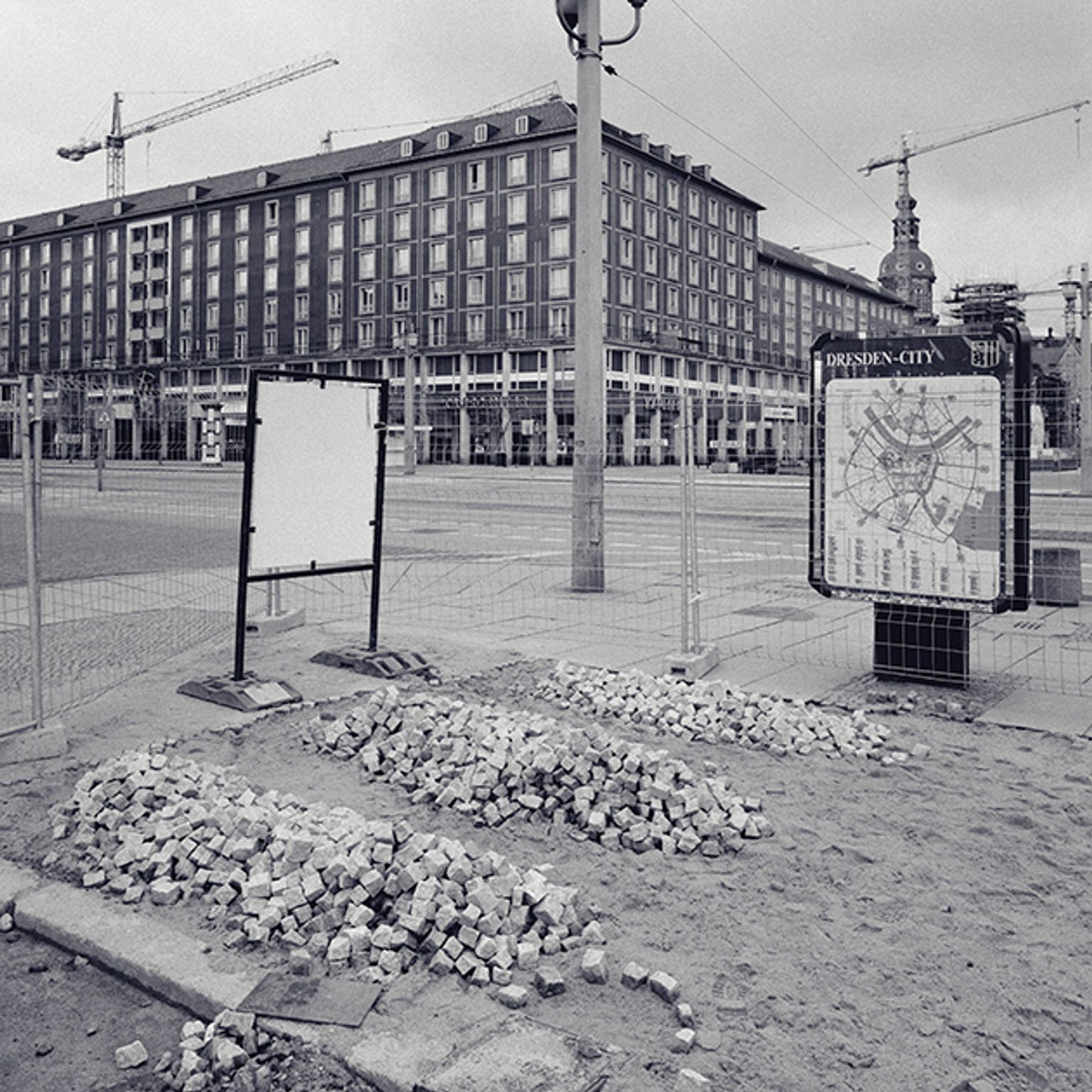
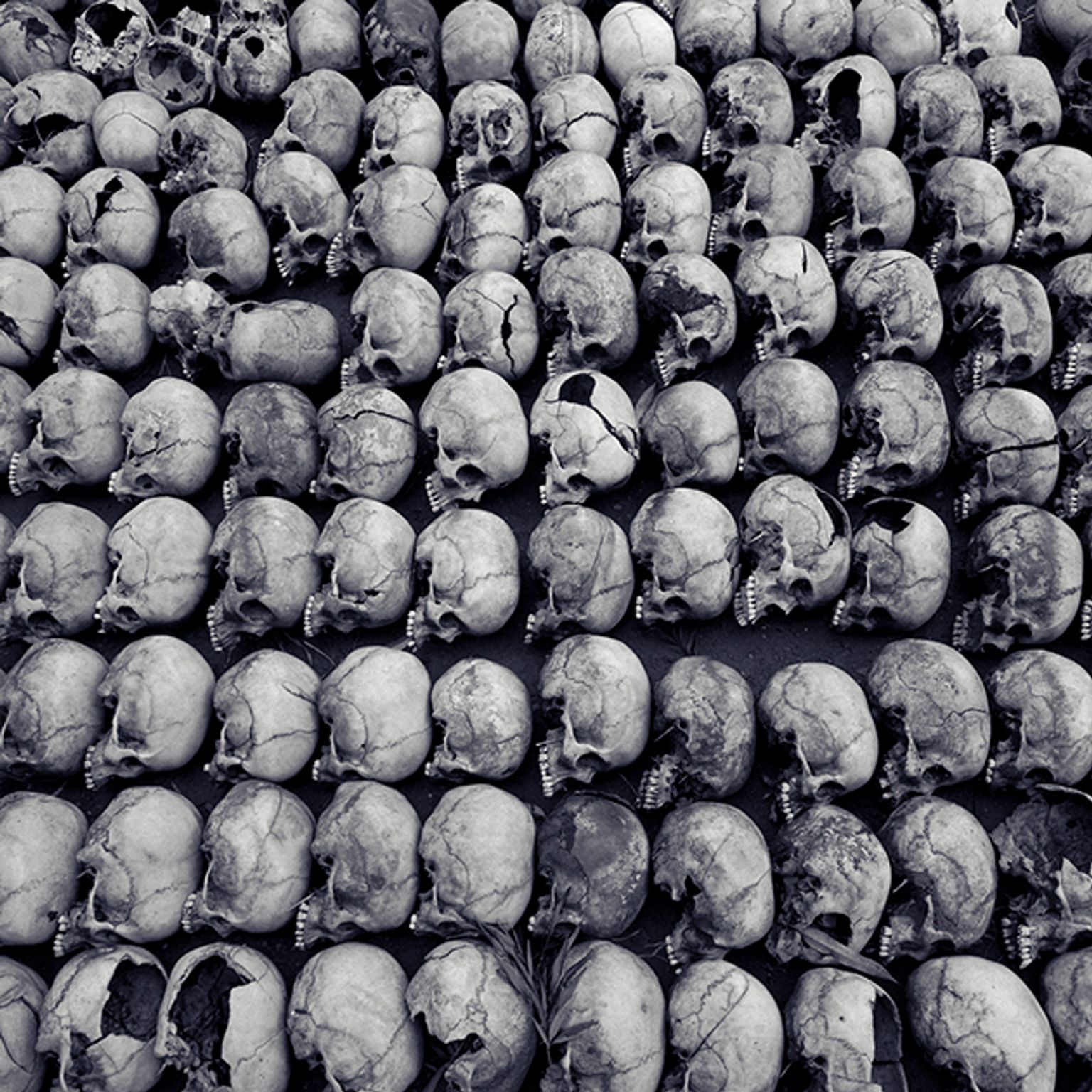
Simon Norfolk’s For Most of It I Have No Words: Genocide, Landscape, Memory (1998), published by Dewi Lewis Publishing with an essay by Michael Ignatieff, is a photographic project that examines how genocide is remembered through place rather than through people. Instead of documenting violence as it happens, Norfolk travels to former sites of atrocity – Rwanda, Cambodia, Vietnam, Auschwitz, Dresden, Ukraine, Armenia, and Namibia – and photographs what remains after.
The work focuses on landscapes, buildings, and small physical traces, asking how history lingers once the events themselves have passed. It marks a shift away from photojournalism toward a slower, more reflective approach, where the images are not about witnessing action, but about understanding its aftermath and the difficulty of holding on to memory.

Auschwitz
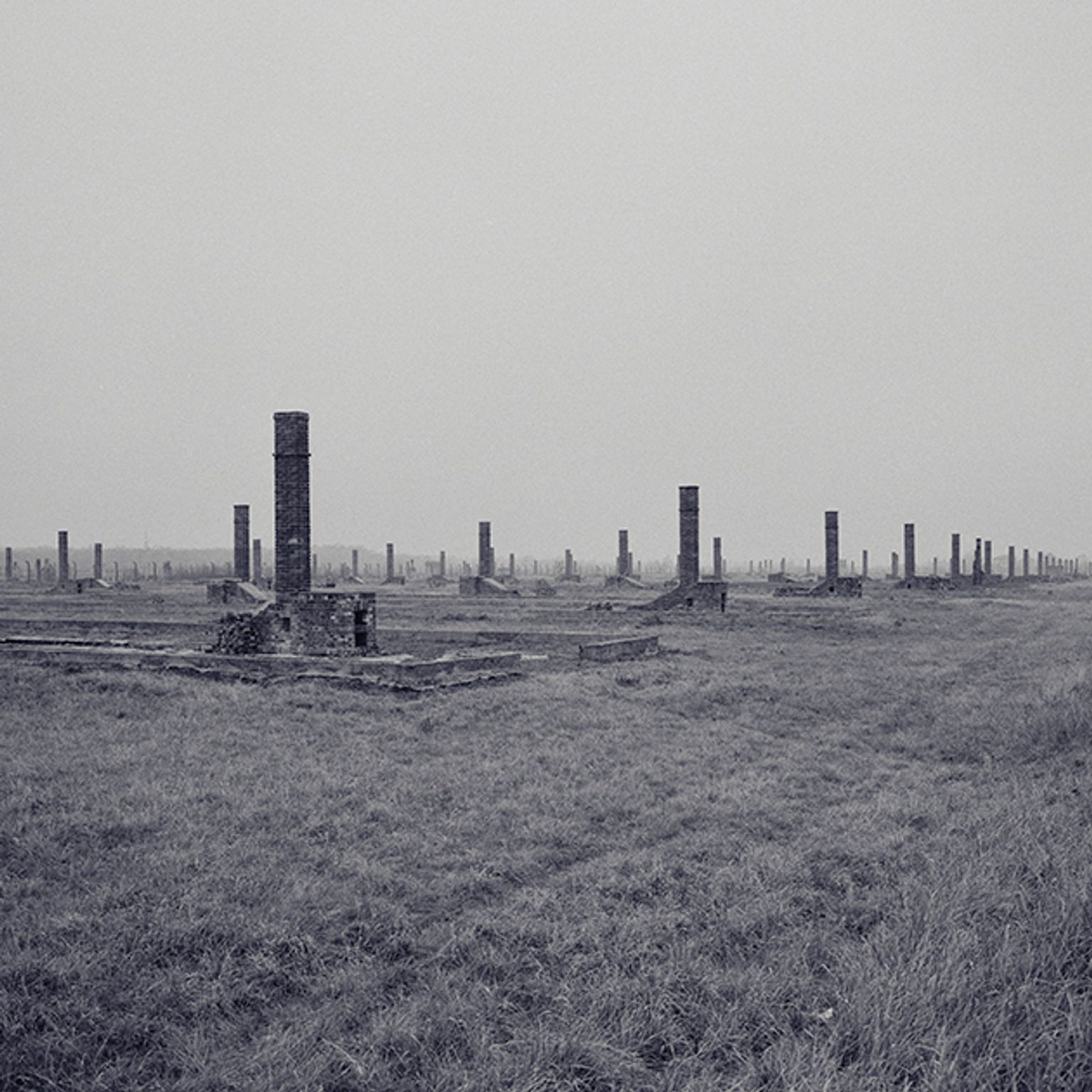
Within this wider body of work, Auschwitz: Staircase in a prison block (c. 1998) focuses on a single, almost unremarkable element: a worn staircase inside the camp. There are no figures, no dramatic gestures, only the steady erosion of steps shaped by countless unseen movements. In isolating this fragment, Norfolk avoids the familiar visual language of atrocity and instead directs attention to the physical residue of human presence. The staircase becomes a kind of index of time: each mark a repetition, each surface a record. What is shown is minimal, but what it holds is immense – an entire history compressed into texture, light, and form.






Against the Image of Spectacle
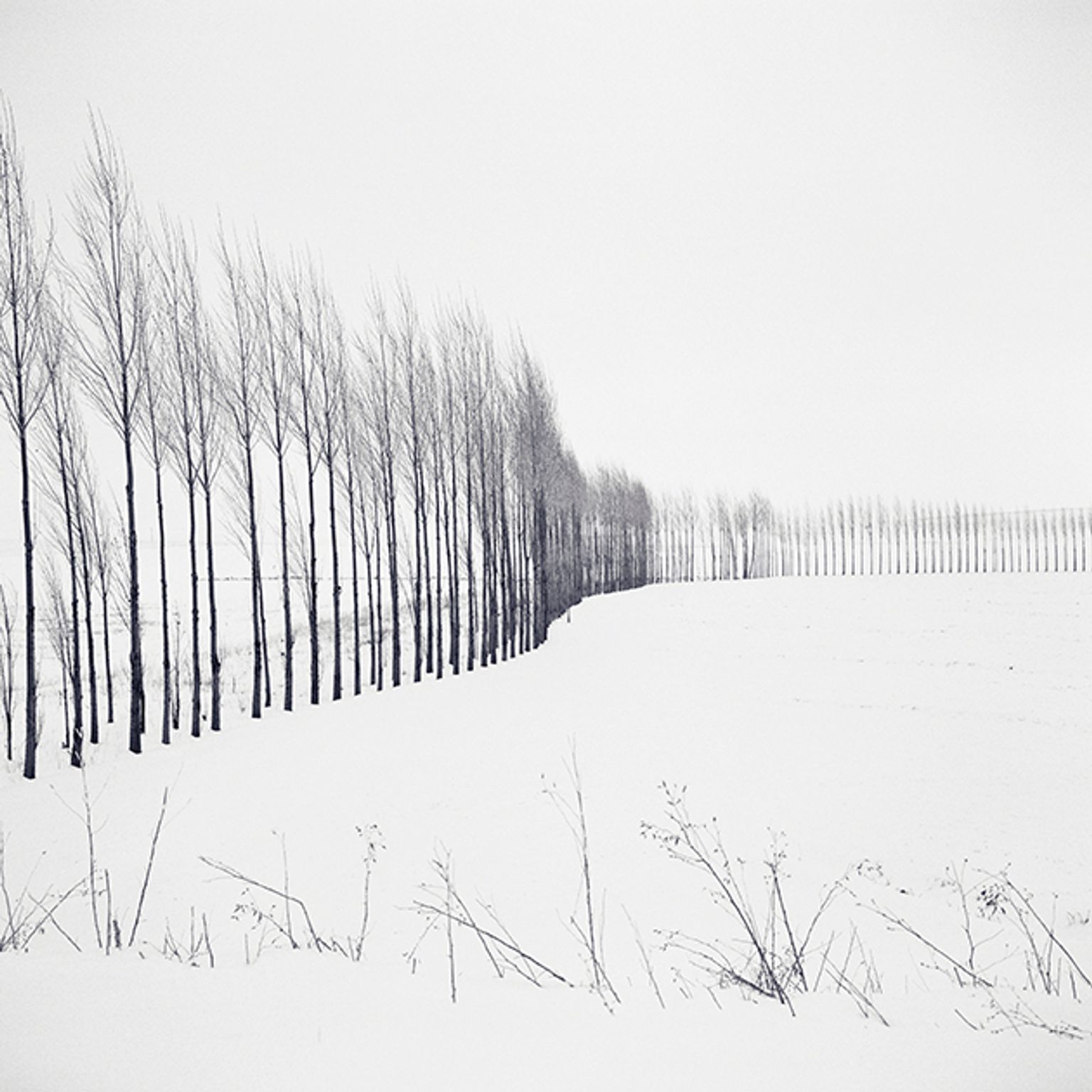
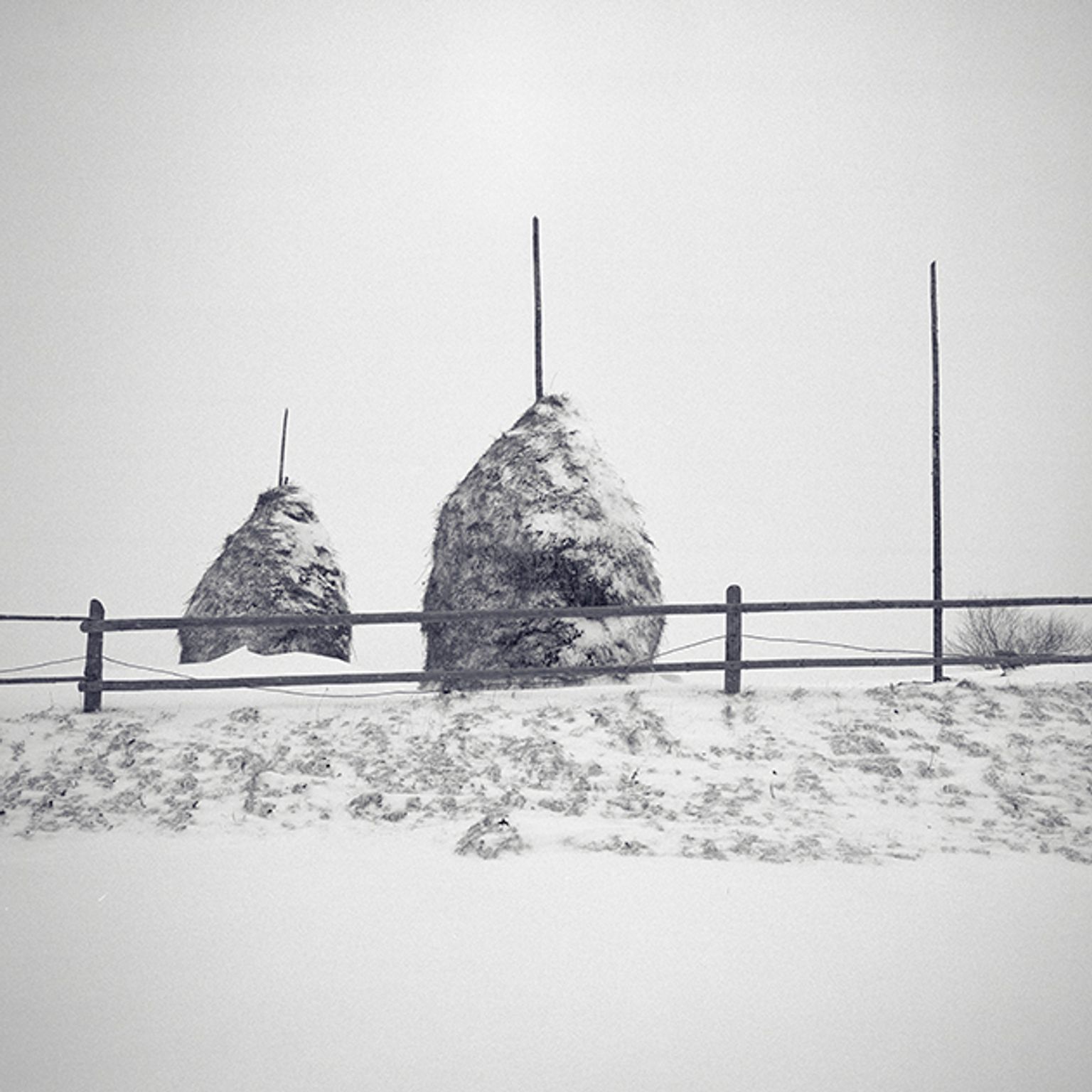
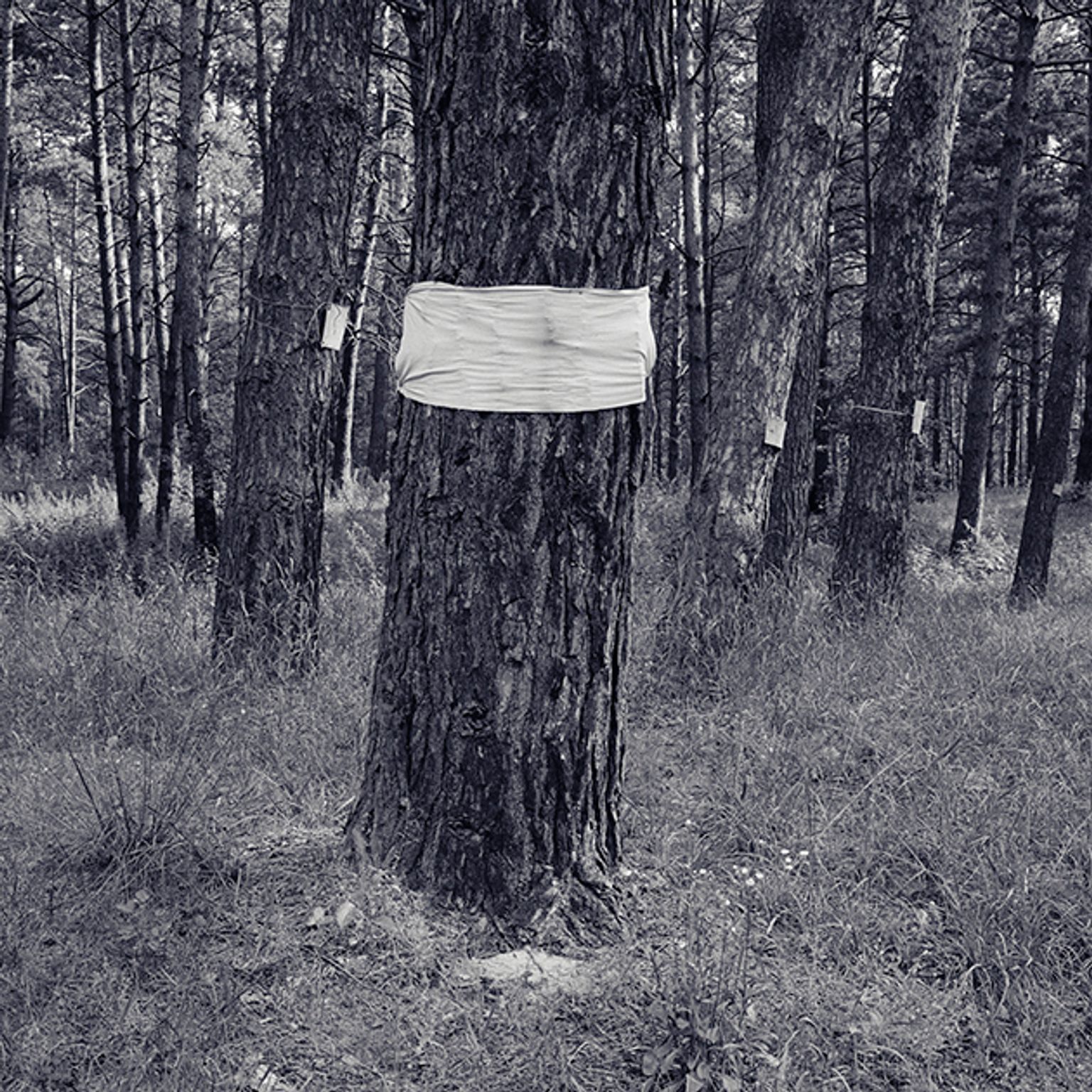
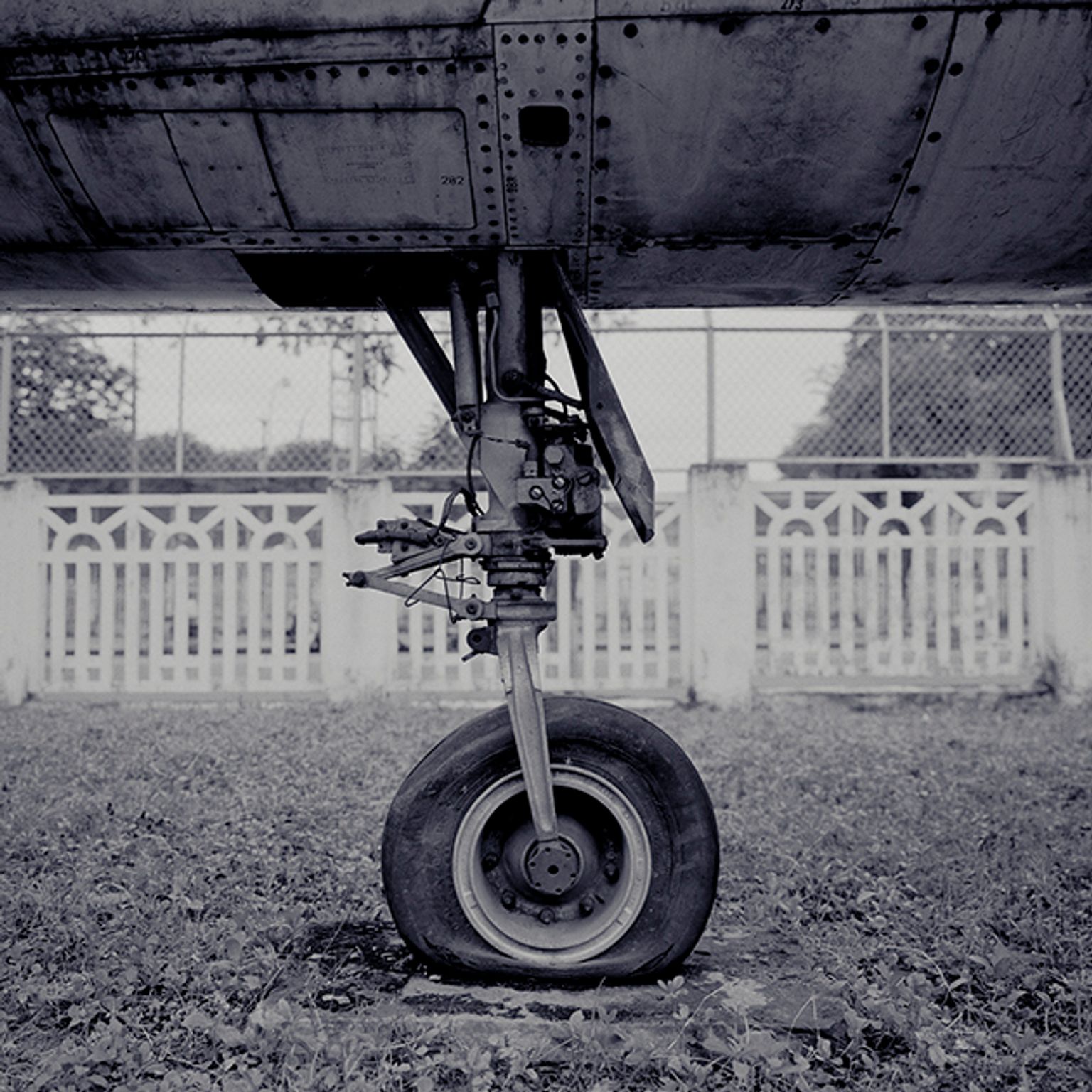
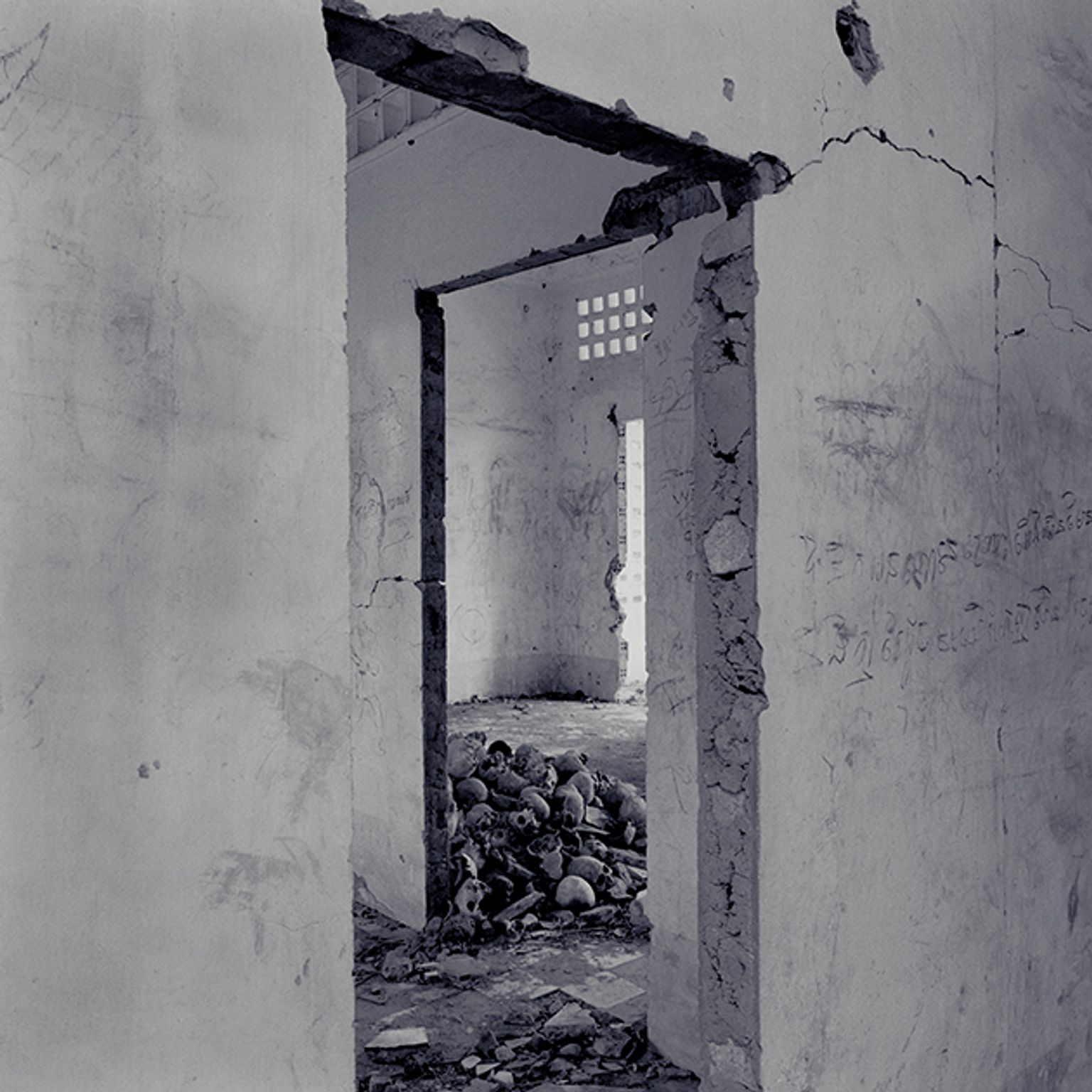
Norfolk’s photographs are deliberately austere. Working primarily in black-and-white gelatin silver prints, he rejects the immediacy and emotional shorthand of traditional war photography. There are no victims on display, no moments of action. Instead, the images operate through distance and restraint, aligning more closely with traditions of landscape and ruin photography than with reportage. This choice is both ethical and conceptual: by removing the human figure, Norfolk resists turning suffering into something consumable. The absence of people does not empty the image, it intensifies it, forcing attention onto the spaces where events unfolded and where their echoes still remain.

Memory, Erosion, and Time
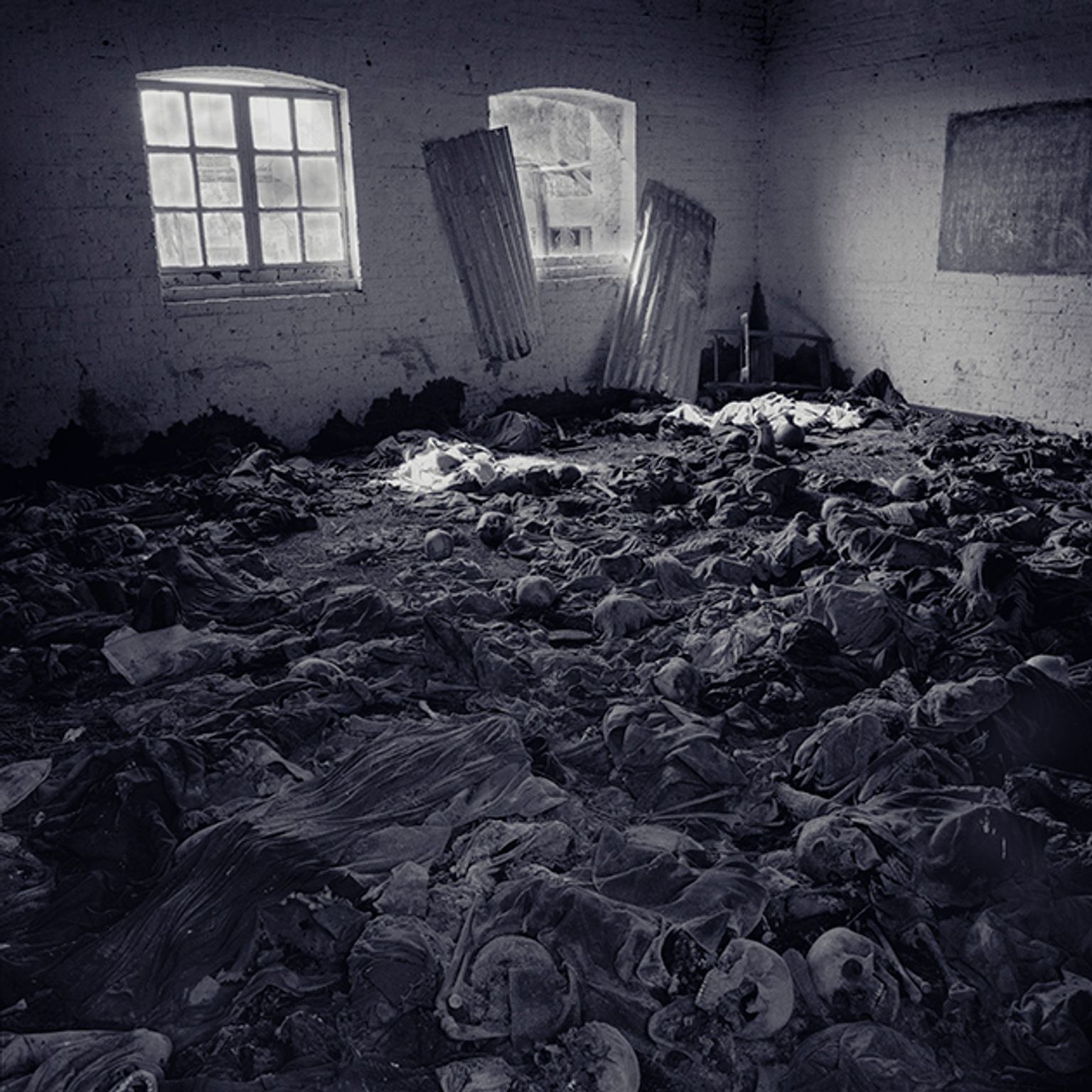
Across the series, a pattern emerges: the further one moves from the event, the less visible its traces become. In Rwanda, bodies and personal belongings still lie exposed; in Auschwitz, architecture persists; in older sites such as Namibia’s Omaheke Desert, the landscape has nearly erased all evidence. The staircase sits somewhere in between – still legible, yet already slipping into abstraction. This gradual disappearance is central to the project. Norfolk is not only documenting places of genocide, but also the process by which they fade from collective memory. The photographs act as a countermeasure to that erosion, holding onto what can still be seen while acknowledging how much has already been lost.


A politics of looking
Born in Nigeria in 1963 and based in Brighton, Simon Norfolk has consistently explored how war shapes both physical environments and cultural consciousness. In this series, his interest expands beyond battlefields to what he has described as a broader “military landscape”, a world formed by conflict, even when conflict is no longer visible.
For Most of It I Have No Words has been exhibited internationally, including at the Imperial War Museum, and its works are held in collections such as the Museum of Fine Arts Houston and the Portland Art Museum. Yet its impact lies less in where it is shown than in how it asks to be read: slowly, attentively, and with an awareness that what is absent from the image may be as important as what remains.