
A Skyspace by James Turrell
As Seen Below – The Dome
- ArtistJames Turell
- PhotographerAdam Mørk, Florian Holzherr and Mads Smidstrup
OUTOFARTGALLERY Light and its influence on the surroundings is the central focus of this work. James Turrell delivers a true masterpiece with As Seen Below. The work engages all the senses and needs to be experienced in reality, not merely viewed from a distance.

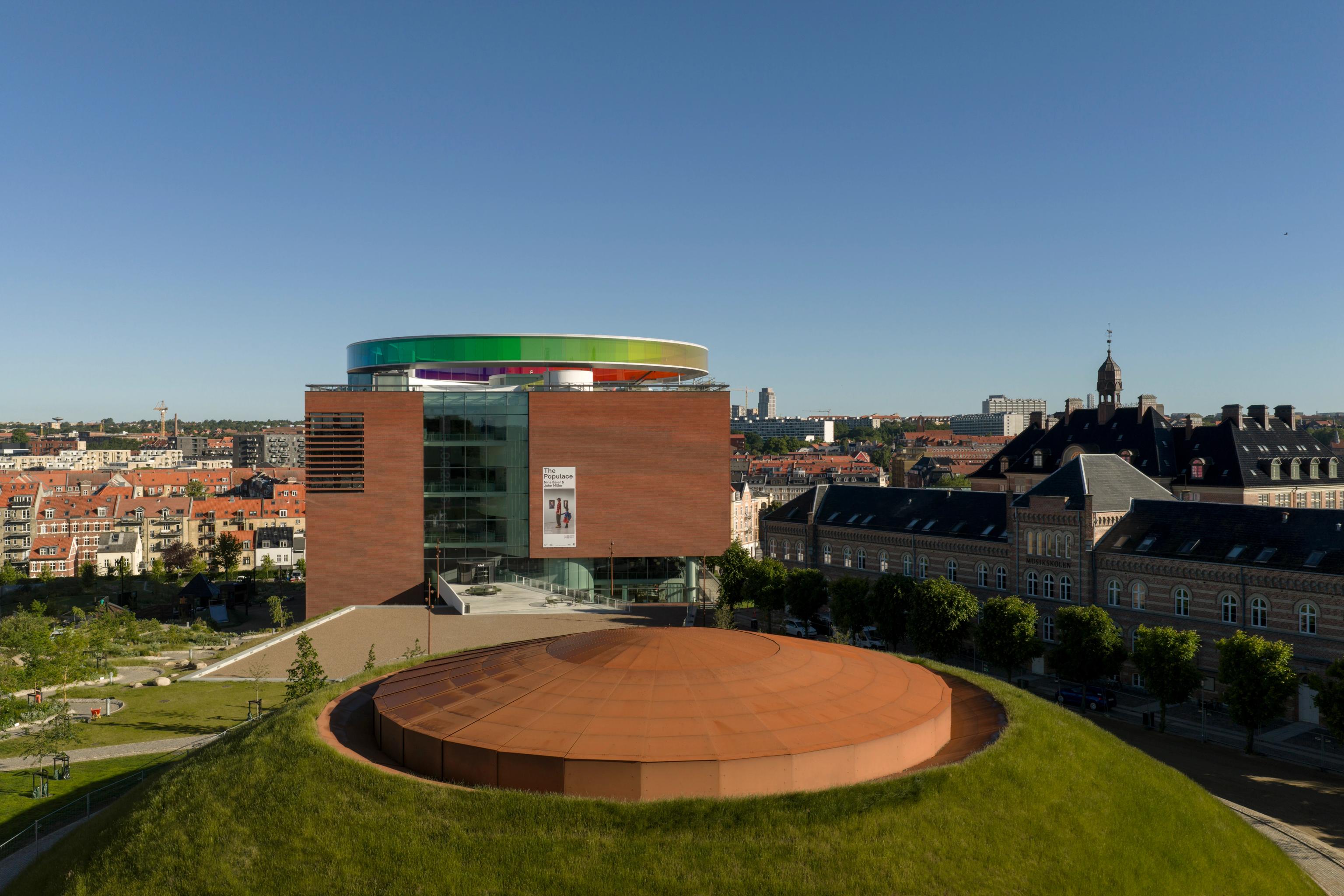
As Seen Below: A New Landmark Rises Beneath Aarhus
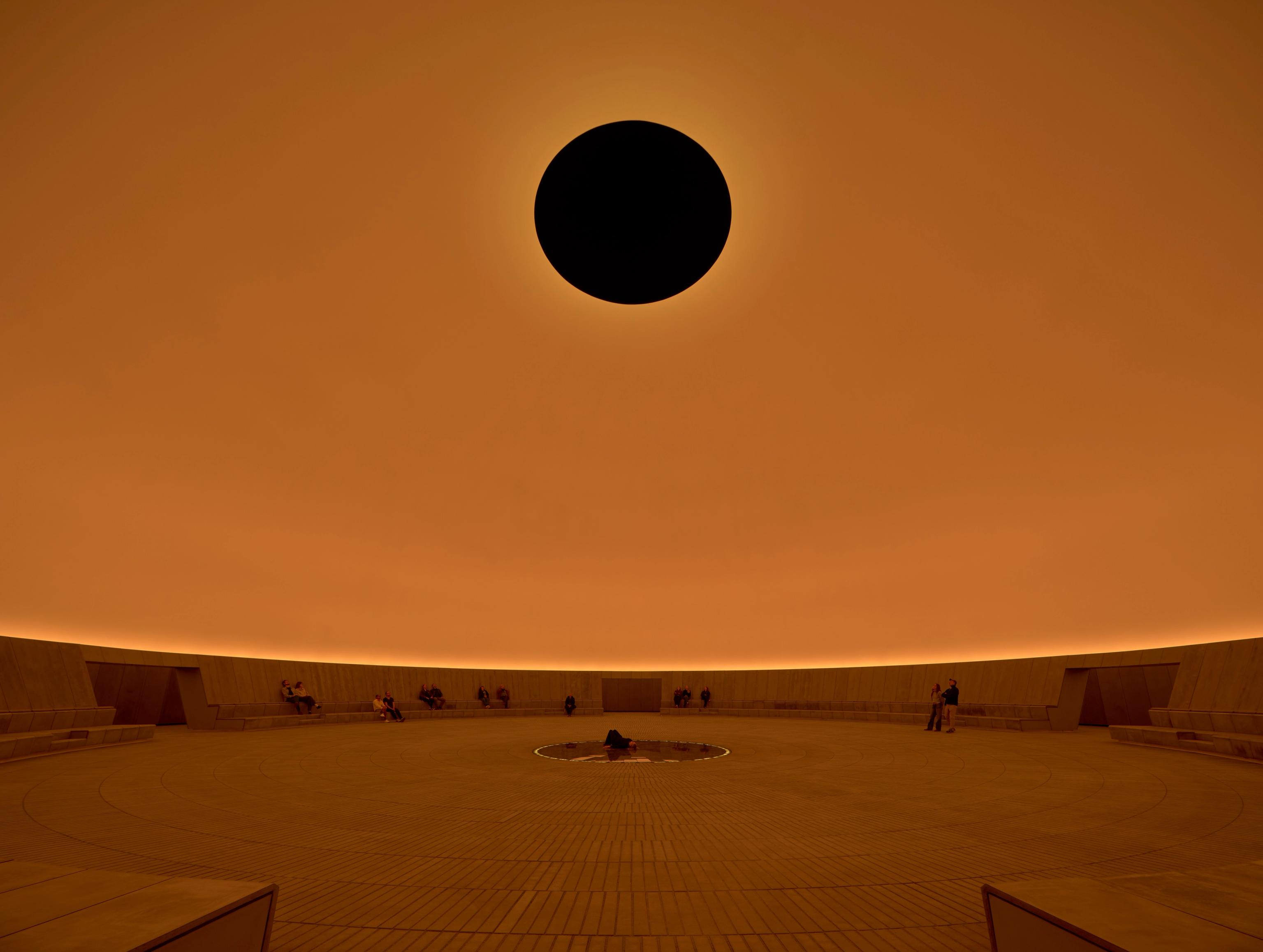
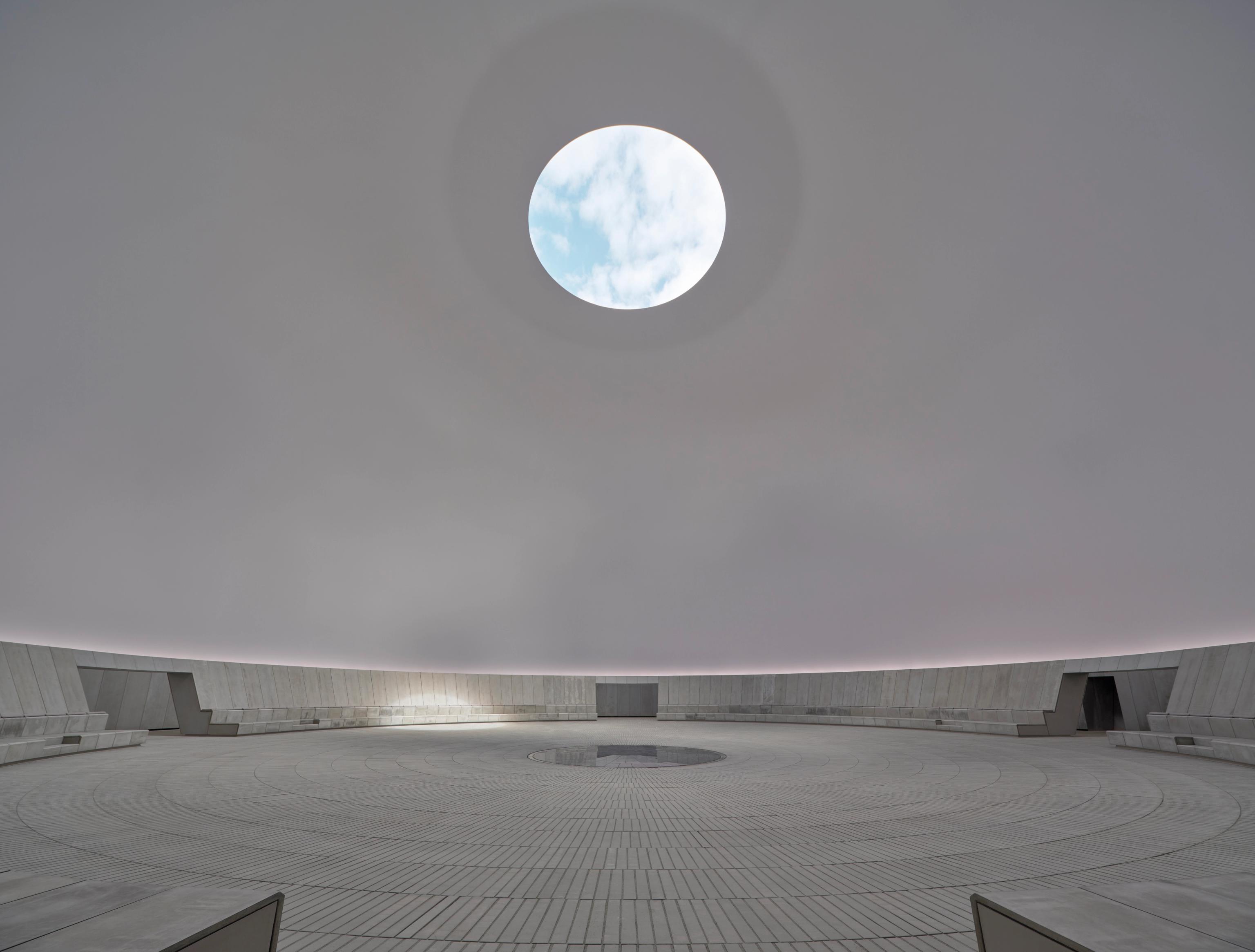
On 19 June 2026, ahead of the summer solstice, ARoS Aarhus Art Museum opened its most ambitious commission to date. As Seen Below, The Dome, a Skyspace by James Turrell, is the artist's largest Skyspace ever installed within a museum, and its opening marks a milestone in both Turrell's long career and the museum's history. Measuring 16 metres in height and 40 metres in diameter, the work is Turrell's hundredth Skyspace, and its scale has been compared to that of the Pantheon in Rome.
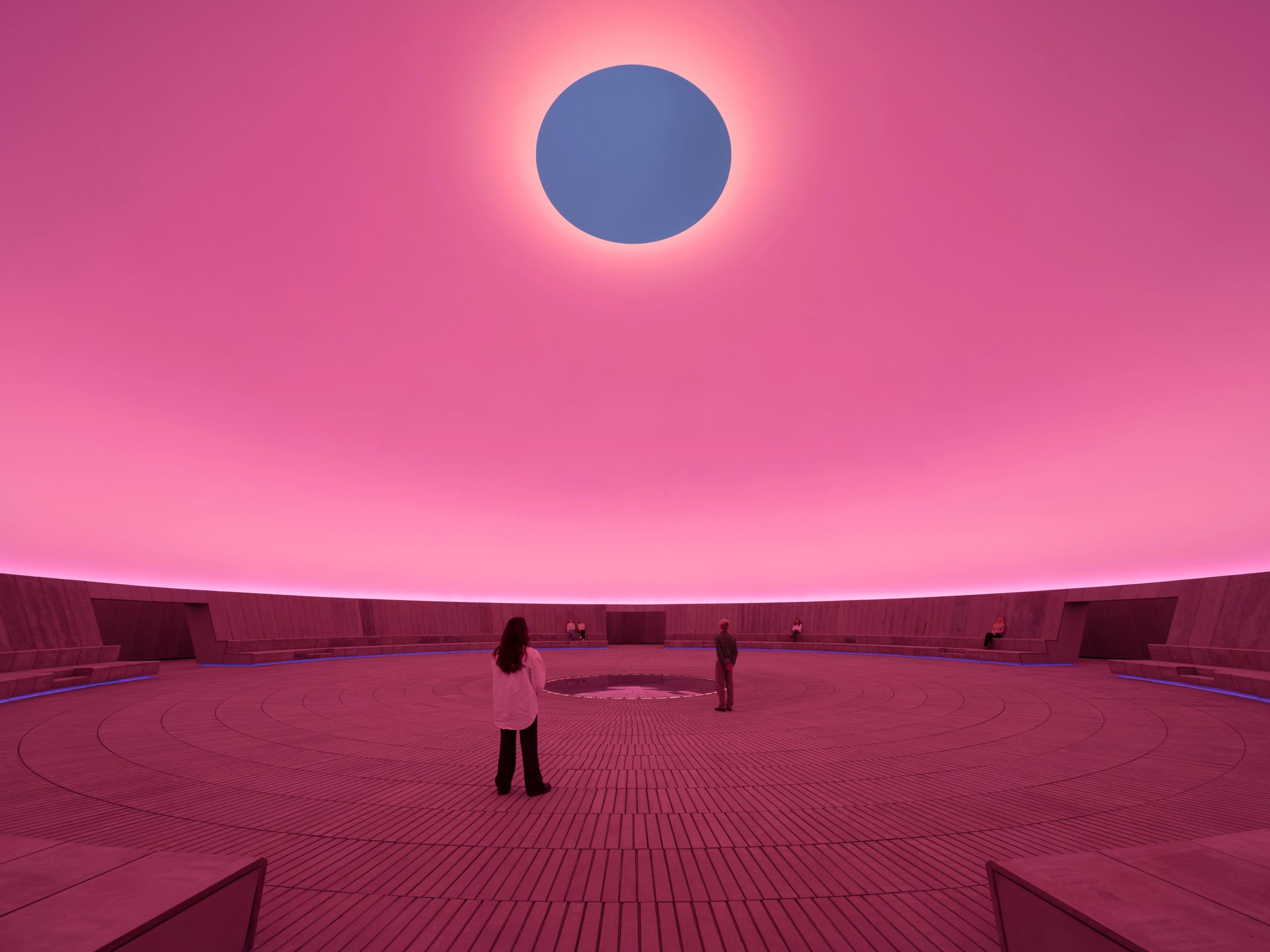
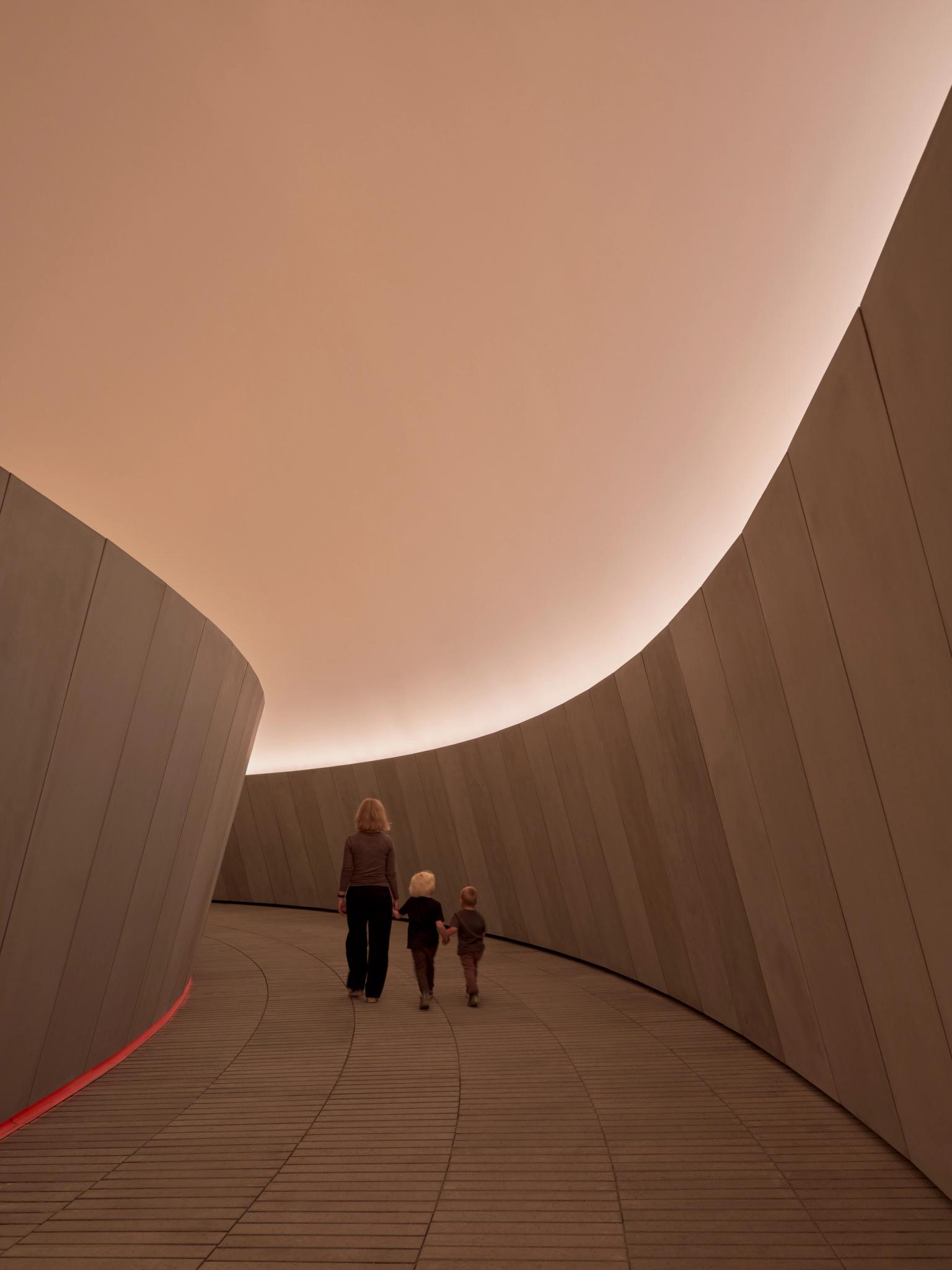
Visitors enter through an underground corridor before emerging into the vast domed hall, where Turrell's carefully calibrated lighting washes the entire space in colour and frames the sky above through a large central aperture. Turrell has described the intention behind the piece in his own words, saying that As Seen Below offers a collective experience driven by light and the poetry of seasons, meant to sharpen our sense of connection to nature, the sky, and the planet we share.

Three Ways to See the Sky
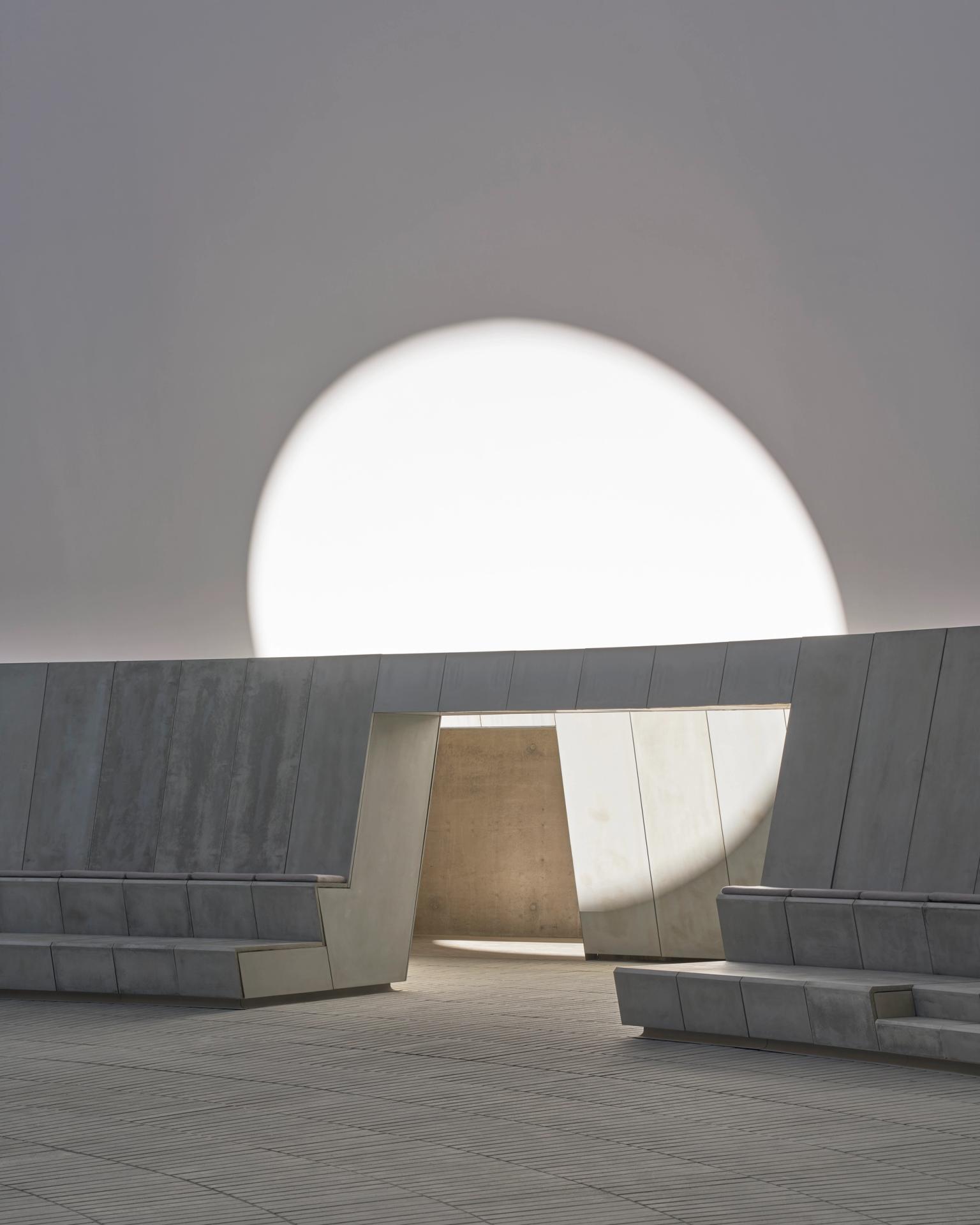
The Dome can be experienced in three distinct modes, each changing the relationship between viewer, light, and sky. In Open Sky, the mode visitors typically encounter first upon arrival, the ceiling's circular opening frames the visible sky and turns it into a living canvas that never stops changing. Familiar points of reference disappear, and the sky reads as a pure, intense field of colour.
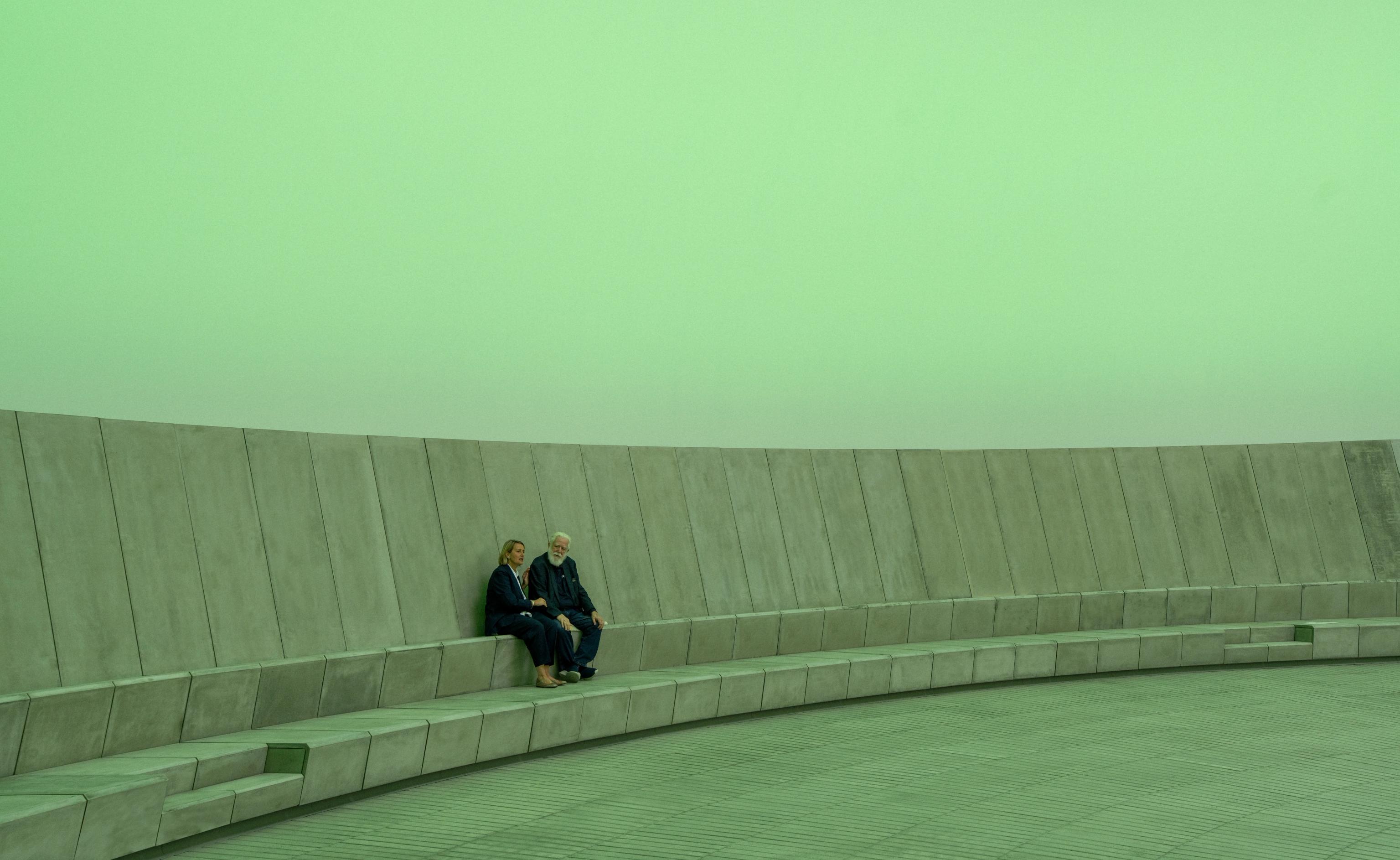
In Colour Shift, the aperture closes and the sky disappears from view entirely. Here light itself becomes the subject. The walls seem to dissolve, the room appears to shift shape, and colour is revealed as something tangible rather than simply illumination, a material that shapes and permeates the space around the viewer.
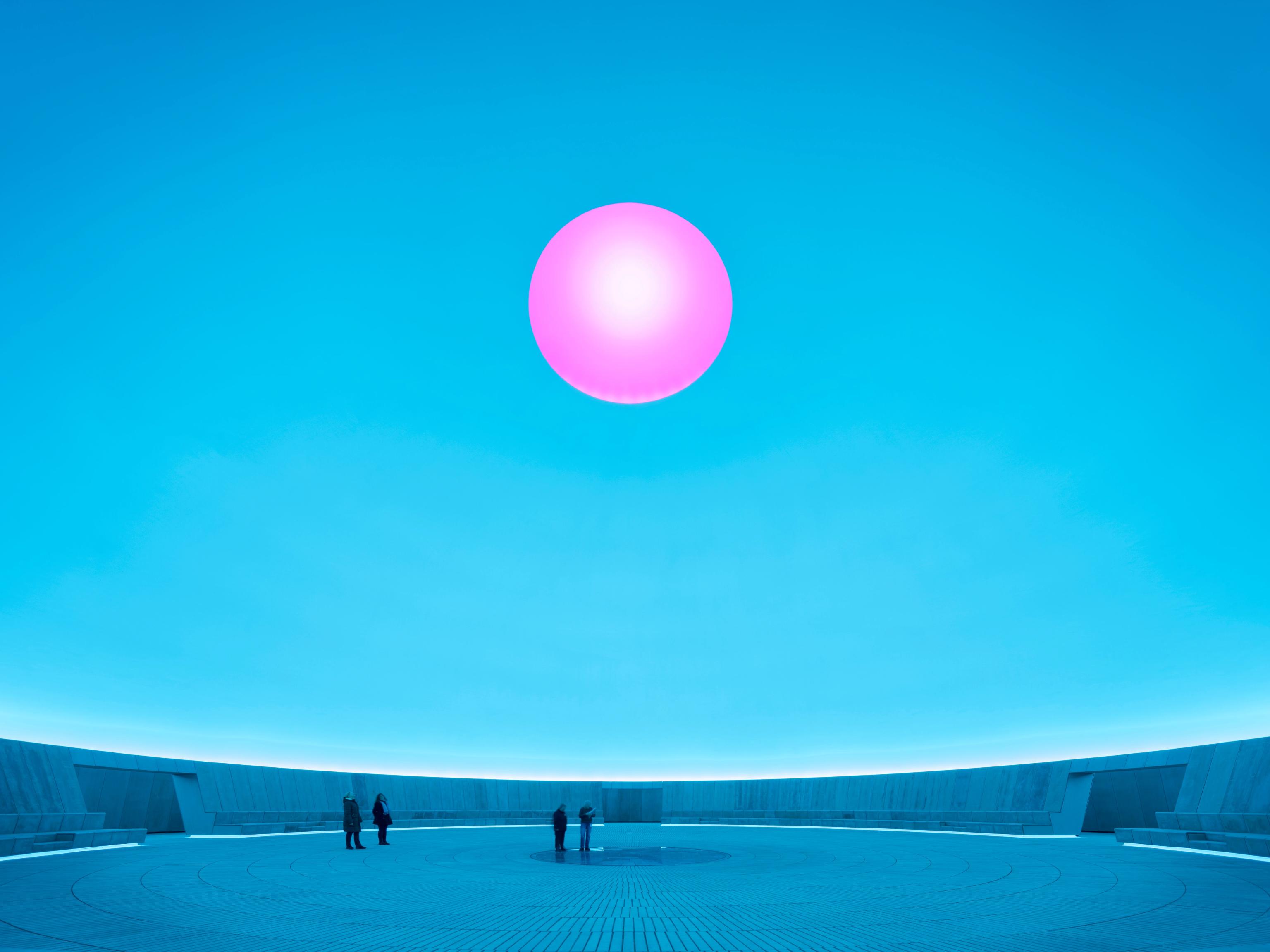

Twilight sessions, offered at sunrise and sunset on selected days, capture the most delicate transition of all. The aperture stays open as day turns to night, and the light inside the dome gradually changes colour in step with the changing sky outside. Turrell has put it simply: he can change the sky to any colour you want. As he explains it, he does not work with light to shape light itself, but to shape how people perceive.
That idea, perception as the true subject of the work, runs through nearly everything Turrell says about his practice. He has described his art as having no object, no image, and no focus, so that what a visitor is actually looking at, in the end, is themselves looking. The architecture, he says, brings the sky close enough that people realise the act of seeing is itself the artwork.

A Pilot's Eye, A Lifelong Fascination With Light
Turrell's relationship with the sky did not begin in a gallery. Born in Los Angeles in 1943 and raised in a Quaker family where silence and contemplation held a central place, his fascination with light took shape early. As a young man he became a licensed pilot and spent long hours in the air, an experience he has called meditative, absorbed by the sky's vastness and by watching how light and colour shift with altitude, time of day, and weather. Flying, he has said, taught him to value the horizon as a boundary between earth and sky, a line that recurs throughout his work.
Trained in both art and the psychology of perception, Turrell became a central figure in California's Light and Space movement during the 1960s. He has spoken about a long held fascination with how people in northern latitudes seem to treasure light, once assuming it was simply because of the long winters, before realising the fuller picture also includes the Northern Lights and a dimmer sky that allows for a clearer gaze. He never wanted to use light merely to reveal other things. He wanted light itself to be the revelation, something to feel and bathe in.
Though unable to attend the opening in person, Turrell sent a message describing his hopes for the piece: that visitors consciously enter the earth and emerge into the heavens, an image he offered as an analogy for the work's deeper purpose, which he called simply The Return. While the Skyspaces remain his best known works, Turrell's true magnum opus is Roden Crater, an enormous, still unfinished project built within a volcanic cinder cone in Arizona's Painted Desert, nearly five decades in the making and intended, once complete, to last for centuries.
Two Decades of Collaboration Beneath the City
As Seen Below is the culmination of ARoS' long term expansion, The Next Level, developed with architects Schmidt Hammer Lassen and Aarhus Municipality over more than a decade. It joins the Salling Gallery, an underground exhibition space that opened in 2025, and the new ARoS Art Square, completing a roughly 4,000 square metre subterranean addition to the museum.
Museum director Rebecca Matthews called the opening a transformative moment for ARoS, not only the unveiling of a landmark installation by one of the most important artists of our time, but the creation of a place of wonder and reflection that invites people to slow down and see their relationship to the world anew. Aarhus mayor Anders Winnerskjold described it as strengthening the city's standing as an international cultural destination, while cultural mayor Jesper Kjeldsen called it a giant leap for Aarhus, one that will benefit citizens, tourists, and local trade alike.

The project was realised with support from the Salling Foundations, the New Carlsberg Foundation, Aarhus Municipality, ARoS itself, and a private anonymous donor. Sanne Kofod Olsen, chair of the New Carlsberg Foundation, called the finished work an exceptional artwork and a magnificent monument, one certain to draw visitors from Denmark and abroad for years to come.
Today the dome sits quietly beneath a grassy mound beside the museum, its rooftop rainbow neighbour, Olafur Eliasson's Your Rainbow Panorama, visible nearby. Together they form two very different invitations to look up, one from below ground, one from above it, both asking visitors to notice the sky in a way they rarely do.