
Vincenzo De Cotiis
Archaeology of Consciousness
- DesignerVincenzo De Cotiis
- GalleryVincenzo De Cotiis Gallery
- PhotographerCourtesy Carpenters
JACOB BRINTH Decotiis radical and experimental material mixes take us out of any geological nor temporal context. These particular pieces feel like archaeological relics found in the far future.


The Memory of Form
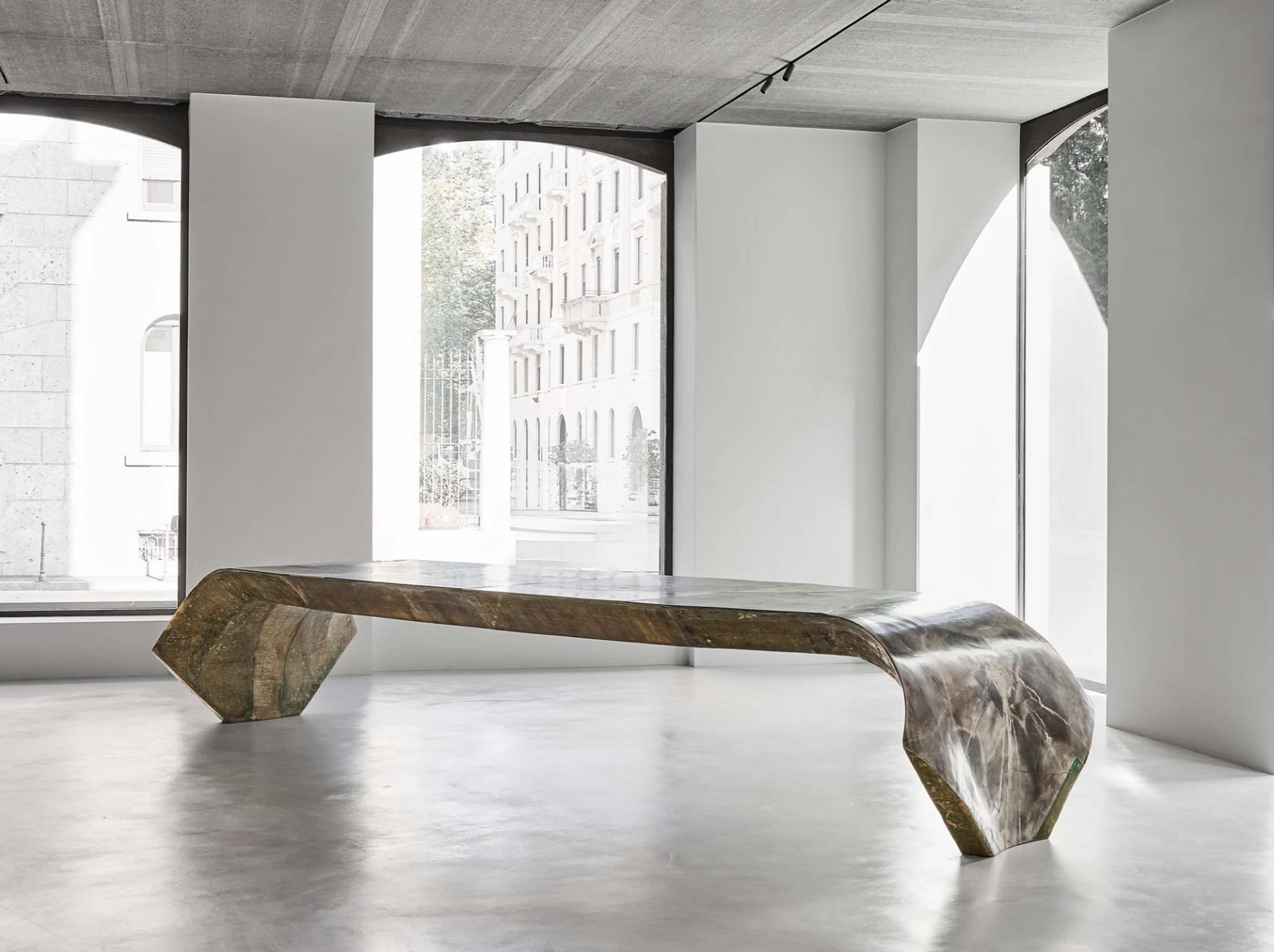
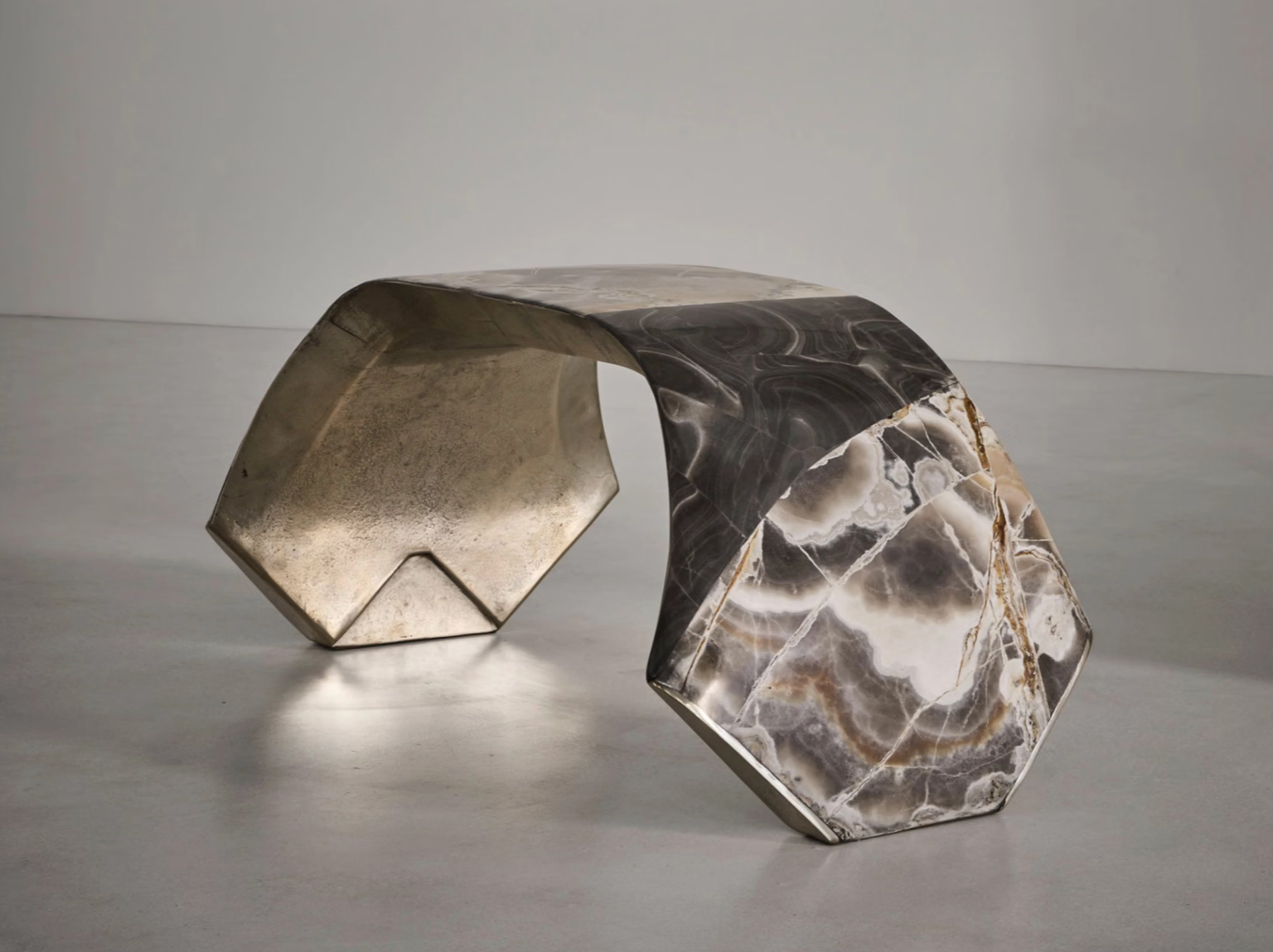
In Archaeology of Consciousness, Italian artist and architect Vincenzo De Cotiis explores the relationship between memory, time and the enduring presence of architectural forms. Centred on the archway, one of the most recognisable structures in the history of architecture, the series transforms a familiar symbol of strength, permanence and passage into something more ambiguous and otherworldly. Through a process of distortion and reinterpretation, De Cotiis strips the arch of its conventional authority, allowing it to emerge as an object suspended between ancient memory and imagined futures.
For De Cotiis, archaeology is not simply the study of what remains from the past. It is also a way of examining the layers of consciousness, personal associations and cultural references that shape how we perceive the world. His sculptures appear to have been excavated from an unknown civilisation, their forms carrying traces of histories that are at once familiar and impossible to locate. They invite us to consider architecture not as a fixed expression of human ambition, but as something continually reshaped by time, nature and the imagination.

Materials Between Past and Future
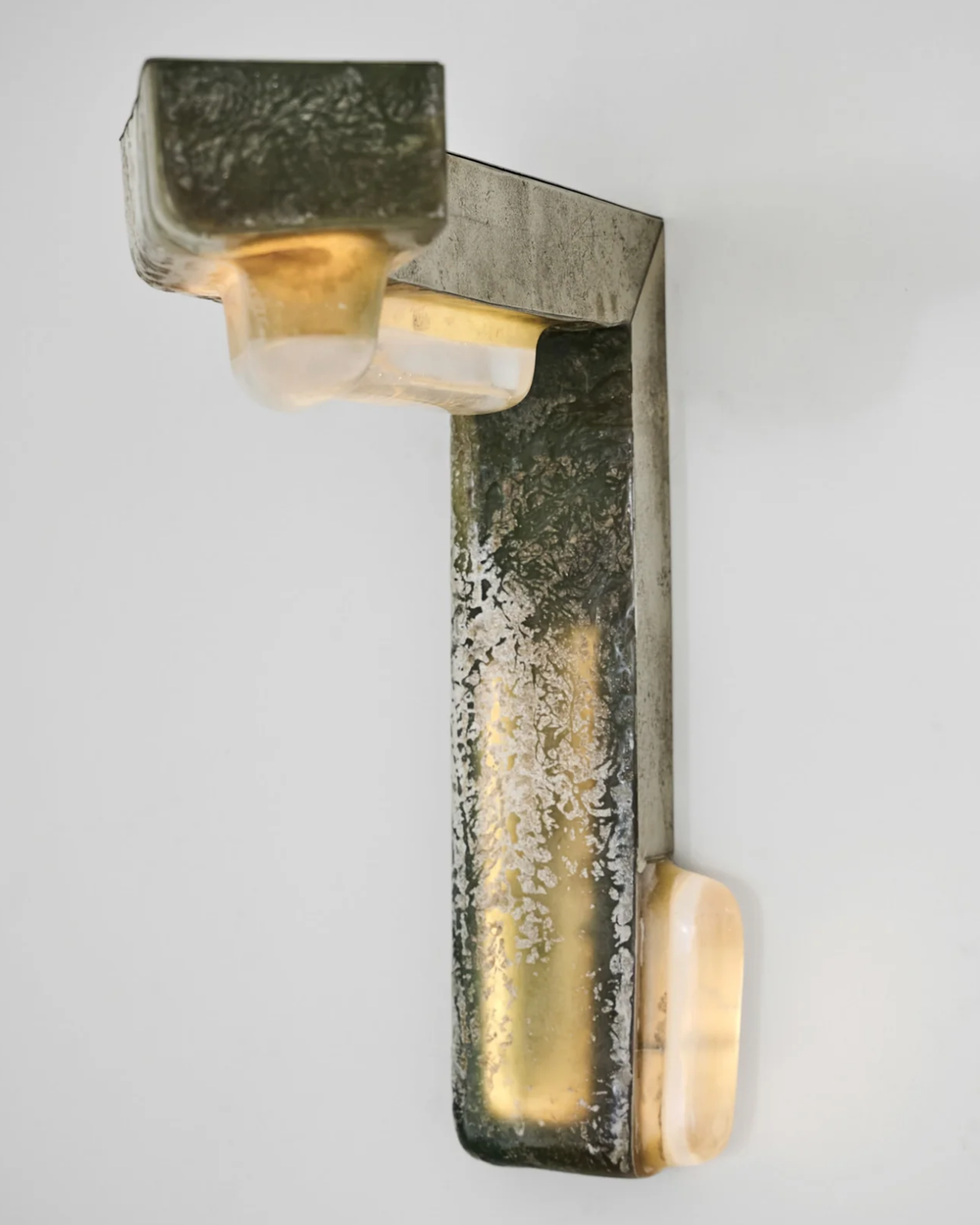
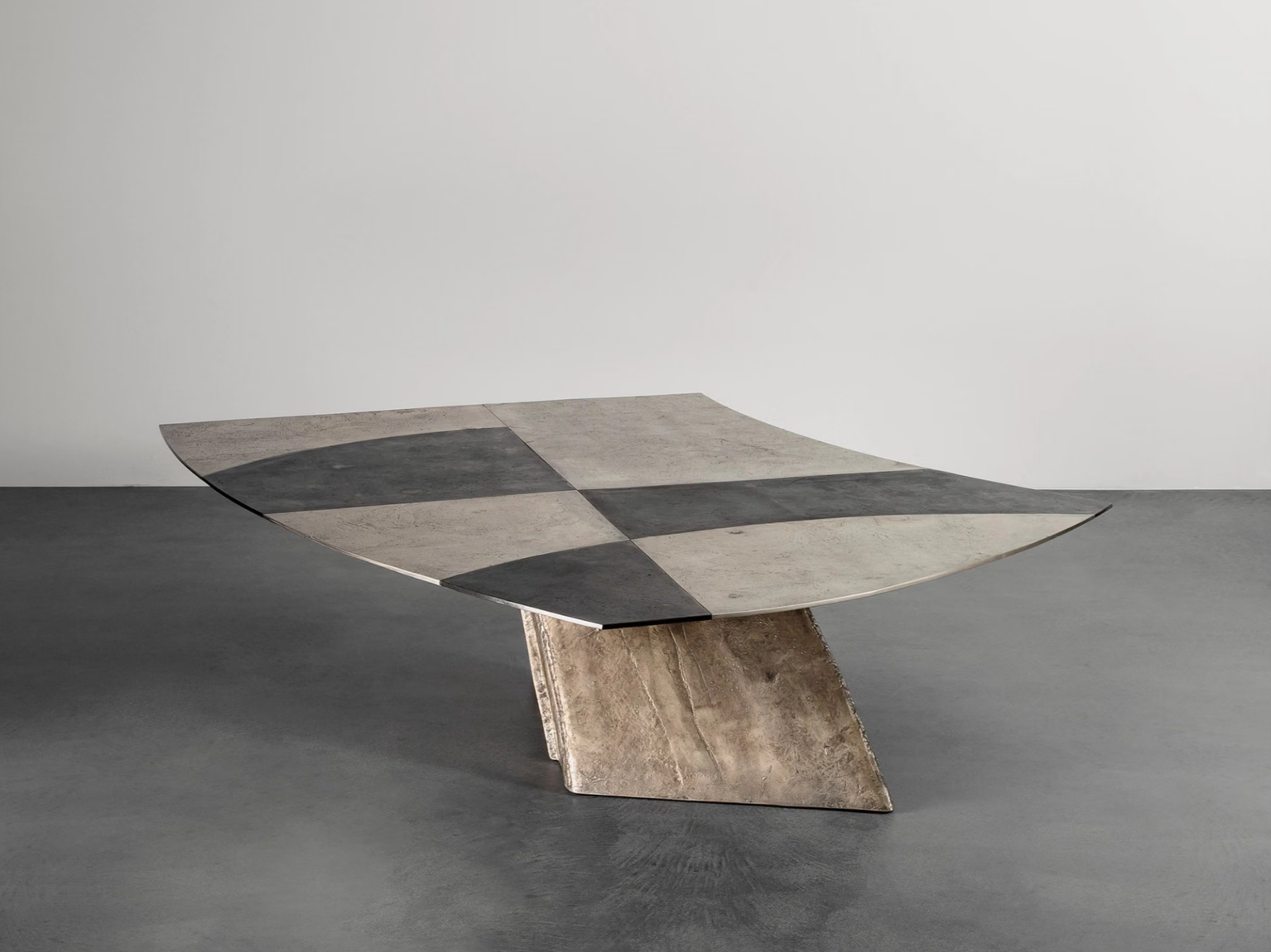
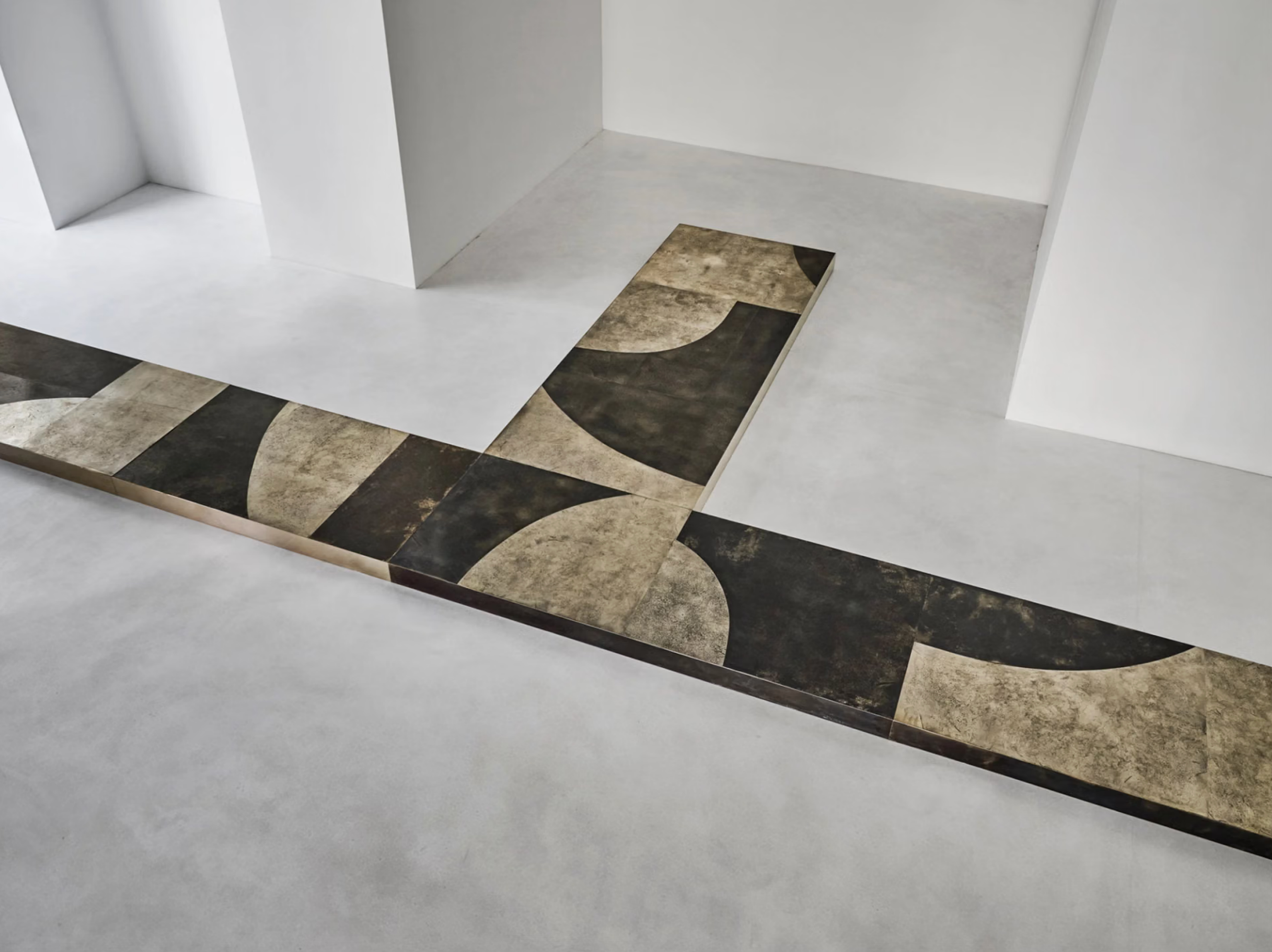
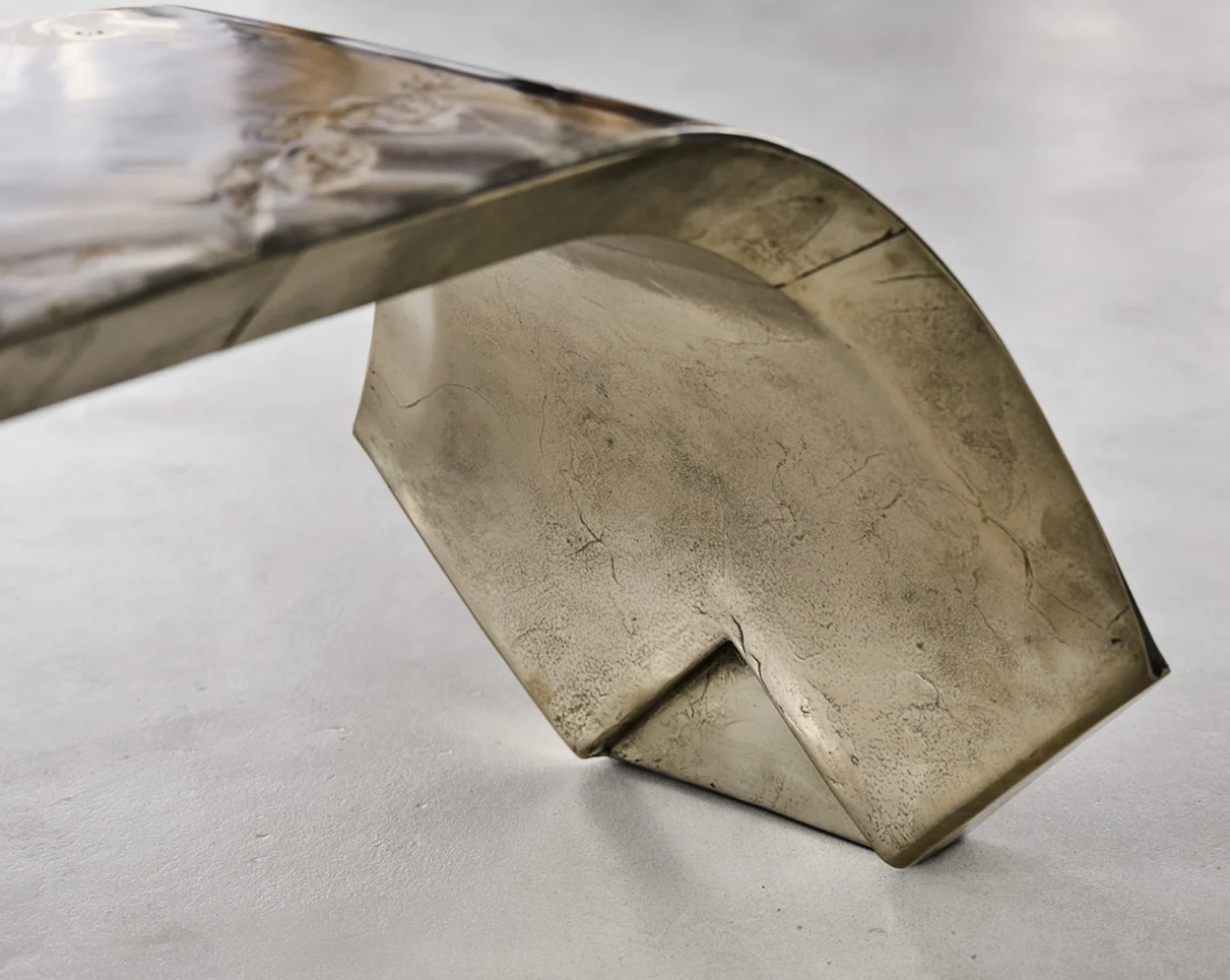
The material language of the series reinforces this sense of temporal uncertainty. Rare stones and marble meet recycled fibreglass, Murano glass and cast metals, bringing together substances that belong to different worlds of making and different understandings of permanence. The weight and geological depth of stone contrast with the artificiality and translucency of contemporary materials, creating a tension between the ancient and the futuristic. Surfaces appear weathered, fragmented or transformed, as though the works have survived an event whose origins remain unknown.
De Cotiis approaches these materials through a process of reclamation, allowing their histories and imperfections to become integral to the final form. Rather than pursuing the pristine finish associated with idealised architectural objects, he embraces irregularity, erosion and visual dissonance. The resulting sculptures possess a peculiar presence, simultaneously monumental and fragile, recognisable yet estranged from their original purpose. They suggest relics from a future in which our own cultural achievements have become archaeological discoveries, their meanings altered by the passage of time.

The Arch as a Threshold
Throughout the series, the arch functions as more than an architectural motif. It becomes a threshold between states of being, connecting physical space with psychological and metaphysical possibilities. Historically associated with triumph, authority and protection, the arch is reimagined by De Cotiis as an unstable structure that questions the very permanence it once represented. Its familiar geometry is disrupted, opening new perspectives on the relationship between the human-made environment and the forces that ultimately transform it.
This dialogue reaches a particularly evocative expression in Archaeology of Consciousness Venice, where three monumental arches stand in the courtyard of Palazzo Giustinian Lolin. Positioned within the historic fabric of Venice, the sculptures establish a conversation between the city's architectural heritage and De Cotiis's speculative vision. Their combination of ancient stone, marble, Murano glass and fibreglass creates a sequence of passages through which the visitor moves, experiencing the installation as both a physical journey and a meditation on time.
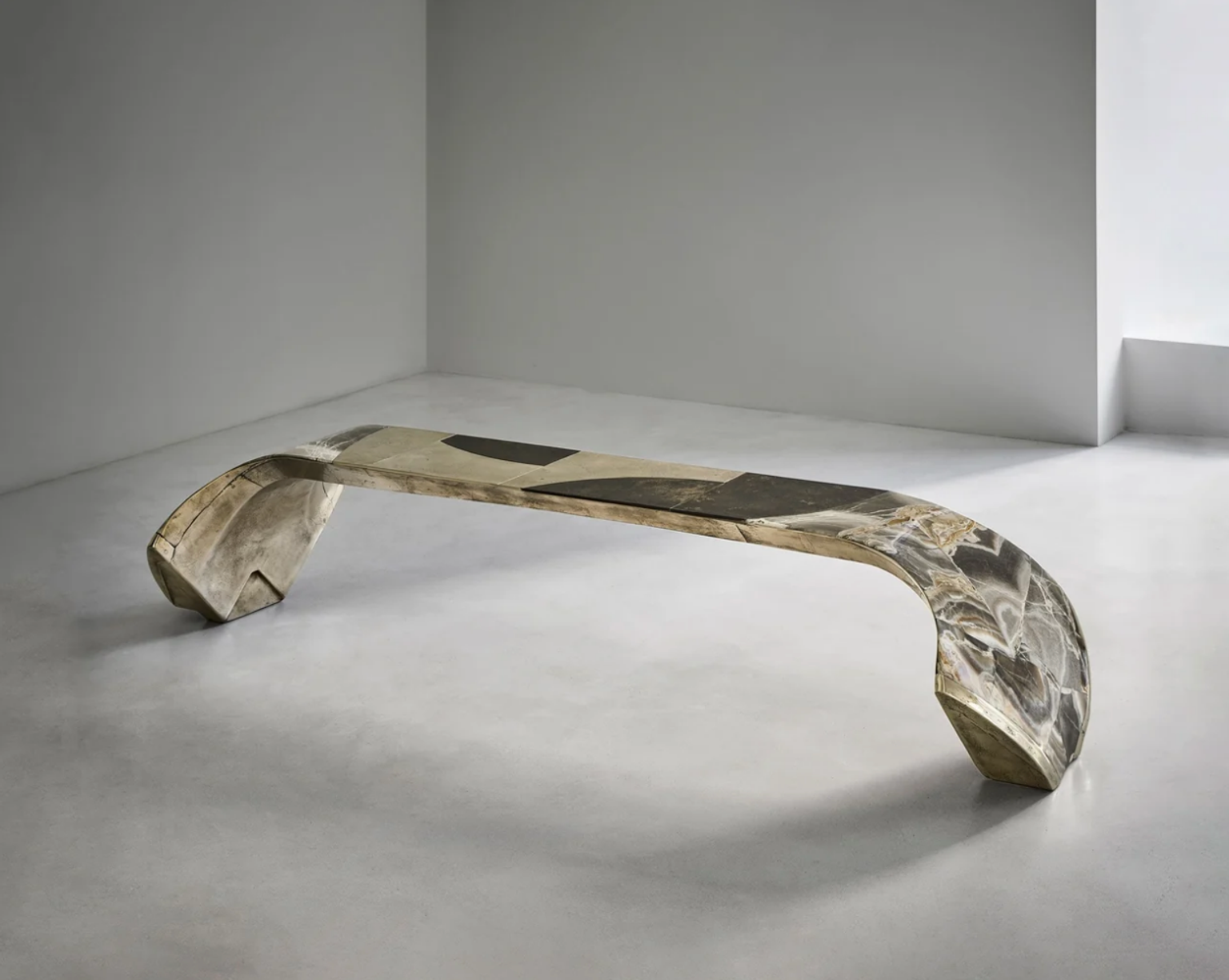

Ultimately, Archaeology of Consciousness proposes that the past and the future are not opposing territories, but overlapping dimensions of experience. De Cotiis's sculptures occupy the space between them, where familiar forms lose their certainty and acquire new meanings. They remind us that even the most enduring structures are subject to transformation, and that what survives of a civilisation may be less a record of its achievements than an invitation to reinterpret them. In this sense, the work becomes an archaeology not only of architecture, but of consciousness itself, uncovering the fragments through which we understand our place in time.