
Brandlhuber+
Antivilla
- ArchitectBrandlhuber+ Emde, Burlon,
- TeamArno Brandlhuber, Olaf Grawert, Roberta Jurcic and Jonas Janke
- PhotographerFuture Documentation (formerly Erica Overmeer)
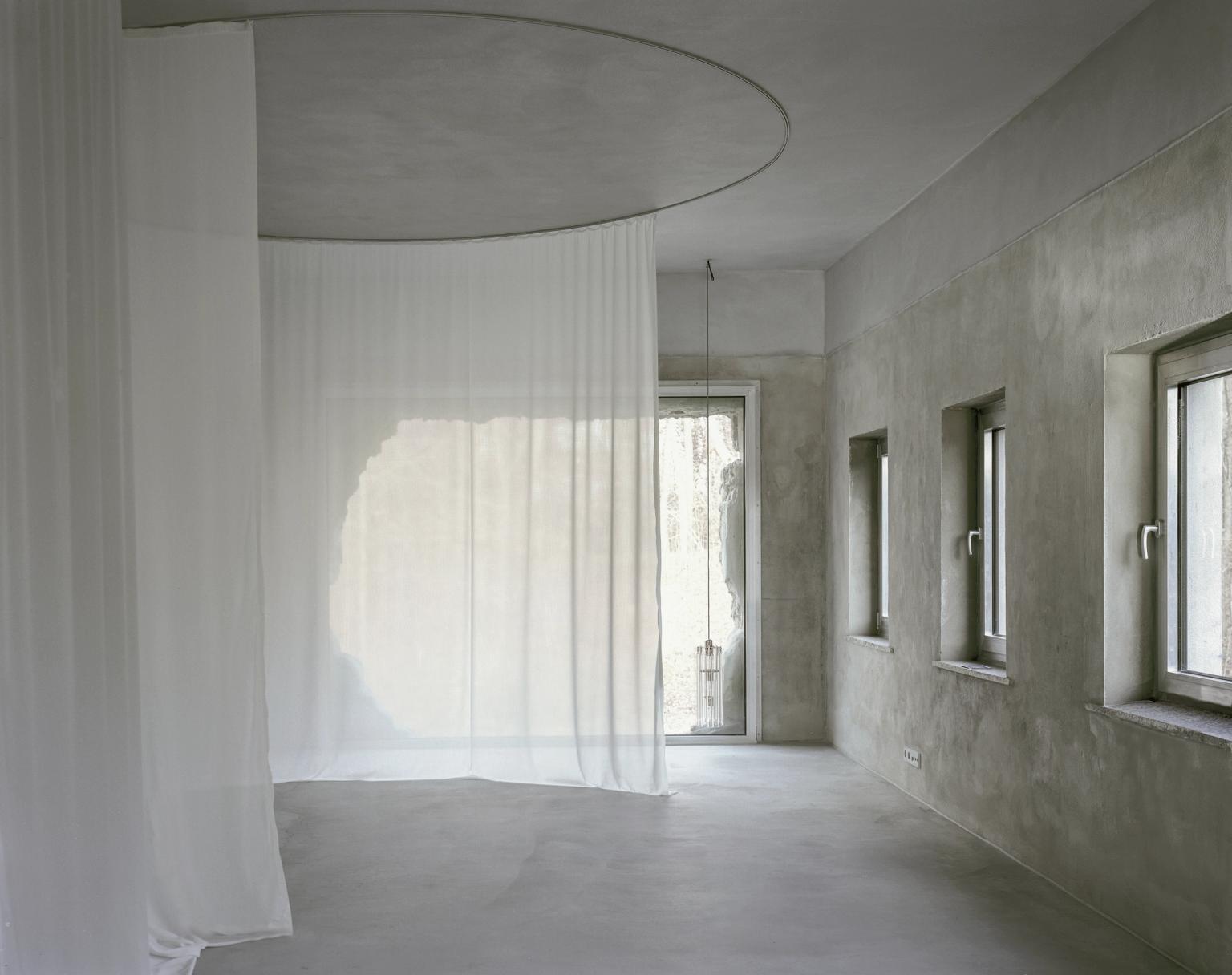
Atelier Axo We’re interested in how Antivilla challenges conventional ideas of spatial division. Through curved zoning and soft, movable boundaries, the project demonstrates how space can remain open, adaptable and responsive, changing with both climate and inhabitation rather than being fixed.

Antivilla
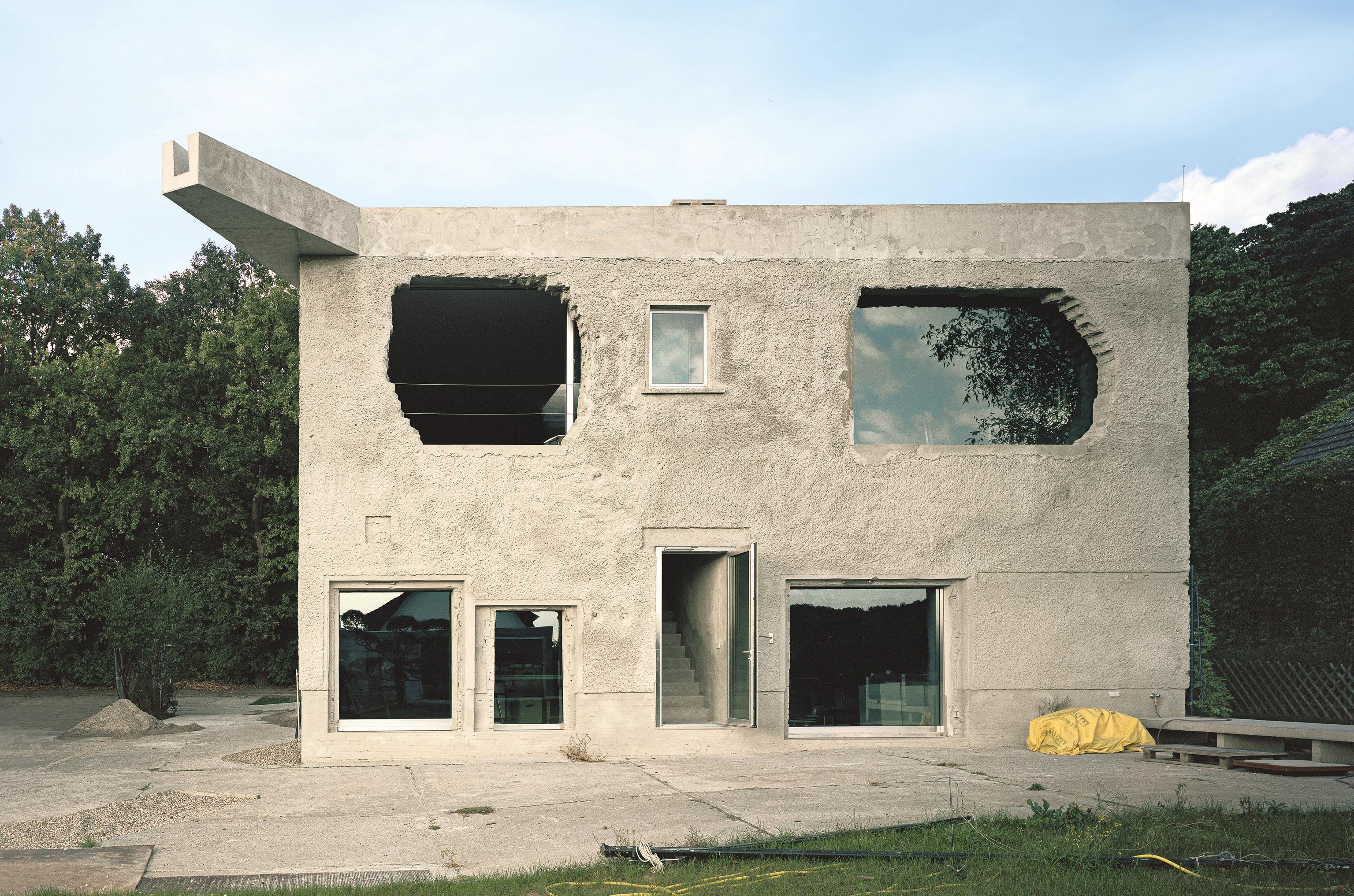
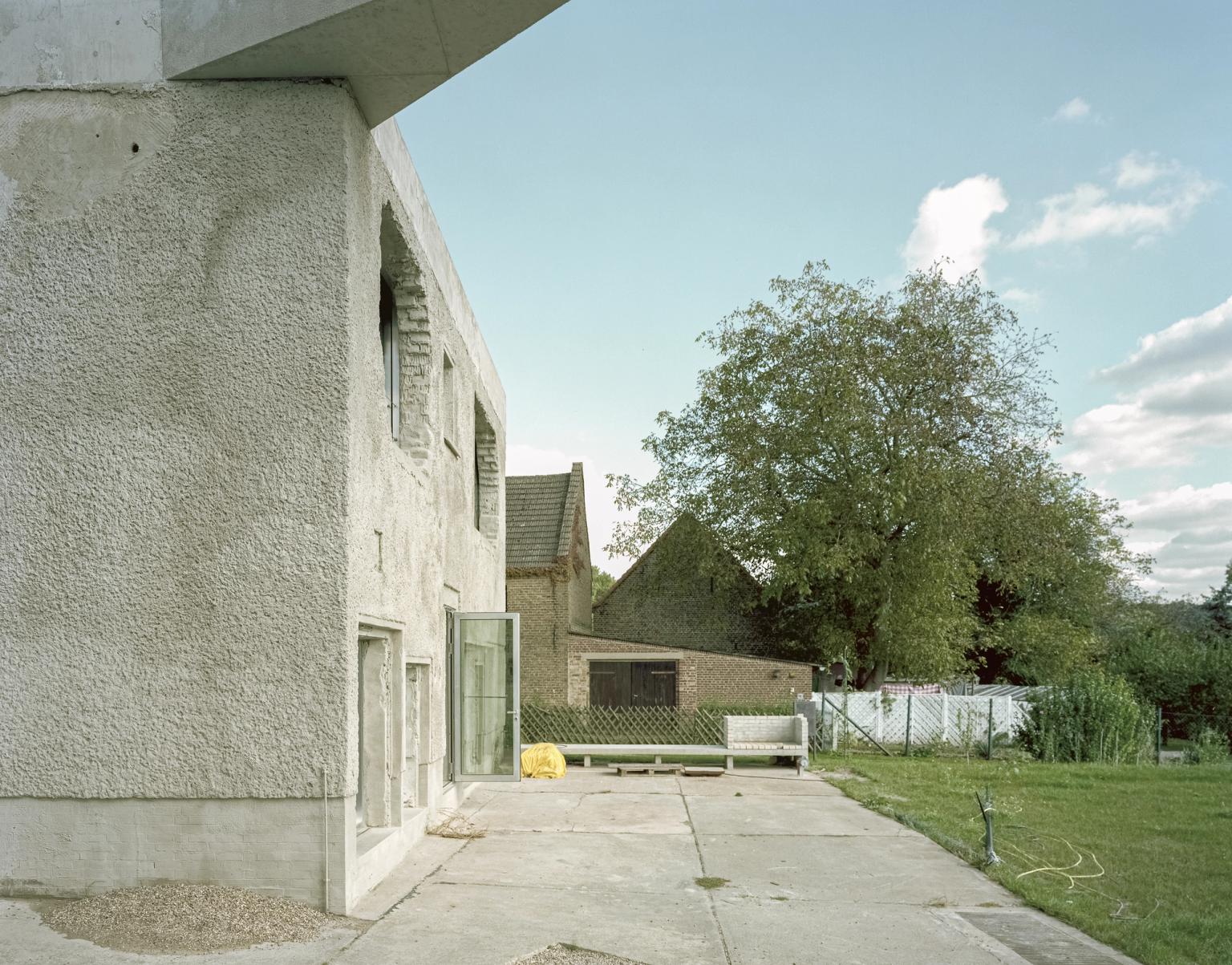
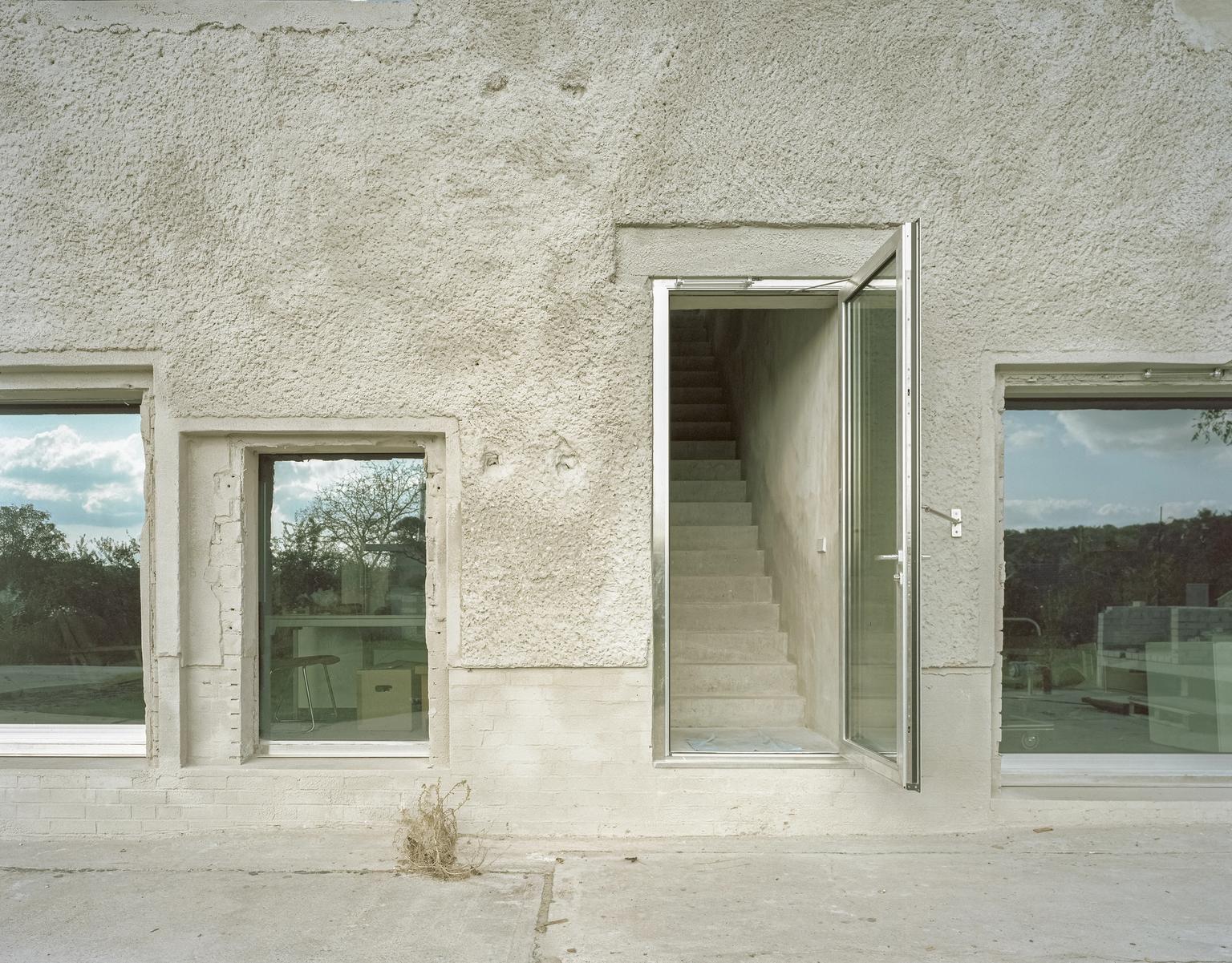
Nestled beside Krampnitzsee, southwest of Berlin, Antivilla reimagines the abandoned Ernst Lück lingerie factory as a hybrid studio and residence. Conceived by Brandlhuber+, the project rescues a 500 sqm concrete and brick shell from demolition, turning constraints into design opportunities. German regulations would have allowed only 100 sqm of new construction if the building had been demolished, rendering demolition both wasteful and inefficient. Instead, selective interventions preserve the building’s structural and material legacy while enabling a new life.
Brandlhuber+, the Berlin-based architecture collective led by Arno Brandlhuber, is renowned for its experimental, collaborative approach, seamlessly merging theory and practice across projects spanning residential, work, and cultural environments. The architects embraced the raw textures, industrial proportions, and historical traces, turning what might have been a derelict relic into a living experiment in adaptive reuse, energy, and spatial flexibility. Antivilla embodies a radical approach: architecture that negotiates with the past while proposing a socially and environmentally intelligent future.


Structural Interventions and Spatial Clarity
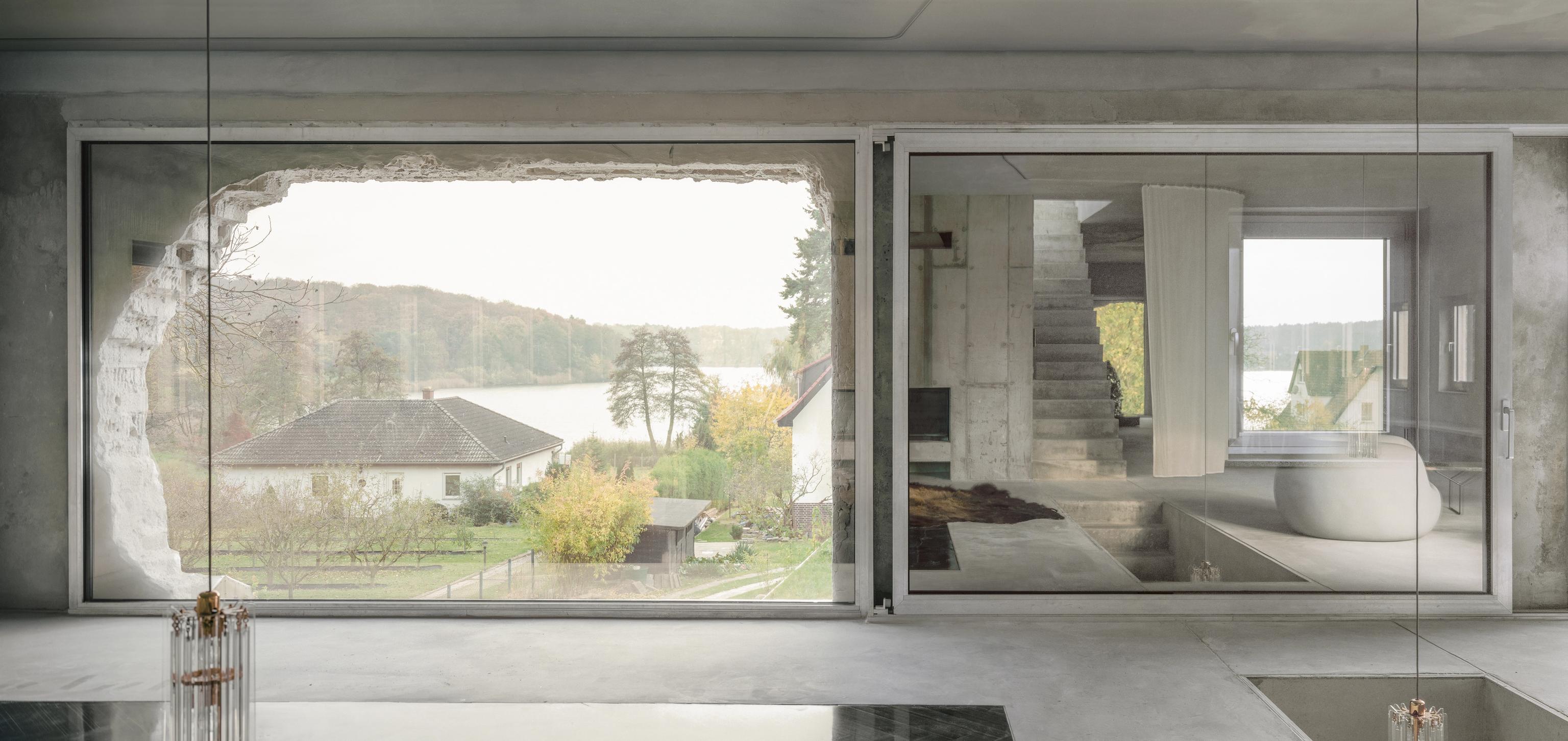
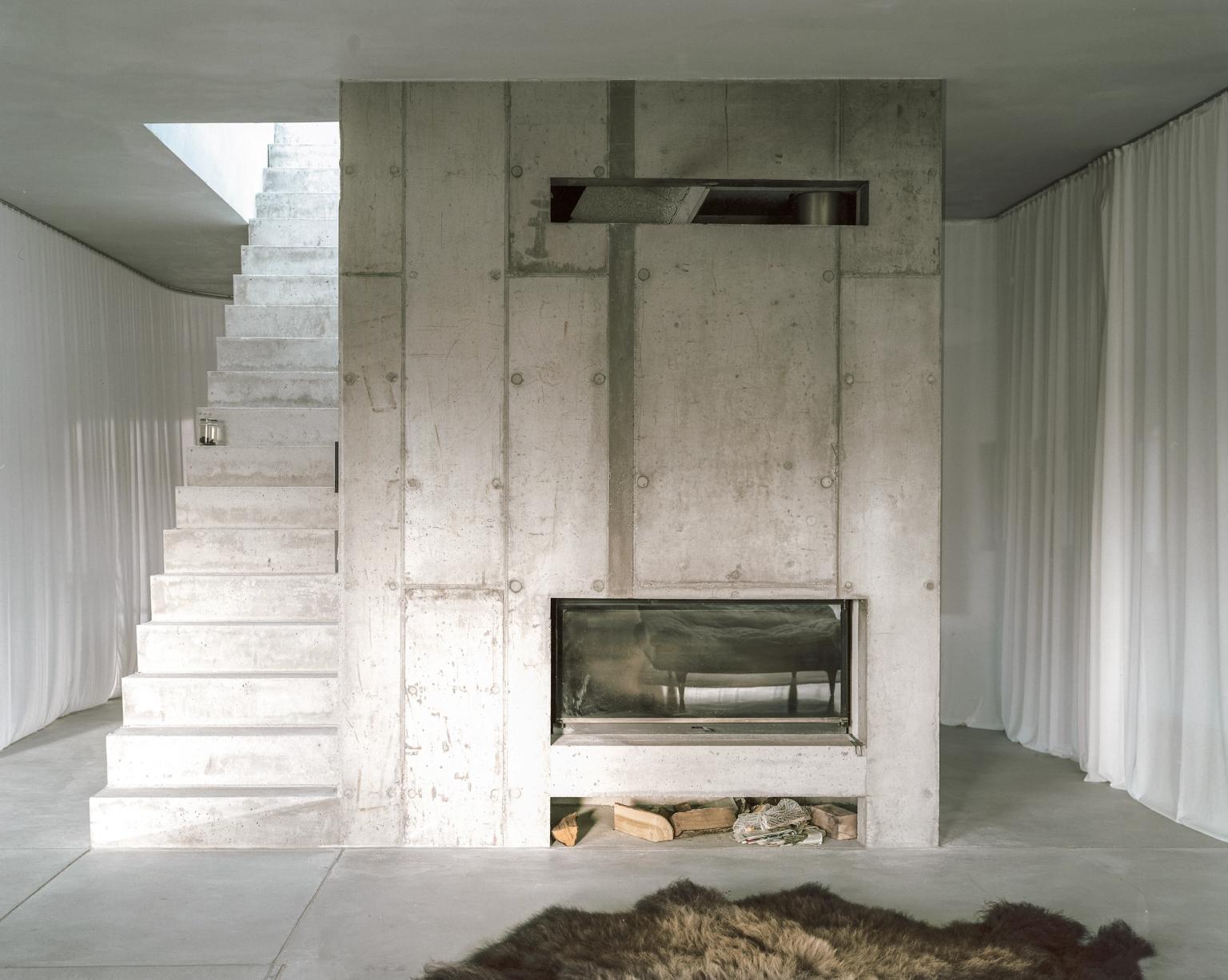
The transformation began with a radical structural overhaul. The original gabled roof, containing asbestos, was dismantled and replaced with a flat, water-resistant concrete roof supported by a continuous beam and a central concrete core on the upper floor. This core houses essential functions – a kitchen, bathroom, sauna, and fireplace – and acts as a structural spine, allowing openings up to five meters wide in the existing walls. Non-load-bearing partitions were removed to create open, fluid interiors. On the ground floor, spaces originally used for deliveries, storage, and garages remain structurally intact, maintaining the factory’s industrial logic.
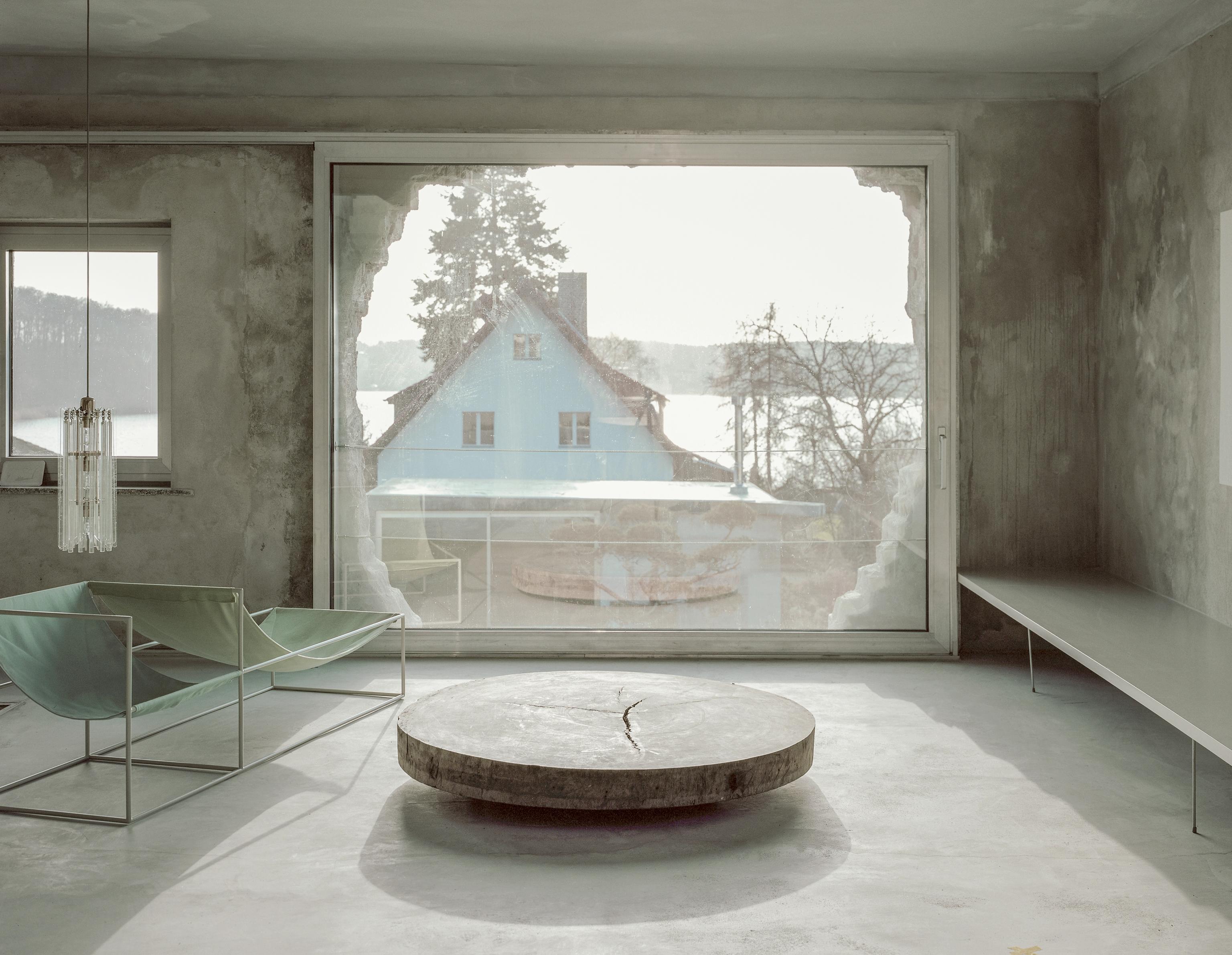
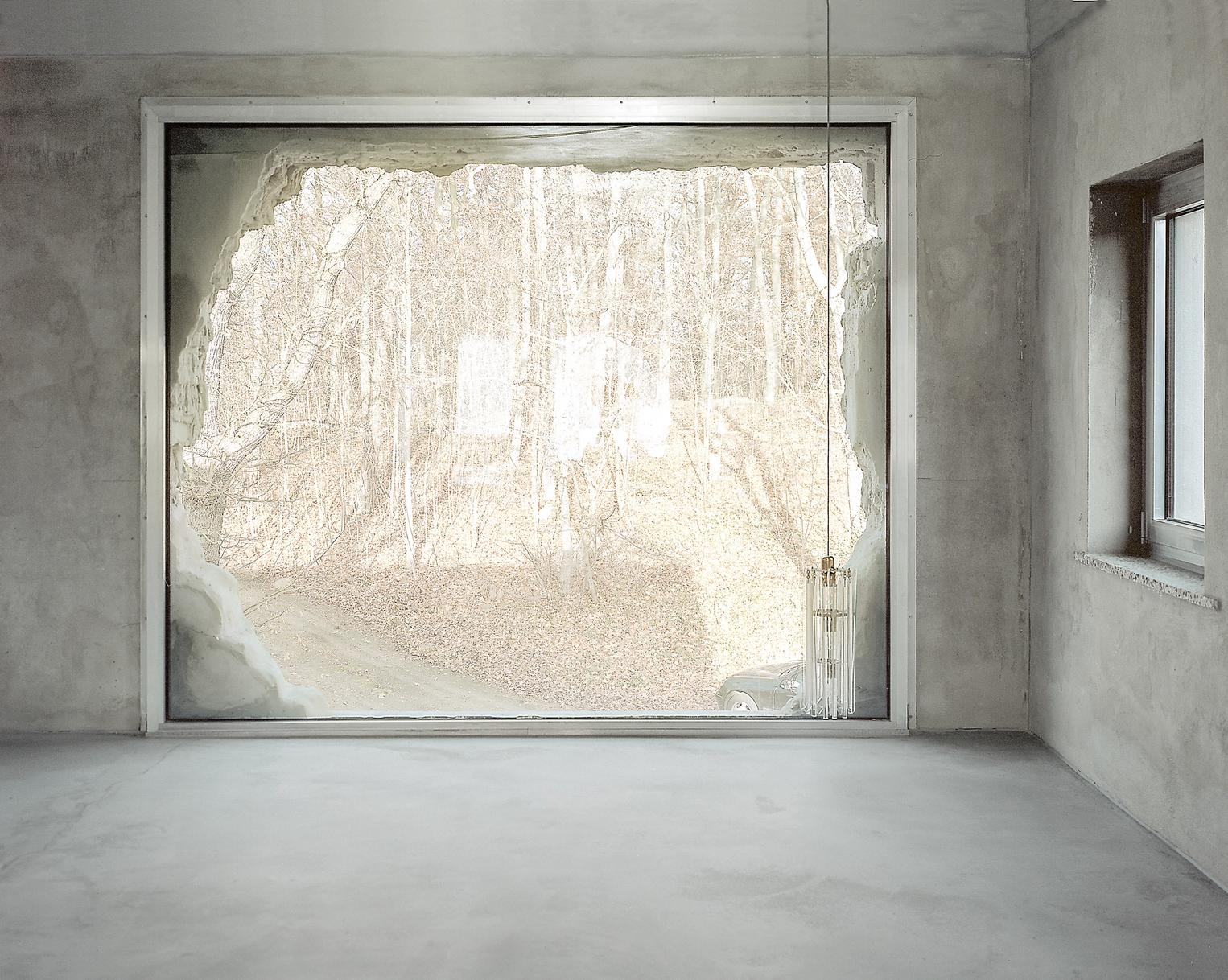
Inspired by Claude Faraldo’s experimental film Themroc (1973), walls facing the lake and forest were punched with oversized openings, not only framing nature but inviting collaborative participation: friends and collaborators gathered to physically create these new views, reinforcing Antivilla’s ethos of collective engagement and experimentation.

Materiality, Climate, and Energy
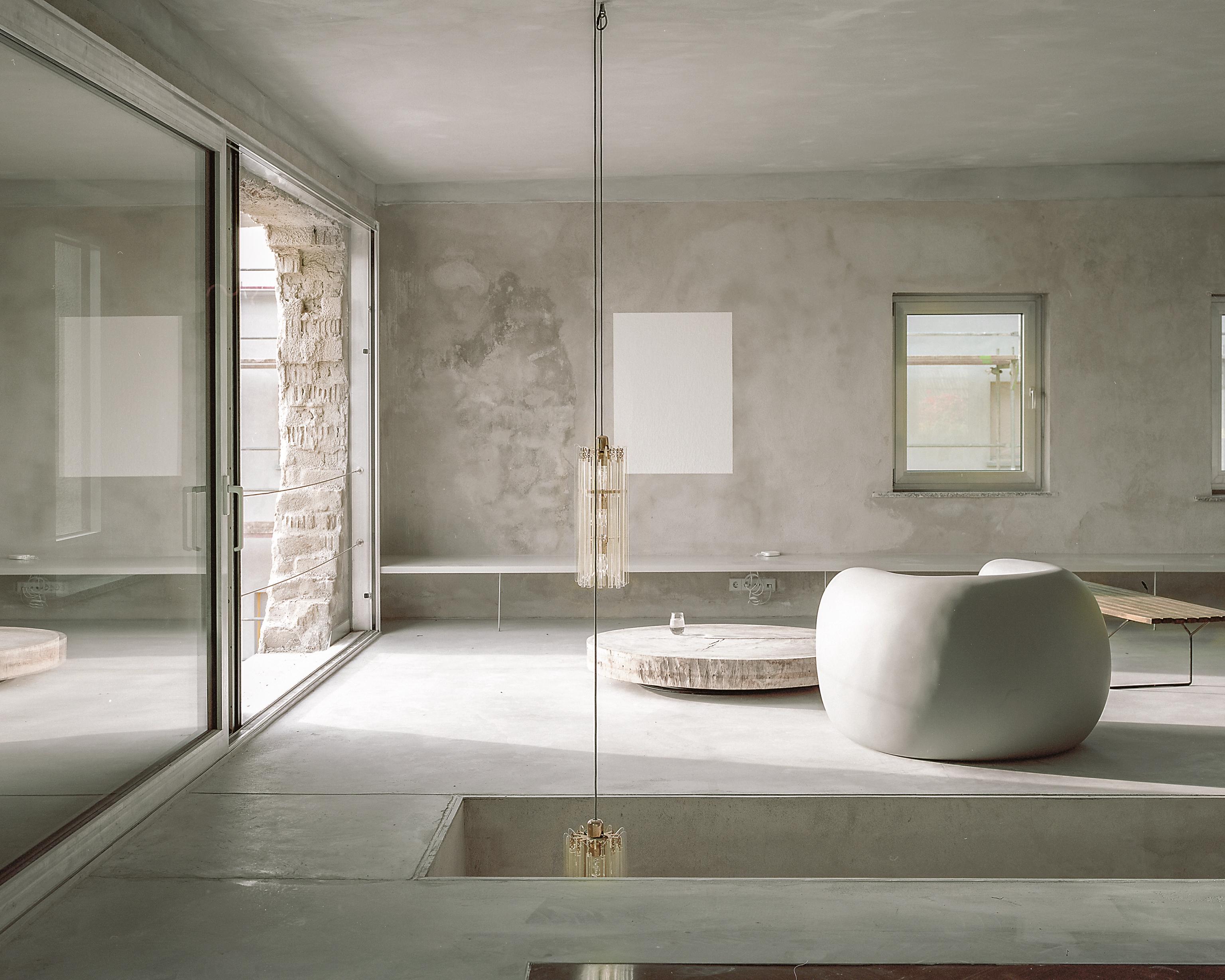
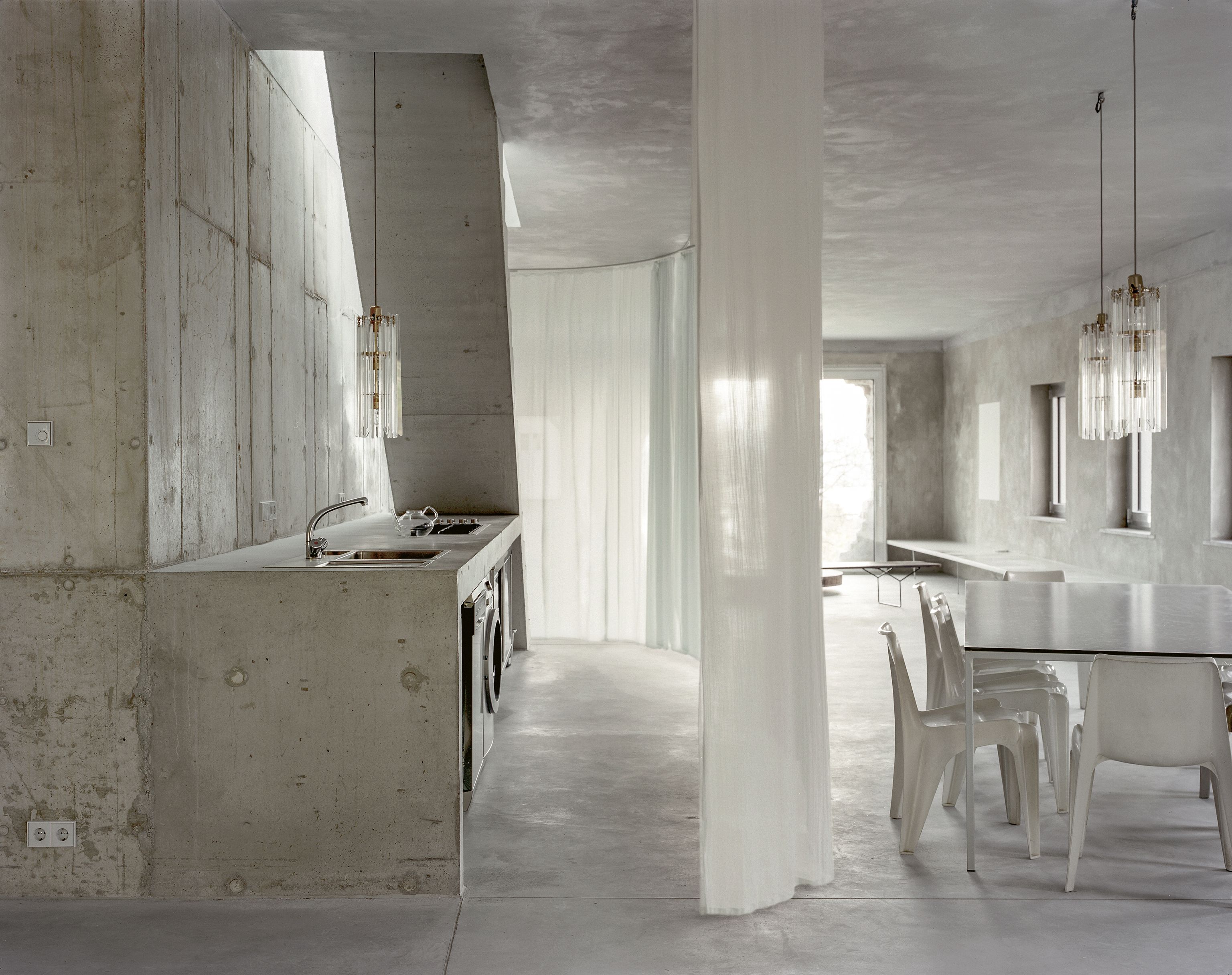
Antivilla’s interiors foreground texture, materiality, and environmental innovation. The plastered brick walls were largely preserved, covered with fine grey mortar inside and grey lime sludge outside, allowing the building’s history to remain visible through subtle shifts in tone and texture. Instead of conventional insulation, the architects introduced a climate strategy using geothermal floor heating and a central sauna stove, modulated by translucent curtains that define warmer zones.
The upper floor’s heated area can shrink to roughly 70 sqm in winter or expand to 250 sqm in warmer months, demonstrating a reinterpretation of Reyner Banham’s Architecture of the Well-Tempered Environment (1969). Here, the “constructional aspect” of the building is inseparable from the “energetic aspect”: architecture and climate are inseparably intertwined, allowing occupants to inhabit spaces that shift dynamically with both season and program.


Architecture, Collaboration, and Experience
Every element of Antivilla reflects Brandlhuber+’s experimental, collaborative approach. Large openings, the flexible core, and movable curtains negotiate between private and public, work and leisure, interior and exterior. Former industrial spaces, from brick walls to raw concrete, become instruments of architectural expression, while interventions like the hydraulic roof hatch, oversized window holes, and sauna-focused climate zoning demonstrate a willingness to combine poetic gestures with practical performance.

The building also integrates bespoke technological elements: a Siedle door station in raw aluminium merges craft, temporal expression, and historical reference, echoing Brandlhuber’s belief that material, process, and story are inseparable. Through Antivilla, Brandlhuber+ demonstrates how architecture can embrace constraints, celebrate existing structures, and create spaces that are simultaneously experimental, livable, and socially attuned – a model for rethinking adaptive reuse in both ecological and cultural terms.