
Hiroshi Sugimoto
Abandoned Theaters
- ArchitectHiroshi Sugimoto
- Photographer© Hiroshi Sugimoto, courtesy Fraenkel Gallery, San Francisco and Lisson Gallery
Edmund Sumner I’ve long admired the work of Hiroshi Sugimoto, particularly his Theatres series. What fascinates me is not simply the subject matter, but the way his images allow architecture to mark time, using the building as a vessel for something far beyond its physical form…

Edmund Sumner´s perspective on Sugimoto's Abandoned Theaters
… An ongoing thread within my own practice, Traces, begins from a similarly simple premise: architecture is a conduit of time, a repository for emotion, a time capsule of memory, both real and imagined. In photographing buildings, I’m not only interested in their formal qualities, but in the emotional DNA they carry - marks, atmospheres, and subtle traces of past incarnations. These elements are often fragile, sometimes barely perceptible, yet they hold a quiet intensity. They exist, I would argue, in almost every environment - if we choose to look closely enough, or perhaps more importantly, to feel and to think.
Sugimoto’s work, with its serene, almost sanguine gaze upon grand American theatres, resonates deeply in this regard. His images collapse duration into a single frame, transforming space into something both monumental and ephemeral, at once joyful, melancholic, and somewhere in between. In Traces, I’m attempting something parallel, not to document architecture as it appears, but to reveal it as it is remembered, felt, and continuously reimagined through time. And perhaps that is the point:architecture is never fixed. It is always in a state of becoming, shaped as much by memory and emotion as by concrete and stone.

Abandoned Theaters as Memory Structures
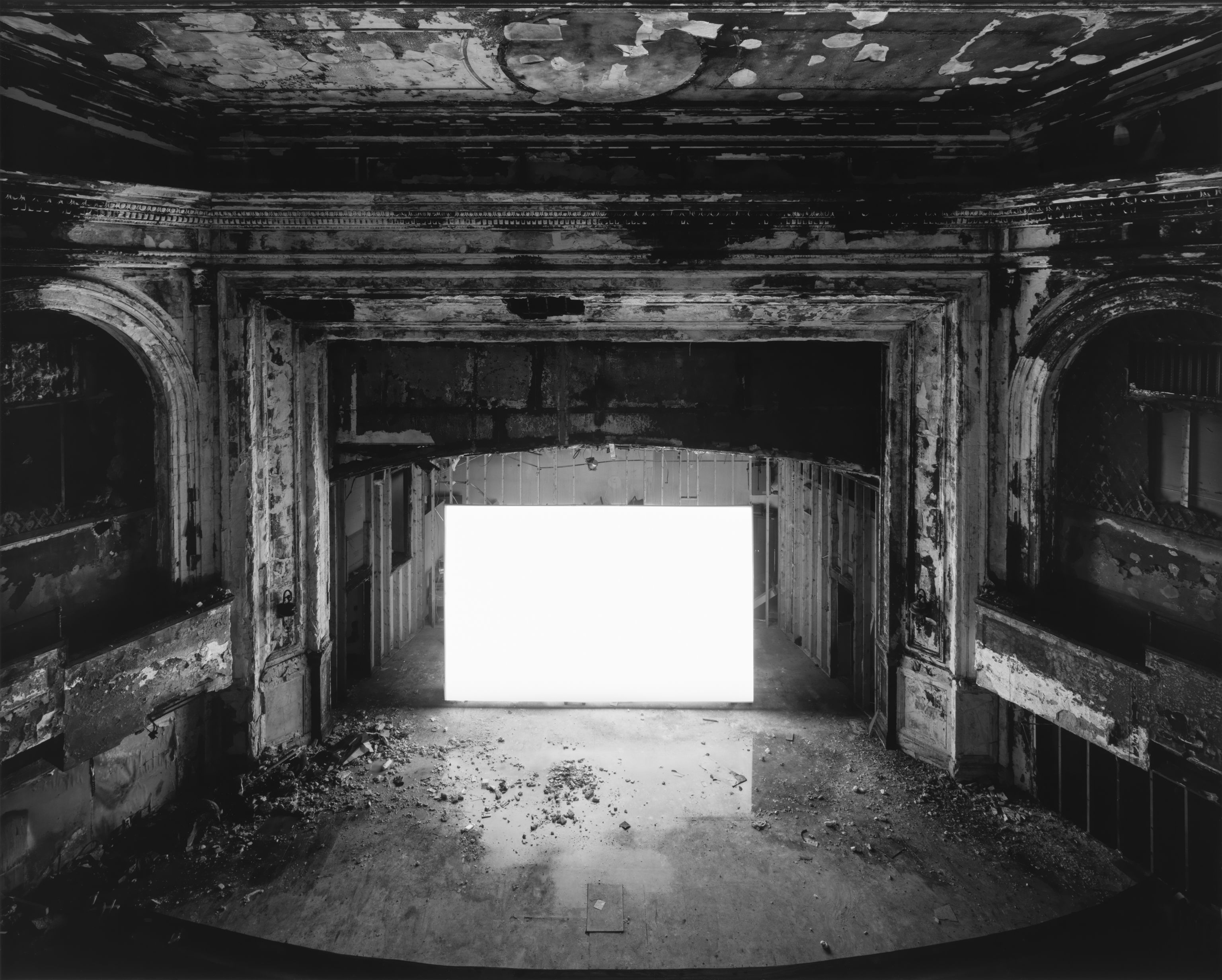
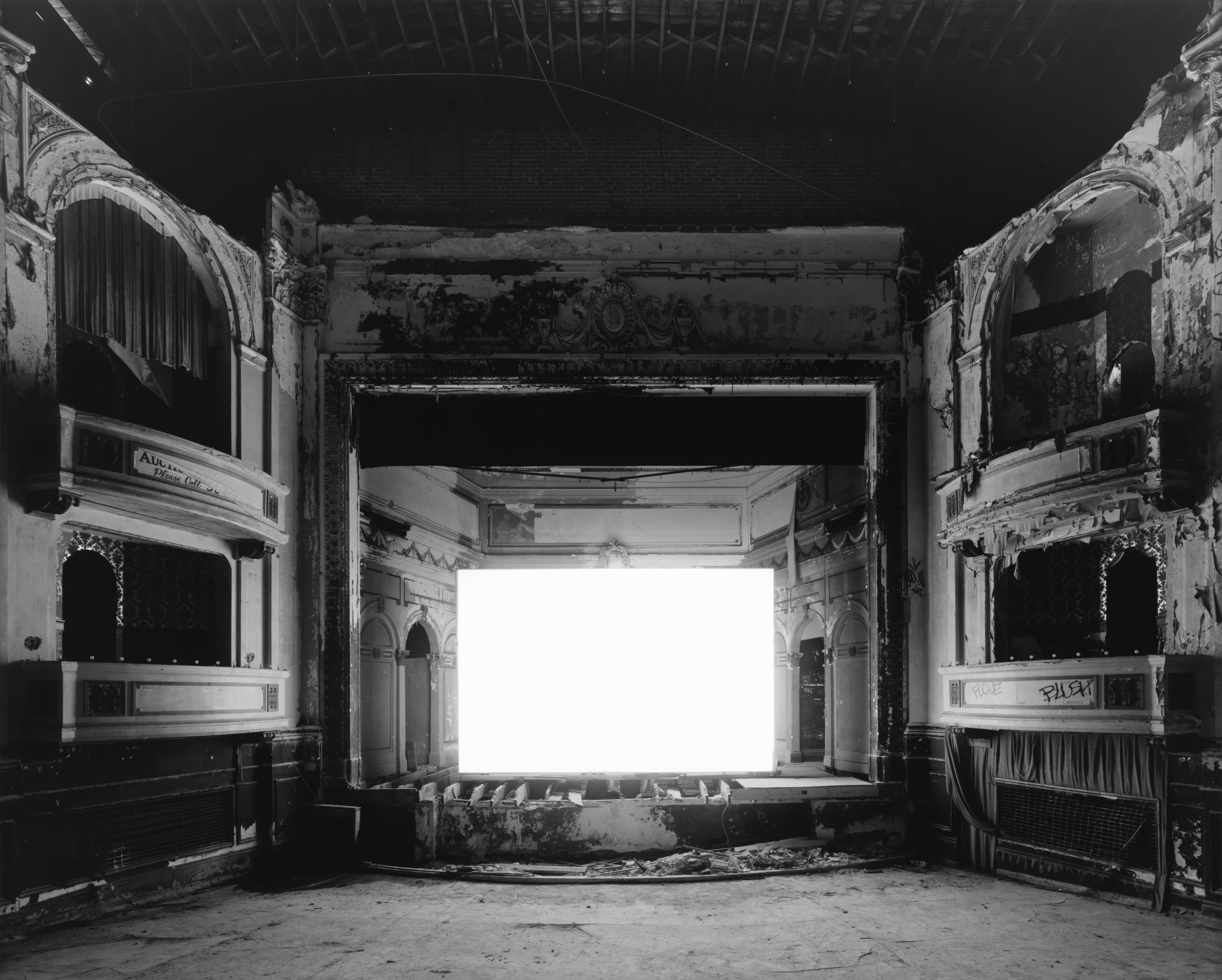
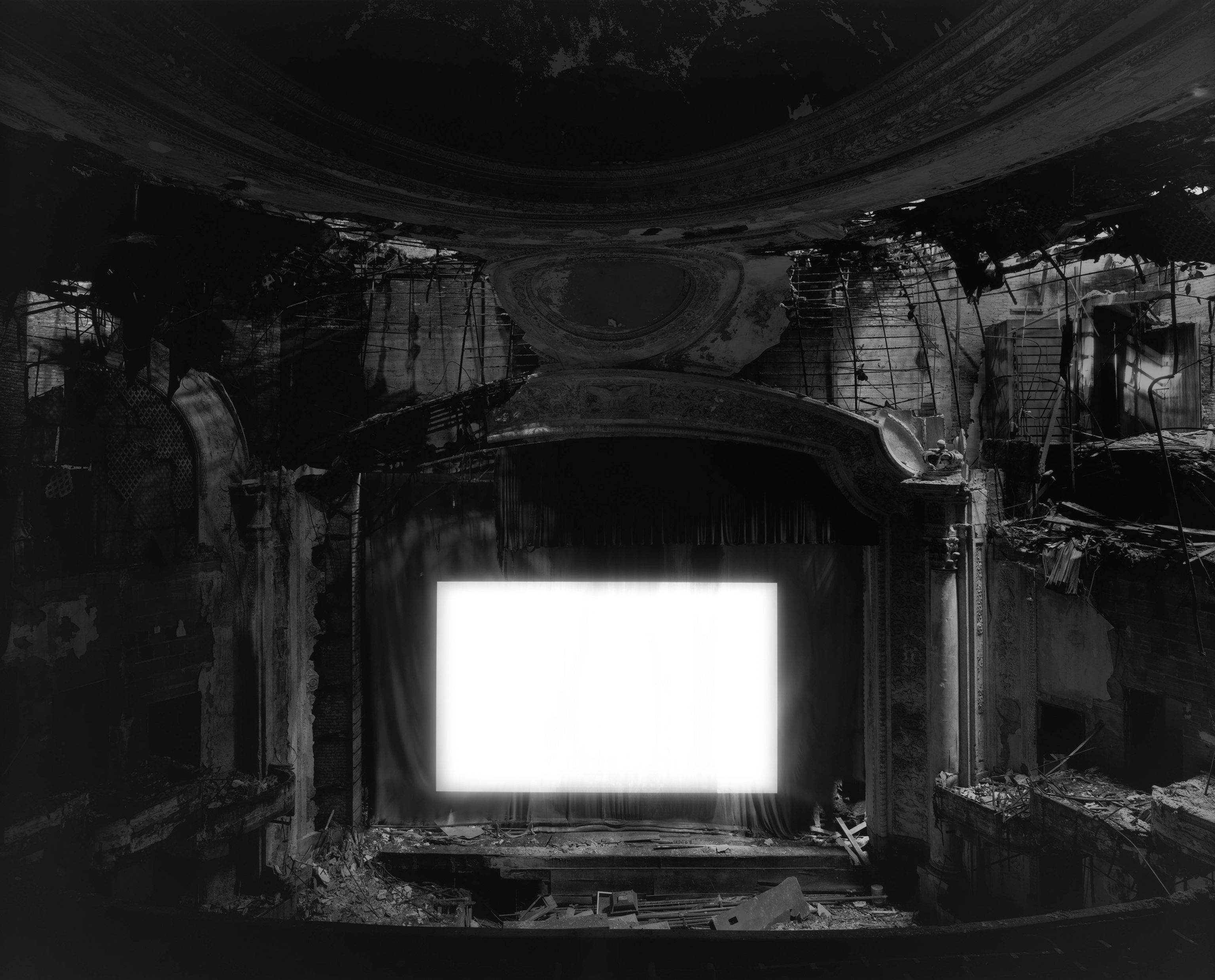
Hiroshi Sugimoto’s Abandoned Theaters begins with a simple but radical gesture: what happens if an entire film is compressed into one photograph? Since the 1970s, Sugimoto has worked with a method where he opens the camera’s shutter at the start of a movie screening and closes it only when the film ends. The result is not a sequence of images, but a single exposure where time collapses into one luminous field. In this series, that field becomes an intense, almost blinding white rectangle, the screen emptied of narrative, yet filled with everything that has unfolded within it. The theaters themselves remain visible in darkness: ornate, decaying, once-grand architectural spaces now marked by neglect.
For this later body of work, Sugimoto turns his attention to abandoned cinemas in cities such as Newark and Boston, including sites like the Paramount Theater, Franklin Park Theater, and Everett Square Theater. These buildings once functioned as social and cultural gathering points, designed as immersive environments for collective storytelling. In their current state of disuse, they become something closer to ruins of attention, spaces where culture once unfolded in real time, now left to silence. By choosing these specific locations, Sugimoto treats each theater not just as a backdrop, but as a memory structure where architecture, decay, and cinematic history intersect. The white screen at the center of each image acts like a residue of all the films that passed through it.
Light, Loss, and the Afterimage of Cinema
What defines Abandoned Theaters is not documentation in a conventional sense, but a shift in how time is perceived. Instead of capturing a decisive moment, Sugimoto compresses duration itself into a single surface. The photograph becomes a kind of container where beginning and end no longer exist separately, but are fused into one continuous presence. This approach transforms cinema, an art form built on movement, into stillness. The theaters, stripped of audience and projection, appear suspended between past and present, where the act of viewing has already taken place, yet its trace remains visible in the architecture of the image.
At the core of the series is a quiet tension between disappearance and preservation. The theaters are no longer active cultural spaces, yet they are not entirely gone; they persist as physical shells holding the memory of projection. Sugimoto’s long exposure technique makes this condition visible by replacing narrative with light itself. The glowing screen becomes both absence and record, a final image that contains every image that came before it. In this way, Abandoned Theaters reads less like a document of decay and more like a meditation on cinema as a disappearing form, where what remains is not the film, but the time it once occupied.