
Philip Johnson
9 Ash Street
- ArchitectPhilip Johnson
- Restoration ArchitectThomas Phifer & Partners
- Structural EngineerSGH (Simpson Gumpertz & Heger)
- ClientHarvard University Graduate School of Design (GSD)
Praksis Arkitekter An architectural thesis that argues for modernism, while quietly footnoting classicism - all done in an simple prefabricated facade panel.

A Thesis Built Into Reality
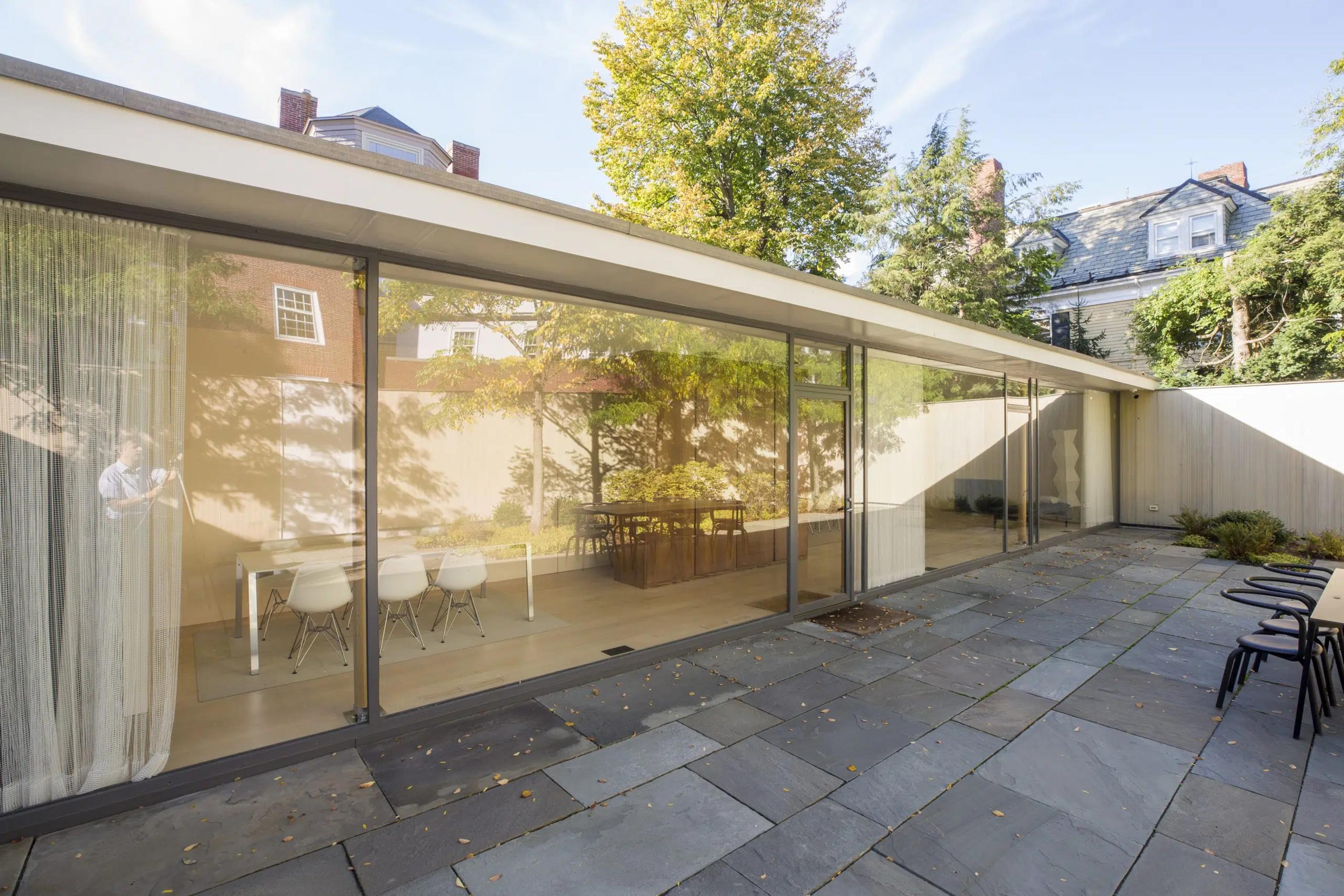
Completed in 1942 in Cambridge, Massachusetts, 9 Ash Street began as Philip Johnson’s thesis project while studying at Harvard Graduate School of Design. Yet the house feels far more ambitious than a student exercise. Designed and built during the uncertainty of World War II, the residence became Johnson’s first realised architectural work, a compact but radical experiment in prefabrication, modularity, and modern living.
At a time when materials were limited due to wartime restrictions, Johnson assembled the house using prefabricated wood-framed panels for the floors, walls, roof, and even the surrounding fence. The building almost reads as a kit of parts carefully joined together, reflecting an early fascination with industrial construction methods and efficiency. Despite its modest scale, the project already hinted at the architectural language Johnson would later become famous for: strict geometry, controlled proportion, and an obsession with how architecture frames experience.

An Introverted Modern House
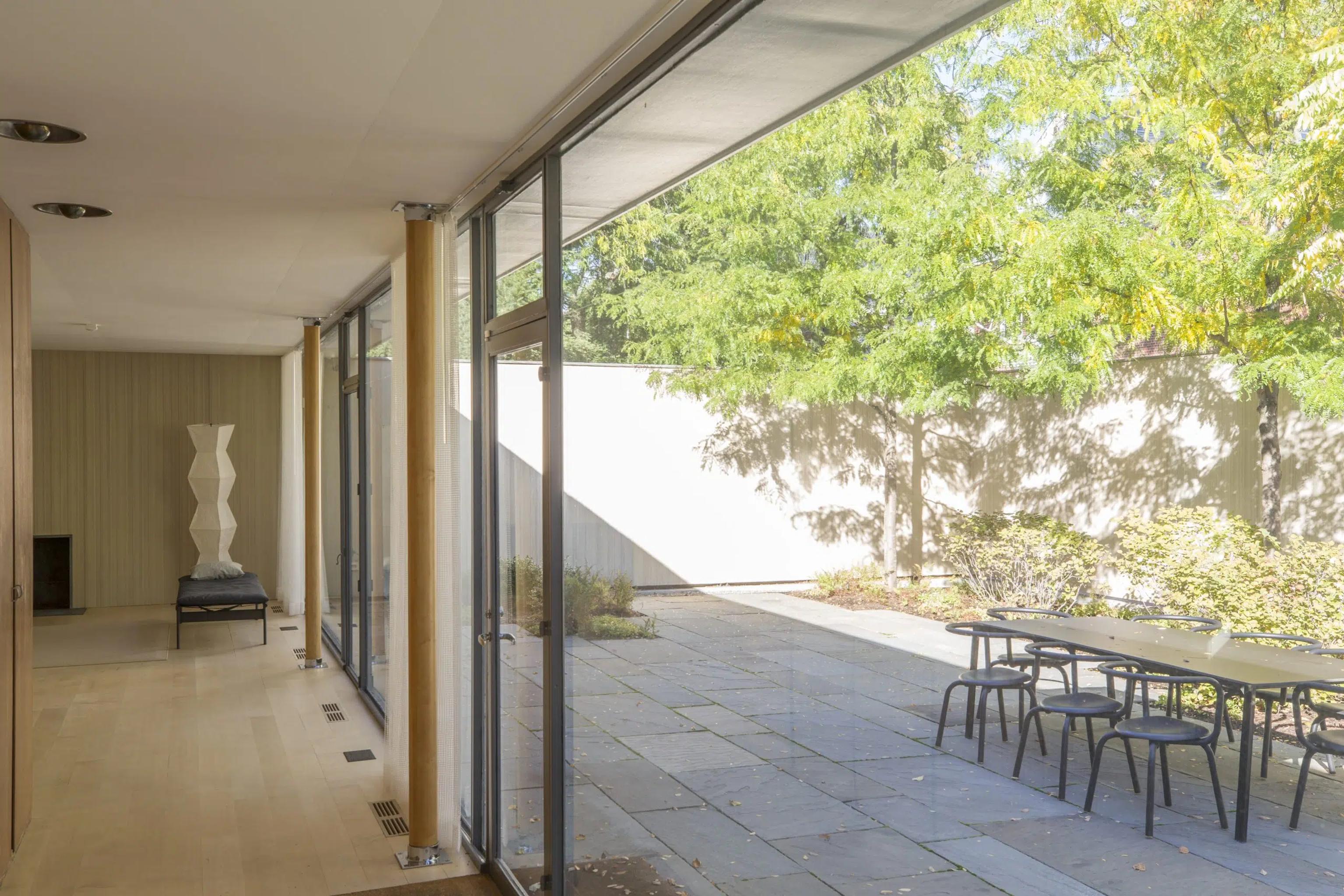
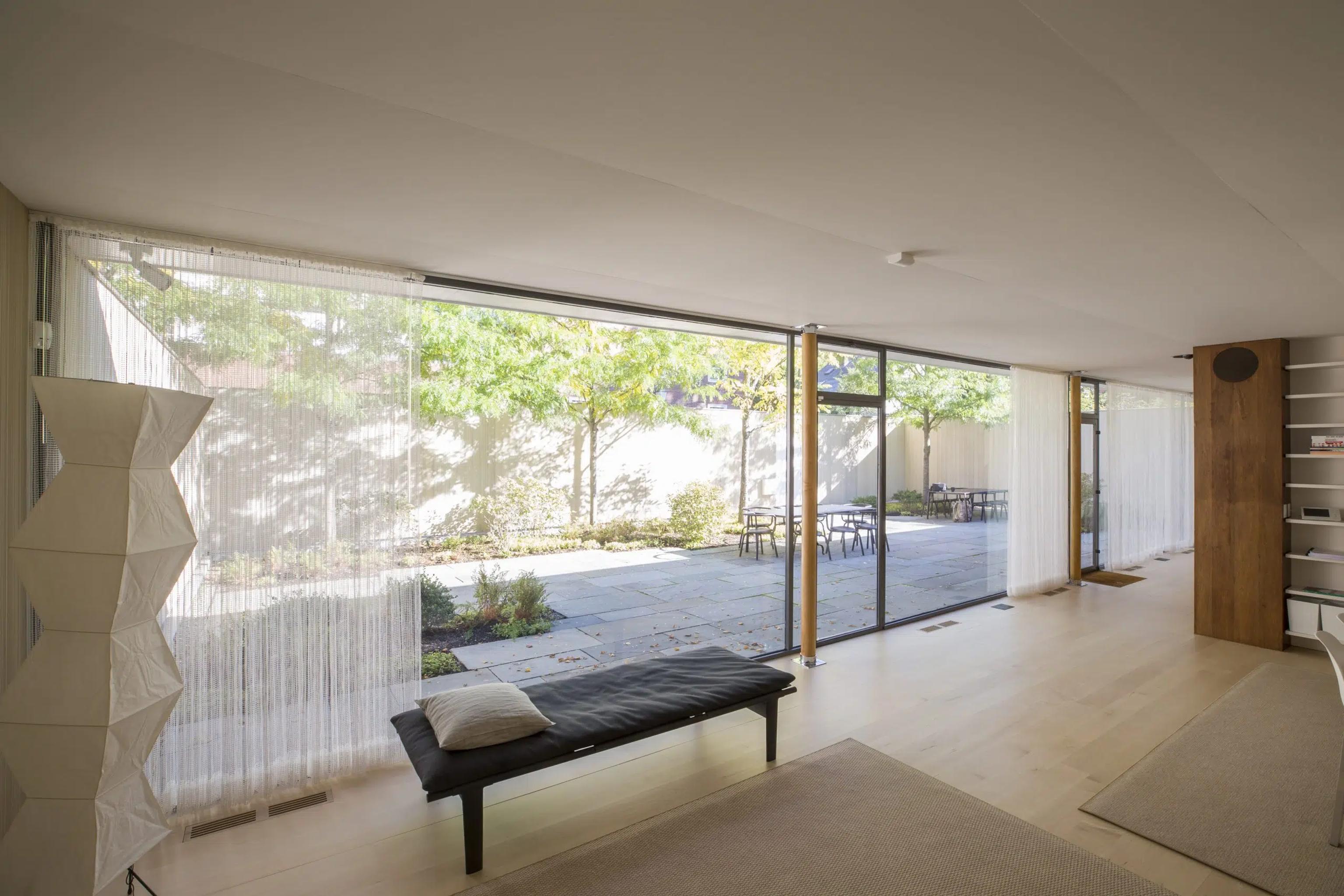
From the street, 9 Ash Street appears unusually closed off. A tall perimeter fence wraps around the rectangular structure, creating a protected courtyard that separates the house from its suburban surroundings. Rather than opening outward in a traditional residential way, Johnson turned the project inward, designing the experience around privacy, enclosure, and controlled views. Entering through the gate feels less like arriving at a suburban home and more like stepping into a carefully staged architectural composition. Inside, large glass surfaces dissolve the boundary between the courtyard and interior, foreshadowing ideas Johnson would later develop further in projects like the Glass House.
The house became known locally not only for its architecture, but also for the gatherings Johnson hosted there with students, architects, and intellectuals from Harvard’s design community. Even in this early project, architecture was treated not simply as shelter, but as a social and cultural setting.


Preservation Of A Fragile Modernism
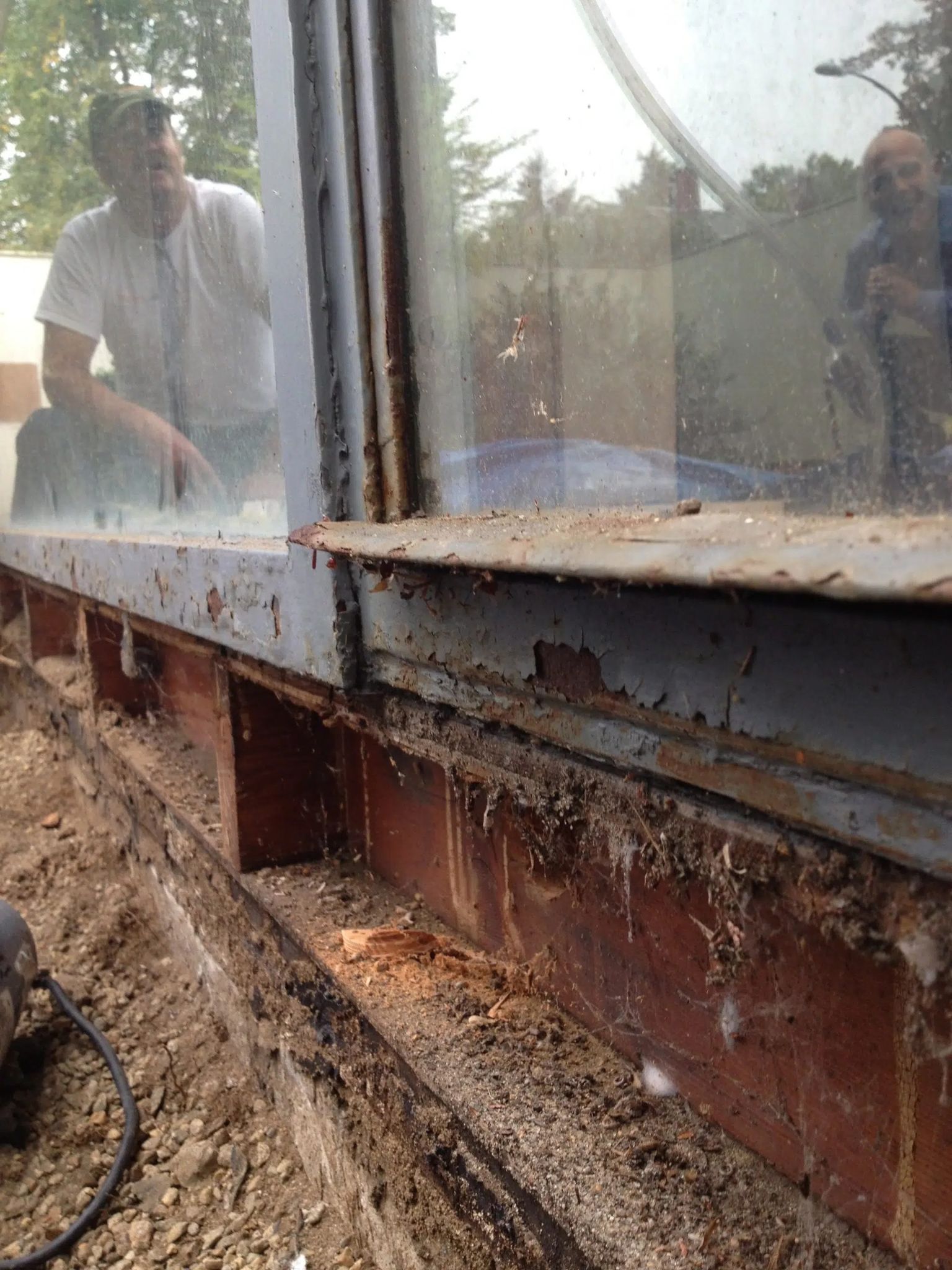
After passing through several private owners, the house gradually fell into serious disrepair. Years of neglect, water damage, and structural deterioration eventually led to a partial floor collapse. When Harvard GSD purchased the property in 2010, the building required extensive restoration to survive. What made the process especially challenging was the house’s unusual construction system.
The prefabricated wooden panels, experimental for their time, had aged poorly and demanded highly specific repair methods. Restoration teams worked carefully to preserve original materials wherever possible, including the distinctive Weldex plywood finish with its textured striated surface. The iconic steel-framed glass wall was restored while retaining its original glass panes, and hidden waterproofing systems were introduced beneath the surface to extend the life of the structure without altering its appearance. Rather than turning the building into a polished replica, the restoration respected its fragility and treated the house as an important document of early American modernism.

Philip Johnson And A Complicated Legacy
Understanding 9 Ash Street also means understanding Philip Johnson himself, one of the most influential and controversial architects of the twentieth century. Johnson played a major role in introducing European modernism to the United States through his work at the Museum of Modern Art, where he helped define and popularise the “International Style” alongside figures like Walter Gropius and Mies van der Rohe. Later in his career, he became internationally known for projects such as the Glass House in Connecticut and the AT&T Building in New York. But Johnson’s legacy is deeply complicated by his openly fascist and white supremacist views during the 1930s, including documented support for the Nazi regime.
In recent years, these histories have led institutions to reconsider how his work is presented and celebrated. Harvard eventually removed Johnson’s name from the house, officially renaming it simply “9 Ash Street.” Today, the project exists in a more layered context: not only as an important piece of architectural history, but also as part of a wider conversation about power, ideology, and the responsibility of cultural institutions to look more critically at the figures they once celebrated as central to architecture.